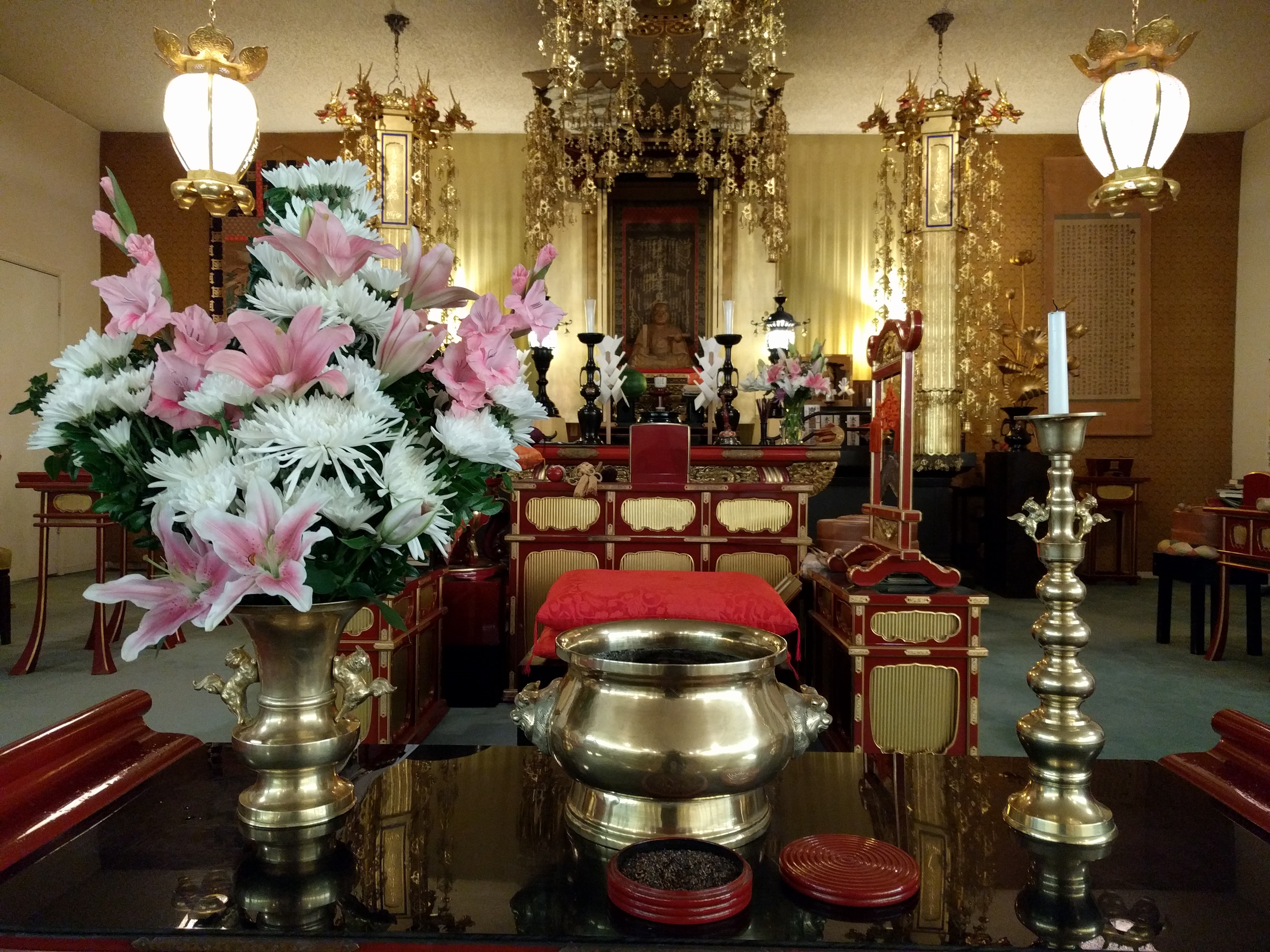
The practice of Buddhism is about changing our lives deep at the core. Buddhism calls on us to examine the causes of our suffering in brutal honesty. After making this self-assessment we then take the next step and make the necessary changes so we can free ourselves from the cycle of suffering in ignorance. The essays in the book are short; usually only several hundred words. It is possible to read them quite quickly. That however, is not what I intended and so I have concluded each essay with either some questions for you to consider or suggestions for actions you might decide would be beneficial. You will get the most value out of this book if you take your time and use the essays and the follow-up comments as tools. Use the book sparingly, sampling each essay as if it were a most delicious candy. This book will be of the most value to you if you actually try to use it as a tool for making changes in your life.
The Six Paramitas are 1. Giving – Dana; 2. Discipline – Five Precepts; 3. Patience; 4. Effort; 5. Meditation; and 6. Wisdom. … Dana is the act of giving without ANY expectation of reward or benefit. Think about that for a moment. No reward, no thanks, no benefit, no tax deduction, no write off, no name recognition, perhaps no appreciation, no self congratulations, no quiet satisfaction of performance, perhaps even no warm fuzzy feeling. How hard is that? Just giving because you want to and in appreciation, giving as an expression of your gratitude.
Thus, what the people in the Latter Age of Degeneration should be afraid of are not swords and sticks, tigers and wolves, or the ten evil acts and the five rebellious sins but those monks who wear Buddhist robes and pretend to be high priests without knowing the true teaching and those people who regard monks of provisional teachings as venerable and hate the practicers of the True Dharma of the Lotus Sutra.
Nichiren wrote this passage in his Treatise on Chanting the Great Title of the Lotus Sūtra (Shō Hokke Daimoku-shō). In Nichiren’s time, Buddhist monks had a great influence on the leaders of Japan, and thus on the lives of ordinary people. Wars, taxes, disease and education were no less important in Nichiren’s time than they are now. Nichiren recognized that the greatest danger came not from external forces, but from those within the country who took positions of power to benefit themselves rather than others. Nichiren’s reliance on the Wonderful Dharma, and his refusal to be coerced by his persecutions, show us how to live in this degenerating age.
The Daily Dharma is produced by the Lexington Nichiren Buddhist Community. To subscribe to the daily emails, visit zenzaizenzai.com
Day 31 covers Chapter 27, King Wonderful-Adornment as the Previous Life of a Bodhisattva.
Last month, I discussed by longing to see young people who could emulate the sons of King Wonderful Adornment and inspire others to “to understand the Dharma by faith.” And yet I understand that it is not one’s age but one’s faith that matters.
I considered myself a Buddhist for more than a quarter century before I became a follower of Nichiren Shu and joined the Sacramento Nichiren Buddhist Church. In that time I seldom talked about my faith outside my immediate family. Today, that has changed. I’m not sure I can explain how. It is just one of the things that I can see is different now. And apparently others can see this too. I am much more likely to discuss my practice and Buddhism with strangers today than I ever was before.
I like this story of the two boys, Pure-Store and Pure-Eyes, who end up converting their parents to the Lotus Sutra not so much because of the phenomena the two sons performed but for the example that our actions speak more powerfully than our words. We can convince more people of the truth of the Lotus Sutra through the way we act in society than by merely talking theoretically about Buddhism. Getting through life and the day-to-day concerns we all face may seem ordinary, even hum-drum. However, the manner in which we face and ultimately overcome our problems can look supernatural to others around us who struggle and suffer so much. We don’t need to spout water or fire from our bodies; we merely need to show the joy of our practice in the face of life as human. Lecture on the Lotus Sutra
In December 2014 I was invited to Las Vegas by then Bishop Shokai Kanai of the Nichiren Order of North America. He suggested that I do a presentation on the Parable of the Skillful Physician and His Sick Children found in Chapter 16 of the Lotus Sutra. On many occasions I have been asked to share my experiences as a hospital chaplain. It seemed like a good opportunity to combine both and so I began writing this book. This book is the second volume in my series “Studying the Lotus Sutra”. In this book as in all the books of this series I take one portion of the Lotus Sutra and examine it more deeply. This book focuses on the parable found in Chapter XVI of the Lotus Sutra; The Physician and His Ill Children. As I write about this parable I am tying to do so in a way that brings the stories told over 2500 years ago into our contemporary lives. I hope that through this little effort of mine a door will open for you to have a greater sense of connection to the Sutra.
One of the benefits of practicing with a Sangha is to have support in times of crisis. Regardless of the crisis, having the support of community is invaluable. Practicing alone by choice may be convenient in times of ease and comfort, but invariably problems will arise and it is times such as those when having friends in faith can be invaluable. The Sangha, the third of the Three Jewels of Buddhism is so critical to a healthy faith.
Those who believe in the Lotus Sutra are like the winter season, for many hardships come incessantly. Winter is surely followed by spring. We have never heard or seen that winter returns to fall. We have never heard that the believers in the Lotus Sutra go back to become ordinary men. The Lotus Sutra says, “All people who listen to this Sutra will attain Buddhahood.”
Nichiren wrote this in his Letter to the Nun Myoichi (Myoichi Ama Gozen Gohenji). Nichiren suffered through many hardships in his life, including exile, banishment from his family and home province, being placed on the execution mat, and having his home at Matsubagayatsu burned by members of the Pure Land sect. Through all these difficulties, Nichiren kept his faith in the Buddha’s wisdom and fulfilled his mission to benefit all beings in this world of conflict by leading them with the Wonderful Dharma of the Lotus Sūtra. Nichiren’s faith and practice inspire our faith and practice. Whatever obstacles we may face, we progress towards enlightenment under the guidance of the Ever-Present Buddha.
The Daily Dharma is produced by the Lexington Nichiren Buddhist Community. To subscribe to the daily emails, visit zenzaizenzai.com
When the Buddha is asked by Medicine-King Bodhisattva how many merits will be given to the “good men or women who keep, read, recite, understand or copy the Sutra of the Lotus Flower of the Wonderful Dharma,” the Buddha replies:
“Suppose some good men or women make offerings to eight hundred billion nayuta Buddhas, that is, as many Buddhas as there are sands in the River Ganges. What do you think of this? Are the merits given to them many or not?”
“Very many, World-Honored One!” The Buddha said: “More merits will be given to the good men or women who keep, read or recite even a single gatha of four lines of this sutra, understand the meanings of it or act according to it.”
And following this Medicine-King Bodhisattva, Brave-In-Giving Bodhisattva, Vaisravana Heavenly-King, World-Holding Heavenly-King and the 10 raksasis daughters, their mother and attendants offer dharanis to protect the teacher of the Dharma.
Back in May I wrote: “Only two of these – Medicine-King Bodhisattva and the 10 raksasis daughters and their mother – are singled out to receive merit for their efforts by the Buddha.”
In re-reading the chapter today I realized I was mistaken. Unlike the raksasis daughters and their mother, whose “merits will be immeasurable” in exchange for their protection, Medicine-King Bodhisattva will not receive, but he “will be able to give many benefits to all living beings.”
Yes, being able to give merits to others is a merit for oneself, but that doesn’t make my earlier post any less mistaken. The whole point of reading and then re-reading and then re-reading is to understand.
Ven. Kenjo Igarashi discussed his sadness at the passing of an old friend as the thread running through his sermon.
When Rev. Igarashi graduated from college in Japan he and his friend Taikyo Nakamura were assigned to the Los Angeles Nichiren Shu temple as assistant priests to complete their training. Nakamura struggled with the demands of the work. Rev. Igarashi laughed and said he struggled too. In the 1970s, when Rev. Igarashi was assigned a position in San Francisco, Nakamura was sent to Portland. But Nakamura’s struggles continued and his conflicts with the Portland temple’s members finally caused him to leave the priesthood and return to secular life. The two former friends eventually lost contact with each other. They had not spoken for more than 20 years when Rev. Igarashi learned that Taikyo Nakumura had died. (Here’s the Oregonian obituary.)
To continue the thread of his lesson, Rev. Igarashi recalled the Japanese children’s story, The Spider’s Thread.
Shakyamuni is meandering around Paradise one morning, when he stops at a lotus-filled pond. Between the lilies, he can see, through the crystal-clear waters, the depths of Hell. His eyes come to rest on one sinner in particular, by the name of Kandata. Kandata was a cold-hearted criminal, but had one good deed to his name: while walking through the forest one day, he decided not to kill a spider he was about to crush with his foot. Moved by this single act of compassion, the Buddha takes the silvery thread of a spider in Paradise and lowers it down into Hell.
Down in Hell, the myriad sinners are struggling in the Pool of Blood, in total darkness save for the light glinting off the Mountain of Spikes, and in total silence save for the sighs of the damned. Kandata, looking up by chance at the sky above the pool, sees the spider’s thread descending towards him and grabs hold with all the might of a seasoned criminal. The climb from Hell to Paradise is not a short one, however, and Kandata quickly tires. Dangling from the middle of the rope, he glances downward, and sees how far he has come. Realizing that he may actually escape from Hell, he is overcome by joy and laughs giddily. His elation is short-lived, however, as he realizes that others have started climbing the thread behind him, stretching down into the murky depths below. Fearing that the thread will break from the weight of the others, he shouts that the spider’s thread is his and his alone. It is at this moment that the thread breaks, and he and all the other sinners are cast back down into the Pool of Blood.
Shakyamuni witnesses this, knowing all but still with a slightly sad air. In the end, Kandata condemned himself by being concerned only with his own salvation and not that of others. But Paradise continues on as it has, and it is nearly noontime there. Thus the Buddha continues his meanderings.
Rev. Igarashi bound the day’s lesson together with the “rope of the Daimoku.” The Daimoku, he explained, is a rope lowered to us in the suffering world by Nichiren. By climbing up the rope of Daimoku we can pull ourselves out of the suffering world.
“Don’t let go of the Daimoku,” Rev. Igarashi repeated several times.
I hope no one faces the kind of persecution Nichiren or others since him have faced. But I do wonder how many would be standing after facing such hardships. There are all sorts of ways our faith may be challenged that might be more common. Persecution or persuasion or pressure from family or loved ones frequently happens. Interference caused by work or other obligations often causes people to give up their faith and practice, thinking they will pick it back up when things get easy. But a practice of convenience hardly qualifies as faith with no fear or upholding at the cost of one’s life.