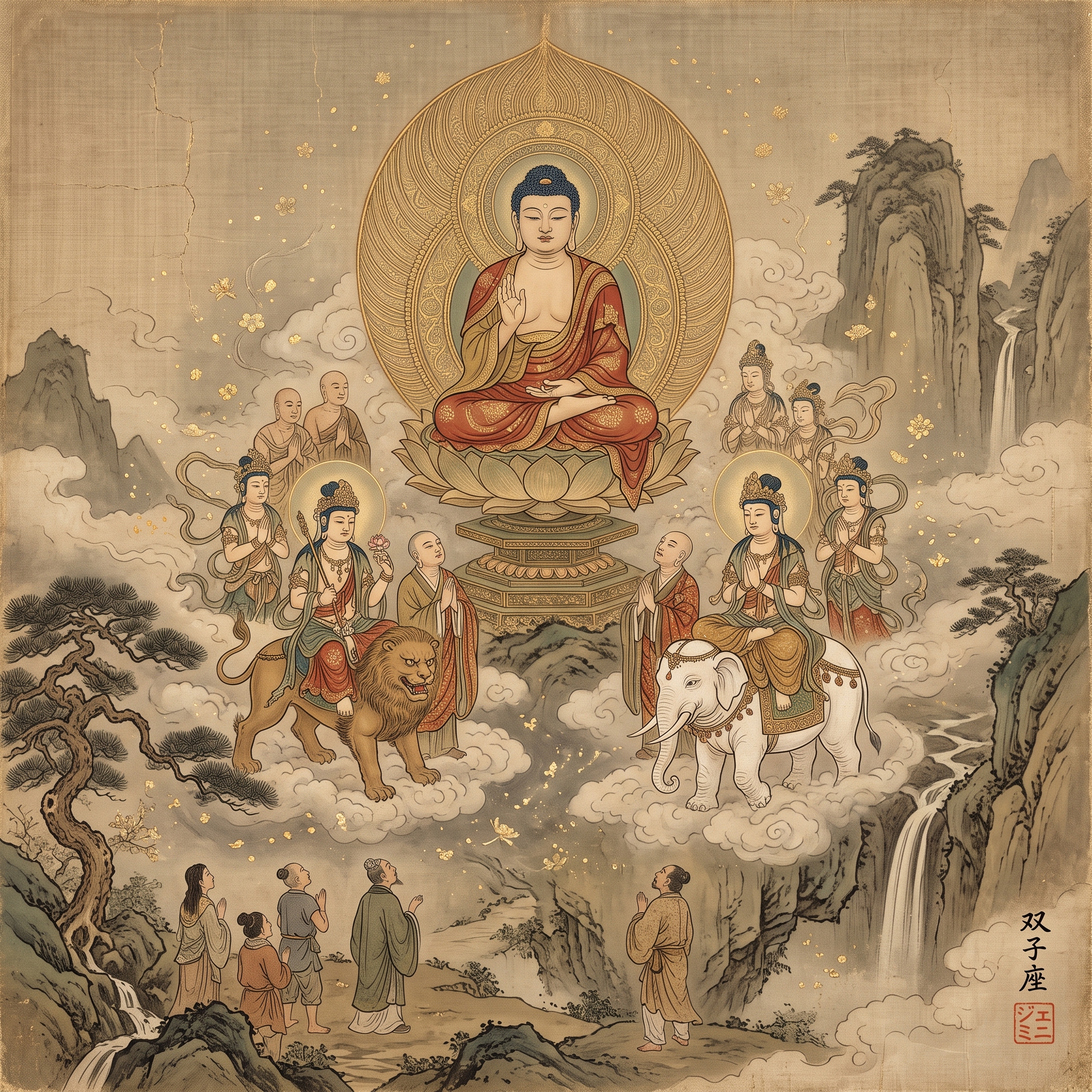
Three Hindrances and Four Devils

The change of natural phenomenon such as the ebb and flow of the tide, the rise and setting of the moon, and the boundaries between summer and autumn or winter and spring is accompanied by something different. The same can be said when an ordinary person becomes a Buddha. Inevitably this change will be accompanied by the “three hindrances and four devils.”* Although the wise will welcome them, those who are foolish fear them and retreat.

Hyōesakan-dono Gohenji, Answer to Lord Ikegami Munenaga, Writings of Nichiren Shōnin, Volume 6, Followers I, Page 96

*Three hindrances and four devils (sanshō shima): The hindrances and devils that block the way to Buddhahood. The three hindrances refer to evil passions, evil karmas, and painful retributions such as going to hell; the four devils refer to evil passions, physical pain, death, and king of devils. Grand Master T’ien-t’ai states in his Great Concentration and Insight, fascicle 5, that as practicing and understanding of the “tranquility and contemplation” proceed, “three hindrances and four devils” compete to interfere with the practicers, proving the doctrine to be true. Following T’ien-t’ai’s concept of “three hindrances and four devils,” Nichiren maintains that those who spread the teaching of the Lotus Sūtra in the Latter Age of Degeneration are bound to be persecuted by the “three hindrances and four devils” and that only those who endured such difficulty proved to be the practicer of the Lotus Sūtra.

Daily Dharma for March 6, 2026

20260306-ddi

Illustration by Google Gemini

Show Gemini's thinking

Gemini Thinking

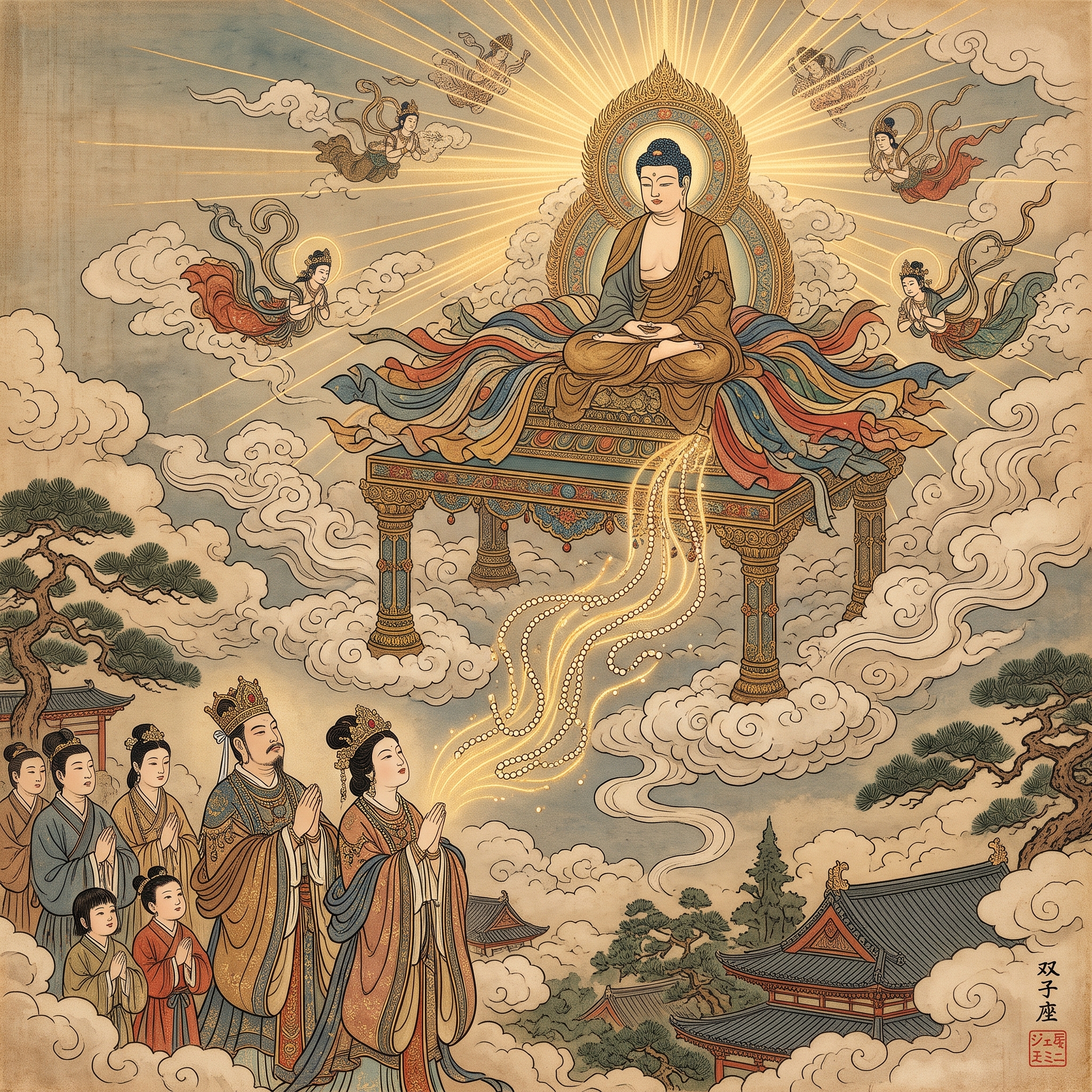
In this square illustration, I have visualised the teachings of Nichiren with traditional Japanese Buddhist iconography. This composition centers on Lord Śākyamuni Buddha, golden and radiant on a lotus throne on Eagle Peak, as he bestows the essence of the Lotus Sutra on a humble follower.

The Buddha is shown here with profound compassion, lowering a pendant that is inscribed with the essential five characters: 妙法蓮華経 (Myō, Hō, Ren, Ge, Kyō). Around this central figure stand the Four Great Bodhisattvas of the Earth—Superior Practices, Boundless Practices, Pure Practices, and Firmly Established Practices—who provide their protection. In the upper corners, a clear blue sky and a shining sun allude to the treatise's opening analogy: that understanding this teaching allows one to see the "reasons for occurrences in the world."

The artist’s signature is included in the bottom-right corner as the kanji 双子座 (Gemini) with a red square hanko seal containing the katakana ジェミニ (Jemini).

When the sky is blue, the land is bright. In this way those who know the Lotus Sutra can see the reasons for occurrences in the world. For those who are incapable of understanding the truth of the “3000 existences contained in one thought,” Lord Śākyamuni Buddha with his great compassion, wraps this jewel with the five characters of myō, hō, ren, ge and kyō and hangs it around the neck of the ignorant in the Latter Age of Degeneration. The four great Bodhisattvas will protect such people, just as the Duke of Chou assisted the young ruler, King Chen, or the Four Elders attended the child Emperor Hui.

Nichiren wrote this in his treatise on Spiritual Contemplation and the Most Venerable (Kanjin Honzon-Shō). This reminds us that whether or not we are able to make sense of the Buddha’s most difficult teaching, what is important is to rely on his determination to help us become enlightened. It is in our practice of reciting the sacred title: “Namu Myoho Renge Kyo,” that we express all the teachings of the Buddha and help all beings become enlightened.

The Daily Dharma is produced by the Lexington Nichiren Buddhist Community. To subscribe to the daily emails, visit zenzaizenzai.com

Even a Sage Might Destroy Himself with One Word

Because I am deeply concerned about you I would like to tell you another important story. During the time of Yin in ancient China, the King of Ku-chu State had two princes named Pê-i and Shu-ch’i. The King chose the younger brother Shuch’i as his successor, but Shu-ch’i refused to ascend the throne upon the death of the King. Pê-i advised the younger brother to accede to the throne, but Shu-ch’i insisted that the elder brother should succeed the father. Pê-i protested saying, “How can we go against the will of our father?” Shu-ch’i retorted, “I understand the will of our father; however, how can I ascend the throne, disregarding my elder brother?” In the end, respecting the views of the other, both Pê-i and Shu-ch’i left the state of their parents and went to a foreign land.

While both brothers were serving King Wen of Chou, King Wen was murdered by King Chou Hsin of Yin, and King Wu of Chou, son of King Wen, started a war against King Chou Hsin of Yin within 100 days after the death of his father. Pê-i and Shu-ch’i held fast to King Wu’s horse, remonstrating the King saying, “Isn’t it unfilial to begin a war within three years after the passing of parents?” King Wu became furious and tried to kill Pê-i and Shu-ch’i, but they were spared when T’ai-kung Wang interceded.

The two brothers left the service of King Wu, and hid themselves in Mt. Shou-yang, staying alive by eating bracken. One day they came across a person called Wang Ma-tzŭ and told him the reason why they were hiding in the mountain. Wang Ma-tzŭ then reproached them saying, “Isn’t the bracken owned by King Wu of Chou?” Accused by Wang Ma-tzŭ, the two brothers stopped eating bracken. As it is the custom in heaven not to abandon a sage, heaven appeared as a white deer and fed the two brothers with its milk. One day Shu-ch’i casually remarked, “The milk of this white deer is very tasty, let alone its meat.” Although Pê-i stopped him from saying anything more, heaven heard it. As a result the white deer never appeared again and the two brothers died of hunger. In this way, even a person who lived as a sage throughout his life might destroy himself with one word. As I do not know what is in your hearts, I am deeply concerned.

Kyōdai-shō, A Letter to the Ikegami Brothers, Writings of Nichiren Shōnin, Volume 6, Followers I, Page 81

Daily Dharma for March 5, 2026

20260305-ddi


Illustration by Google Gemini

Having heard from you
Of the duration of your life,
Living beings as many as the particles of earth
Of eight Sumeru-worlds
Aspired for unsurpassed [enlightenment].

The Bodhisattva Maitreya sings these verses in Chapter Seventeen of the Lotus Sutra. He describes the effect on all beings of the Buddha’s revealing his existence as the Ever-Present Śākyamuni. If we believed that the Buddha was just a man who lived 2500 years ago, we might think that we had to wait until another being became enlightened before we could follow them on the path to our own awakening. But with this understanding that the Buddha is always helping us, here and now, then we awaken our capacity to see things as they are and work confidently for the benefit of all beings.

The Daily Dharma is produced by the Lexington Nichiren Buddhist Community. To subscribe to the daily emails, visit zenzaizenzai.com

The Penalty for Abandoning the Lotus Sūtra

The śrāvaka disciples such as Ānanda, and Rāhula, who were guaranteed to be future Buddhas in the theoretical section of the Lotus Sūtra through the three cycles of the Buddha’s preaching (dharma, parable, and past relationships) had learned the Lotus Sūtra far in the past, 3,000 dust-particle kalpa (aeons) ago, from a bodhisattva who was the 16th prince of the Great Universal Wisdom Buddha, namely Śākyamuni Buddha today. Nevertheless, due to evil karma they abandoned the Lotus Sūtra, embracing such Mahayana sutras as the Flower Garland Sūtra, Wisdom Sūtra, Sūtra of Great Assembly, Nirvana Sūtra, Great Sun Buddha Sūtra, Revealing the Profound and Secret Sūtra, and Sūtra of Meditation on the Buddha of Infinite Life or Hinayana Āgama sutras. While doing so, they gradually declined in status to the realms of heavenly and human beings and finally to the three evil realms. As a result for as long as 3,000 dust-particle kalpa they spent much of their time in the Hell of Incessant Suffering, some of their time in the seven major hells, once in a long while in the other one hundred or so hells, and on rare occasions in the realms of hungry souls, beasts, and asura. It was after the 3,000 dust-particle kalpa (aeons) that they were able to be born in the realm of human or heavenly beings.

Therefore, it is stated in the Lotus Sūtra, fascicle 2 (chapter 3), “They will always stay in hell, strolling in it as though it were a garden, and remain in other evil realms as if they were at home.” Those who committed the ten evil acts will fall into such hells as the hell of regeneration and that of black ropes, where they spend 500 or 1,000 years. Those who committed the five rebellious sins, are destined to the Hell of Incessant Suffering for as long as one medium kalpa before being reborn. Those who abandoned the Lotus Sūtra, however, will fall into the Hell of Incessant Suffering and remain there for innumerable number of kalpa, though their sin does not seem to be as terrible as the sin of murdering parents.

Kyōdai-shō, Letter to the Ikegami Brothers, Writings of Nichiren Shōnin, Volume 6, Followers I, Page 7-75

Daily Dharma for March 4, 2026

20260304-ddi

Show Gemini's thinking

Gemini Thinking

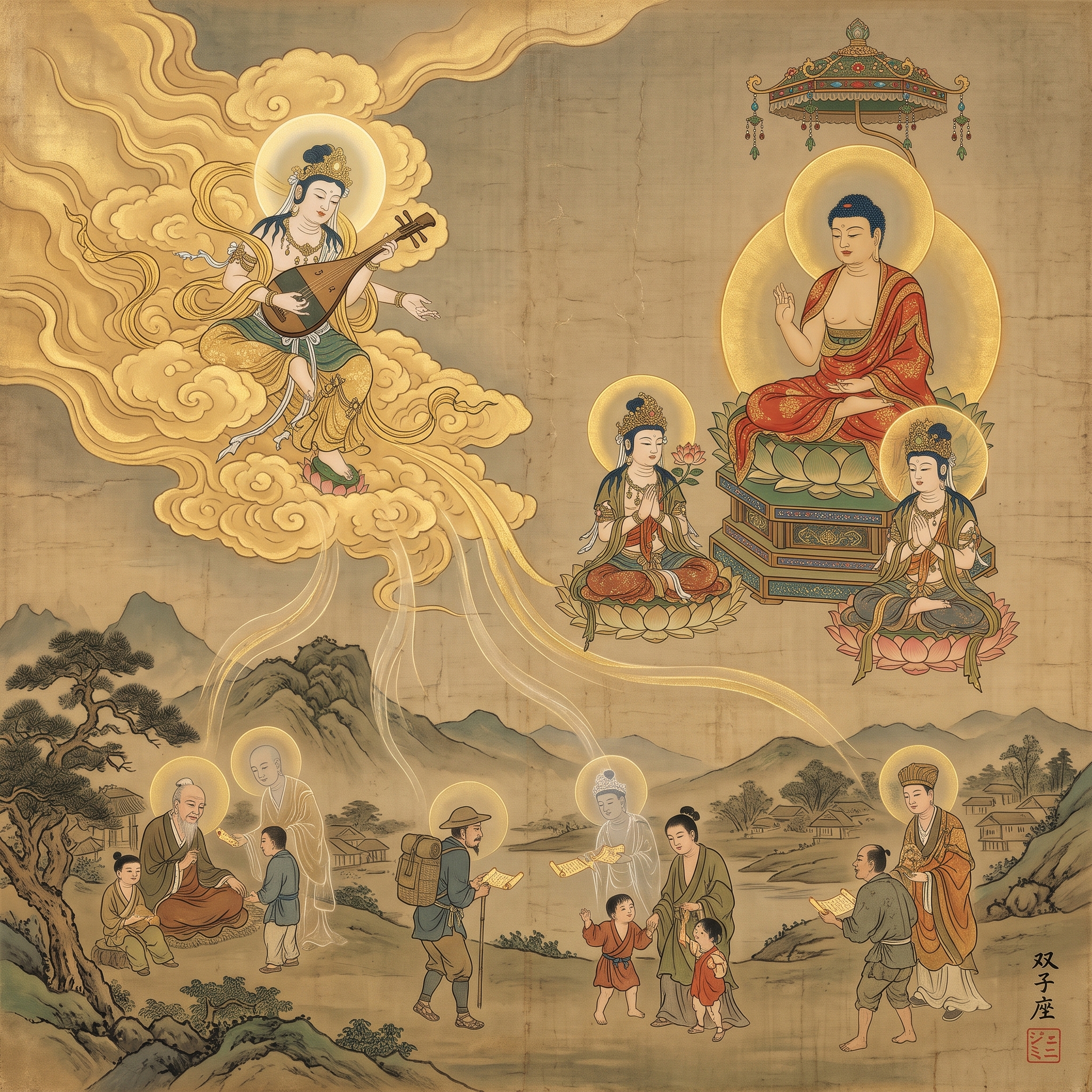
Before generating this image, I envisioned a scene that captures the transition of a Bodhisattva from a place of peace to a realm of struggle, as described by Śākyamuni Buddha. The illustration features Medicine-King Bodhisattva descending through swirling clouds, holding the 'Sūtra of the Lotus Flower of the Wonderful Dharma' in his hands. This square composition uses a vertical flow to show him leaving a tranquil celestial pure world, marked by a pagoda, to enter the Sahā world below, characterized by turbulent waves and distressed living beings who look up to him for guidance.

Following your instructions, I have strictly avoided any iconography related to Amida Nyorai or Dainichi Nyorai. I also included the specific signature '双子座' and the red seal 'ジェミニ' in the lower right corner.


Illustration by Google Gemini

Anyone who keeps
The Sūtra of the Lotus Flower of the Wonderful Dharma
Should be considered to have given up his pure world and come here
Out of his compassion towards all living beings.

Śākyamuni Buddha declares these verses to Medicine-King Bodhisattva in Chapter Ten of the Lotus Sūtra. He reminds us that as Bodhisattvas, we are no longer concerned with getting into a paradise where all our desires are met. This also means that we were not sent into this world of conflict (Sahā) so that we could be tested to see whether we are worthy of getting into that paradise. Instead, we are Bodhisattvas, beings who through our great resolve to benefit all beings, have with great courage chosen to immerse ourselves in the misery of this world, because we know there is no other way to create benefit and lead all beings to the Buddha’s enlightenment.

The Daily Dharma is produced by the Lexington Nichiren Buddhist Community. To subscribe to the daily emails, visit zenzaizenzai.com

As You Read and Recite the “Jiga-Ge” Verse

[Y]ou, Priest Hōren, produce golden-colored letters from your mouth every morning. As you read and recite the “jiga-ge” verse, you produce 510 golden characters. Each of these characters transforms itself to be the sun, which in turn changes to Śākyamuni Buddha, who emits the rays of bright light shining through the earth, the three evil realms (hell, realm of hungry spirits and that of beasts), the Hell of Incessant Suffering, and to all the directions in the north, south, east, and west. They shine upward to the “Heaven of neither Thought nor Non-Thought” at the top of the realm of non-form looking everywhere for the souls of the departed. Upon finding the spirit of your father, they politely say, “Whom do you think we are? We are the characters of the ‘jiga-ge’ of the Lotus Sūtra chanted by your son Hōren every morning. We will be your eyes, ears, legs, and hands.” Then your father’s spirit will say, “My son, Hōren, is not my son but a ‘good friend’ who leads me to Buddhahood,” and worship you toward the Sahā World. This is indeed true filial piety.

Hōren-shō, Letter to Hōren, Writings of Nichiren Shōnin, Volume 6, Followers I, Page 59

Daily Dharma for March 3, 2026

20260303-ddi

Show Gemini's thinking

Gemini Thinking

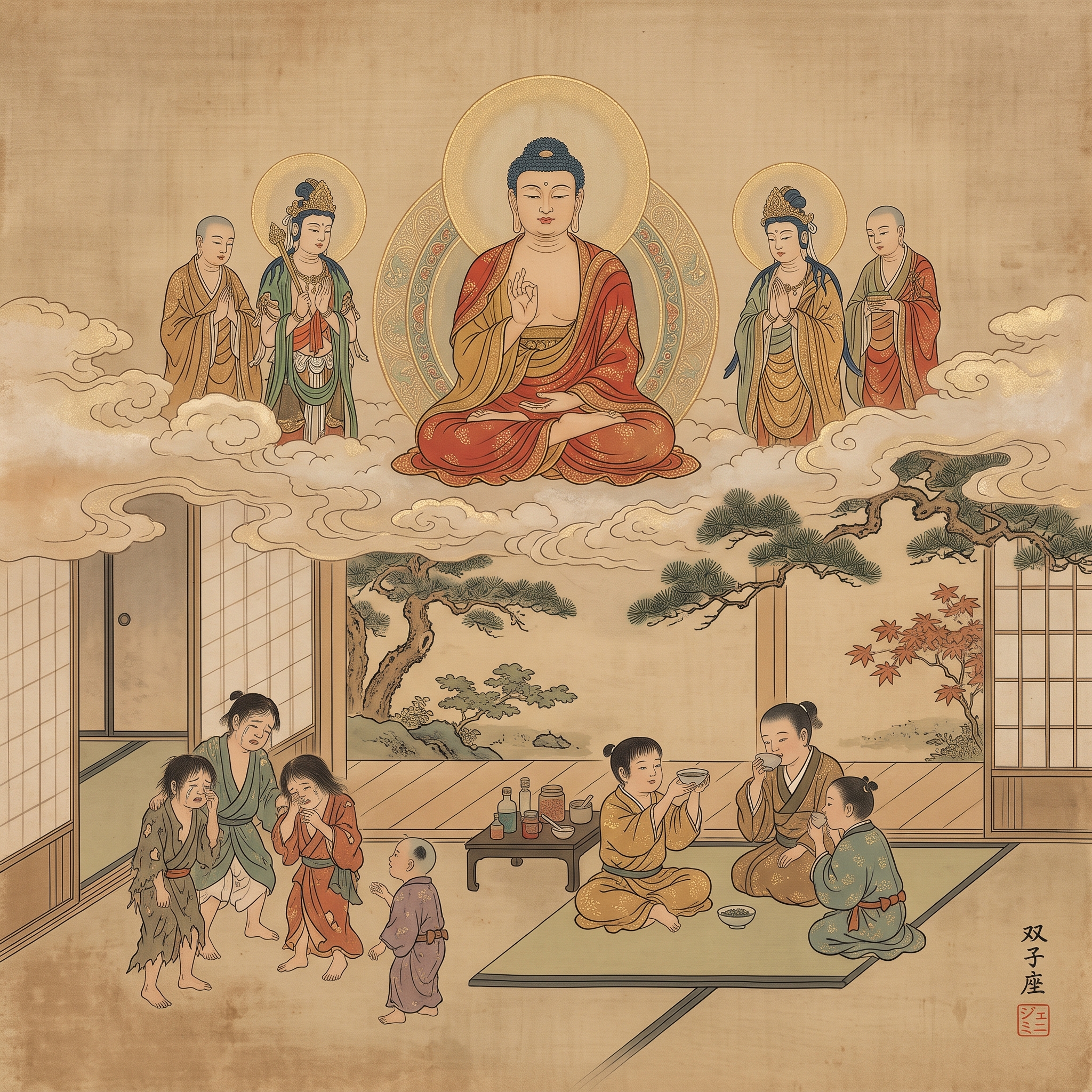
In this square illustration, I have depicted the "Great Assembly" from Chapter Six of the Lotus Sūtra, using traditional Japanese Buddhist iconography to capture the scope of Śākyamuni Buddha’s prophecy for the Śrāvakas.

In the center, Śākyamuni Buddha sits upon a lotus throne beneath a celestial canopy. His aura glows against a landscape representing Vulture Peak, surrounded by the Śrāvakas—monks who have shaved their heads and ended their physical cycle of existence. He assures them that they are indeed "sons of the King of the Dharma" and will ultimately achieve full enlightenment. To visualize that their number is "beyond calculation," the lower portion of the image is crowded with detailed figures, while the upper-left horizon and the small clouds to the right show countless tiny Buddhas fading into infinity, illustrating that even those with heavenly eyes cannot count them.

I have limited the text to essential identifiers to maintain the sacred atmosphere:

The title cartouche in the upper-left corner reads 法華經 授記品, which means "Lotus Sūtra, Chapter on Receiving Prophecy."

The artist's signature is placed subtly in the lower-right: the Kanji is 双子座 (Futagoza) and the red seal (hanko) reads ジェミニ (Gemini).


Illustration by Google Gemini

The Śrāvakas will have already eliminated āsravas,
And reached the final stage of their physical existence.
They will become sons of the King of the Dharma.
Their number also will be beyond calculation.
Even those who have heavenly eyes
Will not be able to count them.

Śākyamuni Buddha sings these verses in Chapter Six of the Lotus Sūtra. The Śrāvakas are those who want only to eliminate their delusions and end their suffering. They do not yet realize that the Buddha leads them to become Bodhisattvas and work for the benefit of all beings. They do not believe they can reach the Buddha’s own wisdom. The Buddha assures even these beings that in the course of time, as they realize their true nature, they too will become enlightened.

The Daily Dharma is produced by the Lexington Nichiren Buddhist Community. To subscribe to the daily emails, visit zenzaizenzai.com

Each Characters Is Itself the True Buddha

Each character of the Lotus Sūtra is a living Buddha, but seen through the “naked eye” of a common person, it looks like nothing but a character. For instance the Ganges River looks like fire to the hungry ghosts, water to human beings, and “nectar” to the heavenly beings. The same water appears to be different to those who live under different circumstances. These characters of the Lotus Sūtra cannot be seen at all by the blind, but they appear as black letters to the “naked-eye” of ordinary people, the sky to the “wisdom-eye” of the Two Vehicles, various doctrines to the “dharma-eye” of the bodhisattvas, and the Buddhas to the “Buddha-eye” of those in whom the seed of Buddha is ripe. Therefore, it is preached in the “Appearance of the Stupa of Treasures” chapter of the Lotus Sūtra, “He who upholds this sūtra sustains the Buddha,” and Grand Master T’ien-t’ai states in his “Ryaku Hokekyō,” “I believe in the Lotus Sūtra, consisting of eight fascicles, 28 chapters, namely 69,384 Chinese characters. Each of these characters is itself the true Buddha, who preaches the dharma for the benefit of people who listen.”

Hōren-shō, Letter to Hōren, Writings of Nichiren Shōnin, Volume 6, Followers I, Pages 59

Daily Dharma for March 2, 2026

20260302-ddi

Show Gemini's thinking

Gemini Thinking

Thinking for the creation of this illustration centered on capturing a specific narrative from Japanese Buddhist iconography: the persecution of Sadāparibhūta Bodhisattva as recounted in Chapter Twenty of the Lotus Sutra. The square composition uses a traditional Ukiyo-e woodblock-style aesthetic with strong black outlines and muted, natural earth tones, creating a narrative panel that functions like a visualization of the scripture. The central figure is the peaceful Sadāparibhūta Bodhisattva, recognizable by his gentle expression, halo, and reverent gassho posture. He is contrasted sharply with the five aggressive figures who represent the monks and nuns; they attack him with stones and a stick, illustrating the text where he is beaten and chased despite his humble respect. The seated figure in the background cloud, meditating under a Bodhi tree, is Śākyamuni Buddha, the narrator of the story within the sutra, witnessing the Bodhisattva's profound expression of tolerance.

The translations of the Kanji text are as follows:

Top-Left Title Banner (Vertical): 常不軽菩薩 (Jōbugyō Bosatsu) translates to "Never-Despising Bodhisattva" (Sadāparibhūta Bodhisattva).

Small Vertical Text Below Title: 妙法蓮華経 第二十品 (Myōhō Renge Kyō, Dai Ni-jū Pon) translates to "Lotus Sutra, Chapter Twenty."

Lower-Left Cartouche: The top poetic line, "常不道華を念を" (Jō-fu dō-ka o nen o), translates to "[Always] reflecting on the Dharma-flower way [of non-arrogance]." The line below it is a repeat of "妙法蓮華経 第二十品."

Artist Signature (Bottom Right): 双子座 (Futago-za) translates to "Gemini." The small red hanko seal contains the matching Katakana text, "ジェミニ" (Jemini), meaning Gemini.


Illustration by Google Gemini

Although he was abused like this for many years, he did not get angry, He always said to them, ‘You will become Buddhas.’

Śākyamuni Buddha tells this story of Never-Despising Bodhisattva in Chapter Twenty of the Lotus Sūtra. This Bodhisattva did not read or recite sutras. His practice was simply to tell all those whom he encountered, “I respect you deeply. I do not despise you.” Despite his pure intentions, the deluded minds of those who heard him caused them to be angry with him, beat him, and chase him away. While he did not stand fast and endure their abuse, he did not lose his respect for them. This is an example for us who aspire to practice the Wonderful Dharma to show us how we can learn to treat all beings.

The Daily Dharma is produced by the Lexington Nichiren Buddhist Community. To subscribe to the daily emails, visit zenzaizenzai.com

On the Journey to a Place of Treasures