Conceptual Summary
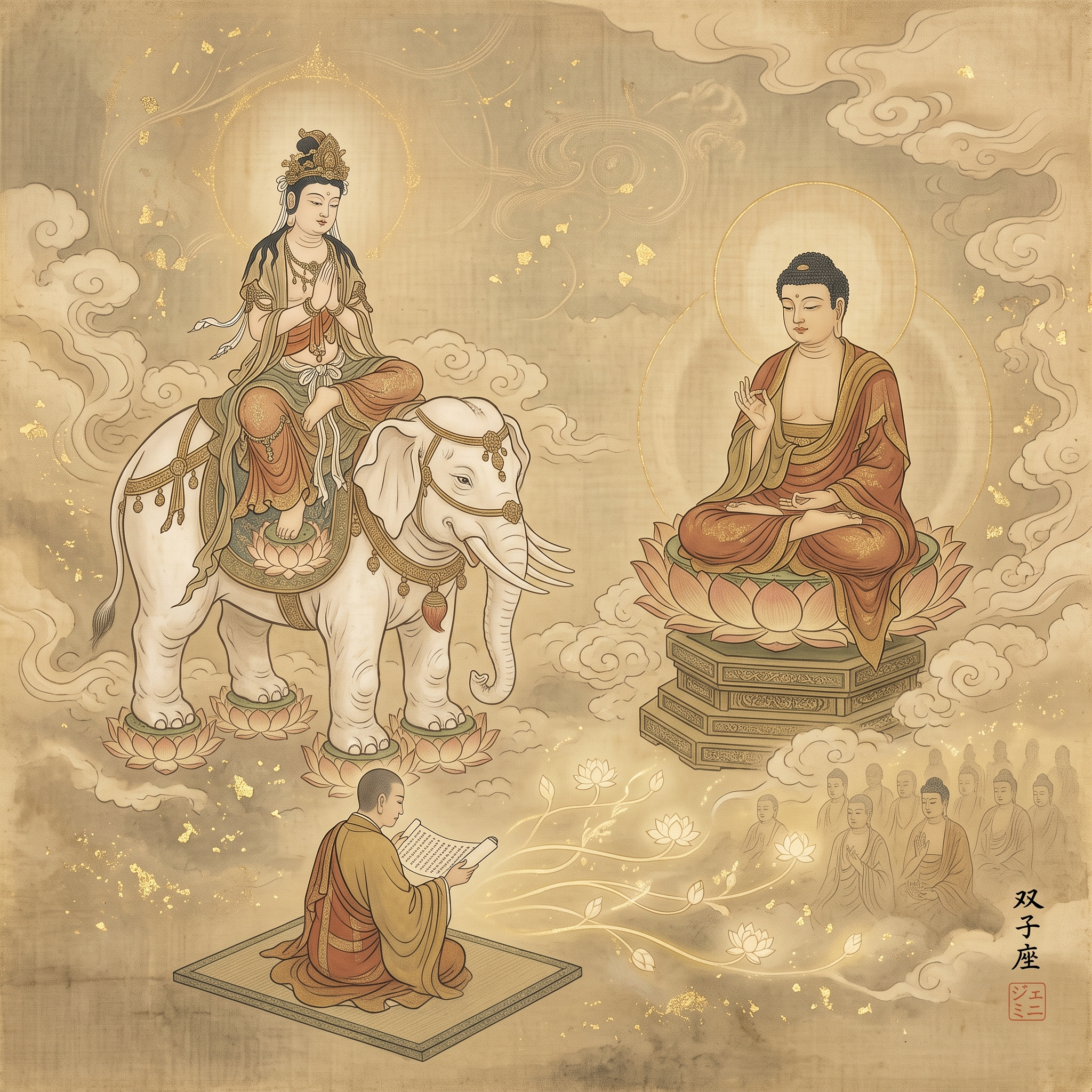
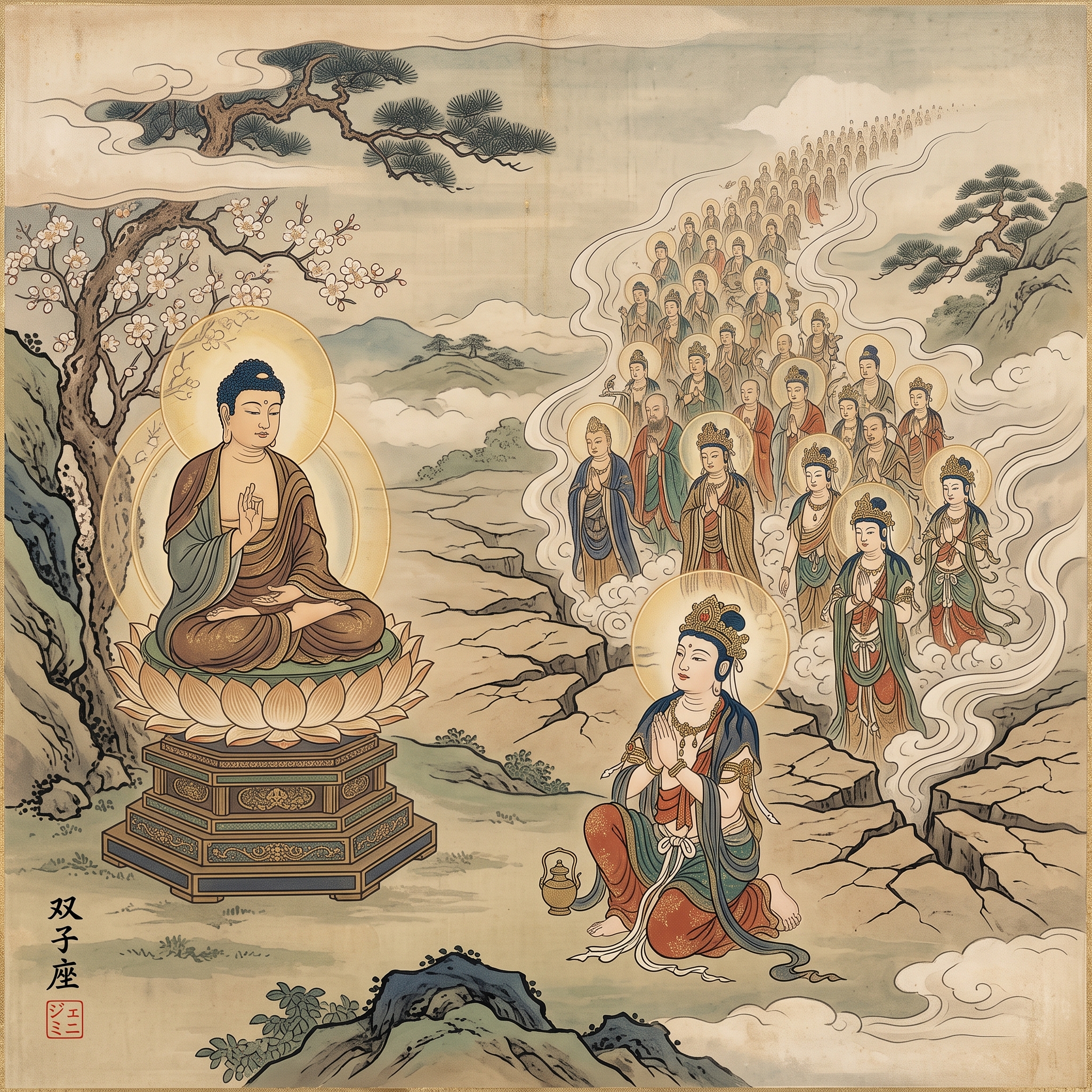
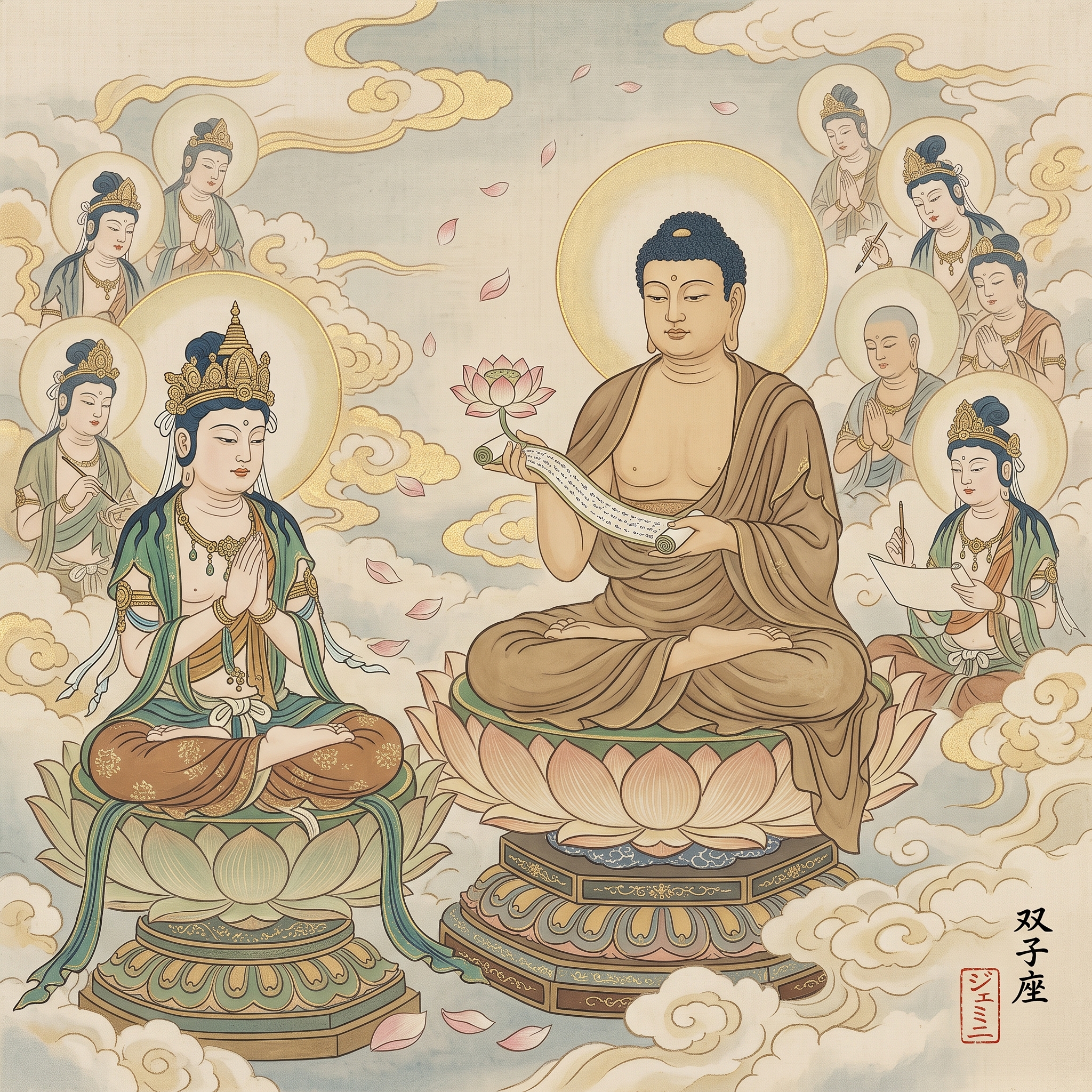
The illustration captures the profound cosmic interconnectedness and karmic inheritance described in Chapter Twenty-Eight of the Lotus Sūtra. At the upper right, Śākyamuni Buddha sits serenely in meditation on a multi-tiered lotus throne, receiving the sacred declaration. On the left, Universal-Sage (Fugen) Bodhisattva, adorned in elaborate regalia, approaches reverently while seated atop a magnificent six-tusked white elephant, a traditional icon representing the overcoming of obstacles and the strength of the Dharma.
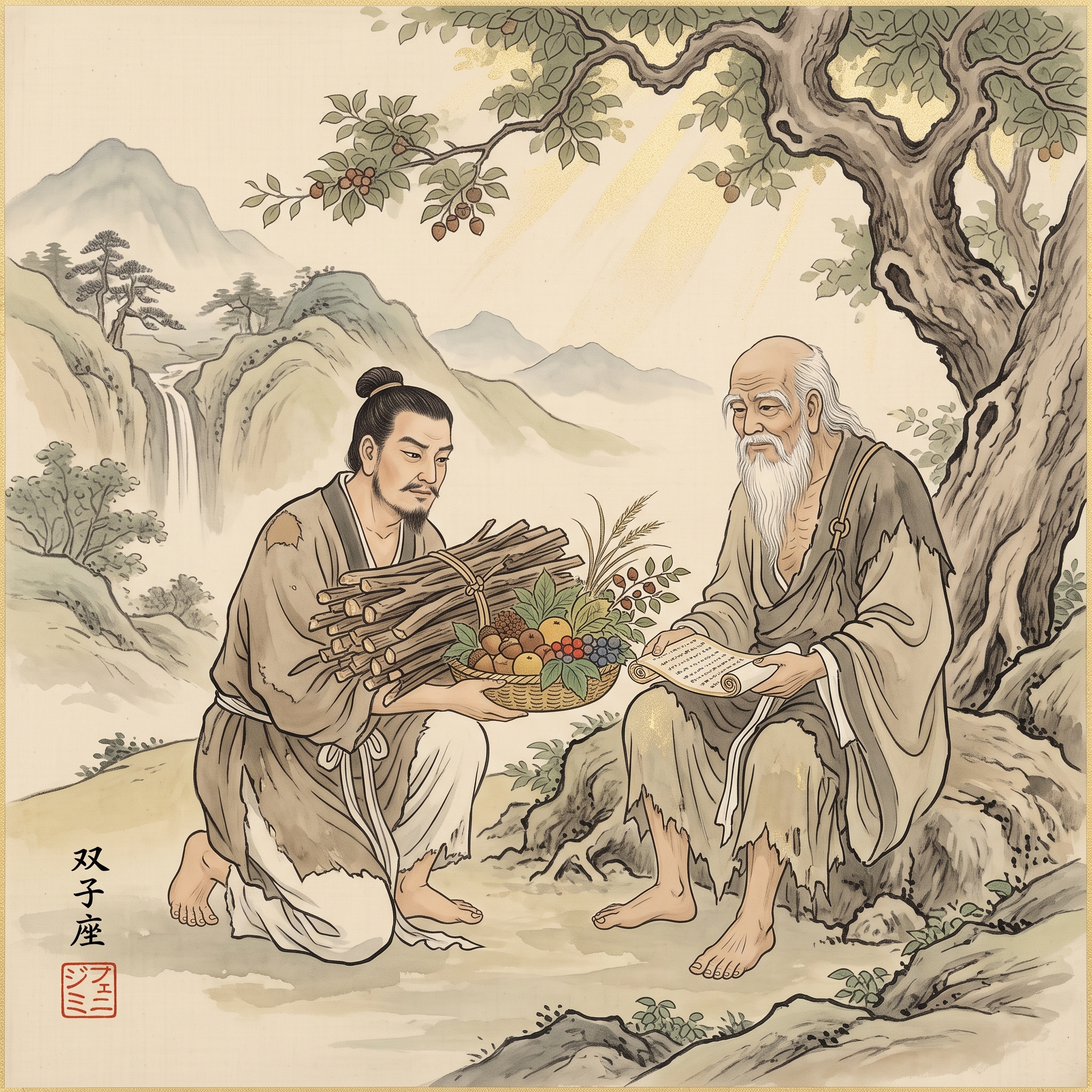
In the foreground, the focus shifts to the mundane world where a pious devotee kneel-reads a sutra scroll, embodying the person who actively keeps, reads, and understands the teachings. Transforming this earthly practice into an act of cosmic significance, glowing tendrils of merit and lotus vines weave from the practitioner toward a vast, fading assembly of "innumerable Buddhas" in the misty, golden-flecked background. This visualizes the spiritual truth that the humble practitioner is not insignificant, but rather rooted in countless lifetimes of dedicated practice, equal in potential merit to the great Bodhisattva who watches over them.
Iconography & Character Identification
Item 1: Deities/Figures Featured:
Śākyamuni Buddha (Shaka Nyorai): Seated on a multi-tiered lotus throne on the right, embodying the historical and cosmic Buddha who receives the vow.
Universal-Sage Bodhisattva (Fugen Bosatsu): Seated atop the sacred six-tusked white elephant on the left, depicted with hands in anjalimudra (prayer/supplication).
The Six-Tusked White Elephant: The traditional mount of Fugen Bodhisattva, symbolizing the six perfections (paramitas) and spiritual power.
The Sūtra Practitioner (Devotee): Kneeling in the lower foreground on a mat, actively reading and reciting from a handscroll.
The Innumerable Buddhas: A spectral, fading assembly of countless past Buddhas in the lower right background, representing the deep-seated "roots of good" planted by the practitioner in previous existences.
Item 2: Text Translations:
双子座 (Signature, lower right): "Gemini" (literally "the Gemini constellation" or "Twins" in Japanese).
ジェミニ (Red square seal/hanko, lower right): "Gemini" (written in Katakana).