All posts by John Hughes

Daily Dharma – Aug. 19, 2016

Tears keep falling when I think of the current unbearable hardships, but I cannot stop tears of joy when I think of obtaining Buddhahood in the future. Birds and insects chirp without shedding tears. I, Nichiren, do not cry, but tears keep falling. These tears are shed not for worldly matters, but solely for the sake of the Lotus Sutra. Therefore they should be called tears of nectar.

Nichiren wrote this as part of his letter to monk Sairen-bō in his Treatise on All Phenomena as Ultimate Reality (Shohō-Jissō Shō). For the sake of the Lotus Sūtra, Nichiren endured two harsh exiles, his house being burnt down, ambushes by soldiers with swords, being placed on the execution mat himself, and the persecution of his followers. Despite all these obstacles, he held true to the Buddha’s teaching in the face of all opposition. Most of us who practice the Lotus Sūtra today have lives of relative comfort. It is wonderful that we have Nichiren’s example. He was a human being just like us, and we too are capable of his faith and determination.

The Daily Dharma is produced by the Lexington Nichiren Buddhist Community. To subscribe to the daily emails, visit zenzaizenzai.com

Day 20

Day 20 completes Chapter 15, The Appearance of Bodhisattvas from Underground, and concludes the Fifth Volume of the Sutra of the Lotus Flower of the Wonderful Dharma.

As the 20th day opens the Buddha is responding to the leaders of the Bodhisattvas who arose from the underground. They had asked:

World-Honored One, are you peaceful?
Are you in good health?
Are you not tired
With teaching the living beings?
Are they ready
To receive your teaching,
Or are they not?
Do they not fatigue you?

And Sakyamuni’s response:

Truly, truly good men! I am peaceful. I am in good health. The living beings are ready to be saved. They do not fatigue me because I already taught them in their consecutive previous existences, and also because they have already honored the past Buddhas respectfully and planted the roots of good. As soon as they saw me and heard my teachings, they received my teachings by faith and entered into the wisdom of the Tathagata, except those who had previously studied and practiced the teachings of the Lesser Vehicle. Now I am causing [the followers of the Lesser Vehicle] to hear this sutra and to enter into the wisdom of the Buddha.

Thereupon the [four] great Bodhisattvas sang in gathas:

The living beings are ready to be saved
Because in their previous existence
They already asked the [past] Buddhas
About their profound wisdom,
And having heard about it, understood it by faith.
We rejoice at seeing you.

The Daily Dharma from April 3, 2015, addresses this section:

Truly, truly good men! I am peaceful. I am in good health. The living beings are ready to be saved. They do not fatigue me because I already taught them in their consecutive previous existences, and also because they have already honored the past Buddhas respectfully and planted the roots of good.

The Buddha makes this proclamation to the leaders of the Bodhisattvas from Underground in Chapter Fifteen of the Lotus Sūtra. These Bodhisattvas appeared when the Buddha asked who would teach the Lotus Sūtra after the Buddha’s death, and asked about the Buddha’s health and whether those he was teaching could keep what he provided for them. The Buddha assures us not only of the certainty of our future enlightenment, but that for us to receive his teaching, there was an earlier time, which we may have forgotten, when we met him. This awareness of our future and our past helps us to see our place in the world and maintain our determination to benefit all beings.

The Daily Dharma is produced by the Lexington Nichiren Buddhist Community. To subscribe to the daily emails, visit zenzaizenzai.com

It’s deja vu all over again.

Saint Nichiren

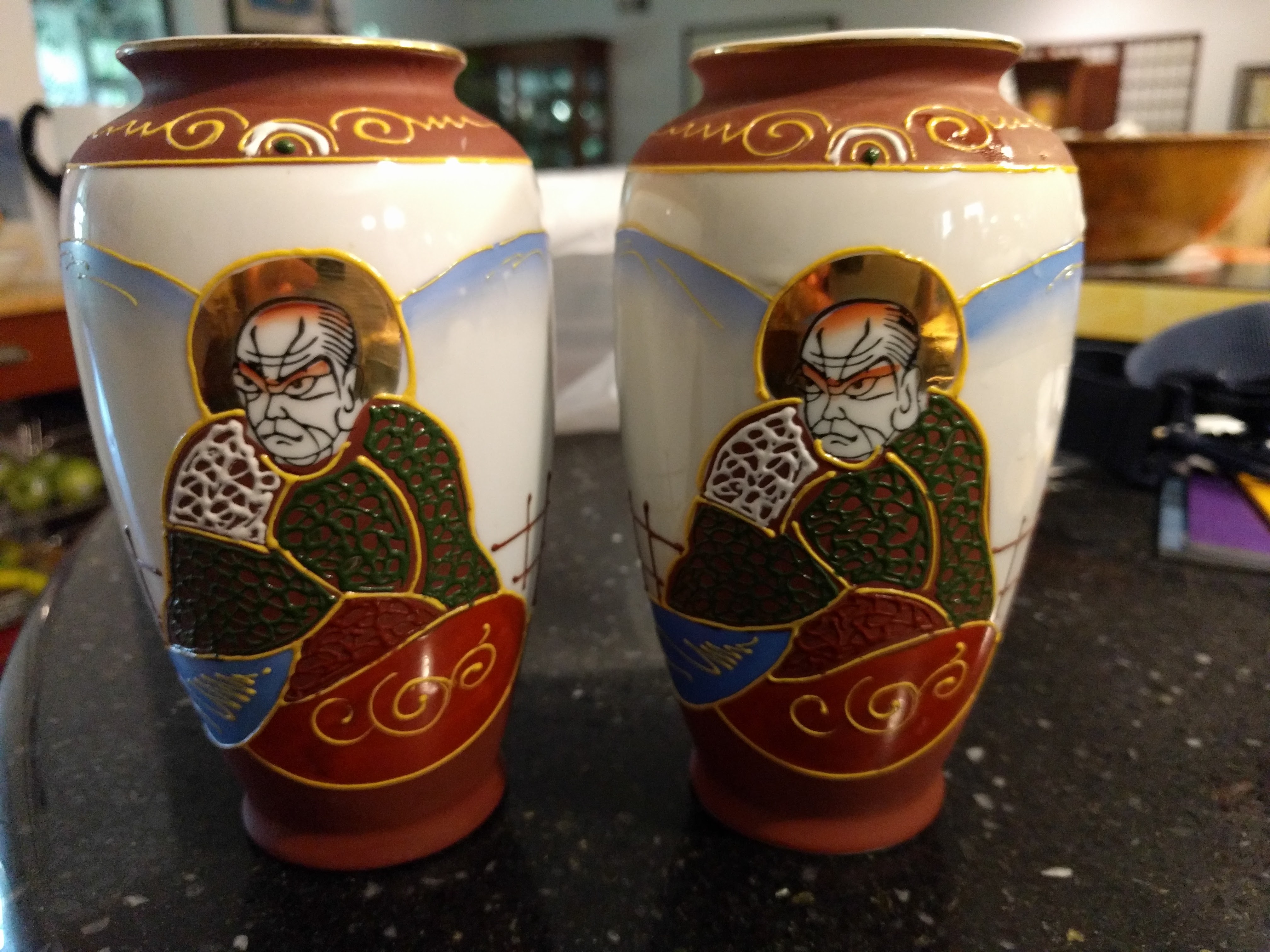
A pair of hand-painted Saint Nichiren vases. These are six inches tall and about 3.5 inches in  diameter at their widest point.
A pair of hand-painted Saint Nichiren vases. These are six inches tall and about 3.5 inches in diameter at their widest point.

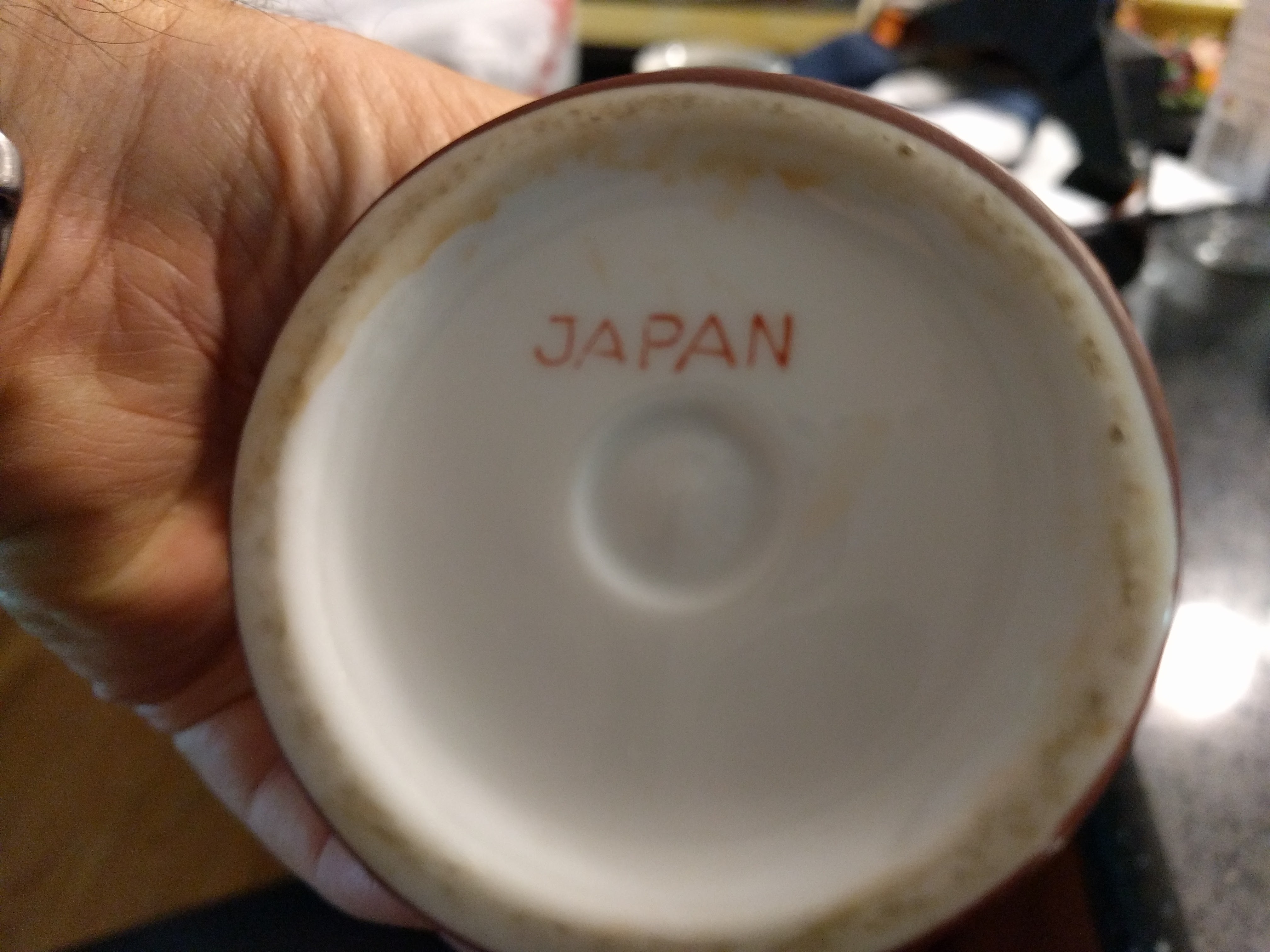
Each Saint Nichiren vase is stamped with Japan on the bottom.

My wife found these Saint Nichiren vases at Sakura Gifts From Japan, a store she frequents in what passes for Japantown in Sacramento. The owner, Nobuko Saiki Pang, is not a member of the Sacramento Nichiren Buddhist Church and this is the first Nichiren-themed item we’ve found at her store, which contains a wide array of products made in Japan.

The vases, which stand 6 inches tall and are about 3.5 inches at their widest diameter, are hand decorated and stamped “JAPAN” on the bottom.

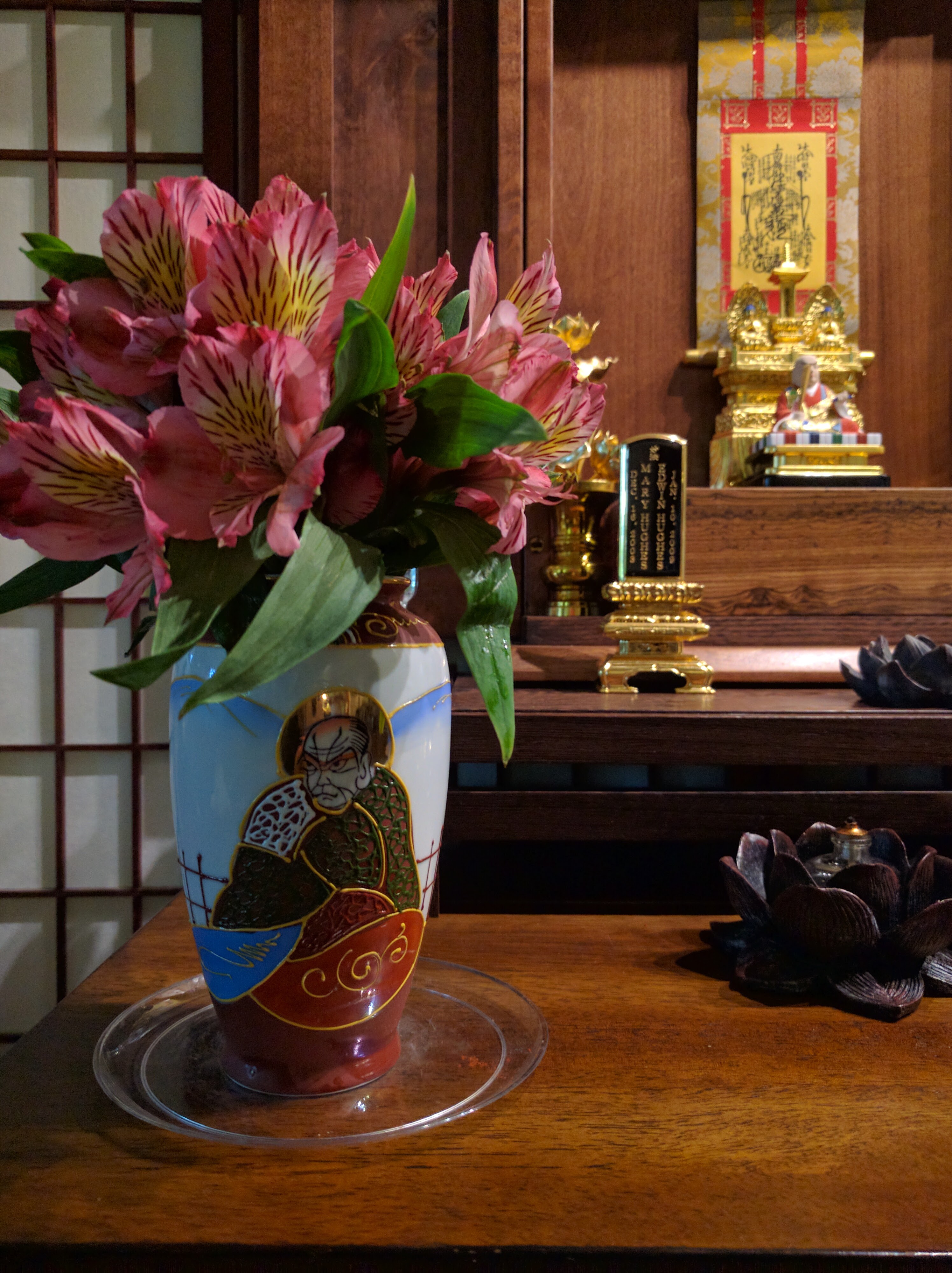
The Saint Nichiren vase makes a nice addition to my altar.

Comparison Purposes

There is fundamentally no difference between others in our environment and ourselves because we all equally possess the potential to become Buddhas. Our outward appearances, our social differences, our education differences and all the other ways we tend to differentiate ourselves from others are so minor, they are trivial when we get down to the most important thing in life – enlightenment – that for us to spend time making comparisons is pointless and wasteful of our time.

Lecture on the Lotus Sutra

Daily Dharma – Aug. 18, 2016

Anyone who keeps this sūtra
In the latter days after my extinction
Should have compassion towards laymen and monks
And towards those who are not Bodhisattvas.
He should think:
‘They do not hear this sūtra.
They do not believe it.
This is their great fault.
When I attain the enlightenment of the Buddha,
I will expound the Dharma to them
With expedients
And cause them to dwell in it.’

The Buddha sings these verses to Mañjuśrī in Chapter Fourteen of the Lotus Sūtra. In our zeal to help other beings, we may create expectations of how they will receive our efforts, or how they will change themselves after hearing the Buddha Dharma. We may even blame them for not improving as quickly as we might want. These verses remind us that there is no shortage of time available for our efforts to benefit others.

The Daily Dharma is produced by the Lexington Nichiren Buddhist Community. To subscribe to the daily emails, visit zenzaizenzai.com

Day 19

Day 19 concludes Chapter 14, Peaceful Practices, and begins Chapter 15, The Appearance of Bodhisattvas from Underground.

Having covered the third set of peaceful practices yesterday, I’m going to finish with the fourth set of peaceful practices today.

Again, Manjusri! A Bodhisattva-mahasattva who keeps this Sutra of the Lotus Flower of the Wonderful Dharma in the latter days after [my extinction] when the teachings are about to be destroyed, should have great loving-kindness towards laymen and monks, and great compassion towards those who are not Bodhisattvas. He should think: ‘They do not know that the Tathagata expounded expedient teachings according to the capacities of all living beings. They do not hear, know or notice it, or ask a question about it or believe or understand it. Although they do not ask a question about this sutra, or believe or understand it, I will lead them and cause them, wherever they may be, to understand the Dharma by my supernatural powers and by the power of my wisdom when I attain Anuttara-samyak-sarpbodhi.’

“Manjusri! A Bodhisattva-mahasattva who performs this fourth set of [peaceful] practices after my extinction, will be able to expound the Dharma flawlessly. Bhikss, bhiksunis, upasakas, upasikas, kings, princes, ministers, common people, brahmanas and householders will make offerings to him, honor him, respect him, and praise him. The gods in the sky will always serve him in order to hear the Dharma from him. When someone comes to his abode located in a village, in a city, in a retired place or in a forest, and wishes to ask him a question, the gods will protect him day and night for the sake of the Dharma so that the hearer may rejoice because this sutra was, is, and will be protected by the supernatural powers of the past, present and future Buddhas.

In discussing this fourth set of peaceful practices, the Daily Dharma of May 19, 2016, says:

The Buddha gives this explanation to Mañjuśrī Bodhisattva in Chapter Fourteen of the Lotus Sūtra. Until we reach enlightenment, we may not be able to reach all beings. Rather than blaming them for not having the capacity to learn from us, or blaming ourselves for not being skillful enough to reach them, the Buddha reminds us to be patient and realize there is no hurry to being free from our delusions.

The Daily Dharma is produced by the Lexington Nichiren Buddhist Community. To subscribe to the daily emails, visit zenzaizenzai.com

Next month it will be time to discuss the difficulty in hearing this sutra and Parable of the Priceless Gem in the Top-Knot.

Daily Dharma – Aug. 17, 2016

Have faith in the Great Mandala Gohonzon, the Most Venerable One in the entire world. Earnestly endeavor to strengthen your faith, so that you may be blessed with the protective powers of Śākyamuni Buddha, the Buddha of many treasures, and Buddhas in manifestation throughout the Universe. Strive to carry out the two ways of practice and learning. Without practice and learning Buddhism will cease to exist. Endeavor yourself and cause others to take up these two ways of practice and learning, which stem from faith. If possible, please spread even a word or phrase of the sutra to others.

Nichiren wrote this as part of his letter to monk Sairen-bō about the nature of reality (Shohō-Jissō Shō). One way of reading this passage is that as we develop our faith in the Great Mandala Gohonzon, the Buddhas will provide more protection for us. Another way to read it is that as our faith develops, so does the power we have to protect others, free them from suffering and help them to awaken their Buddha nature. Either way, Nichiren shows us the practical results of our faith.

The Daily Dharma is produced by the Lexington Nichiren Buddhist Community. To subscribe to the daily emails, visit zenzaizenzai.com

Day 18

Day 18 concludes Chapter 13, Encouragement for Keeping this Sutra, and begins Chapter 14, Peaceful Practices.

Last month, I discussed the proper things a Bodhisattva should know, which leaves me this month with the third set of peaceful practices.

A Bodhisattva-mahasattva who wishes to keep, read and recite this sutra in the latter days after [my extinction] when the teachings are about to be destroyed, should not nurse jealousy against others, or flatter or deceive them. He should not despise those who study the Way to Buddhahood in any way. He should not speak ill of them or try to point out their faults. Some bhiksus, bhiksunis, upasakas or upasikas will seek Sravakahood or Pratyekabuddhahood or the Way of Bodhisattvas. He should not disturb or perplex them by saying to them, ‘You are far from enlightenment. You cannot obtain the knowledge of the equality and differences of all things because you are licentious and lazy in seeking enlightenment.’ He should not have fruitless disputes or quarrels about the teachings with others. He should have great compassion towards all living beings. He should look upon all the Tathagatas as his loving fathers, and upon all the Bodhisattvas as his great teachers. He should bow to all the great Bodhisattvas of the worlds of the ten quarters respectfully and from the bottom of his heart. He should expound the Dharma to all living beings without partiality. He should be obedient to the Dharma. He should not add anything to the Dharma or take away anything from the Dharma. He should not expound more teachings to those who love the Dharma more [than others do].

And in gathas:

Anyone who wishes to expound this sutra
Should give up jealousy, anger, arrogance,
Flattery, deception and dishonesty.
He should always be upright.

He should not despise others,
Or have fruitless disputes about the teachings.
He should not perplex others by saying to them:
“You will not be able to attain Buddhahood.”

Any son of mine who expounds the Dharma
Should be gentle, patient and compassionate
Towards all living beings.
He should not be lazy.

In the worlds of the ten quarters,
The great Bodhisattvas are practicing the Way
Out of their compassion towards all living beings.
He should respect them as his great teachers.

He should respect the Buddhas, the World-Honored Ones, As his unsurpassed fathers.
He should give up arrogance
So that he may expound the Dharma without hindrance.

This is the third set of peaceful practices.
A man of wisdom should perform all this.
Anyone who performs these peaceful practices
Will be respected by innumerable living beings.

In a discussion of Peaceful vs. Hostile Practices, Rev. Ryusho Jeffus writes in his Lecture on the Lotus Sutra:

By doing the peaceful practices we will create the kind of peaceful lives that further reflects and enhances our practice. It is sort of like an endless feedback loop that keeps replenishing and enhancing.

I imagine that some will say, yes, but Nichiren was pretty harsh with some of the people of his time, and shouldn’t we too carry out that same strict rhetoric as we engage with people who don’t believe in the Lotus Sutra? To this I say these are two different situations. For one thing, there are few of us today whose lives are threatened and for whom death is a constant possibility because of our practice. We live in a time when there are few actual obstacles to practicing our faith either privately or in society. It isn’t that this can’t happen, it is that it isn’t currently happening. In such a situation, even Nichiren stated that we should only use a much more strident approach when absolutely necessary.

When there is no obstacle to practice it is entirely possible to create a false obstacle by our behavior of obstinacy and belligerence. The kinds of obstacles created in those situations are false. I can be a jerk and have people around me treat me poorly, but I can’t claim it is because of my practice when I am not actually following the peaceful practices in a peaceful environment. In an environment that is not hostile we should practice in a non-hostile way. If the reverse becomes true then other measure might be called for.
Lecture on the Lotus Sutra

Daily Dharma – Aug. 16, 2016

There is a daughter of Dragon-King Sāgara [among those whom I taught]. She is eight years old. She is clever. She knows the karmas of all living beings. She obtained dhāraṇīs. She keeps all the treasury of the profound and hidden core expounded by the Buddhas. She entered deep into dhyāna-concentration, and understood all teachings. She aspired for Bodhi in a kṣana, and reached the stage of irrevocability. She is eloquent without hindrance. She is compassionate towards all living beings just as a mother is towards her babe. She obtained all merits. Her thoughts and words are wonderful and great. She is compassionate, humble, gentle and graceful. She [has already been qualified to] attain Bodhi[, and to become a Buddha quickly].

The Bodhisattva Mañjuśrī gives this description in Chapter Twelve of the Lotus Sūtra. This is his response to the question of whether any of the beings in the sea whom he taught will become a Buddha quickly. Those hearing his answer did not expect that a woman, much less a girl, much less a nonhuman being such as a dragon could reach the same enlightenment as the Buddha. Mañjuśrī’s response shows that all beings have within us the capability of developing the qualities that allow us to see things as they are and benefit all beings.

The Daily Dharma is produced by the Lexington Nichiren Buddhist Community. To subscribe to the daily emails, visit zenzaizenzai.com

Day 17

Day 17 covers all of Chapter 12, Devadatta, and opens Chapter 13, Encouragement for Keeping this Sutra.

Last month I discussed the “problems” with this chapter, but it serves an important purpose.

In this chapter, Sakyamuni illustrates how his teaching is beyond commonly held beliefs.

The story of the evil Devadatta as a teacher of Sakyamuni in a previous life and a Buddha in a future life illustrates that everyone is a Buddha.

Rev. Ryusho Jeffus offers this comment on the Devadatta lesson:

This passage, from the Devadatta Chapter tells how the Buddha served Devadatta in a previous life so that he could be taught the Wonderful Dharma of the Lotus Flower Sutra. When I think about the truth of the Buddha being present in all beings as taught by Never-Despising Bodhisattva I can’t help but think that we can begin to really understand the teaching of the Lotus Sutra when we serve other beings, when we can help them as the Buddha did seeking the Dharma from Devadatta.
Lotus Path: Practicing the Lotus Sutra Volume 1

And then there is the example of the 8-year-old daughter of the dragon king. She overcame both the commonly held belief that enlightenment requires ages of practices and the belief that a female could not become a Buddha, no matter how long she practiced.

Here’s how the 1983 Doctrines of Nichiren described this:

It is not difficult for any one to become a Bodhisattva, or even a Buddha. Women, too, may succeed, in spite of the exceptional difficulty which popular Buddhist teaching attributes to the female sex in such a quest. Why, even a female dragon is said to have attained to Buddhahood; and if that is true, why not a female human bing? Devadatta became a Buddha in spite of his infernal character. Why, then, not another man?
Doctrines of Nichiren (1893)

And so I embrace the Buddha’s prediction:

Good men or women in the future who hear this chapter of Devadatta of the Sutra of the Lotus Flower of the Wonderful Dharma with faithful respect caused by their pure minds, and have no doubts [about this chapter], will not fall into hell or the region of hungry spirits or the region of animals. They will be reborn before the Buddhas of the worlds of the ten quarters. They will always hear this sutra at the places of their rebirth. Even when they are reborn among men or gods, they will be given wonderful pleasures. When they are reborn before the Buddhas, they will appear in lotus-flowers.