All posts by John Hughes

Daily Dharma – Mar. 2, 2021

Because we are your messengers,
We are fearless before multitudes.
We will expound the Dharma.
Buddha, do not worry!

In Chapter Thirteen of the Lotus Sūtra, innumerable Bodhisattvas sing these verses before the Buddha from whom they had come to hear the Wonderful Dharma. The Buddha had asked who would continue to spread and practice his highest teaching after his extinction. These Bodhisattvas vowed to uphold this teaching through all obstacles, particularly those created by people who were so attached to their delusions that they would slander and persecute anyone who keeps this Lotus Sūtra. The fearlessness of these Bodhisattvas comes from their certainty that this Sūtra leads all beings to enlightenment, and their compassionate resolve to benefit everyone.

The Daily Dharma is produced by the Lexington Nichiren Buddhist Community. To subscribe to the daily emails, visit zenzaizenzai.com

Day 8

Day 8 concludes Chapter 4, Understanding by Faith, and closes the second volume of the Sutra of the Lotus Flower of the Wonderful Dharma.

Having last month witnessed the son receive his inheritance in gāthās, we consider the Śrāvakas’ unwillingness to gain the treasure-store of the teachings of the Buddhas.

You are like the father.
Knowing that we wished
To hear the Lesser Vehicle,
You did not say to us, “You will become Buddhas.”
You said of us to others:
“Though they are my disciples, they are Śrāvakas.
They eliminated āsravas,
But attained only the Lesser Vehicle.”

You said to us:
“Expound the most excellent Way [to Bodhisattvas]!
Those who practice the Way
Will be able to become Buddhas.”

By this order of yours
We expounded the unsurpassed Way
To the great Bodhisattvas
With various stories of previous lives,
With various parables and similes
And with various discourses.•

Hearing the [Way, that is, the] Dharma from us,
Those sons of yours
Thought it over day and night,
And practiced it strenuously.

Thereupon the Buddha assured them
Of their future Buddhahood, saying to them:
“You will become Buddhas
In your future lives.”

You expounded the real thing,
That is, the store
Of the hidden core of the Buddhas
Only to the Bodhisattvas.
You did not expound
This truth to us.

The poor son came to his father,
And took custody
Of the things of his father,
But wished to take none of them.

The same can be said of us.
We did not wish to have the treasure-store
Of the teachings of the Buddhas
Although we expounded it [to the Bodhisattvas].

We were satisfied with the elimination
Of illusions within ourselves.
What we accomplished was that elimination.
We did nothing more.

See A World Filled with Poor Sons

A World Filled with Poor Sons

[Another] important thing to learn from chapter 4 is that those who are fortunate enough to have encountered the Lotus Sutra and have been able to understand it and believe in it can fly straight to the Buddha’s arms. However, today’s world, in the evil ages of the five decays, is filled with “poor sons.” We cannot be said to have actually practiced the spirit of the Lotus Sutra unless we save as many of these poor sons as possible. The only thing we can do to save them and lead them is to understand the spirit of the Buddha’s tactful means as illustrated in this chapter. At the same time, we must follow the Buddha’s example in using tactful means; we must not forget that to follow another’s good example is a shortcut to reaching the goal.

Buddhism for Today, p71

On the Way to the Other Shore

I’ve decided this year to devote the month of March and September, when the Spring and Fall Equinox occur, to Higan. As explained in a Nichiren Shu brochure:

For Buddhists, this period is not just one characterized by days with almost equal portions of light and dark. Rather, it is a period in which we strive to consciously reflect upon ourselves and our deeds.

Recently, while participating in a Nichiren Buddhist Sangha of the San Francisco Bay Area meeting, I brought up the importance of merit transference through our practice as a means of comforting both the dead and the living. That discussion elicited a criticism from one of the participants. This man felt focusing on funerary services is bad for Buddhism. This was a written comment during a Zoom session and I didn’t take the opportunity to discuss the issue at the time.

I am well aware of the criticism toward the Japanese temple system reliance on funerary services to keep the lights on. While I, too, wish more effort within Nichiren Shu temples was directed toward propagation and education, I do not share the opinion that funerary services have no value. For me, the lack of any formal funerary services within Soka Gakkai was one of my motivations for seeking something more. I am very fortunate to have been able to experience practicing with Ven. Kenjo Igarashi and the Sacramento Nichiren Buddhist Church.

Higan is traditionally a week-long practice, with the three days before and the three days after the Equinox devoted to the six paramitas and the Equinox devoted to memorials for the dead. As I have learned from Rev. Igarashi, at the Equinox the veil between this world and the spiritual world is at its thinnest.

I say “traditionally” three days before and after the Equinox focus on the six paramitas, but I am unable to find any American priest who actually performs week-long services or other observations as part of Higan. So, here I am. I’m creating my own Higan week observance with two, month-long introductions. In future years I envision devoting just the week around the Spring and Fall Equinoxes to the six paramitas and a memorial service.

For the month of March I’ve postponed my daily quotes from the Foundations of T’ien-T’ai Philosophy. Tomorrow I’ll reprint the official Nichiren Shu brochure explaining Higan. For the rest of March, Wednesdays will be devoted to the perfection of charity. Thursdays will be devoted to the perfection of morality. Fridays will be devoted to the perfection of tolerance. Saturday March 20 is the Equinox. Saturdays in March will be devoted to merit transference and the meaning of “the other shore.” Sundays will be devoted to the perfection of energy. Mondays will be devoted to the perfection of meditation. Tuesdays will be devoted to the perfection of wisdom.

I will use quotes from The Six Perfections: Buddhism & the Cultivation of Character to illustrate these perfections.

The Most Important Cause We Can Make

The primary practice of Nichiren Buddhism is chanting Namu Myoho Reng Kyo. In reciting the Odaimoku, we are upholding the spiritual essence of the Lotus Sutra, which is the spiritual essence of the Buddha’s teaching. Likewise, we become one with the Eternal Shakyamuni Buddha by upholding the Wonderful Dharma. This is the most important cause we can make.

Lotus Seeds

The Certainty of the Lotus Sūtra

And yet even though a finger might point to the great earth and miss it, a person tie up the sky, the ocean’s tide lack an ebb and flow, or if the sun should rises in the west, there cannot be a time when the prayer of a practicer of the Lotus Sūtra is not answered. If the various bodhisattvas, human and heavenly beings, eight kinds of gods and demi-gods who protect Buddhism, the two sage bodhisattvas (Medicine King and Brave Donor Bodhisattvas), two heavenly kings (Jikoku-ten and Bishamon-ten), and ten female rākṣasa demons, or even one out of 1,000, do not rush to protect practicers of the Lotus Sūtra, they commit the sin of fooling Śākyamuni and the other Buddhas above and in the nine realms below. Thus, they will protect the practicers of the Lotus Sūtra without fail regardless if the practicers are insincere, unwise, impure, and do not observe the precepts so long as they chant “Namu Myōhō Renge Kyō.”

Kitō Shō, Treatise on Prayers, Writings of Nichiren Shōnin, Faith and Practice, Volume 4, Page 68

Daily Dharma – Mar. 1, 2021

World-Honored One! It is difficult for anyone in the world to believe this. It is as difficult as to believe a handsome, black-haired man twenty-five years old who points to men a hundred years old and says, ‘They are my sons,’ or as to believe men a hundred years old who point to a young man and say, ‘This is our father. He brought us up.’

Maitreya Bodhisattva explains his perplexity to the Buddha in Chapter Fifteen of the Lotus Sūtra. The Buddha had just revealed that he was who taught all the Bodhisattvas who have appeared from underground to continue teaching the Wonderful Dharma after the extinction of the Buddha. Maitreya realizes that his doubts are no different from those of those gathered to hear the Buddha teach and asks the Buddha to explain. When our experience does not match what the Buddha teaches, we should not keep silence and just accept what he tells us. It is only through sincere questioning that we find the Buddha’s mind and make it our own.

The Daily Dharma is produced by the Lexington Nichiren Buddhist Community. To subscribe to the daily emails, visit zenzaizenzai.com

Day 7

Day 7 concludes Chapter 3, A Parable, and begins Chapter 4, Understanding by Faith.

Having last month conclude today’s portion of Chapter 3, A Parable, we return to the top and consider how this triple world is the Buddha’s property and all living beings therein his children.

This triple world
Is my property.
All living beings therein
Are my children.
There are many sufferings
In this world.
Only I can save
[All living beings].

I told this to all living beings.
But they did not believe me
Because they were too much attached
To desires and defilements.

Therefore, I expediently expounded to them
The teaching of the Three Vehicles,
And caused them to know
The sufferings of the triple world.
I opened, showed, and expounded
The Way out of the world.

Those children who were resolute in mind
Were able to obtain
The six supernatural powers
Including the three major supernatural powers,
And to become cause-knowers
Or never-faltering Bodhisattvas.

See Awakening Aspiration for Buddhahood

Celebrating Nichiren’s Birth

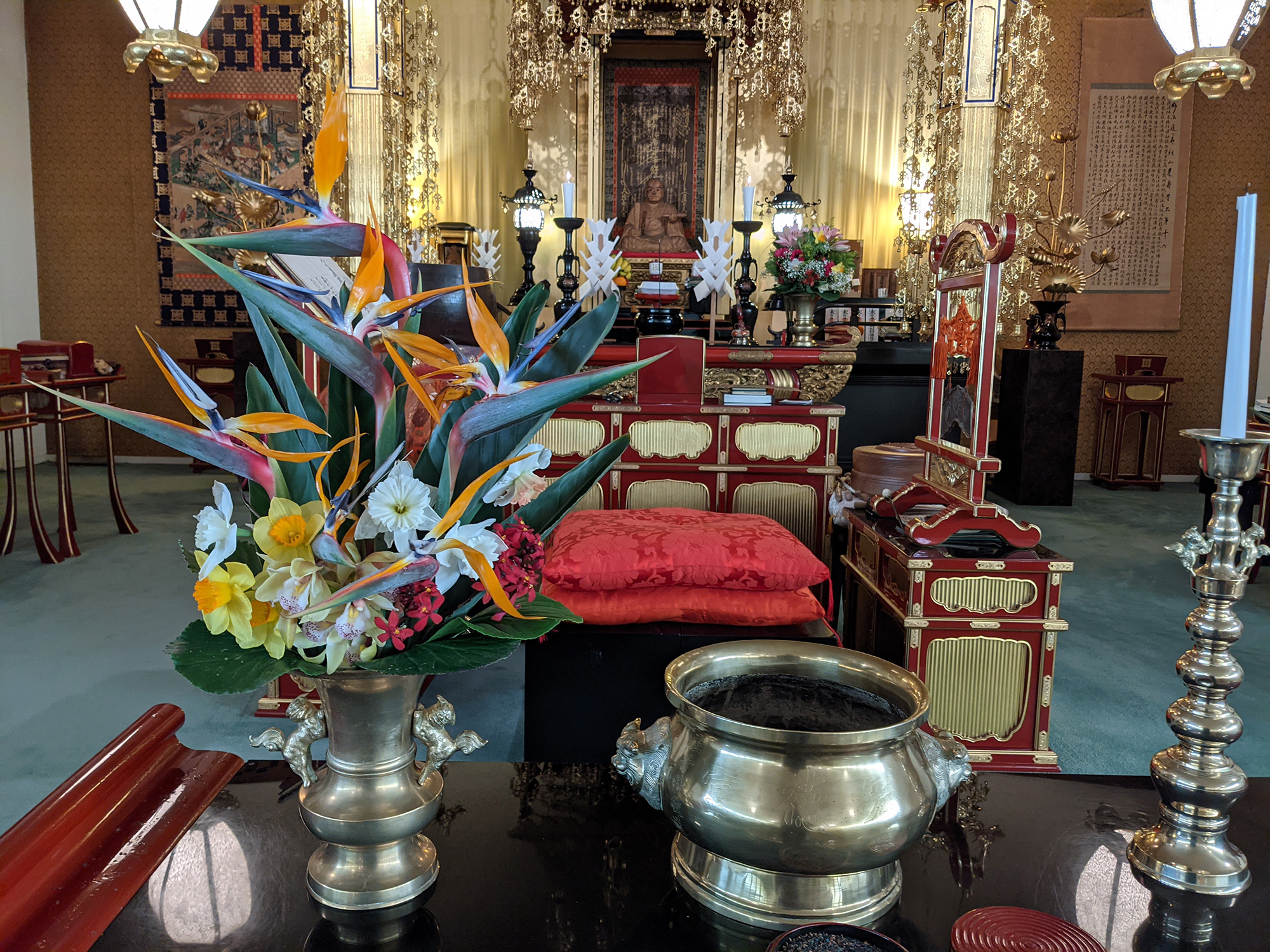
Sacramento Nichiren Buddhist church altar flowers for the Sunday, Feb. 28, service honoring the 800th birthday of Nichiren
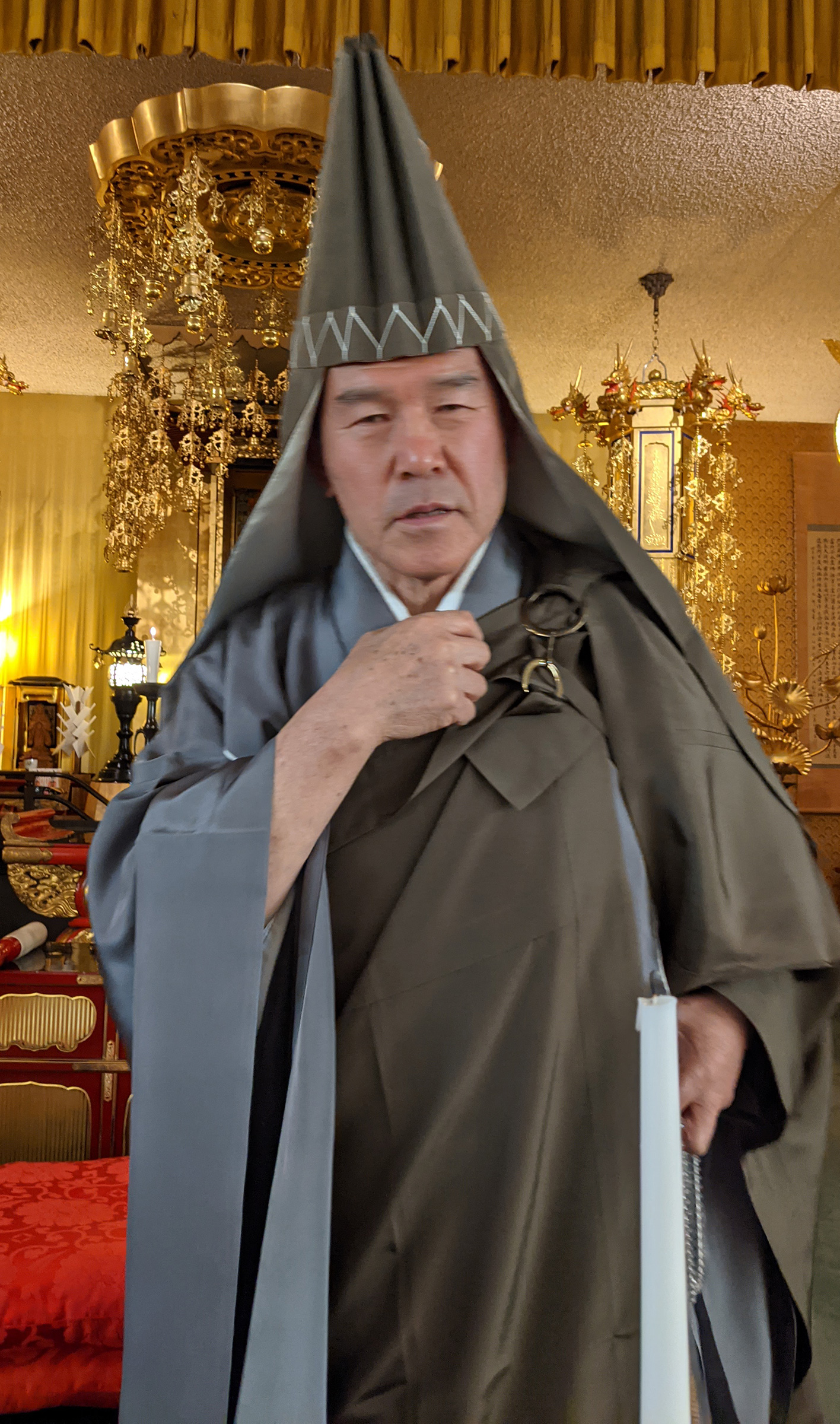
Rev. Kenjo Igarashi in full regalia for the service honoring the 800th birthday of Nichiren.

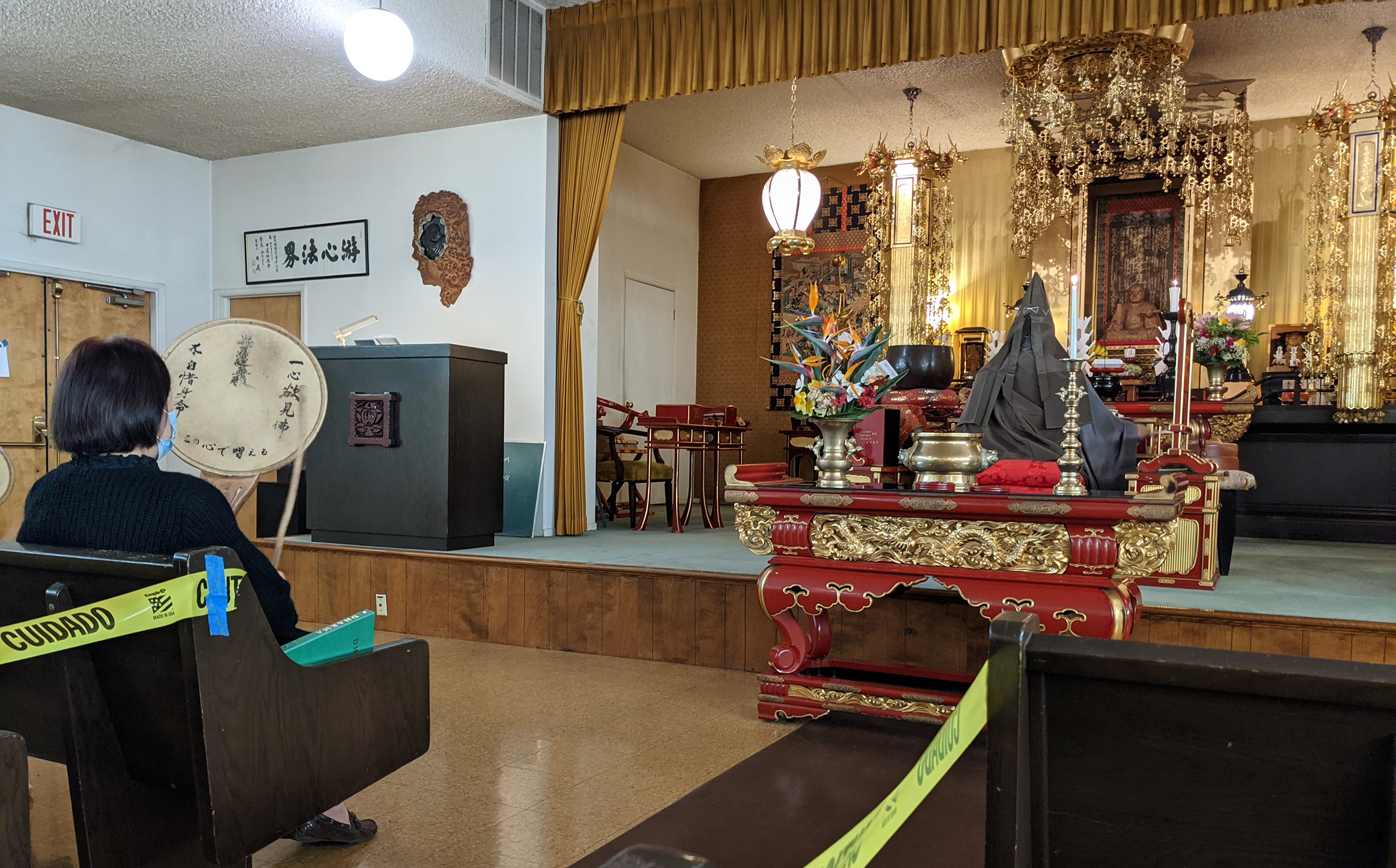
Socially distant but happy to have opportunity to meet inside the Sacramento Nichiren Buddhist Church to celebrate the 800th birthday of Nichiren

The Meaning of Transcendental Teaching

“[T]ranscendental” means that in whatever place, there the Lord of the Four Teachings distinctly exists in various bodies, with various words, and gives various sermons. [At some times and places] he hides his grand body of immeasurable virtues and is manifested as six feet tall, shining gold and purple. [At other times and places] he does not preach the sweet taste and eternal pleasure [of nirvāṇa] but the bitter taste of transiency. For him [as Śākyamuni] to reject the royal robes and pick up the dung pot is called an “expedient means” [upāya]. If he opens the gate of expedient means and reveals the aspects of true reality [as in the Lotus Sūtra], the body one faces is the perfect and eternal body; the Dharma one faces is the perfect Dharma; the practice and reality one faces are all true reality.

In this way, although these are all the shared teachings of one voice [of the one eternal Buddha], there are distinctions such as Hinayāna and Mahāyāna. Although there are long and short as to the capacity [of sentient beings] to receive, that which is revealed is ultimately only one. Various terms name one ultimate [reality]. Only one ultimate [reality] is given many names. To discuss the shared and distinct aspects of teaching, practice, and reality in this way makes it difficult to understand the [distinct] aspects, but easy to clarify [the one underlying principle of] reality.

Foundations of T'ien T'ai Philosophy, p 166-167