
Two Buddhas, p117-118Nichiren drew from the Mahābhijfiājfiānābhibhū [Great-Universal-Wisdom-Excellence Tathāgata] story an understanding of how the Buddha’s pedagogical method unfolds over time. Zhiyi had identified three standards of comparison by which the Lotus Sūtra could be said to surpass all others. The first, based on Śākyamuni’s declaration of the one buddha vehicle in the “Skillful Means” and subsequent chapters, is that it encompasses persons of all capacities. The second, based on the present, “Apparitional City” chapter, is that it reveals the process of the Buddha’s instruction from beginning to end. Drawing on the Mahābhijfiājfiānābhibhū narrative, Zhiyi described this process with the metaphor of “sowing, maturing, and harvesting.” That is, the Buddha implants the seed of buddhahood in the mind of his disciples with an initial teaching; cultivates it through subsequent teachings, enabling their capacity to mature; and finally reaps the harvest by bringing those disciples to full enlightenment. As the opening passage of this chapter describes, the buddha Mahābhijfiājfiānābhibhū lived an immensely long time ago, so long that one could measure it only by grinding a vast number of world systems to dust and using each dust speck to represent one eon. In that distant time, Mahābhijfiājfiānābhibhū and his sixteen sons planted the seed of buddhahood in the minds of their auditors by preaching the Lotus Sūtra. Those who heard the Lotus Sūtra from the sixteenth son were born together with him in lifetime after lifetime, as he nurtured their capacity, bringing it to maturity with subsequent teachings over the course of innumerable lifetimes. When that son preached the Lotus Sūtra in the Sahā world as Śākyamuni Buddha, some were at last able to reap the harvest of enlightenment, while others would do so in the future. In other words, Śākyamuni’s resolve to lead all beings to the one vehicle was not merely a matter of this lifetime, but a project initiated in the inconceivably remote past. Indeed, this chapter offers another early hint that Śākyamuni’s buddhahood encompasses a time frame far exceeding the present lifetime, a theme that the Lotus Sūtra develops in later chapters.
All posts by John Hughes
Revealing the Superiority of Tendai Teachings
In his writings Saichō frequently mentioned traditional Tendai classifications of Buddhist doctrine, such as the division of the Buddha’s teaching into five periods and eight types of teaching (goji hakkyō). In addition, he developed a number of new systems of classification which were designed to reveal various aspects of the superiority of Tendai teachings over those of other schools. Even before studying in China, Saichō had divided Buddhist schools into two categories, those based on sūtras (the words of the Buddha) and those based on Sāstras (works by Buddhist monks). Using this classification, Saichō criticized the two preeminent Buddhist schools in Japan, the Hossō and Sanron, because they were based on works (sāstras) by Buddhist monks rather than on the words of the Buddha. Twenty years later in the Hokke shūku he further refined this system by dividing the schools based on sūtras into two groups: the Tendai School, which was based on the Lotus Sūtra, and all other schools based on sūtras, such as the Kegon School.
Saichō: The Establishment of the Japanese Tendai School, p183Daily Dharma – Oct. 11, 2019
Many priests in the Latter Age of Degeneration do not discern the capacity of people. When it is impossible to discern the capacity of people, the true teaching should be preached vigorously.
Nichiren wrote this passage in his Treatise on Chanting the Great Title of the Lotus Sūtra (Shō Hokke Daimoku-shō). When the Buddha taught using expedient means, he could see the delusions and attachments of those whom he taught, and adjust his teachings to them for their benefit. For us who live in this time where most people are not aware of the ever-present Buddha Śākyamuni, all we need to know about those whom we wish to benefit is that they are convinced that this age is headed towards ruin. We cannot know who is ready to receive the Buddha’s highest teaching. Therefore our generosity compels us to provide the teaching that leads towards enlightenment, not merely the teaching that leads away from suffering.
The Daily Dharma is produced by the Lexington Nichiren Buddhist Community. To subscribe to the daily emails, visit zenzaizenzai.com
Day 10
Day 10 concludes Chapter 6, Assurance of Future Buddhahood, and opens Chapter 7, The Parable of a Magic City.

Having last month concluded today’s portion of Chapter 7, The Parable of a Magic City, we return to today’s portion of Chapter 6, Assurance of Future Buddhahood, and the prediction of Buddhahood for Subhūti.
Thereupon the World-Honored One, having understood the wishes of the great disciples, said to the bhikṣus:
“In his future life, this Subhūti will see three hundred billion nayutas of Buddhas, make offerings to them, respect them, honor them, praise them, perform brahma practices, complete the Way of Bodhisattvas, and become a Buddha on the final stage of his physical existence. He will be called Beautiful-Form, the Tathāgata, the Deserver of Offerings, the Perfectly Enlightened One, the Man of Wisdom and Practice, the Well-Gone, the Knower of the World, the Unsurpassed Man, the Controller of Men, the Teacher of Gods and Men, the Buddha, the World-Honored One. The kalpa in which he will become that Buddha will be called Having-Treasures; and his world, Treasure-Born. The ground [of his world] will be even, made of crystal, adorned with jeweled trees, and devoid of mounds, pits, rubble, thorns and dirt. Jeweled flowers will cover the ground to purify it. The people of that world will live in buildings of wonderful treasures. His disciples in Śrāvakahood will be numberless, beyond calculation or comparison. The Bodhisattvas will be many thousands of billions of nayutas in number. The duration of the life of that Buddha will be twelve small kalpas. His right teachings will be preserved for twenty small kalpas. The counterfeit of his right teachings will be preserved also for twenty small kalpas. That Buddha will always stay in the sky, expound the Dharma to the multitude, and save innumerable Bodhisattvas and Śrāvakas.Thereupon the World-Honored One, wishing to repeat what he had said, sang in gāthās:
Bhikṣus!
Now I will tell you.
Listen to me
With one mind!Subhūti, a disciple of mine,
Will be able
To become a Buddha
Called Beautiful-Form.He will make offerings
To many billions of Buddhas, and practice
According to the practices of the Buddhas,
And finally attain great enlightenment.On the final stage of his physical existence,
He will obtain the thirty-two physical marks,
And become as beautiful and as wonderful
As a mountain of treasures.The world of that Buddha
Will be the purest.
Anyone will be happy to see it.
That Buddha will save
Innumerable living beings
Of that world.Many Bodhisattvas
In the world of that Buddha
Will be clever.
They will turn
The irrevocable wheel of the Dharma,
And adorn that world.The Śrāvakas in that world also
Will be countless.
They will have the six supernatural powers,
Including the three major supernatural powers.
They will have the eight emancipations.
They will be exceedingly powerful and virtuous.The supernatural powers
Employed by that Buddha
For the expounding of the Dharma
Will be inconceivable.As many gods and men
As there are sands in the River Ganges
Will join their hands together
And listen to the words of that Buddha.The duration of the life of that Buddha
Will be twelve small kalpas.
His right teachings will be preserved
For twenty small kalpas.
The counterfeit of his right teachings
Also will be preserved for twenty small kalpas.
Teaching Śrāvakas the Taste of Ghee
Two Buddhas, p106-107Nichiren explained that these four great śrāvakas “had not even heard the name of the delicacy called ghee,” but when the Lotus Sūtra was expounded, they experienced it for the first time, savoring it as much as they wished and “immediately satisfying the hunger that had long been in their hearts.” Nichiren’s reference here to “ghee,” or clarified butter, invokes the concept of the “five flavors,” an analogy by which Zhiyi had likened the stages in human religious development to the five stages in the Indian practice of making ghee from fresh milk. As we have seen, like other educated Buddhists of his day, Nichiren took the Tendai division of the Buddha’s teaching into five sequential periods to represent historical fact. From that perspective, Nichiren sometimes described the sufferings that he imagined the Buddha’s leading śrāvaka disciples must have endured during the period when Śākyamuni began to preach the Mahāyāna, seeing their status plummet from that of revered elders to targets of scorn and reproach for their attachment to the inferior “Hinayāna” goal of a personal nirvāṇa. Some Mahāyāna sūtras excoriate the śrāvakas as those who have “destroyed the seeds of buddhahood” or “fallen into the pit of nirvāṇa” and can benefit neither themselves nor others. Their “hunger” then would have represented their chagrin and regret at not having followed the bodhisattva path and thus having excluded themselves from the possibility of buddhahood.
At the same time, Nichiren imagined them suffering hunger in the literal sense. As monks, they would have had to beg for their food each day. Nichiren imagined that on hearing the érävakas rebuked as followers of a lesser vehicle, humans and gods no longer viewed them as worthy sources of merit and stopped putting food in their begging bowls. “Had the Buddha entered final nirvāṇa after preaching only the sūtras of the first forty years or so without expounding the Lotus Sūtra in his last eight years, who then would have made offerings to these elders?” he asked. “In their present bodies, they would have known the sufferings of the realm of hungry ghosts.” Serious hunger was a condition that Nichiren had experienced at multiple points in his life and with which he could readily sympathize. But when the Buddha preached the Lotus Sūtra and predicted buddhahood for the śrāvakas, Nichiren continued, his words were like the brilliant spring sun emerging to dissolve the ice of winter or a strong wind dispersing dew from all the grass. “Because [these predictions] appear in this phoenix of writings, this mirror of truth [i.e., the Lotus], after the Buddha’s passing, the śrāvakas were venerated by all supporters of the dharma, both humans and gods, just as though they had been buddhas.”
How to Receive a Gohonzon
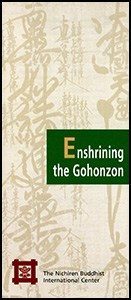
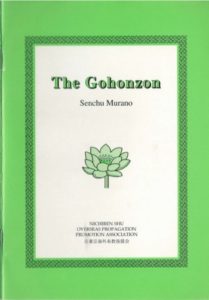
On Oct. 8, 2019, I received a contact email from Richard, who lives in Sydney, Australia. Richard asked how he might receive a Gohonzon. He said he has been practicing on his own, chanting and reciting the Lotus Sutra. I replied to his contact email, but the email address he provided doesn’t work. So, I’ll post the email here in hopes of reaching Richard in Sydney.
Nichiren writes in “Treastise on Chanting the Daimoku of the Lotus Sūtra”:
QUESTION: What should a believer of the Lotus Sūtra regard as the Honzon (the Most Venerable One)? How should one perform the Buddhist rites and practice daily training?
ANSWER: First of all, the Honzon could be eight fascicles, one fascicle, one chapter or the title alone of the Lotus Sūtra. This is preached in the “Teacher of the Dharma” and “Divine Powers of the Buddhas” chapters. Those who can afford to may have the portraits or wooden statues of Śākyamuni Buddha and the Buddha of Many Treasures made and placed on both sides of the Lotus Sutra. Those who can further afford to may make the portraits or wooden statues of various Buddhas all over the universe or Universal Sage Bodhisattva. As for the manner of performing the rites, standing or sitting practices must be observed in front of the Honzon. Outside the hall of practice, however, one is free to choose any of the four modes of acts: walking, standing, sitting and lying down. Next, regarding the daily practices, the daimoku of the Lotus Sūtra should be chanted, “Namu Myōhō Renge Kyō.” If possible, a verse or phrase of the Lotus Sūtra should respectfully be read. As an auxiliary practice one may say a prayer to Śākyamuni Buddha, the Buddha of Many Treasures, the numerous Buddhas throughout the universe, various bodhisattvas, Two Vehicles, Heavenly Kings, dragon gods, the eight kinds of gods and demi-gods who protect Buddhism as one wishes. Since we have many ignorant people today, the “3,000 existences contained in one thought” doctrine may be difficult to contemplate from the beginning. Nevertheless, those who wish to study it are encouraged to do so from the start.
Shō Hokke Daimoku-shō, Treastise on Chanting the Daimoku of the Lotus Sūtra, Writings of Nichiren Shōnin, Faith and Practice, Volume 4, Page 19
Nichiren also writes in “Reply to Lord Nanjō”:
Those who offer a stem of flower or a pinch of incense to the Lotus Sūtra, as precious as this, are as meritorious as those who offered donations to “ten thousand billion” Buddhas in the past.
Nanjō-dono Gohenji, Reply to Lord Nanjō, Writings of Nichiren Shōnin, Volume 7, Followers II, Page 15-16
If you are going to get a Gohonzon mandala that has been eye-opened by a priest, then you need to establish a relationship with a priest. Being as there are no Nichiren Shu priests in Australia (as far as I know), that leaves you with a number of long-distance relationships.
These priests have an online presence:
- Shoda Douglas Kanai of the Nichiren Buddhist Kannon Temple of Nevada. [email protected] See The Value of Online Services
- Myokei Caine-Barrett at [email protected]
- Ryuoh Faulconer at [email protected]
- Kanjin Cederman who you contact through enkyojibuddhistnetwork.org/contact/
- Nichiren Shu Sangha of the San Francisco Bay Area
I posted this on Facebook’s Nichiren Shu page and received this comment from Guy Chouinard Jr:
Don’t worry about Gohonzon. You actually don’t need it (read ch. 21). Try going outside to chant. Chant to nature and universe. Chant with nature and universe. Chant in nature and universe. Chant odaimoku as the sun rises, just like St. Nichiren did the first time he ever chanted Odaimoku. Don’t limit yourself to “stuff.” This way you can open your mind to the reality of all things.
My opinion: Your personal practice imbues your personal altar with the benefits of your practice. At the very least, light a candle and offer flowers and incense to your copy of the Lotus Sutra. As you chant, it will be as “meritorious as those who offered donations to ‘ten thousand billion’ Buddhas.”
Fully Revealing the Buddha’s Ultimate Teaching
Saichō’s view of the Perfect faculties of the Japanese people was partly based on statements in the Lotus Sūtra that the Buddha’s supreme teaching could be preached during the “latter evil age.” Saichō believed that the faculties of the Japanese people had matured and that they were ready to hear him expound the Buddha’s ultimate teaching found in the Lotus Sūtra. Although the Sanron and Hossō interpretations of the Lotus Sūtra had been studied previously in Japan, Saichō argued that they did not represent the correct interpretation of the Lotus Sūtra. The Tendai teachings concerning the Lotus Sūtra, transmitted directly to Saichō by Chinese T’ien-t’ai masters, were the only explanations of the sūtra which fully revealed it as the Buddha’s ultimate teaching. In order to stress this point, Saichō often referred to his school as the Tendai Hokkeshū (Lotus School), and thus closely linked the terms Tendai and Lotus Sūtra.
Chien-chen had brought the first T’ien-t’ai texts to Japan, but had not actively attempted to spread Tien-t’ai teachings. Instead, he had devoted himself to conducting Ssufen lü ordinations. As a result T’ien t’ai teachings were virtually forgotten several decades after Chien-chen’s death. In contrast, Saichō succeeded in spreading T’ien-t’ai teachings throughout Japan. By Saichō’s time the faculties of the Japanese people had matured. They were ready to listen to the Tendai interpretation of the Lotus Sūtra.
Saichō: The Establishment of the Japanese Tendai School, p182The True Mahāyāna Teaching
Now it is the beginning of the Latter Age of Degeneration. Those who should be saved by Hinayāna and provisional Mahāyāna teachings have disappeared, leaving only those who should be saved by the True Mahāyāna teaching.
You cannot load a big rock on a small boat. Evil and ignorant people are like huge rocks. Such teachings as Hinayāna and provisional Mahāyāna sūtras and the nembutsu are like a small boat. A large malignant scab cannot be cured easily because it is a severe sickness. For us in the Latter Age of Degeneration, nembutsu is like cultivating a rice field in winter. The time is not at all right.
Nanjō Hyōe Shichirō-dono Gosho, A Letter to Lord Nanjō Hyōe Shichirō, Writings of Nichiren Shōnin, Doctrine 3, Pages 142.
Daily Dharma – Oct. 10, 2019
To sum up, all the teachings of the Tathāgata, all the unhindered, supernatural powers of the Tathāgata, all the treasury of the hidden core of the Tathāgata, and all the profound achievements of the Tathāgata are revealed and expounded explicitly in this sūtra. Therefore, keep, read, recite, expound and copy this sūtra, and act according to the teachings of it with all your hearts after my extinction!
The Buddha makes this declaration to Superior-Practice Bodhisattva (Jōgyo, Viśiṣṭacārītra) in Chapter Twenty-One of the Lotus Sūtra. In Chapter Two, the Buddha told those gathered to hear him teach that his highest teaching could not be attained by reasoning alone. These two passages show us faith to look beyond the words in this book to find the Buddha Dharma in every aspect of our lives, and the ever-present Buddha leading us all to enlightenment.
The Daily Dharma is produced by the Lexington Nichiren Buddhist Community. To subscribe to the daily emails, visit zenzaizenzai.com
Day 9
Day 9 covers Chapter 5, The Simile of Herbs, and introduces Chapter 6, Assurance of Future Buddhahood.
Having last month heard Śākyamuni explain how he reveals the Dharma with the Simile of the Herbs, we conclude Chapter 5.
Both the Śrāvakas and the cause-knowers,
Who live in mountains or forests,
Who have reached the final stage
of their physical existence,
And who have attained enlightenment by hearing the Dharma,
May be likened to the herbs
Which have already grown up.The Bodhisattvas
Who resolve to seek wisdom,
Who understand the triple world,
And who seek the most excellent vehicle,
May be likened to the short trees
Which have already grown up.Those who practice dhyāna,
Who have supernatural powers,
Who have great joy
When they hear that all things are insubstantial,
And who save all living beings
By emitting innumerable rays of light,
May be likened to the tall trees
Which have already grown up.As previously stated, Kāśyapa, I expound the Dharma
And lead human flowers
[To the fruits of Buddhahood]
Just as the large cloud waters all flowers
By a rain of the same taste
And causes them to bear their fruits.Kāśyapa, know this!
I reveal the enlightenment of the Buddha
With various stories of previous lives,
With various parables and similes,
That is, with various expedients.
All the other Buddhas do the same.Now I will tell you [, Śrāvakas,]
The most important truth.
You, Śrāvakas,
Have not yet attained [true] extinction.
What you are now practicing is
The Way of Bodhisattvas.
Study and practice it continuously,
And you will become Buddhas.