[W]e all live in a world of relativity. We cannot ignore the fact that different opinions and different understandings of the world have always existed. According to the Lotus Sutra, this diversity of opinions should be appreciated and understood as valid steps we are taking on the road to the human ideal of the ultimate truth and ultimate value. For example, we often see conflicting theories in scientific research programs. Since each theory has good reasons behind it, it may be called a truth at that particular stage. But these various hypotheses must lie within the process leading to that truth.
Introduction to the Lotus SutraAuthor: John Hughes
-
Embodiment of the Scripture
Much was written on the Lotus — philosophical treatises, miracle stories, poems, and prayers; the book also inspired many painters and sculptors, and we have a rich store of works of art whose subjects are taken from it. But there was none, until Nichiren “read” the book in his original way, who derived from it such a wonderful power of strenuous, militant life, and thereby lived a life of striving toward the ardent zeal exemplified by primeval disciples of Buddha. Indeed, Nichiren deemed himself to be an embodiment of the Scripture, a personal version of its teachings and prophecies and a living testimony to them.
Nichiren, The Buddhist Prophet
-
Propagation
SENJI-SHO
The ocean consists of water from many rivers.
Mount Sumeru consists of soil and rocks. When I, Nichiren, began to believe in the Lotus Sutra, I was like one drop of water in the ocean or a handful of soil of the mountain, compared to all people of Japan. However, if the number of the believers increases from two to three and to hundreds, thousands, millions; then, it becomes the huge Mount Sumeru of Buddhahood or the great ocean of nirvana.(Background : June 1275, 53 years old, at Minobu, Showa Teihon, p.1054)
Explanatory note
The Nichiren Sect has traditionally held such a slogan as “Itten Shikai Kaiki Myoho,” or “Convert the entire people under the heaven within four seas to the teachings of the Lotus Sutra.” Kenji Miyazawa, a poet and follower of the Lotus Sutra, stated, “There will be no individual happiness until the whole world becomes happy.
Nichiren Daishonin’s earnest desire for the attainment of Buddhahood through the recitation of Odaimoku does not stop at the level of individual salvation. The voice of the recitation should not only penetrate the heart of the individual who recites it but should also achieve the attainment of Buddhahood for the entire people.
He had appealed his religious view to Kamakura Government three times. They were 1.) “Rissho Ankoku Ron” completed and given to the government in 1260, 2.) appeal on the occasion of his persecution at Tatsunokuchi in 1271, and 3.) the appeal to the government in 1274. They were all his frantic efforts to materialize his sincere desire. The four major persecutions and the numerous lesser persecutions all befell him around the time he made these expostulations. They served as tests of his prayer for the happiness and attainment of Buddhahood for the entire world.
He kept his composure throughout these hardships, and stated that the vast ocean consists of drops of water, and Mt. Sumeru is composed of grains of soil. That is, each individual’s voice in the prayer of the Lotus Sutra which he advocated may not reach afar, yet the voice will gain compassion in due course of time and will spread far and wide, eventually reaching the pinnacle of the absolute spiritual awakening of our original teacher, the Buddha Sakyamuni. Nichiren had no doubt that the vast ocean of absolute salvation (i.e., nirvana) would reveal itself to the world. Thus, he confidently predicted the future of propagation and spread of his teaching.
Today, we receive our salvation through the prayer of the Lotus Sutra and enjoy its protection. But we must question to what extent we have responded to Nichiren’s great compassion.
Nichiren has led us to the world of great salvation of the Lotus Sutra. We must in turn do our utmost to spread the salvation of the sutra to the numerous individuals covering the entire land. We must realize that it is the proof of our faith to help to guide the whole world to happiness and attainment of Buddhahood.
Rev. Ikuta
Phrase A Day
-
Rochester Generations
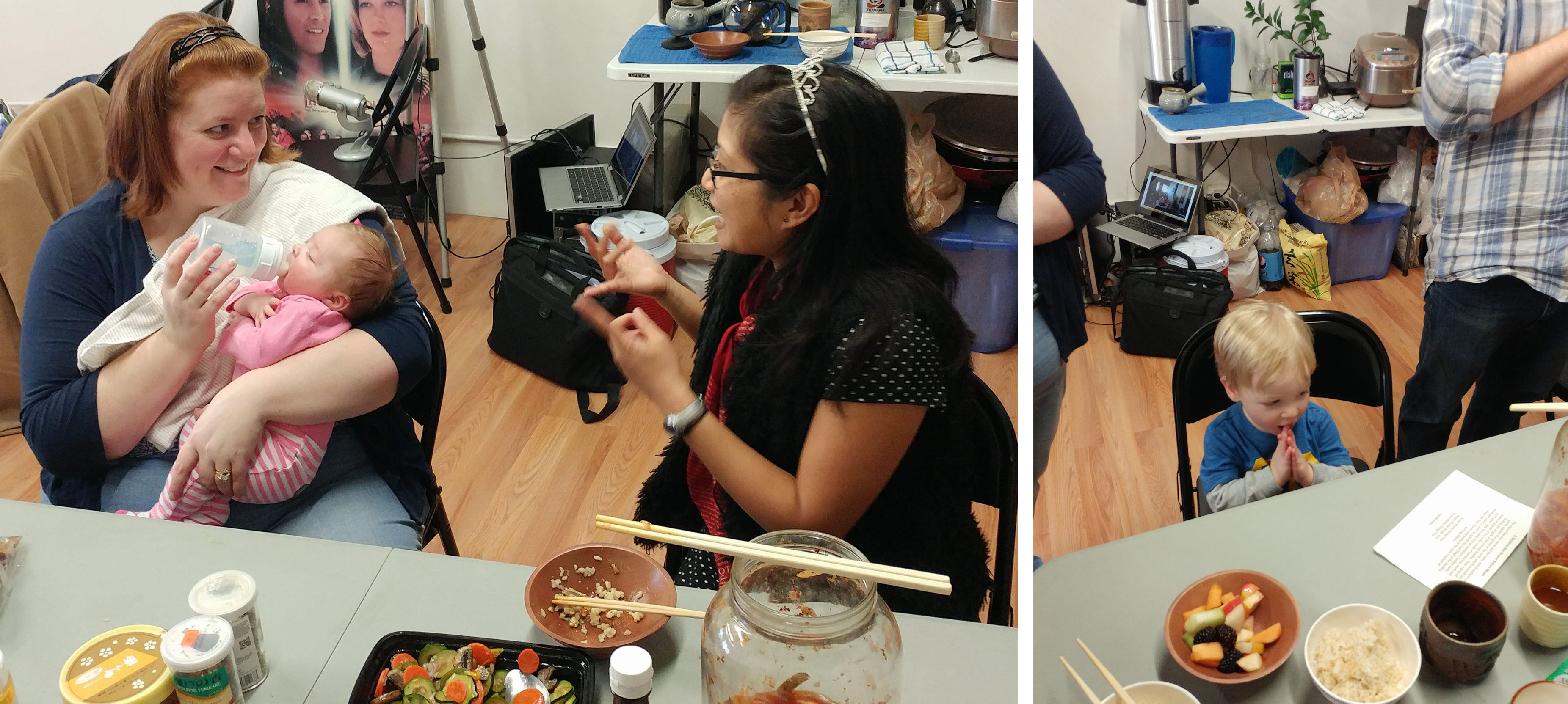
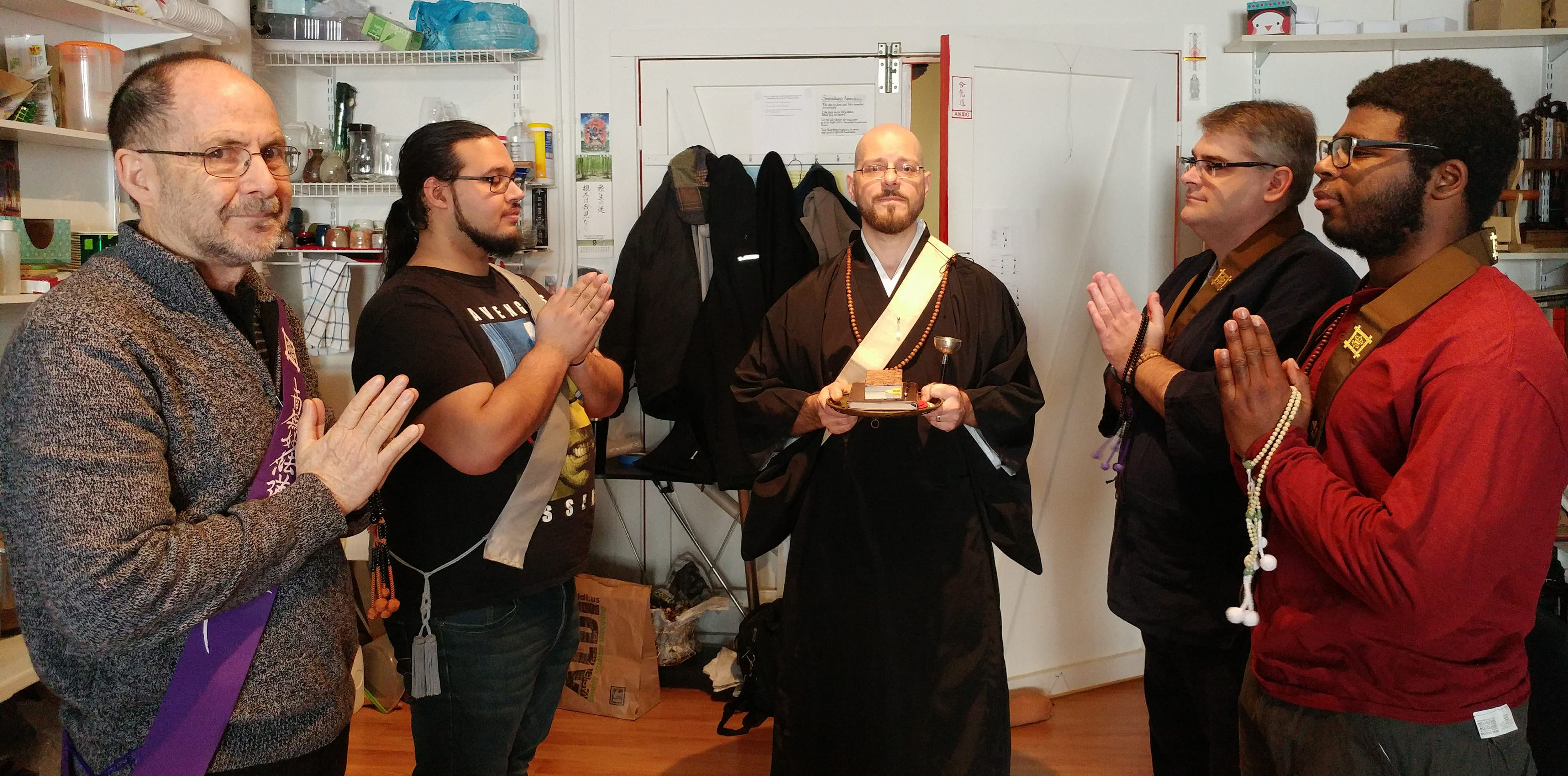
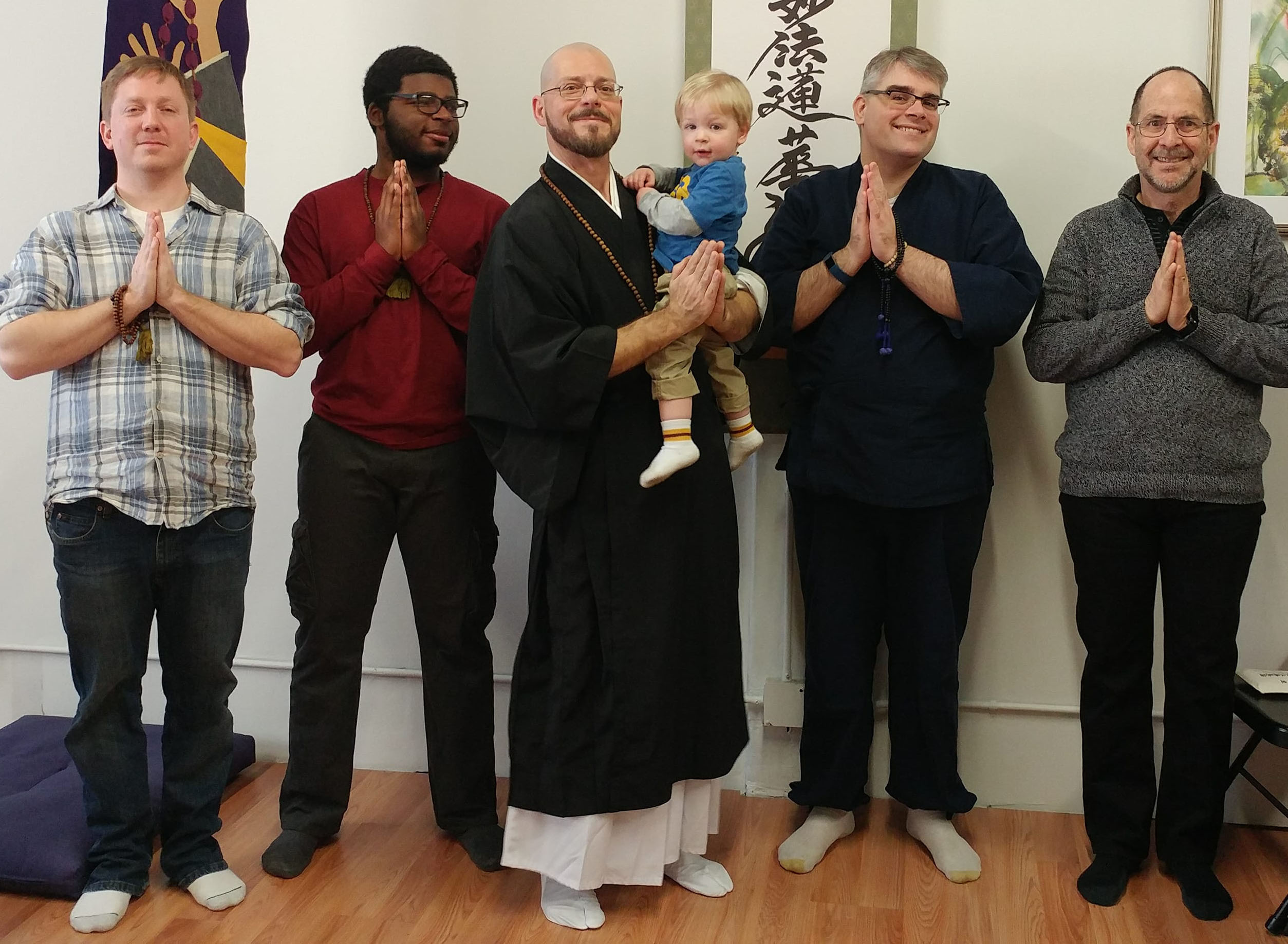
These photos go with yesterday’s blog post.
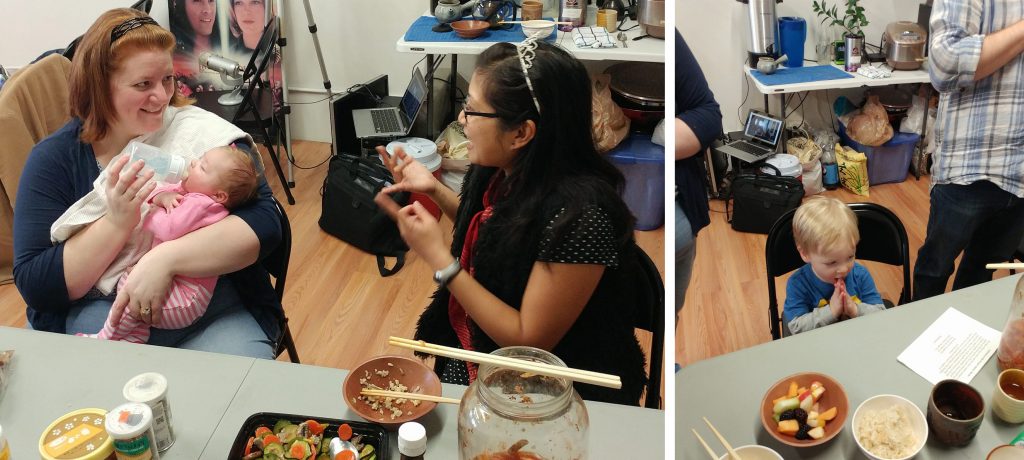
Everyone got some food after the service 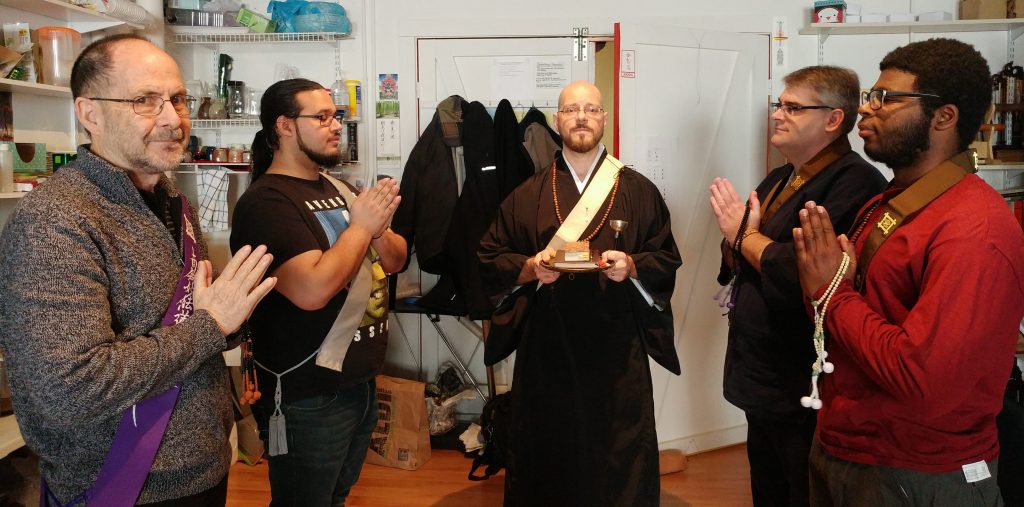
I was made an honorary lay leader and participated in the procession that precedes the service. 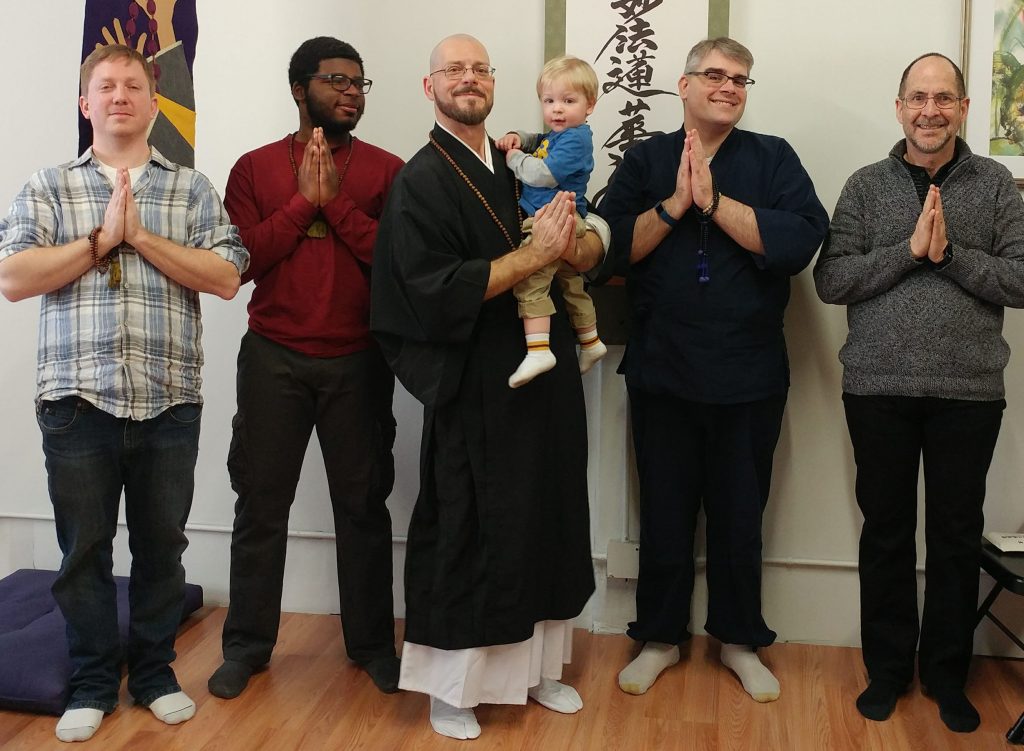
Group photo following service -
Daily Dharma – Jan. 29, 2017
Let us go even to the end of one thousand billion worlds,
And find the place from where this light has come.
A Buddha may have appeared somewhere in the universe
In order to save the suffering beings.These verses are sung by the Brahma King Great Compassion in Chapter Seven of the Lotus Sūtra. He invites his fellow Brahma Kings, creators of entire worlds, to leave the luxury of their palaces to find a Buddha who is leading all beings to enlightenment. They value the Buddha’s words more than anything that they have created for themselves, and know how rare it is to encounter an enlightened being. These kings give us an example of how we can learn to treasure the Buddha Dharma.
The Daily Dharma is produced by the Lexington Nichiren Buddhist Community. To subscribe to the daily emails, visit zenzaizenzai.com
-
Day 4
Day 4 finishes Chapter 2, Expedients, and completes the first volume of the Sūtra of the Lotus flower of the Wonderful Dharma.
Having last month discussed the arrogant bhikṣus and bhikṣunīs who left, we hear the Buddha explain his expedient teachings.
Śāriputra, listen attentively!
The Buddhas, having attained the Dharma,
Expound it to all living beings
By their immeasurable power to employ expedients.I caused all living beings to rejoice
By telling them stories of previous lives,
Parables, similes and discourses,
That is to say, by employing various expedients
Because I knew their thoughts,
The various teachings they were practicing,
Their desires, their natures,
And the good and evil karmas they have previously done.The sūtras were composed of prose, gāthās, and geyas.
The contents of them were
Miracles, parables, similes, upadesas,
And stories of the previous lives
Of Buddhas and of their disciples.
The reasons why the sūtras were expounded were also given. -
Generations
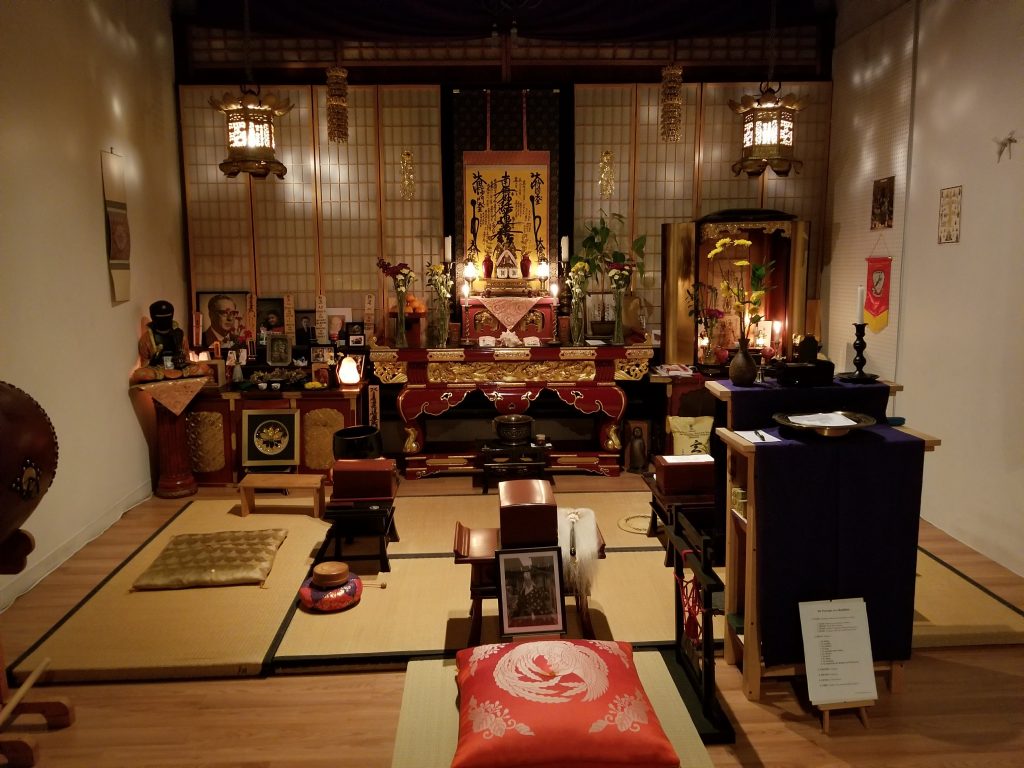
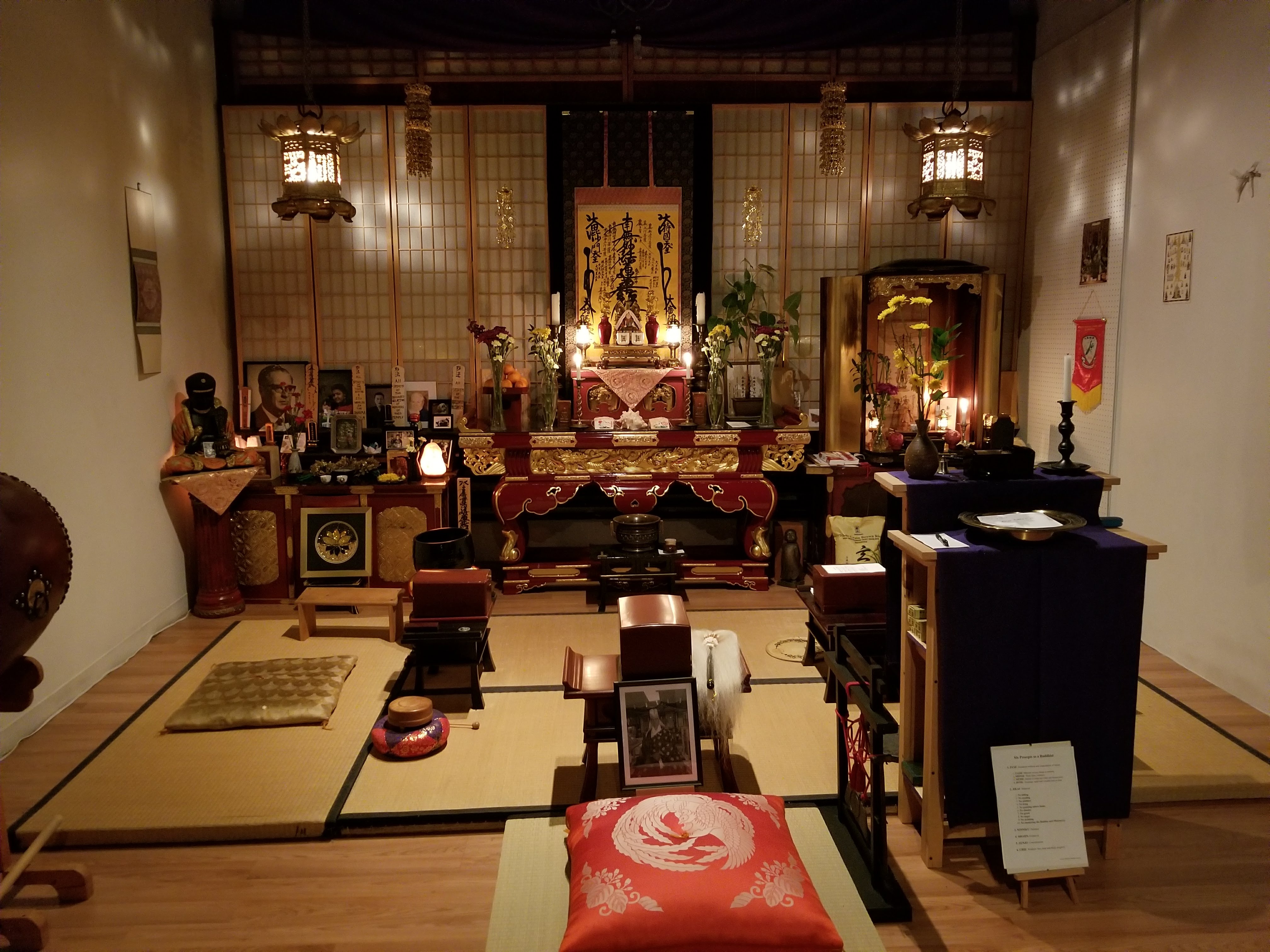
Shoeizan Enkyoji Buddhist Temple 祥栄山円教寺 at night Attended Sunday service at 祥栄山円教寺 Shoeizan Enkyoji Buddhist Temple of Rochester (website, Facebook). This was my second Sunday service. I also attended Tuesday and Thursday evening Shodaigyo services and Dharma meetings.
One of the most interesting aspects of the Rochester Sangha is the youthful enthusiasm that permeates all of its activities. To underscore this we had a toddler and his infant sister attend. And these are just two of the congregation’s latest additions. Shami Kanyu 観涌 Kroll has a newborn and another lay leader recently learned he will soon be a father. The temple has plans to provide a nursery in the adjacent Jisso-Kai Dojo.
In Sacramento I’m one of the younger members at 66 years of age. It’s inspiring to see so many people with so much life ahead of them embracing the teachings of Nichiren and the Lotus Sutra.
More Photos From Service
-
The Spirit of the Great Vehicle
The teaching of the Lotus Sutra, which leads all beings without exception to Buddhahood, is the most highly exalted manifestation of the spirit of the Great Vehicle. It strives to benefit all living beings and leave behind no exceptions. This fundamental principle is clearly expounded in Chapter 2.
Introduction to the Lotus Sutra
-
Our Mind Meld With The Buddha
Nichiren Shu teaches people to chant Odaimoku, Namu Myoho Renge Kyo on a daily basis. The Lotus Sutra, which is the Buddha’s final teaching, expounds the essence of the Buddha’s enlightenment based on the universal law underlying all things in nature. It is said traditionally, that when we chant the Odaimoku (the title of the Lotus Sutra), with all our hearts, and a sense of faith, the Buddha-nature within our minds will fuse with the Buddha’s mind, and we are able to receive the Buddha’s rewards unconsciously – wisdom, compassion, supernatural powers and enlightenment.
Spring Writings
-
Attainment of Buddhahood
MYOICHI AMA GOZEN GOSHOSOKU
Those who believe in the Lotus Sutra are like the winter season for many hardships come incessantly. Winter is surely followed by spring. We have never heard nor seen that winter returned to fall. We have never heard that the believers in the Lotus Sutra go back to ordinary men. The Lotus Sutra says, “All people who listen to this sutra will attain Buddhahood.”
(Background : May, 1275, 53 years old, at Minobu, Showa Teihon, p.1000)
Explanatory note
Nichiren Buddhists believe tomorrow brings improvement. Nichiren Daishonin’s life was full of conStant persecutions. He had strong belief in the Lotus Sutra and believed in the Buddha’s protection; therefore, he never gave up his hope of attaining Buddhahood. His life was the practice of his belief and materialization of his faith. So he earnestly preached to us to have the same belief and hope in the sutra.
At his time, there were unseasonable weather, poor harvests, famines, epidemics, and social disorders. Nichiren sought causes of these natural disasters and social disorders in various sutras. As a result, he wrote “Rissho Ankoku Ron” which says at the end, “Ye men of little faith, turn your minds and trust yourselves at once to the unique truth of the righteous way! Then ye shall see that the triple worlds of the unenlightened will become the Buddhaland.” The disasters and disorders, he said, were caused by the people’s disbelief in the Lotus Sutra.
“Strong spirit to overcome any hardship” – this is Nichiren Daishonin’s foundation throughout his life. His strong spirit came out of “hope” which he always kept during many continuous persecutions. The hope was belief in the Eternal Lord Buddha who was watching and protecting him always.
Compared with Kamakura Era, we today are living in an unbelievably comfortable environment. But this comfortable living has many weak points as if we are standing on thin ice. It will easily melt.
Chapter 12 of the Lotus Sutra says that the Buddha Sakyamuni had accumulated merits by practising austerities in His previous lives for innumerable kalpa. To practice Buddha’s way, we must foresee our long steps to Buddhahood.We adhere in small matters, and we are joyful or sad only for matters before our eyes. But we must open our eyes wide and keep the “hope” revealed in the Lotus Sutra deep in our minds.
Rev. Kanai
Phrase A Day