All posts by John Hughes

Hoping for a Happier New Year

I started attending Sacramento Nichiren Buddhist Church services in January 2015. Every New Year after that – 2016 through 2020 – I attended the services held to usher out the old year – Joya (End of Year) Service – and bring in the new – Shinnen (New Year) Service. At the Sacramento Nichiren Buddhist Church these are held on either side of midnight. At the stroke of midnight, the church bell is rung 108 times to purge church members’ 108 earthly desires .

That familiar ritual was another of the many things taken away by COVID-19.

Instead, I found myself seated next to my altar in front of my computer making do with the Zoom sessions from the Nichiren Buddhist Kannon Temple of Nevada.

Rev. Shoda Kanai holds his end of year service in the morning since Las Vegas at midnight is party central and not a place you want to be driving around after midnight. I’m not particularly fond of driving home from the Sacramento church after midnight but at least all of the major roads are open.

Yesterday morning I attended Rev. Shoda Kanai’s end of year service, which included the ringing of his temple bell.
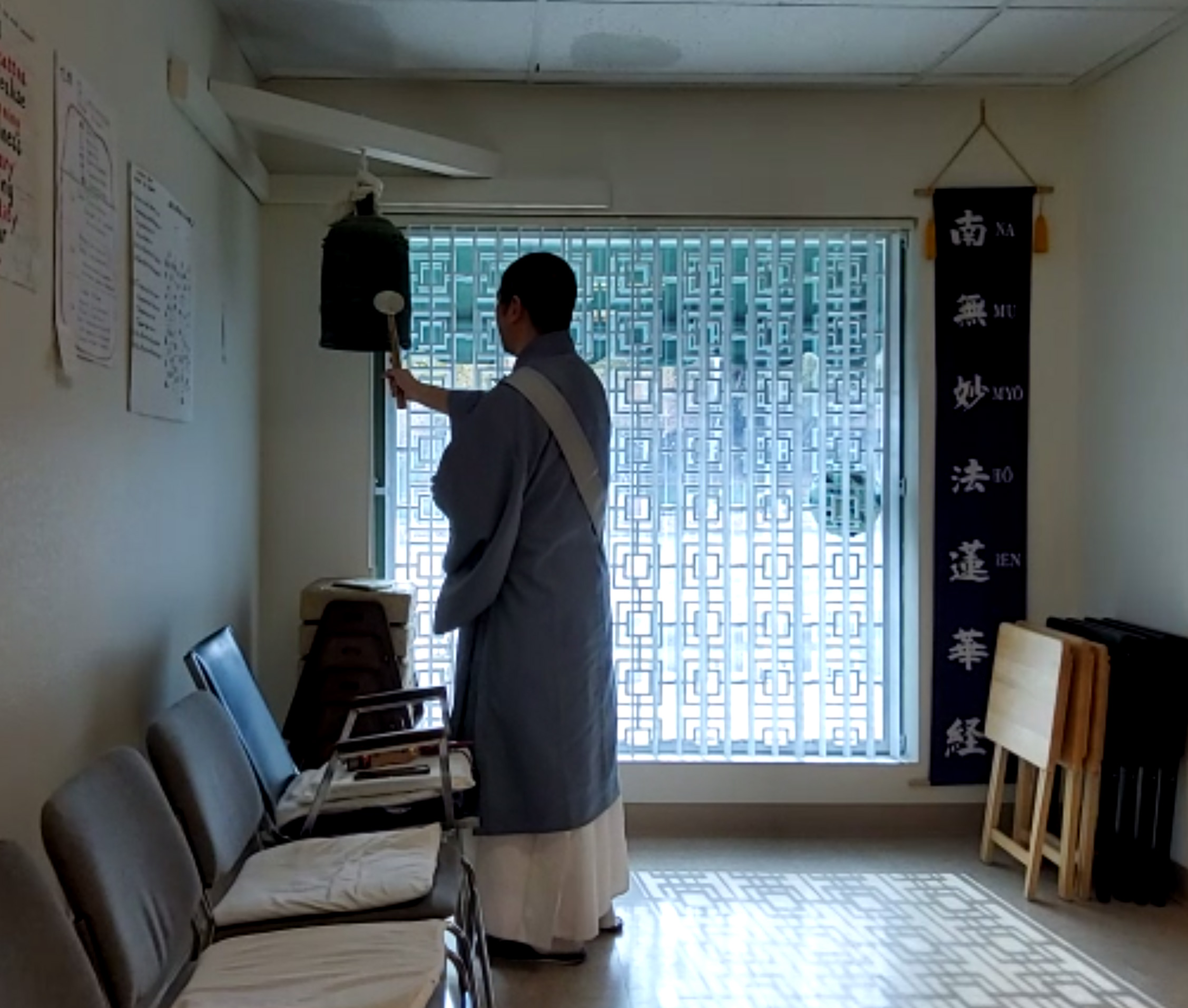
20201231-LV-bell-ringing

I was fascinated with the 108 division of the worldly desires offered by Rev. Shoda Kanai.

The six senses each have three subdivisions – pleasant, painful, neutral or like, dislike, indifference – making 18 desires.

Those 18 kinds have two categories – pure, unpure or internal, external – making 36 desires.

The 36 have three other categories – past, present, future – which brings us to the 108 total.

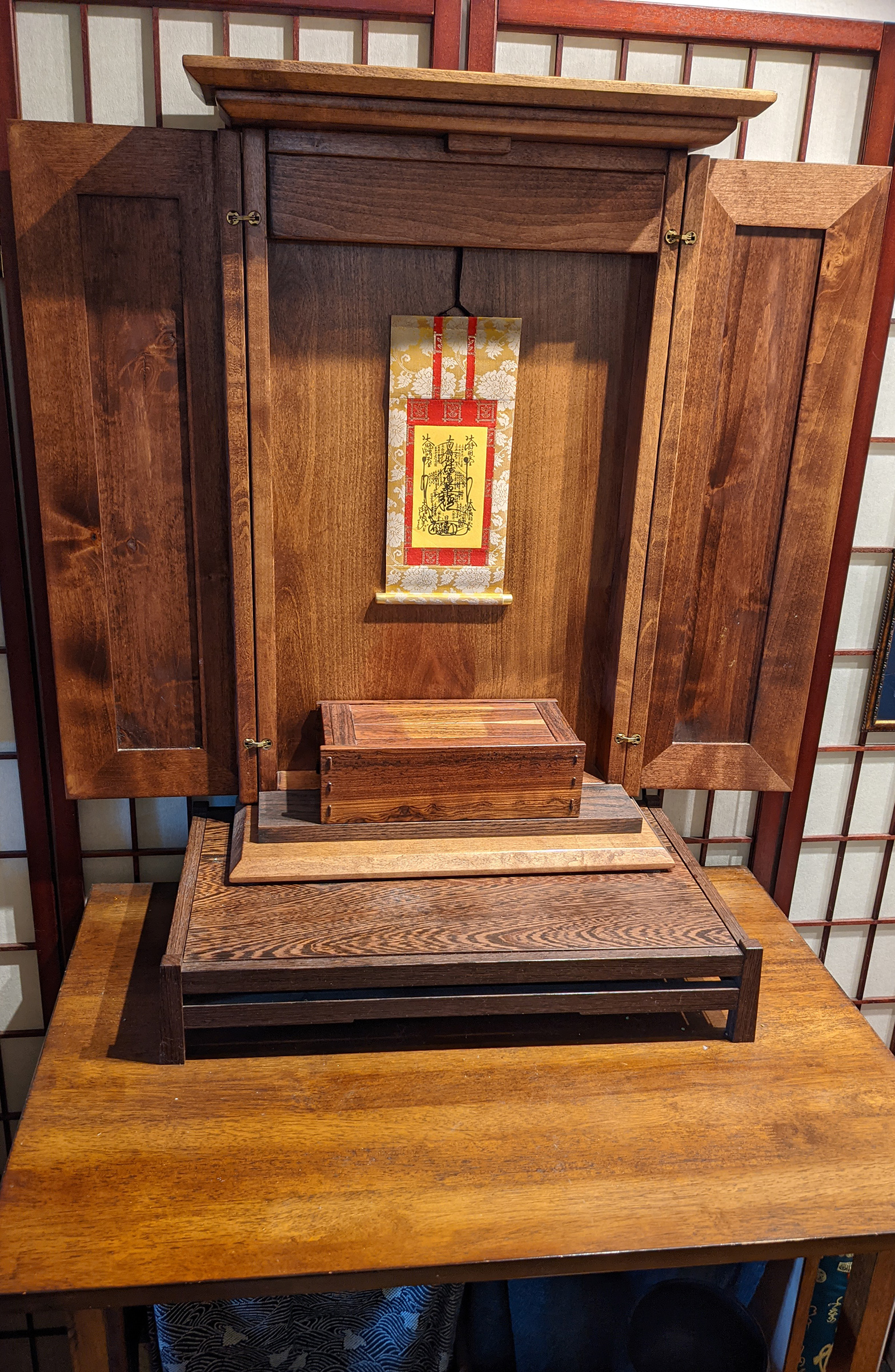
This morning I celebrated the New Year by burning special incense that displays Namu Myoho Renge Kyo Minobu San after it burns.
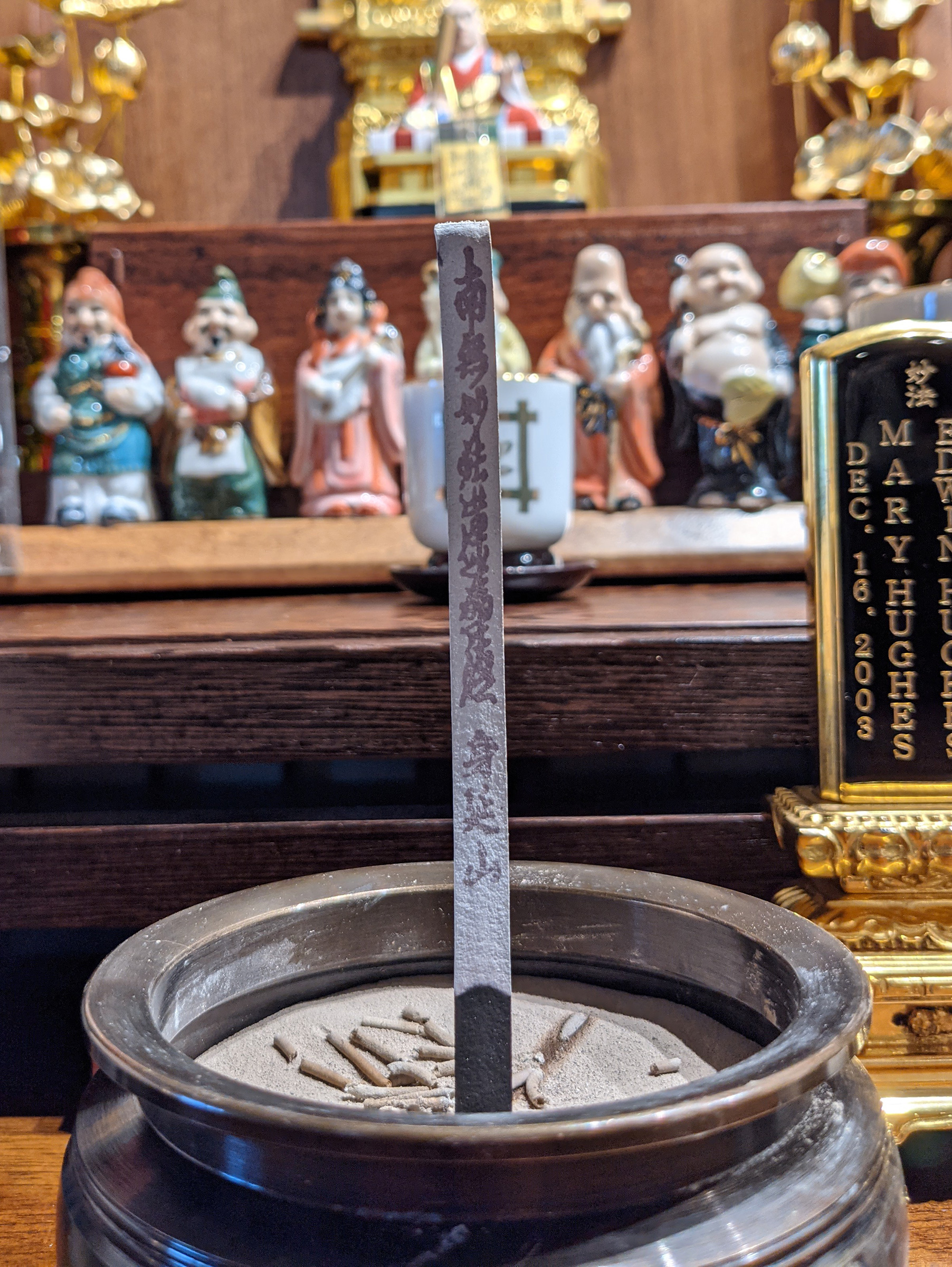
20210101_special-incense

The incense is available online but the shipping from Singapore is exorbitant. I’m down to my last four sticks of this and looking for resupply.

After my morning service I set my laptop computer up next to my altar and attended Rev. Shoda Kanai’s New Year Purification Ceremony.
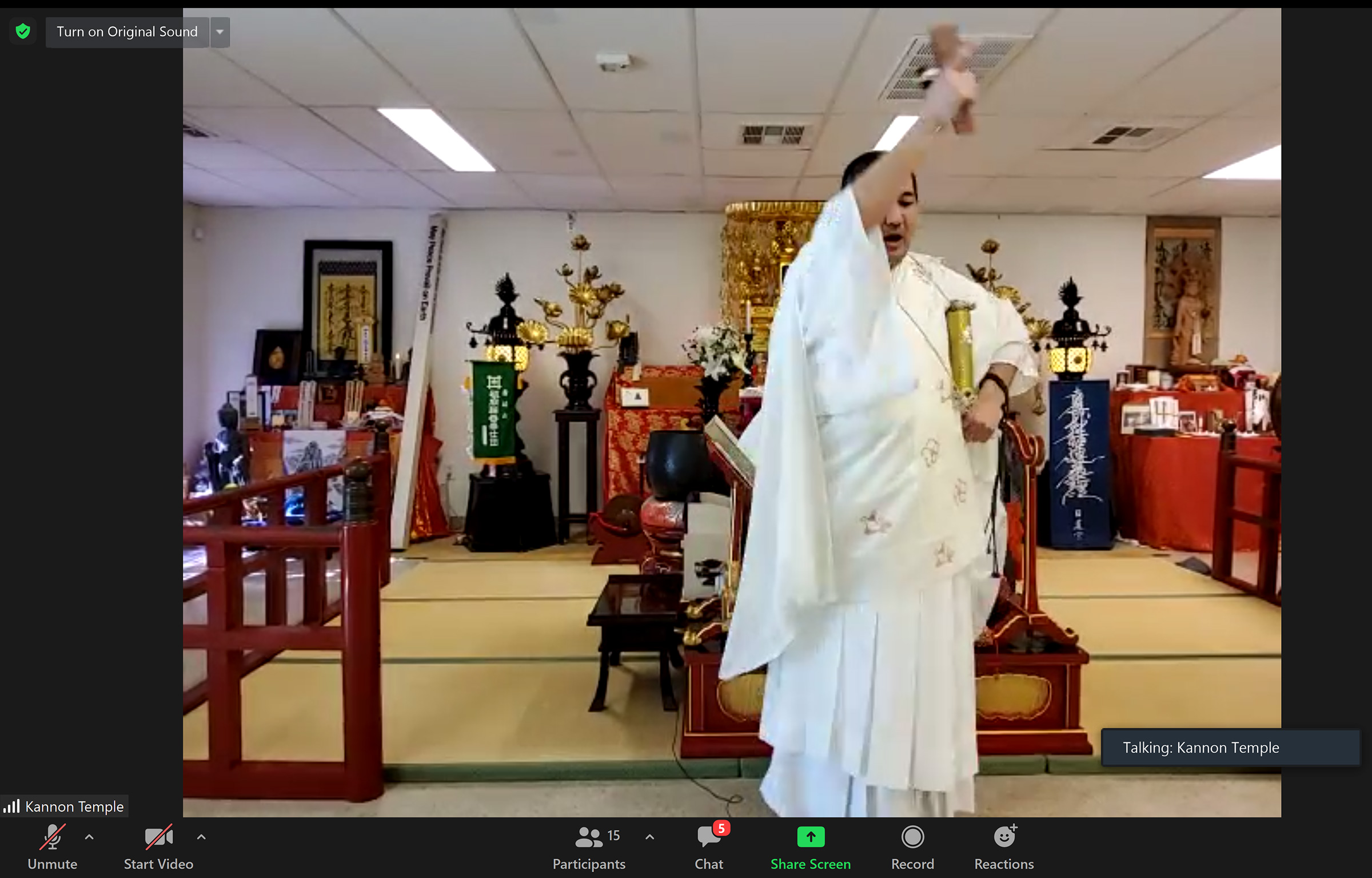
20210101-LV-NewYearPurification

Next Sunday I’ll be back in Las Vegas (virtually) for Rev. Shoda Kanai’s monthly purification service which he holds the first Sunday of each month throughout the year.

Zoom is not IRL, but it helps. I’m looking forward to getting my vaccination and the eventual end of this COVID-19 nightmare.


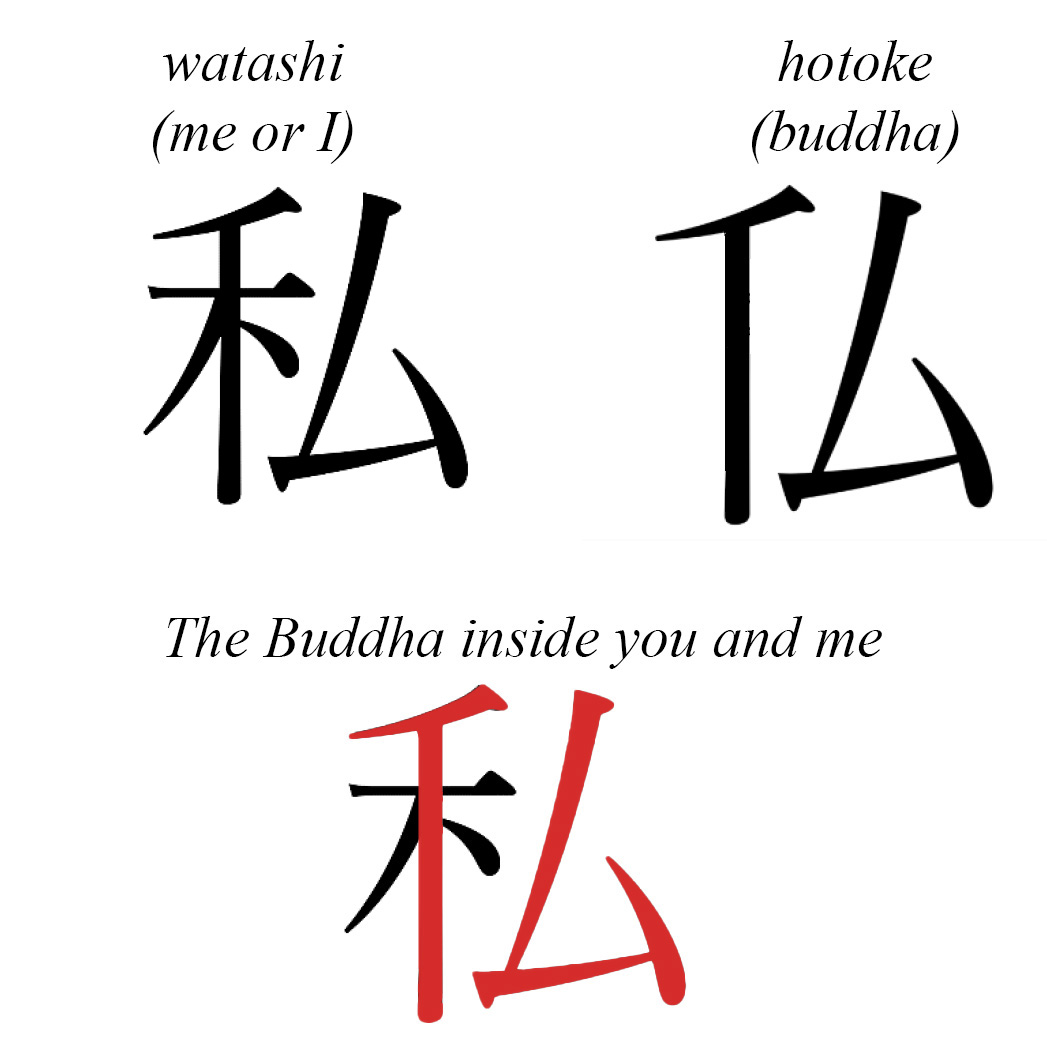
Correction: Yesterday’s post about Rev. Shoda Kanai’s discussion of kanji characters misstated the character for “me” or “I.” I only had half of the character. I’ve fixed my error.

Out of Great Love and Gratitude

When the bodhisattva realized his capacity to appear in all different kinds of emanation bodies, his feeling of love for and gratitude to his teacher grew even stronger. So out of his great love and gratitude, and with the profound insight into his ultimate nature, he was able to relinquish his body very easily. The Sutra tells us that as an offering to the Buddha and to display his insight that the body is not a permanent, unchanging self, he poured fragrant oil on himself and allowed himself to be burned by fire. This is a quite radical demonstration of his freedom and insight, one that was made out of a very deep love.

Peaceful Action, Open Heart, p158

See the end of Stretching the Truth to Pull Meaning Out of the Lotus Sutra

The Importance of Chapter 16

There are six traditionally given reasons for claiming the importance of Chapter 16. These six are: 1. The revelation of the eternity of the Buddha, 2. It shows misguided people the way to Buddhahood, 3. Revelation of the eternal Buddha Land, 4. Eternal salvation of the people, 5. Actual salvation of misguided people, and 6. The vow of the Buddha.

Lecture on the Lotus Sutra

The Golden Words of the Buddha

It has already been more than 2,230 years since the Buddha passed away. What is more, India, China, and Japan are separated from one another by mountains, rivers, and oceans. As the people’s minds and lands are different in each country, so are their languages and customs. How then can we, ordinary people, perceive the true heart of Buddhism? There is only one way: by reading the letters of sūtras and comparing them, but there are so many volumes and different kinds of sūtras in all the scriptures of Buddhism. The Lotus Sūtra consists of eight fascicles along with one fascicle each of the Universal Sage Sūtra as transmission and the Sūtra of Infinite Meaning as introduction.

When we open the Lotus Sūtra, we can see its teachings as clearly as looking at our face in a mirror. It is similar to recognizing the color of grasses and trees as the sun rises. It is stated in the Sūtra of Infinite Meaning, “The truth has not been revealed during the first forty years or so.” At the beginning of the “Expedients” chapter of the Lotus Sūtra, fascicle 1, it is said, “The World Honored One will expound the true teaching after a long period [of expounding expedient teachings].” In the chapter of “The Appearance of the Stupa of Treasures” in the fourth fascicle of the Lotus Sūtra, “The Lotus Sūtra of the Wonderful Dharma … is nothing but the truth.” In the chapter of “Divine Powers of the Buddha” in the seventh fascicle of the Lotus Sūtra, it is clearly stated that the tongues of the three Buddhas (Śākyamuni Buddha, the Buddha of Many Treasures, and numerous Buddhas in manifestation) “reach the Brahma Heaven,” proving the sūtra to be true. Moreover, in the “Medicine King Bodhisattva” chapter, other sūtras preached before or after the Lotus Sūtra are compared to stars, rivers, petty kings or minor mountains whereas the Lotus Sūtra is compared to the moon, the sun, the great ocean, major mountains or a great king. These are not my own words, but the golden words of the Buddha and the words that Buddhas from all the worlds throughout the universe resolved. All bodhisattvas, Two Vehicles, the King of the Brahma Heaven, Indra, as well as the sun and moon that reside in the sky at present saw and heard the preaching of the Lotus Sūtra. The words of the sun and moon (vowing to spread the Lotus Sūtra) are also recorded in the Lotus Sūtra.

Sennichi-ama Gozen Gohenji, A Reply to My Lady Nun Sennichi, Writings of Nichiren Shōnin, Faith and Practice, Volume 4, Page 145-146

Daily Dharma – Jan. 1, 2021

The Buddhas, the Leaders, expound the teaching of Nirvāṇa
In order to give a rest [to all living beings].
When they see them having already had a rest,
They lead them to the wisdom of the Buddha.

The Buddha sings these verses in Chapter Seven of the Lotus Sūtra. These are part of his explanation of the parable of the Magic City. In this story, a group of people hire a guide to lead them through a dangerous wilderness to reach a city of treasures. Halfway through the journey, the people lose confidence and ask the guide to take them back to where they started. The guide conjures up a magic city and gives the people a chance to rest. The people believed this illusion was their destination. The guide then made the city disappear and implored his charges to continue their journey. The Buddha compares his teachings of the end of suffering to the fabricated city, and the true city of treasures to his enlightenment. As the travelers had to leave their delusions about suffering and continue on the way of the Bodhisattva towards enlightenment, so must we set aside the Buddha’s expedient teachings and uphold the Wonderful Dharma of the Lotus Sūtra.

The Daily Dharma is produced by the Lexington Nichiren Buddhist Community. To subscribe to the daily emails, visit zenzaizenzai.com

Day 16

Day 16 concludes Chapter 11, Beholding the Stūpa of Treasures, and completes the Fourth Volume of the Sūtra of the Lotus Flower of the Wonderful Dharma.

Having last month concluded Chapter 11, Beholding the Stūpa of Treasures, we begin today’s portion of the chapter with the preparations for the arrival of Buddhas of the replicas of Śākyamuni Buddha.

Thereupon each of the Buddhas of the [worlds of the] ten quarters said to the Bodhisattvas under him, “Good men! Now I will go to Śākyamuni Buddha of the Sahā-World. I also will make offerings to the stūpa of treasures of Many-Treasures Tathāgata.”
At that instant the Sahā-World was purified. The ground of the world became lapis lazuli. The world was adorned with jeweled trees. The eight roads were marked off by ropes of gold. The towns, villages, cities, oceans, rivers, mountains, forests and thickets were eliminated. The incense of great treasures was burned; mandārava flowers, strewn over the ground; and jeweled nets and curtains with jeweled bells, hung over the world. The gods and men were removed to other worlds except those who were in the congregation.

At that time each of the Buddhas was accompanied by an attendant who was a great Bodhisattva. Some of the Buddhas came under the jeweled trees in the Sahā-World. The jeweled trees were five hundred yojanas tall, and adorned with branches, leaves, flowers and fruits. Under the jeweled trees were lion-like seats five yojanas tall, adorned with great treasures. The Buddhas sat cross-legged on the seats [under the jeweled trees]. The seats [under the jeweled trees] in the [Sahā-World composed of] one thousand million Sumeru-worlds were, however, too few to receive all the Buddhas of Śākyamuni Buddha’s replicas who were to come from the worlds even of one of the ten quarters. [Seeing this,] Śākyamuni Buddha purified two hundred billion nayuta worlds of each of the eight quarters [neighboring the Sahā-World] to receive all the Buddhas of his replicas. The hells, the regions of hungry spirit , the regions of animals, and the regions of asuras [of those worlds] were eliminated; and the gods and men [of those worlds] were removed to other worlds. The ground of those purified world became lapis lazuli. The worlds were adorned with jeweled trees five hundred yojanas tall. The trees were adorned with branches, leaves, flowers and fruits. Under the trees were lion-like seats of treasures five yojanas tall, adorned with various treasures. The great oceans, rivers, the Mucilinda Mountains, the Maha-Mucilinda Mountains, the Surrounding Iron Mountains, the Great Surrounding Iron Mountains, the Sumeru Mountains, and all the other great mountains [of those worlds] were eliminated, and all those worlds were amalgamated into one Buddha-world [that is, into the world of Śākyamuni Buddha). The jeweled ground of this [expanded] world was even. Jeweled curtains and canopies adorned with streamers were hung over this [expanded] world; the incense of great treasures, burned; and jeweled flowers of heaven, strewn over the ground.

See The Reality of Both the One and the Many

The Reality of Both the One and the Many

This image of the reality of one and many can also be seen in the image of Shakyamuni Buddha bringing together billions and billions of worlds to create a temporary unification of them into a single buddha land. Their reality as many lands does not disappear when they are brought together to function as one. Later in the Sutra they will return to being, as they were, many. In this way, Shakyamuni Buddha, as well as being the buddha of this world, is at the same time the Universal Buddha – the buddha who, by virtue of his embodiments, is represented or present everywhere throughout the universe.

One reason that this holding together of the reality of both the one and the many is important in the Dharma Flower Sutra is that it provides a general framework for understanding the One Vehicle of many skillful means. It provides, in other words, a way of understanding through images how the many ways of Buddhism can all have an importance and reality within one Buddhism.

The Stories of the Lotus Sutra, p142-143

Bye Bye, 2020


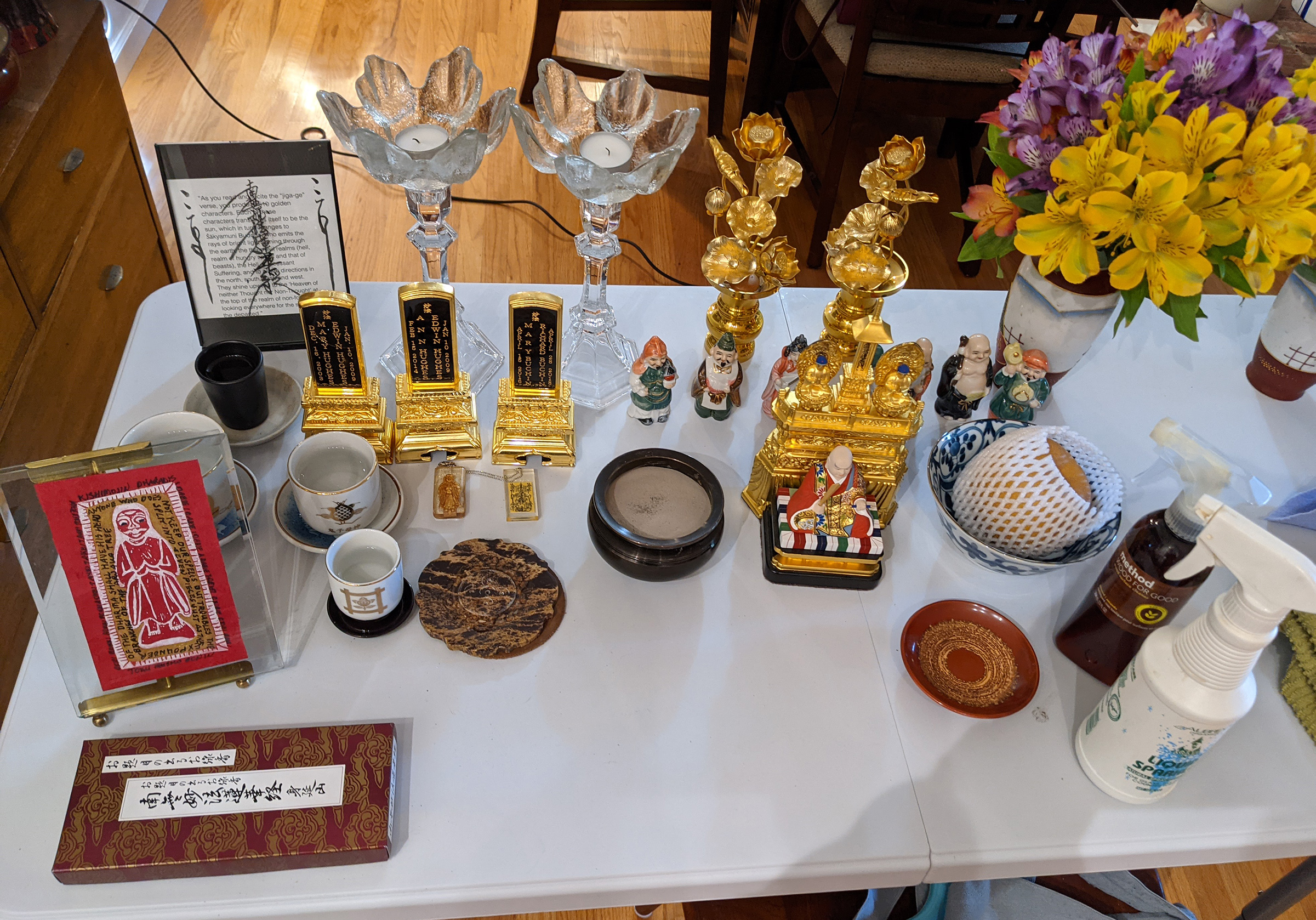
Traditionally I clean my altar on the last day of the year in preparation for the New Year. Never before have I looked forward to the end of a year as I do 2020.

While I’m here I figure I should clean out my blog to-do list.


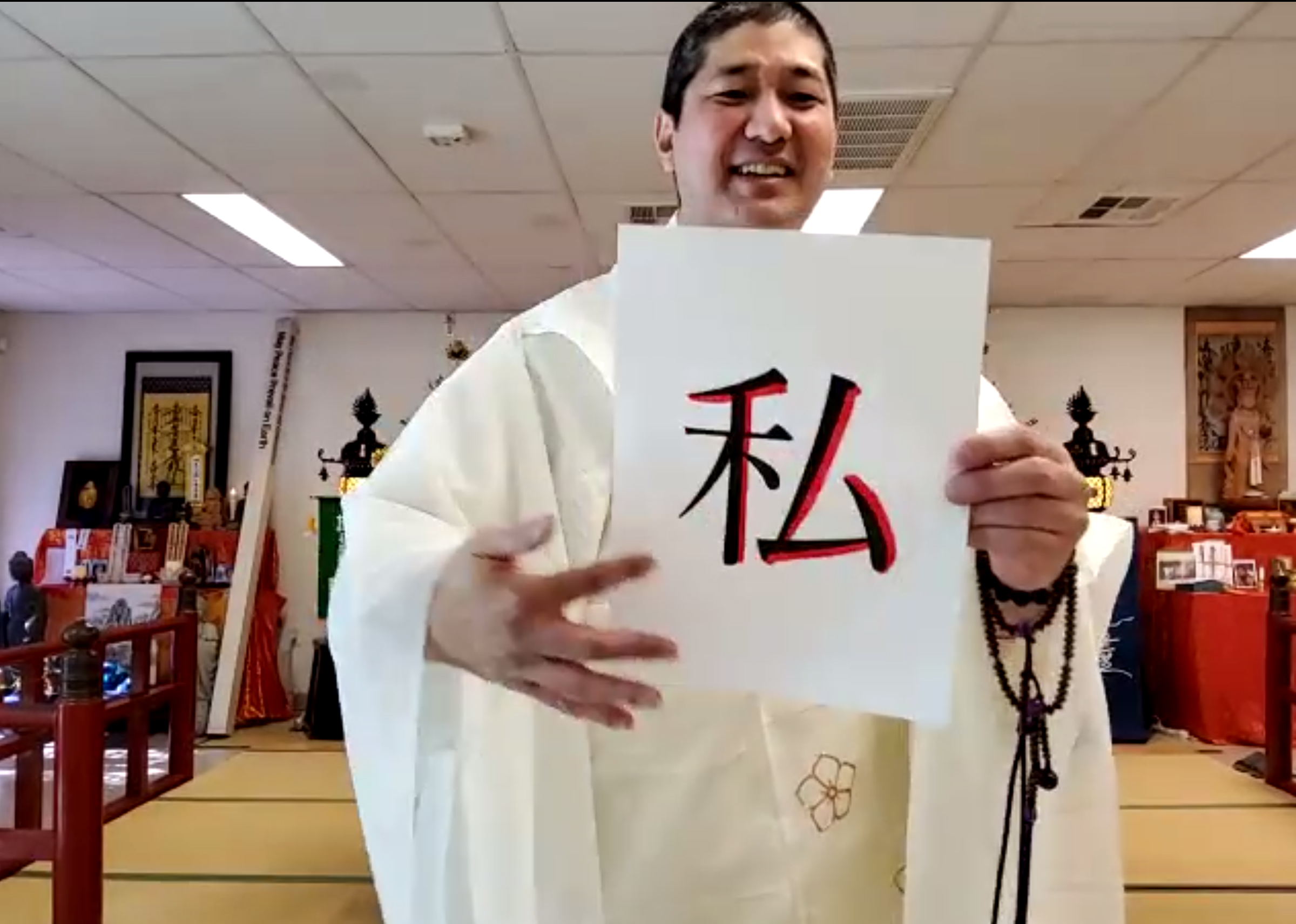
Following an online service back on December 6 at the Nichiren Buddhist Kannon Temple of Nevada, Rev. Shoda Kanai gave a sermon playing with kanji character for “Buddha” and the kanji character for “me” or “I” and showing how, in kanji, the Buddha is literally inside you and me.

The Buddha Inside you and ame

Here’s PDF copy of the article in the January 2021 Radiance newsletter that Rev. Shoda Kanai adapted from his sermon.


Back in September, Rev. Ryuei McCormick was interviewed as part of a video series organized by filmmaker Yujiro Seki, who is promoting his movie Carving the Divine.

The stated topic of the interview is the The Four Aims (Siddhantas) of Buddhist Practice. When I first saw that the interview lasts nearly 40 minutes I kept putting off listening to it. As result it was only last week when I finally realized what I had missed. Yes, there is a discussion the question “What are the four siddantas/the four aims?” But that is only a minor portion of the full video.

While I recommend everyone watch the full video, I’ve created links to the various topics for those with a particular interest.

We Need Love and Affection, Warmth and Nurturance

Bodhisattva Seen with Joy by All Living Beings became a very good disciple of the Buddha Pure and Bright Excellence of Sun and Moon. He felt great devotion and love toward his teacher, and the bond between them was very deep. Because of the great affection between teacher and disciple, he made a lot of progress. Looking deeply into the nature of this bodhisattva’s practice, we can see the devotion, dedication, love, and faithfulness.

You might wonder how devotion and affection are part of the practice of looking deeply and attaining enlightenment. Do we need to love our teacher? Do we need to love our disciples? Do we need to love our Dharma brothers and sisters in order to succeed in our practice? The answer is, yes. Just as the loving presence of the parents is quite crucial for the growth of a baby, the loving presence of a teacher is very important for his or her disciples. The loving presence of our brothers and sisters in the Sangha is very important for us to grow as practitioners. That is the message sent forth by this bodhisattva. We need love and affection, warmth and nurturance in order to grow and progress on the path.

Peaceful Action, Open Heart, p156-157

Wherever and Whenever One Chants Namu Myoho Renge Kyo

There is another important point regarding Odaimoku: Namu Myoho Renge Kyo is not simply one of the Three Great Secret Dharmas, but is itself all three. Namu Myoho Renge Kyo is the Wonderful Dharma, which is the true nature of reality–the Eternal Shakyamuni Buddha. When we chant Odaimoku, we abide in the presence of the Eternal Shakyamuni Buddha, the true Focus of Devotion. Upholding Namu Myoho Renge Kyo is itself the most essential precept; thus, anywhere we chant is transformed into the Precept Platform at that time. Wherever and whenever one chants Namu Myoho Renge Kyo all Three Great Secret Dharmas are present.

Lotus Seeds