
All posts by John Hughes

Day 32

Day 32 covers Chapter 28, The Encouragement of Universal-Sage Bodhisattva, closing the Eighth Volume of the Sutra of the Lotus Flower of the Wonderful Dharma.

Having last month witnessed the arrival of Universal-Sage Bodhisattva, we consider Universal-Sage’s vow to protect the practicer of the Lotus Sutra.

Thereupon Universal-Sage Bodhisattva said to the Buddha:

“World-Honored One! If anyone keeps this sūtra in the defiled world in the later five hundred years after [your extinction], I will protect him so that he may be free from any trouble, that he may be peaceful, and that no one may take advantage [of his weak points]. Mara, his sons, his daughters, his subjects, his attendants, yakṣas, rākṣasas, kumbhāṇḍas, piśācakas, kṛtyas, pūtanas, vetādas or other living beings who trouble men shall not take advantage [of his weak points]. If anyone keeps, reads and recites this sūtra while he walks or stands, I will mount a kingly white elephant with six tusks, go to him together with great Bodhisattvas, show myself to rum, make offerings to him, protect him, and comfort him, because I wish to make offerings to the Sūtra of the Lotus Flower of the Wonderful Dharma. If he sits and thinks over this sūtra, I also will mount a kingly white elephant and appear before him. If he forgets a phrase or a gāthā of the Sūtra of the Lotus Flower of the Wonderful Dharma, I will remind him of it, and read and recite it with him so that he may be able to understand it. Anyone who keeps, reads and recites the Sūtra of the Lotus Flower of the Wonderful Dharma [after your extinction], will be able to see me with such joy that he will make more efforts. Because he sees me, he will be able to obtain samadhis and a set of dhārāṇis. The set of dhārāṇis will be the dhārāṇis by which he can memorize repetitions of teachings, the dhārāṇis by which he can memorize hundreds of thousands of billions of repetitions of teachings, and the dhārāṇis by which he can understand the expediency of the voice of the Dharma.
See The Power to be a Universal Sage

The Power to be a Universal Sage

In the Chapter 28 story, Universal Sage Bodhisattva promises that if anyone accepts and upholds the Dharma Flower Sutra he will come to that person mounted on a white elephant with six tusks. This can be understood to mean that taking the Sutra seriously gives one extraordinary strength or power. The elephant itself is often a symbol of strength or power, the whiteness of the elephant has been taken to symbolize purity, and the six tusks have been taken to represent both the six paramitas or transcendental bodhisattva practices and purification of the six senses. But if the elephant is taken to be a symbol of power, we should understand that this is not a power to do just anything. It is a power to practice the Dharma, strength to do the Buddha’s work in the world, power to be a universal sage.

Though the image does not come from this story but from the much more involved visualization of the Sutra of Meditation on the Dharma Practice of Universal Sage Bodhisattva, the elephant on which Universal Sage Bodhisattva rides is very often depicted as either walking on blossoming lotus flowers or wearing them like shoes. If the elephant is not standing, a lotus flower will be under the foot of Universal Sage. Such lotus blossoming should be understood, I believe, as an attempt to depict in a motionless picture or statue something that is actually very dynamic – the flowering of the Dharma.

The Stories of the Lotus Sutra, p304-305

The Simile of the Clay Pots

Today and tomorrow I’m going to add the “missing” portion of Chapter 5, The Simile of Herbs. This is found in Leon Hurvitz’s Lotus Blossom of the Fine Dharma, which was published in 2009. I used this version of the Lotus Sutra for two cycles through my 32 Days of the Lotus Sutra starting on April 18, 2019.

Hurvitz translated both Kumārajīva’s version and a surviving Sanskrit version. This material was found in the Sanskrit but not included in Kumārajīva’s version.

“Again, O Kāśyapa, the Thus Gone One, in his guidance of the beings, is equitable, not inequitable. O Kāśyapa, just as the light of the sun and the moon illuminates the whole world, both him who does well and him who does ill, both him who stands high and him who stands low, the good-smelling and the bad-smelling, just as that light falls everywhere equally, not unequally, in just that way, O Kāśyapa, does the light of the thought of the knowledge of the all-knowing, of the Thus Gone Ones, the worthy ones, the properly and fully enlightened ones, the demonstration of the true dharma, function equally among all beings in the five destinies according to their predispositions, be they persons of the great vehicle, persons of the vehicle of the individually enlightened, or persons of the vehicle of the auditors. Nor in the light of the knowledge of the Thus Gone One is there either deficiency or superfluity, for the light conduces to knowledge in accord with merit. O Kāśyapa, there are not three vehicles. There are only beings of severally different modes of conduct, and for that reason three vehicles are designated.”

When this had been said, the long-lived Mahākāśyapa said to the Blessed One: “If, O Blessed One, there are not three vehicles, what is the reason for the present designation of auditors, individually enlightened, and bodhisattvas?”

When this had been said, the Blessed One said to the long-lived Mahākāśyapa: “It is just as the potter. O Kāśyapa, makes pots with the same clay. Among them, some become pots for sugar lumps, some pots for clarified butter, some pots for curds or milk, while some become pots for inferior and filthy things; and just as there is no difference in the clay, but rather a supposed difference in the pots based solely on the things put into them, in just this way, O Kāśyapa, is there this one and only one vehicle, to wit, the buddha vehicle. There exists neither a second nor a third vehicle.”

Lotus Blossom of the Fine Dharma, p103

And in gāthās:

As the light of the sun and the moon falls alike on all men,
The virtuous as well as the evil, and as in their glow there is no deficiency [for some] or fullness [for others],
So the glow of the Thus Gone One’s wisdom, as equitable as the sun and the moon,
Guides all beings, being neither deficient nor yet excessive.

As a potter may be making clay pots, the pieces of clay being quite the same,
Yet there take shape in his hand containers of sugar, milk, clarified butter, and water,
Some for filth, while yet others take shape as containers of curds;
As that potter takes one clay, making pots of it;
And as, whatever thing is put into it, by that thing the pot is designated:
So to match the distinction among the beings, because of the difference in their inclinations, the Thus Gone Ones
Tell of a difference in vehicles, whereas the buddha vehicle is the true one.

Lotus Blossom of the Fine Dharma, p107

Daily Dharma – July 30, 2020

When we worship gods or Buddhas, we begin with the phrase of “namu.” Namu is an Indian word that has come to mean “offering of life to Buddhas and gods” in China and Japan. Our social standing is determined in part by possessing a spouse and children, retainers, fiefs, and gold and silver, though some people do not have those. Regardless of whether we possess these or not, no one possesses treasure more precious than life. Accordingly, sages and wise men in the past have donated their lives to the Buddhas in order to attain Buddhahood.

Nichiren wrote this passage in his Treatise on Phenomenal and Noumenal Offering (Jiri Kuyō Gosho). We tend to judge ourselves and others by the outward aspects of our lives: where we live, what we wear, our position in society, and the company we keep. It is easy to lose sight of what will happen when we leave this life and give up all those things, even our precious bodies. Nichiren reminds us that our lives are all we have, and when we live them in gratitude for what the Buddha teaches us, and dedicate ourselves to benefitting others, then we exist as enlightened beings.

The Daily Dharma is produced by the Lexington Nichiren Buddhist Community. To subscribe to the daily emails, visit zenzaizenzai.com

T. Murray

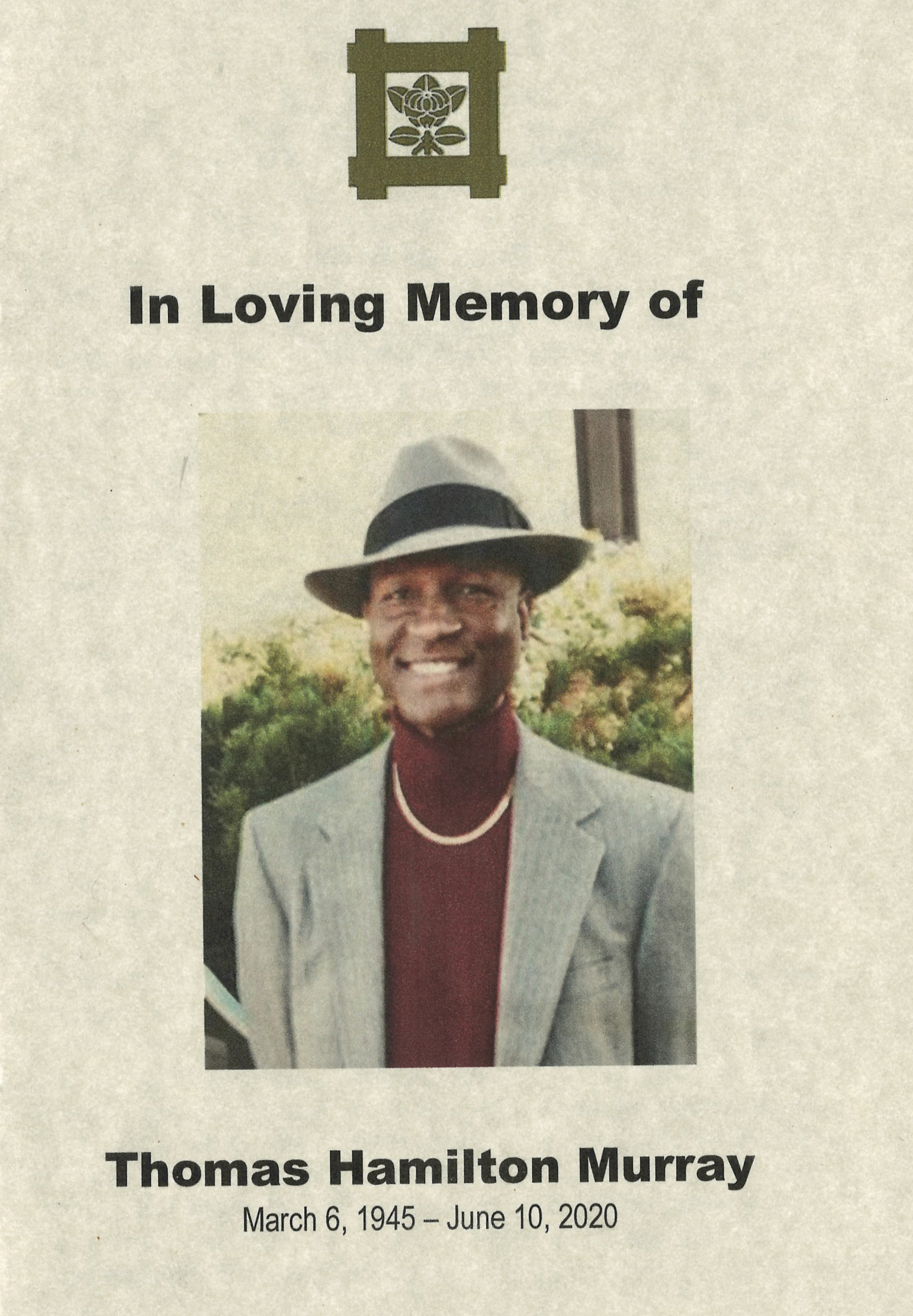
Tomas Murray Service Booklet

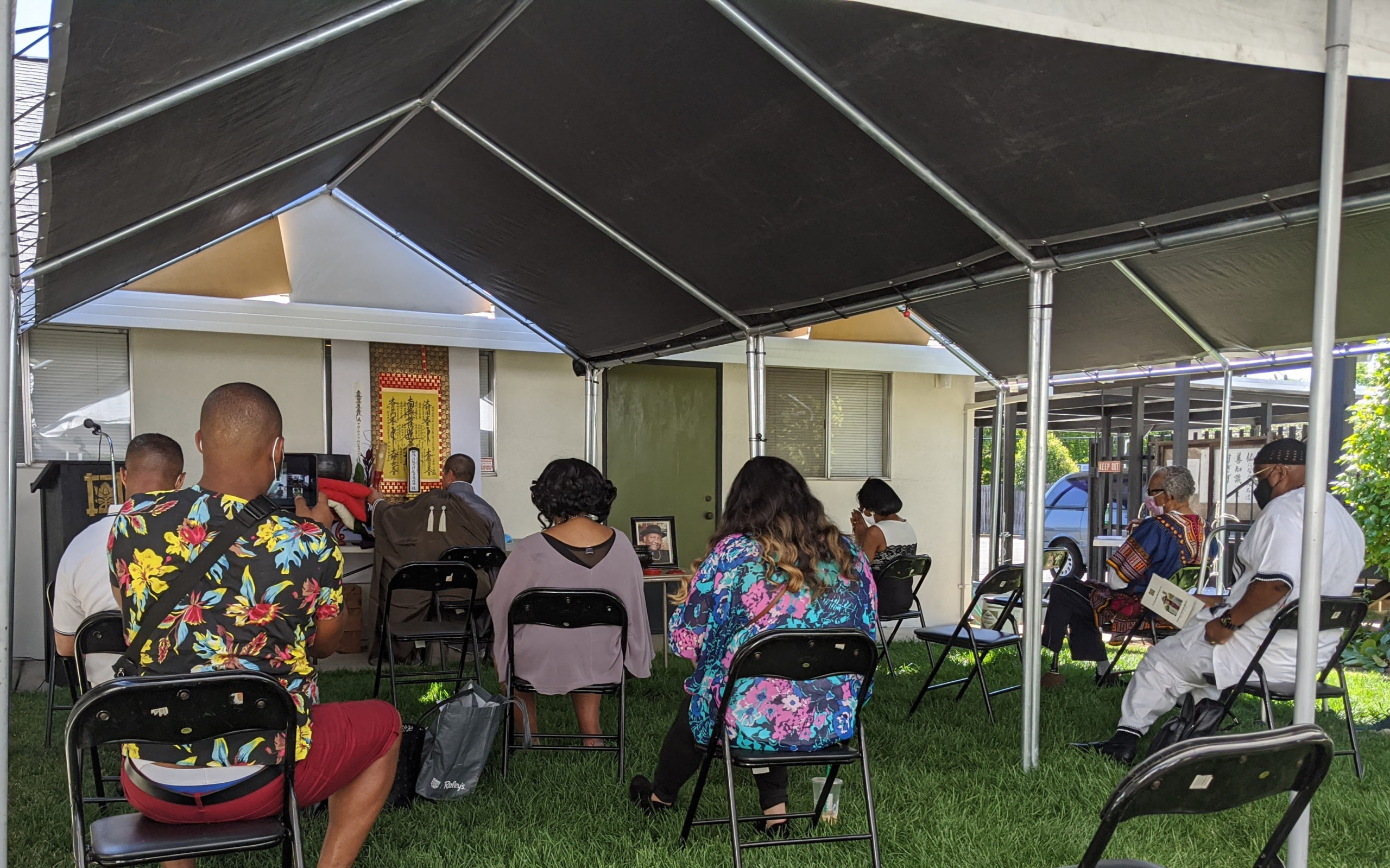
Attended a service today for Thomas Hamilton Murray. Just T for those who claimed him as a friend. This was a combination funeral and 49 Day Memorial service. He died on June 10 at the age of 75.

Mr. Murray became a member of the Sacramento Nichiren Budddhist Church about a year after I did. He had been practicing Nichiren Buddhism since the 1970s with Nichiren Shoshu of America. After the 1991 split between Nichiren Shoshu and Soka Gakkai, he stayed with the temple, attending services at Nichiren Shoshu Myoshinji Temple in Pinole. Mr. Murray discovered Nichiren Shu from the church website. He was very happy to have joined Nichiren Shu, with its focus on the Eternal Śākyamuni Buddha and the Great Bodhisattva Nichiren Shōnin.

As a Nichiren Shoshu practitioner he had made something like 19 trips to Taisekiji in Japan. But he had never been to Minobu. In February, he convinced Rev. Igarashi that his Sacramento, Chicago and Long Beach parishioners would love to travel to Minobu, where Nichiren lived in the latter years and where his ashes are buried. A date for the trip was set and then the pandemic cancelled everything.

At the service today, Rev. Igarashi said Thomas finally made it to Mt. Minobu. Nichiren will greet him on his way to the Pure Land of Mt. Grdhrakūta to join the constantly abiding Śākyamuni Buddha.

20200729_murray_crowd
The two men at left streamed the service on Zoom for those who could not attend.

Day 31

Day 31 covers Chapter 27, King Wonderful-Adornment as the Previous Life of a Bodhisattva.

Having last month witnessed family travel to Cloud-Thunderpeal-Star-King-Flower-Wisdom Buddha, we hear Cloud-Thunderpeal-Star-King-Flower-Wisdom Buddha’s prediction for King Wonderful-Adornment.

“Thereupon Cloud-Thunderpeal-Star-King-Flower-Wisdom Buddha said to the four kinds of devotees, ‘Do you see this King Wonderful-Adornment standing before me with his hands joined together, or not? This king will become a bhikṣu under me, strenuously study and practice the various ways to the enlightenment of the Buddha, and then become a Buddha called Sala-Tree-King in a world called Great-Light in a kalpa called Great-Height-King. Sala-Tree-King Buddha will be accompanied by innumerable Bodhisattvas and Śrāvakas. The ground of his world will be even. [King Wonderful-Adornment) will have these merits.’

“Thereupon the king abdicated from the throne in favor of his younger brother, renounced the world, and with his wife, two sons, and attendants, practiced the Way under that Buddha. After he renounced the world, the king acted according to the Sūtra of the Lotus Flower of the Wonderful Dharma constantly and strenuously for eighty-four thousand years. Then he practiced the samādhi for the adornment of all pure merits. Then he went up to the sky seven times as high as the tala-tree, and said to that Buddha, ‘World-Honored One! These two sons of mine did the work of the Buddha. They converted me from wrong views by displaying wonders. They caused me to dwell peacefully in your teachings. They caused me to see you. These two sons of mine are my teachers. They appeared in my family in order to benefit me. They inspired the roots of good which I had planted in my previous existence.’

“Thereupon Cloud-Thunderpeal-Star-King-Flower-Wisdom Buddha said to King Wonderful-Adornment, ‘So it is, so it is. It is just as you say. The good men or women who plant the roots of good will obtain teachers in their successive lives. The teachers will do the work of the Buddha, show the Way [to them], teach them, benefit them, cause them to rejoice, and cause them to enter into the Way to Anuttara-samyak-saṃbodhi. Great King, know this! A teacher is a great cause [of your enlightenment] because he leads you, and causes you to see a Buddha and aspire for Anuttara-samyak-saṃbodhi. Great King! Do you see these two sons of yours, or not? They made offerings to six trillion and five hundred thousand billion Buddhas, that is, as many Buddhas as there are sands in the River Ganges, in their previous existence. They attended on those Buddhas respectfully. They kept the Sūtra of the Lotus Flower of the Wonderful Dharma under those Buddhas, and caused the people of wrong views to have right views out of their compassion towards them.

See We All Need Good Friends and Teachers

We All Need Good Friends and Teachers

King Wonderfully Adorned praises his sons, calling them his friends or teachers, and Wisdom Blessed Buddha responds that good friends or teachers do the work of the Buddha, showing people the Way, causing them to enter it, and bringing them joy.

The term used here, zenchishiki in Japanese, is not easy to translate. Some use “good friends,” some “good teachers.” Perhaps good “acquaintances” or “associates” would be a good translation, for there is a sense in which our good friends are always also our teachers. The point is that the help or guidance of others can be enormously useful. Entering the Way, becoming more mindful or awakened, is not something best done in isolation. We all need good friends and teachers.

The Stories of the Lotus Sutra, p289

The Bodhisattva Archetype

This follows yesterday’s quote from Faces of Compassion: Classic Bodhisattva Archetypes and Their Modern Expression.

In fully employing the bodhisattva figures as archetypes, we must also realize the tentative, artificial nature of archetypes. The archetypal aspects of the bodhisattva figures are helpful as patterns. We can feel a sense of what it might mean to behave and function as a bodhisattva ourselves by examining the fearless insight and eloquence of Mañjuśrī, the luminous helpful activity of Samantabhadra, the unmediated, unconditional generosity of Avalokiteśvara, the faithful witness of Jizō, the patience and loving concern of Maitreya, the clever, illuminating displays of Vimalakirti, and the selfless decision and determination of Siddhārtha Gautama. However, all of their kindness and efforts are only manifest and real when we see the bodhisattva figures not as theoretical or mythological, but as actualities expressed in our world.

Beyond all the archetypal patterns, the life of the bodhisattva is in ordinary, everyday activity. In simple acts of kindness and gestures of cheerfulness, bodhisattvas are functioning everywhere, not as special, saintly beings, but in helpful ways we may barely recognize. The bodhisattvas are not glorified, exotic, unnatural beings, but simply our own best qualities in full flower.

Our ‘Good Friends’

QUESTIONS: Commonly speaking, “good friend” refers to a person.
Do you have any evidence for saying the dharma is a “good friend?”

ANSWER: Usually “good friends” are persons. However, true “good friends” do not exist in the Latter Age; so, there is much evidence of regarding dharmas as “good friends.” For instance it is stated in the Great Concentration and Insight, fascicle 1, “Following either ‘good friends’ or sūtras, we will be able to listen to Buddhahood of the One Vehicle truth (Lotus Sūtra) as preached above.” This passage regards sūtras as “good friends.”

It is stated in the Lotus Sūtra, chapter 28 on the “Encouragement of the Universal Sage Bodhisattva, if there is anyone who can practice and uphold the Lotus Sūtra in this world, he had better think that it is all due to the divine help of the Universal Sage Bodhisattva.” It means that it is with the help of the “good friend,” Universal Sage Bodhisattva, that the ignorant in the Latter Age can have faith in the Lotus Sūtra.

The sūtra in the same chapter claims also, “Anyone who keeps faith in, recites, memorizes correctly, practices and copies this Lotus Sūtra should know that he is like those who see Śākyamuni Buddha in person and listen to Him preach this sūtra. You should know that he is making offerings to Śākyamuni Buddha.” According to this passage, the Lotus Sūtra is identical to Śākyamuni Buddha, who would enter Nirvana and never appear in front of those who do not believe in the Lotus Sūtra but would always appear in front of those who believe in the Lotus Sūtra as if he were alive in this world even after death.

It is also stated in the Lotus Sūtra, chapter 11 on the “Appearance of the Stupa of Treasures,” that when the Buddha of Many Treasures was practicing the bodhisattva way, he made a great vow, declaring, “If the Lotus Sūtra is preached anywhere in the worlds all over the universe after I have attained Buddhahood and passed away, my mausoleum Stupa will spring up on the spot so that I may listen to the sūtra and testify to it.” It means that when we, the ignorant in the Latter Age, chant the title of the Lotus Sūtra, the Buddha of Many Treasures will inevitably appear in order to carry out his original vow.

The sūtra also states in the same chapter, “The Buddha called together all the Buddhas preaching the dharma in the worlds throughout the universe in a single spot.” Thus, Śākyamuni Buddha, the Buddha of Many Treasures, all the Buddhas manifested in the worlds throughout the universe, the Universal Sage Bodhisattva and others are all our “good friends.” So long as we believe in the Lotus Sūtra, we are guided by these great teachers personally. In this sense, our merits accumulated from our previous lives are more than those of Bodhisattvas Good Treasures, Ever Weeping and King Spotted Feet so that we are able to meet better teachers than they were. This is because they met teachers of expedient sūtras while we met teachers of true sūtras; they met bodhisattvas of expedient sūtras and we met Buddhas and bodhisattvas of true sūtras.

Shugo Kokka-ron, Treatise on Protecting the Nation, Writings of Nichiren Shōnin, Doctrine 1, Pages 58-59

Daily Dharma – July 29, 2020

Kāśyapa, and all of you present here! It is an extraordinarily rare thing to see that you have understood, believed and received the Dharma which I expounded variously according to the capacities of all living beings because it is difficult to understand the Dharma which the Buddhas, the World-Honored Ones, expound according to the capacities of all living beings.

The Buddha makes this declaration to his disciple Kāśyapa and all those gathered to hear him teach in Chapter Five of the Lotus Sūtra. The Buddha knows how hard it is to set aside our delusions and understand what he is teaching us. When the Buddha teaches with expedients, he lets us stay in the comfort of our own minds. With the Wonderful Dharma of the Lotus Sūtra, he takes us into the unfamiliar areas of his own mind. Only when we gain confidence in the Buddha as our guide can we stay with this teaching and not regress to the contentment of our attachments.

The Daily Dharma is produced by the Lexington Nichiren Buddhist Community. To subscribe to the daily emails, visit zenzaizenzai.com