Ajita! Anyone who[, while he is staying outside the place of the expounding of the Dharma,] says to another person, ‘Let us go and hear the sūtra called the Lotus Flower of the Wonderful Dharma which is being expounded [in that place],’ and causes him to hear it even for a moment, in his next life by his merits, will be able to live with the Bodhisattvas who obtain dhāraṇīs.
The Buddha gives this explanation to Maitreya (whom he calls Ajita – Invincible) in Chapter Eighteen of the Lotus Sutra. The dhāraṇīs are promises made by Bodhisattvas to protect those who keep and practice the Lotus Sūtra. They are included in the sūtra so that we can use them to remind these Bodhisattvas, and ourselves, of the protection we enjoy from our practice. This protection is not just meant for us. It is for all beings. When we share the teaching of the Wonderful Dharma with others, we help them become aware of their potential to become enlightened.
The Daily Dharma is produced by the Lexington Nichiren Buddhist Community. To subscribe to the daily emails, visit zenzaizenzai.com
Day 23 covers all of Chapter 18, The Merits of a Person Who Rejoices at Hearing This Sutra, and opens Chapter 19, The Merits of the Teacher of the Dharma.
Having last month considered merits of the 50th person who rejoices, we consider the merits of those who invite others to hear the Lotus Sūtra.
“Furthermore, Ajita! Anyone who goes to a monastery in order to hear this sūtra and hears it even for a moment while he is sitting or standing, in his next life will be able to go up to the palace of heaven, riding in a beautiful and wonderful elephant-cart or horse-cart or in a palanquin of wonderful treasure by his merits. Anyone who, while sitting in the place of the expounding of the Dharma, persuades another per on to it down or shares his seat with him to hear [the Dharma] when he sees him coming to the place, in his next life by his merits, will be able to obtain the seal of King Sakra, of the Brahman Heavenly-King or of a wheel-turning-holy-king.
“Ajita! Anyone who[, while he is staying outside the place of the expounding of the Dharma,] says to another person, ‘Let us go and hear the sūtra called the Lotus Flower of the Wonderful Dharma which is being expounded [in that place],’ and cause him to hear it even for a moment, in his next life by his merit , will be able to live with the Bodhisattvas who obtain dharanis. He will be clever and wise. He will not be dumb throughout thousands of millions of his future existences. His breath will not be foul. He will have no disease of the tongue or the mouth. His teeth will not be defiled, black, yell w, few, fallen out, uneven or crooked. His lips will not be pendulous, shrunk, chapped, cracked, broken, distorted, thick, large, yellow-black or loathsome. His nose will not be flat or awry. His face will not be black, long, distorted or displeasing. His lips, tongue and teeth will be well-shaped; his nose, long, high and straight. His face will be full; his eyebrows, thick and long; and his forehead, broad and even. In a word, he will have all the good features of a man. He will be able to see the Buddhas, hear the Dharma from them, and receive their teachings by faith throughout his future existences.
“Ajita, look! The merits of the person who causes even a single man to go and hear the Dharma are so many. It is needless to speak of the merits of the person who hears [this sūtra] with all his heart, reads it, recites it, expounds it to the great multitude, and acts according to its teachings.
Nichiren explains the importance of these merits in his Treastise on Chanting the Daimoku of the Lotus Sūtra:
The Pure Land Buddhists today … [say] it is impossible to practice the Lotus Sūtra unless one possesses a high capacity to understand and it bewilders the evil ordinary people in the Latter Age of Degeneration. Are they not contradicting themselves? Grand Master Miao-lê in his Annotations to the Words and Phrases of the Lotus Sūtra asserts, “Most people make mistakes, without knowing how great the merits of the inexperienced practicers can be. They imagine that only the experienced practicers can have merits and slander the inexperienced. Therefore, in the ‘Merits of Rejoicing at Hearing This Sūtra’ chapter it is shown that the merits of the inexperienced practicer can be great and how great the merits of the Lotus Sūtra are.” This passage means that the merit of the 50th person rejoicing at hearing the Lotus Sūtra transmitted one after another was preached to show that the merit of an ignorant person with little capacity in the Latter Age rejoicing even for a moment at hearing the sūtra preached is superior to the merit of sages who practice the pre-Lotus sūtras preached during the 40 or so years before the Lotus Sūtra. This is preached so that the Lotus Sūtra is not mistaken as the teaching attained by only persons of superior capacity and devotion.
Therefore, Grand Master T’ien-t’ai in his Words and Phrases of the Lotus Sūtra compares the 50th person rejoicing at hearing the Lotus Sūtra transmitted one after another, the lowest rank in the practice of the Lotus Sūtra, against the practicers of non-Buddhist teachings, Hinayana Buddhism, and provisional Mahayana Buddhism. He states that the merits of the lowest rank in the practice of the Lotus Sūtra are superior to those of any other practice.
Shō Hokke Daimoku-shō, Treastise on Chanting the Daimoku of the Lotus Sūtra, Writings of Nichiren Shōnin, Faith and Practice, Volume 4, Page 7-8
What does the Lotus Sutra teach? According to Nichiren Shōnin,
“Twenty important doctrines are in this Lotus Sūtra … The ‘3,000 existences in one thought’ doctrine is hidden between the lines of the sixteenth chapter on ‘The Life Span of the Buddha’ in the essential (honmon) section of the Lotus Sutra.” (Kaimoku Shö, WNS2, p. 34)
Among these doctrines, the most important one is Ichinen Sanzen. Nichiren Shōnin said,
“The doctrine of Ichinen-Sanzen, or the ‘Three Thousand Existences in One Thought,’ is the rarest and the most miraculous.” (Shōjō Daijō Funbetsu Shō, WNS2, p. 193)
In the Kaimoku-Shō, Nichiren Shōnin further stated,
“Considering these testimonies of Buddhas and Bodhisattvas in various sutras with those in the Lotus Sutra, they are like yellow rocks against gold nuggets, white clouds against white mountains, white pieces of ice against mirrors of silver, and black color against blue color.” (Kaimoku shō, WNS2, p. 44)
Those who seek the enlightenment of the Buddha
Are as various as previously stated.
A kalpa will not be long enough
To describe the variety of them.
The Buddha speaks these verses in Chapter Three of the Lotus Sūtra. We may believe that only some kinds of people will hear the teaching of the Buddha. In this passage the Buddha reminds us that we cannot predict who will be able to join us in our practice and who will not. This is why it is so important to maintain our vow as Bodhisattvas to benefit all beings.
The Daily Dharma is produced by the Lexington Nichiren Buddhist Community. To subscribe to the daily emails, visit zenzaizenzai.com
Having last month repeated in gāthās the merits of anyone who keeps this sūtra, we conclude Chapter 17, The Variety of Merits.
Anyone who respects the stupa-mausoleum,
Who is modest before bhikṣus,
Who gives up self-conceit,
Who always thinks of wisdom,
Who does not get angry when asked questions,
And who expounds the Dharma
According to the capacities of the questioners,
Will be able to obtain innumerable merits.
When you see any teacher of the Dharma
Who has obtained these merits,
You should strew heavenly flowers to him,
Dress him in a heavenly garment,
Worship his feet with your head,
And think that he will become a Buddha.
You should think
“He will go to the place of enlightenment before long.
He will be free from āsravas and free from causality.
He will benefit all gods and men.”
Erect a stupa in the place
Where he expounded even a gāthā of this sūtra
While he was standing,
Walking, sitting or reclining!
Adorn the stupa beautifully,
And make various offerings to it!
He is my son.
I will accept his place as mine.
I will be there.
I will walk, sit or recline there.
The Daily Dharma from July 4, 2019, offers this:
Anyone who respects the stūpa-mausoleum,
Who is modest before bhikṣus,
Who gives up self-conceit,
Who always thinks of wisdom,
Who does not get angry when asked questions,
And who expounds the Dharma
According to the capacities of the questioners,
Will be able to obtain innumerable merits.
The Buddha sings these verses to Maitreya Bodhisattva in Chapter Seventeen of the Lotus Sūtra. The merits of which he speaks are not an indication that we are better than other beings, that we deserve more respect than others, or that we are closer to enlightenment. Merits are a measure of clarity. When we lose attachment and delusion, we gain merit. When we see things for what they are, we gain the wisdom to truly benefit others.
The Daily Dharma is produced by the Lexington Nichiren Buddhist Community. To subscribe to the daily emails, visit zenzaizenzai.com
During my recent hour-long walking meditations, I’ve been pondering how to describe the role of the Daimoku in Buddhist practice. Similes – comparison of one thing with another thing of a different kind, used to make a description more emphatic or vivid – seem the best bet.
Consider The Simile of the Magnifying Glass Lighting a fire with a magnifying glass
Let’s set the stage with some background from Nichiren’s letters:
The first thousand years following the Buddha’s extinction are called the Age of the True Dharma. During this period, many people kept the precepts and some attained Buddhahood. The next thousand years are called the Age of the Semblance Dharma. During this period, many people broke the precepts, and only a few attained Buddhahood. After the Age of the Semblance Dharma comes the Latter Age of Degeneration. This period is filled with people who neither keep nor break the precepts, but the country is filled with people who have no precepts.
Nanjō Hyōe Shichirō-dono Gosho, A Letter to Lord Nanjō Hyōe Shichirō, Writings of Nichiren Shōnin, Doctrine 3, Pages 140.
In the Latter Age of Degeneration, the pre-Lotus sūtras and the teaching of the theoretical section of the Lotus Sūtra, which were suitable in the Ages of the True Dharma and the Semblance Dharma, no longer enabled the people to shed delusions of life and death and attain Buddhahood.
Sandai Hiho Honjo-ji, The Transmission of the Three Great Secret Dharmas, Writings of Nichiren Shōnin, Doctrine 2, Page 288
In the Latter Age of Degeneration beginning 2,000 years after the passing of the Buddha, the Hinayāna and Mahāyāna sutras given to Kāśyapa, Ānanda, Mañjuśrī, Maitreya, Medicine King, Avalokiteśvara and others were no longer useful as medicine for living beings. It is because they were no longer effective as cures for the severe ailments of living beings. While the Buddha considered what to do about this, Superior Practice Bodhisattva emerged from the earth. The Buddha then ordered the bodhisattva to give the five characters of Myō, Hō, Ren, Ge, and Kyō to all living beings throughout the Jambudvīpa.
Takahashi Nyūdō-dono Gohenji, A Response to Lay Priest Lord Takahashi, Writings of Nichiren Shōnin, Volume 7, Followers II, Pages 74-75
So today, more than 700 years later, we are well into the Latter Age of Degeneration, when the Buddha’s teachings have lost their vitality. It is much like the sun in winter in Upstate New York.
During the spring and summer and into the fall, the sun nourishes us with its warmth. But once winter settles in, that warmth is nowhere to be found. The same sun is there in the cloudless afternoon sky, but the temperature is 17 degrees Fahrenheit or even less.
In this endless winter of diminished warmth in the Latter Age of Degeneration, the Daimoku acts like a magnifying glass, focusing the Dharma rays to a single point. That focused energy is enough to set fire to karmic encumbrances or to burn away delusions.
The daimoku has two meanings: the daimoku which was practiced during the Ages of the True Dharma and Semblance Dharma, and that which is practiced in the Latter Age of Degeneration. During the Age of the True Dharma, Bodhisattvas Vasubandhu and Nāgārjuna chanted the daimoku solely for the sake of their own practice. During the Age of the Semblance Dharma, Grand Masters Nanyüeh and T’ien-t’ai chanted only the daimoku, Namu Myōhō Renge Kyō; they, too, chanted it for their own practices, not to guide other people. Their daimoku was a practice for attaining enlightenment based on the teaching of the theoretical section of the Lotus Sūtra. The daimoku which I, Nichiren, recite today in the Latter Age of Degeneration is the daimoku of Namu Myōhō Renge Kyō, which, unlike that of the previous ages, is not merely the practice for personal enlightenment but it is the practice also for benefitting others. This five-character daimoku is not just a title of the Lotus Sūtra; it contains the five profound meanings of the name, entity, quality, function and teaching.
Sandai Hiho Honjo-ji, The Transmission of the Three Great Secret Dharmas, Writings of Nichiren Shōnin, Doctrine 2, Page 289-290
Embracing the idea of being better and letting go of the need for perfection is one of many keys to becoming happier in our lives. In being better, not perfect, the idea is that by continually making changes, by continually making progress, we actually improve our lives in a much more significant and profound way than if we focused on trying to achieve perfection.
T’ien’tai, therefore, makes clear that all things and phenomena in the ten realms are manifestations of the ultimate reality. Since ultimate reality is another name of the Lotus Sutra, what he states is that all things and phenomena are equal to the Lotus Sutra.
Nichiren wrote this as part of his letter to monk Sairen-bō in his Treatise on All Phenomena as Ultimate Reality (Shohō-Jissō Shō). This was another way of Nichiren expressing his understanding that the Buddha’s highest wisdom is not something that takes us out of this world, but is found within the everyday experiences of our lives. Even the realms of anger, greed, fear, hostility, calm and pleasure are part of the Buddha’s pure land. The practice of the Wonderful Dharma is not to escape from these difficult places, but to use them to benefit all beings. To be caught up in them is to be deluded about their evanescent nature. To see them for what they are is to know the joy of enlightenment.
The Daily Dharma is produced by the Lexington Nichiren Buddhist Community. To subscribe to the daily emails, visit zenzaizenzai.com
Having last month repeated in gāthās why the Buddha expediently shows his Nirvāṇa, we conclude Chapter 16, The Duration of the Life of the Tathāgata.
I can do all this by my supernatural powers.
I live on Mt. Sacred Eagle
And also in the other abodes
For asaṃkhya kalpas.
The [perverted] people think:
“This world is in a great fire.
The end of the kalpa [of destruction] is coming.”
In reality this world of mine is peaceful.
It is filled with gods and men.
The gardens, forests and stately buildings
Are adorned with various treasures;
The jeweled trees have many flowers and fruits;
The living beings are enjoying themselves;
And the gods are beating heavenly drums,
Making various kinds of music,
And raining mandārava-flowers on the great multitude and me.
[This] pure world of mine is indestructible.
But the [perverted] people think:
“It is full of sorrow, fear, and other sufferings.
It will soon burn away.”
Because of their evil karmas,
These sinful people will not be able
To hear even the names of the Three Treasures
During asaṃkhya kalpas.
To those who have accumulated merits,
And who are gentle and upright,
And who see me living here,
Expounding the Dharma,
I say:
“The duration of my life is immeasurable.”
To those who see me after a long time,
I say, “It is difficult to see a Buddha.”
I can do all this by the power of my wisdom.
The light of my wisdom knows no bound.
The duration of my life is innumerable kalpas.
I obtained this longevity by ages of practices.
All of you, wise men!
Have no doubts about this!
Remove your doubts, have no more!
My words are true, not false.
The physician, who sent a man expediently
To tell his perverted sons
Of the death of their father in order to cure them,
Was not accused of falsehood although he was still alive.
In the same manner, I am the father of the world.
I am saving all living beings from suffering.
Because they are perverted,
I say that I pass away even though I shall not.
If they always see me,
They will become arrogant and licentious,
And cling to the five desires
So much that they will fall into the evil regions.
I know who is practicing the Way and who is not.
Therefore I expound various teachings
To all living beings
According to their capacities.
I am always thinking:
“How shall I cause all living beings
To enter into the unsurpassed Way
And quickly become Buddhas?”
Nichiren discusses this Sahā world being the Buddha’s Pure Land in his Treatise on Protecting the Nation:
QUESTION: Which “Pure Land” should practicers of the Lotus Sūtra pray to be reborn in?
ANSWER: It is stated in the sixteenth chapter on “The Life Span of the Buddha,” the essence of the Lotus Sūtra consisting of 28 chapters, “I will always stay in this Sahā World;” “I reside here always;” and “This world of Mine is at peace.” According to these statements, the Eternal True Buddha, the origin of all Buddhas in manifestation, is always in this Sahā World. Then why should we wish to be anywhere other than this Sahā World? You should know that there is no Pure Land other than the very place where the practicer of the Lotus Sūtra resides. Why should we concern ourselves seeking a Pure Land in any other place?
Shugo Kokka-ron, Treatise on Protecting the Nation, Writings of Nichiren Shōnin, Doctrine 1, Pages 67-68
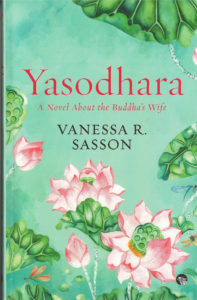
Last week, I traveled to Red Wing, Minnesota, to attend the wedding of my brother’s oldest daughter. I took along “Yasodhara: A Novel About the Buddha’s Wife,” which has been gathering dust on my to-be-read pile of books. It was only later that I realized this was not a random decision.
A long time ago, in a far-off kingdom, a boy and a girl, born on the same day, were destined to be together–and then painfully wrenched apart. The boy was Siddhattha, heir to the Sakya kingdom and the future Buddha; the girl was the beautiful and precocious Yasodhara, his friend who became his loving wife.
In this exquisitely crafted narrative, we encounter Yasodhara as a fiercely independent, passionate and resilient individual. We witness her joys and sorrows, her expectations and frustrations, her fairy-tale wedding, and her overwhelming devastation at the departure of her beloved.
It is through her eyes that we witness Siddhattha’s slow transformation, from a sheltered prince to a deeply sensitive young man. On the way, we see how the gods watch over the future Buddha from the clouds, how the king and his ministers try to keep the suffering of the world from him and how he eventually renounces the throne, his wife and newly-born son to seek enlightenment.
Resurrecting a forgotten woman from the origin stories of the Buddha, Vanessa R. Sasson combines the spirit of fiction and the fabulism of Indian mythology with impeccable scholarship, to tell the evocative and deeply moving story of an extraordinary life.
Vanessa R. SassonThe author, Vanessa R. Sasson, is a professor of Religious Studies in the Liberal and Creative Arts and Humanities Department at Marianopolis College, Quebec. She is also a Research Fellow for the International Institute for Studies in Race, Reconciliation and Social Justice at the University of the Free State in South Africa, as well as Adjunct Professor at the Faculty of Religious Studies of McGill University, Montreal.
In the author’s introduction, she explains the book in this way:
Yasodhara, the Buddha’s wife, is not the focus of most early Buddhist hagiographies. The literature preserves fragments of her life, but the focus is (unsurprisingly) usually on her husband. In this book, I have tried to bring together some of these early fragments into the shape of a modern novel, to tell her story from her perspective (as I imagine it). As the writing process unfolded, however, I came to appreciate how much information we are missing. The literature is genuinely scant where she is concerned— particularly regarding her youth. She is a key player during a few moments in the Buddha’s life, but otherwise, we know little about her. We know she produced their one and only son, that she was left behind when he made his Great Departure, and that when he returned to the palace seven years later, he took his son back to the forest with him. The Jatakas (past-life stories) refer to her in a number of accounts, suggesting that Yasodhara and the Buddha had been connected for lifetimes, but we do not know much more than that. Indeed, Yasodhara is so marginalized in some cases that she does not even receive a name. She is known simply as Rahulamata—Rahula’s mother. …
The story I have told here is, therefore, a story inspired by later hagiographies. It is not historical fiction, but perhaps what can be more appropriately labelled “hagiographical fiction” (if such a label existed). This book is my attempt at recreating a hagiography, inspired by hagiographies that belong to an earlier time.
The novel stands alone well by itself, “a story inspired by later hagiographies.” But for me the joy was reading each chapter with the notes that detail the sources of her inspiration.
Returning to the topic of my trip, it wasn’t until near the end of the book that I realized why I was drawn to this tale. It was at the point in the story when Siddhattha, now the Buddha, returns to the Sakya palace. Yasodhara, who has felt abandoned by her husband and wears widow’s clothes, must now confront the loss of her 7-year-old son Rahula.
My parents divorced in 1960 when I was 9 years old and my brother 7. My mother threatened to kill herself if my father followed through with his attempt to gain custody. My brother and I lived with my mother and rarely saw our father once he moved away with his new wife. My mother never remarried. Later in life, I blind-sided my first wife with a divorce request because I was, as an acquaintance described it, “feeling my generations” – the male equivalent of the ticking biological clock. I could really relate to the tale of Yasodhara.
This weekend I watched as a lovely young couple married. They lived together for 10 years before exchanging vows. That’s longer than my parents’ marriage and longer than my first marriage. May they have a long and happy life as husband and wife.