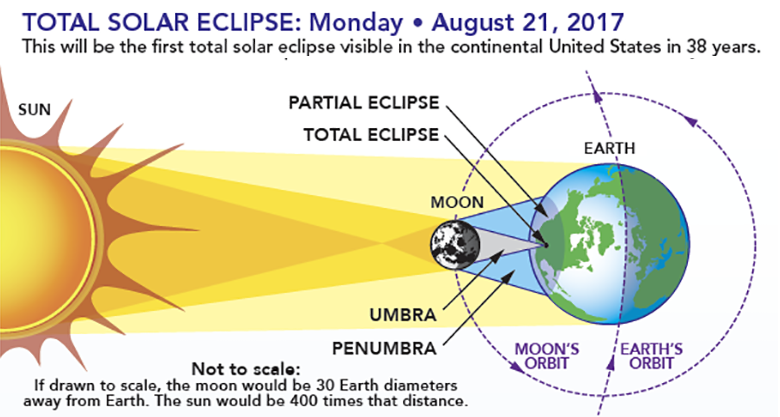
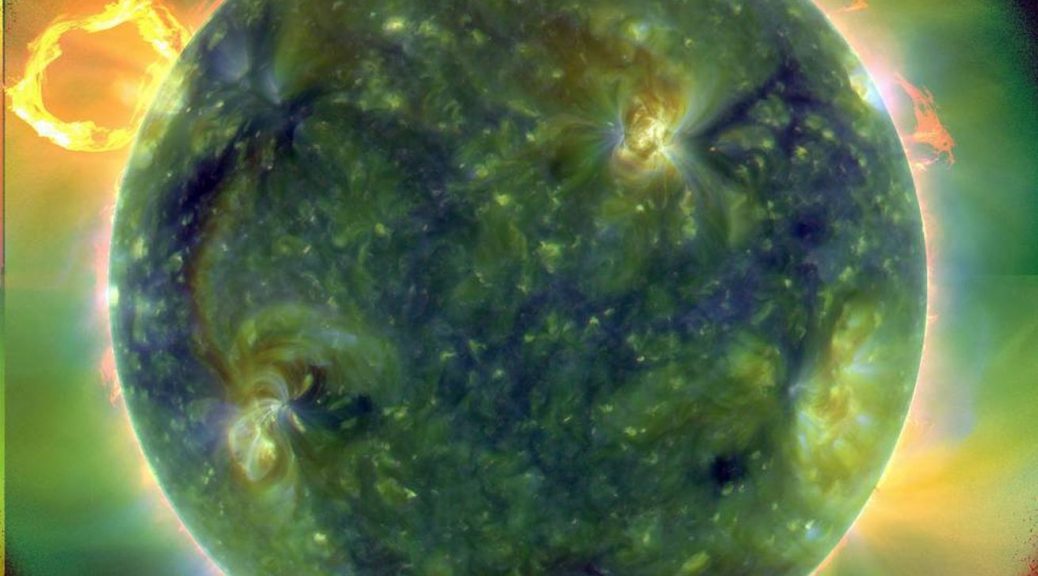
But Monday, Aug. 21, 2017, wasn’t a normal day. Everyone was hyped about the TOTAL SOLAR ECLIPSE. I wasn’t excited to see the eclipse – I watched what could be seen from Sacramento on the last eclipse, Monday, February 26, 1979 – but the hype put me in a mood to do something special to mark the occasion.
So I created my Eclipse Protection ceremony.
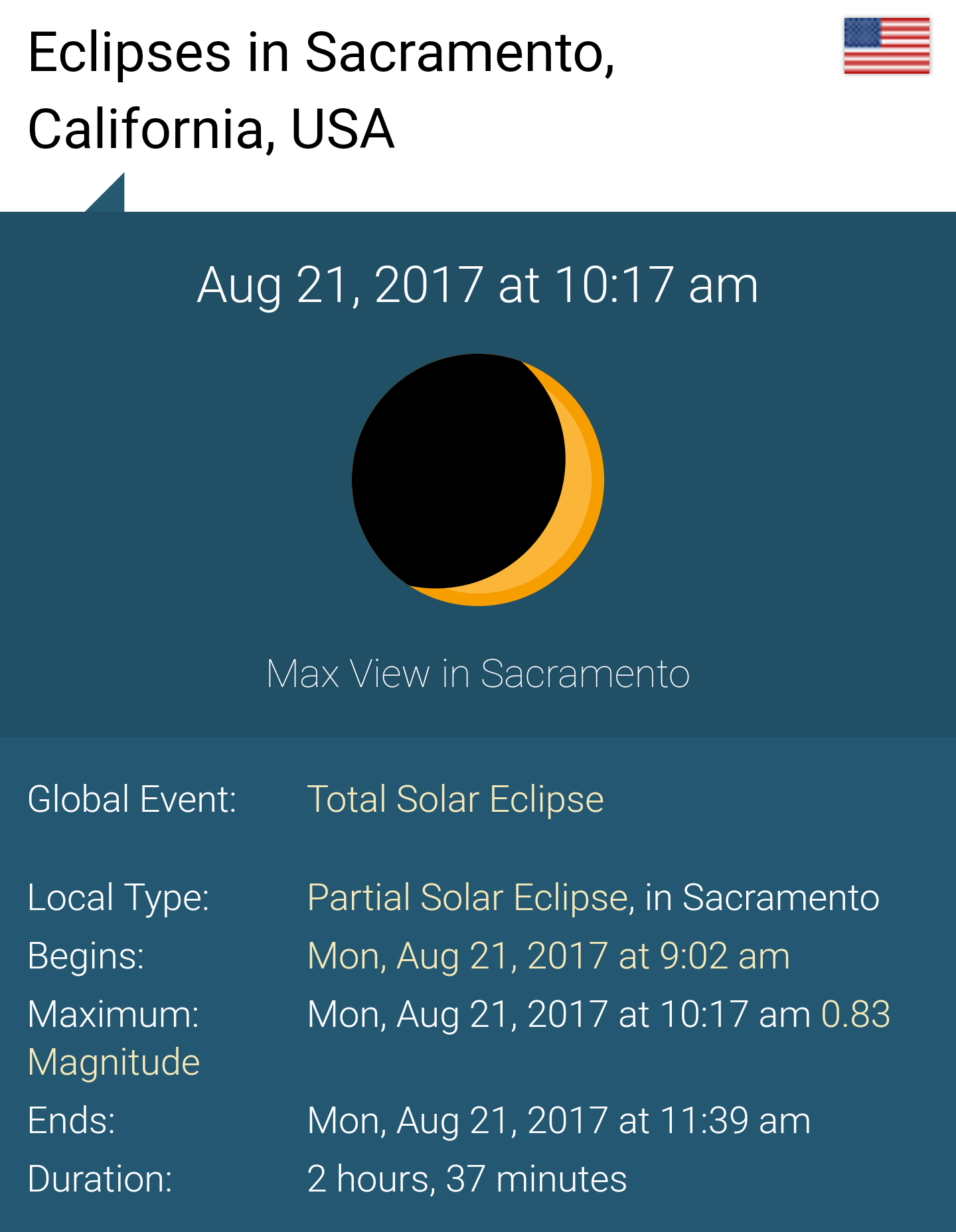
A quick Google search gave the local parameters. The moon would start to cross in front of the sun at 9:02am and reach the maximum coverage at 10:17am. The eclipse would end locally at 11:39am.
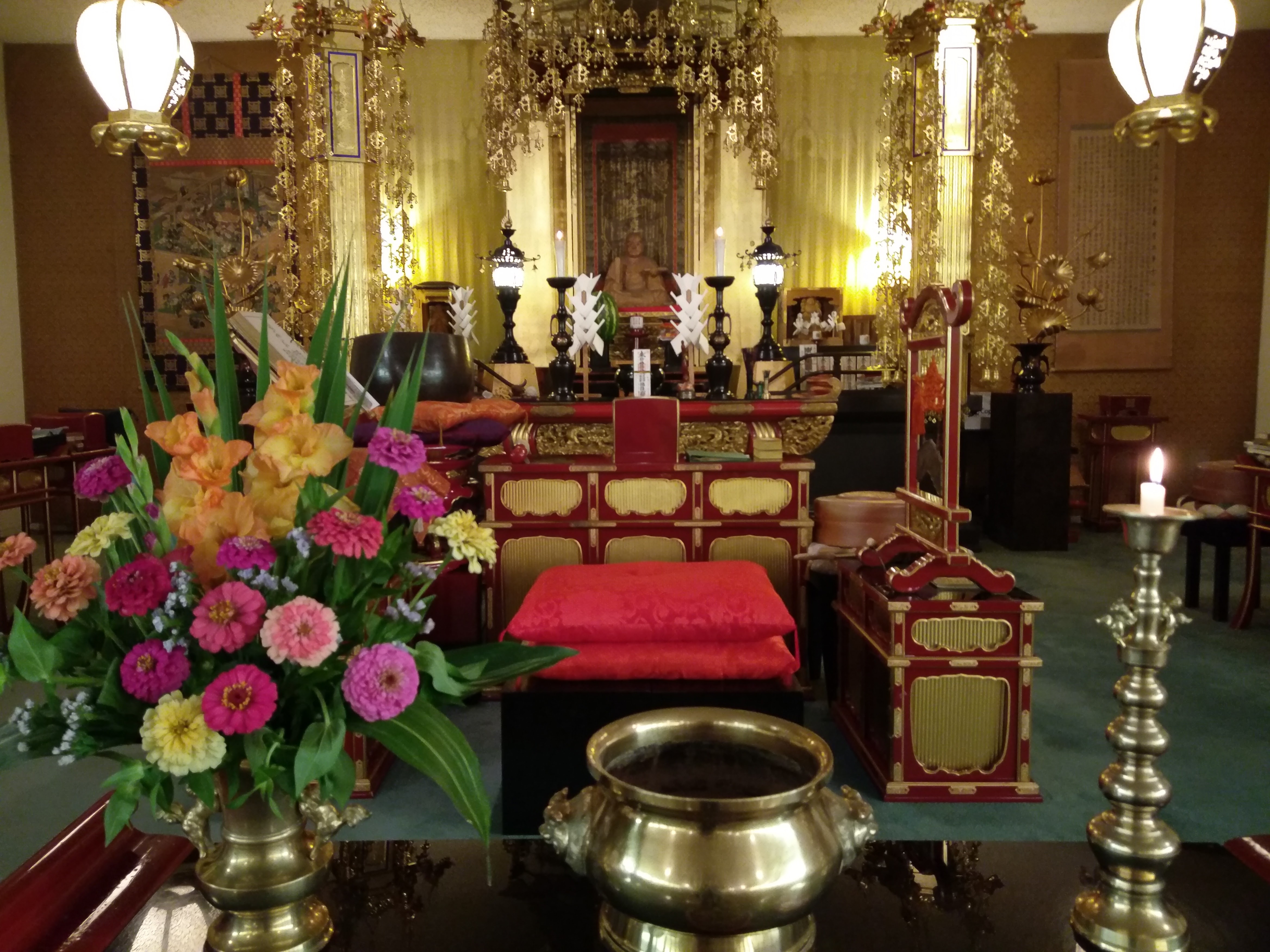
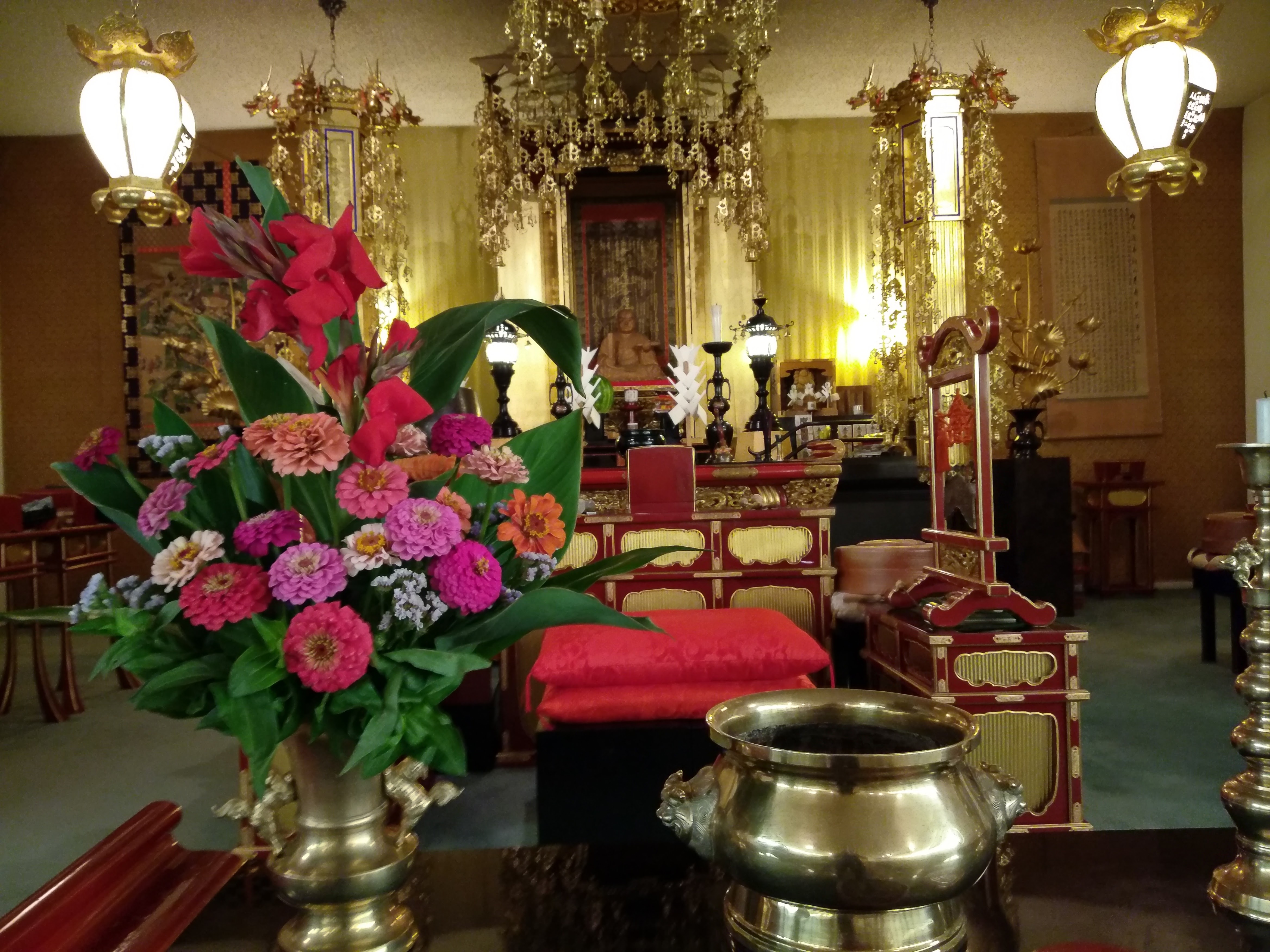
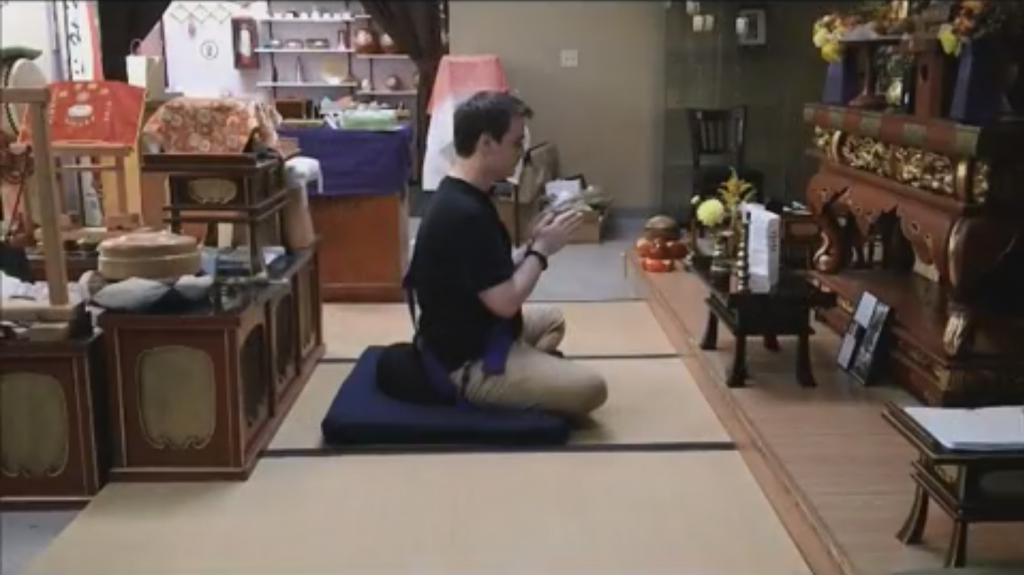
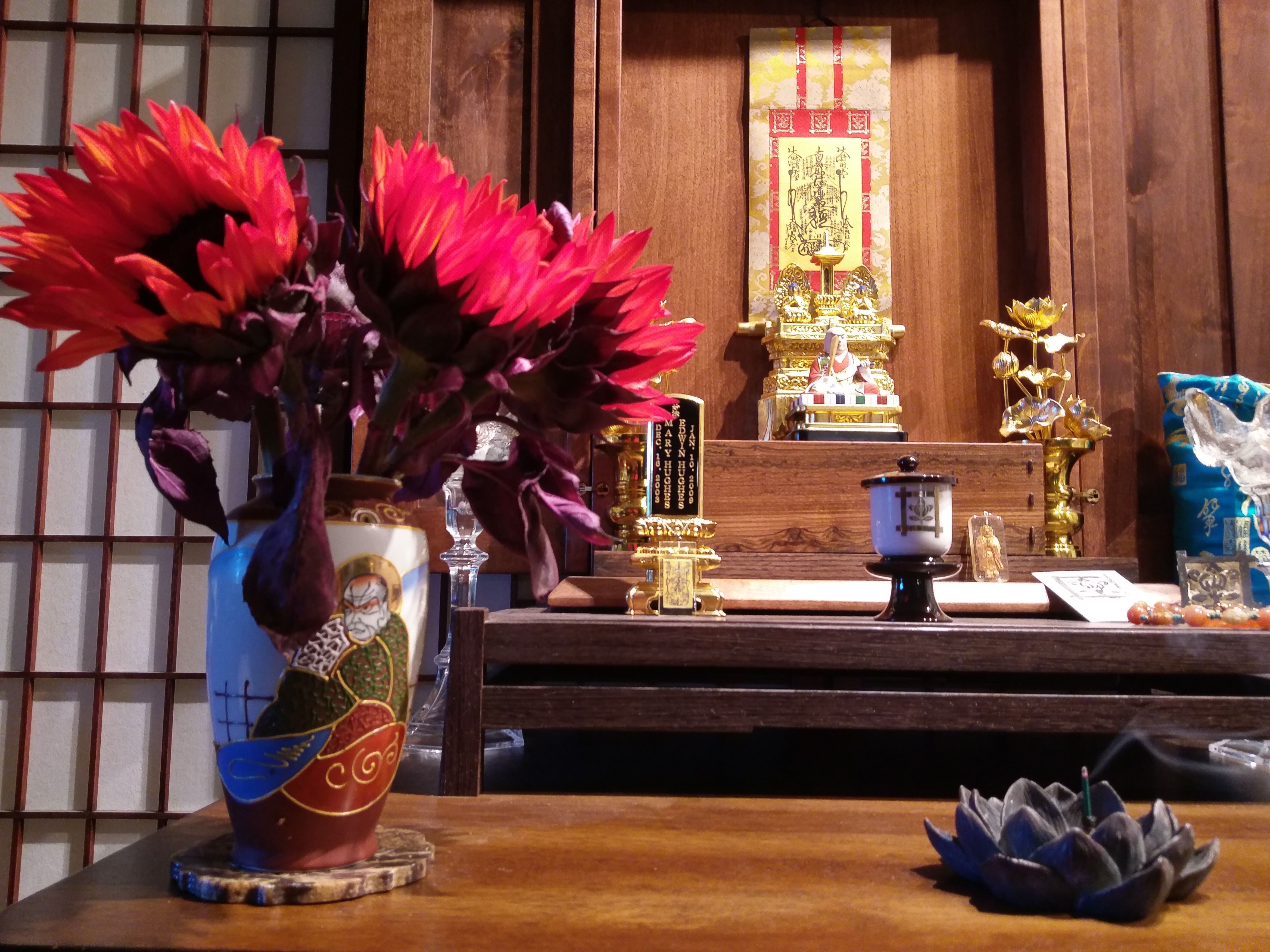
So to begin I set up my altar with water, lit the candles and started a stick of incense. I bowed three times and kneeled on my floor cushion and waited for 9:02am.
At the appointed time, I started the timer and began chanting at a measured pace of one Namu Myoho Renge Kyo per breath. While chanting I imagined the moon beginning to eat at the edge of the sun’s disk of light.
After Kaikyoge I recited the title of the Lotus Sūtra– Myoho Renge Kyo – and then recited today’s portion of the Sūtra in shindoku, the traditional Japanese reading of the Chinese characters.
When I finished reciting the Sūtra I had a few minutes before the start of the middle portion of chanting. I used that time to stretch my legs in silent walking meditation.
By 10:02am I was seated again. I lit another stick of incense and started the timer. This time I accompanied my chanting with my Uchiwa Daiko, pausing on Namu and then striking the fan drum on Myo, Ho, Ren, Ge, Kyo. I chanted at the pace we normally chant during services at the Sacramento Nichiren Buddhist Church.
The timer rang a bell at exactly 10:17am. The 0.83 percent coverage of the sun above Sacramento made the sky outside look as if it were overcast. As I continued chanting and striking the drum I imagined watching the sliver of light grow in brightness as the sun’s disk was uncovered.
Once the 30 minutes of chanting was complete, I opened my English copy of The Lotus Sūtra to my bookmark and began reciting aloud the last half of Chapter 2, Expedients, which was today’s portion of my 32-day cycle.
I’m including the full text here. While you read, imagine the world around you getting brighter and brighter.
Day 4
Chapter 2: Expedients (Continued)
Thereupon the World-Honored One, wishing to repeat what he had said, sang in gāthās:
Some bhikṣus and bhikṣunīs
Were arrogant.
Some upāsakās were self-conceited.
Some upāsikās were unfaithful.
Those four kinds of devotees
Were five thousand in number.
They could not see their own faults.
They could not observe all the precepts.
They were reluctant to heal their own wounds.
Those people of little wisdom are gone.
They were the dregs of this congregation.
They were driven away by my powers and virtues.
They had too few merits and virtues
To receive the Dharma.
Now there are only sincere people here.
All twigs and leaves are gone.
Śāriputra, listen attentively!
The Buddhas, having attained the Dharma,
Expound it to all living beings
By their immeasurable power to employ expedients.
I caused all living beings to rejoice
By telling them stories of previous lives,
Parables, similes and discourses,
That is to say, by employing various expedients
Because I knew their thoughts,
The various teachings they were practicing,
Their desires, their natures,
And the good and evil karmas they have previously done.
The sūtras were composed of prose, gāthās, and geyas.
The contents of them were
Miracles, parables, similes, upadesas,
And stories of the previous lives
Of Buddhas and of their disciples.
The reasons why the sūtras were expounded were also given.
I expounded the teaching of Nirvana to the dull people
Who wished to hear the teachings of the Lesser Vehicle,
Who were attached to birth and death,
And who were troubled by many sufferings
Inflicted on them because they have not practiced
The profound and wonderful teachings under innumerable Buddhas.
l expounded this expedient teaching in order to cause them
To enter the Way to the wisdom of the Buddha.
I never said to them:
“You will be able to attain the enlightenment of the
Buddha.” I never said this
Because time was not yet ripe for it.
Now is the time to say it.
I will expound the Great Vehicle definitely.
I expounded various sūtras of the nine elements
According to the capacities of all living beings.
I expounded various sūtras
Because those sūtras were a basis for the Great Vehicle.
Some sons of mine are pure in heart, gentle and wise.
They have practiced the profound and wonderful teachings
Under innumerable Buddhas
[ln their previous existence].
I will expound this sūtra of the Great Vehicle to them,
And a sure them of their future Buddhahood, saying:
“You will attain the enlightenment of the Buddha
In your future lives.”
Deep in their minds they are thinking of me,
And observing the pure precepts.
Therefore, they will be filled with joy
When they hear they will become Buddhas.
I know their minds.
Therefore, I will expound the Great Vehicle to them.
Any Śrāvaka or Bodhisattva
Who hears even a gāthā
Of this sūtra which I am to expound
Will undoubtedly become a Buddha.
There is only one teaching, that is, the One Vehicle
In the Buddha-worlds of the ten quarters.
There is not a second or a third vehicle
Except when the Buddhas teach expediently.
The Buddhas lead all Living beings
By tentative names [of vehicles]
In order to expound their wisdom.
They appear in the worlds
Only for the One Vehicle.
Only this is true; the other two are not.
The Buddhas do not save living beings by the Lesser Vehicle.
They dwell in the Great Vehicle.
The Dharma they attained is adorned
With the power of concentration of mind
And with the power of wisdom.
They save all living beings by the Dharma.
l attained unsurpassed enlightenment,
The Great Vehicle, the Truth of Equality.
If I lead even a single man
By the Lesser Vehicle,
I shall be accused of stinginess.
It is not good at all to do this.
l do not deceive
Those who believe me and rely on me.
I am not greedy or jealous
Because I have eliminated all evils.
Therefore, in the worlds of the ten quarters,
I am fearless.
I am adorned with the physical marks of a Buddha.
I am illumining the world with my light.
To the countless living beings who honor me, I will expound
The seal of the truth, that is, the reality of all things.
Know this, Śāriputra!
I once vowed that l would cause
All living beings to become
Exactly as I am.
That old vow of mine
Has now been fulfilled.
I lead all living beings
Into the Way to Buddhahood.
Seeing people of no wisdom, l thought:
“If I teach them only the Way to Buddhahood,
They will be distracted.
They will doubt my teaching, and not receive it.
I know that they did not plant
The roots of good in their previous existence.
They are deeply attached to the five desires.
They suffer because of stupidity and cravings.
Because they have many desires,
They will fall into the three evil regions,
Or go from one to another of the six regions
Only to undergo many sufferings.
Through their consecutive previous existences,
Their small embryos have continued to grow up
To become men of few virtues and merits.
They are now troubled by many sufferings.
They are in the thick forests of wrong views.
They say “Things exist,”
Or “Things do not exist.”
They are attached to sixty-two wrong views.
They are deeply attached to unreal things.
They hold them firmly, and do not give them up.
They are arrogant, self-conceited,
Liable to flatter others, and insincere.
They have never heard of the name of a Buddha
Or of his right teachings
For thousands of billions of kalpas.
It is difficult to save them.”
Therefore, Śāriputra!
I expounded an expedient teaching
In order to eliminate their sufferings.
That was the teaching of Nirvana.
The Nirvana which I expounded to them
Was not true extinction.
All things are from the outset
In the state of tranquil extinction.
The Buddhas’ sons who complete the practice of the Way
Will become Buddhas in their future lives.
l expounded the teaching of the Three Vehicles
Only as an expedient.
All the other World-Honored Ones also
Expound the teaching of the One Vehicle [with expedients].
The great multitude present here
Shall remove their doubts.
The Buddhas do not speak differently.
There is only one vehicle, not a second.
The number of the Buddhas who passed away
During the past innumerable kalpas was
Hundreds of thousands of billions,
Uncountable.
All those World-Honored Ones expounded
The truth of the reality of all things
With various stories of previous lives, parables and similes,
That is to say, with innumerable expedients.
All those World-Honored Ones expounded
The teaching of the One Vehicle,
And led innumerable living beings [with expedients]
Into the Way to Buddhahood.
All those Great Saintly Masters
Who knew the deep desires
Of the gods, men, and other living beings
Of all the worlds,
Revealed the Highest Truth
With various expedients.
Those who met a past Buddha,
Who heard the Dharma from him,
And who obtained various merits and virtues
By almsgiving or by observing the precepts
Or by patience or by making endeavors
Or by dhyāna or by wisdom,
Have already attained
The enlightenment of the Buddha.
Those who, after the extinction of a Buddha,
Were good and gentle,
Have already attained
The enlightenment of the Buddha.
Those who, after the extinction of a Buddha,
Erected billions of stupas,
And who purely and extensively adorned [those stupas]
With treasures
Such as gold, silver, crystal,
Shell, agate, ruby, and lapis lazuli,
And who offered those adornments to his śarīras;
Or those who made the mausoleum [of the Buddha]
With stone, bricks, or clay,
Or with many kinds of wood,
Such as candana, aloes, or agalloch;
Or those who made the mausoleum of the Buddha
With heaps of earth
In the wilderness;
Or the boys who made the stupa of the Buddha
With heaps of sand by playing,
Have already attained
The enlightenment of the Buddha.
Those who carved an image of the Buddha
With the [proper] physical marks in his honor
Have already attained
The enlightenment of the Buddha.
Those who made an image of the Buddha
With the seven treasures;
Or those who made it
Of copper, copper-gold alloy, nickel,
Pewter lead, tin, iron, wood, or clay;
Or those who made it in plaster work,
Have already attained
The enlightenment of the Buddha.
Those who drew or caused others to draw in color
A picture of the Buddha adorned with his physical marks,
Each mark representing one hundred merits,
Have already attained the enlightenment of the Buddha.
The boys who by playing drew
A picture of the Buddha
With a piece of grass or wood,
Or with a brush,
Or with the back of their fingernails,
Became able to accumulate merits one by one.
Having great compassion towards others,
They attained the enlightenment of the Buddha,
Taught only Bodhisattvas,
And saved many living beings.
Those who respectfully offered
Flowers, incense, streamers, and canopies
Enshrined in a stupa-mausoleum;
Or those who caused men to make music
By beating drums, by blowing horns and conches,
And by playing reed-pipes, flutes, lyres, harps,
Lutes, gongs, and copper cymbals,
And offered the wonderful sounds produced thereby
To the image or picture of the Buddha;
Or those who sang joyfully in praise of him for his virtues;
Or those who just murmured [in praise of him],
Have already attained
The enlightenment of the Buddha.
Those who, without concentrating their minds,
Offered nothing but a flower to the picture of the Buddha,
Became able to see
Innumerable Buddhas one after another.
Those who bowed to the image of the Buddha,
Or just joined their hands together towards it,
Or raised only one hand towards it,
Or bent their head a little towards it
And offered the bending to it,
Became able to see innumerable Buddhas one after another.
They attained unsurpassed enlightenment,
Saved countless living beings,
And entered into the Nirvana-without-remainder
Just as fire dies out when wood is gone.
Those who entered a stupa-mausoleum
And said only once “Namo Buddhaya,”
Without even concentrating their minds,
Have already attained the enlightenment of the Buddha.
Those who heard the Dharma
In the lifetime of a past Buddha
Or after his extinction
Have already attained the enlightenment of the Buddha.
The World-Honored Ones in the future
Will be countless in number.
Those Tathāgatas also
Will expound the Dharma with expedients.
The Tathāgatas save all living beings
With innumerable expedients.
They cause all living beings to enter the Way
To the wisdom-without-āsravas of the Buddha.
Anyone who hears the Dharma
Will not fail to become a Buddha.
Every Buddha vows at the outset:
“I will cause all living beings
To attain the same enlightenment
That I attained.”
The future Buddhas will expound many thousands
Of myriads of millions of teachings
For just one purpose,
That is, for the purpose of revealing the One Vehicle.
The Buddhas, the Most Honorable Bipeds,
Expound the One Vehicle because they know:
“All things are devoid of substantiality.
The seed of Buddhahood comes from dependent origination.”
The Leading Teachers expound the Dharma with expedients
After realizing at the place of enlightenment:
“This is the abode of the Dharma and the position of the Dharma.
The reality of the world is permanently as it is.”
Gods and men are making offerings
To the present Buddhas of the worlds of the ten quarters.
The Buddhas as many as there are sands in the River Ganges
Who appeared in these worlds,
Are expounding the Dharma
For the purpose of giving peace to all living beings.
They know the Highest Truth of Tranquil Extinction.
They have the power to employ expedients.
Although they expound various teachings,
Their purpose is to reveal the Buddha-Vehicle.
Knowing the deeds of all living beings,
And their thoughts deep in their minds,
And the karmas they have done in their previous existence,
And their desires, natures, and powers to make efforts,
And also knowing whether each of them is keen or dull,
The Buddhas expound the Dharma according to their capacities,
With various stories of previous lives, parables, similes and discourses,
That is to say, with various expedients.
I also do the same.
I show the enlightenment of the Buddha
With various teachings
In order to give peace to all living beings.
I know the natures and desires of all living beings
By the power of my wisdom.
Therefore, I expound various teachings expediently,
And cause all living beings to rejoice.
Śāriputra, know this!
Seeing with the eyes of the Buddha
The living beings of the six regions, I thought:
“They are poor, and devoid of merits and wisdom.
They incessantly suffer because they are taken
To the rough road of birth and death.
They cling to the five desires
Just as a yak loves its tail.
They are occupied with greed and cravings,
And blinded by them.
They do not seek the Buddha who has great power.
They do not seek the Way to eliminate sufferings.
They are deeply attached to wrong views.
They are trying to stop suffering by suffering.”
My great compassion was aroused towards them.
I for the first time sat at the place of enlightenment[,]
[And attained enlightenment].
For three weeks afterwards,
I gazed on the tree,
Or walked about, thinking:
“The wisdom I obtained is
The most wonderful and excellent.
The living beings [of the six regions]
Are dull, attached to pleasures,
And blinded by stupidity.
How shall I save them?”
On that occasion King Brahman,
Heavenly-King Śakra,
The four heavenly world-guardian kings,
Great-Freedom God, and other gods [of each world],
And thousands of millions of their attendants
Joined their hands together [towards me] respectfully,
Bowed to me,
And asked me to turn the wheel of the Dharma.
I thought:
“If I extol only the Buddha-Vehicle,
The living beings [of the six regions] will not believe it
Because they are too much enmeshed in sufferings to think of it.
If they do not believe but violate the Dharma,
They will fall into the three evil regions.
I would rather enter into Nirvana quickly
Than expound the Dharma to them.”
But, thinking of the past Buddhas who employed expedients,
I changed my mind and thought:
“I will expound the Dharma which l attained
By dividing it into the Three Vehicles.”
The Buddhas of the worlds of the ten quarters
Appeared before me when I had thought this.
They consoled me with their brahma voices:
“Good, Śākyamuni, Highest Leading Teacher!
You attained the unsurpassed Dharma.
You have decided to expound it with expedients
After the examples of the past Buddha
We also expound the Three Vehicles
To the Living beings
Although we attained
The most wonderful and excellent Dharma.
Men of little wisdom wish to hear
The teachings of the Lesser Vehicle.
They do not believe that they will become Buddhas.
Therefore, we show them
Various fruits of enlightenment.
Although we expound the Three Vehicles,
Our purpose is to teach only Bodhisattvas.”
Śāriputra, know this!
Hearing the deep, pure, and wonderful voices
Of the Lion-Like Saints,
l joyfully called out, “Namo Buddhaya!”
I thought:
“I appeared in the defiled world.
Just like the other Buddhas,
I will expound the Dharma
According to the capacities of all living beings.”
Having thought this, I went to Varanasi,
And expounded the Dharma to the five bhikṣus
With expedients
Because the state of tranquil extinction of all things
ls inexplicable by words.
That was my first turning
Of the wheel of the Dharma.
Thus the words: Nirvana, Arhat, Dharma,
and Sangha
Came into existence.
I said to them:
“For the past innumerable kalpas
I have been extolling the teaching of Nirvana
In order to eliminate the sufferings of birth and death.”
Śāriputra, know this!
Then I saw many sons of mine,
Thousands of billions in number,
Seeking the enlightenment of the Buddha.
They came to me respectfully.
They had already heard
Expedient teachings
From the past Buddhas.
I thought:
“I appeared in this world
In order to expound my wisdom.
Now is the time to do this.”
Śāriputra, know this!
Men of dull capacity and of little wisdom cannot believe the Dharma.
Those who are attached to the appearances of things are arrogant.
They cannot believe it, either.
I am now joyful and fearless.
I have laid aside all expedient teachings.
l will expound only unsurpassed enlightenment
To Bodhisattvas.
The Bodhisattvas who hear the Dharma
Will be able to remove the mesh of doubts.
The twelve hundred Arhats also
Will become Buddhas.
All the Buddhas in the past, present, and future
Expounded, are expounding, and will expound
In the same manner the Dharma beyond comprehension.
I also will expound it in the same manner.
The Buddhas seldom appear in the worlds.
It is difficult to meet them.
Even when they do appear in the worlds,
They seldom expound the Dharma.
It is difficult to hear the Dharma
Even during innumerable kalpas.
It is also difficult to meet a person
Who listens to the Dharma attentively.
It is as difficult as seeing an udumbara-flower.
This flower, loved by all living beings,
And treasured by gods and men,
Blooms only once in a long time.
Anyone who rejoices at hearing the Dharma
And utters even a single word in praise of it
Should be considered to have already made offerings
To the past, present, and future Buddhas.
Such a person is rarely seen,
More rarely than the udumbara-flower.
[The Buddha said to the great multitude:]
All of you, do not doubt me!
I am the King of the Dharma.
I say to you:
“I will expound the teaching of the One Vehicle
Only to Bodhisattvas.
There is no Śrāvaka among my disciples.”
Śāriputra, other Śrāvakas, and Bodhisattvas!
Know this!
This Wonderful Dharma is
The hidden core of the Buddhas.
The living beings
In the evil world of the five defilements
Are attached to many desires.
They do not seek the enlightenment of the Buddha.
Evil people in the future will doubt the One Vehicle
When they hear it from a Buddha.
They will not believe or receive it.
They will violate the Dharma, and fall into the evil regions.
Extol the teaching of the One Vehicle
In the presence of those who are modest,
Who are pure in heart,
And who are seeking enlightenment of the Buddha!
Śāriputra [and others], know this!
As a rule, the Buddhas expound the Dharma
With billions of expedients as stated above,
According to the capacities of all living beings.
Those who do not study the Dharma
Cannot understand it.
You have already realized
The fact that the Buddhas, the World-Teachers, employ expedients,
According to the capacities of all living beings.
Know that, when you remove your doubts,
And when you have great joy,
You will become Buddhas!
[Here ends] the First Volume of the Sūtra of the Lotus flower of the Wonderful Dharma.
End of Day 4
I had time for another period of silent meditation before the final 20 minutes.
At 11:39am, the timer bell rang and I bowed, got up and put out the candles.
I showered, changed clothes and went grocery shopping. It was still Monday, after all.