Category Archives: Blog

Flowers

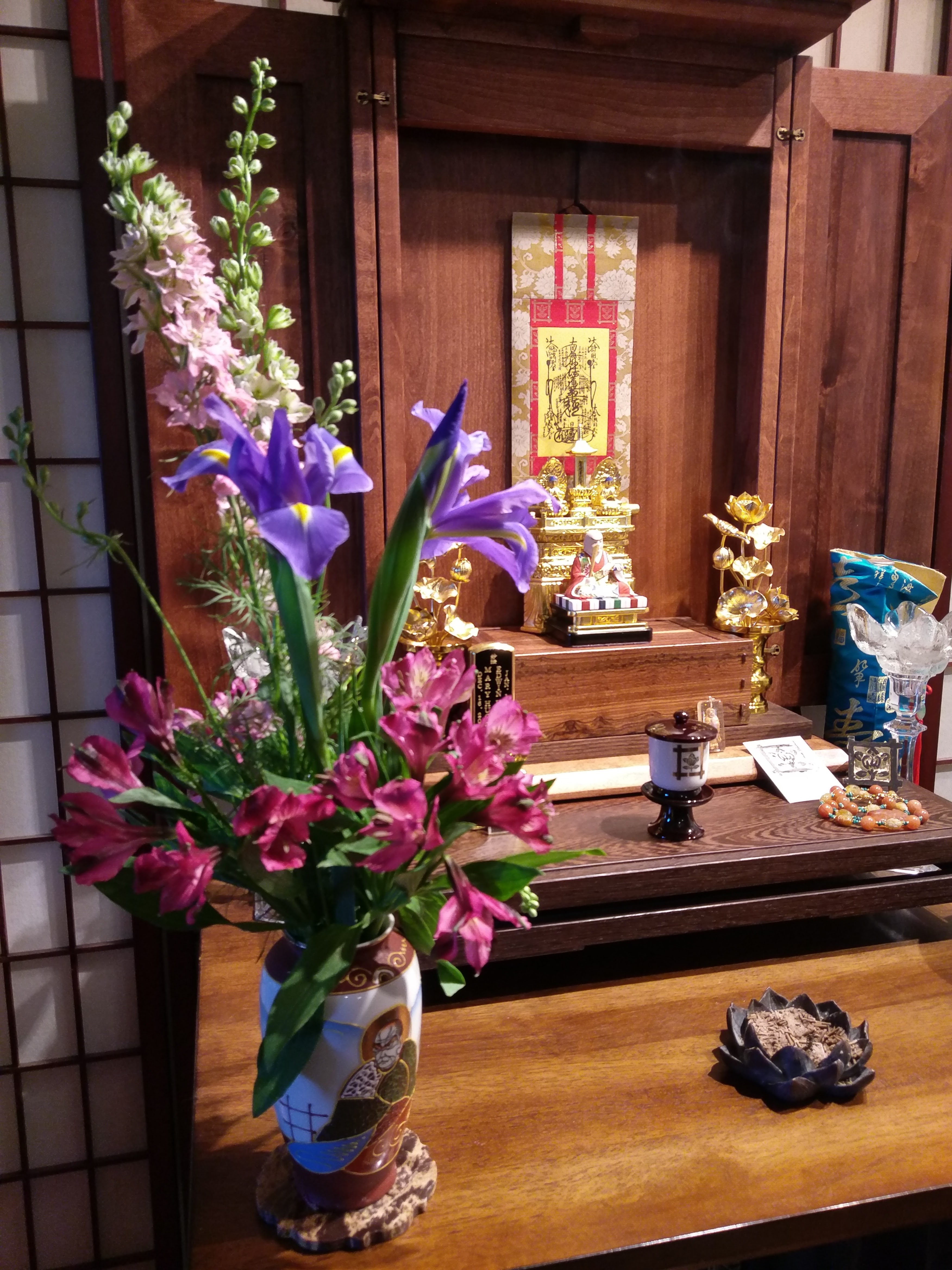
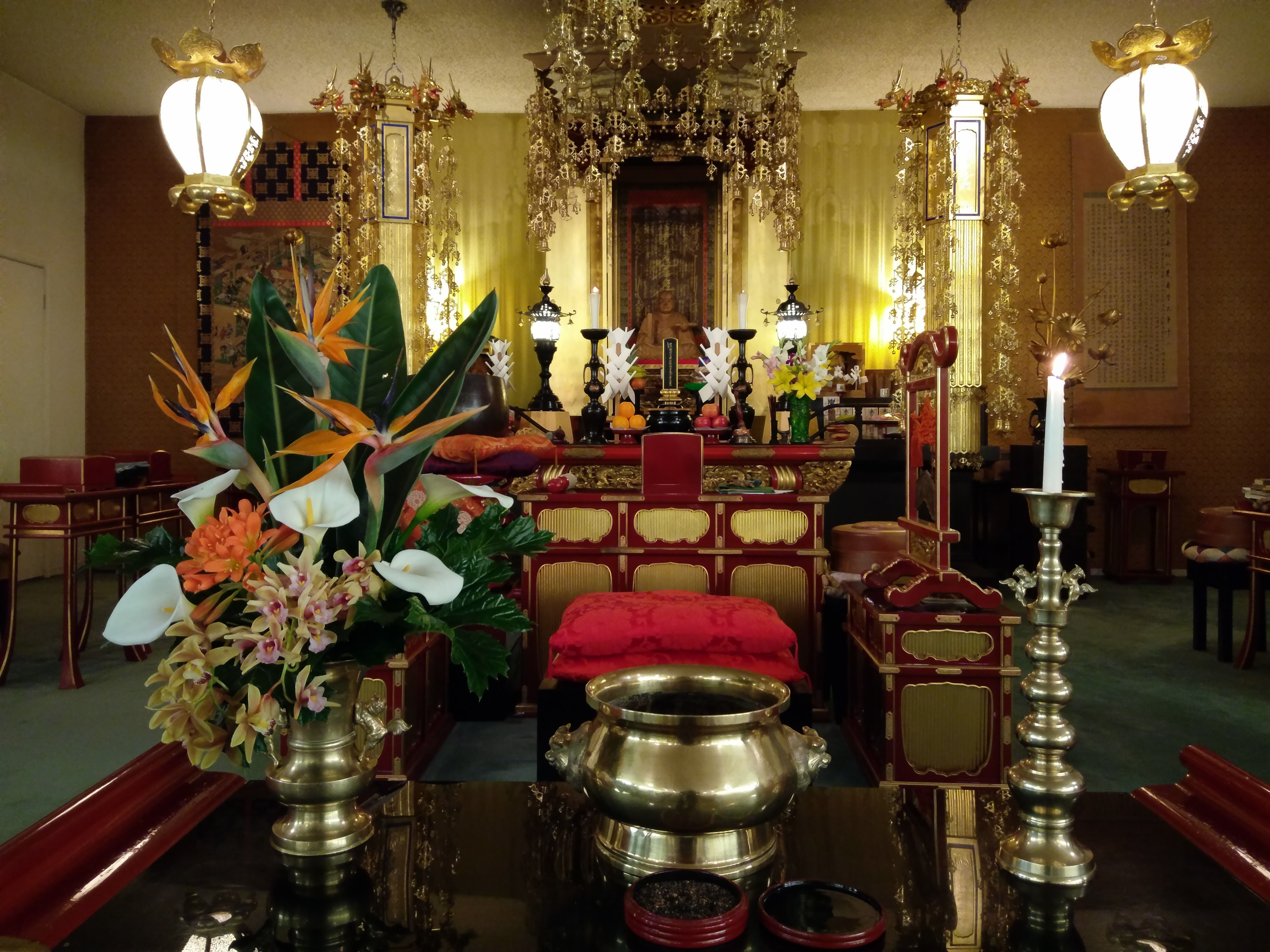
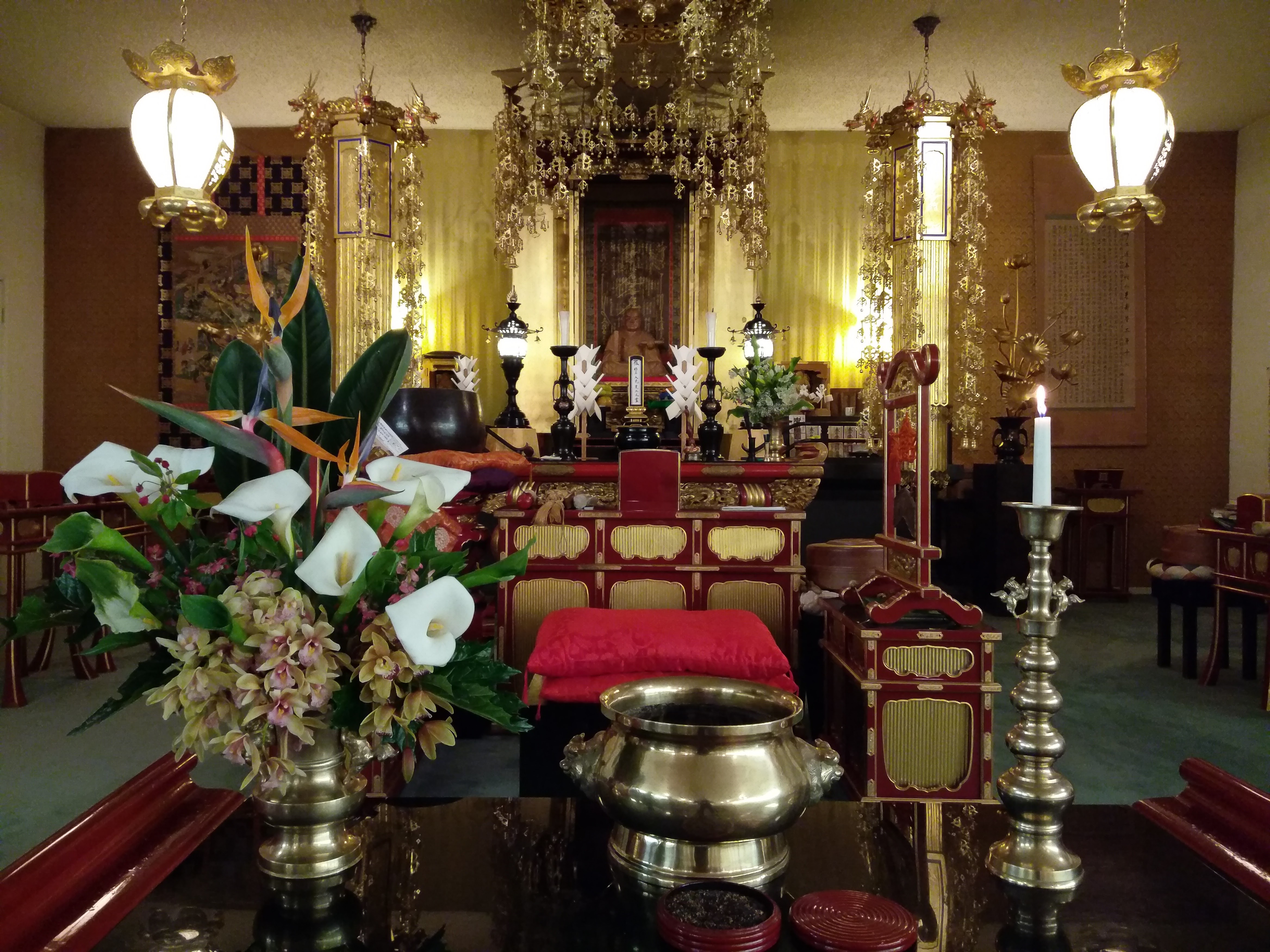
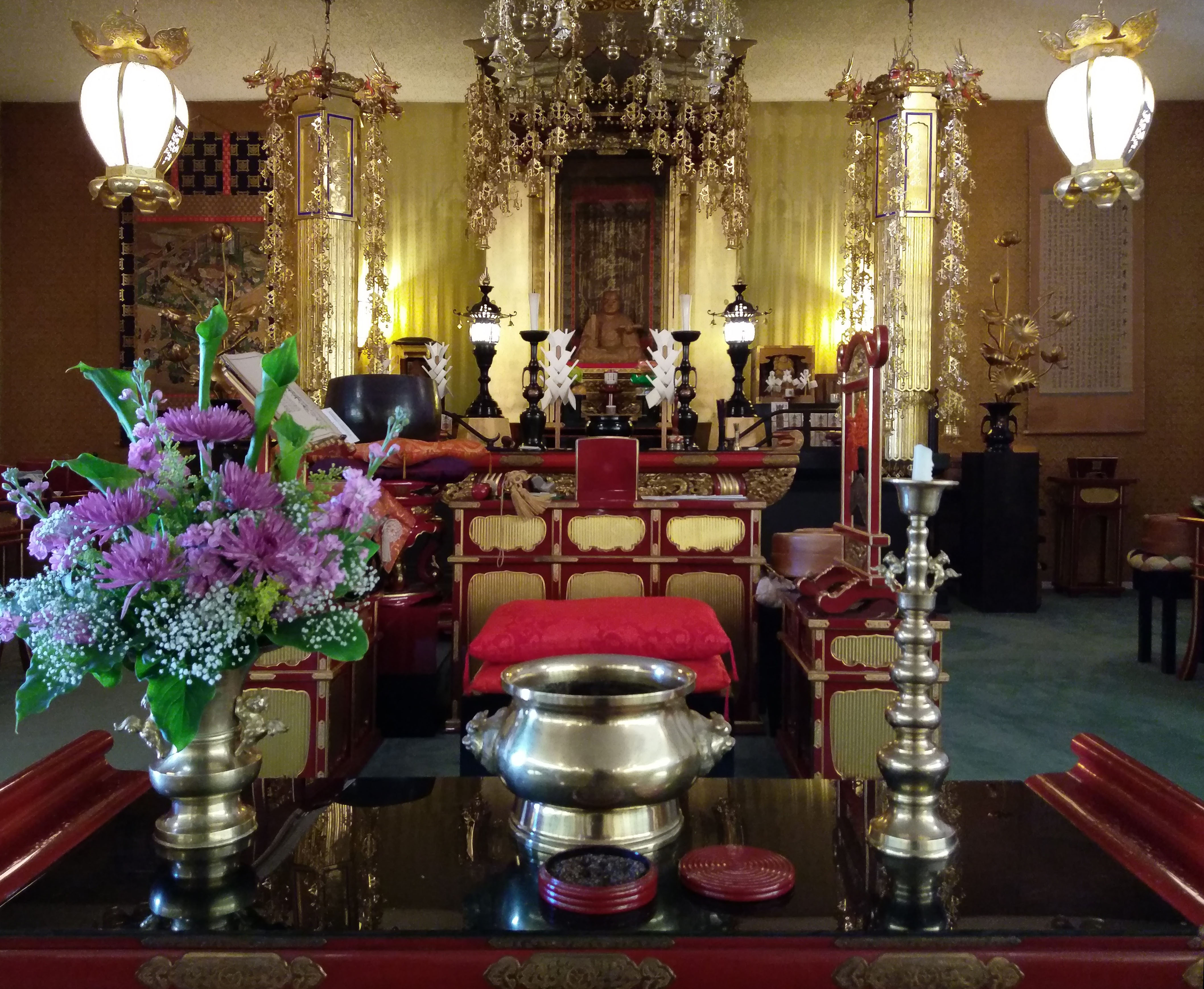
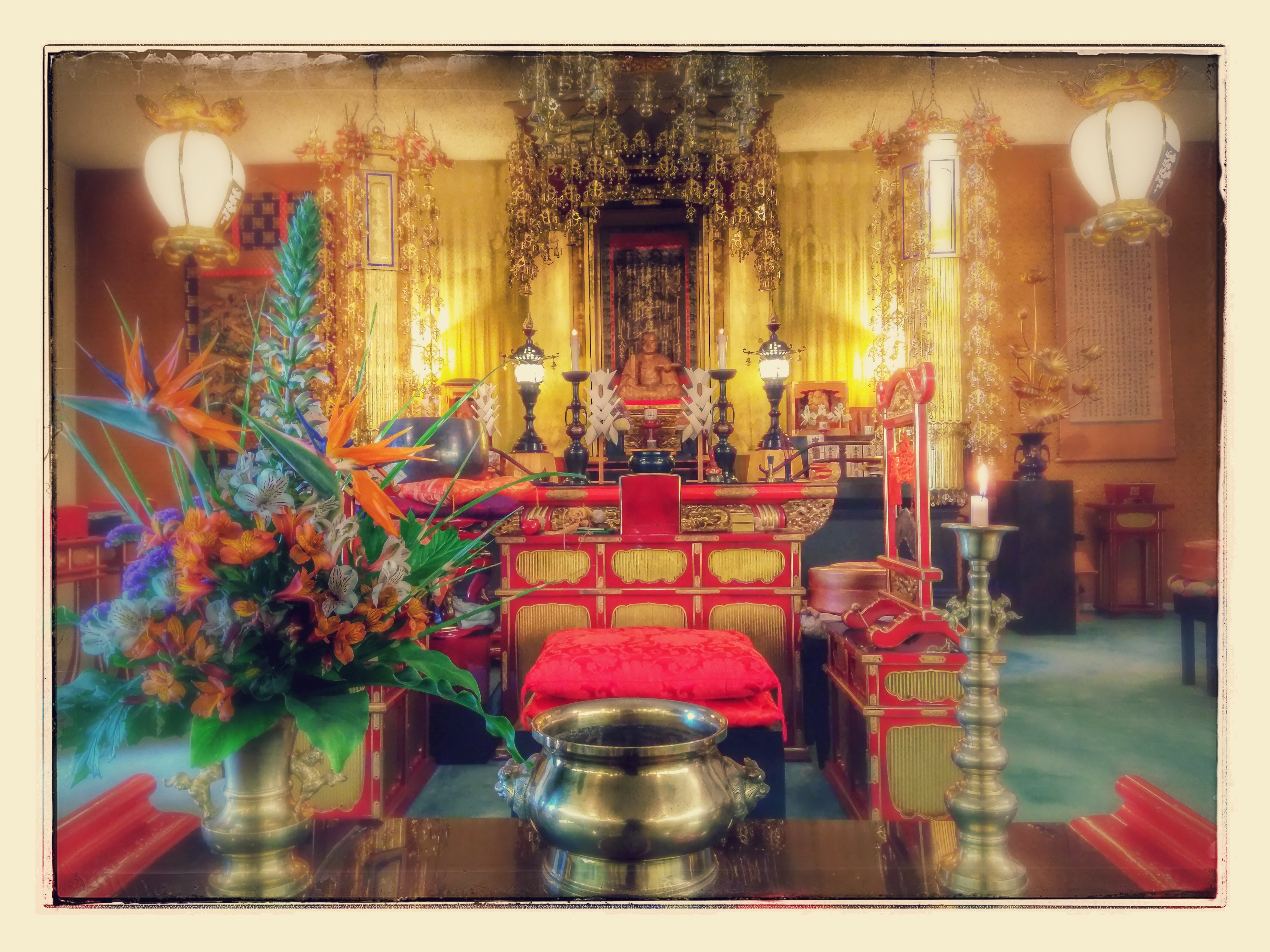
Attended services at the Sacramento Nichiren Buddhist Church Sunday. After each service I take a photo of the flowers arranged by Rev. Kenjo Igarashi‘s wife, Nihoko. Periodically, Google likes to volunteer an enhanced version of the photo and that’s what I’ve got here. (Here’s the original.)

And flowers are one of the things I enjoy most about difference between Soka Gakkai (and by extension Nichiren Shoshu) and Nichiren Shu. I never could understand why offering flowers would be frowned upon. After all, offering flowers is one of the specific ways of showing faith in the Sutra of the Lotus Flower of the Wonderful Dharma.

Each week I offer new flowers. This week I got a little carried away.
Flower offering

Birthday wishes

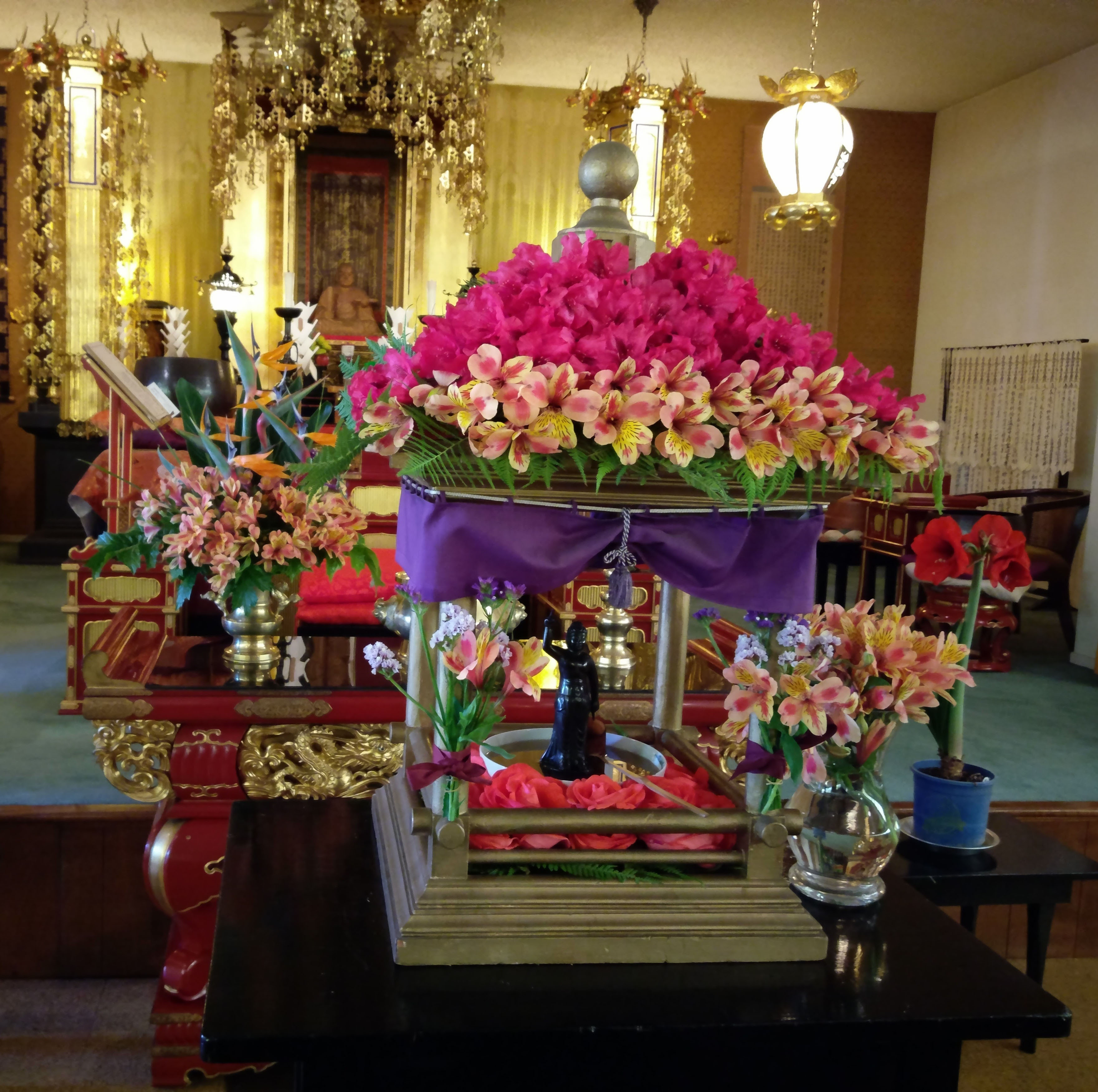
Hanamatsuri service with baby Sakyamuni surrounded by flowers and sweet tea.

Went to the Sacramento Nichiren Buddhist Church today. It was something of a pot-pourri of Buddhism.

The day began with the annual Hanamatsuri service. During the chanting of Odaimoku, the parishioners ladle sweet tea over a statue of baby Sakyamuni and then offer incense.

Following that Ven. Kenjo Igarashi performed his kaji kito blessing on each attendee. Normally this is a separate service held on the last Sunday of the month but Rev. Igarashi needs to travel to Japan and can’t hold the service next week.

car blessingAnd after all that we got to watch as Rev. Igarashi “purified” a parishioner’s new car. This particular member travels more than two hours to attend services so everyone agreed she needs all the protection she can get. I knew that Rev. Igarashi offered this but had never observed it. The ceremony involves many of the same tools used in the purification ceremony. In addition, uncooked rice and salt are tossed on the ground and water and saki poured around the car.

Finally we had a lunch prepared by the women’s club. In all, we had 24 diners, which is a nice size crowd.


I’m going to finish with a short tale. It is the type of tale that might be put to use later as a lesson for something. For now, I just want to tell what happened.


We have a new member, a woman who struggles financially. Each month she mails the church $20 in cash.

This woman was practicing Buddhism with Nichiren Shoshu for more than 40 years before joining our church. She is anxious to understand the differences between that sect and Nichiren Shu. Today’s Hanamatsuri service, for example, is the first she has participated in. Apparently nothing like that occurs at the Nichiren Shoshu temple in Pinole.

While riding to church today, she mentioned that she has been using stamps that feature prominent black history figures on the envelopes she mails to the church. She wondered if that was OK. Is there some prohibition about using such stamps for letters addressed to the church?

“Not that I am aware of,” I replied. “Why do you think it might be a problem.”

The woman explained that she received an envelope from the church and inside were generic postage stamps.

“Ahh!,” I said. “I’m certain that the stamps were not sent as a criticism. The priest appreciates that it costs you money to mail your money each month. He is offering the stamps as a gift to you.”

The woman was greatly relieved.

Personally, I was deeply impressed that Rev. Igarashi had done this. It is another of the many examples I’ve witnessed that underscore his care and concern for those he serves.

And on the 49th Day

Memorial service

Kanji Hitomi

On Saturday, April 22, 2017, I attended the 49 Day memorial service for Kanji Hitomi, a member of a prominent family at the Sacramento Nichiren Buddhist Church. My wife and I held a 49 Day service for her mother last year, but this was the first stand-alone 49 Day service I’ve attended. The attention paid to our deceased relatives, especially parents, is one of features of the Nichiren Shu practice I’ve found very rewarding.

Ven. Kenjo Igarashi offered his explanation the 49 Days after someone dies. The retelling is for those in the audience who are not members, but I always find it interesting.

Here’s my recollection:

After dying the body of the person is kept from moving with 49 nails. Each seven days seven nails are removed and a trial occurs. (I’ll admit to some confusion with being secured by nails and the previous tales of having to climb a mountain on the first seven days and crossing a river on the second, but I’m happy accept both concepts.) On the 35th Day, the deceased meets with Emma-o, the god of the underworld, who has a VCR and tape of every action of the deceased’s lifetime. No detail is left hidden as this karma is detailed.

On the final trial on the 49th Day, the last of the nails are removed. The deceased is in a room with a judge. The room contains six identical doors. One leads to hell. Another to the world of animals. Another goes to the world of asuras where everyone fights all the time. One leads to the world of hungry spirits. One returns to the world of humans. The sixth door leads to a heavenly realm. There is no way to tell which door leads to which realm. The judge silently motions for the deceased to pick a door.

The deceased’s karma determines the choice but the prayers of the living can transfer merit that can improve the lot of the deceased.

All of those attending today’s service were invited to join the family at a local Chinese restaurant where dishes favored by the deceased would be enjoyed by everyone.

Rev. Igarashi gave me a ride to the restaurant and while we were sitting together eating, he mentioned that this luncheon serves a special purpose. The feeling of satisfaction in dining and the camaraderie of the diners is transferred to the deceased.

I’ve considered myself a Buddhist for nearly 30 years, but it is only in the years that I’ve attended the Sacramento Nichiren Buddhist Church and delved into the teachings of Nichiren Shu that I feel genuinely Buddhist.

That’s just me. Your mileage may vary.

The Wondrousness That Opens

Ryusho Shonin and participants in discussion

20170412-Ryusho-hoyo_shiki

[Updated to include content from April 19, 2017, discussion]

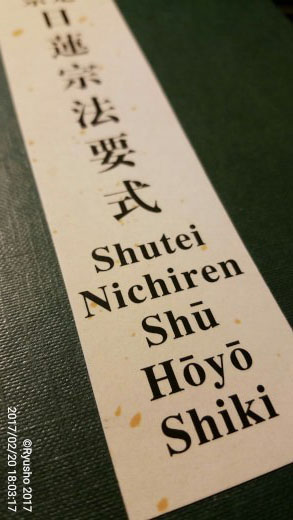
For the past several Wednesdays I’ve been attending (online) Ryusho Shonin‘s lectures Historical Background of Standards and Rituals in Nichiren Shu. The depth of what we are studying is reflected in the excerpt from the Shutei Nichiren Shu Hoyo Shiki below:

The five characters of myo, ho, ren, ge, and kyo are the wondrousness that opens. The 28 chapters are the Dharma that is to be opened. That is why each phrase converges in the wonderful name. Each character is a true Buddha. Therefore, each of the 60,000 characters is the Dharma-realm. The virtues [of those characters] are mutually embracing with no increase or decrease. [Each character produces virtue just as] the wish fulfilling jewel constantly rains down many other jewels. Even one jewel is enough, while 10,000 jewels are not too many. No matter the quantity what is produced is sufficient. You should know that each character and sound spreads throughout the Dharma-realm to propagate the Buddha’s teaching in the past, present, and future, bringing benefit to all beings.

This is the place of practice where the Three Treasures of ultimate truth and unseen beings who protect the Dharma now appear and accept our offerings. This land is the Buddha’s Pure Land of Eternally Tranquil Light. Our body is the awakened body of the uncreated three-bodies. The sutra that we are upholding is the objective sphere where all the Buddhas of the past, present, and future certify the Dharma. The thought that is rightly upheld is the mind-only Dharma-realm of three thousand worlds in a single thought-moment. Therefore, may each sound and each thought spread throughout the Dharma-realm, as offerings to the Three Treasures, contributions to all sentient beings, and adornments of the Buddha’s land that will equally benefit the natural spirits and other beings of heaven and earth inside and outside the place of practice and also the good men and women who are seeing, hearing, and enjoying them. This virtue will be limitless.

This is the place of practice where the Three Treasures of ultimate truth and the unseen beings who protect the Dharma now appear and descend to this place. They see us clearly with the light of their wisdom. This place of practice where we are is the Pure Land of Eternally Tranquil Light. This present form-body is the awakened Dharma-Body. The sutra that we are upholding is what all Buddhas certify as the Dharma. The thought that is rightly upheld is the entire Dharma-realm. May each sound and each thought and all the virtues spread equally to adorn the Buddha’s land as offerings to the Three Treasures and contributions to all sentient beings. May awakening spread everywhere manifesting its light. May all the natural spirits, other beings, and the four kind of devotees in this world, those who are far and near, inside and outside the place of practice, throughout heaven and earth, and those who have a relationship with the Dharma and are seeing, hearing, and enjoying it receive conspicuous and inconspicuous benefit equally and limitlessly.

The schedule of lectures can be found in the Myoshoji calendar.

Only Religious Piety

April 9, 2017, service

Attended the Sacramento Nichiren Buddhist Church service on April 9. In a addition to the regular service, 35-day prayers were said for a member of one of the church’s founding families. This was also the one-year anniversary for my wife’s mother’s death and memorial prayers were said for her. My wife and son both attended.

During Ven. Kenjo Igarashi‘s sermon, he told the story of a modern-day priest in Japan who was publically bemoaning that his temple didn’t have enough members to make it financially viable. Financial viability has been something of a personal concern for me as a member of the Sacramento Nichiren Buddhist Church because a bunch of church maintenance needs have all come due at the same time.

Rev. Igarashi said he read a newspaper article by the priest. Priests in Japan, he explained, have a difficult time, especially in the rural areas where young church members have moved to cities leaving fewer people to care for the church. Rev. Igarashi admitted he couldn’t relate to the troubles of a minister’s life in Japan because he has been preaching in America “for a very long time.” (He left Japan for training in Los Angeles in the 1970s, moved to San Francisco for a period and took over the duties in Sacramento in 1986.)

The priest in Japan was bemoaning that with fewer than a thousand members it is very hard to maintain the church. In reading this, Rev. Igarashi thought about our church. “How many people support the church? Only 20 or 30 people do. So if we were in Japan, it would already [have closed.]”

Rev. Igarashi pointed out that the priest in Japan was not of the Nichiren faith. The priest was finding it very hard to manage with only 100 members, surviving on memorial and funeral services. The priest said he needed a minimum of 300 members.

“This idea is completely different for me because church business is not like ordinary business, about making money,” Rev. Igarashi said. “Most important is faith. We have Nichiren Buddhism faith. Only Nichiren Buddhism faith support temples, not money. If only money supports this church [it would have already closed.] But everyone who attends this church has firm faith and that is why faith maintains our church.”

For Rev. Igarashi, the plight of the priest in Japan is completely foreign.

“Nichiren Shonin gave me this place for my practicing, the chanting and preaching, everything. Nichiren Shonin gave me this place. Therefore, I have to support this temple until I retire. But if I retire I would worry about this church. Some minister told me, ‘Rev. Igarashi do not worry. If you retire you do not care about your church.’ But I’m not [like that] because Nichiren Shonin gave me this place for my practicing.”

Rev. Igarashi underlined that he considers himself a member of the church as well.

Bottom line: “Only religious piety supports our church and keeps up our church and spread Nichiren Buddhism and try to save other people not by ourselves. If you understand the meaning of Nichiren Buddhism, you have to try to teach other people and save their spirit too.”

The effort to save other people, to act beyond one’s one happiness, is the true Nichiren Buddhism, he said.

“If members want to practice Nichiren Buddhism and try to study Nichiren Buddhism and the Lotus Sutra, then we can keep our church,” he said. “Only religious piety support our church, not only money.”

Paramita Week

March 26, 2017, service

Today was the Ohigan ceremony at the Sacramento Nichiren Buddhist Church, during which prayers are offered for our ancestors, to transfer our merit to them to ease their burden.

Ven. Kenjo Igarashi’s service reminded us that Ohigan is also the final day of a weeklong focus on living the life of the Six Paramitas.

The Six Paramitas, also known as the Six Perfections, are:

The bottom line of Buddhist practice, Rev. Igarashi explained, “Don’t make bad actions.”

At the last service, Rev. Igarashi explained that the first seven-day trial for the deceased is to climb a treacherous mountain. The heavier your karma, the more difficult the climb.

Today, Rev. Igarashi explained that the second seven-day trial involves crossing a deep river. Those with little or no bad karma can cross on a bridge but those with heavy karma are forced to cross by bobbing to the surface, sinking to the bottom, and bobbing to the service until they reach the other shore.

He also made an effort to explain the third seven day trial but something was lost in translation. The third week apparently involves snakes and cats but how and why were unclear.

Postscript: An article entitled Meido: The Japanese Underworld offers a detailed explanation of the trials of the 49 days following death. This is the explanation of the Third Trial:

The third trial takes place 21 days after death, and is overseen by King Soutei (whose true form is Manji Bosatsu, or Manjusri). Manji judges the souls on their sins of lust and sexuality, using a cat and a snake. The cat is used to judge the souls of men; it bites at their penises, and the degree of the injury — from a slight scratch to completely severed — is used as a measure of one’s sexual sin. The snake is used to judge the souls of women; it is inserted into the woman, and the depth to which it can enter is used to determine the depth of her sin. As before, some will go on to Hell, while others — with the aid of funerary services from their surviving family members — will pass on to the next trial.

What is Buddhahood or how would you describe it?

[This continues a previous conversation]

What is Buddhahood or, how would you describe it? It seems like such a vague term to me. Everywhere i’ve read, vagueness abounds. I was hoping you could maybe offer your take on this word?

On the meaning of Buddhahood, I like Ven. Kenjo Igarashi’s explanation here.

Specifically to Nichiren Buddhism, you have to consider Ichinen Sanzen, the 3000 realms in a single thought moment. Here’s a quick explanation.

And in the realm of things to ponder is Rev. Igarashi’s “Consciousness Only” view of our innate Buddhahood and why it seems hidden from us. See this blog post.

I’m sorry. I digested that information and, I just don’t get it.

One of the fundamental aspects of Buddhism is the requirement that each individual ponder what it all means. No one can enlighten you. There are certain things for which we are asked to have faith but even those require constant pondering. It’s all something to consider while chanting Namu Myoho Renge Kyo.

But if we can’t articulate these concepts in a way that lay men & women can understand, how can we propagate Buddhism?

Personally, I like the concept expressed by Ven. Kenjo Igarashi that “Essentially, [the eternal] Buddha is the ‘truth.’ ” One who becomes enlightened — who enters Buddhahood — awakens to the truth. The whole truth.

And what is this truth? Here’s one attempt to explain:

The Four Noble Truths are the fundamental teachings of the Buddha, a straight-forward application of the law of cause and effect. The Four Noble Truths are the truth of suffering, the truth of the cause of suffering, the truth of freedom from suffering, and the truth of the way to eliminate suffering that is the Eightfold Path. The first two truths describe the effect and the cause of suffering. The last two truths describe the effect and cause of freedom from suffering.
Lotus Seeds

The Physician left behind for us in the Lotus Sutra a medicine that looks, smells and tastes pleasing. It can cure all of the suffering children. The problem is that while it is easy enough to see that something looks nice and that it smells OK, there is no way tell if the medicine tastes pleasing without taking the medicine. That is the measure of the faith needed to embrace the Lotus Sutra and to receive the merits of this practice.

I believe I’ve articulated the foundation of Nichiren Buddhism, although I admit that much of it presupposes a certain general understanding of Buddhism.

My reading from the Lotus Sutra tonight covered Chapter 5: Simile of Herbs.

Although my teachings are of the same content to anyone
Just as the rain is of the same taste,
The hearers receive my teachings differently
According to their capacities
Just as the plants receive
Different amounts of the rain water.

Articulating these concepts in a way that “lay men & women” can understand is the original problem.

I appreciate you taking the time to explain things for me. I get the impression that Buddhahood is something to be experienced and that it just cannot be really encapsulated into words?

Yes. I’d say that pretty much nothing related to Buddhahood can be encapsulated into words. But that doesn’t mean we don’t try.

Nichiren’s Buddhism draws its foundation from the Tendai Buddhism of his day and before. The founder of Tendai Buddhism, in discussing the realization of the 3,000 realms in a single thought moment as enlightenment, offered this:

“One may say neither that the one mind is prior and all dharmas posterior nor that all dharmas are prior and the one mind posterior. … If one derives all dharmas from the one mind, this is a vertical relationship. If the mind all at once contains all dharmas, this is a horizontal relationship. Neither vertical nor horizontal will do. All one can say is that the mind is all dharmas, and all dharmas are the mind. Therefore the relationship is neither vertical nor horizontal, neither the same nor different. It is obscure, subtle and profound in the extreme. Knowledge cannot know it, nor can words speak it. Herein lies the reason for its being called ‘the realm of the inconceivable.’ ” *

Describing enlightenment as “the realm of the inconceivable” works for me. Really appreciating that in each moment we have the potential to realize Buddhahood is just amazing.


* This quote comes from “Original Enlightenment and the Transformation of Medieval Japanese Buddhism” by Jacqueline I. Stone.

The Final Climb

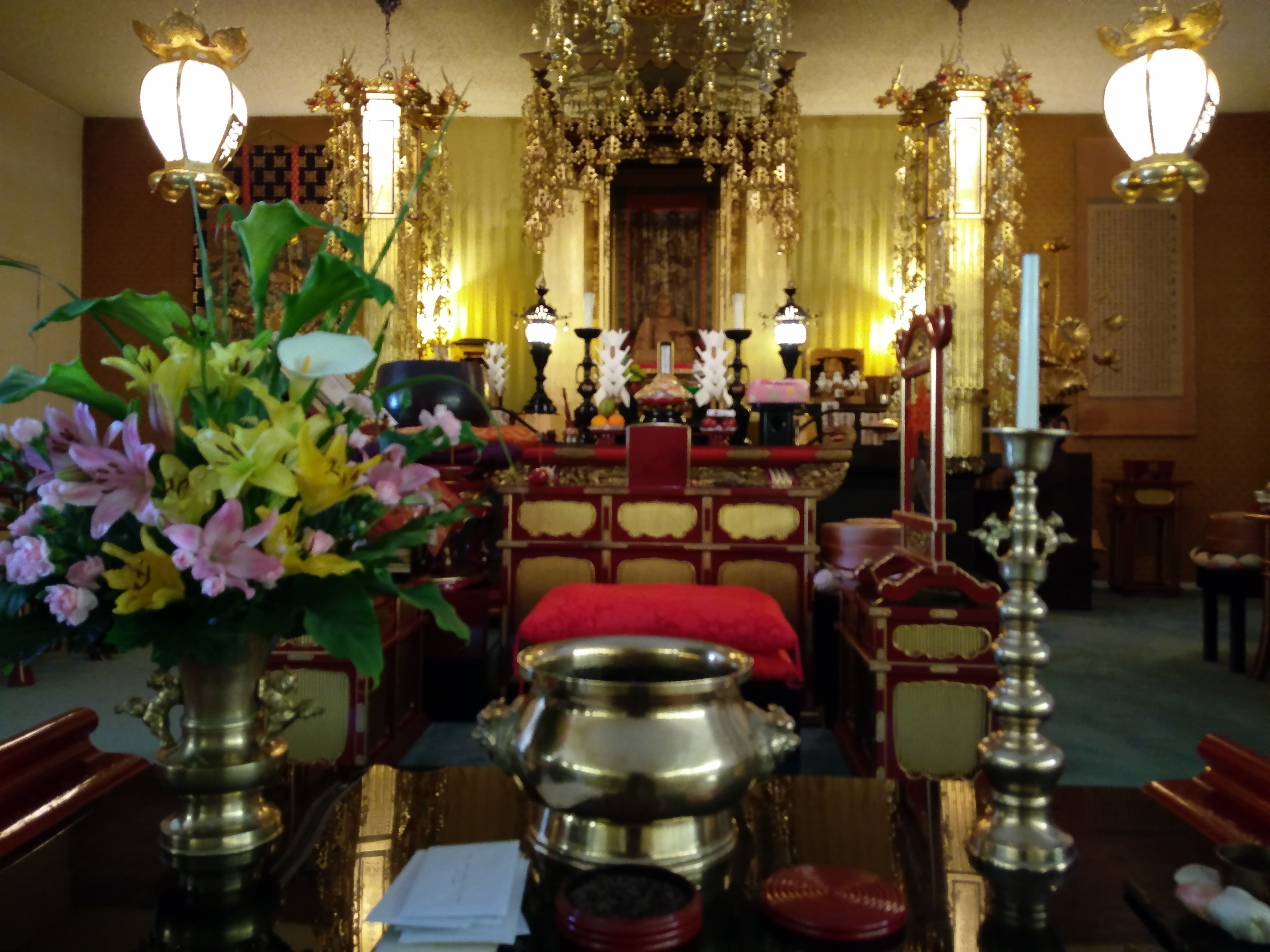
Flowers and the altar on Sunday, March 12, at the Sacramento Nichiren Buddhist Church

Today was the Kaji Kito purification ceremony at the Sacramento Nichiren Buddhist Church and appended to that was the 7-Day Memorial Service for a prominent member of the church. After the service the Ven. Kenjo Igarashi offered a reminder of the purpose of this and the other memorial ceremonies.

In the first seven days after passing, the person must climb a steep hill. The difficulty of the task is compounded by the weight of the person’s bad karma. Someone who did many evil deeds would be burdened by a great weight during the climb. The prayers offered during the service and daily during the initial seven days seek to transfer our merit to the deceased in order to ease the weight of their bad karma.

Following the explanation Rev. Igarashi was quick to point out that the recently deceased church member had “no bad karma” and therefore had an easy climb.

Rev. Igarashi’s most recent newsletter lecture – The Similarities Between Ohigan and Volunteering – seeks to counter the criticism of modern Buddhism that it is too focused on funerals. There is much to agree with in his conclusion:

[D]uring this month of Ohigan, we must get together and recite the sutra and chant the Odaimoku in order to help those spirits that cannot rest in peace or are unable to cultivate their own virtue, and approach this in the same manner that we approach what is considered to be “volunteering.”

This Is _Just_ My View; Nothing Official, Nothing Enlightened

This was originally part of an answer I wrote to someone who found the concept of the three bodies of the Buddha confusing.

My preference in regard to all things that appear confusing is to recall the number of times people ask questions in the Lotus Sutra. The whole purpose of the pursuit of Enlightenment is to gain the wisdom of the Buddha. Asking questions fits right in. And when there is no one to ask, I find just contemplating the question can allow me to relieve the anxiety of not knowing or, from a different perspective, release the attachment I have to needing to know everything.

The concept of the Three Bodies of the Buddha is important but more for contemplating than for actually knowing. I like to think of it this way. (And this is _just_ my view; nothing official, nothing enlightened.) The historical Buddha sat under the Bodhi tree and became enlightened. What he became enlightened to existed already much as we might say Newton discovered gravity. No one would suggest he created gravity. That pre-existing, always existing Enlightenment is one of the Buddha’s bodies in the Nichiren Shu tradition.

This concept of what it means to become enlightened is alluded to in Chapter 7 of the Lotus Sutra, The Parable of a Magic City:

The Buddha said to the bhiksus:
The duration of the life of Great-Universal-Wisdom-Excellence Buddha was five hundred and forty billion nayuta kalpas. [Before he attained Buddhahood,] he sat at the place of enlightenment and defeated the army of Mara. He wished to attain Anuttara-samyak-­sambodhi, but could not because the Dharma of the Buddhas had not yet come into his mind. He sat cross-legged without moving his mind and body for one to ten small kalpas. During all that time the Dharma of the Buddhas did not come into his mind.

I personally love the line, “the Dharma of the Buddhas did not come into his mind.” Keep trying.

Sakyamuni’s enlightenment of itself is another body. The physical body that existed in time and space is the third.

Lots of resources for Nichiren Shu doctrine are available in English. I have a personal blog — 500yojanas.org — and that includes books I’ve read and some quotes from each that I found inspiring. I strongly recommend subscribing to the Daily Dharma, which is an email list. I collect these daily emails on my website and often use them as part of my personal practice.

Here I’ll close by throwing out a couple of those quotes to consider.

From Lotus Seeds: The Essence of Nichiren Shu Buddhism:

Shakyamuni Buddha was no different than any of us, except for his extraordinary wisdom and compassion. He is known as “the” Buddha, not because he attained something that ordinary people cannot attain, but because he was the first person in recorded history to awaken to the truth and to show others how to do so. In that sense, the title “Buddha” is reserved for Shakyamuni simply because he happened to be the one to fulfill the role of teacher and model for all those who would follow his path. However, all of us have the Buddha-nature. Therefore, all of us are capable of displaying the same wisdom and compassion as Shakyamuni Buddha.

From Odaimoku: The Significance Of Chanting Namu Myoho Renge Kyo:

By embracing the faith and practice of Myoho Renge Kyo, we can revitalize our lives. In other words, regardless of the state of life in which we find ourselves at any given moment, through faith and practice we can transform any life condition (no matter how negative) into enlightenment. In this way, we can develop wisdom and a life that is no longer a slave to pain, delusion and suffering.

Again, this is _just_ my view; nothing official, nothing enlightened.

Merits

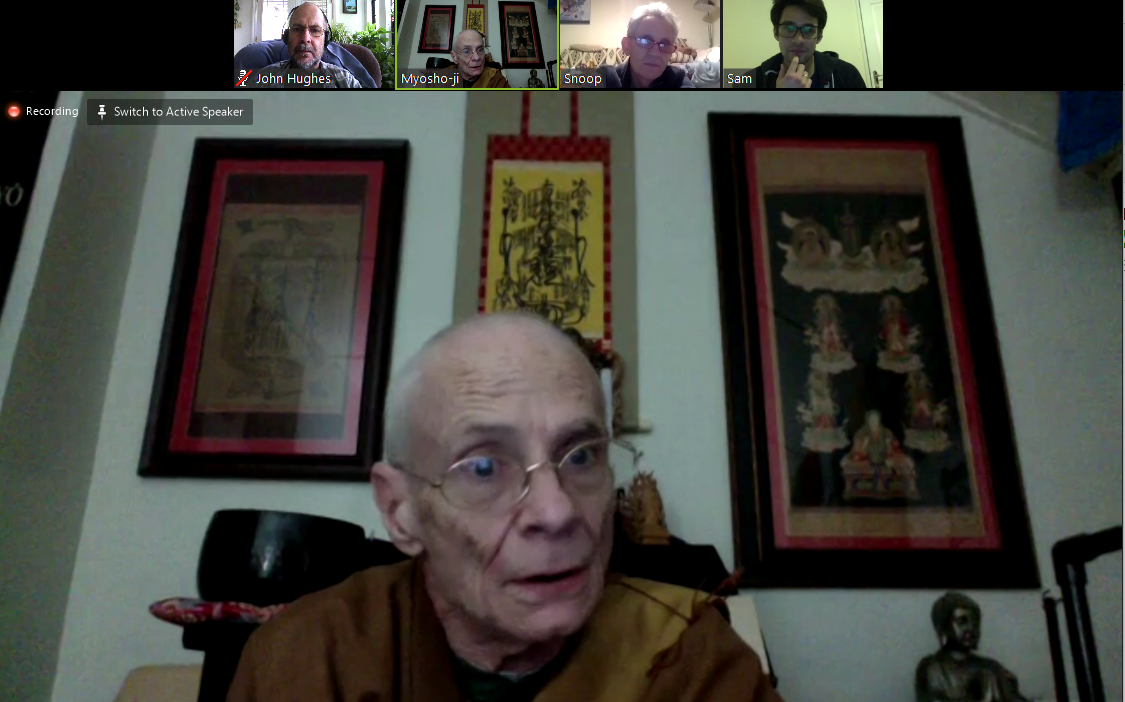
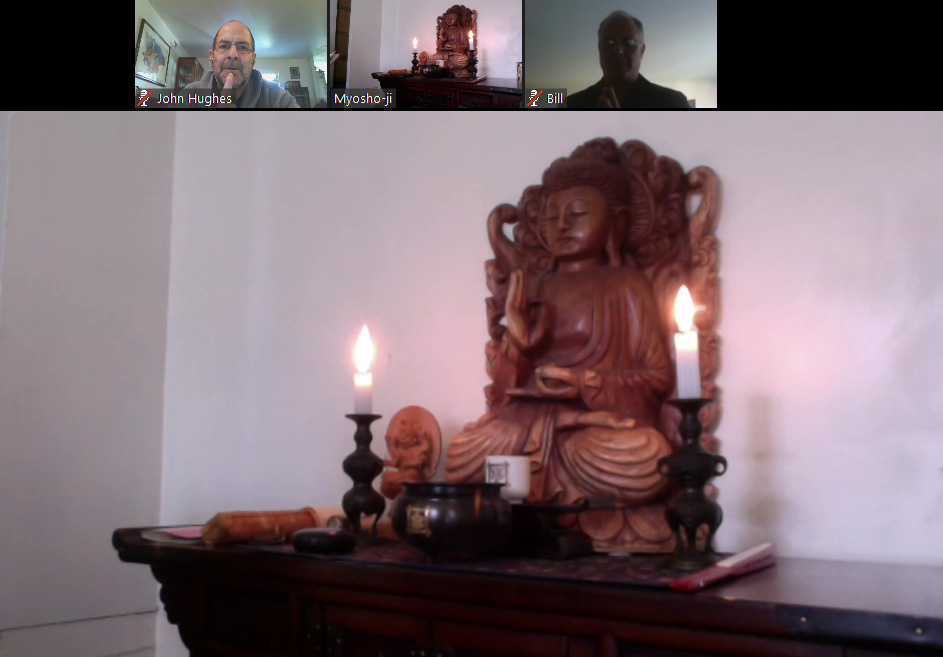
Screengrab from first service with Ryusho Shonin from Myosho-ji Temple since the move to Syracuse on Feb. 26, 2017.

Feb. 26, 2017, service at Sacramento Nichiren Buddhist Church

I don’t normally attend the Myosho-ji services when there is a local service, but being the first from Ryusho Shonin‘s new home in Syracuse, N.Y., I felt compelled. Why not.

This post is prompted by yesterday’s reading from The Merits of a Person Who Rejoices at Hearing This Sutra.

Suppose a man rejoices at hearing this sutra
Or at hearing even a gatha of it
In a congregation,
And expounds it to a second person.

The second person expounds it to a third person.
In this way it is heard by a fiftieth person.
Now I will tell you of the merits
Of the fiftieth person. …

The merits of the [fiftieth] person
[Who hears this sutra] are immeasurable.
Needless to say, so are the merits of the first person
Who rejoices at hearing it in the congregation.

In all of the time I was a member of Nichiren Shoshu and, after the split, Soka Gakkai, I never was comfortable expounding my Buddhist beliefs. That all changed when I came to Nichiren Shu and began my study of the Lotus Sutra. I’m both the 50th person and the first.

Today I had an email exchange with a man who asked, “What is the eternal Buddha?”

I suggested reading Chapter 16, The Duration of the Life of the Tathāgata, but the guy said he had read that and needed it broken down in layman’s terms. So I offered this:

Are you familiar with the three bodies of the Buddha? In the Lotus Sutra Sakyamuni represents all three, not just the historical Buddha who lived 3000 or so years ago. All other Buddhas are emanations of the eternal Buddha (as explained in Chapter 11, Beholding the Stūpa of Treasures). For Nichiren Buddhists the eternal Sakyamuni Buddha and the Bodhisattvas he has been teaching since the remotest past (see Chapter 15, The Appearance of Bodhisattvas from Underground) are the focus of devotion. Nichiren Buddhists believe that each person has an inherent Buddha nature (and all of the other 9 natures or worlds from hell to Bodhisattva) at any given moment. (See http://fraughtwithperil.com/ryuei/2010/06/18/chapter-10-ichinen-sanzen/)

All of this is gathered together and enclosed within the title of the sutra, Myoho-Renge-Kyo. Chanting devotion to the sutra – Namu-Myoho-Renge-Kyo – is the principle practice for this age and allows the individual to awaken this Buddha nature.

The question of how to describe Nichiren Buddhism is something I’ve been puzzling over recently. It was after I sent this email that I did evening gonyo and read today’s section from the Lotus Sutra, the conclusion of The Merits of the Teacher of the Dharma.

He will be able to expound the Dharma
With tens of millions of skillful words
Because he keeps
The Sutra of the Lotus Flower of the Wonderful Dharma.

Maybe not yet, but in time, yes.