Category Archives: Blog

Driving Out Misfortune, Welcoming Good Fortune

February 12, 2017, Setsubun Service
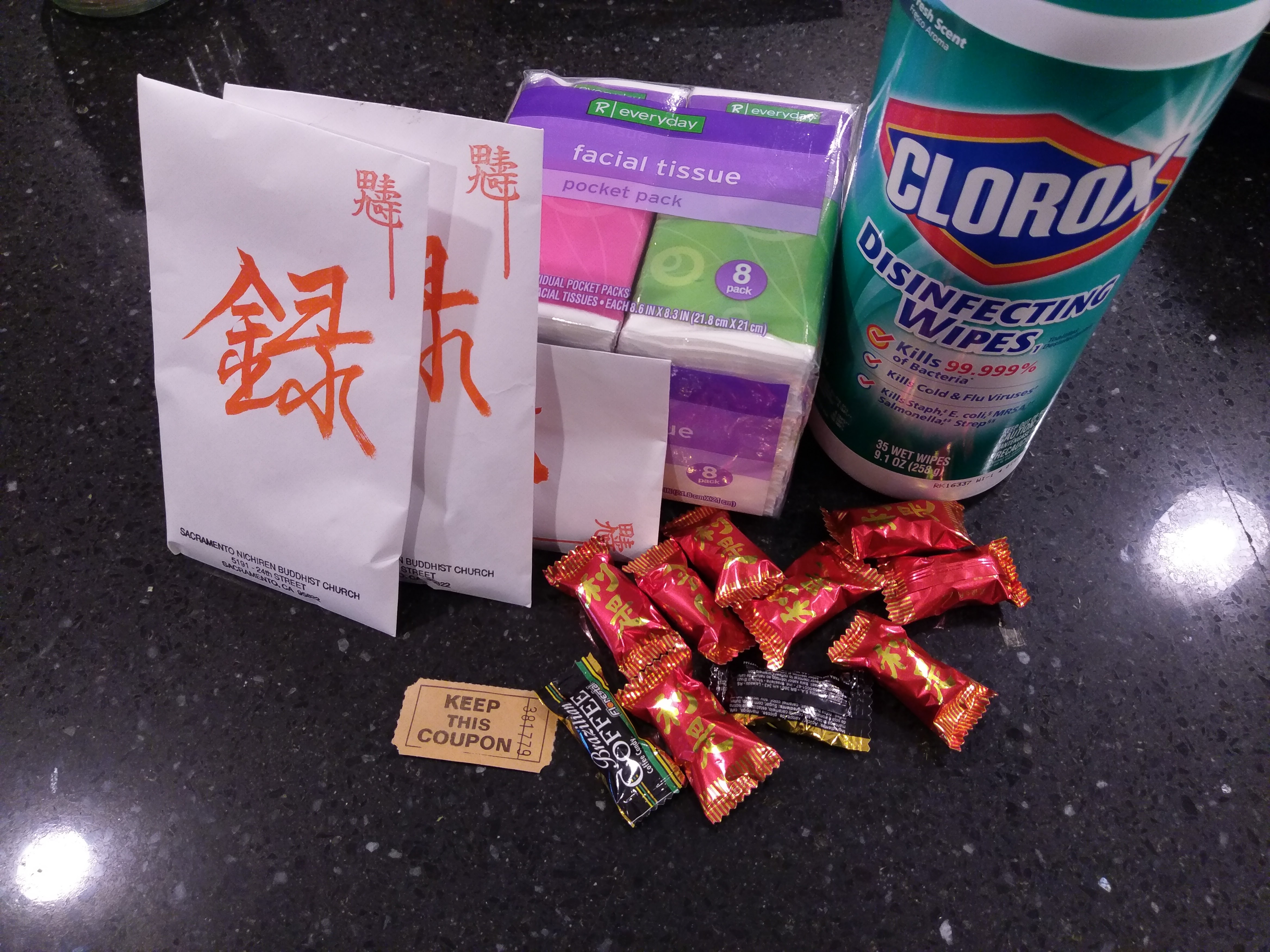
Good fortune accumulated from the Setsubun service.

Today was my third Setsubun service, which marks the transition from Winter to Spring in the lunar calendar. Following the regular sutra recitation, the priest offered a purification prayer and then had those people born in the particular Chinese Zodiac year, the Rooster this year, help him bring good fortune to everyone by tossing hard candy into audience. After all the candy was gathered up, small bags of roasted sesame seeds were passed out. (See explanation below on that.) Finally a raffle of “paper products” was held. Why paper products? No clue. But the winning of raffle prizes was marked as a sign of good fortune ahead.

Here’s an explanation of Setsubun from the official Nichiren Shu newsletter.

Nichiren Shu News, April 1, 2015
By Rev. Kanjo Bassett
Setsubun is the last day of winter in the traditional Chinese calendar year comprised of 24 solar periods. In the Edo period, Setsubun became a popular celebration of seeing out the old year and welcoming the new.

The practice of throwing roasted soybeans to drive out oni, Japanese demons, dates from the Muromachi period. This practice then spread and split into endless local variations and traditions all over the country.
The one thing common among all these traditions is that demons do not like the smell of either roasted soybeans or sun-dried sardines hung in the front doorway, a custom still seen today in the Japanese countryside.

There is also the side benefit that once the demons are dispatched, one can eat the beans and dried sardines for good luck, preferably washed down with gulps of sake.

These days, large temples and shrines invite famous people to put on traditional dress and throw bags of beans from the ceremony hall foyer to the crowds below. Ikegami Honmonji holds one of the largest Setsubun celebrations in Tokyo. More than 10,000 people attended this year’s event, which began with a ceremony and prayers to dispel misfortune and bring good fortune to the whole world.

As the famous professional wrestler Rikidozan is buried on the temple grounds, the invited bean-throwing guests included a number of former professional, K-1 and sumo wrestlers, such as Akebono Taro, a former sumo champion, Jun Akiyama, president of the Pro Wrestling Association, and Katsuhiko Nakajima, a popular pro wrestler from the same association.

Setsubun also begins a busy month of celebrations that includes the Buddha’s Nirvana Day on the 15th of February and Nichiren Shonin’s birthday on the 16th of February.
Ritually Copying the Lotus Sutra

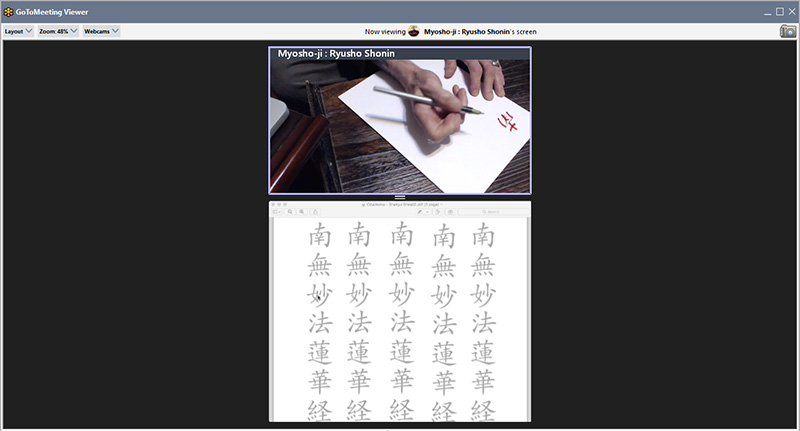
Shakyo practice

Devotion to the Lotus Sutra is manifested in the five practices of upholding, reading, reciting, explaining, and copying the text of the Lotus Sutra.

I’ve participated in Shakyo practice, the ritual copying of the Lotus Sutra, during which I traced the letters of Namu Myoho Renge Kyo.

That practice seems so shallow compared to this tale from Readings of the Lotus Sutra, a collection of essays edited by Stephen F. Teiser and Jacqueline I. Stone.

The tale of the seventh-century nun Miaozhi, as recounted in Huixiang’s Accounts of the Propagation of the Lotus Sutra, provides a vivid example of the effort that might go into [ritually copying the sutra].

To produce the pulp used in making the paper for her sutra, Miaozhi planted saplings in the nearby hills, which she nurtured daily with perfumed water. Once the trees had matured, she constructed a hut from mud mixed with fragrant water, where she had a craftsman boil and press the bark into paper, ensuring all the while that he observed the proper protocols to purify both himself and the materials. With the paper in hand, she built yet another chamber for copying the sutra, again with utmost attention to ritual purity. Having finally located a skilled calligrapher who was willing to uphold her ritual specifications, Miaozhi first had the man fast for a period of forty-nine days, after which he finally began to inscribe the text. Each time he entered the sanctuary to copy the Sutra, he was required to bathe and don a purified robe. Miaozhi knelt in adoration beside him as he wrote, incense burner in hand and right knee to the ground. When the scribe withdrew at the end of the day, she remained in the chamber to offer incense and ritually circumambulate the work in progress. The task finally completed, Miaozhi created splendid accoutrements for the manuscript, including ten sets of specially constructed robes that were to be worn (after bathing) by persons who came to pay obeisance to the sutra.

Practice and Study

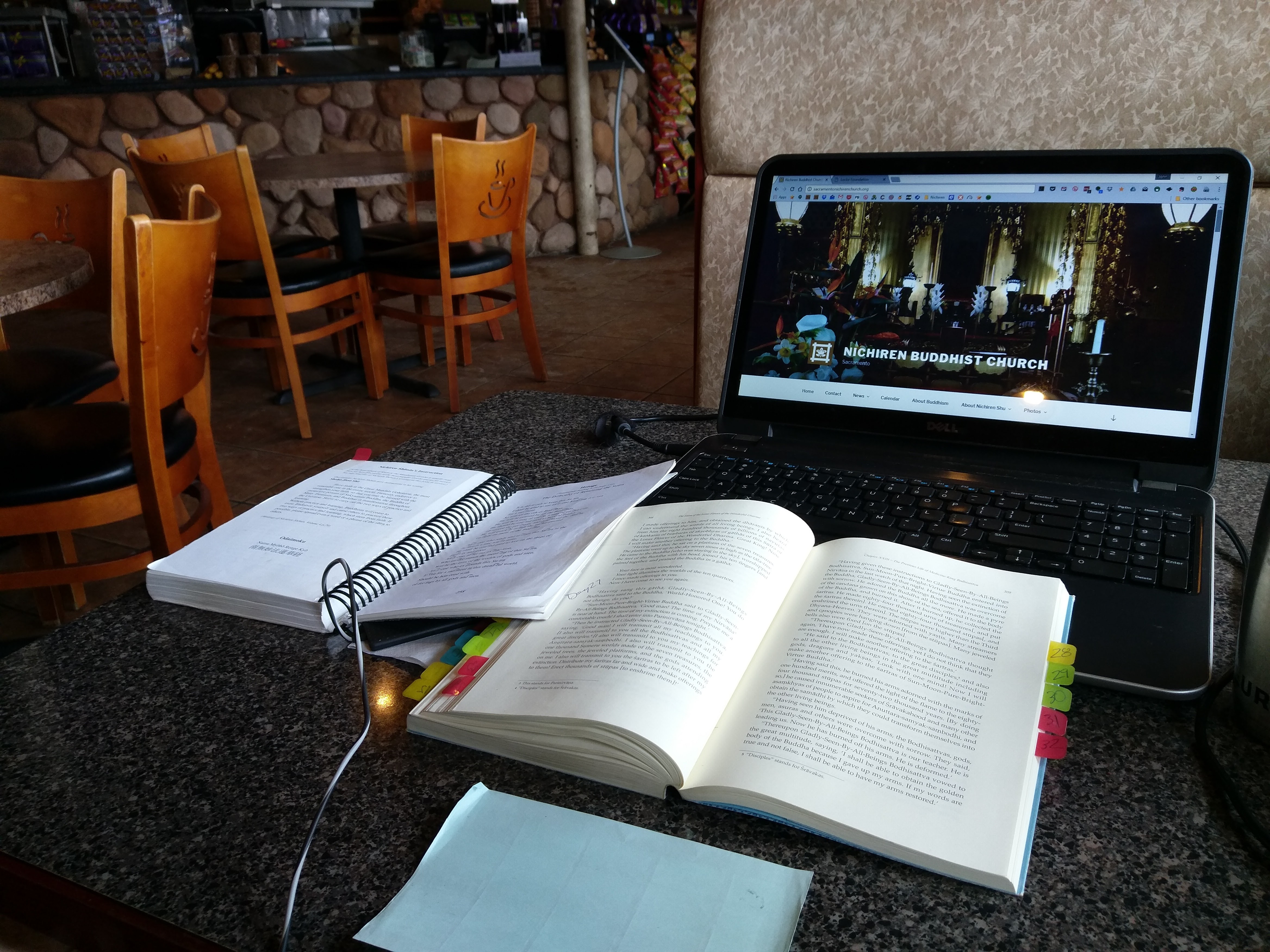
Daily service at Jitters Cafe, Rochester’s Hometown Coffee Roaster, in North Chili

My daily practice involves reciting portions of the Lotus Sutra in shindoku in the morning and then in the evening reciting the same section from Senchu Murano’s English Translation.

The shindoku is a Japanese pronunciation of the Chinese translation using Romanized text. As Rev. Ryuoh Michael Faulconer explains in the introduction to his Myo Ho Renge Kyo Romanized, “It is a form of faith reading done as practice which our inner Buddha nature understands. When we chant in our native language, we do so to further our understanding.”

Practice and study.

Daily I recite the admonition from Nichiren Shonin’s Instruction in Shoho Jisso Sho: “Earnestly endeavor to strength your faith, so that you may be blessed with the protective powers of Skyamuni Buddha, the Buddha of Many Treasures, and Buddhas in manifestation throughout the Universe. Strive to carry out the two ways of practice and learning. Without practice and learning, Buddhism will cease to exist.”

And I suppose this blogging and my daily posting of the Lotus Sutra section read each days qualifies as part of my effort to “[e]ndeavor yourself and cause others to practice these two ways of practice and learning, which stem from faith.”

But what to do when I’m traveling and away from my home altar?

For a week I’m in the suburbs of Rochester, New York. Specifically, I’m in Jitters Cafe, “Rochester’s Hometown Coffee Roaster,” in North Chili, which is the closest coffee shop to my father-in-law’s home in Churchville, New York.

On past trips I’ve stayed in hotels and kept to my daily practice schedule before and after visits to my father-in-law. But this time my wife and I are saving the hotel cost and bunking on my father-in-law’s couch. And rather than trying to practice in my father-in-law’s house, I’ve decided to do my reading of the shindoku and English versions of the Lotus Sutra each morning over coffee and then take advantage of the free WiFi to post here.

New Year Party

20170129 service

Sunday’s service at the Sacramento Nichiren Buddhist Church included memorial prayers for deceased members of the church. The memorial tablet on the altar is for the church members.

Ven. Kenjo Igarashi offered another version of his lecture on the “suffering world” and the need to practice the Lotus Sutra and study. Last week he paired the Four Noble Truths with the Parable of the Magic City. This time around, he used the Parable of the Skillful Physician and His Sick Children to remind everyone of the medicine left for the people in the “suffering world.”

The quote today from Odaimoku: The Significance Of Chanting Namu Myoho Renge Kyo fits in well here:

By embracing the faith and practice of Myoho Renge Kyo, we can revitalize our lives. In other words, regardless of the state of life in which we find ourselves at any given moment, through faith and practice we can transform any life condition (no matter how negative) into enlightenment. In this way, we can develop wisdom and a life that is no longer a slave to pain, delusion and suffering.
Odaimoku: The Significance Of Chanting Namu Myoho Renge Kyo

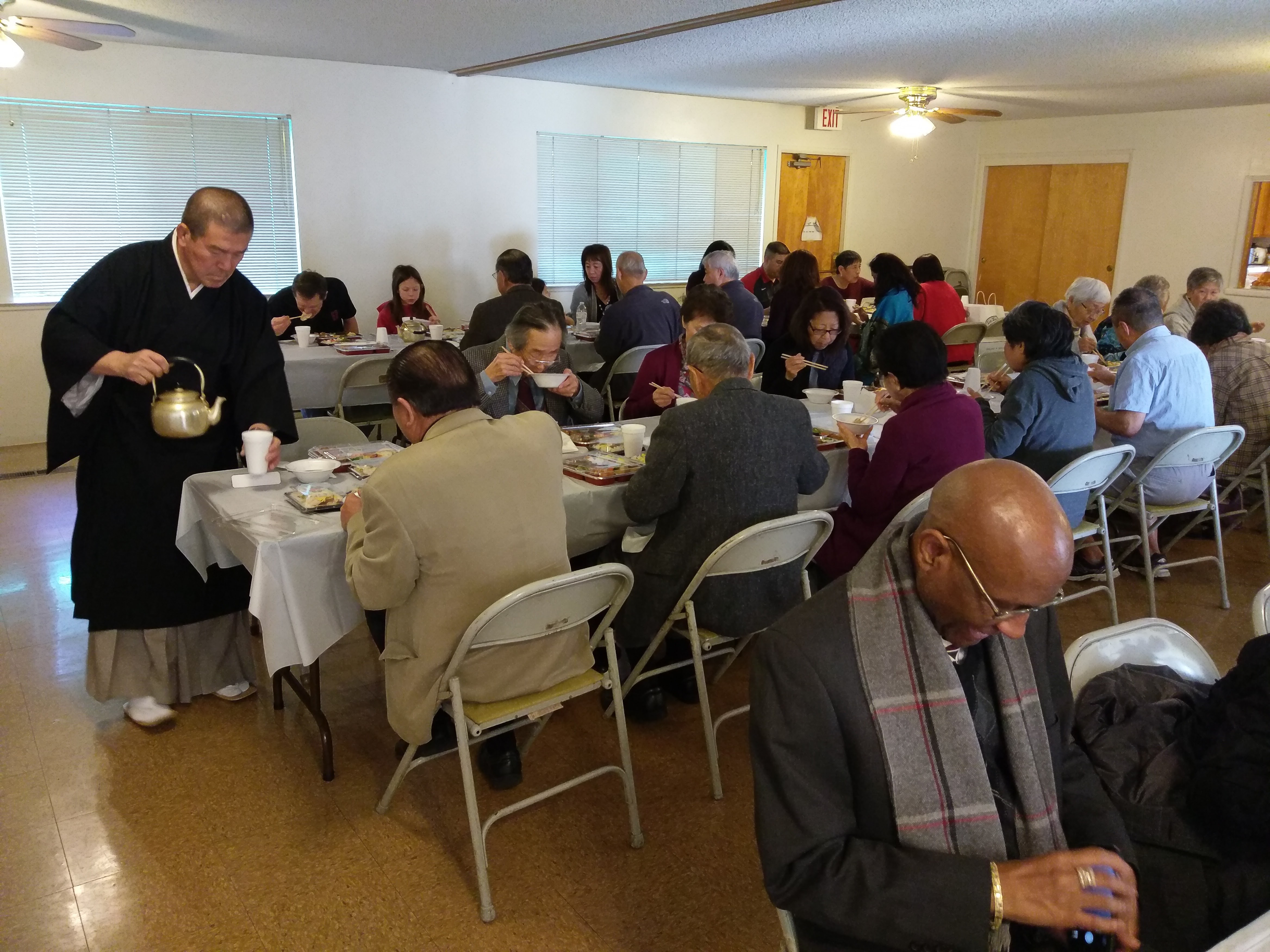
Following the service was the annual New Year luncheon for members and those nonmembers who have helped the church in the past year.

Ven. Kenjo Igarashi pours tea during the Sacramento Nichiren Buddhist Church annual New Year luncheon.

It was on this last service of January in 2015 that I first attended a Nichiren Shu service. This year I brought my wife along and we sat with another couple who are new members.

Noble Truths About Magic Cities

Jan. 22, 2017, service

Attended services at the Sacramento Nichiren Buddhist Church. The Rev. Kenjo Igarashi‘s lecture covered the need to practice and study, along the way incorporating the Four Noble Truths and the Eightfold Path with the Parable of the Magic City and the promise of acquiring the benefits of Sakyamuni Buddha, a veritable Treasure Mountain.

Lesson for service

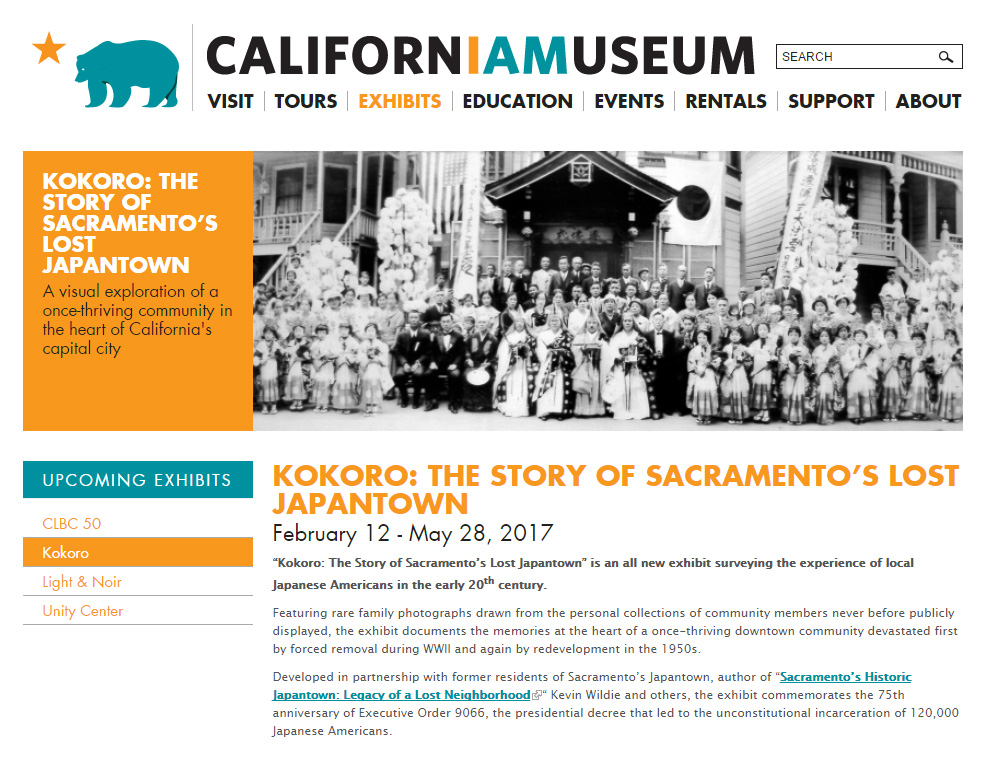
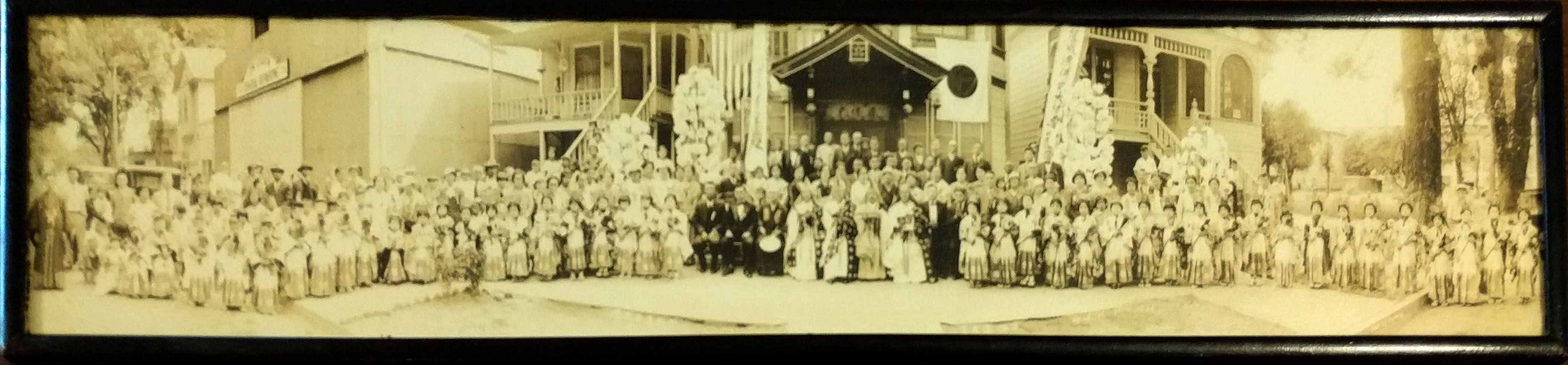
We also learned that photos of the early Sacramento Nichiren Buddhist Church will be featured at a California Museum exhibit entitled, Kokoro: The Story of Sacramento’s Lost Japantown. The exhibit runs from Feb. 12 to May 28, 2017. This year is the 75th Anniversary of FDR’s infamous Executive Order 9060.

CaliforniaMuseum.org/Kokoro

Kaikyoge

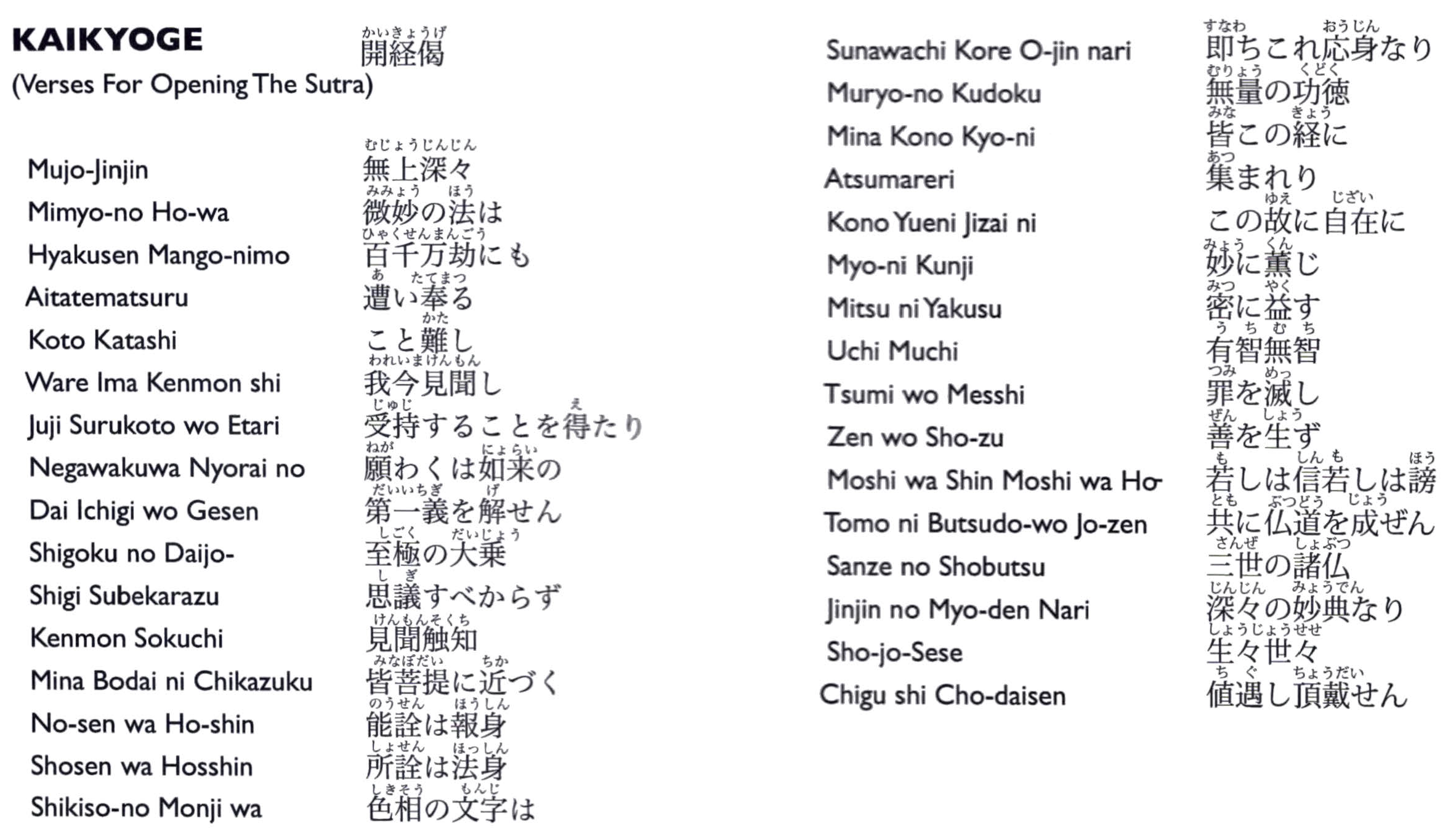
I’ve been attending services at the Sacramento Nichiren Buddhist Church now for more than two years and I’ve never mastered the Kaikyoge, the Japanese Verses for Opening the Sutra.

I am using my phone during morning and evening services to play this recording until I can follow along during services.

kaikyoge text

Enlightened Jazz

Seriously, I can’t imagine two things that go together better: chanting Dhāraṇīs from the Lotus Sutra and modern jazz.

The two songs from this experiment are available on Spotify and iTunes.

New Year Memorial

My wife and I attended the end of year service at 11pm Dec. 31, followed by a meal of noodles and tempura. At midnight, the church bell was rung 108 times, with each attendee doing a portion of the total. After the conclusion of the bell ringing, the priest held the New Year’s service.

The New Year’s service included an eyeopening ceremony for a new member’s Gohonzon and a memorial service for my parents. The priest has offered prayers for my parents at each Obon and I’ve had their names added to the Eitaikyo, but I’ve never had a memorial service.

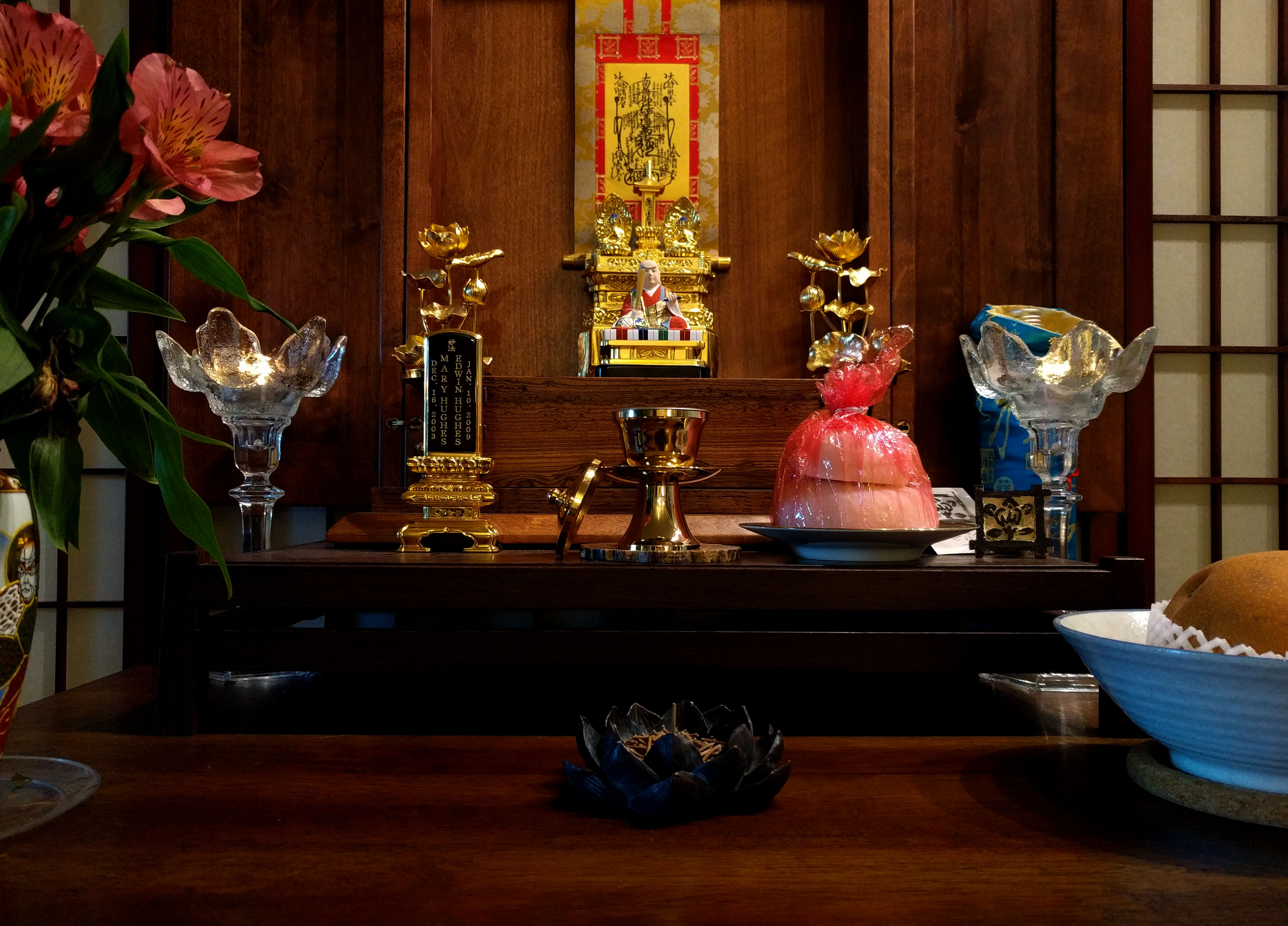
My memorial tablet can be seen in the center of the photo along with the scroll containing the names of my parents.

Kasane

Altar offering Dec. 28, 2018

This is the end of my second year with the Sacramento Nichiren Buddhist Church. While I’ve been a follower of Nichiren since 1989, much of the Nichiren Shu practice is still new to me. For example, I had to ask Ven. Kenjo Igarashi when was the appropriate time to make the kasane offering. He said Dec. 28 to 30 was ideal, or after the New Year.

So today I took the kasane I had purchased at the church’s annual mochi sale and wrapped it in red plastic and placed it on a plate and then on the altar.

Recently I’ve been mulling over how to explain Nichiren Shu Buddhism to someone who knows little or nothing about Buddhism. What are the three essential things on which to focus? And today, chanting and looking at the kasane on my altar, I considered the Eternal Buddha Śākyamuni, always-present, and the Sutra of the Lotus Flower of the Wonderful Dharma, so difficult to understand and so rare to hear, all wrapped in Namu Myoho Renge Kyo.

Polishing my spirit

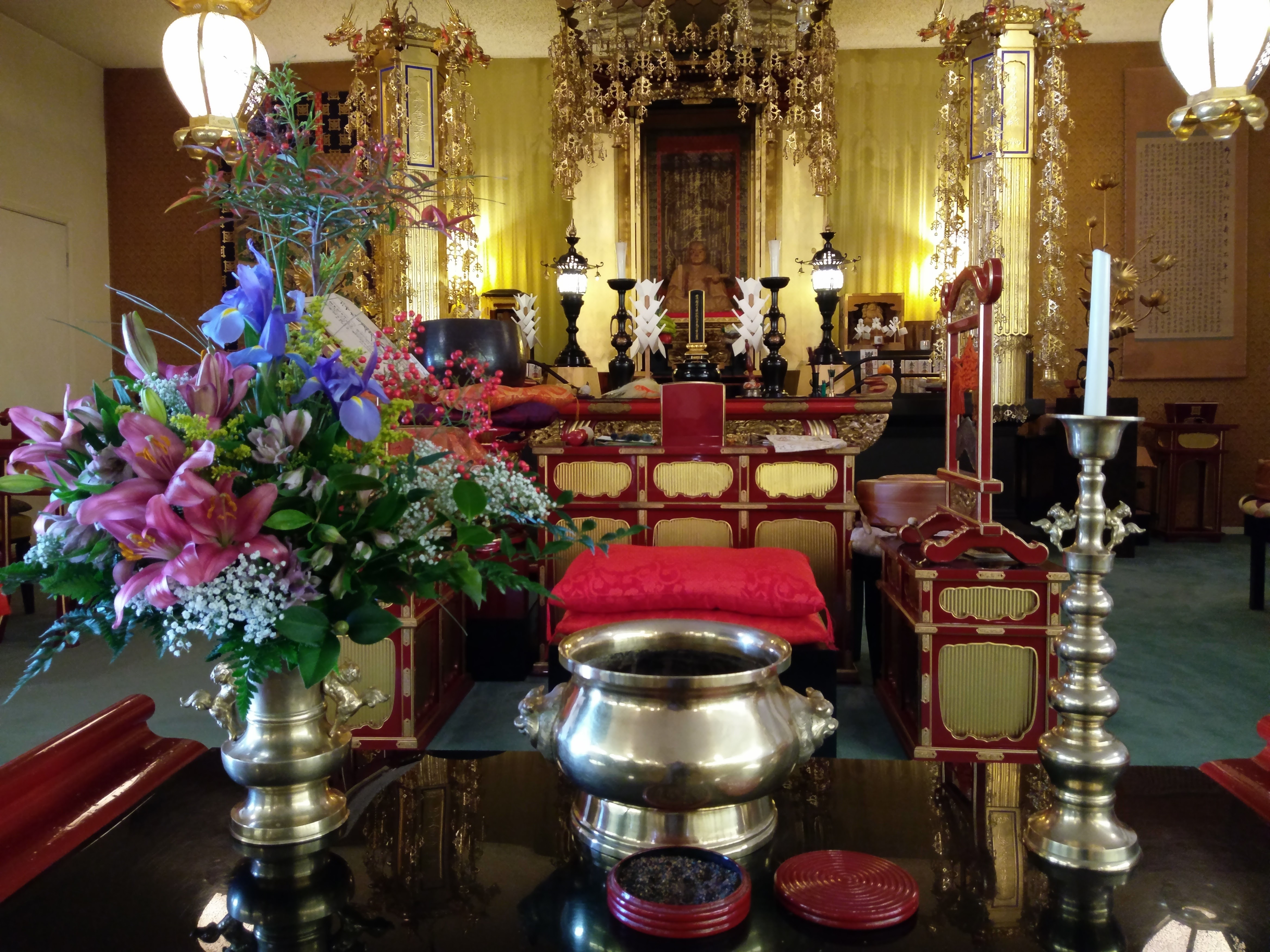
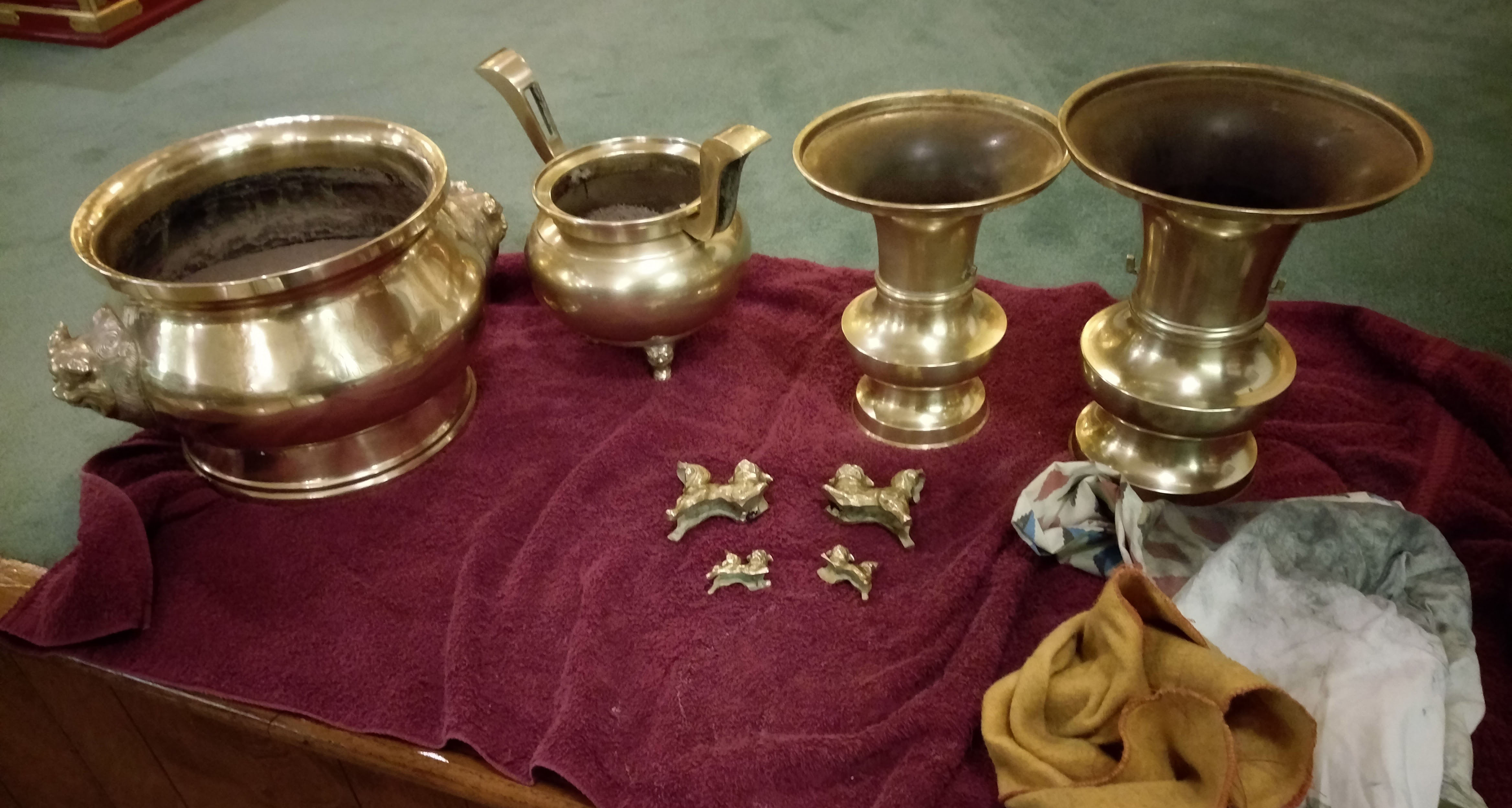
Polished brass

Dusting
Ven. Kenjo Igarashi brushing dust off statue of Nichiren using calligraphy brush dipped in incense smoke.
Spent Sunday at the Sacramento Nichiren Buddhist Church helping out with the annual church cleaning. Last year, when I called to find out what time the cleaning would be, the priest’s wife said, “Oh, we already finished.” This year I made sure the priest knew I _really_ wanted to help out. Apparently, it has been such a struggle to get members to show up to help that the task is generally left to the priest, his wife and their son.

And, of course, they didn’t wait for me. They were already well into the task of cleaning the altar area when I arrived at the appointed hour.

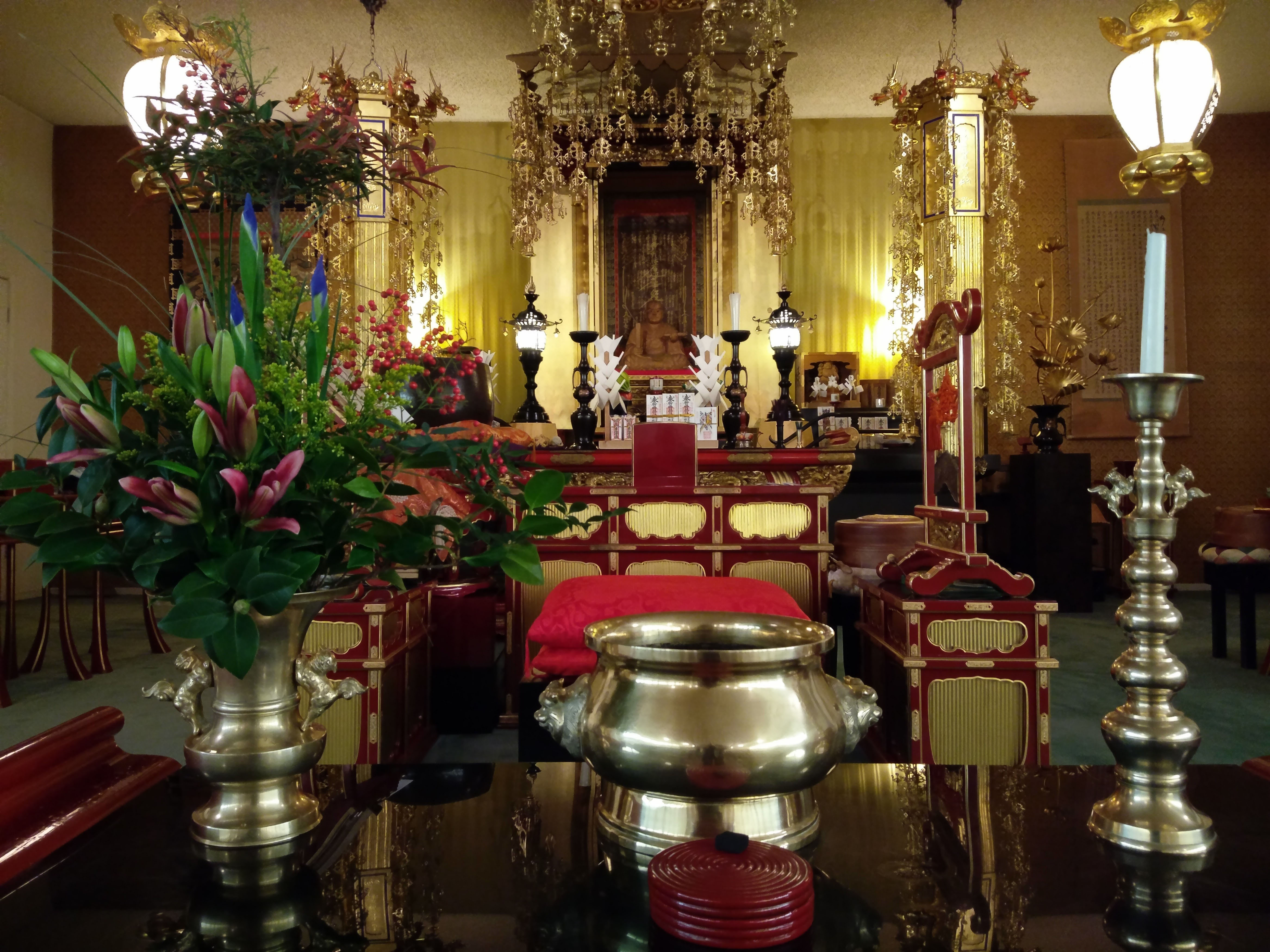
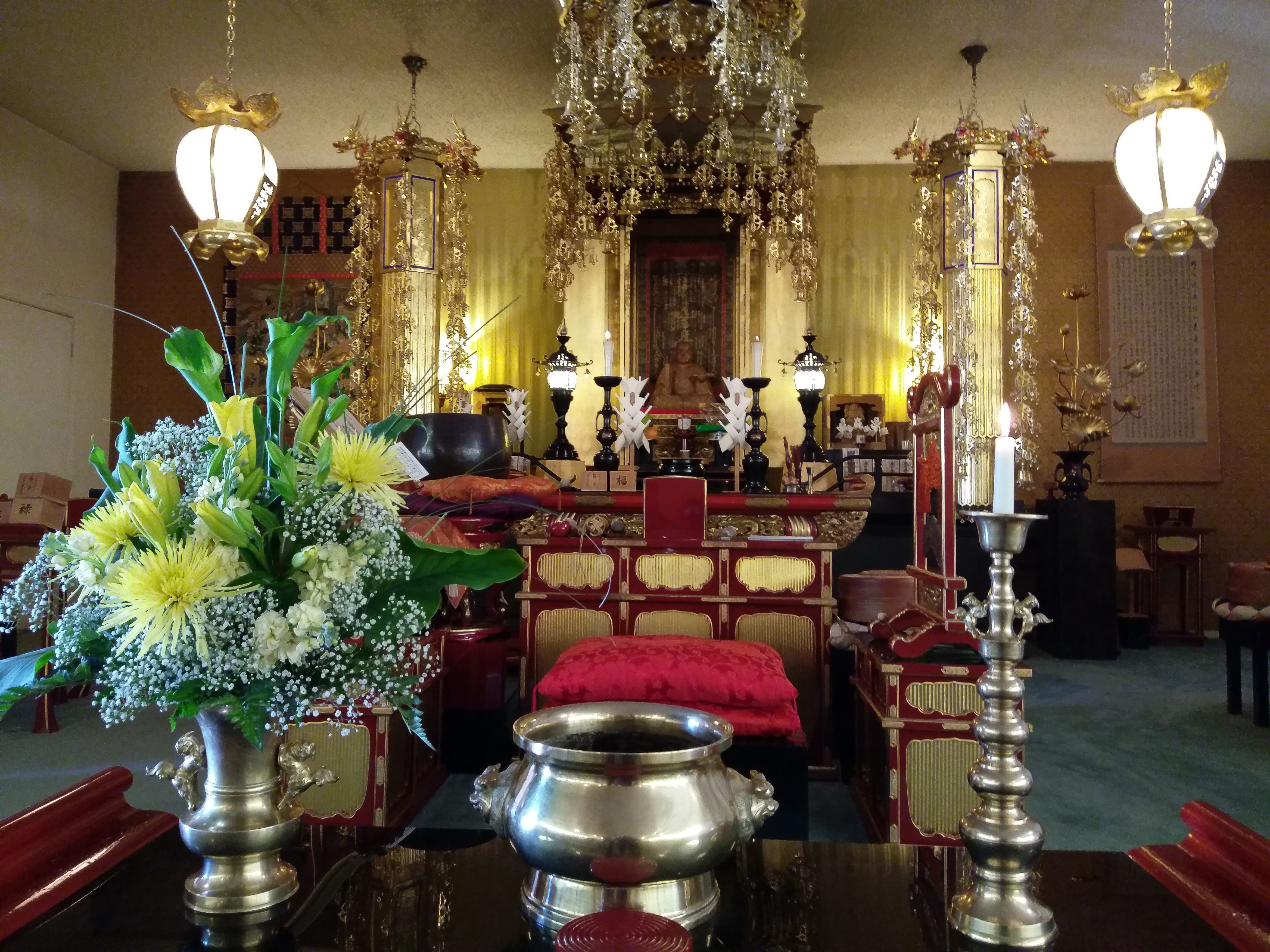
My principal task was dusting stuff that was not on the altar and polishing the brass fixtures. The brass bowls, vases and candle holders all have ornamental protective deities (four dog-like bits in the center of the top photo) that prevent evil spirits from climbing up and spoiling the offering. They have Japanese names but I didn’t really catch them.

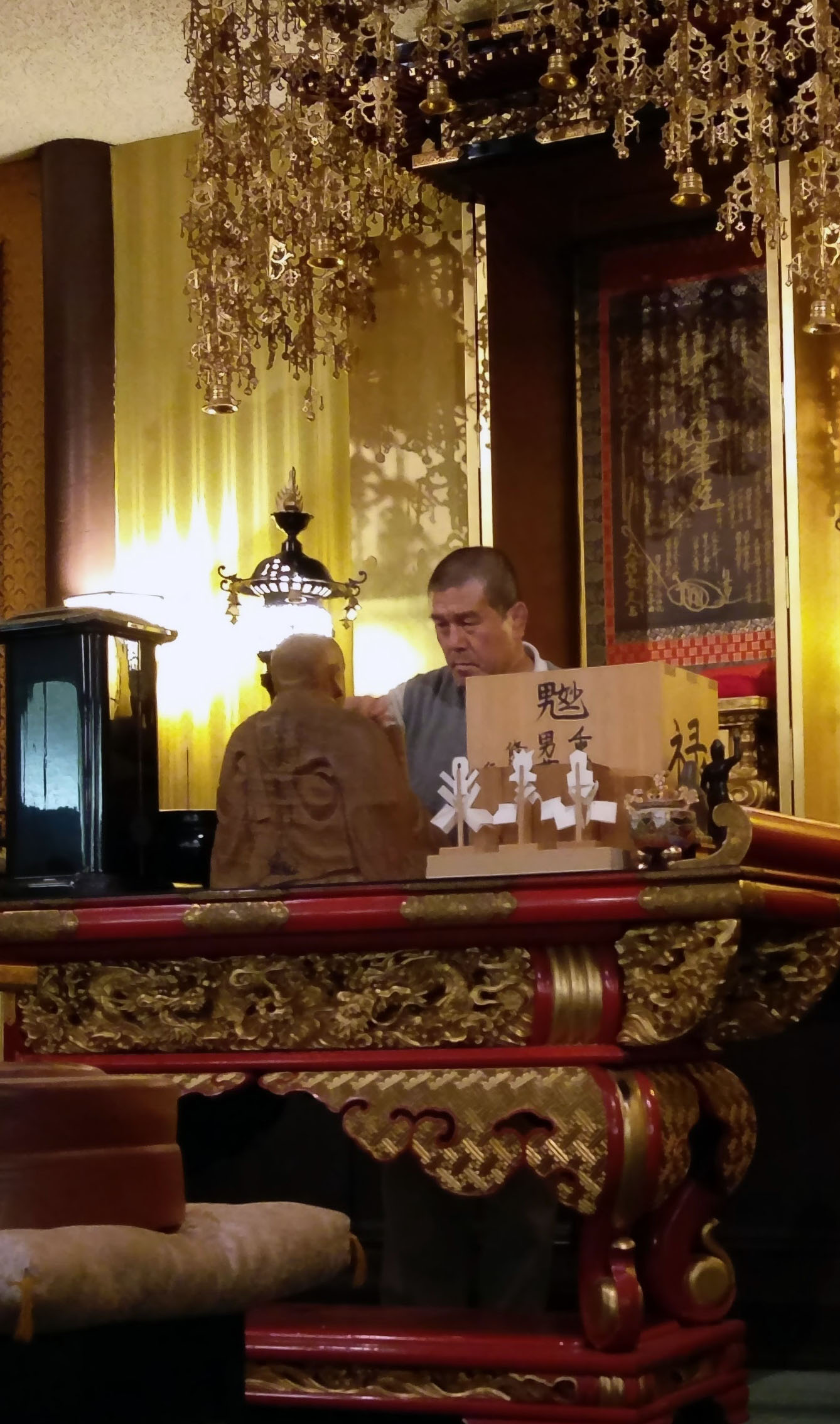
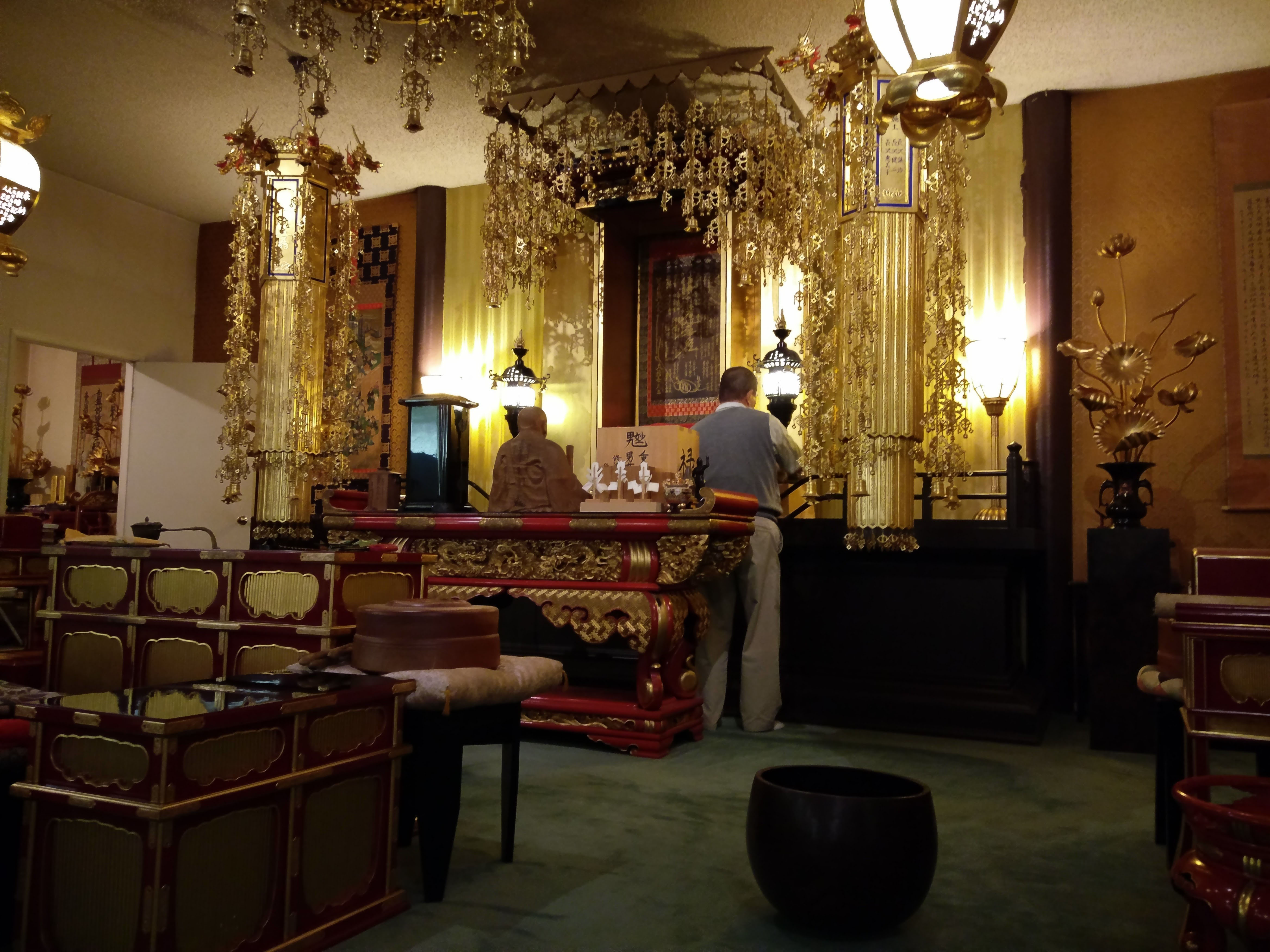
While I polished, I watched Ven. Kenjo Igarashi work on the statues. He lit incense and then waved a calligraphy brush in the smoke before brushing off any dust. He began with Nichiren, then Kishimojin and finally Daikokuten. Nichiren’s back is decorated with the Odaimoku and other characters I didn’t recognize. The statue was sent from Japan to Sacramento in 1936. Rev. Igarashi explained that Daikokuten’s back has text from the Lotus Sutra written on it.

Afterward, Rev. Igarashi and I were served sweet bean soup with mochi, a first for me. I realize it may be traditional, but it always bothers me that Mrs. Igarashi and her son don’t eat with church members.