
Conceptual Summary
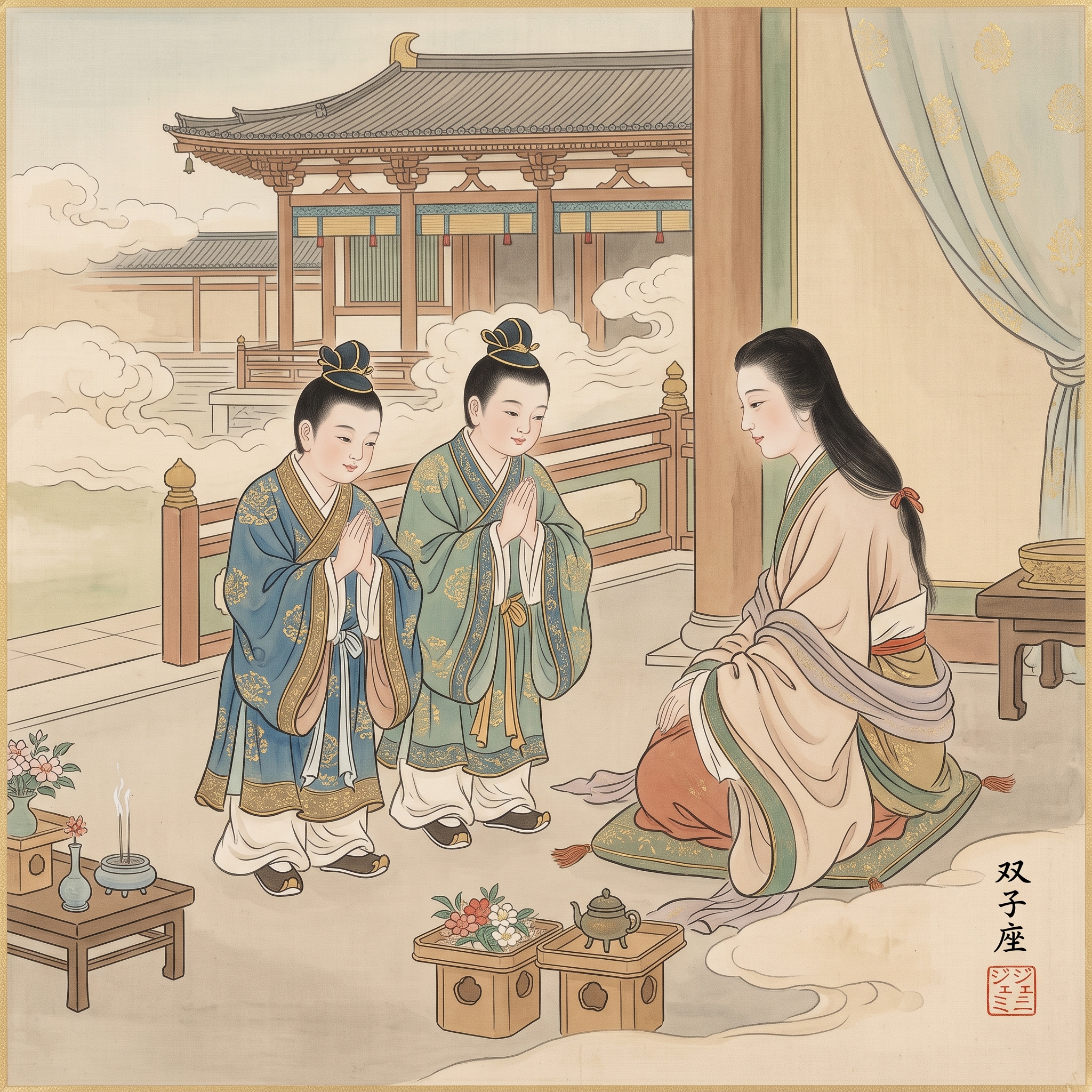
The illustration is a visual interpretation of a pivotal moment from the Lotus Sutra, specifically Chapter Twenty-Seven, where the two princes, Pure-Store and Pure-Eyes, appeal to their mother, Queen Pure-Virtue. The composition uses traditional Japanese Buddhist iconography on silk to create a serene, devotional atmosphere. By focusing on the direct interaction between the three figures—the princes with hands joined in anjali mudra (gasping hands) and their attentive mother—the image interprets the source text’s theme of filial and spiritual leading. This moment symbolizes the first step in their mission to convert their father, King Wonderful-Adornment, to the Wonderful Dharma by first establishing consensus within the family structure. The traditional architecture and offerings serve to contextualize the narrative within a sacred, aristocratic environment consistent with ancient Indian Buddhist settings as viewed through a classical East Asian lens.
Iconography & Character Identification
Item 1: Deities/Figures Featured:
Prince Pure-Store (Jp. Jōzangō)
Prince Pure-Eyes (Jp. Jōgen)
Queen Pure-Virtue (Jp. Jōtoku)
Item 2: Text Translations:
'双子座' (Kanji): Gemini
'ジェミニ' (Katakana, within the red seal): Gemini
The two sons, Pure-Store and Pure-Eyes, came to their mother, joined their ten fingers and palms together, and said, ‘Mother! Go to Cloud Thunderpeal-Star-King-Flower-
The Buddha tells the story of King Wonderful-Adornment in Chapter Twenty-Seven of the Lotus Sūtra. The two sons chose to be born at a time when Cloud-Thunderpeal-Star-King-
The Daily Dharma is produced by the Lexington Nichiren Buddhist Community. To subscribe to the daily emails, visit zenzaizenzai.com