
Conceptual Summary
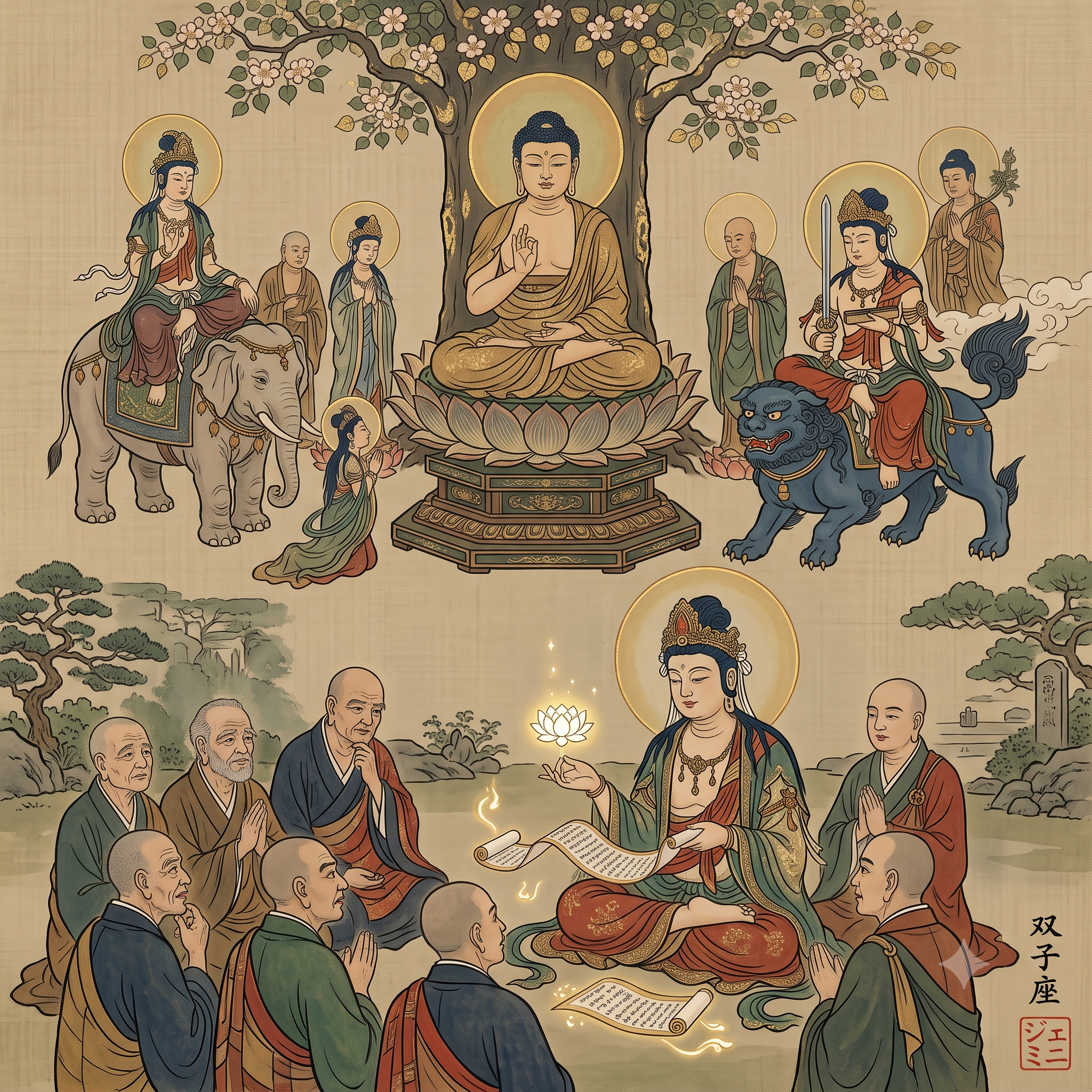
The illustration is a 1:1 square composition on textured silk, using traditional Japanese inks and mineral pigments with subtle gold leaf, split into two registers. The upper section features Śākyamuni Buddha (Shaka Nyorai), centered under a bodhi tree, expounding teachings to a serene gathering that explicitly includes Mañjuśrī (Monju) Bodhisattva on a lion and Fugen (Samantabhadra) on an elephant, visually rooting the scene in Chapter 14 of the Lotus Sūtra. The lower register captures the heart of the source text: a non-confrontational teaching scenario. A Bodhisattva figure, displaying patience and peace of mind, interacts with a diverse group of listeners. Floating white lotus represent the flow of 'Mahāyāna' ('Great Vehicle') teachings. The overall mood is harmonious and respectful, visually translating the directive to not find fault.
Iconography & Character Identification
Item 1: Deities/Figures Featured:
Śākyamuni Buddha (Shaka Nyorai), seated on a lotus throne beneath the bodhi tree.
Mañjuśrī Bodhisattva (Monju), on a lion (to Śākyamuni’s left).
Samantabhadra Bodhisattva (Fugen), on an elephant (to Śākyamuni’s right).
An assembly of listening Bodhisattvas, monks, and celestial figures (lower register), including representations of Śrāvakas listening without conflict.
Item 2: Text Translations:
Kanji Signature ( bottom-right corner): 双子座 — Gemini (literally: 'Twin Constellation/Throne')
Red Seal ( bottom-right corner): ジェミニ — Gemini
When he expounds or reads this sūtra, he should not point out the faults of other persons or sūtras. He should not despise other teachers of the Dharma. He should not speak of the good points or bad points or the merits or demerits of others. He should not mention Śrāvakas by name when he blames them. Nor should he do so when he praises them. He should not have hostile feelings against them or dislike them. He should have this peace of mind so that he may not act against the wishes of the hearers. When he is asked questions, he should not answer by the teachings of the Lesser Vehicle, but expound the Dharma only by the teachings of the Great Vehicle so that the questioners may be able to obtain the knowledge of the equality and differences of all things.
The Buddha gives this explanation to Mañjuśrī Bodhisattva in Chapter Fourteen of the Lotus Sūtra in which he describes the peaceful practices of a Bodhisattva. For us who aspire to be Bodhisattvas in this world of conflict, this passage reminds us not to create more conflict in our efforts to benefit others. Rather we should work to remind them of their good qualities and demonstrate the respect we want to receive.
The Daily Dharma is produced by the Lexington Nichiren Buddhist Community. To subscribe to the daily emails, visit zenzaizenzai.com