
Conceptual Summary
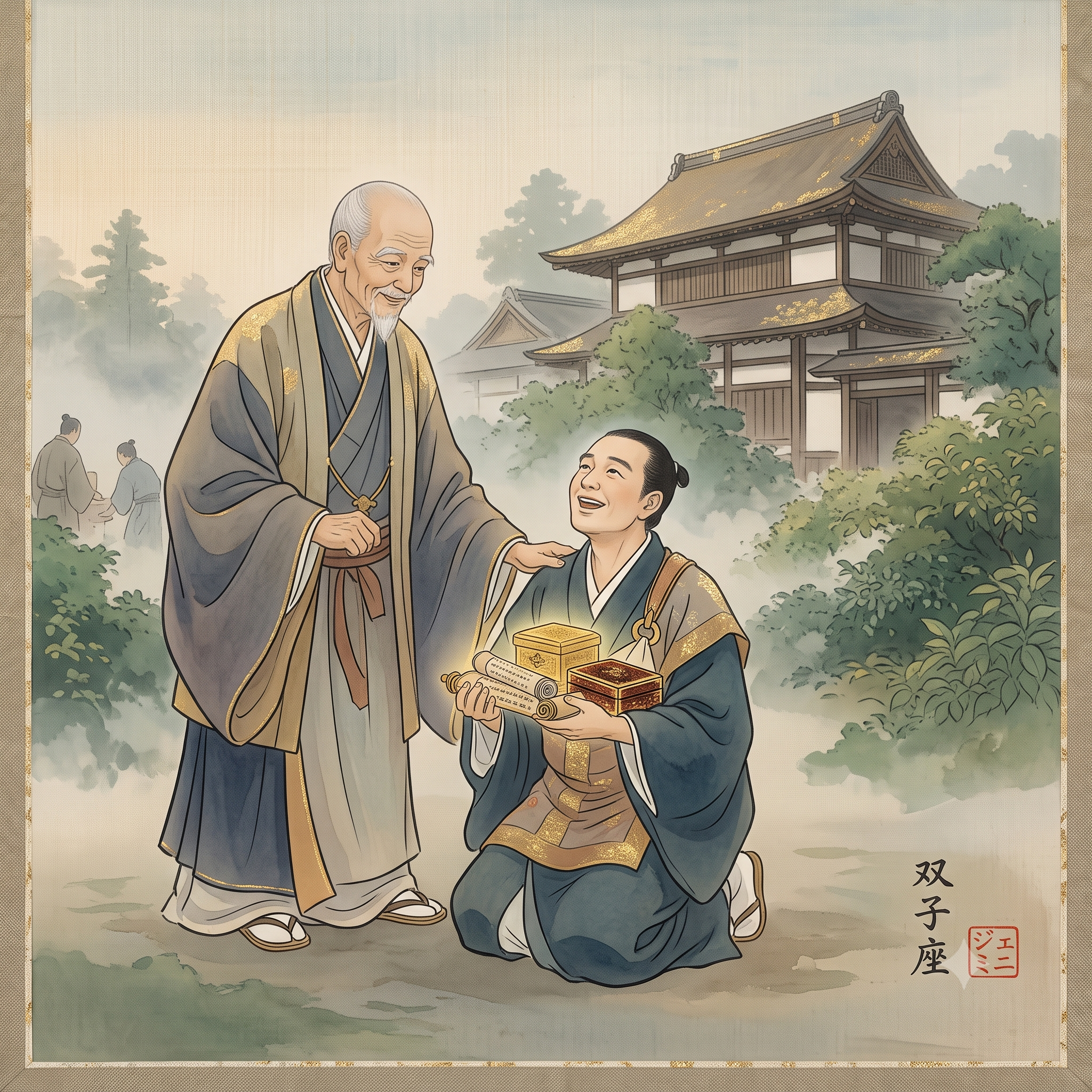
This 1:1 square composition, rendered in the delicate style of traditional Japanese Buddhist inks and mineral pigments on silk, captures the emotional climax of the "Wayward Son" parable from the Lotus Sutra. The central figures are the wealthy, benevolent father and his kneeling, humble son. The father, depicted as a wise patriarch, gently receives the son, symbolizing the Buddha accepting a disciple ready for the ultimate teaching. The 'treasures, houses, and all the other things' from the source text are visually represented by the large, gold-roofed estate in the background and the precious scrolls and ornate boxes resting between them, catching the light. The composition focuses on their mutual recognition and the son’s profound happiness at finally inheriting the profound wisdom he was initially unprepared for. Subdued gold leaf highlights give the entire scene a sacred, warm resonance, emphasizing the spiritual inheritance while strictly avoiding specific transcendent Buddhas like Amida or Dainichi.
Iconography & Character Identification
Item 1: Deities/Figures Featured:
The Father (a representation of the Buddha as an expedient teacher)
The Son (representing the disciple, Subhūti, ready for enlightenment)
Distant background figures (attendants to the father, indicating his status)
Item 2: Text Translations:
The Kanji '双子座' translates to: Gemini
The Katakana in the red seal 'ジェミニ' translates to: Gemini
The son thought: “I was poor, base and mean.
Now I have obtained
The treasures, houses,
And all the other things
From my father.
Never before
Have I been so happy.”
These verses are part of the story of the Wayward Son told by Subhūti, Mahā-Kātyāyana, Mahā-Kāśyapa, and Mahā-Maudgalyāyana in Chapter Four of the Lotus Sūtra. The son in the story has come into his inheritance after years of training and preparation by his father. The story explains the disciples’ understanding of how the Buddha uses expedients over time to prepare us for enlightenment. When we are not ready for the Buddha’s wisdom, he teaches to the capacity of our own minds. Now that we are ready for his highest teaching, he reveals his own mind in the Lotus Sutra.
The Daily Dharma is produced by the Lexington Nichiren Buddhist Community. To subscribe to the daily emails, visit zenzaizenzai.com