
Conceptual Summary
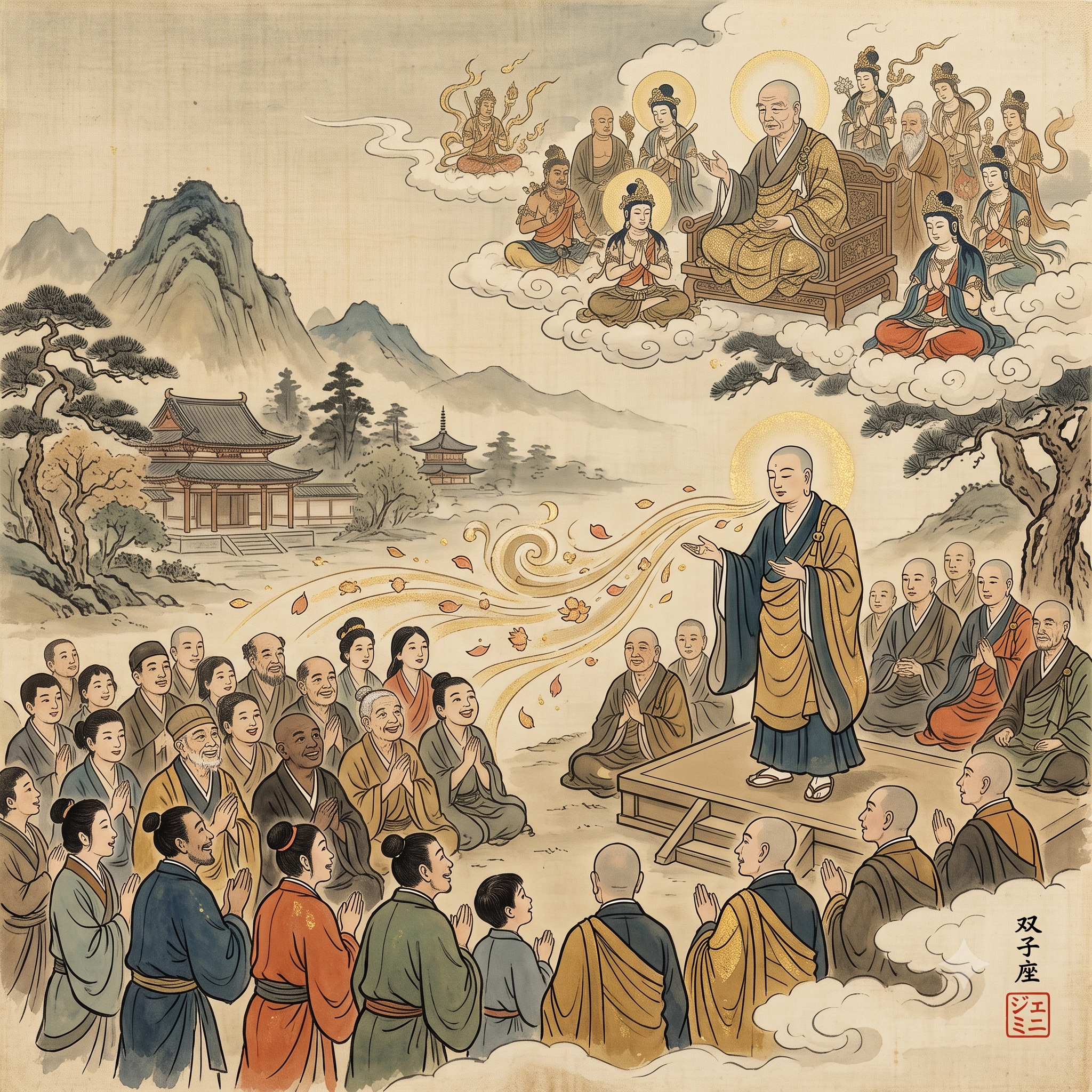
The illustration is a visual translation of Chapter Nineteen of the Lotus Sūtra, focusing on the transformative power of the "deep and wonderful voices" of those who uphold the Dharma. The composition uses a split-level hierarchy within a traditional silk painting style to depict the text's promise. In the lower realm, the visual centerpiece is the 'keeper of the sūtra,' a monk on a platform whose voice is physically manifested as waves of gold light and blooming flowers. These rays interact directly with the 'great multitude' of diverse laypersons and monastics, whose radiant, joyful faces and reverent postures confirm they are indeed 'joyful and cheerful.' In the upper realm, celestial figures—representing Śakra, Brahman, and the other gods and goddesses—gather on clouds to hear this same teaching, emphasizing the universal appeal and supreme order of the sūtra's deep voice. By focusing on the keeper of the Dharma and Śākyamuni’s surrounding multitude, the image successfully avoids restricted deities.
Iconography & Character Identification
Item 1: Deities/Figures Featured:
Lower Realm Central Figure: A Buddhist monk, identified conceptually as the 'keeper of the sūtra' and a devout practitioner (lacking the usnisa topknot, identifying him as a follower of the historical Buddha, and distinct from the restricted deities).
Great Multitude: A diverse crowd of monastic and laypersons (men, women, children, aged individuals, and varying ethnicities/attires) showing expressions of joy and devotion.
Upper Realm Celestial Assembly:
Main Seated Figure on Throne: A powerful, golden celestial Master/Deity, potentially representing Brahman (Bonten) or another high king of the form realm, seated with a specific teaching hand gesture (Vitarka Mudra variant).
Figure with Trident: Śakra (Taishakuten), identified by the trident and position of leadership within the Deva realm.
Attendant Figures: A multi-armed figure (potentially another deity) and multiple other high-ranking gods and goddesses (Bodhissatvas/Devas) gathered on clouds.
Item 2: Text Translations:
Kanji Signature ('双子座'): Gemini
Seal Katakana ('ジェミニ'): Gemini
When they expound the Dharma to the great multitude with their tongues, they will be able to raise deep and wonderful voices, to cause their voices to reach the hearts of the great multitude so that the great multitude may be joyful and cheerful. Hearing their speeches given in good order by their deep and wonderful voices, Śakra, Brahman, and the other gods and goddesses will come and listen to them.
The Buddha declares these lines to Constant-Endeavor Bodhisattva in Chapter Nineteen of the Lotus Sūtra, describing those who keep the Lotus Sūtra. When we share the Buddha Dharma with others, it is as if the Buddha’s mind is finding voice in our words. It should then come as no surprise to us that beings of all dispositions will want to hear more of what the Buddha has taught us. When we “practice the sūtra with our bodies,” as Nichiren described, when we make this teaching a part of our lives, then we find the words we need to reach all beings and lead them to the Buddha’s enlightenment.
The Daily Dharma is produced by the Lexington Nichiren Buddhist Community. To subscribe to the daily emails, visit zenzaizenzai.com