
Conceptual Summary
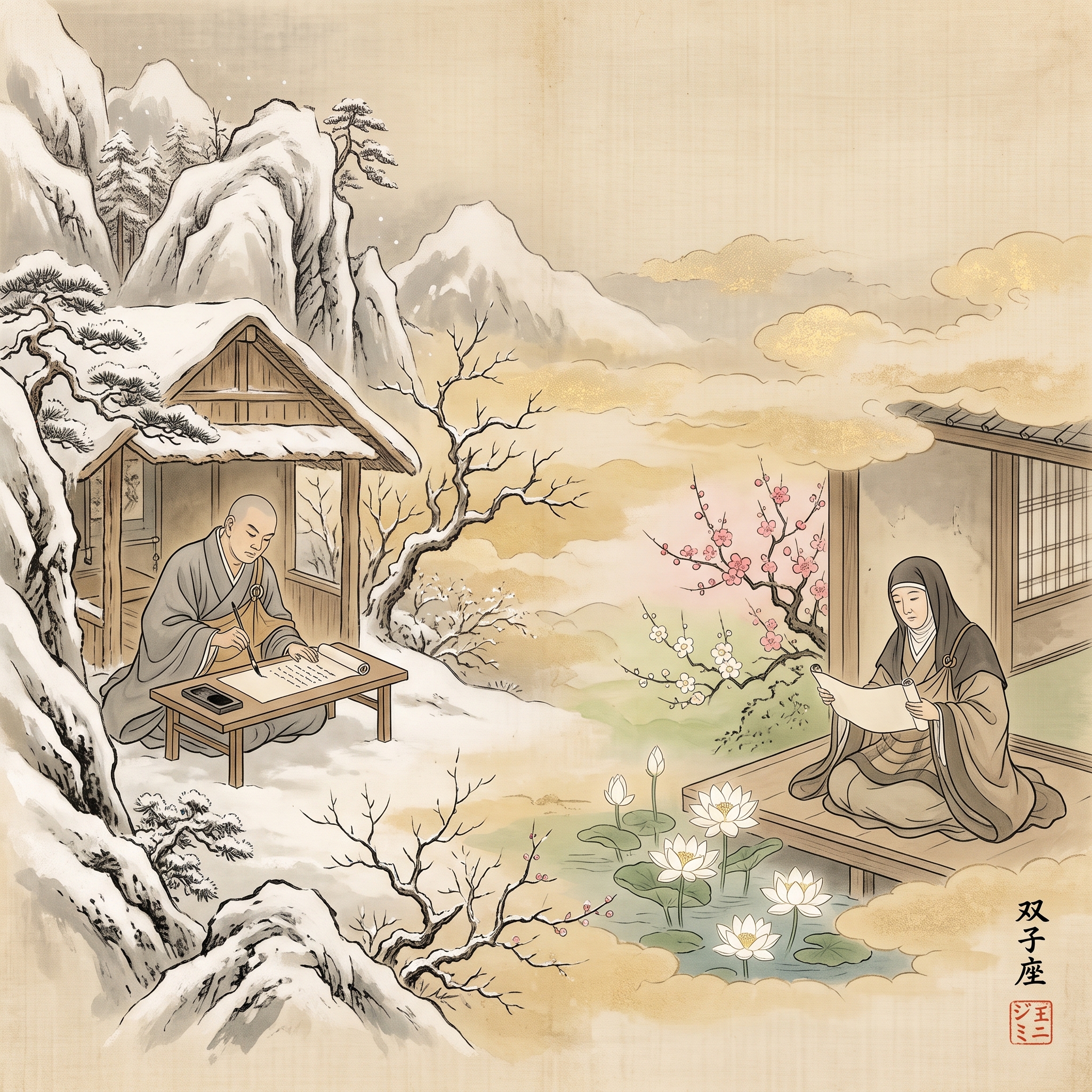
Rendered in the classical Kamakura-period narrative silk-painting tradition with sumi ink, soft mineral pigments, and delicate gold leaf, this composition visually embodies Nichiren’s assurance that "winter always turns to spring." On the left, Nichiren sits within a snowbound mountain hermitage, steadfast amidst adversity, inscribing his letter of encouragement to transform personal hardship into compassionate Bodhisattva action. Moving across the square frame from left to right, austere, snow-laden branches gradually give way to warm golden mist, early-blooming plum blossoms—traditional Japanese emblems of resilience at winter’s end—and luminous white lotus flowers symbolizing the universal Buddhahood promised by the Lotus Sutra. Immersed in this dawning spring, the lay follower Myoichi Ama reads the scroll in serene faith, illustrating the irreversible journey from ceaseless trials to assured awakening.
Iconography & Character Identification
Item 1: Deities/Figures Featured:
-
Nichiren (1222–1282): Depicted on the left in humble grey Kamakura-period monastic robes (koromo) and kesa, writing with an ink brush amidst winter snow, representing fearless determination and the Bodhisattva path of using one's own hardships to awaken others.
-
Myoichi Ama: The devoted 13th-century laywoman and Buddhist nun depicted on the right in simple robes, reading Nichiren's letter in the warmth of arriving spring as an emblem of unwavering faith in the Lotus Sutra.
-
Symbolic Flora (Non-Deity Motifs): Snow-covered branches blossoming with ume (plum blossoms) signify endurance and the certainty of spring following winter, while radiant white lotus flowers (renge) represent the attainment of Buddhahood assured by the Lotus Sutra. In strict accordance with the iconographic parameters, no representations, symbols, or mudras of Amida Nyorai or Dainichi Nyorai appear.
Item 2: Text Translations:
-
Kanji Signature (
双子座): Futagoza — translates to "Gemini" (specifically the constellation Gemini;双子means "twins" and座means "seat" or "constellation"). -
Red Square Seal / Hanko (
ジェミニ): Jemini — the direct phonetic Katakana rendering of "Gemini."
Those who believe in the Lotus Sutra are like the winter season, for many hardships come incessantly. Winter is surely followed by spring. We have never heard nor seen that winter returned to fall. We have never heard that the believers in the Lotus Sutra go back to ordinary people. The Lotus Sutra says, “All people who listen to this sutra will attain Buddhahood.”
Nichiren wrote this in a letter to one of the lay women who followed his teachings, Myoichi Ama. Knowing the hardships Nichiren faced in his life helps us understand his great fearlessness and determination to spread the Wonderful Dharma. One of the most difficult things about hardship is that it can seem like it will never end. Nichiren reminds us that hardships do end, and that we who practice the Lotus Sutra are assured of our future enlightenment. The example of Nichiren’s life also shows us that as Bodhisattvas, we can use our hardships to lead other beings to enlightenment.
The Daily Dharma is produced by the Lexington Nichiren Buddhist Community. To subscribe to the daily emails, visit zenzaizenzai.com