I woke today an hour early. An hour lost. Why did I lose that hour? AI. Artificial intelligence has become such a topic of discussion that even Rev. Kenjo Igarashi spent his Sunday Dharma talk at the Sacramento Nichiren Buddhist Church railing against the failings of AI.
This is all wildly misdirected.
Here’s how AI (Google Gemini) explains Artificial Intelligence:
Artificial Intelligence (AI) is a field of computer science dedicated to creating systems capable of performing tasks that typically require human intelligence. These tasks include learning from experience, recognizing patterns, understanding natural language, solving complex problems, and making decisions.
Rather than a single technology, AI is an umbrella term that encompasses several distinct approaches and capabilities.
And what constitutes “Human Intelligence”? Again, Gemini explains:
Human intelligence is typically defined by five core dimensions that AI cannot fully replicate:
The 5 Dimensions of Human Intelligence
- General Adaptability (Contextual Learning): Humans can learn a concept in one domain and immediately apply it to a completely unrelated situation (transfer learning). A human can read a book about leadership and use those insights to resolve a dispute between friends. Current AI requires specific retraining or prompt adjustments to switch contexts.
- Intuition and Common Sense: Humans possess a massive, unwritten database of “how the world works” acquired through physical existence. We instantly know that an open umbrella won’t protect us from a falling bowling ball, or that a crying person might need space rather than logic. AI lacks this lived experience and must approximate it through statistical patterns in text and media.
- Emotional Intelligence (EQ) and Empathy: Human intelligence includes the ability to feel, interpret, and mirror the emotions of others, as well as understand our own internal motivations. AI can simulate empathy by generating comforting words, but it does not experience emotional states or genuine interpersonal connection.
- Intrinsic Motivation and Intentionality: Humans act out of desires, survival instincts, curiosity, and existential purpose. We decide what goals are worth pursuing. AI has no intrinsic intent; it is entirely reactive, executing tasks based on external prompts, reward functions, or objectives programmed by humans.
- True Creativity and Innovation: While AI can recombine existing data into novel configurations (generative AI), human intelligence can create entirely new paradigms, art movements, or scientific theories out of emotional breakthroughs, existential crises, or accidental observations.
So, when Rev. Igarashi was telling the story of how the “AI” tool he uses to send his propagation report to Nichiren Shu headquarters in Japan doesn’t identify the correct kanji character for the word “propagation”, what was the lesson his listeners were supposed to take away about Artificial Intelligence?
I’m a technology early adopter. I think I inherited it from my father, who was a pioneer in computer hardware engineering and inertial guidance systems. When dial-up Internet access first became available in Sacramento in 1993, I signed up immediately. I loved the concept of meeting and interacting with people around the world. I spent many hours at night online playing Go with players in Asia.
I’ve taken a similar attitude toward the tools that have become available in the very short period since the first modern “Generative AI” app launched in 2022.
Notice that what I like – what really attracts my attention – is the tools that take advantage of generative artificial intelligence.
OpenAI CEO Sam Altman has coined the phrase “Revenge of the idea guys.” In the world of Silicon Valley startups before AI, the idea guys were the people who had great ideas but lacked the skills to implement them. Now, with the tools becoming available through Artificial Intelligence, the idea guys are suddenly able to put their ideas to work by themselves.
I’m an idea guy.
Using Google’s Gemini Notebook I am able to use generative AI to digest and interpret the writings of Nichiren Shonin, the academic papers published on the topic and the brochures and other publications of Nichiren Shu. I’ve uploaded several translations of the Lotus Sutra and commentaries to gain better understanding of the Lotus Sutra. When I ask questions, the answers come from these curated sources.
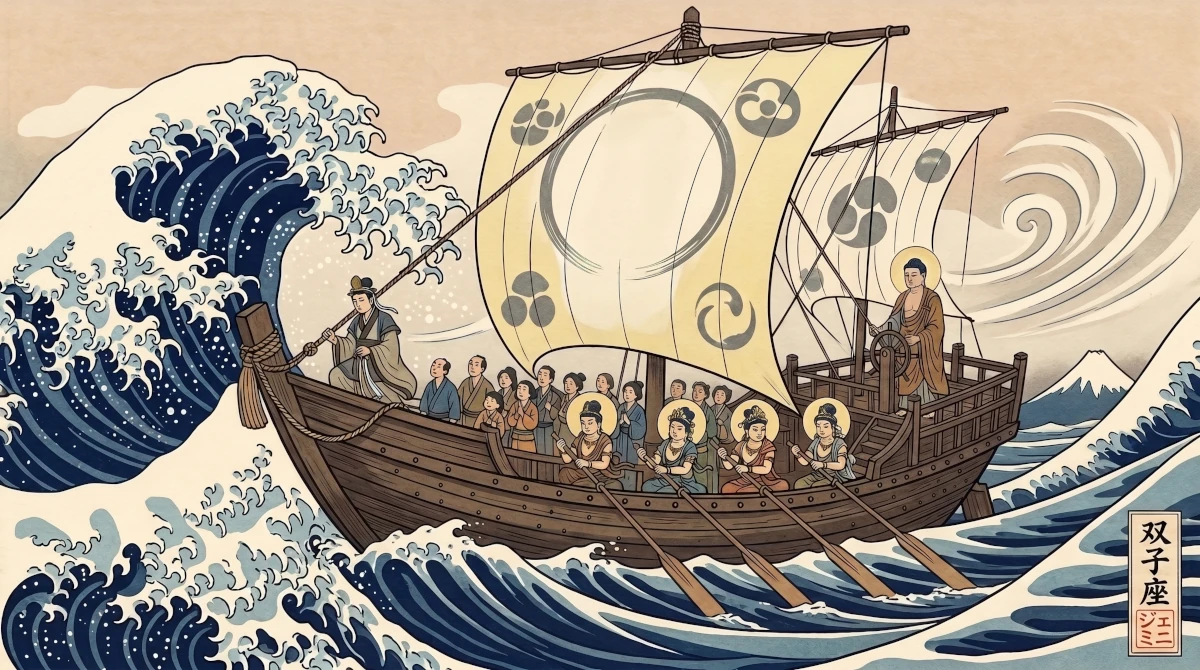
Each day I use Gemini’s image generator, Nano Banana, to create an illustration for that day’s Daily Dharma lesson. The image isn’t essential, I just think it gives the lesson an added dimension.
Google’s suite of AI tools have allowed me to gather together resources to create these websites:


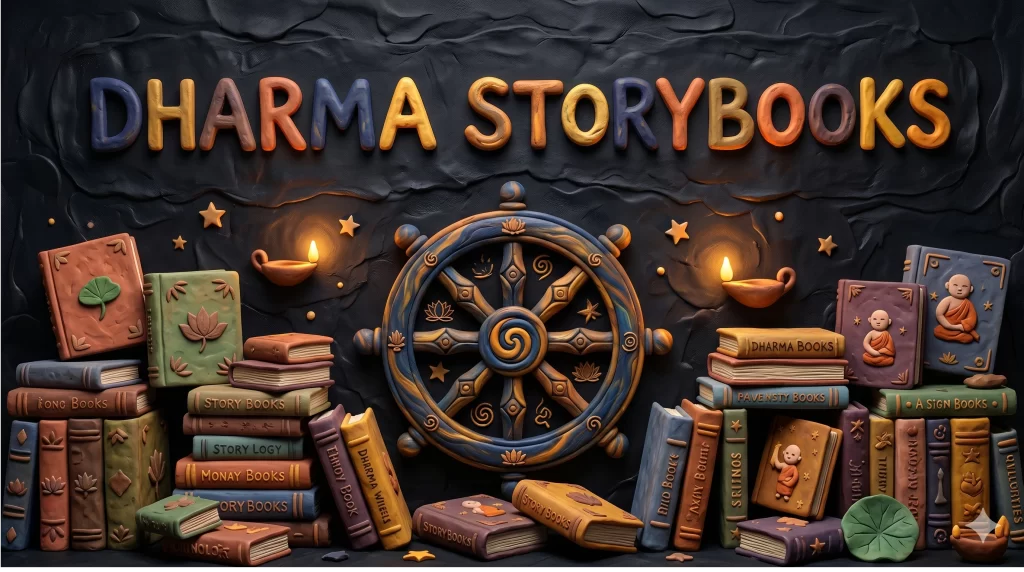
Yes. These tools can make mistakes. These are still machines and if you don’t specify exactly what you want, they can make things up. Conversely, when you want to imagine something out of the ordinary they balk. I still can’t get Google’s Nano Banana to draw Universal Sage’s Six-Tusked White Elephant with six tusks. It just can’t do it.
What really bothers me about all this “AI is bad” talk, is that they might take away my toys.

 Learn More About This Topic