This is Gemini’s translation of a 30 page Japanese pamphlet entitled “What I Seek Are True Words. Kenji Speaks, the Universe Speaks.” The pamphlet was published by the Nichiren Shu headquarters but there is no indication of when it was published. I found it among other Japanese language pamphlets in a storage room at the Sacramento Nichiren Buddhist Church.
I’ve written before about Kenji Miyazawa (see this post). In reading this pamphlet, I was especially pleased to finally learn what was written on Giovanni’s ticket to anywhere.
What I Seek Is the Word of Truth
As Told by Kenji, As Told by the Universe
“I do not know how much I pray that a few fragments of these small stories may end up becoming your transparent, true food in the end.”
— From the Preface to the Children’s Story Collection The Restaurant of Many OrdersMiyazawa Kenji — Traveler of the Cosmic Mind
“Let us go together, as far as we can.”
The true words are lost,
Clouds tear apart and fly across the sky.
Ah, at the bottom of a sparkling April,
Gnashes his teeth and burns as he comes and goes,
I am a solitary Asura.
— From Spring and AsuraLight and Darkness
Miyazawa Kenji is a poet of the Lotus Sutra (“the word of truth”). He was a rare soul who communed with the sky, love, apples, wind, and the source of all power—the life of the universe. Namo Saddharmapundarika Sutra (Namu Myoho Renge Kyo) is nothing other than the resonant cry of that communion.
An Asura living with suppressed anger beneath a shining sky—that is how Kenji viewed himself. In his poem titled “Politician,” Kenji wrote: “On this side and that, / everyone causes a fuss / just wanting a drink. / Fern leaves and clouds— / the world is so cold, dark, and silent.” The reality of society from the Taisho to early Showa periods at times seemed to obscure “the great power of virtue that enfolds the world” from Kenji’s eyes.
His 37 years of life burned intensely as he moved back and forth from an Asura to a “Dekunobo” (a blockhead/simple person who desires nothing for himself). Today, when we recite Kenji’s words, strangely enough, torn clouds and April winds seem to blow through our hearts, and from dark forests and transparent mountains, we seem to hear Kenji’s playful, gentle voice.
The Acorns and the Wildcat
“That writing is pretty poorly done, isn’t it?” the man said, looking down sadly. Ichiro felt sorry for him and said, “Oh, no, it seemed like quite good writing to me.” Hearing this, the man was delighted, gasped for air, turned bright red around his ears, widened his collar, and asked with shy delight in his whole body, “Is the handwriting pretty good too?”
Kindness and Thoughtfulness
A strange postcard from the Wildcat reached Ichiro. It was an invitation to a trial to decide who among the acorns was the most grand. The carriage driver of the Wildcat, who wrote the postcard, diffidently asked Ichiro about his poor writing and lettering. Feeling sorry for him, Ichiro praised his work, and the man was overjoyed.
In child-rearing, it is often said that one should praise rather than scold, because praise brings joy and instills confidence and motivation. Ichiro offered the man that same praise and encouragement.
Through Ichiro’s voice, Kenji is speaking to us about the importance of such kindness and thoughtful consideration for others.
“Very well. Quiet down! Here is the ruling. The one among you who is the least grand, the most foolish, the most chaotic, the most completely hopeless, and whose head looks crushed—that one is the grandest!”
Everyone Is Precious in Their Own Way
Facing the acorns who were squabbling over who was grander, Ichiro handed down an unexpected verdict: the grandest one is the one who is foolish, utterly hopeless, and simple. This is because comparing who is grander is futile—true greatness can never be judged by outward appearances. Indeed, the verdict dismissed conventional ways of looking at things by implying that comparing oneself to others is inherently foolish.
Ichiro remarked that he “heard this in a sermon.” The Buddha’s teaching explains that every person is a precious being capable of attaining Buddhahood; therefore, human beings can never be ranked as superior or inferior to one another.
In today’s highly competitive society, children are constantly subjected to comparison. Kenji encourages children to realize that everyone is a precious individual who can develop their own uniqueness and gain confidence. If bullying occurs simply because someone is different from others, even the acorns would scold us to cherish one another and respect each person’s individuality.
Elegy of Aomori (Aomori Banka)
Did she pass through such a lonely station all by herself?Heading toward a direction unknown,
Walking along that path toward who-knows-what kind of world,
Did she walk all alone and lonely?Whereabouts of the Soul
Kenji’s beloved younger sister, Toshi, was stricken with pulmonary tuberculosis and passed away on November 27, 1922 (Taisho 11), at the young age of 24.
In the Miyazawa family, where his father was a devout follower of Jodo Shinshu, Toshi was the only sister who understood and shared Kenji’s deep faith in the Lotus Sutra. At her deathbed, Kenji chanted the Daimoku (Namu Myoho Renge Kyo) praying for her peace in the afterlife, but it is recorded that he was overcome with unbearable grief and wept bitterly.
After his sister’s death, Kenji’s poetic creation ceased for a period—perhaps due to shock or a sense of utter emptiness. Taking advantage of his summer vacation as a teacher, Kenji suddenly boarded a night train bound for the north. On the night train bound for Aomori, Kenji was seized by a visionary mood. Out of his intense longing and love for his deceased sister, he penned “Elegy of Aomori.”
“Did she pass through such a lonely station all by herself…” Thinking of his sister’s soul, he could not help but ponder her journey into the next world.
Bare Feet of Light (Hikari no Suashi)
“Please forgive Hio! Please forgive Hio!” Ichiro wept and cried out.
“Walk!” The whip cracked again, so Ichiro shielded Hio with all his strength in both arms.
As he shielded him, Ichiro felt words like “Chapter 16: Tathagata Life Span” reach him like a faint wind, like a subtle scent.True Salvation
In a fierce blizzard, while tightly embracing his younger brother Hio, Ichiro is gradually buried in snow and undergoes a mysterious near-death experience. What Ichiro experienced there was…
Fearsome demons with terrifying faces struck Hio with whips—a horrifying world of hell itself. Crying bitterly, Ichiro desperately clung to the demons, shielding his brother and begging, “Please forgive Hio.” But the demons shouted, “His sins are not just from this time!” and continued striking Hio. At that moment, the words “Chapter 16: Tathagata Life Span” (Nyorai Juryohon Dai-juroku) faintly reached his ears. When Ichiro murmured those words without fully understanding their meaning, the hellish world instantly transformed into a radiant, shining world of the Buddha. Hio was taken into the Buddha’s world, and Ichiro was returned to the present world.
Nichiren Shonin taught that the true intent of the Buddha is revealed in the Lotus Sutra, and that salvation for all beings exists nowhere outside the Lotus Sutra. Through this story, Kenji conveys that if one encounters the Lotus Sutra, salvation is assured.
Night on the Galactic Railroad (Gingatetsudo no Yoru)
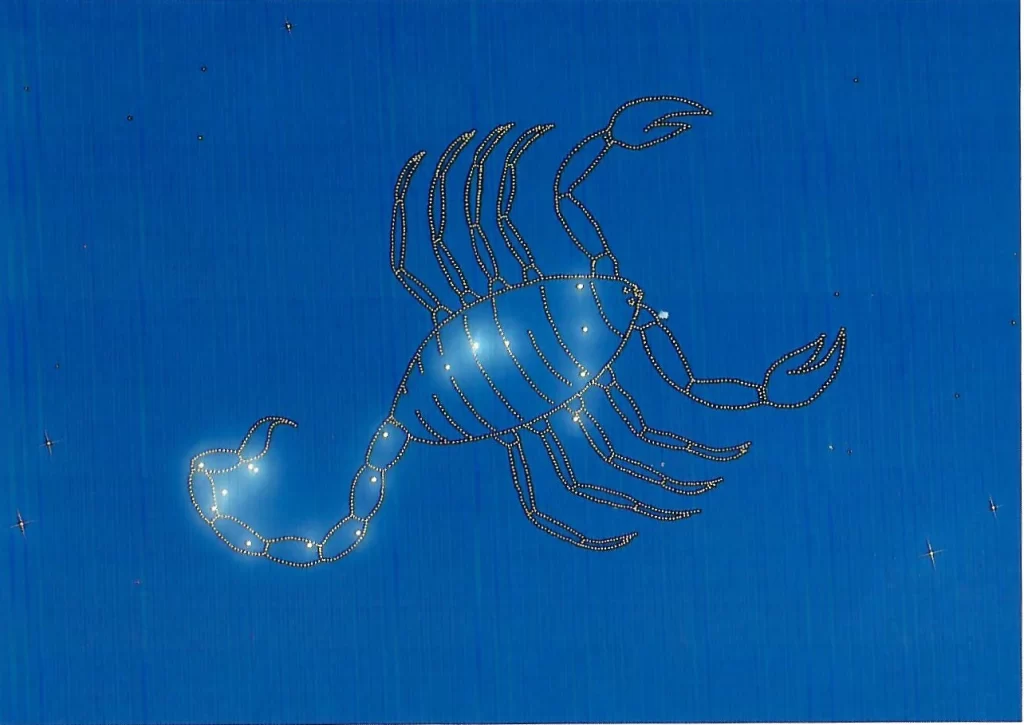
Long ago on the plain of Valdora, a scorpion lived by killing and eating small insects. One day, a weasel found it and tried to eat it. The scorpion fled with all its might, but was about to be caught by the weasel. Just then, it fell into a well in front of it. Unable to climb out, the scorpion began to drown. At that moment, the scorpion prayed:
“Ah, I have taken countless lives until now. Yet when the weasel tried to take my life, I ran away with all my strength. And now it has come to this. Ah, nothing can be relied upon. Why did I not simply give my body to the weasel without a word? Then the weasel could have survived another day. O God, please look into my heart. Do not let me throw away my life in vain like this; next time, please use my body for the true happiness of everyone.”
Then, the scorpion saw its own body turn into a bright red, beautiful fire, burning and illuminating the darkness of the night.
For the True Happiness of Everyone
Campanella drowned in the river because he tried to save his classmate Zanelli. The young tutor and his pupils chose to entrust themselves to the sinking ship rather than push others aside to board a lifeboat. All the people riding together on the Galactic Railroad were those who had sacrificed their lives for the happiness of others.
By wishing to give its body “for the true happiness of everyone,” the scorpion turned into a bright red, beautiful fire that burns eternally to illuminate the darkness. This story purifies, saves, and illuminates the noble act of Campanella and others who sacrificed themselves.
However, what must not be forgotten here is that the scorpion’s prayer was a prayer “for the true happiness of everyone.” What, then, is “true happiness”? Not just for you or me, but the genuine happiness of all living beings…?
“My, this is a magnificent thing. This ticket can take you to the true heaven itself. Not just heaven—it is a pass to walk anywhere you please.”
A Ticket That Can Go Anywhere
When the conductor asked to see his ticket, Giovanni hurriedly searched his pockets. He found a green piece of paper about the size of a postcard folded in four, printed with about ten characters. It was a ticket that allowed free travel anywhere—even to the true heaven.
How wonderful it would be if one could freely travel not only across the Earth or through the three-dimensional space of the universe, but also to the four-dimensional world of past and future, and even into the dimensional realm of the Galactic Railroad!
By the way, what were the “about ten characters” printed on the ticket? Kenji rendered Myoho Renge Kyo in Sanskrit transliteration as “Saddharmapundarika Sutra”, which when written in Chinese characters is 「薩達摩芬陀梨伽素多覧」—exactly ten characters! The “about ten characters” on Giovanni’s ticket signified “Myoho Renge Kyo.” In other words, Namu Myoho Renge Kyo is the very ticket that allows free travel anywhere.
Although Giovanni held a ticket to go anywhere delightful, in the end he returned to his home where his sick mother was waiting. He did so because he realized that it is right there at home that he must build “true happiness.”
“We do not know what true happiness is. But no matter how painful things may be, if it happens on the path toward what is right, every uphill and downhill slope brings us one step closer to true happiness.”
The Path to Happiness
Surely no one refrains from seeking happiness. But what is true happiness? Life is something we cannot understand without walking through it.
The words spoken by the lighthouse keeper to the passengers on the Galactic Railroad are nothing less than a guidebook for life that Kenji wished to leave behind for us. The path Kenji sought to walk was the path once walked by Nichiren Shonin. That is why he could endure any hardship.
For Kenji, Nichiren Shonin was likely his lighthouse keeper, and the beam emitted from that lighthouse was the light of the Daimoku. Kenji believed that living the Lotus Sutra with one’s voice, mind, and body was the absolute best path to happiness, no matter how long and distant that path might be.
“But we must get off here. This is the place going to heaven,” the girl said mournfully.
“We don’t have to go to heaven! My teacher said we must make this place right here even better than heaven,” Giovanni replied.“Right Here” Is the Pure Land
“Right here” is the world we live in. “Right here” is by no means an easy world; in the sutras, it is called the Saha World. Saha means a world where one must endure and persevere.
“My teacher” refers to Nichiren Shonin. Nichiren Shonin taught that this Saha world is itself the Pure Land, because it is the world watched over by the Eternal Original Buddha, Shakyamuni. He does not merely watch over us; he wishes for all of us to become Buddhas and guides us toward that goal.
That is why Giovanni on the Galactic Railroad appeals to us: “Let us make this world a place finer than anywhere else!” That is also the eternal vow of Nichiren Shonin: Rissho Ankoku (Establishing Righteousness and Securing the Peace of the Land).
The Phenomenon Called Life
The Dragon’s Star (Yodaka no Hoshi)
The clouds were pitch black, and only toward the east the fire of a mountain blaze reflected red, appearing terrifying. Feeling a tightness in his chest, the Nighthawk flew up into the sky again. Another beetle flew into the Nighthawk’s throat, scratching and fluttering wildly. The Nighthawk swallowed it down by force, but at that moment his heart suddenly throbbed, and he burst into loud weeping. Weeping, he circled round and round in the sky.How much sacrifice is required simply because I am alive?
The Nighthawk was mocked by everyone and treated with contempt. Yet even as he flew into the sky resigned to death, several insects—several lives—were being swallowed into his throat. Swallowing struggling lives by force… nothing could be more sorrowful. The Nighthawk could only soar into the sky while weeping.
Kenji grieved over the reality that taking life (Sessho) cannot be avoided. He questioned the true meaning of the phenomenon called “life,” sustained at the cost of so many sacrifices.
In the Lotus Sutra, it is taught that all beings can attain Buddhahood. Every life is positioned as the working of the Buddha’s life. We, in our ignorance, dislike things that appear ugly and despise things that seem foolish. The fire of the mountain blaze in the east represents this terrifying world where people suffer without realizing these truths. The Nighthawk reaches the Buddha’s realm—where he can look back over that world from afar—realizes the true radiance of life, and ultimately becomes that radiance itself, attaining Buddhahood.
The Earth God and the Fox (Tsuchigami to Kitsune)
“I truly think so too,” the Birch Tree said in a gentle voice. This time, the Earth God felt as though his entire body were being burned by a fluttering, peach-colored flame. His breathing grew labored and became truly unbearable.
Fluttering Pink Flame of Jealousy
The Earth God loved the Birch Tree. But due to his hideous appearance and terrifying strength, even a slight prank from him would cause others to face near-death experiences, making him feared by everyone in the forest. Furthermore, out of pride in being a god, he maintained a stern dignity and never treated others gently. When the Earth God finally made up his mind to speak softly to the Birch Tree and crept closer, he witnessed a visitor—a Fox—talking intimately with her. The Earth God had long disliked the Fox for pursuing the Birch Tree. His brief moment of gentle affection vanished instantly, consumed by burning jealousy.
We often think, “Because I love them so much, I want them to love me back.” This stems from the delusion that we can control another person’s heart. Driven by this delusion, it turns into jealousy that ultimately hurts those around us. This story reveals both the difficulty and the nobility of truly treasuring the one you love.
Praying for All Our Beloved Ones
From Elegy of Aomori
(Since everyone has been brothers and sisters from long ago,
you must never pray for just one person.)
Ah, I have never done so.
Night and day since she passed away,
not once have I prayed
that she alone should go to a good place.When a person loses their most beloved one, what do they think and feel? At age 26, having lost his beloved sister Toshi, Kenji embarked on a journey north from Hokkaido toward Sakhalin, creating several magnificent elegies. This poem is one of them. Between the lines of Kenji’s text—as he ponders the world after death where Toshi has gone—one feels as if crimson blood might burst forth.
In Kenji’s mental imagery, countless forms of Toshi come and go: Toshi suffering in hell, Toshi turned into a small bird, Toshi reaching the heavenly realm. Finally, his thoughts sublimated into the prayer of the Lotus Sutra quoted above.
When encountering the line “Since everyone has been brothers and sisters from long ago, you must never pray for just one person,” looking back at oneself, the passage from the Lotus Sutra comes deeply to mind: “I pray that this merit may extend universally to all, so that we and all living beings together may attain the Buddha Way.”
The Peace of the “Dekunobo”
From Be Not Defeated by the Rain (Ame ni mo Makezu)
When it is dry, shed tears;
In a cold summer, walk around anxiously;
Called a blockhead (Dekunobo) by everyone,
Neither praised
Nor considered a nuisance;
Such a person
I want to become.The concept of Kiyo Hopen consists of four words: being defamed, being honored, being praised, and being criticized. Liberating oneself from the spell of these four worldly evaluations means living in true peace. Kenji expressed the state of living in liberated peace as becoming a Dekunobo (blockhead/simple person). For a Dekunobo, what is needed is a strong body that is not defeated by rain, wind, snow, or summer heat.
How can one become a Dekunobo? The unification of each of us with the great truth that unifies the universe—which we call the Great Mandala Gohonzon—is the realization of the Dekunobo spirit within us.
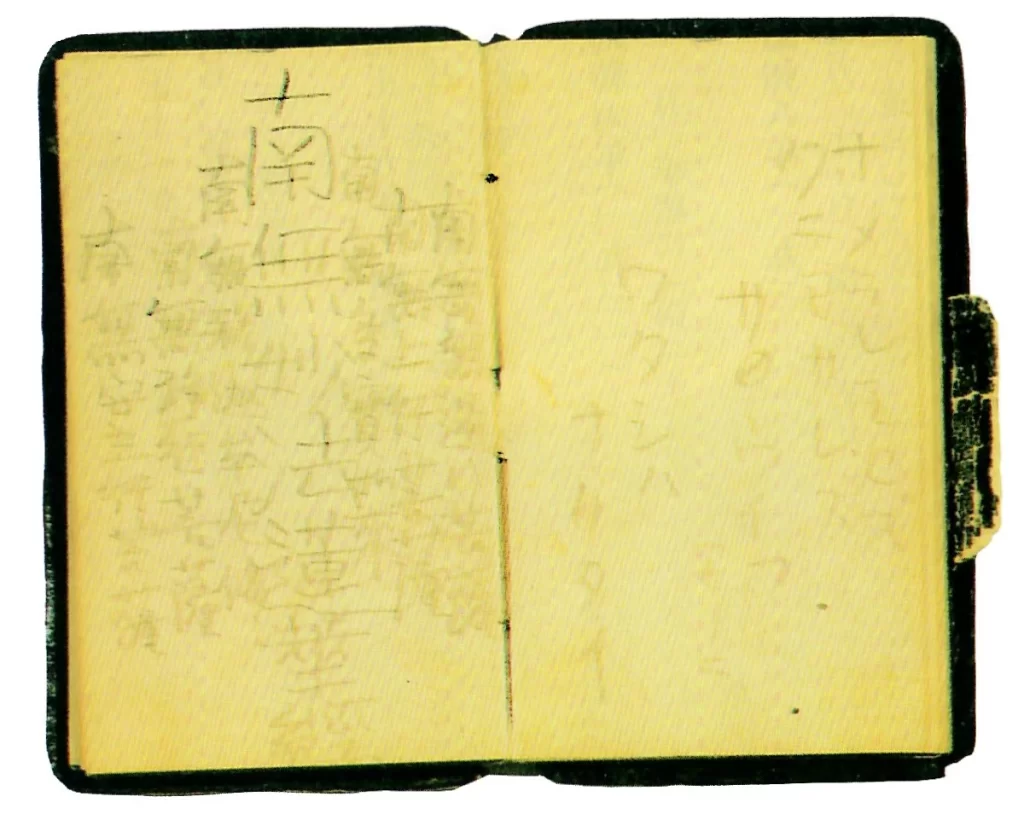
When Kenji expressed his Dekunobo spirit in a single poem, he concluded by transcribing this Gohonzon:
Namu Muhengyo Bosatsu (Boundless Practice)
Namu Jogyo Bosatsu (Superior Practice)
Namu Taho Nyorai (Many Treasures Buddha)
NAMU MYOHO RENGE KYO
Namu Shakyamuni Butsu (Shakyamuni Buddha)
Namu Jyogyo Bosatsu (Pure Practice)
Namu Anryugyo Bosatsu (Firmly Established Practice)
Brief Chronology of Miyazawa Kenji
Year / Age Key Life Events 1896 (Meiji 29) Born on August 27 in Hanamaki City, Iwate Prefecture. 1914 (Taisho 3) — Age 18 Deeply moved upon reading the Lotus Sutra. 1920 (Taisho 9) — Age 24 Completed research studies at Morioka Higher Agricultural and Forestry School. 1921 (Taisho 10) — Age 25 In January, moved to Tokyo without his father’s permission. Around this time, began fiercely writing children’s stories. In December, appointed teacher at Hienuki (later Hanamaki) Agricultural High School. 1922 (Taisho 11) — Age 26 In November, lost his beloved younger sister Toshi. 1924 (Taisho 13) — Age 28 In April, self-published the poetry collection Spring and Asura. In December, published the story collection The Restaurant of Many Orders. 1926 (Taisho 15 / Showa 1) — Age 30 In March, resigned from Hanamaki Agricultural High School. Established the Rasu Farmers’ Association and engaged in agricultural community work. 1931 (Showa 6) — Age 35 In November, wrote “Ame ni mo Makezu” (Be Not Defeated by the Rain) in his notebook. 1933 (Showa 8) — Age 37 Passed away on September 21, leaving a will requesting the printing and distribution of 1,000 copies of the Japanese translation of the Lotus Sutra. Today, Kenji’s grave is located at Shinsho-ji Temple (Nichiren Shu) in Hanamaki City. “The new era is heading toward a direction where the world becomes of one consciousness and one living organism.”
— From Outline of Farmers’ Art
Produced by: Administrative Headquarters of Nichiren Shu
Edited by: Nichiren Shu Shimbunsha
Design: Studio Hiro
Original Japanese text based on Complete Works of Miyazawa Kenji (Kohon Edition).“May this body scatter into fine dust across the sky.”
— Spring and Asura