All posts by John Hughes

Day 24

Day 24 concludes Chapter 19, The Merits of the Teacher of the Dharma, and closes the Sixth Volume of the Sutra of the Lotus Flower of the Wonderful Dharma.

Having last month considered consider the 1200 merits of the mind, we repeat those merits in gāthās and conclude today’s portion of Chapter 19, The Merits of the Teacher of the Dharma.

Thereupon the World-Honored One, wishing to repeat what he had said, sang in gāthās:

Their minds will become pure, clear, keen and undefiled.
They will be able to recognize with their wonderful minds
The superior, mean and inferior teachings.
When they hear even a gāthā [of this sūtra],
They will be able to understand
The innumerable meanings of [this sūtra].

When they expound [this sūtra]
In good order according to the Dharma
For a month, four month or a year,
They will be able to understand at once
The thoughts of gods, dragons, men, yakṣas, demigods,
And of all the other living beings
Inside and outside this world
Composed of the six regions
Because they keep
The Sūtra of the Lotus Flower of the Wonderful Dharma.

They also will be able to hear and keep
The Dharma expounded to all living beings
By the innumerable Buddhas of the worlds of the ten quarters
Who are adorned with the marks of one hundred merits.

When they think over the innumerable meanings [of this sūtra],
And endlessly repeat the expounding of those meanings,
They will not forget or mistake the beginnings and ends [of quotations]
Because they keep the Sūtra of the Lotus Flower of the Wonderful Dharma.

They will see the reality of all things.
Knowing the position [of this sūtra in the series of sūtras],
And the names and words [of this sūtra], according to the meanings of it,
They will expound [this sūtra] as they understand it.

They will expound the Dharma
Already taught by the past Buddhas.
Therefore, they will be fearless
Before the multitude.

Anyone who keeps the Sūtra of the Lotus Flower of the Wonderful Dharma
Will have his mind purified as previously stated.
Although he has not yet obtained the [wisdom-]without-āsravas,
He will be able to obtain [these merits of the mind].

When he keeps this sūtra,
He will be able to reach a rare stage.
He will be joyfully loved and respected
By all living beings.

He will be able to expound the Dharma
With tens of millions of skillful words
Because he keeps
The Sūtra of the Lotus Flower of the Wonderful Dharma.

[Here ends] the Sixth Volume of the Sūtra of the Lotus Flower of the Wonderful Dharma.

Nichiren offers this about these merits in his Response to a Follower letter:

Please remember that the service to your lord itself is practicing the teaching of the Lotus Sūtra. Interpreting the scriptural statement in the Lotus Sūtra (“The Merits of the Teacher of the Dharma” chapter), Grand Master T’ien-t’ai, therefore, states in his Great Concentration and Insight, “All the activities and daily work of the people in the secular world do not contradict the truth preached by the Buddha.” Please contemplate the spirit of this scriptural statement again and again.

Dannotsu Bō Gohenji, Response to a Follower, Writings of Nichiren Shōnin, Faith and Practice, Volume 4, Page 131

Making Efforts to Realize and Actualize Buddha Nature

[W]hereas the Hinayāna sūtras and schools do not recognize that sentient beings universally possess the nature of buddhahood, the Flower Garland Sūtra states that right after his awakening the Buddha saw that all beings are capable of being buddhas also but do not realize it.

Then the Buddha, with the unimpeded, pure, clear eye of knowledge, observes all sentient beings in the cosmos and says, “How strange — how is it that these sentient beings have the knowledge of the Buddha but in their folly and confusion do not know it or perceive it? I should teach them the way of sages and cause them forever to shed deluded notions and attachments, so they can see in their own bodies the vast knowledge of buddhas, no different than the buddhas. (Cleary 1993, p. 1003)

In the Nirvāṇa Sūtra, just before his final nirvāṇa the Buddha teaches that the essential nature of the Buddha is unborn and deathless and that all beings are endowed with this same buddha-nature.

“This is to say that the Tathagata is eternal and unchanging, that he is utmost peace itself, and that all beings have the Buddha Nature. ” (Yamamoto, Kosho, p. 143)

Though the buddha-nature of all sentient beings is asserted, the Buddha stated in the passage from the Flower Garland Sūtra that sentient beings are ignorant of this and would need to be taught. In the Nirvāṇa Sūtra, Kāśyapa Bodhisattva points out:

“There surely is the Buddha Nature. But having not yet practiced the best expediency of the Way, he has not yet seen it. Having not seen it, there can be no attainment of the unsurpassed bodhi. ” (Ibid, p. 169)

Having buddha-nature, then, is one thing, but actually arousing the aspiration to attain buddhahood and making efforts to realize and actualize buddha nature is something else again. This aspiration and determination to dedicate all their efforts to attaining buddhahood for the sake of all beings is what differentiates a bodhisattva from the śrāvakas and pratyekabuddhas of the two vehicles.

Open Your Eyes, p191-192

The Ten Factors: Unity

Of the Ten Factors, Unity refers to the non-duality of all phenomena despite their differing aspects. Even though all phenomena can be distinguished due to the differences between them in the other nine factors, they are all united and equal in that they are all empty and temporary manifestations of Dependent Origination. Again, this means that even though each of the Ten Worlds from hell­-dweller to Buddhahood seems radically different from one another, in actuality they are all a part of the same life process and cannot be separated from one another. Because of this unity, the Ten Worlds mutually posses one another. Because of the mutual possession of the Ten Worlds, all beings are embraced by the Buddha and the Buddha-nature can reside within all beings.

Lotus Seeds

24 Hours of Chanting on Wesak Day, May 7

This video recaps the 24 hours of Odaimoku celebrated on Wesak Day, May 7.

The Realm of Buddhas Exists in the Realm of Men

The “mutual possession of ten realms” doctrine is as difficult to maintain as it is to see fire in a rock and flowers in wood. However, it is not totally impossible because rocks spark when struck together and a tree blooms in spring. It is most difficult to believe that the realm of Buddhas is contained in the realm of men because it is just like saying that fire is in water or water is in fire. However, it is said that dragon fire comes out of water and dragon water comes out of fire. This is difficult to believe, but we cannot help but believe in it because of the evidence for this. You have come to believe that each of the eight realms is contained in the realm of men. Why can you not believe that the realm of Buddhas, too, is contained in it?

Ancient Chinese rulers, sages such as Yao and Shun, treated all people equally with compassion, proving the existence of the realm of Buddhas, at least a portion of it, within the realm of men. Never-Despising Bodhisattva, described in the 20th chapter on “Never-Despising Bodhisattva” of the Lotus Sūtra, pressed his hands together in respect and bowed to anyone he met because whenever the bodhisattva saw a man, he saw a Buddha in him. Born to the human world, Prince Siddhartha, young Śākyamuni, became the Buddha. These evidences should be enough to convince you to believe that the realm of Buddhas exists in the realm of men.

Kanjin Honzon-shō, A Treatise Revealing the Spiritual Contemplation and the Most Verable One, Writings of Nichiren Shōnin, Doctrine 2, Page 136-137

Daily Dharma – May 15, 2020

Anyone who rejoices at hearing the Dharma
And utters even a single word in praise of it
Should be considered to have already made offerings
To the past, present, and future Buddhas.
Such a person is rarely seen,
More rarely than the udumbara-flower.

The Buddha sings these verses to his disciple Śāriputra and all those gathered to hear him teach in Chapter Two of the Lotus Sūtra. It is natural to admire and respect those who make great sacrifices for the sake of improving the world, and who lead us to know what deserves those offerings. It is sometimes difficult to see the joy that comes from those efforts. In these verses the Buddha reminds us that even when our reaction to his Dharma is just a smile, or saying “Wonderful,” our admiration is a reminder of our own capacity for such great efforts.

The Daily Dharma is produced by the Lexington Nichiren Buddhist Community. To subscribe to the daily emails, visit zenzaizenzai.com

Day 23

Day 23 covers all of Chapter 18, The Merits of a Person Who Rejoices at Hearing This Sutra, and opens Chapter 19, The Merits of the Teacher of the Dharma.

Having last month considered just how great the benefits are for those who rejoice at hearing the sūtra, we consider further benefits of encouraging others to hear the sutra.

“Furthermore, Ajita! Anyone who goes to a monastery in order to hear this sūtra and hears it even for a moment while he is sitting or standing, in his next life will be able to go up to the palace of heaven, riding in a beautiful and wonderful elephant-cart or horse-cart or in a palanquin of wonderful treasure by his merits. Anyone who, while sitting in the place of the expounding of the Dharma, persuades another per on to it down or shares his seat with him to hear [the Dharma] when he sees him coming to the place, in his next life by his merits, will be able to obtain the seal of King Sakra, of the Brahman Heavenly-King or of a wheel-turning-holy-king.

“Ajita! Anyone who[, while he is staying outside the place of the expounding of the Dharma,] says to another person, ‘Let us go and hear the sūtra called the Lotus Flower of the Wonderful Dharma which is being expounded [in that place],’ and cause him to hear it even for a moment, in his next life by his merit , will be able to live with the Bodhisattvas who obtain dharanis. He will be clever and wise. He will not be dumb throughout thousands of millions of his future existences. His breath will not be foul. He will have no disease of the tongue or the mouth. His teeth will not be defiled, black, yell w, few, fallen out, uneven or crooked. His lips will not be pendulous, shrunk, chapped, cracked, broken, distorted, thick, large, yellow-black or loathsome. His nose will not be flat or awry. His face will not be black, long, distorted or displeasing. His lips, tongue and teeth will be well-shaped; his nose, long, high and straight. His face will be full; his eyebrows, thick and long; and his forehead, broad and even. In a word, he will have all the good features of a man. He will be able to see the Buddhas, hear the Dharma from them, and receive their teachings by faith throughout his future existences.

“Ajita, look! The merits of the person who causes even a single man to go and hear the Dharma are so many. It is needless to speak of the merits of the person who hears [this sūtra] with all his heart, reads it, recites it, expounds it to the great multitude, and acts according to its teachings.

See The Opportunity to Encounter The Teaching

The Opportunity to Encounter The Teaching

[Chapter 18] states that even a person who is so unenlightened that when he comes in contact with the teaching he is not deeply moved by it will obtain very great merits. This teaches us how important it is to have the opportunity to encounter the teaching. We all surely have the buddha-nature, but we cannot attain salvation unless we awaken to the existence of our buddha-nature through such an opportunity. To come in contact with the teaching is a prior condition for salvation, and the opportunity to encounter it must be said to be very sacred indeed. Accordingly, our giving such an opportunity to others is also a very sacred deed.

Buddhism for Today, p292

Ecumenical Buddhism

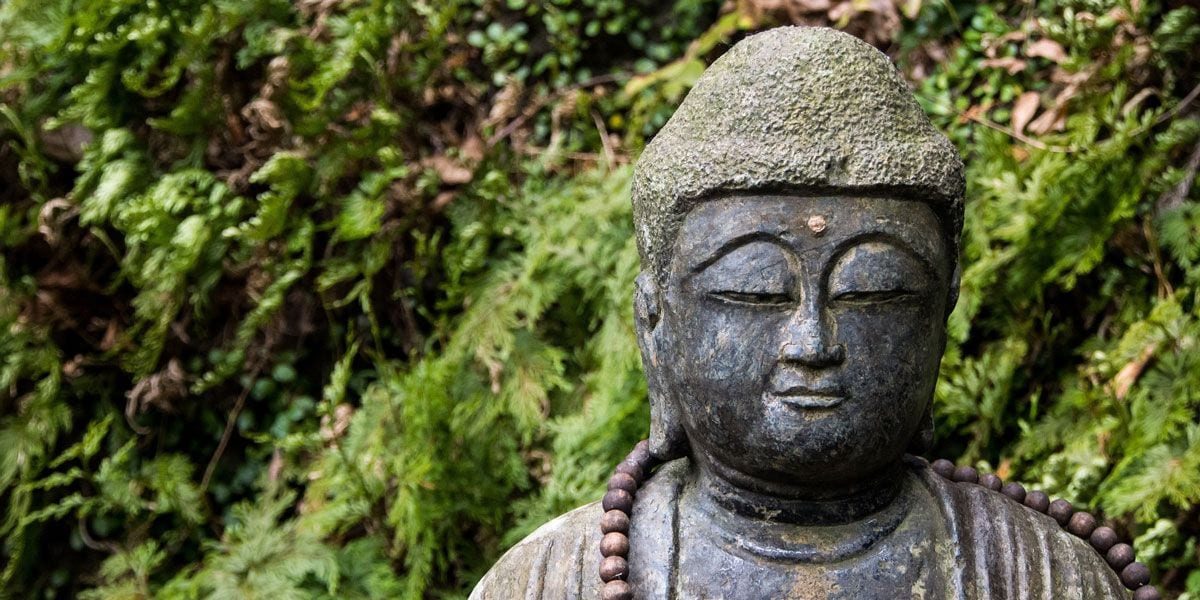
Buddha statue
While I struggle with Gene Reeves and Risshō Kōsei Kai’s doctrine of Interfaith Truth, I have no real problem with the idea that the ocean of the Lotus Sutra contains all of the rivers of Buddhist thought.

As Reeves states in his discussion of Chapter 22, Transmission, in his Stories of the Lotus Sutra:

As the Dharma Flower Sutra often praises itself and asserts its own excellence or superiority, it is very important to notice that in [Chapter 22, Transmission], which entrusts the teaching to bodhisattvas, the Buddha says that if in the future there are people who cannot have faith in or accept the Dharma Flower Sutra, other profound teachings of the Buddha should be used in order to teach the Dharma Flower Sutra. In other words, the teachings of the Lotus Sutra are not only in the text called the Sutra of the Lotus Flower of the Wonderful Dharma, they are also to be found in all of the profound teachings of the Buddha found in numerous sutras. By clinging too strongly to the text and words that we call the Dharma Flower Sutra, we may limit our ability to spread the teachings of the Sutra, the teachings that comprise the “real” Dharma Flower Sutra.

The Stories of the Lotus Sutra, p235-236

Later in the same chapter he expands on the need for a “generous attitude” when expounding the Lotus Sutra.

It is common for people who are enthusiastic about something to want to protect it by preserving it just as it is and by taking pleasure in making it difficult for it to be understood or appreciated by the uninitiated. Being inflexible about how a text is to be translated and expressed, insisting, for example, on using unfamiliar Sanskrit terms or quaint English expressions, may make it very difficult for others to enter a particular circle of understanding and appropriation. In such ways we may be establishing an in-group/out-group situation in which we are on the inside, in some way perhaps protected from what is outside. Traditionally, secret religious doctrines or ceremonies often functioned in this way.

Perhaps this kind of group bonding through special, esoteric language is necessary to some degree. Certainly it is very common among religious groups. But when it means that the Dharma Flower Sutra, which entrusts us to spread it everywhere, is not taught generously to others, we fail to fulfill the commission of the Buddha.

I believe that teaching generously should mean that we share the Sutra in whatever ways are most appropriate to the intended audience, always, of course, within the real limits of our abilities. While it might be nice if everyone learned enough Chinese to be able to read Kumarajiva’s Chinese version of the Lotus Sutra, this is neither necessary nor necessarily desirable. It is good, I believe, that we have versions of the Dharma Flower Sutra that make it more intelligible to Japanese people, and it is good that there are English versions that make it more available to English-speaking people. This is not merely a matter of translation into other languages; it is important that the Sutra be rendered in ways that make it as understandable as possible.

This kind of generosity, a generosity in which one tries to understand and appreciate the linguistic and cultural situation of others, a generosity in which we do not insist that our own way of expressing something in the Sutra is the only good way, this kind of generosity is what the Sutra expects of those who are its genuine followers.

If we do not approach teaching the Sutra with such a generous attitude we will, I fear, fall into one more version of “merely formal Dharma.” In other words, we will be going through the motions of teaching and practicing, but very few will be deeply moved by such teaching. This kind of failure to be generous is largely unconscious, making it difficult, but not impossible, to detect and overcome. But another problem often stands in the way of our being generous in teaching: Often we are all too conscious of it, making it difficult to overcome. This is manifest in reticence or shyness in speaking and teaching.

The Stories of the Lotus Sutra, p237-239

For me this is all underscored in Chapter 14, Peaceful Practices:

A Bodhisattva-mahāsattvas who wishes to expound this sūtra in the age of the decline of the teachings after my extinction should perform the following peaceful practices. When he expounds or reads this sūtra, he should not point out the faults of other persons or sūtras. He should not despise other teachers of the Dharma. He should not speak of the good points or bad points or the merits or demerits of others. He should not mention Śrāvakas by name when he blames them. Nor should he do so when he praises them. He should not have hostile feelings against them or dislike them. He should have this peace of mind so that he may not act against the wishes of the hearers. When he is asked questions, he should not answer by the teachings of the Lesser Vehicle, but expound the Dharma only by the teachings of the Great Vehicle so that the questioners may be able to obtain the knowledge of the equality and differences of all things.”

And again later:

“Again, Mañjuśrī! A Bodhisattva-mahāsattvas who wishes to keep, read and recite this sūtra in the latter days after [my extinction] when the teachings are about to be destroyed, should not nurse jealousy against others, or flatter or deceive them. He should not despise those who study the Way to Buddhahood in any way. He should not speak ill of them or try to point out their faults. Some bhikṣus, bhikṣunīs, upāsakās or upāsikās will seek Śrāvakahood or Pratyekabuddhahood or the Way of Bodhisattvas. He should not disturb or perplex them by saying to them, ‘You are far from enlightenment. You cannot obtain the knowledge of the equality and differences of all things because you are licentious and lazy in seeking enlightenment.’ He should not have fruitless disputes or quarrels about the teachings with others. He should have great compassion towards all living beings. He should look upon all the Tathāgatas as his loving fathers, and upon all the Bodhisattvas as his great teachers. He should bow to all the great Bodhisattvas of the worlds of the ten quarters respectfully and from the bottom of his heart. He should expound the Dharma to all living beings without partiality. He should be obedient to the Dharma. He should not add anything to the Dharma or take away anything from the Dharma. He should not expound more teachings to those who love the Dharma more [than others do].

Yes, Nichiren didn’t appear to be so understanding or tolerant, but this is not 13th century Japan. This is a much different world. As Ryuei McCormick explained in his earlier reply to my inter-faith question, “Nichiren makes it clear that there are countries that are just ignorant and evil and then there are countries that slander. I believe the distinction he is making is between non-Buddhist cultures that need to be persuaded to give ear to the Dharma and learn more about it until they are able to take up the Wonderful Dharma of the Lotus Sutra.”

Accomplishing the Greatest, Most Selfless Goal

[B]eginning in the 1st century BCE a class of sūtras known as Mahāyāna or “Great Vehicle” began to appear that spoke of the bodhisattva vehicle. Those who eschewed the two vehicles of the śrāvakas and pratyekabuddhas as spiritually selfish took up the bodhisattva vehicle instead, aspiring to attain buddhahood for the sake of all sentient beings. These sūtras extolled this as the superior path. The earlier sūtras only take into account one buddha, the historical Śākyamuni Buddha of this world, and only one bodhisattva, his successor Maitreya Bodhisattva. They only deal with this era wherein the teaching of the Buddha Dharma is still extant. Most importantly, they only teach the way to attain arhatship or pratyekabuddhahood, both of which see liberation as the irrevocable abandonment of the six lower realms and the beings still transmigrating within them. Mahāyāna sūtras, however, have a grander scope that takes in the whole universe and unimaginably vast scales of time wherein there are countless buddhas inhabiting pure lands throughout the universe (the ten directions) with bodhisattva attendants who voluntarily take birth even in this Sahā world (the world of Endurance) in order to help liberate all beings and accumulate the merit and insight they would need to attain buddhahood and establish their own pure lands. According to the Mahāyāna sūtras, it is indeed possible to accomplish the greatest and most selfless goal of buddhahood itself.

Open Your Eyes, p190