All posts by John Hughes

Saichō’s Debate With Takuitsu

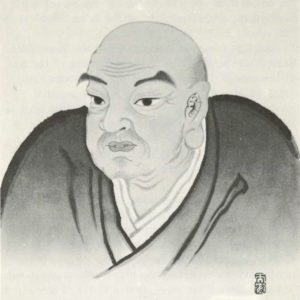
[Page 90-91] The turning point in Saichō’s career began with a trip to Tōgoku (Eastern provinces) in 817. … During his travels in Tōgoku, Saichō probably heard about the Hossō Monk Takuitsu. … [Page 96] The dispute between Saichō and Takuitsu covered a wide range of problems, including the proper method of classifying the Buddha’s teachings, the evaluation of Tendai methods of exegesis of the Lotus Sūtra, and the criticism of various Tendai doctrines and meditations. Both men offered detailed and penetrating arguments in support of their positions. …

[Page 105-106] In its later stages, the debate focused on the exegesis of the Lotus Sūtra, the most authoritative scripture for the Tendai School.

Saichō often referred to his own school as the Tendai Hokkeshū, the Tendai School of Lotus Sūtra interpretation. It was not the only school which interpreted the Lotus Sūtra, since both the Hossō and Sanron schools had long traditions of exegesis of the Lotus Sūtra. Thus Saichō’s task was to show that the Tendai interpretation was the most authoritative one.

Tokuitsu followed the orthodox Hossō interpretation, as it was presented in Tz’u-en’s (632-682) commentary, the Fa hua hsüan tsan. According to Tz’u-en’s writings, the Buddha had a hidden purpose in preaching the Lotus Sūtra. He wanted to encourage people of undetermined nature to strive to become bodhisattvas, rather than being content with merely becoming or striving to become arhats or pratyekabuddhas. The One-vehicle doctrine was an expedient teaching (gonkyō) directed toward those of undetermined nature. The claims of the Lotus Sūtra that it was the ultimate teaching (jitsukyō) were an expedient designed to encourage this particular class of practitioner and were not to be considered as teachings which were universally valid. Predictions in sūtras that certain people would attain Buddhahood were said to refer to the individual’s possession of the gyōbusshō and to not have any general significance. Statements that all beings had the Buddha nature, such as that by the bodhisattva Jōbukyō (Never-disparaging), were said to refer only to the inactive ribusshō.

In contrast to the Hossō position presented above, Saichō believed that the Lotus Sūtra was the Buddha’s ultimate teaching, a direct revelation of the Buddha’s enlightenment, which was valid for all men and not just intended for one particular group. Saichō supported his arguments by referring to passages in the Lotus Sūtra that stated that the sūtra was indeed the Buddha’s ultimate teaching, by defending the Tendai classification of Buddhist doctrine, and by attacking the Hossō classification of Buddhist doctrine. The defense and exegesis of the The teachings of the One-vehicle, the universality of salvation, and the speedy realization of salvation were eventually accepted as standard Buddhist teachings throughout Japan. The new schools of the Kamakura reformation developed out of the Tendai School and adopted the positions that Saichō had defended, though not without changes. Even some Hossō monks such as Ryōhen (1194-1252) tried to reconcile the differences between Hossō and Tendai by devising positions which allowed for universal salvation and the quick attainment of salvation.

Saichō: The Establishment of the Japanese Tendai School, p90-106
Daily Dharma – Sept. 10, 2019

Whoever for as long as a kalpa,
With evil intent and flushed face,
Speaks ill of me,
Will incur immeasurable retributions. Whoever for even a moment
Reproaches those who read, recite and keep
The Sūtra of the Lotus Flower of the Wonderful Dharma
Will incur even more retributions.

The Buddha declares these lines to Medicine-King Bodhisattva in Chapter Ten of the Lotus Sūtra. Why is it worse to criticize someone who is even beginning to practice the Wonderful Dharma than it is to criticize the Buddha who is fully enlightened? It is like the difference between kicking a full-grown tree and kicking a young sapling. The Buddha knows how to handle criticism. One who has just started with the Buddha Dharma could be discouraged from this practice through criticism. We should encourage anyone who wants to practice with us.

The Daily Dharma is produced by the Lexington Nichiren Buddhist Community. To subscribe to the daily emails, visit zenzaizenzai.com

Day 13

Day 13 covers all of Chapter 8, The Assurance of Future Buddhahood of the Five Hundred Disciples.

Having last month considered the prediction for Pūrṇa Bhikṣu, we hear from twelve hundred Arhats.

Thereupon the twelve hundred Arhats, who had already obtained freedom of mind, thought:

“We have never been so joyful before. How glad we shall be if we are assured of our future Buddhahood by the World-Honored One just as the other great disciples were!”

Seeing what they had in their minds, the Buddha said to Maha-Kāśyapa:

“Now I will assure these twelve hundred Arhats, who are present before me, of their future attainment of Anuttara-samyak-saṃbodhi one after another. My great disciple Kauṇḍinya Bhikṣu, who is among them, will make offerings to six billion and two hundred thousand million Buddhas, and then become a Buddha called Universal-Brightness, the Tathāgata, the Deserver of Offerings, the Perfectly Enlightened One, the Man of Wisdom and Practice, the Well-Gone, the Knower of the World, the Unsurpassed Man, the Controller of Men, the Teacher of Gods and Men, the Buddha, the World-Honored One. The others of the five hundred Arhats, including Uruvilvā-Kāśyapa, Gaya­Kāśyapa, Nadī-Kāśyapa, Kālodāyin, Udāyin, Aniruddha, Revata, Kapphina, Bakkula, Cunda, and Svāgata, also will attain Anuttara-samyak-saṃbodhi, and become Buddhas also called Universal-Brightness.”

Nichiren writes of Aniruddha in his Letter to Hōren:

A Hinayāna sage known as Pratyekabuddha is incomparably superior to a śrāvaka. He is so great that he can stand in for the Buddha to appear in the world to save its people. It is said that there was once a hunter who in a time of famine gave a bowl of rice mixed with barnyard millet to a pratyekabuddha called Rita, and as a result he was rewarded with rebirth as a man of wealth in the human or heavenly world for as long as 91 kalpa (aeons). Aniruddha, one of the ten great disciples of the Buddha who is reputed to have mastered the divine-eye of heavenly beings to see through everything, is said to have been [the incarnation of) the hunter. Grand Master Miao-lê interprets this, “Although the bowl of barnyard millet rice has little value, the hunter donated all that he owned to a person of great merit. Therefore, the hunter was rewarded with such good fortune.” It means that although a bowl of millet rice was not much in value, it was presented to a noble person of Pratyekabuddha status, and this is the reason why he was able to be reborn with such good luck.

Hōren-shō, Letter to Hōren, Writings of Nichiren Shōnin, Volume 6, Followers I, Page 46

The View of Nichiren Shū in 1985

1985_Nichiren_Shu-cover
View this brochure online

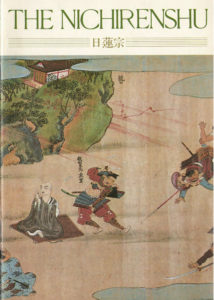
I’ve added another brochure to the Sacramento Nichiren Buddhist Church website. This one was published by the Asia Buddhist Friendship Association Nichiren Shū in 1985. The booklet is bilingual, with English on the lefthand pages and Japanese on the right.

This brochure declares that Nichiren was Bodhisattva Viśiṣṭacaritra – Jōgyō in Japanese and Superior Practice in English.

saint-nichirenViśiṣṭacaritra is a Bodhisattva who is predicted to appear in this impure world in what was termed lawlessness (Mappō in Japanese) two thousand years following Buddha’s passing. Here, in compliance with the spirit of the sage, Śākyamuni, this Bodhisattva is to undertake Buddhist austerities armed with the Lotus Sutra. However, in this sutra it also explains that without fail persecution will be encountered while propagating and teaching the Lotus Sutra in this age of degeneration. It is in the face of this oppression that resolution must not waver, even to the extent of martyrdom, so that teaching of the Lotus Sutra can be carried out. In compliance with this prediction of the Lotus Sutra, Saint Nichiren was born at the beginning of the age of lawlessness (Mappō) during the Kamakura-Era (1185-1333). In preaching this text he suffered repented persecution and at one stage almost became a martyr in its cause. Finally, it was in his pursuit of the course expounded in the Lotus Sutra that Saint Nichiren attained the realization that he was in fact Viśiṣṭacaritra Bodhisattva.

Living the Life

When we choose to live our lives with the firm belief that we are the most qualified to become Buddhas, that we don’t need anything else other than our faith in the Lotus Sutra to qualify us, and when we devout ourselves to practice with faith, and when we strive to save others, then we will actually manifest the characteristics of those Bodhisattvas who arose from beneath the ground. We cannot just call ourselves that and end the day. We actually have to do the things required to fulfill our vows as those Bodhisattvas.

Lecture on the Lotus Sutra

The Tendai School Optimistic view of human potential

The Tendai School had a more optimistic view of human potential than did the Hossō School. Tendai monks followed the Lotus Sūtra in arguing that all sentient beings could eventually attain Buddhahood. No beings were permanently denied Buddhahood. They also argued that the three vehicles did not lead to three separate ultimate goals. Rather, all sentient beings had only one ultimate spiritual goal, Buddhahood. Teachings leading the practitioner to arhathood or pratyekabuddhahood were only provisional teachings designed to encourage those with lesser faculties and lead them onward towards the single ultimate goal for all sentient beings, Buddhahood.

On the basis of these Tendai teachings, Saichō argued that only sūtras which presented provisional teachings contained claims that some people could attain Hinayāna goals but could never attain Buddhahood. The five types of human nature which the Hossō School had presented did not refer to seeds from the beginningless past, but to stages which a practitioner might attain and then transcend as he moved onward to higher goals. The five types of human nature were not determined by seeds which sentient beings possessed from the beginningless past, but by the obstacles which men had to overcome on their way to Buddhahood.

Saichō: The Establishment of the Japanese Tendai School, p101

Daily Dharma – Sept. 9, 2019

When we worship gods or Buddhas, we begin with the phrase of “namu.” Namu is an Indian word that has come to mean “offering of life to Buddhas and gods” in China and Japan. Our social standing is determined in part by possessing a spouse and children, retainers, fiefs, and gold and silver, though some people do not have those. Regardless of whether we possess these or not, no one possesses treasure more precious than life. Accordingly, sages and wise men in the past have donated their lives to the Buddhas in order to attain Buddhahood.

Nichiren wrote this passage in his Treatise on Phenomenal and Noumenal Offering (Jiri Kuyō Gosho). We tend to judge ourselves and others by the outward aspects of our lives: where we live, what we wear, our position in society, and the company we keep. It is easy to lose sight of what will happen when we leave this life and give up all those things, even our precious bodies. Nichiren reminds us that our lives are all we have, and when we live them in gratitude for what the Buddha teaches us, and dedicate ourselves to benefitting others, then we exist as enlightened beings.

The Daily Dharma is produced by the Lexington Nichiren Buddhist Community. To subscribe to the daily emails, visit zenzaizenzai.com

Day 12

Day 12 concludes Chapter 7, The Parable of the Magic City, and completes the Third Volume of the Sutra of the Lotus Flower of the Wonderful Dharma.

Having last month considered what became of the 16 princes, we consider those who were taught by the śramaṇeras.

“Bhikṣus! When we were śramaṇeras, we each taught many hundreds of thousands of billions of living beings, that is, as many living beings as there are sands in the River Ganges. Those living beings who followed me, heard the Dharma from me in order to attain Anuttara-samyak-saṃbodhi. Some of them are still in Śrāvakahood. I now teach them the Way to Anuttara-samyak-saṃbodhi. They will be able to enter the Way to Buddhahood by my teaching, but not immediately because the wisdom of the Tathāgata is difficult to believe and difficult to understand. Those living beings as many as there are sands in the River Ganges, whom I taught [ when I was a śramaṇera], included you bhikṣus and those who will be reborn as my disciples in Śrāvakahood after my extinction. My disciples who do not hear this sūtra or know the practices of Bodhisattvas, after my extinction will make a conception of extinction by the merits they will have accumulated by themselves, and enter into Nirvāṇa as they conceive it. At that time I shall be a Buddha of another name in another world. Those who will enter into Nirvāṇa as they conceive it will be able [to be reborn] in the world I shall live in, seek the wisdom of the Buddha, and hear this sūtra. They will be able to attain [true] extinction only by the Vehicle of the Buddha in that world because there is no other vehicle except when the Tathāgatas expound the Dharma with expedients.

Nichiren discusses this unique relationship between śramaṇera and his disciples in his letter Treatise on the Essence of the Lotus Sūtra:

When we compare Śākyamuni Buddha in the Lotus Sūtra to Buddhas in other sūtras in regard to the period of practicing the Bodhisattva way and saving people, other Buddhas’ length of practice is said to have been three asamkhya kalpa or five kalpa, while Śākyamuni Buddha has been a great Bodhisattva planting the seed of enlightenment in all living beings in the Sahā World since 3,000 dust-particle kalpa ago according to the “Parable of a Magic City” chapter of the Lotus Sūtra. Therefore, none of the living beings in six lower realms in this world have any relationship with any Bodhisattvas in other worlds.

Hokke Shuyō Shō, Treatise on the Essence of the Lotus Sūtra, Writings of Nichiren Shōnin, Doctrine 2, Page 208

Pictorial History of Practicing in Oakland

Sacramento Station
Waiting in Sacramento for the 8:59am train headed to San Jose

Oakland A's fans
Most of the people waiting for the train were headed to the Oakland A’s vs. Detroit Tigers game.

20190908-walk-map
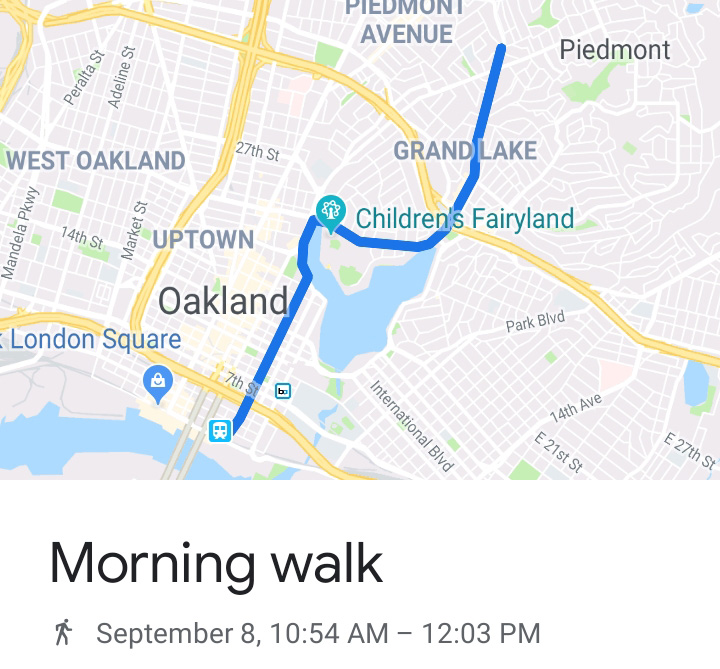
Arriving at Oakland Jack London station with an hour and a half before the service I decided to walk to Mark Herrick’s house in Piedmont. The distance is just a 10th of a mile longer than I normally walk each day.

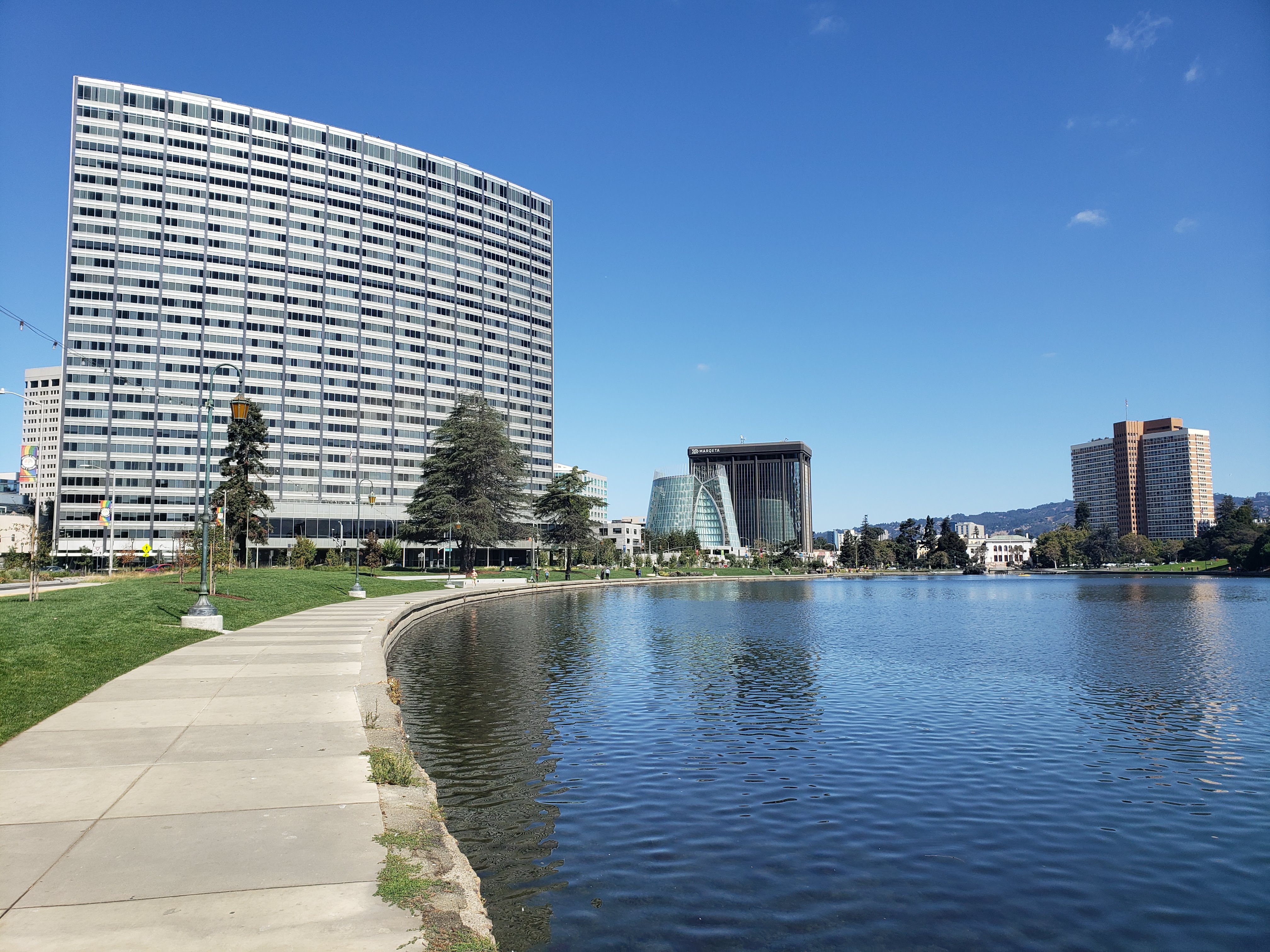
Lake Merritt
The walk was pleasant, although it did get warm by the time I arrived.

20190908_mccormick-Herrick
Michael McCormick and Mark Herrick discuss a book before the service.

20190908_152446
And finally the ride home. Plenty of room to stretch out.

The Ten Worlds: Hell-Dwellers

The world of the hell-dwellers is the lowest of the Ten Worlds. Buddhist cosmology teaches that there are more than 100 hells, including the eight major hot hells and eight major cold hells, which are reserved for those who are so consumed with hatred, bitterness, and despair that their only wish is to destroy themselves and others out of spite and the desire for non-existence.

Lotus Seeds