All posts by John Hughes

Hossō School’s Two Categories of Buddha Nature

The Hossō School’s position was that two categories of Buddha nature could be identified: the ribusshō, which all men possessed, and the gyōbusshō, which only a few possessed. The first was the Buddha-nature as absolute. Since the absolute was the basis of all phenomena, and since all sentient beings were ultimately dependent on the absolute, all were said to possess the ribusshō. However, Hossō scholars argued that the absolute was static; it did not actively participate in the phenomenal realm. Consequently, the ribusshō did not enable a practitioner to attain Buddhahood. When a sūtra stated that all sentient beings possessed the Buddha-nature, it indicated only that all had the ribusshō, not that all could attain Buddhahood.

The potential of some sentient beings to attain Buddhahood was explained by postulating a second type of Buddha-nature, the gyōbusshō or Buddha-nature of practice. The gyōbusshō consisted of untainted seeds (muro shuji) which were stored in the eight or basic consciousness (arayashiki, Skt. ālaya-vijn͂ana). These seeds were said to have existed from the beginningless past. If a person possessed them, he could attain Buddhahood. However, if he lacked untainted seeds, he could not create them no matter how diligently he practiced or studied. A person without the gyōbusshō could therefore never attain Buddhahood. Hossō School monks interpreted statements in the sūtras that only certain people could attain Buddhahood as referring to the possession of gyōbusshō by those people. Since not everyone had the gyōbusshō, some sūtras contained statements that not everyone could attain Buddhahood.

Saichō: The Establishment of the Japanese Tendai School, p97-98

Daily Dharma – Sept. 8, 2019

The Buddha said to Endless-Intent Bodhisattva: “Good man! In a certain world, World-Voice-Perceiver Bodhisattva takes the shape of a Buddha and expounds the Dharma to those who are to be saved by a Buddha. He takes the shape of a Pratyekabuddha and expounds the Dharma to those who are to be saved by a Pratyekabuddha. He takes the shape of a Śrāvaka and expounds the Dharma to those who are to be saved by a Śrāvaka.

The Buddha gives this description of World-Voice-Perceiver Bodhisattva (Kannon, Kanzeon, Avalokitesvara) to Endless-Intent Bodhisattva in Chapter Twenty-Five of the Lotus Sūtra. Like all Bodhisattvas, World-Voice-Perceiver can adapt his appearance to whatever we need to remove our delusions. In one way, this is a guide for us, reminding us that as Bodhisattvas ourselves, we can learn to adapt our approaches to others so that we can benefit them. In another way, it helps us to realize that more beings than we realize are helping us with our practice.

The Daily Dharma is produced by the Lexington Nichiren Buddhist Community. To subscribe to the daily emails, visit zenzaizenzai.com

Day 11

Day 11 continues Chapter 7, The Parable of the Magic City

Having last month considered the reaction of the Brahman-heavenly-kings of the five hundred billion worlds in the east, we consider the reaction of the Brahman-heavenly-kings of the five hundred billion worlds in the southeast.

“Bhikṣus! The great Brahman-[heavenly-]kings of the five hundred billion worlds in the southeast, who saw their palaces illumined more brightly than ever, danced with joy. They also wondered why [their palaces were so illumined]. They visited each other and discussed the reason. There was a great Brahman-heavenly-king called Great-Compassion among them. He said to the other Brahmans in gāthās:

Why is it
That we see this light?
Our palaces are illumined
More brightly than ever.

Did a god of great virtue or a Buddha
Appear somewhere in the universe?
We have never seen this [light] before.
Let us do our best to find [the reason].

Let us go even to the end of one thousand billion worlds,
And find the place from where this light has come.
A Buddha may have appeared somewhere in the universe
In order to save the suffering beings.

“Thereupon the Brahman-heavenly-kings of the five hundred billion [worlds] went to the northwest, carrying flower-plates filled with heavenly flowers, in order to find [the place from where the light had come]. Their palaces also moved as they went. They [reached the Well-Composed World and] saw that Great-Universal-Wisdom-Excellence Tathāgata was sitting on the lion-like seat under the Bodhi tree of the place of enlightenment, surrounded respectfully by gods, dragon-kings, gandharvas, kiṃnaras, mahoragas, men, and nonhuman beings. They also saw that the sixteen princes were begging the Buddha to turn the wheel of the Dharma. Thereupon the Brahman-heavenly-kings worshipped the Buddha with their heads, walked around him a hundred thousand times, and strewed heavenly flowers to him. The strewn flowers were heaped up to the height of Mt. Sumeru. The Brahman-heavenly-kings offered flowers also to the Bodhi-tree of the Buddha. Having offered flowers, they offered their palaces to the Buddha, saying, ‘We offer these palaces to you. Receive them and benefit us out of your compassion towards us!’ In the presence of the Buddha, they simultaneously praised him in gāthās with all their hearts:

Saintly Master, God of Gods!
Your voice is as sweet as a kalavinka’s.
You have compassion towards all living beings.
We now bow before you.
You, the World-Honored One, are exceptional.
You appear only once in a very long time.

No Buddha has appeared
For the past one hundred and eighty kalpas.
The three evil regions are crowded;
And the living beings in heaven, decreasing.

Now you have appeared in this world
And become the eye of all living beings.
As their refuge, you are saving them.
As their father, you are benefiting them
Out of your compassion towards them.
We are now able to see you
Because we accumulated merits
In our previous existence.

“Thereupon the Brahman-heavenly-kings, having praised the Buddha with these gāthās, said, ‘World-Honored One! Turn the wheel of the Dharma and save all living beings out of your compassion towards them!’ Then they simultaneously said in gāthās with all their hearts:

Great Saint, turn the wheel of the Dharma
And reveal the reality of all things!
Save the suffering beings
And cause them to have great joy!

If they hear the Dharma, some will attain enlightenment;
Others will be reborn in heaven.
The living beings in the evil regions will decrease;
And those who do good patiently will increase.

“Thereupon Great-Universal-Wisdom-Excellence Tathāgata gave his tacit consent to their appeal.

This section shows us the East, Southeast, South and Zenith. The story is almost the same but not exactly. One difference that always strikes me is the different length of time since a Buddha last appeared. This is not mentioned in the East or the South, but in the Southeast and Zenith that period is vastly different.

In the Southeast:

No Buddha has appeared
For the past one hundred and eighty kalpas.

In the Zenith:

There has been no Buddha
For the past innumerable kalpas.

All agree on what happens when there is no Buddha. As the Brahman-heavenly-kings of the Zenith say:

Before you appeared,
The worlds of the ten quarters were dark.

The living beings in the three evil regions
And asuras are increasing.
The living beings in heaven are decreasing.
Many fall into the evil regions after their death.

Saichō’s Teacher Hsing-man

The small amount of reliable information that survives about Saichō’s teacher Hsing-man is found in Saichō’s Kechimyakufu. Hsing-man, a native of Su-chou (in modern Kiangsu), was initiated when he was twenty and ordained as a monk when he was twenty-five. He studied the Ssu fen lü precepts for five years. In 768 he met Chan-jan and attended a number of his lectures on Chih-i’s major works (Tendai sandaibu). At the time of Saichō’s arrival in China, he was the head of the Fo-lung temple on Mount T’ien-t’ai. Hsing-man encouraged Saichō in his studies, giving him eighty-two fascicles of T’ien-t’ai works. He also told Saichō that Chih-i had predicted that a foreign monk would come to China in order to propagate T’ien-t’ai teachings in a country to the east of China. Predictions such as this one probably helped foreign monks such as Saichō and Kūkai gain ready acceptance by Chinese monks. Hsing-man assiduously practiced religious austerities and authored a number of works. He died around the year 823 when he was over eighty years old.

Saichō: The Establishment of the Japanese Tendai School, p46

Daily Dharma – Sept. 7, 2019

They will be able to recognize all the sounds and voices inside and outside the one thousand million Sumeru-worlds, although they have not yet obtained heavenly ears. Even when they recognize all these various sounds and voices, their organ of hearing will not be destroyed.

The Buddha gives this explanation to Constant-Endeavor Bodhisattva in Chapter Nineteen of the Lotus Sūtra, describing those who keep the Lotus Sūtra. As we shed our delusions and see the world more for what it is, we begin to see and understand things not visible or comprehensible to those still mired in their suffering and attachment. Knowing the suffering we have left behind, we may be lured into abandoning this world and those in it. In this chapter, the Buddha shows that all of the sense organs we have in this life, sight, hearing, smell, taste, touch and thought, all of these can be used either to increase our delusion or bring us towards awakening. The Buddha reached enlightenment in this world, and so do we.

The Daily Dharma is produced by the Lexington Nichiren Buddhist Community. To subscribe to the daily emails, visit zenzaizenzai.com

The Pictorial Life of Saint Nichiren

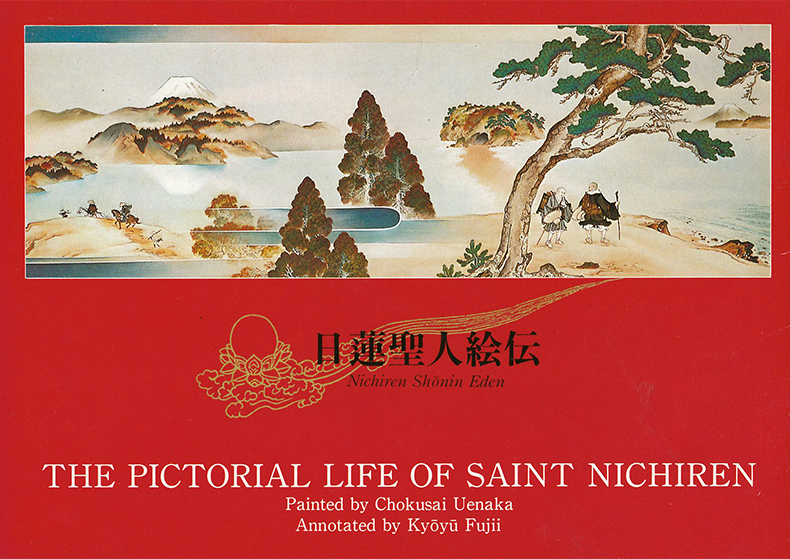
1986_The_Pictorial_Life_Of_Saint_Nichiren-cover
1986 publication of the Nichiren-shū Sia Buddhist Friendship Association

I’ve uploaded to the Sacramento Nichiren Buddhist Church website another of those treasures I discovered when I was cleaning out the Sunday school classroom. This one is a 5×7 booklet that tells the story of Nichiren’s life with paintings by Chokusai Uenaka.

From the Preface:
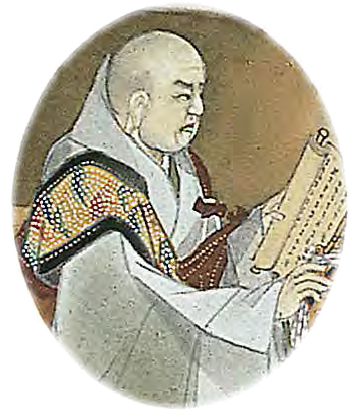
NichirenSince ancient times a genre of art called emakimono, in which biographies of individuals and narrative tales were presented in picture and written form, has existed in Japan. This book, following the traditional Japanese method, illustrates the biography of St. Nichiren, founder of the Nichiren-shu (sect) of Buddhism. An explanation of the scenes is also included.
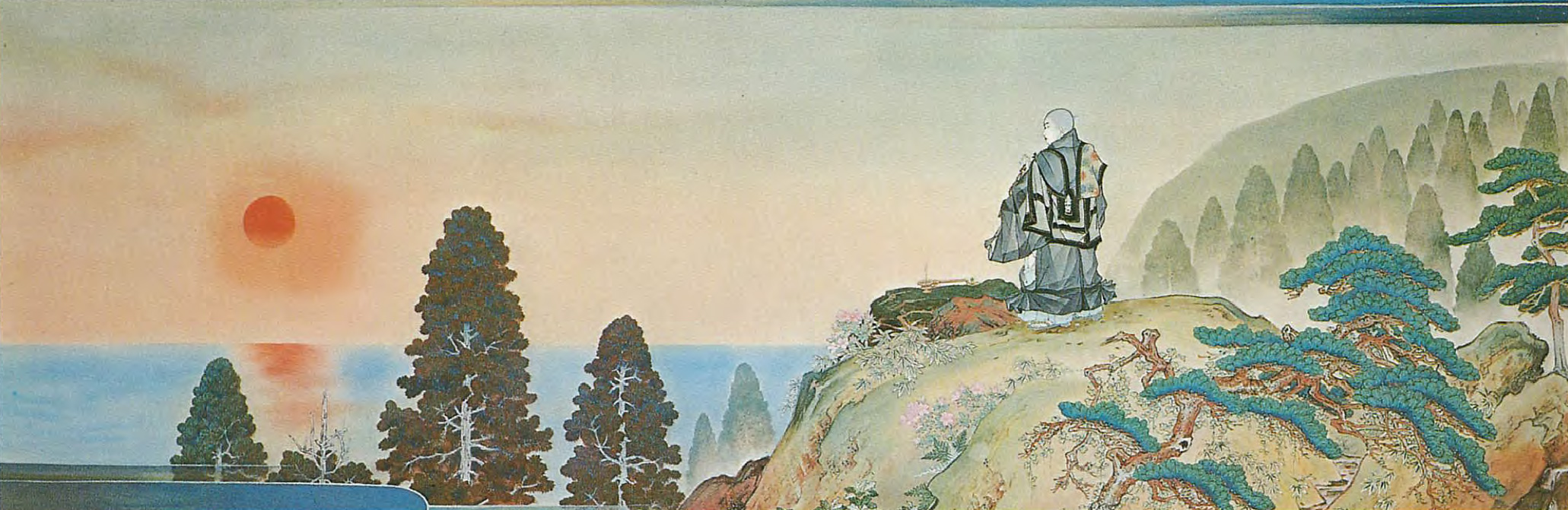
The paintings of St. Nichiren’s life were executed by Chokusai Uenaka. Including a descriptive text which I composed, a Japanese edition of this book was published under the title of Nichiren Shonin eden (A Pictorial Biography of St. Nichiren) by the Kuonji Temple of Mt. Minobu. This English edition contains a selection of sixteen paintings from the original with a re-edited digest of the original text.

In order that people all over the world learn about St. Nichiren and his faith, publishing projects have been a business concern of the Nichiren-shu Asian Buddhist Friendship Association.

Uenaka Chokusai, the artist who created the scenes for this publication, is ranked as a great master of the traditional Tosa-e painting school. In completing this pictorial biography of St. Nichiren, he gave great attention to detail. After carefully researching the period, he took care to make sure that the elements of St. Nichiren’s era-Kamakura period (1192-1333) customs, mannerisms, clothing and architecture-were illustrated accurately.

In the original Japanese edition, the explanatory text was summarized and edited into an English digest by Junpei Kawasaki. However, in order to make the text more understandable it has been given a standardized style, certain areas have been altered or retranslated, and the whole text has been rechecked for accuracy and readability. This has been accomplished through the cooperation of David A. Hall, a Ph.D. candidate in Buddhist Studies from the University of California, Berkeley. The Publishing of this English edition is being made possible through the assistance of Nichiren-shu.

Kyoyu Fujii, Editor
President, Nichiren-shu Asian Buddhist Friendship Association Tokyo, July 1986

The text and images are displayed on the Sacramento Nichiren Buddhist Church website. A PDF copy of the booklet is also available for download.

I’m using cropped versions of some of these images in the header of my website.

Day 10

Day 10 concludes Chapter 6, Assurance of Future Buddhahood, and opens Chapter 7, The Parable of a Magic City.

Having last month met the 16 sons of Great-Universal-Wisdom-Excellence Buddha, we conclude today’s portion of Chapter 7, The Parable of a Magic City, with the 16 sons pleading for their father to turn the wheel of the Dharma.

“Thereupon the sixteen princes, having praised the Buddha with these gāthās, begged the World-Honored One to turn the wheel of the Dharma, saying, ‘World-Honored One! Expound the Dharma, and give peace and many benefits to gods and men out of your compassion towards them!’ They repeated this in gāthās:

You, the Hero of the World, are unequalled.
Adorned with the marks
Of one hundred merits,
You have obtained unsurpassed wisdom.
Expound the Dharma and save us
And other living beings of the world!

Expound the Dharma, reveal the Dharma,
And cause us to obtain that wisdom!
If we attain Buddhahood,
Others also will do the same.

You, the World-Honored One, know
What all living beings have deep in their minds,
What teachings they are practicing,
And how much power of wisdom they have.

You know their desires, the merits they obtained,
And the karmas they did
In their previous existence.
Turn the wheel of the unsurpassed Dharma!

The Daily Dharma from May 10, 2019, offers this:

You, the World-Honored One, know
What all living beings have deep in their minds,
What teachings they are practicing,
And how much power of wisdom they have.

The children of Great-Universal-Wisdom-Excellence Buddha proclaim this to their father in a story told by Śākyamuni Buddha in Chapter Seven of the Lotus Sūtra. In our preoccupation with our pursuits in this world of conflict we are so focused on our schemes that we have forgotten the Buddha’s wisdom dormant in us all. With the Lotus Sūtra, the Buddha leads us to an unfamiliar and even uncomfortable way of seeing the world. But it is only when we leave the false safety of our delusions that we can truly benefit ourselves and others.

The Daily Dharma is produced by the Lexington Nichiren Buddhist Community. To subscribe to the daily emails, visit zenzaizenzai.com

Saicho’s Intention to Establish the Tendai School in Japan

In his petition asking that students be sent to China, Saichō claimed that the Tendai texts transmitted to Japan contained many copyist errors. In addition, a direct transmission from Chinese teachers to Japanese students was needed to insure the orthodoxy of the Tendai School in Japan. Saichō criticized both the Hossō and Sanron schools for being based on Sāstra (commentaries), not on sūtras (the Buddha’s words). Hossō and Sanron monks considered only the branches of the Buddha’s doctrines and neglected the roots. Tendai teachings, because they valued the Lotus Sūtra above all other authorities, were not subject to this criticism. Thus even before he went to China, Saichō declared his intention to establish the Tendai School in Japan.

Saichō: The Establishment of the Japanese Tendai School, p38

A Method of Gradual Guidance

Those who could not learn [the] simple lesson in karma could not hope to comprehend the law of dependent origination or the Four Noble Truths. Comprehension of the triple doctrine enabled aspirants to cleanse their minds of false doctrines and preconceptions. Once the dross had been purged away, they were ready to move on to more advanced teachings. In other words, the Buddha employed a method of gradual guidance leading from the easy to the hard. Several primitive sutras contain passages like the following, explaining this gradual approach:

“To one seated before him, the World-honored One preached the Law gradually. First he taught giving, obeying the precepts, and [thereby] rising to heaven. Then he explained that selfish desires are evil and the cause of both misfortune and impurity, whereas separating oneself from selfish desires is a great virtue. This teaching made the heart of the listener malleable and receptive; the person put aside prejudices and experienced the ecstasy of faith. When this happened, the World-honored One for the first time preached the Four Truths of suffering, desire, nirvana, and the Way. As freshly washed and bleached fabric receives the dye, the listener received the Four Truths. While still seated there, the listener acquired the pure and unsullied Eye of the Law [which sees that all things arising from causes are ultimately extinguished].”
Basic Buddhist Concepts

Daily Dharma – Sept. 6, 2019

When he keeps this sūtra, He will be able to reach a rare stage. He will be joyfully loved and respected By all living beings.

The Buddha sings these verses in Chapter Nineteen of the Lotus Sūtra. He describes those who put this sūtra in their lives, and dedicate their existence to liberating all beings from ignorance and delusion. When the Buddha became enlightened, he realized all beings can become enlightened. When we work for the benefit of all beings, we find the Buddha’s mind and bring harmony into our lives and the world.

The Daily Dharma is produced by the Lexington Nichiren Buddhist Community. To subscribe to the daily emails, visit zenzaizenzai.com