
Conceptual Summary
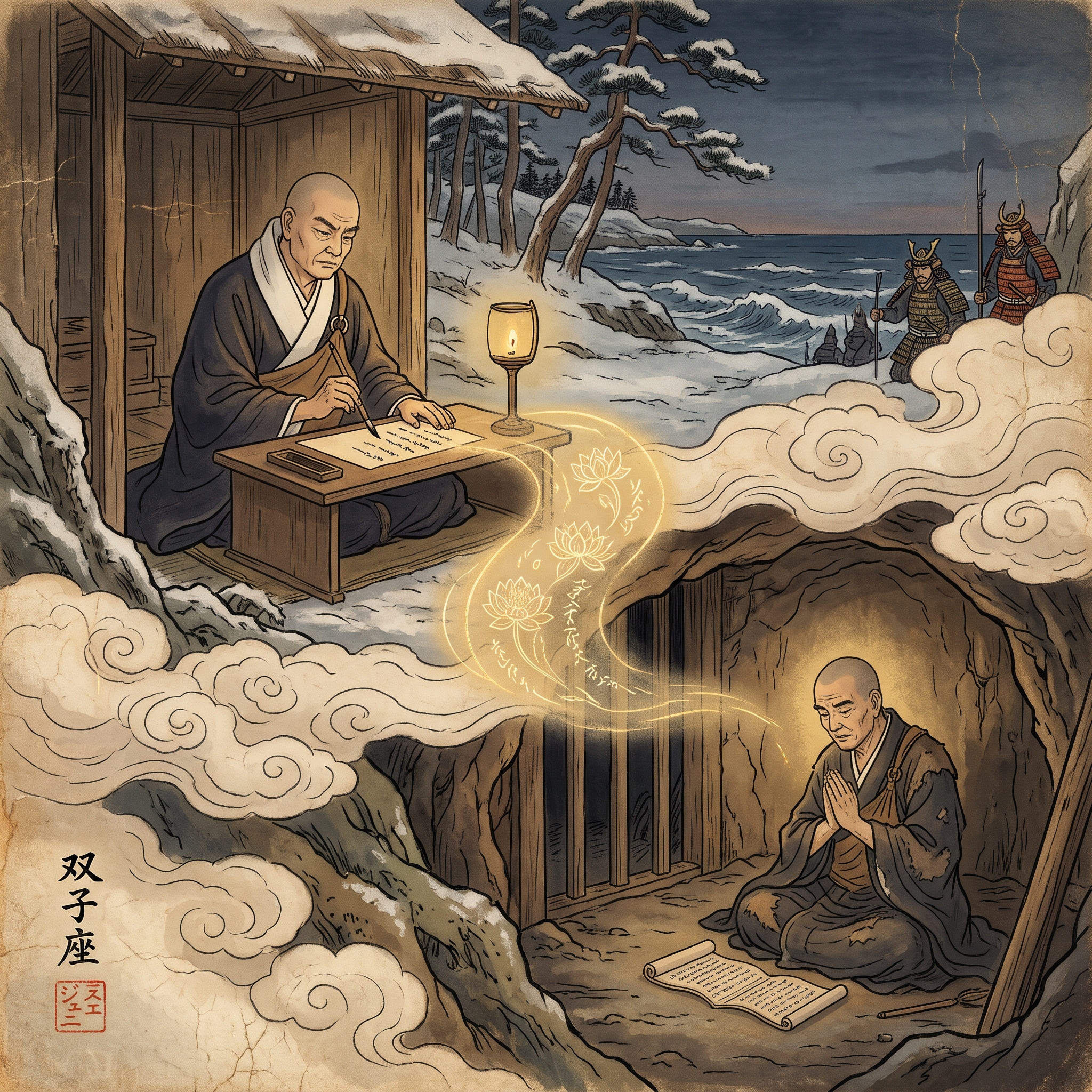
This composition visually interprets Nichiren’s Tsuchi-ro Gosho (Letter to Nichiro) through a classical Kamakura-period narrative perspective that bridges physical separation with spiritual unity. In the upper left, Nichiren sits in a snow-covered shelter on the eve of his exile to Sado Island, writing by lantern light as armed guards wait along the freezing coastline in the background. Below, divided by swirling traditional clouds and rocky earth, his disciple Nichiro sits imprisoned within a cold subterranean dungeon. Rather than succumbing to despair, Nichiro embodies the practice of "reading the Lotus Sutra with one's body"—hands pressed in gassho (prayer) with the sutra scroll unrolled before him, radiating a warm golden aura that wards off the chill of the cell. A luminous golden stream adorned with lotus blossoms flows from Nichiren's brush directly into the dungeon, symbolizing their shared devotion to the Wonderful Dharma and the transcendent power of practicing with body, voice, and spirit.
Iconography & Character Identification
Item 1: Deities/Figures Featured:
Nichiren Shonin (upper left): The 13th-century Japanese Buddhist priest and founder of Nichiren Buddhism, depicted in simple monastic robes writing a letter of encouragement prior to his northern exile.
Nichiro (lower right): One of Nichiren's six senior disciples, depicted in ragged robes inside the earthen prison (tsuchi-ro) in Kamakura, steadfastly practicing the Lotus Sutra in thought, word, and deed.
Kamakura Shogunate Guards (upper right): Samurai warriors in traditional armor (o-yoroi) waiting along the wintry shore to escort Nichiren into exile.
Item 2: Text Translations:
Signature (双子座): Literally translates to the "Gemini Constellation" (composed of 双子 meaning "twins" and 座 meaning "seat" or "constellation").
Red Seal / Hanko (ジェミニ): Phonetic Japanese katakana characters transliterating the English word "Gemini" (Je-mi-ni).
Tomorrow, I, Nichiren, will be exiled to Sado Island. In this cold evening I am thinking of you in the cold dungeon. My thought is that you have read and practiced the Lotus Sutra with your thought and action, which would save your parents, brothers, sisters, relatives, ancestors and everyone around you. Other people read the sutra vocally without feeling it in their hearts. Even though they might read it with their heart, they do not experience it as the sutra teaches. Compared with them you are very precious since you are practicing the sutra with your actions, voice and spirit.
Nichiren wrote this passage in a Letter to his Disciple Nichiro (Tsuchi-ro Gosho). At this point in Nichiren’s life, he had been placed on the execution mat at Tatsunokuchi Beach, only to have the execution stopped at the last minute. Instead of deterring him from teaching the Wonderful Dharma, this experience cemented his resolve to continue admonishing all those who were harming the people of Japan. He taught that rewarding delusions and leading people away from the Buddha’s wisdom only causes misery. Nichiren recognized that his life was the experience of the Lotus Sūtra, and showed his appreciation to everyone who, as he put it, “reads it with their bodies.”
The Daily Dharma is produced by the Lexington Nichiren Buddhist Community. To subscribe to the daily emails, visit zenzaizenzai.com