
Conceptual Summary
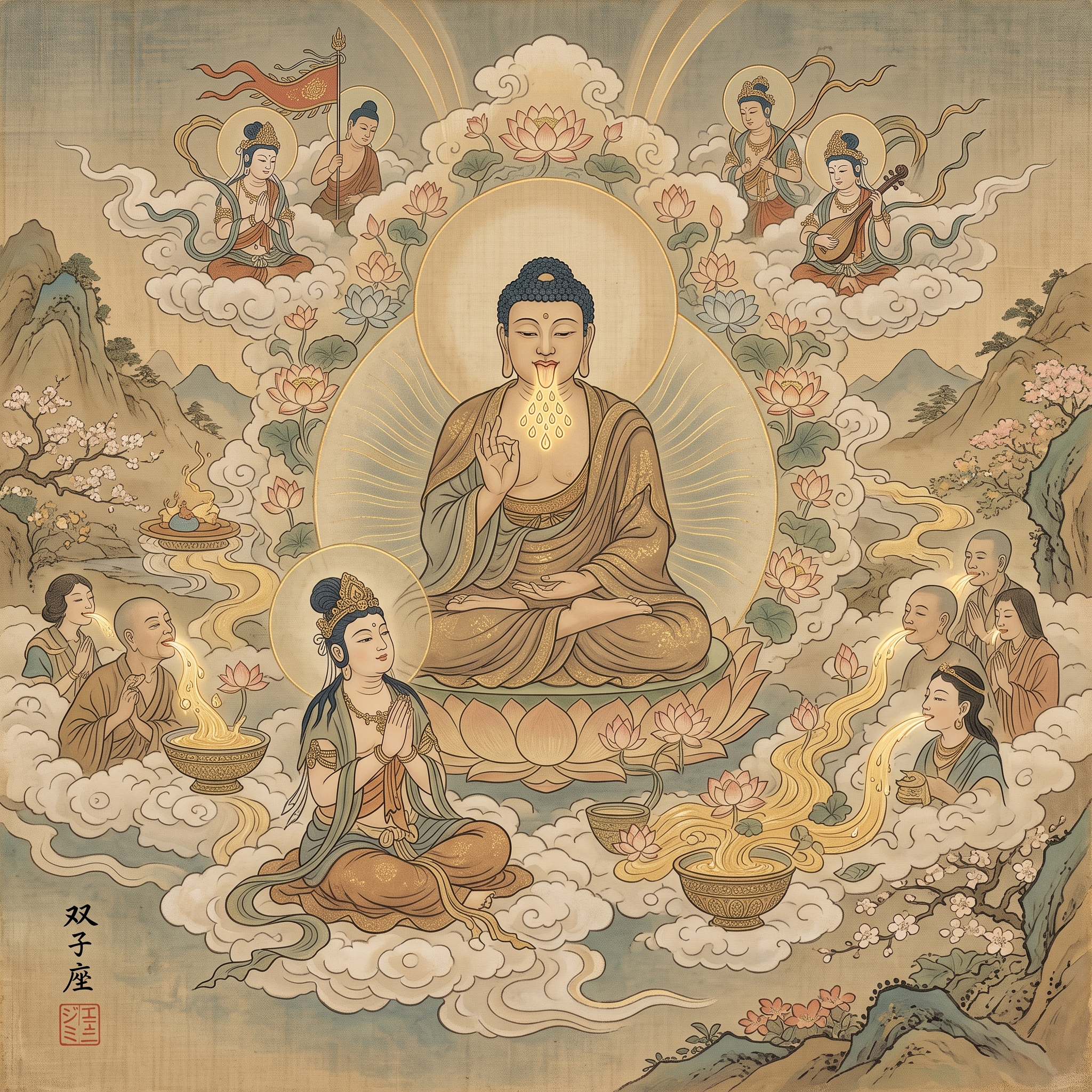
This 1:1 square painting on silk interprets Chapter Nineteen of the Lotus Sūtra using traditional Japanese Buddhist iconography. The central figure is Śākyamuni Buddha, identifiable by his distinctive topknot (uṣṇīṣa) and simple monastic robes, rendered with soft mineral pigments and subtle gold leaf accents. He is shown seated in a mountain landscape, teaching Constant-Endeavor Bodhisattva and a surrounding assembly of practitioners and celestial beings. The illustration literalizes the metaphor of sensory purification: streams of pure nectar flow from the mouths of the gathered followers into a central basin. This symbolizes the cleansing of their tongues and the transformation of all worldly taste into nectar, as described in the sūtra. In adherence to the constraints, no distinct icons or mudras specific to Amida or Dainichi Nyorai are present, focusing purely on Śākyamuni and his assembly.
Iconography & Character Identification
Item 1: Deities/Figures Featured:
Śākyamuni Buddha (Central seating figure with the mudra)
Constant-Endeavor Bodhisattva (Primary attending Bodhisattva)
A surrounding retinue including flying celestials (apsaras/tennin), and various lay and monastic human practitioners experiencing the purification of nectar.
Item 2: Text Translations:
The black ink Kanji signature '双子座' translates directly to 'Gemini'.
The red square hanko seal (using Katakana 'ジェミニ') also translates directly to 'Gemini'.
Their tongues will be purified.
Their tongues will not receive anything bad.
Anything they eat will become
As delicious as nectar.
The Buddha sings these verses to Constant-Endeavor Bodhisattva in Chapter Nineteen of the Lotus Sūtra, describing those who keep the Lotus Sūtra. With food and drink it is easy to see how different people will find the same food either delicious or disgusting. Our experience and beliefs shape what we are comfortable putting into our bodies, and whether we do so for the sake of our health or the pleasure that comes from experiencing their flavor. But when we find that something with good flavor is bad for our health, or vice versa, we can change our tastes. This is another example of how the Lotus Sūtra teaches us how to live in the world. We learn to embrace situations we once found frightening or intolerable. We increase our capacity with our focus on benefiting others. As a wise teacher once said, we learn to enjoy problems the way we enjoy ice cream.
The Daily Dharma is produced by the Lexington Nichiren Buddhist Community. To subscribe to the daily emails, visit zenzaizenzai.com