
Conceptual Summary
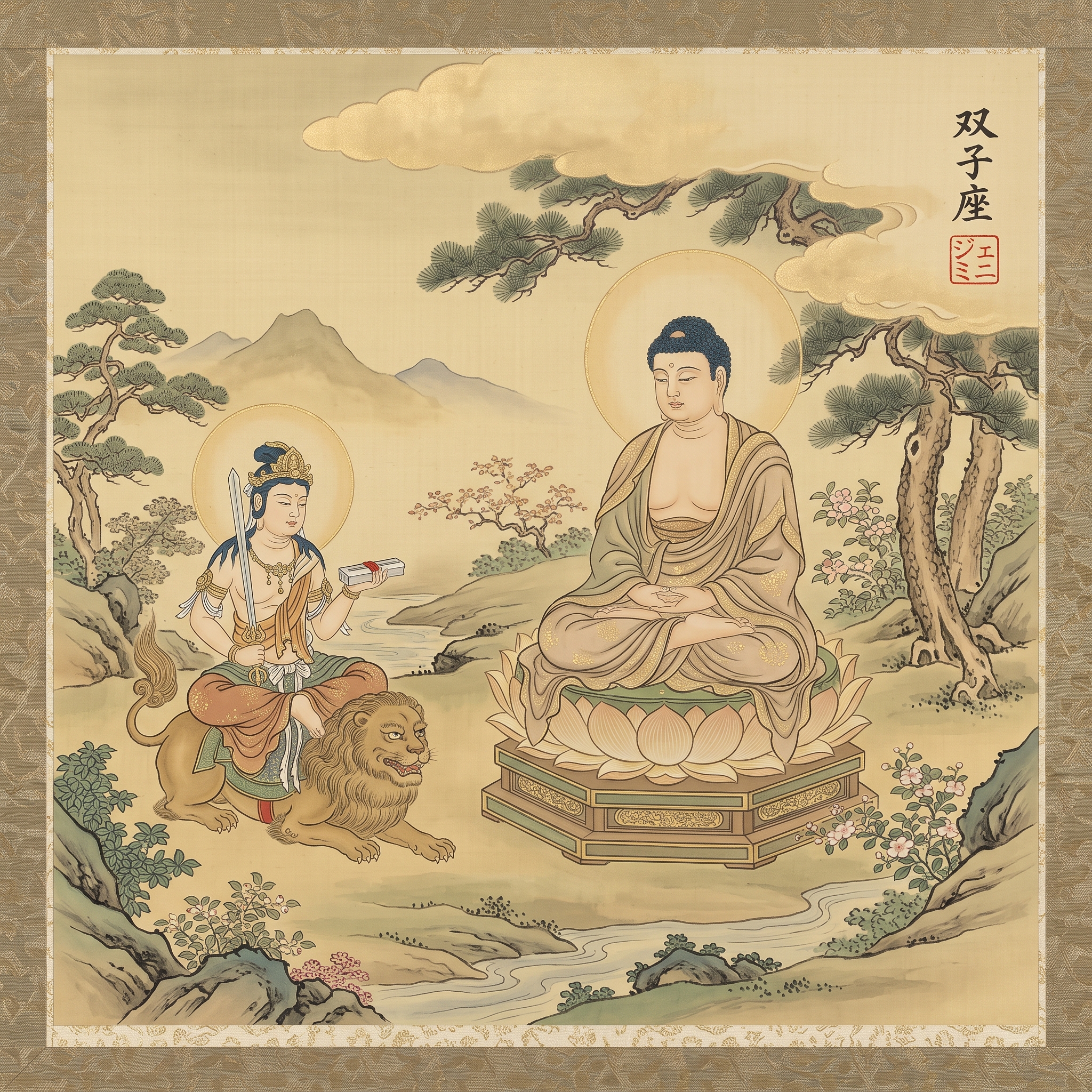
This illustration interprets the instruction from the Lotus Sūtra for a Bodhisattva to seek a "retired place" for dhyāna meditation. The composition utilizes classical Japanese Buddhist iconography on silk, rendering a serene natural landscape with traditional inks and mineral pigments. Śākyamuni Buddha is depicted in the dhyāna mudra, embodying the goal of mental concentration and quiet reflection emphasized in the text. The landscape—featuring mountains, pines, a gentle stream, and gold-leaf clouds—creates the specific atmosphere of a secluded retreat, essential for overcoming worldly attachments. Mañjuśrī Bodhisattva, identified iconographically with his sword and sutra atop a lion, attends to Śākyamuni, directly reflecting the source text where the Buddha delivers this explanation to him. The soft, harmonious colors and gold accents emphasize the sacred and peaceful nature of this spiritual practice.
Iconography & Character Identification
Item 1: Deities/Figures Featured:
Śākyamuni Buddha (釈迦如来), seated in meditation on a lotus throne.
Mañjuśrī Bodhisattva (文殊菩薩), riding a lion and holding a sword and scripture.
Item 2: Text Translations:
Kanji Signature (双子座): Futagoza (Gemini)
Red Seal (ジェミニ): Gemini
He should always make it a pleasure to sit in dhyāna. He should live in a retired place and concentrate his mind. Mañjuśrī! [A retired place] is the first thing he should approach.
The Buddha gives this explanation to Mañjuśrī Bodhisattva in Chapter Fourteen of the Lotus Sūtra in which he describes the peaceful practices of a Bodhisattva. For those who are awakening their nature as Bodhisattvas to benefit all beings, and setting aside their attachment to their own suffering, this can be a difficult transition. Our habits of engaging with the drama and delusion in the world can be too strong to overcome. This is why the Buddha emphasizes the importance of quietly reflecting on what happens around us, and our reactions to them. Through dhyāna meditation, we learn not to believe everything we think, and that we can change our understanding of the world. We also learn that allowing our minds to change is the only way we can benefit other beings.
The Daily Dharma is produced by the Lexington Nichiren Buddhist Community. To subscribe to the daily emails, visit zenzaizenzai.com