
Conceptual Summary
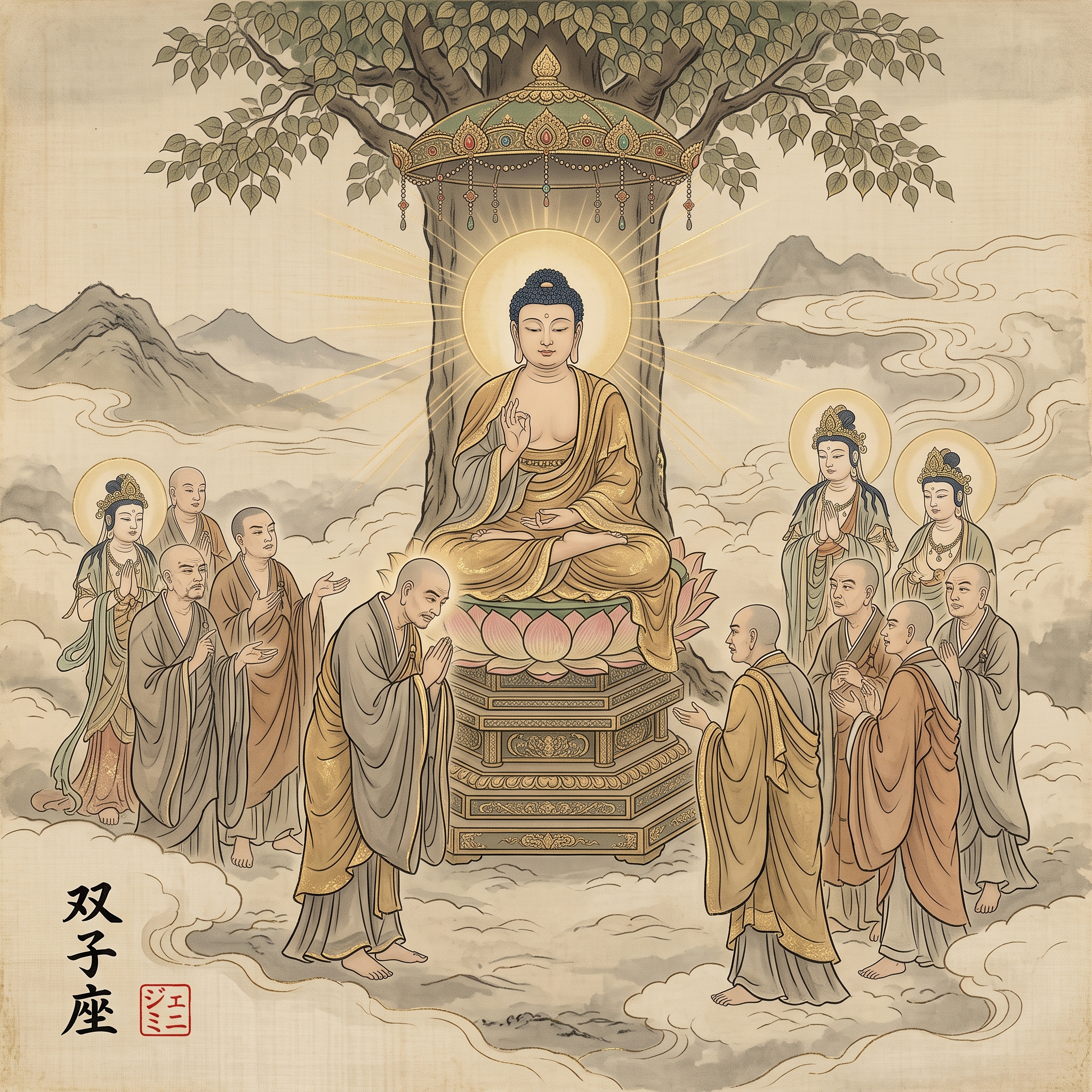
This illustration captures the pivotal scene from Chapter Two of the Lotus Sūtra, translating the moment of Śākyamuni Buddha's initial refusal to teach. The central figure is Śākyamuni Buddha, not the prohibited Amida or Dainichi, identified by classical markers like the uşṇīṣa (wisdom bump) and ūrṇā (third eye), seated on a lotus throne beneath a canopy and a bodhi tree on what suggests Vulture Peak. His right hand is raised in a specific variation of the vitarka mudra, representing exposition and argumentation, which here visualizes his declaration that his "teaching is wonderful and inconceivable" and his explanation for staying silent. Before him stands Śāriputra, bowing respectfully with hands in añjali mudra, representing his repeated request and the readiness necessary to receive this profound wisdom. Surrounding them is the 'fourfold assembly' of monks, nuns, and laypersons. Crucially, a few figures to the side exhibit slight confusion or skepticism, subtly representing the "arrogant people" who "will not respect or believe," contrasting with Śāriputra's respectful, open posture.
Iconography & Character Identification
Item 1: Deities/Figures Featured:
Śākyamuni Buddha (historical Buddha and teacher)
Śāriputra (foremost disciple in wisdom, shown bowing)
The assembly of disciples, monks, lay followers, and celestial beings (listening and reacting).
Item 2: Text Translations:
Kanji signature '双子座' (shuangzizuo): Gemini / The Gemini Constellation.
Red seal hanko 'ジェミニ' (jemini): Gemini (Katakana representation).
No, no, I will not say any more.
My teaching is wonderful and inconceivable.
If arrogant people hear me,
They will not respect or believe me.
The Buddha sings these verses in Chapter Two of the Lotus Sūtra. This was his response the first time Śāriputra asked to receive the Buddha’s highest teaching. The Buddha knew we must be prepared for his wisdom. We must discern clearly the difference between what we know and what we do not know. Because all things are impermanent, the truths we cling to may no longer apply. The ignorance and confusion at the root of our suffering will disappear as we set aside what is no longer true and gain wisdom.
The Daily Dharma is produced by the Lexington Nichiren Buddhist Community. To subscribe to the daily emails, visit zenzaizenzai.com