
The Three Truths are the Truth of Emptiness, the Truth of Provisionality, and the Truth of the Middle Way. Nichiren Shonin learned the Three Truths as part of his early training as a Buddhist monk, and he made them a part of his own teaching. Together, they point out the correct way to understand and apply the teachings of Emptiness, Dependent Origination, and the Middle Way, which are all different ways of explaining the central insight of Buddhism. Nichiren Shonin taught that chanting Namu Myoho Renge Kyo was itself a way to acknowledge and live in accord with the Three Truths.
Lotus SeedsAll posts by John Hughes
Daily Dharma – Nov. 2, 2018
Only I see clearly and without hindrance that they are at various stages [of enlightenment]. I know this, but they do not know just as the trees and grasses including herbs in the thickets and forests do not know whether they are superior or middle or inferior.
The Buddha makes this declaration in Chapter Five of the Lotus Sūtra, as he explains the simile of herbs. This is a good reminder for us on the Bodhisattva path of how important it is to have respect for all beings. We can believe we know whether someone else is less enlightened than we are, or even more enlightened than we are. But for Bodhisattvas, this belief is irrelevant. Only the Buddha knows who is where on the path. We do not need to know. We just need to find ways to benefit others, no matter how close they may be to enlightenment.
The Daily Dharma is produced by the Lexington Nichiren Buddhist Community. To subscribe to the daily emails, visit zenzaizenzai.com
The Altar, the Hedgehog and the Kitten

The last mobile altar. (See previous altars here and here.) Of all the places we’ve stayed on this trip, this is the low point. Strongly recommend against staying at the Ramada by Wyndham in Salt Lake City on 1659 West North Temple.
The wife has decided to skip our planned stay in Reno and drive back to Sacramento tomorrow. We’ll save more than $100, which will almost cover what we spent at The Emporium on Bridger in Rock Springs, Wyoming.
While I’ve sometimes considered my wife’s antique shopping on this trip less than helpful, I must admit that I’m really glad I tagged along on this venture.
Here are the two useless novelties that I just couldn’t live without.
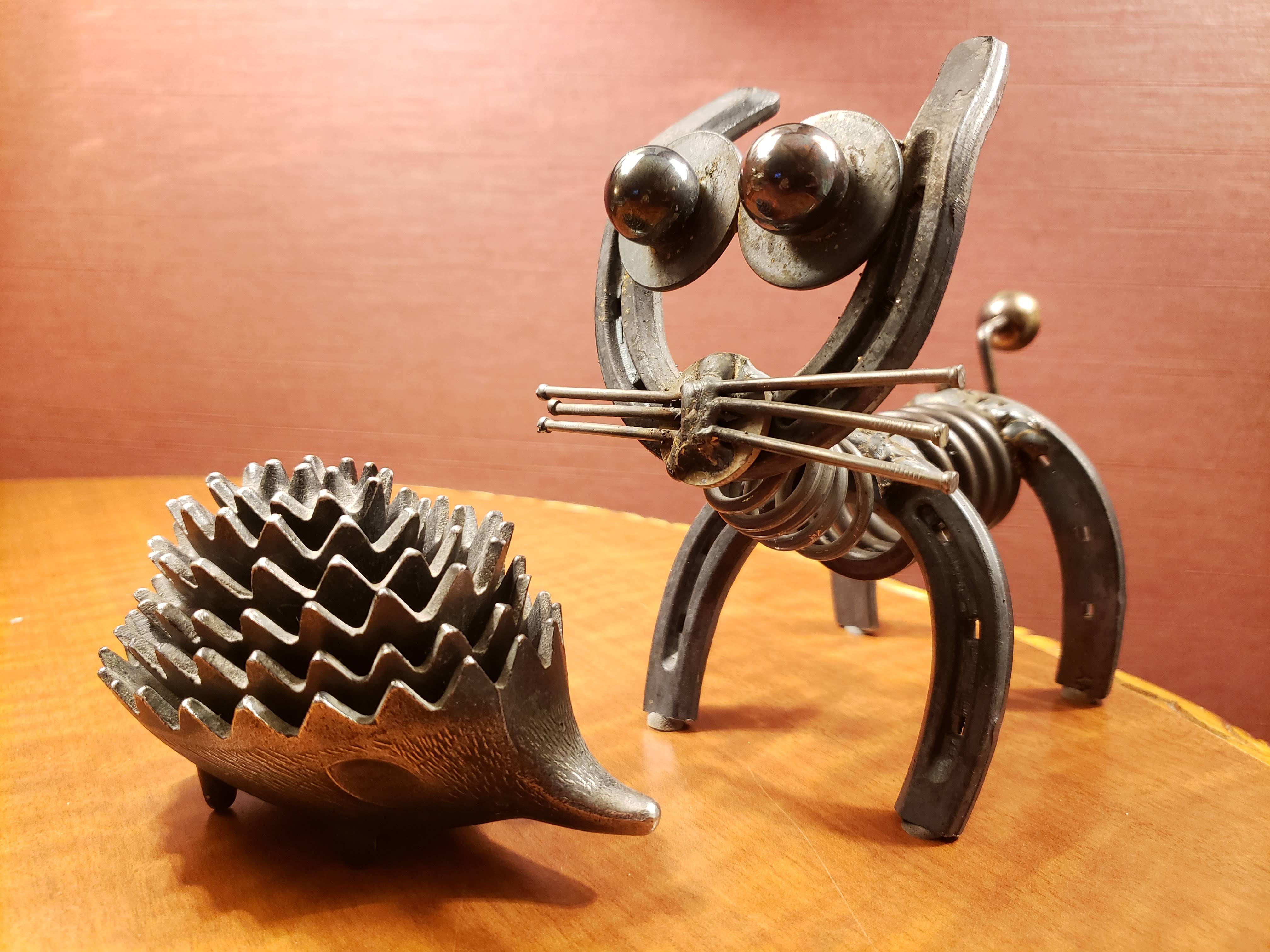
The Kitten, which is made of assorted metal parts such as springs, horse shoes, nails and assorted odds and ends, was part of a collection of metal works by a local artist. I didn’t get the name.
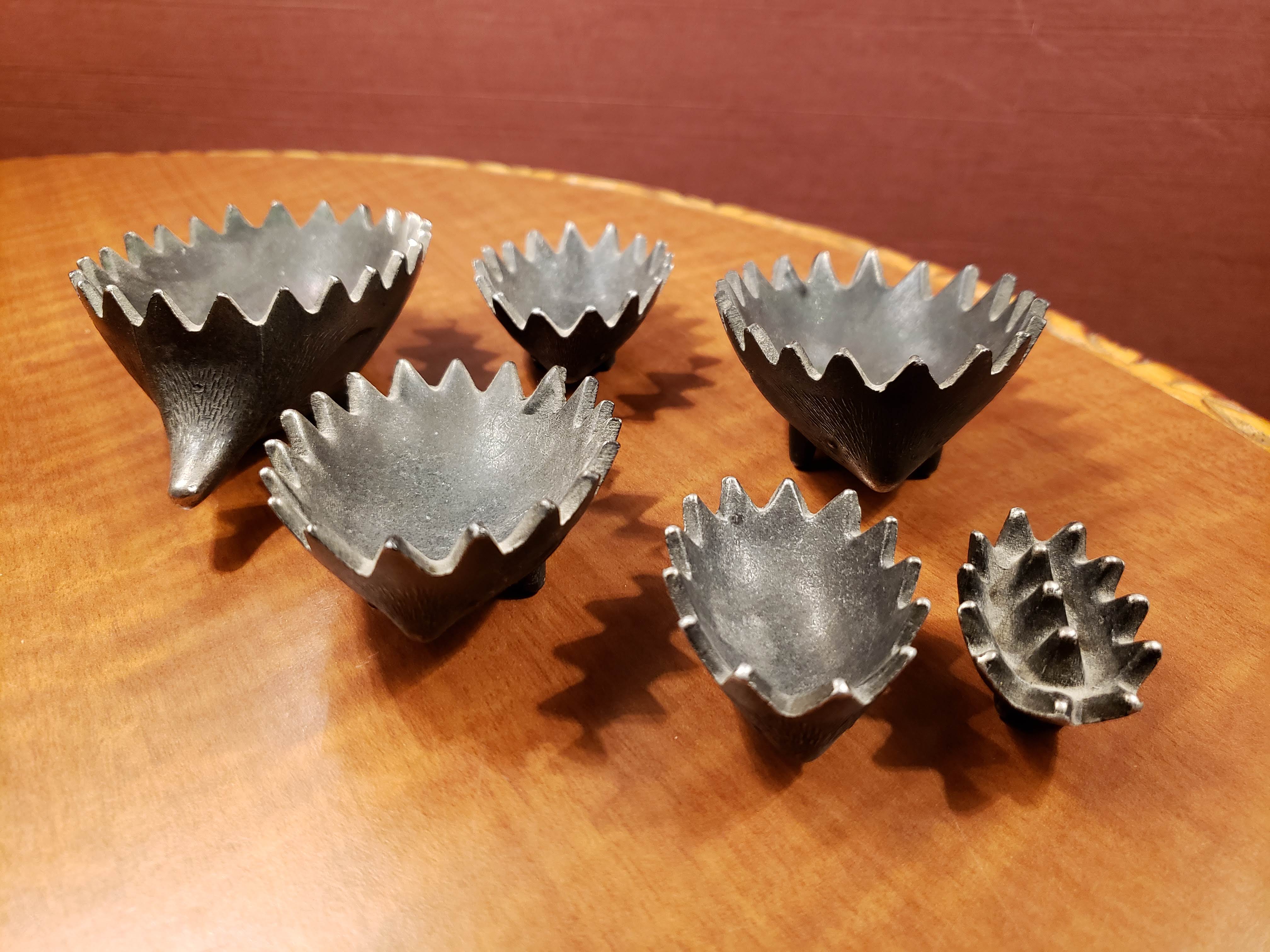
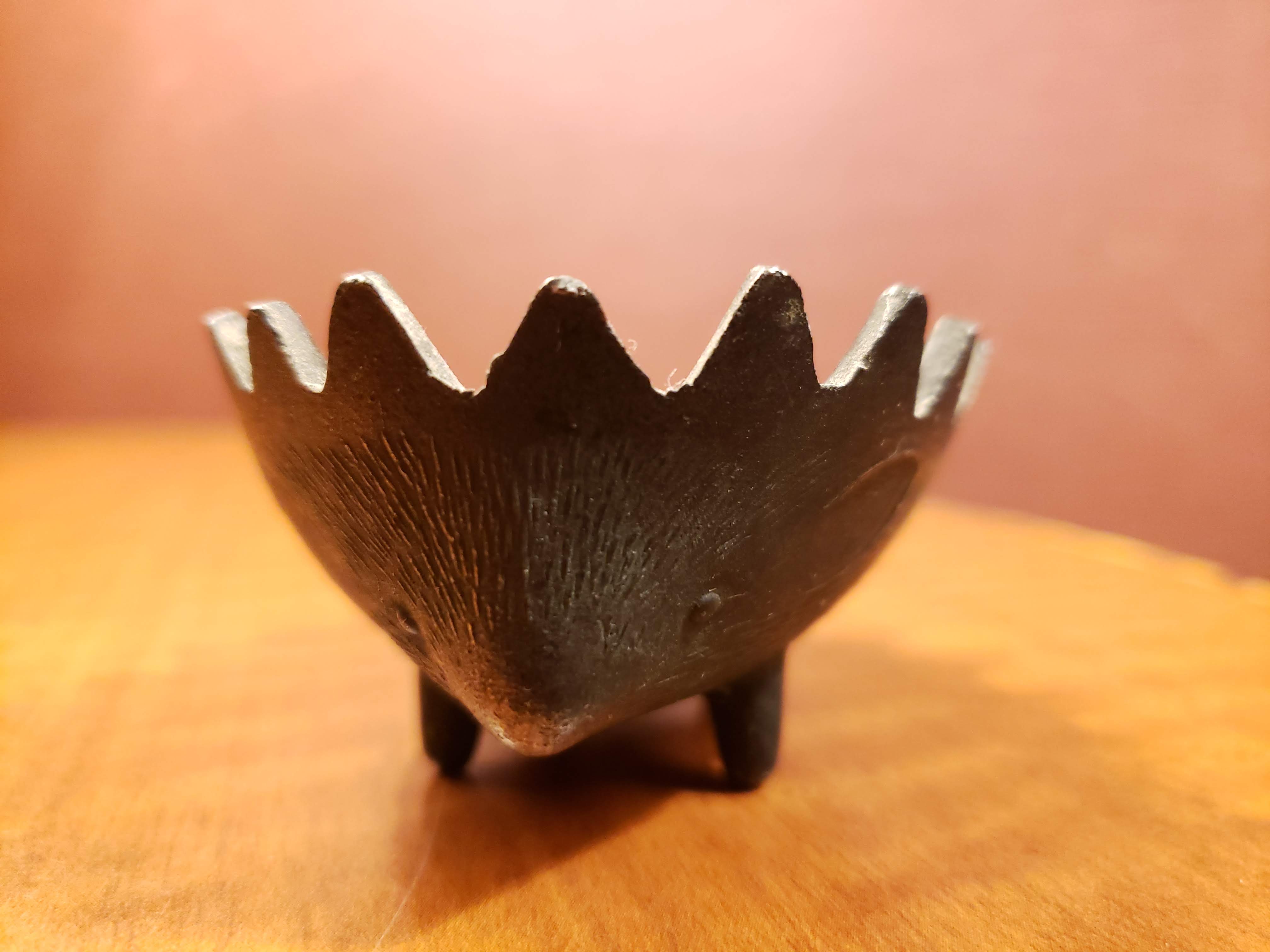
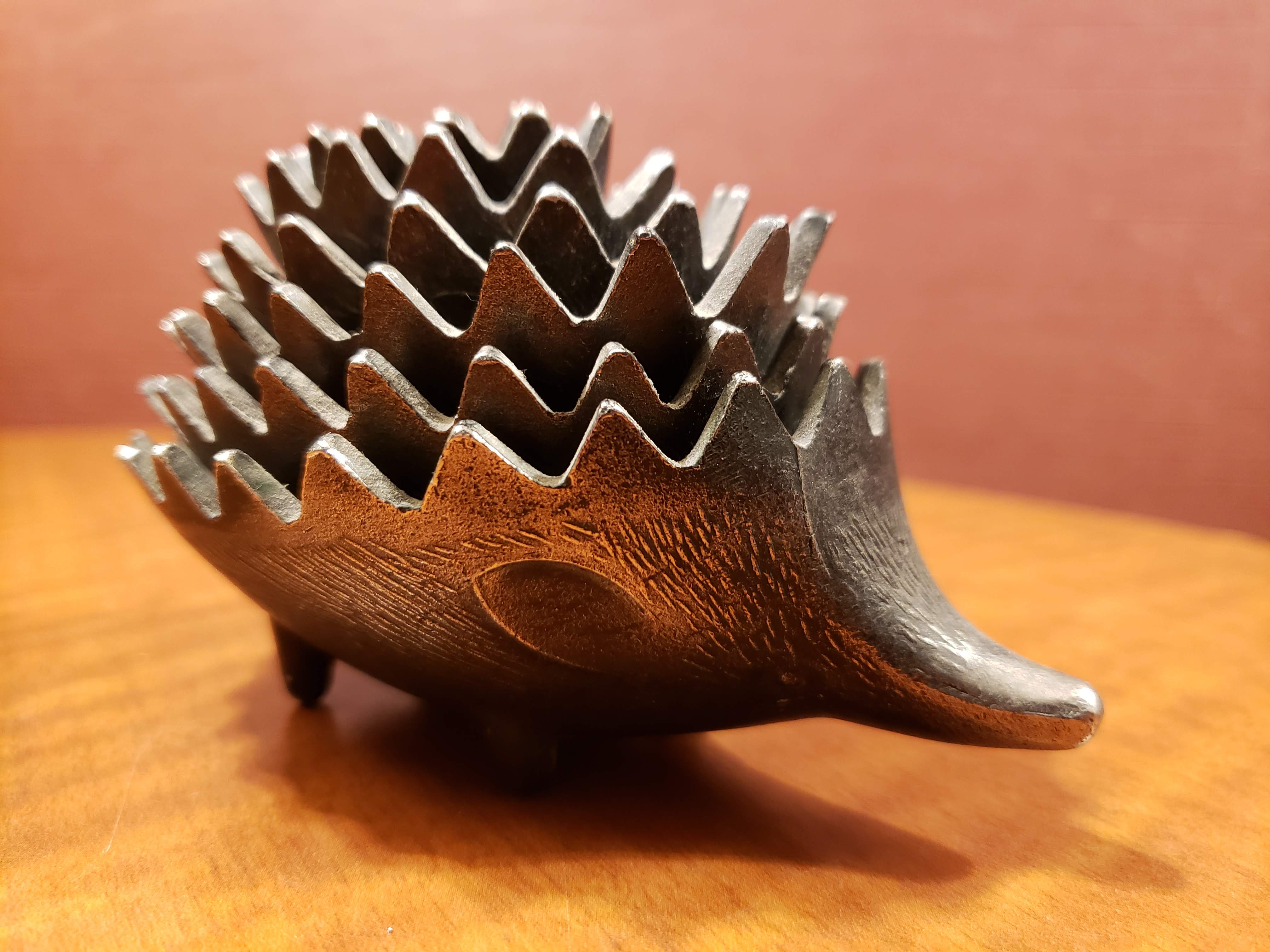
The Hedgehog, however, I found out later is a Vintage Hedgehog Ashtray Set of 6 Nesting Ashtrays Metal Walter Bosse Style Mid Century.
Three Truths Embedded
In Chih-i’s opinion, the distinction among the Three Truths (Emptiness, the Provisional, and the Middle Way) is only so that people can comprehend them easily. Actually, these Three Truths are embedded in each other. When Emptiness is taken into account, the aspects of the Provisional and the Middle Way are also empty — a reality of lacking substantial Being. When the Provisional is taken into account based on the view of Emptiness, all entities bear names as conventional existence a reality of variety. On the basis of Emptiness, this view of the Provisional is non-attachment to the provisional existence. When the Middle Way is taken into account, all entities are both empty and provisional. (Vol. 2, Page 73)
The Profound Meaning of the Lotus Sutra: Tien-tai Philosophy of BuddhismThe Transmission of the Three Great Hidden Dharmas
Because Nichiren Shonin has had the great compassion to teach the Lotus Sutra in the Declining Age of the Dharma, the transmission of the Three Great Hidden Dharmas will extend beyond the Declining Age of the Dharma into the endless future.
Awakening to the LotusDaily Dharma – Nov. 1, 2018
I sought the Great Dharma strenuously
Because I wished to save all living beings.
I did not wish to benefit myself
Or to have the pleasures of the five desires.
The Buddha sings these verses in Chapter Twelve of the Lotus Sūtra. He describes his previous life as a great king who abandoned his throne, his wealth, and all the advantages of his position in society for the sake of enlightenment. In that life he realized that having pleasure as a goal was not making him happy, and only through the vow of the Bodhisattva to benefit all beings could he learn to see the world as it is.
The Daily Dharma is produced by the Lexington Nichiren Buddhist Community. To subscribe to the daily emails, visit zenzaizenzai.com
The Light of the Dharma
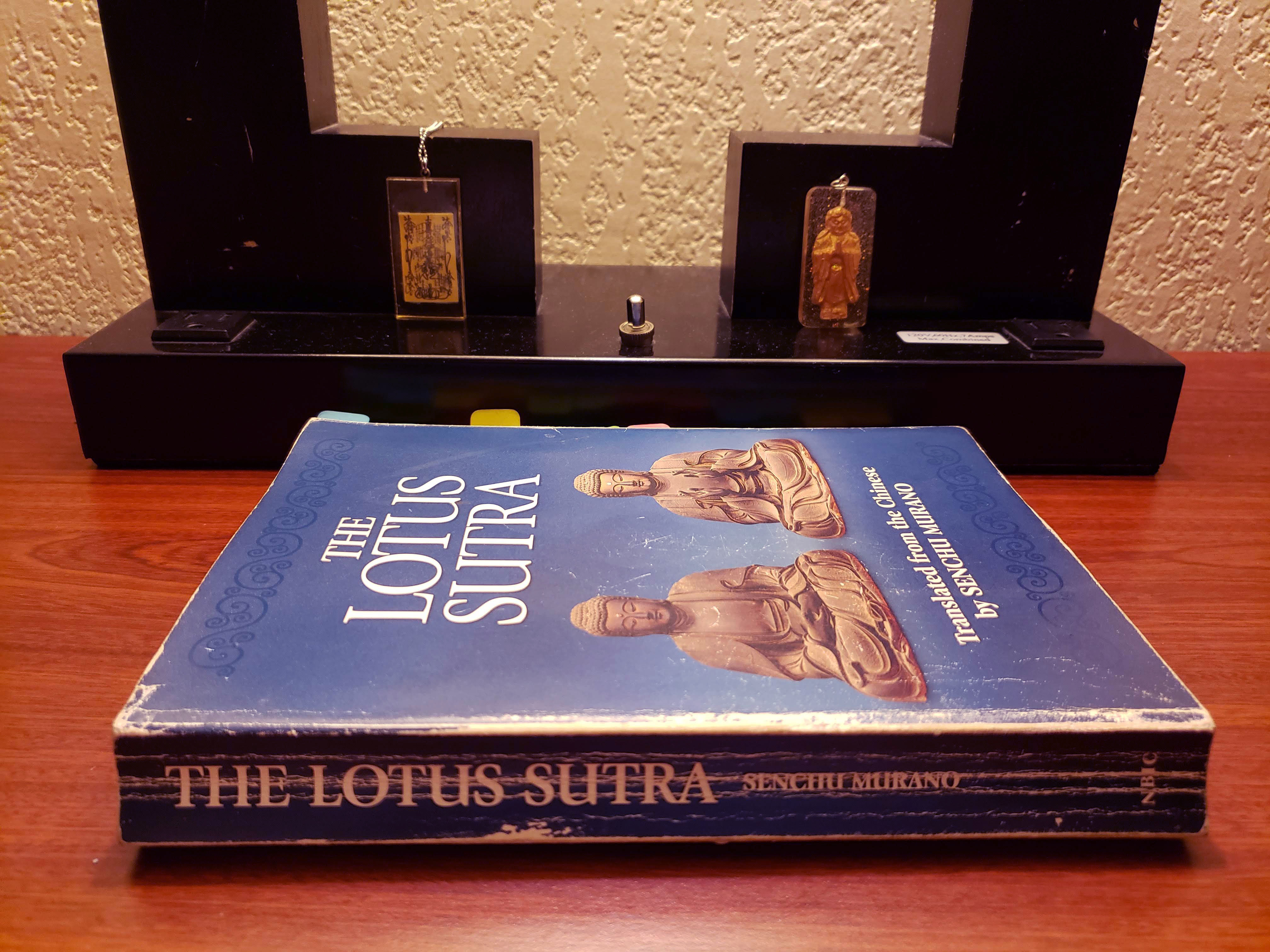
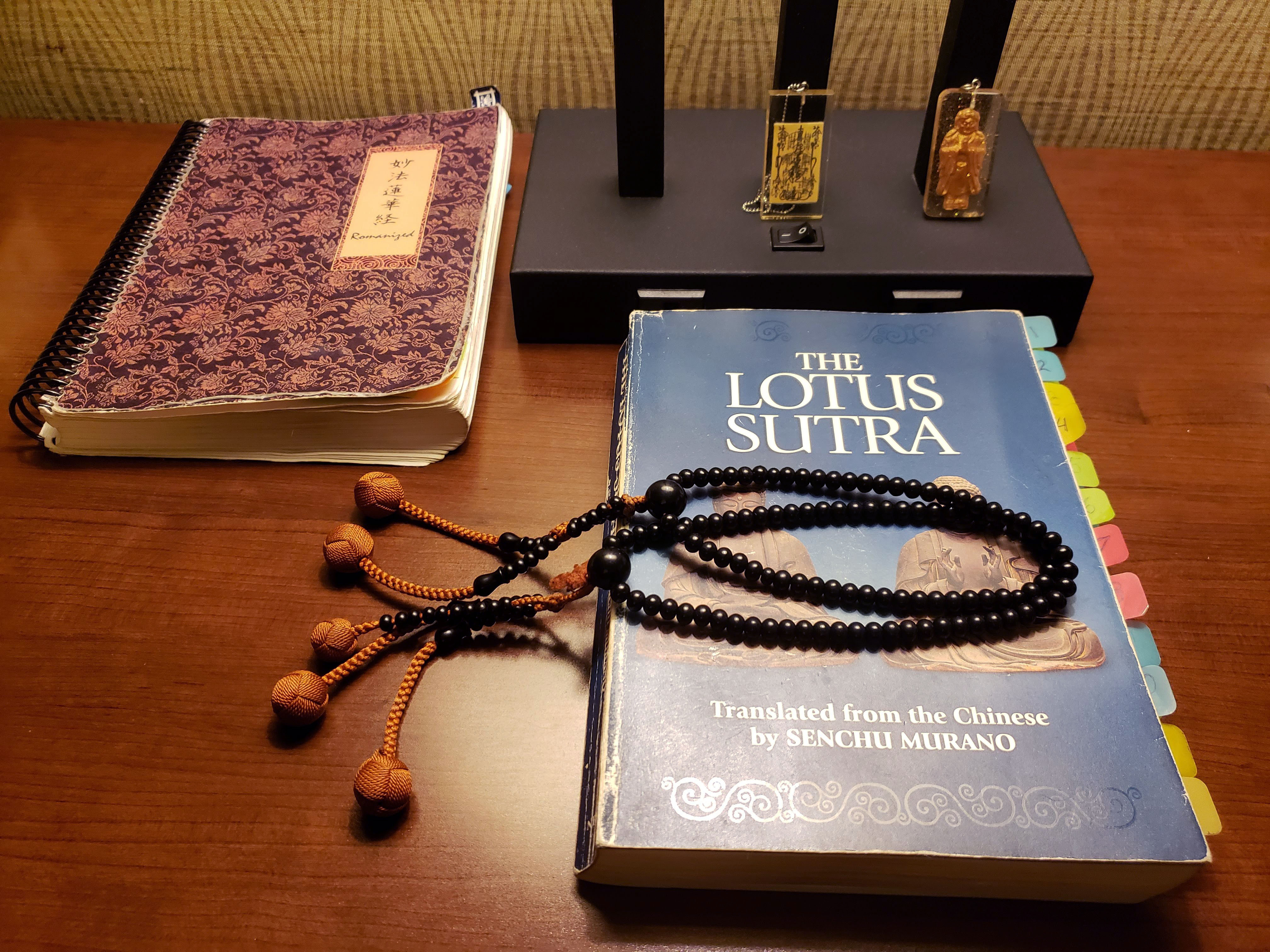
Having fun with the variety of lamps on the desks in our hotel rooms. (See Portage, Indiana)
Ultimate Truth of All Dharmas
Extended interpretation of the Dharma of Sentient Beings (Kuangming Chung-sheng-fa)
The Dharma of Sentient Beings is addressed in two aspects: Fa-shu (numerical categories of the Dharma of Sentient Beings), and Fa-hsiang (characteristics of the Dharma of Sentient Beings).
Numerical categories of the Dharma of Sentient Beings (Fa-shu)
This aspect introduces the Ten Suchnesses (Shihju-shih) and the Ten Dharma-realms (Shih-fa-chieh) as the numerical categories of the Dharma of Sentient Beings. According to Chih-i, the phrases of the Ten Suchnesses are derived from the Lotus Sūtra, and these Ten Suchnesses can describe the characteristics of reality. Chih-i terms the Ten Suchnesses as the “Ultimate Truth of all dharmas” (Chu-fa Shih-hsiang). They are: “suchness of appearance” (Ju-shih-hsiang), “suchness of nature” (Ju-shih-hsing), “suchness of substance” (Ju-shiht ‘i), “suchness of power” (Ju-shih-li), “suchness of function” (Ju-shihtso), “suchness of causes” (Ju-shih-yin), “suchness of conditions” (Jushih-yüan), “suchness of effects” (Ju-shih-kuo), “suchness of retributions” (Ju-shih-pao), and “beginning-and-end-ultimately-alike of its suchness” (Ju-shih Pen-mo Chiu-ching Teng). To sustain his argument that the Ten Suchnesses are the Ultimate Truth of all dharmas, Chih-i declares that the Ten Suchnesses contain three meanings in terms of the Threefold Truth (Emptiness, the Provisional Existence, and the Middle Way), when they are read in three different ways. Inasmuch as the Threefold Truth is the comprehensive view of reality and constitutes the Ultimate Truth of the Middle Way, the Ten Suchnesses that contain the meaning of the Threefold Truth can be certainly taken to characterize the Ultimate Truth. (Vol. 2, Page 71)
The Profound Meaning of the Lotus Sutra: Tien-tai Philosophy of BuddhismAltruistic Ideals
Put to use in everyday life, the Eightfold Path can enhance health, keep people on the proper moral and ethical road, increase efficiency at work, establish a correct view of the world and humankind, and cultivate wisdom. But Mahayana Buddhism rejected sole reliance on the Four Noble Truths and the Eightfold Path as insufficient for its goal, which is to work diligently not only for personal enlightenment but also for the improvement of one’s fellow human beings and all society. Though Mahayana followers recognized the value of the Hinayana truths and principles of action for self-improvement, they decried the absence of altruistic ideals. In the stead of the solitary arhat, they adopted the ideal of the bodhisattva, whose first consideration is the benefit and happiness of other beings. The Eightfold Path, which cannot serve as a complete teaching for bodhisattvas, was replaced with the Six Perfections as the model for religious action.
Basic Buddhist Concepts
Daily Dharma – Oct. 31, 2018
Thereupon Pure-Flower-Star-King-Wisdom Buddha said to Wonderful-Voice Bodhisattva: “Do not despise that world! Do not consider it to be inferior [to our world]! Good Man! The Sahā-World is not even. It is full of mud, stones, mountains and impurities. The Buddha [of that world] is short in stature. So are the Bodhisattvas [of that world]. You are forty-two thousand yojanas tall. I am six million and eight hundred thousand yojanas tall. You are the most handsome. You have thousands of millions of marks of merits, and your light is wonderful. Do not despise that world when you go there! Do not consider that the Buddha and Bodhisattvas of that world are inferior [to us]! Do not consider that that world is inferior [to ours]!”
In Chapter Twenty-Four of the Lotus Sūtra, the Buddha sends a light from his forehead to the world in which Wonderful-Voice Bodhisattva lives. When that Bodhisattva saw this light from Śākyamuni Buddha, he asked permission from the Buddha he was attending to visit our world of conflict. The instruction he receives from his Buddha reminds us that no matter what advantages we have gained from our practice of the Buddha Dharma, these do not make us any better or worse than those we are determined to benefit.
The Daily Dharma is produced by the Lexington Nichiren Buddhist Community. To subscribe to the daily emails, visit zenzaizenzai.com