
[I]n order to elaborate the Dharma of Sentient Beings, Chih-i brings forth the concept of the Ten Dharma-realms (hell-dwellers, hungry ghosts, animals, asuras, humans, heavenly beings, śrāvakas, pratyekabuddhas, bodhisattvas, and Buddhas), as sentient beings are what constitute the Ten Dharma-realms. The first nine realms are said by Chih-i to belong to the Relative Truth, and the Buddha-realm to the Ultimate Truth. Each of the ten realms is characterized by the Ten Suchnesses (appearance, nature, substance, power, function, causes, conditions, effects, retributions, and beginning and end ultimately-alike). Whereas the Ten Suchnesses are regarded by Chih-i as the general characteristics of the Ten Dharma-realms, the Ten Suchnesses are viewed as the Ultimate Truth of all dharmas. Hence, the Ten Suchnesses are the characteristics of the Ultimate Truth. Seeing that the Ultimate Truth is possessed by the Ten Dharma-realms that consist of the Relative and Ultimate, this Ultimate Truth embraces both the Relative and the Ultimate. Chih-i’s interpretation of the Dharma of Sentient Beings aims at associating it with the Dharma of Buddha, for the latter concerns the Buddha’s knowledge of the Relative and the Ultimate, with which the Buddha is able to conceive the Ultimate Truth that embraces the whole Dharma-realm. The Dharma of Mind, on the other hand, as Chih-i’s category of approaching the Ultimate Truth of Buddhahood includes the former two types of the Dharma. This is to say that the Ten Dharmarealms that are characterized by the Ten Suchnesses as the Ultimate Truth of dharmas are contained in one’s mind. One’s mind that embraces the whole universe is based on Chih-i’s view that the Buddha-nature is possessed by all sentient beings. Since the Buddha-nature is inherent in all beings, contemplating one’s mind is the ultimate approach to attain Buddhahood. To Chih-i, if the Buddha-nature is considered to be the invisible state of Buddhahood, the realization of Buddhahood is only the matter of manifesting this Buddha-nature, i.e., one’s enlightenment is the visible state of Buddhahood. Therefore, the Dharma of Mind introduces the practical approach in terms of mind contemplation, through which Buddhahood can be realized. (Vol.2, Page 70)
The Profound Meaning of the Lotus Sutra: Tien-tai Philosophy of BuddhismAll posts by John Hughes
Carrying Out the Buddha’s Activities
We get involved in the Buddha’s life by devoting ourselves to participating in the Buddha’s activities. We can carry out the Buddha’s activities by using our bodies to carry out His work. This is attaining Buddhahood in one’s present form or Sokushin Jōbutsu. It is essentially attaining Buddhahood by receiving the teaching of the Lotus Sūtra and expressing the teachings through one’s body. This means to believe in the Lotus Sūtra, to respect the Buddha, to chant the Odaimoku, and to realize oneself to be a messenger of the Buddha; and thus, work to help Him.
Buddha Seed: Understanding the OdaimokuTraveling Service
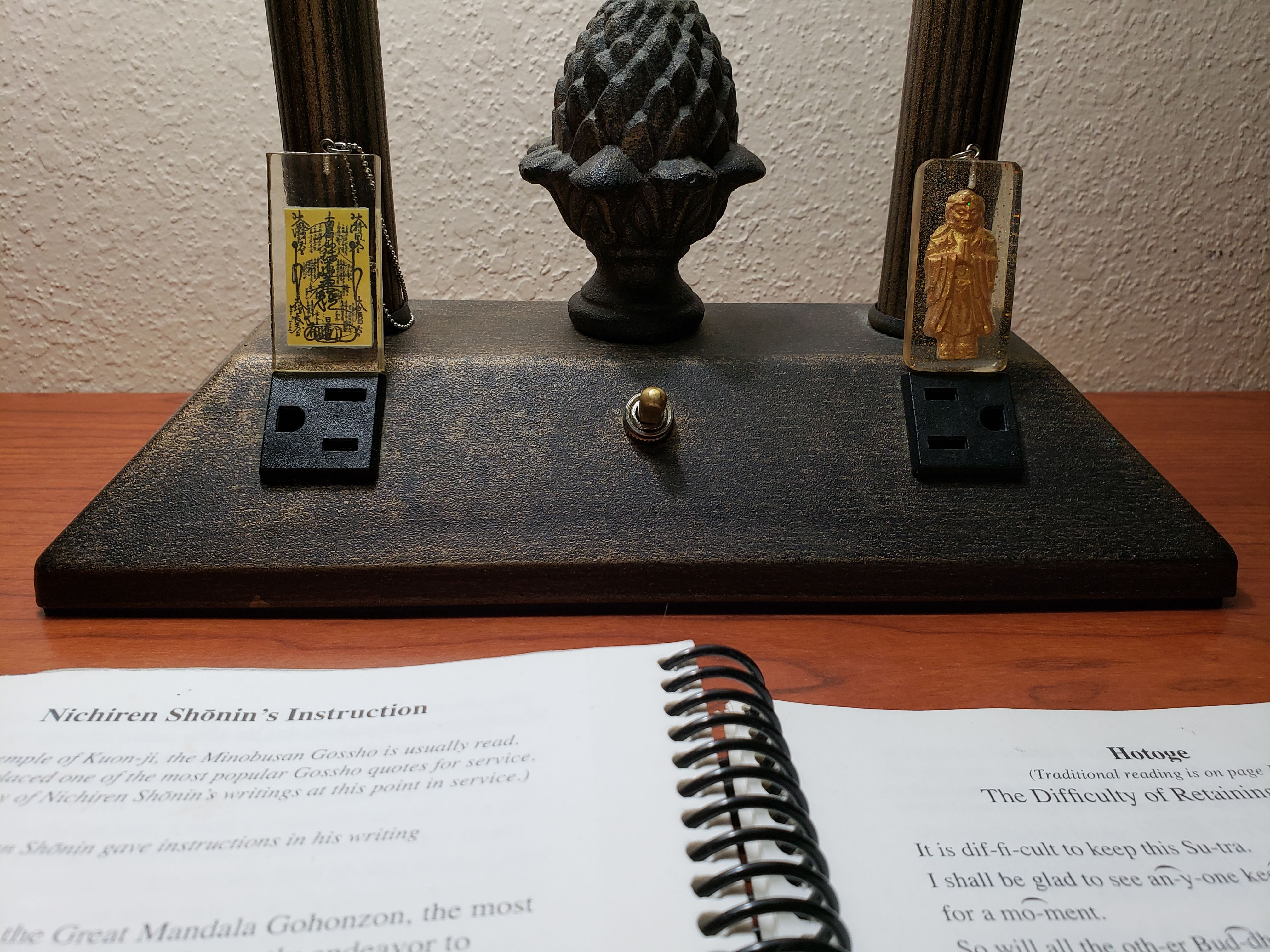
Performed a quiet morning service while the wife slept. We are traveling from Churchville, NY, to Sacramento. We spent the first night in Portage, Indiana. Today we’re traveling to Lincoln, Nebraska.
Les Miserable Indiana sunset
Daily Dharma – Oct. 30, 2018
Universal-Sage! If you see anyone who keeps, reads and recites the Sūtra of the Lotus Flower of the Wonderful Dharma in the later five hundred years after my extinction, you should think, ‘Before long he will go to the place of enlightenment, defeat Māra and his followers, attain Anuttara-samyak-saṃbodhi, turn the wheel of the Dharma, beat the drum of the Dharma, blow the conch-shell horn of the Dharma, send the rain of the Dharma, and sit on the lion-like seat of the Dharma in the midst of the great multitude of gods and men.’
The Buddha gives this instruction to Universal-Sage Bodhisattva (Fugen, Samantabhadra) in Chapter Twenty-Eight of the Lotus Sūtra. Nichiren explained that the later five hundred years mentioned in this passage is the time in which we are living today. The Buddha is therefore talking about all of us who practice the Wonderful Dharma. When we can grow our capacity to respect each other as we respect the Buddha, it inspires the respect at the core of all beings, and transforms this world.
The Daily Dharma is produced by the Lexington Nichiren Buddhist Community. To subscribe to the daily emails, visit zenzaizenzai.com
The Dharma Mind
[T]he subtlety of the Dharma of Mind is indicated from several scriptural citations, such as:
“With one’s mind cultivated and absorbed, one contemplates that all dharmas neither move nor regress.”
“The mind, Buddha, and sentient beings—these three are without distinction.”
“Destroying the atomic objects in the mind is transcendent to all the scrolls of Scripture in the Grand Chiliocosm.”
Basically, the category Dharma of Mind conveys the practical way of conceiving all dharmas. Since all dharmas are contained in one’s mind, Chih-i affirms that Buddhahood can be attained through contemplating one’s mind. (Vol. 2, Page 69)
The Profound Meaning of the Lotus Sutra: Tien-tai Philosophy of BuddhismThe Nature of the Kaidan
If we repeat the Daimoku, and rigorously purify our thoughts, our bad appetites and passions will disappear of themselves, and we shall become inspired with the pure and lofty ethics of our Sect. In walking or resting, standing or lying, speaking or keeping silence, acting or refraining from action – in all these situations we may attain to the mysterious deliverance; birth, old age, disease and death will disappear of themselves; fears, sorrows, pains and troubles vanish away forever, leaving nothing behind them but eternity, purity, enlightenment and peace. Thus we find ourselves in the Paradise of Buddhas, living in the Land of Glorious Light. Therefore the [Lotus Sutra] says, “We ought to know that this place is the Kaidan.” In other words, any place whatever, where we practise the doctrines of the [Lotus Sutra], is fit to be a Kaidan. And if it is fit to be a Kaidan it is in habited by all the Buddhas. Such is the nature of the Kaidan as taught by our Sect.
Doctrines of Nichiren (1893)Where Are You?
Writing these short meditation essays is an engaging activity causing me to look at things in different ways in order to find connections between our everyday lives and the teachings presented in the Lotus Sutra. I have always looked for Buddhism in everyday experiences but writing it down and sharing has been a new experience. One question that arises is who is reading these things? Another question is where are you when you are reading the posts? Take a moment right now and look about you and consider where you are. Are you in a comfy spot; are you in your kitchen sipping a cup of coffee or tea? Perhaps you’re on some public transportation reading on your way to or from work. You might also be at work, sneaking some me time for yourself. Or perhaps you are in some uncomfortable place; some place that is not a pleasant place to be. All of those are one way of looking at and responding to the question, where are you. But there is an equally viable alternative way to consider the question and that is where are you personally in your life? Where are you spiritually in your life? Where are you?
Lotus Path: Practicing the Lotus Sutra Volume 1Messengers of the Buddha
 The fundamental goal is to honor the Original Buddha, to have faith in the Lotus Sūtra and to chant the Odaimoku faithfully. By doing so, we receive the Buddha’s great compassion, and we get involved in the Buddha’s life as His messengers. We will improve ourselves, because the Original Buddha’s Ichinen Sanzen is naturally transferred to us. Having gratitude, respect and compassion improves our consciousness of being messengers of the Buddha. When we make efforts to exceed our small ego of self, we are able to become messengers of the Buddha.
Daily Dharma – Oct. 29, 2018
I still remember vividly how you accompanied me to Tatsunokuchi holding a horse by the bridle, and breaking into tears when I was about to be beheaded there. I will never forget this no matter how many lifetimes come and go. If by chance you should fall into hell, I will refuse the invitation of Śākyamuni Buddha to become a Buddha. Instead I will go into hell with you. If we both entered into hell, how could it be that we would not find Śākyamuni Buddha and the Lotus Sutra there?
Nichiren wrote this passage in his “Emperor Shushun” Letter (Sushun Tennō Gosho) addressed to his disciple Shijō Kingo. Despite the hardships he faced in his life, Nichiren never forgot the kindnesses shown to him by ordinary people. His great determination to save all beings made him fearless even were he to be threatened by the Buddha with the torments of the Hell realms for the sake of those dear to him. Nichiren knew that he would be able to find the Buddha anywhere, and that his devotion would overcome any difficulty.
The Daily Dharma is produced by the Lexington Nichiren Buddhist Community. To subscribe to the daily emails, visit zenzaizenzai.com
Shoeizan Enkyoji Buddhist Temple of Rochester
Enjoyed attending Sunday’s Shodaigo service at Shoeizan Enkyoji Buddhist Temple of Rochester.


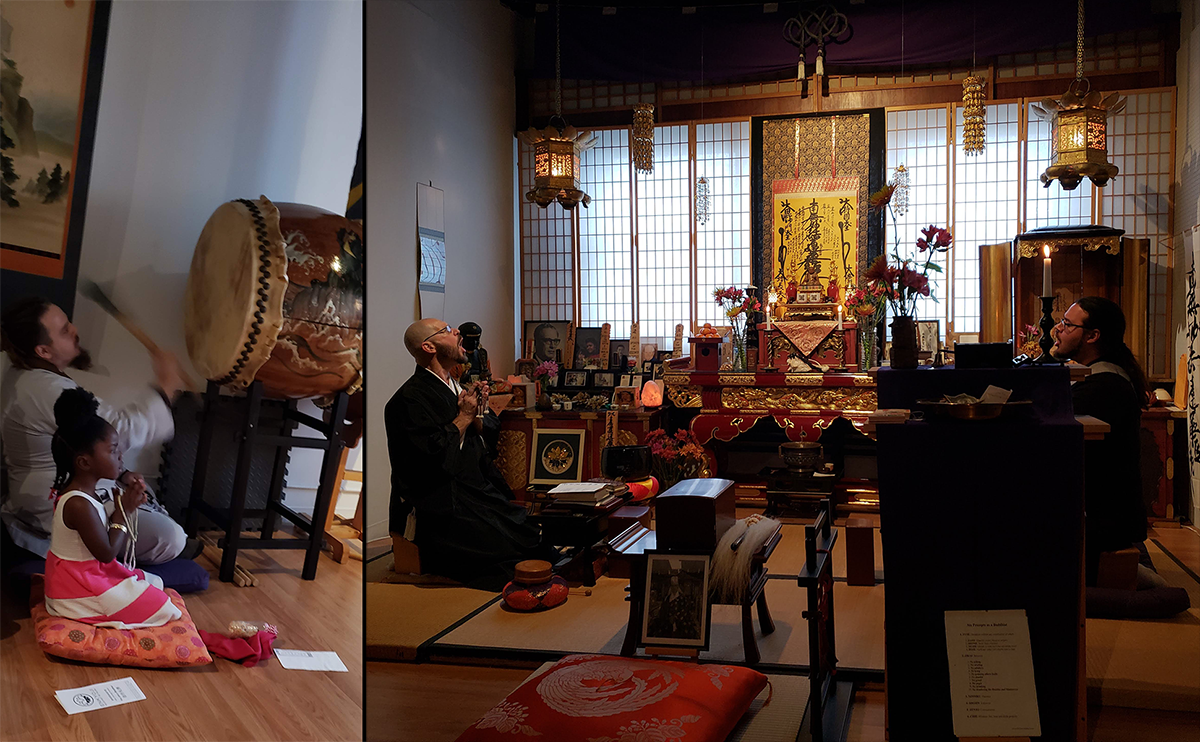
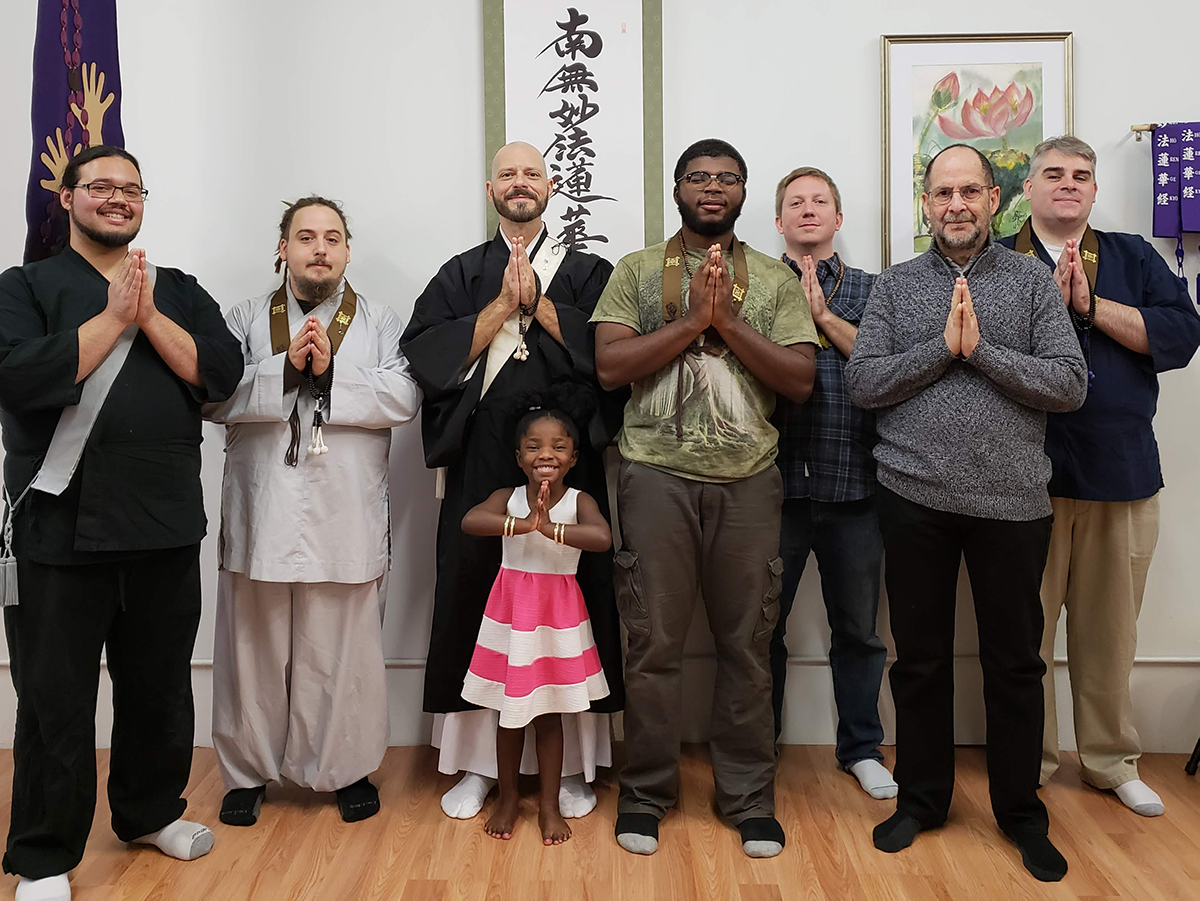
Last week, Shami Kanyu Kroll commented on my great fortune to have opportunities to practice at home and my home away from home. It is my great fortune, indeed.
Tomorrow, the wife and I leave for Sacramento. We are driving a 2009 Mitsubishi Lancer that belonged to my wife’s parents. Even with the trip across the country, the car will have less than 40,000 miles on it when we give it to our son in Sacramento.