
All posts by John Hughes

Day 19

Day 19 concludes Chapter 14, Peaceful Practices, and begins Chapter 15, The Appearance of Bodhisattvas from Underground.

Having last month heard the offer of the Bodhisattva-mahasattvas, more than eight times the number of the sands of the River Ganges, who had come from the other worlds, we greet the arrival of Bodhisattvas from Underground.

Thereupon the Buddha said to those Bodhisattva-mahasattvas:

“No, good men! I do not want you to protect or keep this sutra because there are Bodhisattva-mahasattvas sixty thousand times as many as the sands of the River Ganges in this Saha-World. They are each accompanied by attendants also numbering sixty thousand times as many as the sands of the River Ganges. They will protect, keep, read, recite and expound this sutra after my extinction.”

When he had said this, the ground of the Saha-World, which was composed of one thousand million Sumeru-worlds, quaked and cracked, and many thousands of billions of Bodhisattva-mahasattvas sprang up from underground simultaneously. Their bodies were golden-colored, and adorned with the thirty-two marks and with innumerable rays of light. They had lived in the sky below this Saha-World. They came up here because they heard these words of Sakyamuni Buddha. Each of them was the leader of a great multitude. The Bodhisattvas included those who were each accompanied by attendants as many as sixty thousand times the number of the sands of the River Ganges. Needless to say, [they included those who were each accompanied by less attendants, for instance,] fifty thousand times, forty thousand times, thirty thousand times, twenty thousand times or ten thousand times the number of the sands of the River Ganges, or by attendants just as many of the sands of the River Ganges, or by attendants as many as a half, or a quarter of the number of the sands of the River Ganges, or by attendants as many as the sands of the River Ganges divided by a thousand billion nayuta, a billion, ten million, a million, ten thousand, a thousand, a hundred, ten, five, four, three or two attendants, or only by one attendant. [The Bodhisattvas] who preferred a solitary life came alone. The total number of the Bodhisattvas was innumerable, limitless, beyond calculation, inexplicable by any parable or simile.

The Daily Dharma from July 29, 2016, offers this:

No, good men! I do not want you to protect or keep this sūtra because there are Bodhisattva-mahāsattvas sixty thousand times as many as the sands of the River Ganges in this Sahā-World. They are each accompanied by attendants also numbering sixty thousand times as many as the sands of the River Ganges. They will protect, keep, read, recite and expound this sūtra after my extinction.

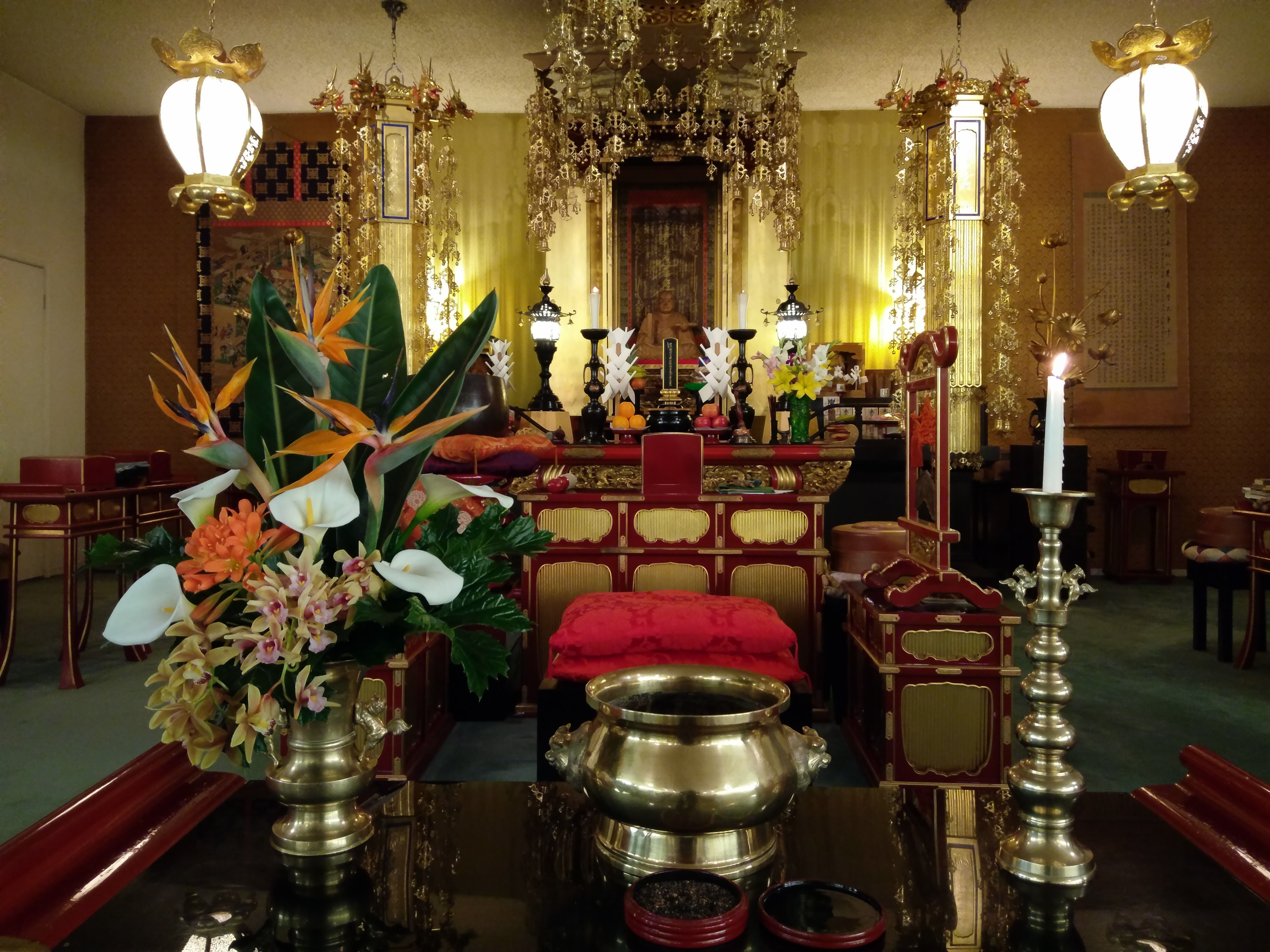
The Buddha makes this declaration to the uncountable number of Bodhisattvas who came from other worlds to hear him teach in Chapter Fifteen of the Lotus Sūtra. These Bodhisattvas had responded to the Buddha’s question of who would keep and expound the Buddha’s highest teaching after his death. They promised that they would remain in this world of conflict and fulfill the Buddha’s request. After the Buddha spoke these words, an unimaginable number of Bodhisattvas came up from underground and paid their respects to the Buddha. We can understand this story, and this image, as showing that our capacity for enlightenment, and our ability to benefit all beings, is already within us. We do not need an outside agent to give these to us.

The Daily Dharma is produced by the Lexington Nichiren Buddhist Community. To subscribe to the daily emails, visit zenzaizenzai.com
Daily Dharma – March 29, 2017

He should always make it a pleasure to sit in dhyāna. He should live in a retired place and concentrate his mind. Mañjuśrī! [A retired place] is the first thing he should approach.

The Buddha gives this explanation to Mañjuśrī Bodhisattva in Chapter Fourteen of the Lotus Sūtra in which he describes the peaceful practices of a Bodhisattva. For those who are awakening their nature as Bodhisattvas to benefit all beings, and setting aside their attachment to their own suffering, this can be a difficult transition. Our habits of engaging with the drama and delusion in the world can be too strong to overcome. This is why the Buddha emphasizes the importance of quietly reflecting on what happens around us, and our reactions to them. Through dhyāna meditation, we learn not to believe everything we think, and that we can change our understanding of the world. We also learn that allowing our minds to change is the only way we can benefit other beings.

The Daily Dharma is produced by the Lexington Nichiren Buddhist Community. To subscribe to the daily emails, visit zenzaizenzai.com

Day 18

Day 18 concludes Chapter 13, Encouragement for Keeping this Sutra, and begins Chapter 14, Peaceful Practices.

Having last month completed the first set of things a Bodhisattva should do, we come to the second set of peaceful practices to perform.

“Second, Manjusri! A Bodhisattva-mahasattva who wishes to expound this sutra in the age of the decline of the teachings after my extinction should perform the following peaceful practices. When he expounds or reads this sutra, he should not point out the faults of other persons or sutras. He should not despise other teachers of the Dharma. He should not speak of the good points or bad points or the merits or demerits of others. He should not mention Sravakas by name when he blames them. Nor should he do so when he praises them. He should not have hostile feelings against them or dislike them. He should have this peace of mind so that he may not act against the wishes of the hearers. When he is asked questions, he should not answer by the teachings of the Lesser Vehicle, but expound the Dharma only by the teachings of the Great Vehicle so that the questioners may be able to obtain the knowledge of the equality and differences of all things.”

The Lecture on the Lotus Sutra offers this perspective:

The second peaceful practice concerns the things we say. The list is a reminder of how we should speak, avoiding such things as being overly critical of others and other sutras. It is a fine line between pointing out differences in belief and practice and drifting to arrogance and disdain. We might be tempted to adopt the harsh language of Nichiren without fully manifesting the heart of Nichiren. The words are cheap and easy to use, the compassion and caring is difficult to manifest. There is also a time and place for things and this age we live in calls for great wisdom in discerning which approach is the most beneficial to the listener first and foremost and not to our own egotistical needs at proving superiority. As the Buddha says, the teacher should not have hostile feelings, nor dislike them but should have peace of mind. We should always have the wish to attain enlightenment for ourselves and cause others to do the same.
Lecture on the Lotus Sutra

Emptying the Teacup

Frequently in Buddhism teachers and others will use the analogy of emptying the teacup. It is a good image when you consider that before you can receive more tea, fresh tea, hot tea, different tea you need to first empty your cup. If your cup remains full then there is no space for more. The same goes with our lives. If we cling tightly to what we have and do not seek to give it away then we have no space for more. If we are feeling good and have received merit from our practice of Buddhism what good does it do us to cling tightly?

Lotus Path: Practicing the Lotus Sutra Volume 1

Daily Dharma – March 28, 2017

Needless to say, boundless will be the merits
Of the person who hears this sūtra with all his heart,
And expounds its meanings,
And acts according to its teachings.

The Buddha sings these verses to Maitreya (whom he calls Ajita – Invincible) in Chapter Eighteen of the Lotus Sutra. The merits we gain through our study and practice of the Lotus Sūtra do not make us better than any of the other beings with whom we share this world. Merits accumulate when we strip away our delusions and see the world for what it is. We sometimes focus on what we can do to change the world, thinking that merely changing how we look at the world will have little effect. It is only when we see things for what they are that we can act effectively. Otherwise we are merely reinforcing the delusions of ourselves and others.

The Daily Dharma is produced by the Lexington Nichiren Buddhist Community. To subscribe to the daily emails, visit zenzaizenzai.com

Day 17

Day 17 covers all of Chapter 12, Devadatta, and opens Chapter 13, Encouragement for Keeping this Sutra.

Having last month covered the promise of future Buddhahood for Devadatta, we come to the promise made to those who take this chapter to heart.

He said to the bhiksus:

“Good men or women in the future who hear this chapter of Devadatta of the Sutra of the Lotus Flower of the Wonderful Dharma with faithful respect caused by their pure minds, and have no doubts [about this chapter], will not fall into hell or the region of hungry spirits or the region of animals. They will be reborn before the Buddhas of the worlds of the ten quarters. They will always hear this sutra at the places of their rebirth. Even when they are reborn among men or gods, they will be given wonderful pleasures. When they are reborn before the Buddhas, they will appear in lotus-flowers.”

The Daily Dharma of Oct. 15, 2016, comments on this prediction:

The Buddha makes this prediction in Chapter Twelve of the Lotus Sūtra. In this Chapter, he assures Devadatta, an evil man who creates great harm, that he too will eventually reach the enlightenment of the Buddha. This prediction is for the rest of us too. It shows that when we nourish our capacity for respect for all beings, no matter how much harm they create, then we uproot the causes of our own greed and fear, and we will always find ourselves in a realm where the Buddha teaches the Wonderful Dharma.

The Daily Dharma is produced by the Lexington Nichiren Buddhist Community. To subscribe to the daily emails, visit zenzaizenzai.com

The Entry Way

Those who avoid the truth and wisdom of the story and believe the entry into enlightenment lies solely in rationality or intellectual understanding have ignored or failed to take to heart the countless times the Buddha says enlightenment is by faith alone. The stories are the entry way to the heart of the sutra, the heart of the Buddha.

Physician's Good Medicine

Daily Dharma – March 27, 2017

Even if I praise for innumerable kalpas
The keeper of this sūtra,
To whom it is to be transmitted,
I cannot praise him highly enough.

The Buddha sings these verses to Superior-Practice Bodhisattva (Jōgyo, Viśiṣṭacārītra) in Chapter Twenty-One of the Lotus Sūtra. When the Buddha praises us for keeping the Lotus Sūtra, he is praising our Buddha-Nature and encouraging us to develop it. When we praise the Buddha and show our gratitude for the practice he has given us, we are praising the Lotus Sūtra. When we praise and value the Lotus Sūtra, we are encouraging the Buddha-Nature in all beings, just as the Buddha has promised to do. Therefore when we keep and practice the Lotus Sūtra, we are fulfilling the Buddha’s promise of our enlightenment.

The Daily Dharma is produced by the Lexington Nichiren Buddhist Community. To subscribe to the daily emails, visit zenzaizenzai.com

Paramita Week

March 26, 2017, service

Today was the Ohigan ceremony at the Sacramento Nichiren Buddhist Church, during which prayers are offered for our ancestors, to transfer our merit to them to ease their burden.

Ven. Kenjo Igarashi’s service reminded us that Ohigan is also the final day of a weeklong focus on living the life of the Six Paramitas.

The Six Paramitas, also known as the Six Perfections, are:

The bottom line of Buddhist practice, Rev. Igarashi explained, “Don’t make bad actions.”

At the last service, Rev. Igarashi explained that the first seven-day trial for the deceased is to climb a treacherous mountain. The heavier your karma, the more difficult the climb.

Today, Rev. Igarashi explained that the second seven-day trial involves crossing a deep river. Those with little or no bad karma can cross on a bridge but those with heavy karma are forced to cross by bobbing to the surface, sinking to the bottom, and bobbing to the service until they reach the other shore.

He also made an effort to explain the third seven day trial but something was lost in translation. The third week apparently involves snakes and cats but how and why were unclear.

Postscript: An article entitled Meido: The Japanese Underworld offers a detailed explanation of the trials of the 49 days following death. This is the explanation of the Third Trial:

The third trial takes place 21 days after death, and is overseen by King Soutei (whose true form is Manji Bosatsu, or Manjusri). Manji judges the souls on their sins of lust and sexuality, using a cat and a snake. The cat is used to judge the souls of men; it bites at their penises, and the degree of the injury — from a slight scratch to completely severed — is used as a measure of one’s sexual sin. The snake is used to judge the souls of women; it is inserted into the woman, and the depth to which it can enter is used to determine the depth of her sin. As before, some will go on to Hell, while others — with the aid of funerary services from their surviving family members — will pass on to the next trial.

Day 16

Day 16 concludes Chapter 11, Beholding the Stupa of Treasures, and completes the Fourth Volume of the Sutra of the Lotus Flower of the Wonderful Dharma.

Having last month finished the prose section of this chapter, we begin the gathas.

Thereupon the World-Honored One, wishing to repeat what he had said, sang in gathas:

The Saintly Master, the World-Honored One,
Who had passed away a long time ago,
Came riding in the stupa of treasures
To hear the Dharma [directly from me].
Could anyone who sees him
Not make efforts to hear the Dharma?

It is innumerable kalpas
Since he passed away.
He wished to hear the Dharma at any place
Because the Dharma is difficult to meet.

His original vow was this:
“After I pass away,
I will go to any place
To hear the Dharma.”

The Buddhas of my replicas
As innumerable
As there are sands in the River Ganges
Also came here
From their wonderful worlds,
Parting from their disciples,
And giving up the offerings made to them
By gods, men and dragons,
ln order to hear the Dharma,
See Many-Treasures Tathagata,
Who passed away [a long time ago],
And have the Dharma preserved forever.

I removed innumerable living beings from many worlds,
And purified those worlds
By my supernatural powers
In order to seat those Buddhas.

Those Buddhas came under the jeweled trees.
The trees are adorned with those Buddhas
Just as a pond of pure water is adorned
With lotus flowers.

There are lion-like seats
Under the jeweled trees.
Those Buddhas sat on the seats.
The worlds are adorned
With the light of those Buddhas as bright
As a great torch in the darkness of night.

Wonderful fragrance is sent forth
From the bodies of those Buddhas
To the worlds of the ten quarters.
The living beings of those worlds
Smell the fragrance joyfully,
Just as the branches of a tree bend before a strong wind.
Those Buddhas employ these expedients
In order to have the Dharma preserved forever.

From Lotus World: An Illustrated Guide to the Gohonzon:

The jeweled stupa arising from the earth represents the emergence of Buddhahood (the stupa) from the ground of Buddha-nature in people’s ordinary lives (the earth). The transformation of this world is a graphic reminder that this world is the real pure land where enlightenment actually occurs. The recall of the emanated Buddhas from the pure lands reveals that these idealized Buddhas are personifications of the enlightened qualities and inner life of the historical Shakyamuni Buddha. The image of Many Treasures Tathagata and Shakyamuni Buddha seated together symbolizes the unity of the true reality of life and the wisdom of the person who awakens to reality.
Lotus World: An Illustrated Guide to the Gohonzon