Category Archives: LS32

Day 7

Day 7 concludes Chapter 3, A Parable, and begins Chapter 4, Understanding by Faith.

Having last month learned that this triple world is the Buddha’s property, we learn the greatness of the vehicle revealed in the Parable of the Burning House.

Śāriputra!
With this parable I expounded
The teaching of the One Buddha-Vehicle
To all living beings.
All of you will be able to attain
The enlightenment of the Buddha
If you believe and receive
These words of mine.

This vehicle is
The purest and most wonderful.
This is unsurpassed by any other vehicle
In all the worlds.
This vehicle is approved with joy by the Buddhas.
All living beings should extol it.
They should make offerings to it,
And bow to it.

The powers, emancipations,
dhyāna-concentrations, wisdom,
And all the other merits [of the Buddhas],
Many hundreds of thousands of millions in number,
Are loaded in this vehicle.

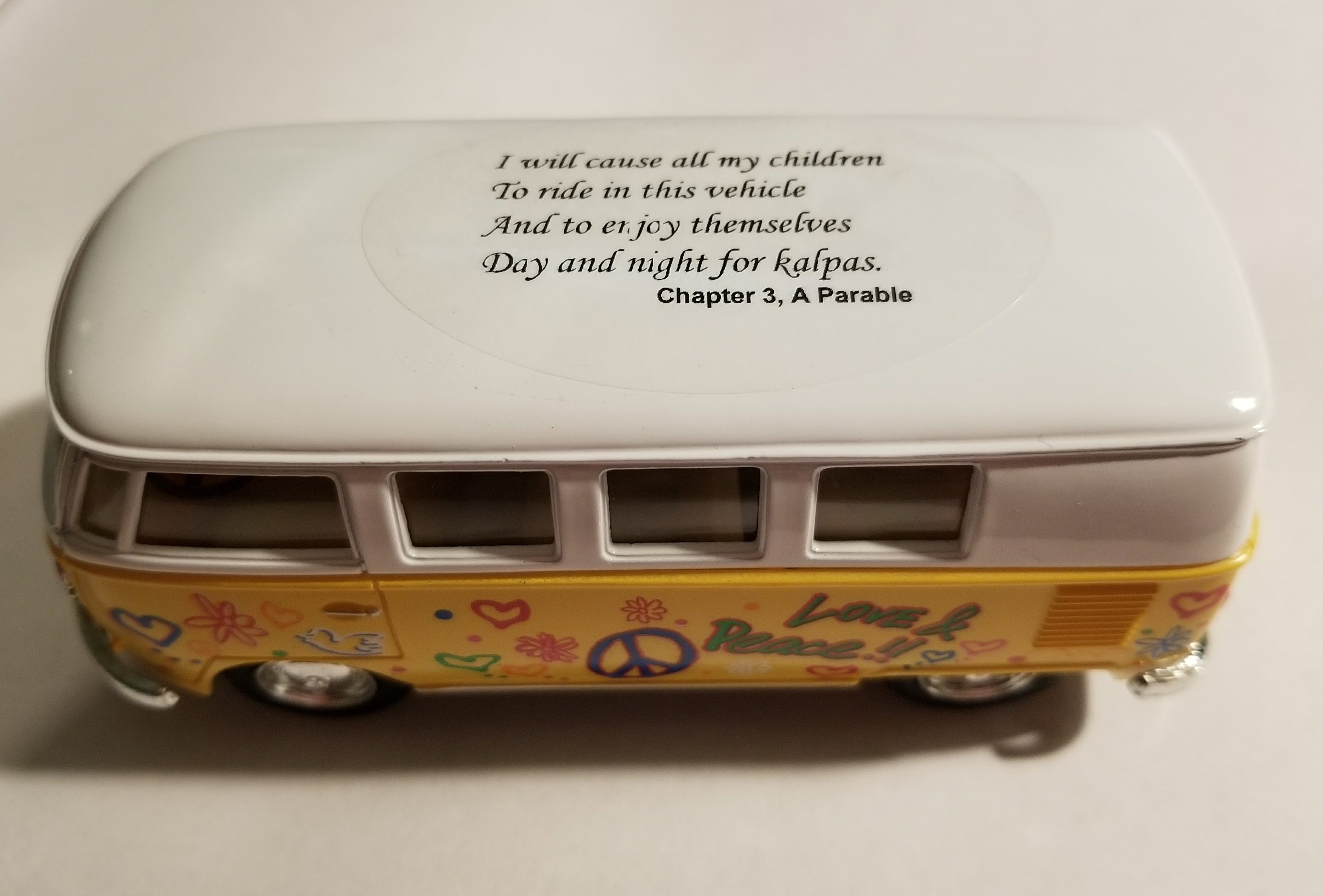
I will cause all my children
To ride in this vehicle
And to enjoy themselves
Day and night for kalpas.

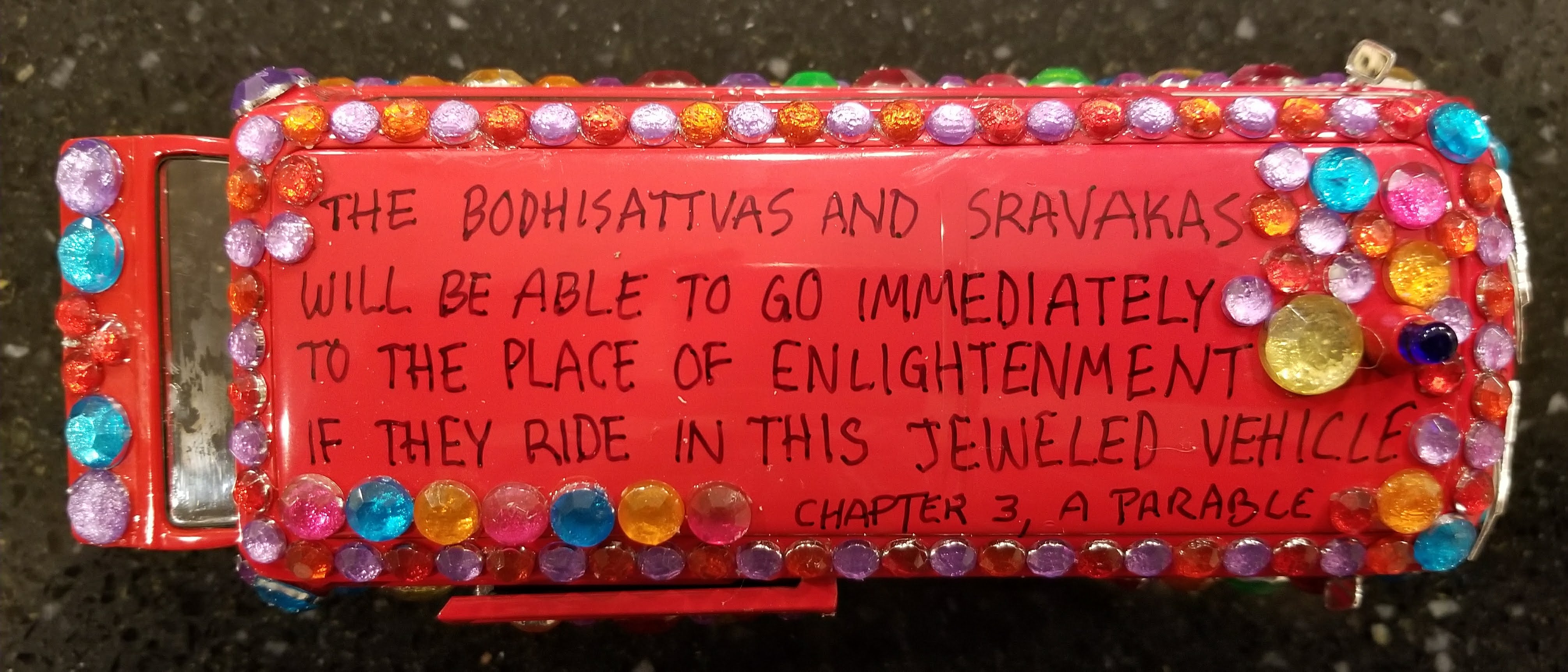
The Bodhisattvas and Śrāvakas
Will be able to go immediately
To the place of enlightenment
If they ride in this jeweled vehicle.

Therefore, even if you try to find another vehicle
Throughout the worlds of the ten quarters,
You will not be able to find any other one
Except those given by the Buddhas expediently.

I’ve always enjoyed this portion of Chapter 3, A Parable.

TheOneVehicle

Jeweled Vehicle

Day 6

Day 6 continues Chapter 3, A Parable

Having last month considered the limits of the Buddha as the father of all living beings, we consider Śākyamuni’s skillful expedients.

“In the same manner, I save all living beings from the burning house of the triple world, not by my powers or fearlessness, but with a skillful expedient. I expounded the teaching of the Three Vehicles: the Śrāvaka-Vehicle, Pratyekabuddha-Vehicle, and Buddha-Vehicle, as an expedient. I said, ‘Do not wish to live in the burning house of the triple world! Do not crave for inferior forms, sounds, smells, tastes or things tangible! If you cling to them and crave for them, you will be burned by them. Get out of the triple world quickly and obtain the teaching of the Three Vehicles: the Śrāvaka-Vehicle, Pratyekabuddha-Vehicle, and Buddha-Vehicle! I now assure you that you will never fail [to obtain those vehicles]. Exert yourselves, make efforts!’

“With this expedient, I caused them to advance. I said to them again, ‘Know this! This teaching of the Three Vehicles is extolled by the saints. This teaching saves you from any attachment or bond or desire. Ride in these Three Vehicles, eliminate āsravas, obtain the [five] faculties, the [five] powers, the [seven] ways to enlightenment, and the [eight right] ways, and practice dhyāna concentrations, emancipations, and samadhis so that you may be able to enjoy immeasurable peace and pleasure!’

This from the Introduction to the Lotus Sūtra:

From the theoretical standpoint, [The Parable of the Burning House] explains the relationship between the Three Vehicles and the One Vehicle. The three toy carts – the sheep-cart, deer-cart, and bullock-cart – respectively represent the Sravaka-Vehicle of the “hearers,” the Pratyekabuddha-Vehicle of the “private Buddhas,” and the Bodhisattva-Vehicle of those who serve and enlighten others. The large white bullock cart which is given to each of the children symbolizes the One Buddha Vehicle. The rich man first offered his children three kinds of carts as expedients, but in the end he gave each of them an identical large white bullock-cart. Obviously the Buddha told this parable to illustrate that the One Vehicle is true and the three are mere expedients. The differences between the One Vehicle and the Three Vehicles, which were discussed theoretically in Chapter Two, are now explained in a graphic story that anyone can understand and remember.

Introduction to the Lotus Sutra

Day 5

Day 5 begins Chapter 3, A Parable

Having last month listened as Śāriputra asks the Buddha to reassure “these twelve hundred people” of their future Buddhahood, we hear Śākyamuni’s reply to Śāriputra.

Thereupon the Buddha said to Śāriputra:
“Did I not tell you, ‘The Buddhas, the World-Honored Ones, expound the Dharma with expedients, that is, with various stories of previous lives, with various parables, with various similes, and with various discourses only for the purpose of causing all living beings to attain Anuttara-samyak-saṃbodhi’? All these teachings of the Buddhas are for the purpose of teaching Bodhisattvas. Śāriputra! Now I will explain this with a parable. Those who have wisdom will be able to understand the reason if they hear the following parable.

“Śāriputra! Suppose there lived a very rich man in a certain country, in a certain village, in a certain town. He was old. His wealth was immeasurable. He had many paddy fields, houses, and servants. His manor house was large, but had only one gate. In that house lived many people, numbering a hundred or two hundred or five hundred. The buildings were in decay, the fences and walls corrupt, the bases of the pillars rotten, and the beams and ridgepoles tilting and slanted.

“All of a sudden fires broke out at the same time from all sides of the house, and it began to burn. In this house lived children of the rich man, numbering ten or twenty or thirty. The rich man was very frightened at the great fires breaking out from the four sides of the house. He thought, ‘I am able to get out of the gate of the burning house safely, but my children are still inside. They are engrossed in playing. They do not know that the fires are coming towards them. They are not frightened or afraid. They are about to suffer, but do not mind. They do not wish to get out.’ Śāriputra! He also thought, ‘I am strong-muscled. I will put them in a flower-plate or on a table and bring them out.’

“But he thought again, ‘This house has only one gate. Worse still, the gate is narrow and small. My children are too young to know this. They are attached to the place where they are playing. They may fall [out of the plate or table] and get burned. I had better tell them of the danger. This house is already burning. They must come out quickly so as not to be burned to death.’

“Having thought this, he said to his children as he had thought, ‘Come out quickly!’ He warned them with these good words out of his compassion towards them, but they were too much engrossed in playing to hear the words of their father. They were not frightened or afraid. They did not wish to come out. They did not know what a fire was, what a house was, and what they would lose. They ran about happily. They only glanced at their father occasionally.

The Daily Dharma from Aug. 1, 2018, offers this:

Having thought this, he said to his children as he had thought, ‘Come out quickly!’ He warned them with these good words out of his compassion towards them, but they were too much engrossed in playing to hear the words of their father. They were not frightened or afraid. They did not wish to come out. They did not know what a fire was, what a house was, and what they would lose. They ran about happily. They only glanced at their father occasionally.

This passage is part of the Parable of the Burning House, told by the Buddha in Chapter Three of the Lotus Sūtra. In this story, he compares us living in this world of conflict to children playing in a dangerous house. As the children in the story were too distracted by their games to hear their father’s warnings, we are often too distracted by the attachments of our world to hear the voice of the Buddha.

The Daily Dharma is produced by the Lexington Nichiren Buddhist Community. To subscribe to the daily emails, visit zenzaizenzai.com

Day 4

Day 4 finishes Chapter 2, Expedients, and completes the first volume of the Sūtra of the Lotus flower of the Wonderful Dharma.

Having last month considered those who have already attained the enlightenment of the Buddha, we learn that the countless Buddhas in the future will employ expedients.

The World-Honored Ones in the future
Will be countless in number.
Those Tathāgatas also
Will expound the Dharma with expedients.

The Tathāgatas save all living beings
With innumerable expedients.
They cause all living beings to enter the Way
To the wisdom-without-āsravas of the Buddha.
Anyone who hears the Dharma
Will not fail to become a Buddha.

Every Buddha vows at the outset:
“I will cause all living beings
To attain the same enlightenment
That I attained.”

The future Buddhas will expound many thousands
Of myriads of millions of teachings
For just one purpose,
That is, for the purpose of revealing the One Vehicle.

The Introduction of the Lotus Sutra offers this:

Toward the end of this chapter, the Buddha expounds a well-known teaching called, “A small good deed leads a person to become a Buddha.” This teaching states that whenever someone shows sincere faith in the Buddha by performing a good deed, no matter how tiny it may be, this act sets him on the path to Buddhahood, and he or she is sure to become a Buddha eventually. Even though such a person is not yet a Buddha, he or she is on the way, and deserves respect as a future Buddha.

For example, even a person who has never performed any special practice can become a Buddha simply by making an offering, such as incense, flowers, or the wonderful sounds of music, in front of a Stupa (a round dome-shaped shrine) or an image of the Buddha. The sutra repeatedly maintains that such people “have already attained the enlightenment of the Buddha.” Furthermore, just entering a shrine only once and reciting, “Namo Buddhaya” (Homage to the Buddha!), or offering a single flower, is enough to enable anyone to become a Buddha. What is more, even a child at play, who pretends to build a Stupa by heaping up a pile of sand or dirt, “has already become a Buddha.” In the same way, if a child draws a picture of the Buddha on a wall with a stick or the back of his fingernail, and makes a gesture of praying to it, he or she has already become a Buddha (or, as the sutra says again, “has already attained the enlightenment of the Buddha”), (The Buddha is pure good: any act of good on our part, no matter how small or insignificant it may appear to be, puts us in his embrace from which nothing can ever separate us.)

The sutra presents various instances, one by one in order, to show that any small act of good will on our part enables us to become a Buddha. From these concrete examples, we can see that the One Vehicle is the teaching of the Buddha himself—boundless in bounty, pouring forth perfect life in limitless supply, lending a hand to everyone, and leading all of us to his own enlightenment. Finally, the sutra adds, “Anyone who even hears the Dharma (law/truth) will not fail to become a Buddha!”

Introduction to the Lotus Sutra

Day 3

Day 3 covers the first half of Chapter 2, Expedients.

Having last month witnessed the clearing of twigs and leaves from the congregation, we hear Śākyamuni explain the one great purpose for which the Buddhas appear in the worlds.”

The Buddha said to him:

“The Buddhas, the Tathāgatas, expound this Wonderful Dharma as rarely as the udumbara-flower blooms. Śāriputra! Believe what T am going to say! My words are not false.

“Śāriputra! The purpose of the various teachings that the Buddhas expound according to the capacities of all living beings is difficult to understand. I also expound various teachings with innumerable expedients, that is to say, with stories of previous lives, parables, similes and discourses. [The purpose of the various teachings of the Buddhas is difficult to understand] because the Dharma cannot be understood by reasoning. Only the Buddhas know the Dharma because the Buddhas, the World-Honored Ones, appear in the worlds only for one great purpose.

“Śāriputra! What is the one great purpose for which the Buddhas, the World-Honored Ones, appear in the worlds? The Buddhas, the World-Honored Ones, appear in the worlds in order to cause all living beings to open [the gate to] the insight of the Buddha, and to cause them to purify themselves. They appear in the worlds in order to show the insight of the Buddha to all living beings. They appear in the worlds in order to cause all living beings to obtain the insight of the Buddha. They appear in the worlds in order to cause all living beings to enter the Way to the insight of the Buddha. Śāriputra! This is the one great purpose for which the Buddhas appear in the worlds.”

Why study Buddhism? Why read the Lotus Sūtra? “To obtain the insight of the Buddha.” Not being reborn in some distant paradise. Not escape suffering. “This is the one great purpose for which the Buddhas appear in the worlds.”

Day 2

Day 2 completes Chapter 1, Introductory.

Having last month considered the role of Wonderful-Light Bodhisattva, we conclude Chapter 1, Introductory.

The ray of light of [Sun-Moon-] Light Buddha,
That is, the good omen, was the same as what I see now.
Judging from this, the present Buddha also will expound
The Sūtra of the Lotus Flower of the Wonderful Dharma.

The good omen I see now is like that of old.
This is an expedient employed by the Buddhas.
The present Buddha is also emitting a ray of light
In order to reveal the truth of the reality [of all things].

[Mañjuśrī said to the multitude:]

All of you, know this, join your hands together,
And wait with one mind!
The Buddha will send the rain of the Dharma
And satisfy those who seek enlightenment.

The Buddha will remove
Any doubt of those who seek
The teaching of the Three Vehicles.
No question will be left unresolved.

Nichiren Shōnin compares the omens of this chapter with what’s to come in the Lotus Sūtra in his letter Zuisō Gosho, Writing on Omens:

The Buddha … showed the ten supernatural powers in the “Divine Powers of the Buddha” chapter. These divine powers were far superior to the omens displayed in the “Introductory” and “Emergence of the Bodhisattvas from the Earth” chapters. In the case of the “Introductory” chapter, the rays of light emitted from the forehead of the Buddha shone on 18,000 lands to the east. Compared to this, similar rays of light shown in the “Divine Powers of the Buddha” chapter shone on all the worlds throughout the universe. The trembling of the earth described in the “Introductory” chapter was limited to the triple thousand worlds, but the great earthquakes of the “Divine Powers of the Buddha” chapter covered all the worlds of numerous Buddhas, where the earth trembled in six different ways. Compared to the great omens described in the “Divine Powers of the Buddha” chapter, other omens were indeed inferior.

Zuisō Gosho, Writing on Omens, Writings of Nichiren Shōnin, Volume 6, Followers I, Page 123

Day 1

Day 1 covers the first half of Chapter 1, Introductory

Having last month considered what Maitreya is seeing, we consider examples of Bodhisattvas of those worlds illuminated by the light of the Buddha.

Mañjuśrī!
I see and hear
Hundreds of thousands of millions of things
Such as these
From this world.
I will tell you briefly some more of them.

I see as many Bodhisattvas of those worlds
As there are sands in the River Ganges,
Who are seeking the enlightenment of the Buddha
[In various ways] according to their environments

Some of them practice almsgiving.
They joyfully give treasures
Such as gold, silver,
Pearls, manis, shells, agates, and diamonds.
They also give menservants and maidservants,
Vehicles and palanquins adorned with treasures.

They proceed to the enlightenment of the Buddha
By the merits obtained thereby,
Wishing to obtain this vehicle,
The most excellent vehicle
In the triple world,
The vehicle praised by the Buddhas.

Some Bodhisattvas give
Jeweled chariots yoked with four horses,
Equipped with railings and flower-canopies,
And adorned on all sides.

I also see some Bodhisattvas
Offering their flesh or their limbs
Or their wives or their children
In order to attain unsurpassed enlightenment.

I also see some Bodhisattvas
Joyfully offering
Their heads or their eyes or their bodies
In order to attain the wisdom of the Buddha.

From this “introduction” I look forward to seeing these acts of Bodhisattvas repeated by Never-Despising Bodhisattva, Gladly-Seen-By-All-Beings Bodhisattva, Wonderful-Voice Bodhisattva and Universal-Sage Bodhisattva. What was then, is now and will be in the future.

Day 32

Day 32 covers Chapter 28, The Encouragement of Universal-Sage Bodhisattva, closing the Eighth Volume of the Sutra of the Lotus Flower of the Wonderful Dharma.

Having last month heard the vow of Universal-Sage Bodhisattva, we hear his promise to help those who study and practice this sūtra.

“World-Honored One! The bhikṣus, bhikṣunīs, upāsakās or upāsikās who seek, keep, read, recite and copy this Sūtra of the Lotus Flower of the Wonderful Dharma in the defiled world in the later five hundred years after [your extinction], if they wish to study and practice this sūtra, should concentrate their minds [on study and practice] strenuously for three weeks. When they complete [the study and practice of] three weeks, I will mount a white elephant with six tusks, and appear before them with my body which all living beings wish to see, together with innumerable Bodhisattvas surrounding me. I will expound the Dharma to them, show them the Way, teach them, benefit them, and cause them to rejoice. I also will give them dhārāṇi spells. If they obtain these dhārāṇis, they will not be killed by nonhuman beings or captivated by women. Also I myself will always protect them. World-Honored One! Allow me to utter these dhārāṇis spells!”

Thereupon he uttered spells before the Buddha:

“Atandai (1), tandahatai (2), tandahatei (3), tandakusharei (4), tandashudarei (5), shudarei (6), shudarahachi (7), botsudahasennei (8), sarubadarani-abatani (9), sarubabasha-abataru (10), hu­abatani (11), sōgyahabishani (12), sōgyaneku-kyadani (13), asogi (14), sōgyahagyadai. (15), teirei-ada-sōgyatorya-aratei-haratei (16), sarubasogya-sammaji-kyarandai (17), sarubadaruma­shuharisettei (18), saru-basatta-rodakyōsharya-atogyadai (19), shin-abikiridaitei (20).”

This is my 34th time posting on the subject of Chapter 28, The Encouragement of Universal-Sage Bodhisattva. Back on the 10th time through this chapter I discussed the “maleness” of this chapter. Clearly, the target audience is young boys and men who have not yet grown to realize women are more than objects of desire, deserving of equality in their humanity. Fortunately that equality is a bedrock on the Lotus Sūtra and, by extension, the teachings of Nichiren Shōnin, as illustrated in today’s Daily Dharma.

Apropos of this discussion, I am publishing the tale of How Nanda, Shakyamuni’s Half-Brother, Came To Be A Disciple from The Beginnings of Buddhism.

How Nanda, Shakyamuni’s Half-Brother, Came To Be A Disciple

After Shakyamuni left the palace for the life of religion, the royal family took great pleasure in the upbringing of Shakyamuni’s own son, Rahula, and of Nanda. When Nanda turned twenty, he acceded to the position of crown prince and would, it was believed, someday succeed to the throne of the aging Suddhodana. Simultaneous with the ceremony to mark his becoming crown prince, he was to marry Sundari, the most beautiful girl in the kingdom. As the wedding was about to take place, Shakyamuni went to beg food at the new home of these two young people. Nanda himself filled the beggar’s bowl with food. But when he went to the house entrance to return it, the Buddha was nowhere to be seen. Nanda thereupon prepared to go in search of him. When she heard Nanda’s footsteps, Sundari realized that he was going to find Shakyamuni and said, “Please come home before my makeup dries.”

But, having followed Shakyamuni to the Nigrodha Garden, Nanda peremptorily had his head shaved and abandoned the ordinary world for the life of religion. Because he joined the Order in this sudden, careless way, however, he did not have the true heart of faith. All he could think of was Sundari, whom he had left behind. He could not turn his thoughts to religious training. Although he waited for a chance to run away and join his beloved, no opportunity presented itself. He could take no part in the joys or the disciplines of the other members of the Order. Sundari was always on his mind, and he is even said to have made a picture of her for consolation.

All of this finally reached the ears of Shakyamuni, who used his mystical powers to transport himself and Nanda to the Himalayas. In a part of the mountains where there had been a fire sat a wounded, burned female monkey. Shakyamuni asked Nanda, “Who is more beautiful, this monkey or Sundari?”

“There can be no comparison between Sundari’s beauty and this wretched female monkey.”

Then Shakyamuni took him still higher in the Himalayas to the abode of the Thirty-three Devas. There he saw five hundred nymphs of unworldly loveliness playing and amusing themselves. They were all unmarried, and no men were in the place.

Shakyamuni asked, “Who is more beautiful, Sundari or these nymphs?”

“Just as there can be no comparison between the female monkey and Sundari, so there can be none between Sundari and these nymphs.”

“Then shall I see to it that these nymphs become yours?”

“If you would do that, I would devote myself entirely to religious training.”

Thereafter Nanda forgot Sundari and, thinking only of the nymphs who would someday be his, gave himself over to religious discipline. The other members of the Order were at first moved by the change in Nanda’s attitude. But when they learned that it had come about as a consequence of his desire to be reborn in heaven and possess the beautiful women, they regarded him as a hireling. They felt that devotion to religious training because of a wish to possess women was identical to working for money or to engaging in disciplines for the sake of profit. And that is not the way to conduct true Buddhist discipline.

Nanda found it hard to put up with the contempt he saw in the eyes of the people around him. But, after reflecting that the fault was his and that the shame was only his due, for the first time he experienced the true spirit of religion and began to dedicate himself to serious discipline along with the other members of the Order. In this way, he attained the enlightenment of an arhat and, it is said, requested the Buddha to dissolve the agreement they had made about the nymphs. (Page 91-93)

(See also this quote.)

The Beginnings of Buddhism

Day 31

Day 31 covers Chapter 27, King Wonderful-Adornment as the Previous Life of a Bodhisattva.

Having last month heard the two sons tell their mother that their father now understands the Dharma by faith, we witness the preparations for going to see the Buddha.

“Thereupon the eighty-four thousand people in the harem of King Wonderful-Adornment became able to keep the Sūtra of the Lotus Flower of the Wonderful Dharma.

“Pure-Eyes Bodhisattva had already practiced the samādhi for the Lotus Flower of the Wonderful Dharma for a long time. Pure-Store Bodhisattva had already practiced the samādhi for the release from evil regions in order to release all living beings from evil regions for many hundreds of thousands of billions of kalpas.

“Now the queen practiced the samādhi for the assembly of Buddhas, and understood the treasury of their hidden core. The two sons led their father by these expedients and caused him to understand the teachings of the Buddha by faith and to wish [to act according to those teachings].

“Thereupon King Wonderful-Adornment, Queen Pure-Virtue, and their two sons came to that Buddha. The king was accompanied by his ministers and attendants; the queen, by her ladies and attendants; and their two sons, by forty-two thousand men. They worshiped the feet of that Buddha with their heads, walked around the Buddha three times, retired, and stood to one side.

Something is this tale of two sons who lead their father with expedients and cause him to understand the teachings of the Buddha by faith and to wish to act according to those teachings resonates with me in ways that other parts of the Lotus Sūtra do not. Something to ponder while chanting Namu Myoho Renge Kyo.