Category Archives: WONS

Writings of Nichiren Shonin

This category covers any article that contains a substantive quote from the Writings Of Nichiren Shonin. These are also found in the Daily Dharma and 100 Days of Study and A Phrase A Day.


For a discussion of Nichiren’s writings and the question of authenticity, see this Japanese Journal of Religious Studies 1999 article by Sueki Fumihiko, Nichiren’s Problematic Works.


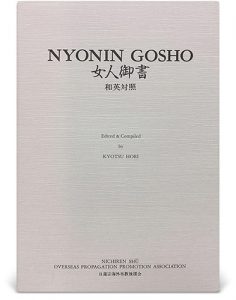
NyoninGoshoCover
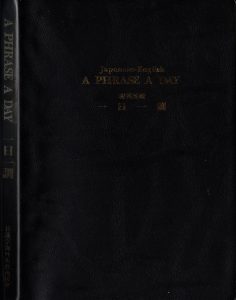
A Phrase A Day

The True Meaning of 3,000 Existences Contained In One Thought

It is not feasible to explain the true meaning of the doctrine of “3,000 existences contained in one thought” even in the theoretical section of the Lotus Sūtra. Needless to say, it is not mentioned at all in the pre-Lotus sūtras. The doctrine stems from the passage describing the ten aspects of existence in the paragraph on the “brief replacement of the three vehicles with the one true vehicle” (ryaku kaisan-ken’ichi) in the second chapter in the theoretical section of the Lotus Sūtra. Nevertheless, the true meaning of the doctrine is based solely on the essential section of the sūtra. The pre-Lotus sūtras should be judged according to the meaning of the theoretical section, which in turn should be judged by the meaning of the essential section. Only the essential section of the Lotus Sūtra can define its meaning as it preaches.

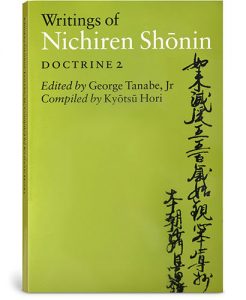
Jisshō-shō, A Treatise on the Ten Chapters of the Great Concentration and Insight, Writings of Nichiren Shōnin, Doctrine 2, Page 3-4

Mortal Enemy of the Buddha Dharma

(Hitherto missing) A sleeping lion does not turn angry unless it is provoked. Waves do not rise unless a pole is thrust in the river. Likewise, if we do not refute the slanderer of the True Dharma, we will not encounter hardship. It is preached in the Nirvana Sūtra, “If a virtuous priest upon seeing a person who destroys the dharma disregards him and does not censure him, such a priest is a mortal enemy of the Buddha Dharma.” If we do not take the word “disregard” seriously in this citation, it is inevitable that we will fall into the Hell of Incessant Suffering in the next life, though we seemingly may be able to pass through this life without trouble.

Therefore, Grand Master Nan-yüeh states in his Lotus Sūtra’s Four Peaceful Practices, “Suppose a bodhisattva protects an evil person and is unwilling to punish him, allowing his evil to increase, thus bringing trouble to virtuous people, and destroying the True Dharma. Such a bodhisattva is not a true bodhisattva. Outwardly he pretends to be a bodhisattva to deceive others, saying always, ‘I am practicing the paramita of perseverance.’ Such a person will fall into hell together with all the other evil people.”

The Ten Wheel Sūtra also preaches, “Do not live with a slanderer of the True Dharma. Do not befriend him or approach him. Doing so, will inevitably lead you to fall into the Avīci Hell.” When one enters a forest of sandalwood, the sweet fragrance clings to one’s body even though no branches are broken. Likewise, when one befriends or approaches a slanderer of the True Dharma, the merits one has accumulated will vanish and that person will fall into hell together with the slanderer. Therefore, Grand Master Miao-lê warns in his Annotations on the Great Concentration and Insight, “If one, who is not initially evil, approaches and befriends an evil person, it is inevitable that one will become evil in time, spreading his wicked ways throughout the country.”

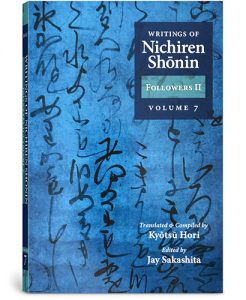
Nambu Rokurō-dono Gosho, A Letter to Lord Nambu Rokurō, Writings of Nichiren Shōnin, Followers II, Volume 7, Page 170-171

Good and Wicked Countries

Of the 25 transmitters of the Buddhist dharma, all except the Buddha are men of temporary manifestation dispatched by the Buddha to lead living beings. Āryadeva, the 14th of the 25 transmitters, was killed by a non-Buddhist, and Venerable Simha, the 25th transmitter, was beheaded by King Dammira. Many others such as Buddhamitra and Bodhisattva Nāgārjuna encountered various difficulties. On the other hand, some were firmly supported by the rulers and were able to spread the dharma without encountering difficulties. Why is it that some transmitters were persecuted while others were not? I believe it is because there exist good and wicked countries in the world and aggressive and persuasive means of spreading a religion. This was true even during the Ages of the True Dharma and the Semblance Dharma. It was also true even in India, the central land of the Buddhist dharma. All the more so in Japan, a remote country land, at the beginning of the Latter Age of Degeneration. It has been expected from the beginning that I would encounter great difficulties when I tried to spread the teaching of the Lotus Sutra. I simply waited for them to arise.

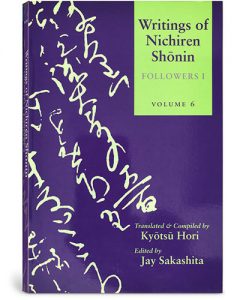
Tenjū Kyōju Hōmon, Lightening the Karmic Retribution, Writings of Nichiren Shōnin, Followers 1, Volume 6, Page 30

The Only Dependable Teaching

[T]he only dependable teaching is a phrase in fascicle seven of the Lotus Sūtra saying: “Propagate this sūtra throughout Jambudvipa during the last 500-year period after My passing.” Grand Master Dengyō interprets this: “The Ages of the True Dharma and Semblance Dharma are approaching the end, and the Latter Age of Degeneration is around the corner. It is the time when the One Vehicle teaching of the Lotus Sūtra will be propagated.”

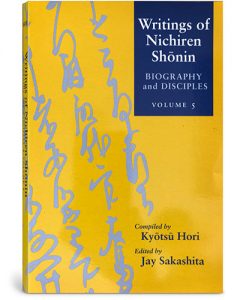
Mikoshi Buri Gosho, Intimidation with the Portable Shrine, Writings of Nichiren Shōnin, Biography and Desciples, Volume 5, Page 143

The Main Meaning of ‘Medicine King Bodhisattva’ Chapter

As for the main meaning of the Previous Life of Medicine-King Bodhisattva chapter, it is in the seventh fascicle of the sūtra and is the 23rd of the 28 chapters. The first fascicle of the Lotus Sūtra includes the “Introductory” and “Expedients” chapters, the former being the introduction to the 28 chapters. The eight chapters from the “Expedients” to the “Assurance of Future Buddhahood of Learners and Adepts” chapters chiefly clarifies the attainment of Buddhahood by the Two Vehicles of śrāvaka and Pratyekabuddha and secondly explains the attainment of Buddhahood by bodhisattvas and ordinary people.

The five chapters, “The Teacher of the Dharma,” “The Appearance of the Stupa of Treasures,” “Devadatta,” “Encouragement for Upholding This Sūtra,” and “Peaceful Practices” chapters, expound the way ordinary people in the Latter Age of Degeneration should practice the eight chapters following the second “Expedients” chapter. Also, the 15th “Appearance of Bodhisattvas from Underground” chapter is the introductory to the 16th “Life Span of the Buddha” chapter. The 12 chapters beginning with the 17th chapter, “Variety of Merits,” explain mainly how ordinary people in the Latter Age of Degeneration should practice the “Life Span of the Buddha” chapter, while in the second place they also preach how to practice the eight chapters beginning with the “Expedients” chapter. Accordingly, this “Medicine King Bodhisattva” chapter explains the way to practice the eight chapters following the “Expedients” chapter as well as the “Life Span of the Buddha” chapter.

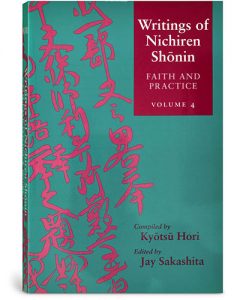
Yakuō-bon Tokui-shō, The Essence of the “Medicine King Bodhisattva” Chapter, Writings of Nichiren Shōnin, Faith and Practice, Volume 4, Page 28-29

Those Who Possess Even the Slightest Belief in the Lotus Sūtra

QUESTION: Suppose ordinary people, priests or lay persons, uphold, read and write or let others read and write the entire Lotus Sūtra without understanding its meaning. Or perhaps they focus on just one of its fascicles, or the four important chapters (chapters 2, 14, 16 and 25), or even just the verse at the end of the “Life Span of the Buddha” chapter without fully appreciating the depth of the sūtra. Suppose there are people who, though they do not read and write the sūtra themselves, show respect by pressing their palms together in the form of gasshō, bow in front of it, offer incense and flowers to it. Or suppose there are people who, though they do not practice these things themselves, are happy seeing others perform such practices, and rejoice that this sūtra is spreading all over the country. Can such people, due to their own merit of having practiced a little, avoid committing worldly sins and be reborn in the realms of human and heavenly beings just as Hinayana sages on the first stage of sainthood are always reborn in the realms of humans and gods without falling into the three evil realms (hell, realm of hungry souls and that of beasts and birds)? Can they in the end perceive the Lotus Sūtra or be reborn in the Pure Lands all over the universe or become Buddhas with their present bodies? I would like to hear about this in detail.

ANSWER: Though my understanding of the sūtra is not profound, as I contemplate the spirit of the Lotus Sūtra and the Nirvana Sūtra, as well as their interpretations by T’ien-t’ai and Miao-lê, it seems to me that those who possess even the slightest belief in the Lotus Sūtra without holding any enmity against its teaching will not fall into the evil realms even if they commit evil deeds.

However, suppose such people believe in the “evil friend,” the one who understands only the provisional teachings, pretending to be wise and saying in an amicable manner that the teaching of the Lotus Sūtra is unsuitable for them. If such people then abandon their faith in the Lotus Sūtra, convert themselves to other teachings, and never return to the Lotus Sūtra for the duration of their lives, they may end up falling into the evil realms.

Shō Hokke Daimoku-shō, Treastise on Chanting the Daimoku of the Lotus Sūtra, Writings of Nichiren Shōnin, Faith and Practice, Volume 4, Page 1-2

The Lotus Sūtra Name: Namu Myōhō Renge Kyō

The Lotus Sūtra has seventeen alternative names. All Buddhas in the past, present and future, however, name it “Namu Myōhō Renge Kyō.” Various Buddhas such as Amida (the Buddha of Infinite Life) and Śākyamuni meditated on the truth of “3,000 existences contained in one thought in mind and recited “Namu Myōhō Renge Kyō” by mouth while performing the bodhisattva practices until they became the Enlightened Ones.

Jisshō-shō, A Treatise on the Ten Chapters of the Great Concentration and Insight, Writings of Nichiren Shōnin, Doctrine 2, Page 4

Sūtra Superiority

QUESTION: The Sūtra of the Pure Land of Mystic Glorification states that it is “supreme of all the Buddhist scriptures.” The Great Cloud Sūtra claims to be the Wheel-turning Noble King of sūtras whereas the Sūtra of the Golden Splendor says of itself to be the king of sūtras. From these statements we can see that it is customary for Mahāyāna sūtras to claim they are supreme. How can you then say from only one passage in the Sūtra of Infinite Meaning that it is superior to all those sūtras preached in the forty years or so before it?

ANSWER: When Lord Śākyamuni Buddha preaches in each sūtra that it is the supreme sūtra, we cannot distinguish between Mahāyāna and Hinayāna or between provisional and true sūtras. If sectarian people merely talk about the differences among the various sūtras and compare the profundity of their doctrines when no actual differences exist, it will not only be the source of controversy but also cause the evil karma of slandering the True Dharma.

When those sūtras preached during the forty-two years of the pre-Lotus period claim that they are the prime sūtras, however, what they are compared with is not the definitive. Some sūtras claim to be supreme in comparison to Hinayāna sūtras; others claim to be first because their Buddhas have the Reward Body, enjoying eternal longevity instead of eighty years of life; still others say that theirs are first merely because they explain the triple truth completely: the truth of the temporal, the void, and the middle. They do not claim to be first of all the Buddhist scriptures. On the contrary, this Sūtra of Infinite Meaning states that it is the prime sūtra of all the sūtras preached in forty years or so before it was preached.

QUESTION: Which is superior, the Lotus Sūtra or the Sūtra of Infinite Meaning?

ANSWER: The Lotus Sūtra is.

QUESTION: How do you know this?

ANSWER: In the Sūtra of Infinite Meaning, neither the possibility of obtaining Buddhahood by Two Vehicles (two categories of Hinayāna saints: Śrāvaka and pratyekabuddha), nor the attaining Enlightenment by Śākyamuni Buddha in the eternal past are revealed. Therefore, in the “Teacher of the Dharma” chapter in the Lotus Sūtra, when it is claimed that the Lotus Sūtra is superior to all the sūtras, those already preached, now being preached and yet to be preached, the Sūtra of Infinite Meaning is included among those being now preached making it clear that it is so easy to understand and put faith in that it actually is less truthful than the Lotus Sūtra.

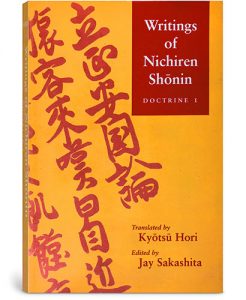
Shugo Kokka-ron, Treatise on Protecting the Nation, Writings of Nichiren Shōnin, Doctrine 1, Page 10

Supreme Qualities of the Ten Female Rākṣasa Demons

The Dhārāṇis chapter states that two bodhisattvas, two heavenly kings and ten female rākṣasa demons will protect the practicer of the Lotus Sūtra. The two bodhisattvas are the Bodhisattva Medicine King and the Bodhisattva Brave Donor. The two heavenly kings are Vaiśravaṇa and Dhṛtarāṣṭra. The ten female rākṣasa demons are ten great demons, mothers of all demons in the four quarters of the world. Their mother is Hāriti (Kishimojin).

They eat men after the custom of demons. A man’s body is composed of thirty-six substances such as excrement, urine, spittle, flesh, blood, skin, bone, five viscera and six entrails, hair, breath, and spirit. Inferior demons feed on excrement and the like. Mediocre demons feed on bones and the like. Superior demons feed on spiritual essence. The ten female rākṣasa demons have supreme qualities and thus feed on man’s spiritual essence. They are the great demons of epidemic.

Nichinyo Gozen Gohenji, Response to My Lady Nichinyo, Writings of Nichiren Shōnin, Faith and Practice, Volume 4, Page 140

This Sahā World Is the True Pure Land of the Tranquil Light

The Pure Lands preached in the pre-Lotus expedient sūtras are mere substitutes tentatively shown by replicas of Śākyamuni Buddha, the Eternal True Buddha. In fact, they all are lands of impurity. Therefore, when the true Pure Land was decided in “The Life Span of the Buddha” chapter of the Lotus Sūtra, the essence of which consists of chapters on the “Expedients” and “The Life Span of the Buddha,” it was declared that this Sahā World is the true Pure Land of the Tranquil Light.

As for the question why, the Lotus Sūtra also recommends the Tuṣita Heaven, the Realm of Peace and Sustenance (Pure Land of the Buddha of Infinite Life), and Pure Lands all over the universe, it is merely that designations of the Pure Lands, such as Tuṣita Heaven and Realm of Peace and Sustenance, preached in the pre-Lotus sūtras are used without modification to name the Pure Lands to be established in this world. It is like names of the three vehicles (śrāvaka, pratyekabuddha, and bodhisattva) mentioned in the Lotus Sūtra, which does not actually preach three different teachings; it preaches the sole teaching leading to Buddhahood. It is stated in the Lotus Sūtra, chapter 23, that those who practice this sūtra “will immediately be reborn in the World of Happiness.” In the Annotations on the Words and Phrases of the Lotus Sūtra, fascicle 10, Grand Master Miao-lê interprets: “This does not mean the Pure Land of the Buddha of Infinite Life preached in the Sūtra of Meditation on the Buddha of Infinite Life.” His interpretation is the same as stated above.

People today without karmic relations with the Lotus Sūtra, wishing to be reborn in the Pure Land to the west, are in fact praying for rebirth in the land of rubble, giving up the Sahā World, which is the true Pure Land. People who do not believe in the Lotus Sūtra will not be able to be reborn even in such lands as Tuṣita Heaven and Realm of Peace and Sustenance, which are in reality the Pure Lands in this Sahā World given such temporary names.

Shugo Kokka-ron, Treatise on Protecting the Nation, Writings of Nichiren Shōnin, Doctrine 1, Pages 63