Daily Dharma for April 3, 2026

20260403-ddi

Illustration by Google Gemini

Show Gemini's thinking

Gemini Thinking

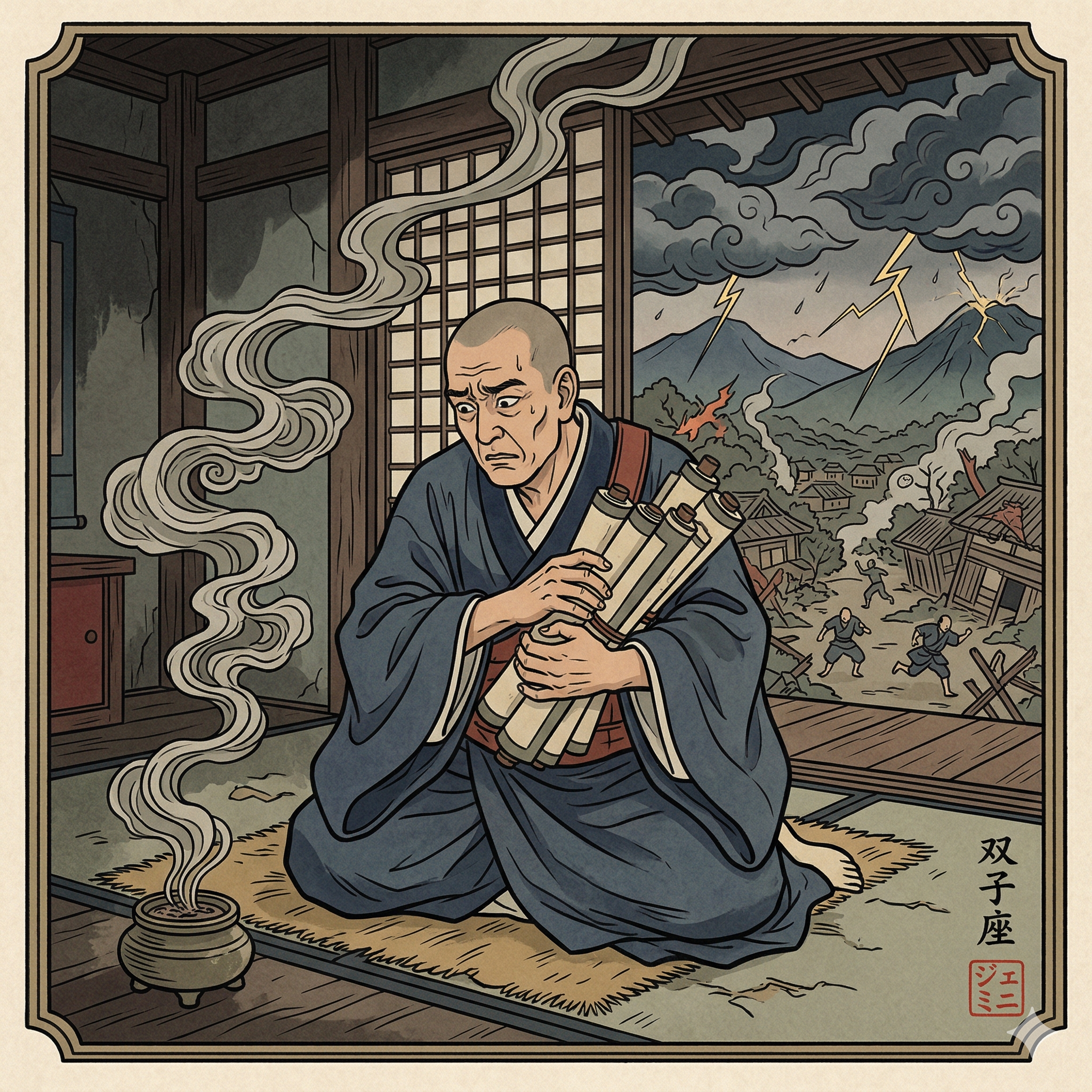
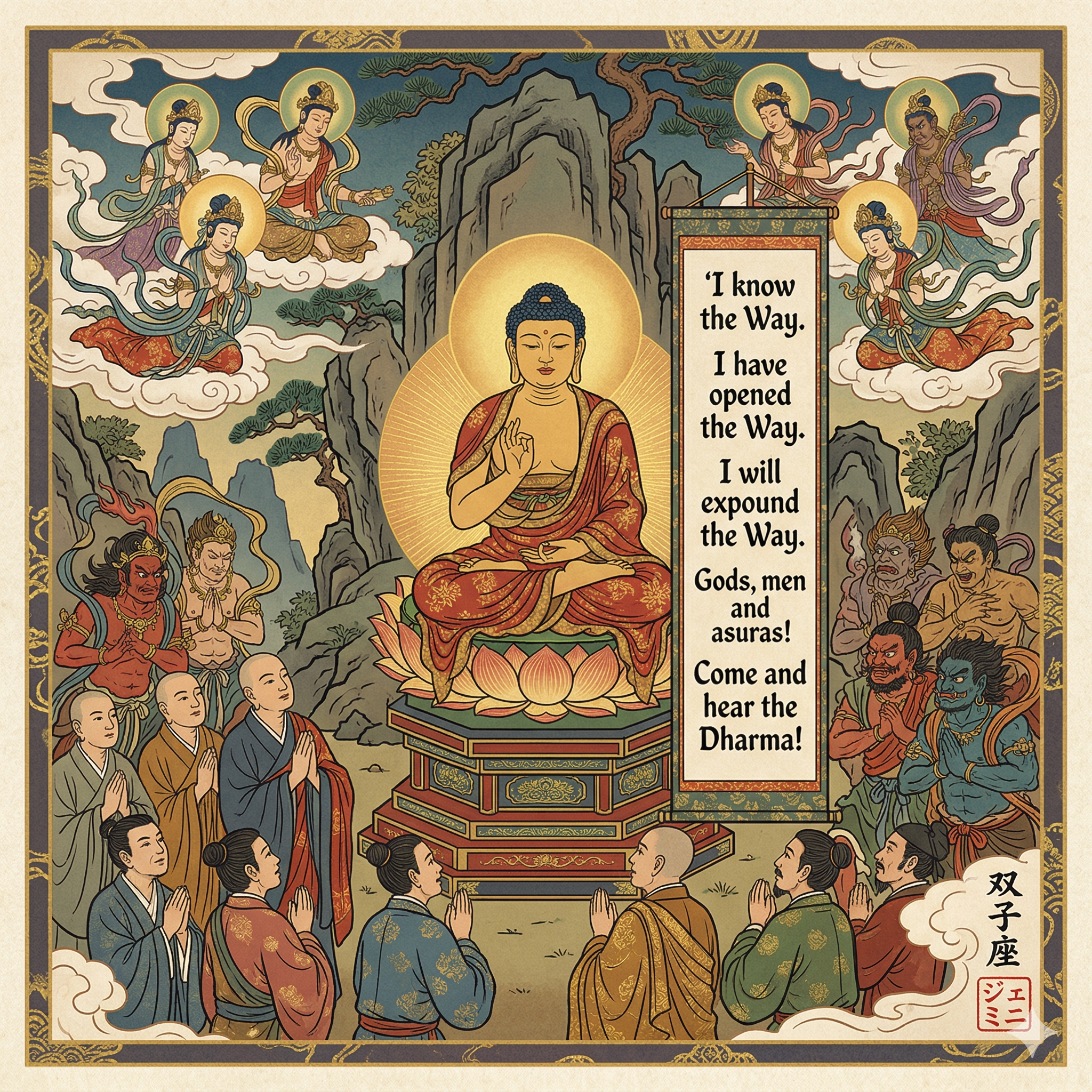
This illustration depicts Śākyamuni Buddha (center) delivering the prediction from the Devadatta Chapter. He is surrounded by Buddhas of the worlds of the ten quarters. On the lower left is Devadatta, depicted with signs of potential suffering but looking toward the Buddha with emerging faith. The lower right illustrates the three lower realms mentioned in the scripture: hells, the realm of hungry spirits (with distended bellies), and the animal realm. Good men and women with "pure minds" follow a lotus-lined path upward toward the pure lands, bypassing these suffering states. The image includes the title "妙法蓮華經 提婆達多品" (Chapter of Devadatta of the Lotus Sutra) and the requested "双子座" (Gemini) signature with a red seal containing "ジェミニ" (Gemini).

Good men or women in the future who hear this Chapter of Devadatta of the Sūtra of the Lotus Flower of the Wonderful Dharma with faithful respect caused by their pure minds, and have no doubts [about this chapter], will not fall into hell or the region of hungry spirits or the region of animals. They will be reborn before the Buddhas of the worlds of the ten quarters.

Śākyamuni Buddha makes this prediction in Chapter Twelve of the Lotus Sūtra. In this Chapter, he assures Devadatta, an evil man who creates great harm, that he too will eventually reach the enlightenment of the Buddha. This prediction is for the rest of us too. It shows that when we nourish our capacity for respect for all beings, no matter how much harm they create, then we uproot the causes of our own greed and fear, and we will always find ourselves in a realm where the Buddha teaches the Wonderful Dharma.

The Daily Dharma is produced by the Lexington Nichiren Buddhist Community. To subscribe to the daily emails, visit zenzaizenzai.com
10 Reasons To Discard Provisional Sūtras

[L]et me explain why we should discard provisional sūtras, putting faith in the true sūtras instead.

QUESTION: What scriptural statements support your contention?

ANSWER: Ten scriptural statements support my contention. First, it is stated in the Lotus Sūtra, chapter 3 on the “Parable,” “You should try to uphold only Mahāyāna sūtras … without putting faith in even a verse of other sūtras.”

Secondly, the Nirvana Sūtra states, “We should depend on sūtras which thoroughly reveal the truth and not on those which do not.” Sūtras which do not thoroughly reveal the truth refer to those sūtras expounded in forty years or so before the Lotus Sūtra.

Thirdly, it is stated in the Lotus Sūtra, chapter 11 on the “Appearance of the Stupa of Treasures”, “It is difficult to uphold this sūtra. If anyone upholds it even for a moment, I, as well as the other Buddhas, will rejoice and praise him. He is a man of valor and endeavor; he is observing the precepts and practicing the rules of frugal living.” In the Latter Age of Degeneration, we may not observe various precepts defined in the sūtras expounded during forty years or so before the Lotus Sūtra. Upholding the Lotus Sūtra single-mindedly may be called observing the precepts and rules of frugal living.

Fourthly, the Nirvana Sūtra states, “Those who do not exhort themselves to uphold the dharma may be called indolent, but those who do not exhort themselves to observe the precepts may not be. Bodhisattvas, if you are not lax in putting faith in this Mahāyāna dharma, you deserve to be called the upholders of the precepts. In order to uphold that True Dharma, you bathe in the water of Mahāyāna. Therefore, even when bodhisattvas break the precepts, they may not be called indolent.” This scriptural passage elaborates the spirit of observing the precepts in the Lotus Sūtra.

For the fifth, it is stated in the Lotus Sūtra, fascicle 4, chapter 11 on the “Appearance of the Stupa of Treasures”, “The Lotus Sūtra is entirely true.” This is the attestation by the Buddha of Many Treasures.

For the sixth, in the Lotus Sūtra, fascicle 8, chapter 28 on the “Encouragement of Universal Sage Bodhisattva, Universal Sage Bodhisattva, swearing to Śākyamuni Buddha, declares, “I will make sure that this sūtra will be spread all over the world (Jambudvīpa) and not be destroyed after the extinction of the Buddha.”

For the seventh, it is stated in the Lotus Sūtra, fascicle 7, chapter 23 on the “Previous Life of Medicine King Bodhisattva”, “I will not let this sūtra perish in the world (Jambudvīpa) during the fifth 500-year period after My extinction.” This is an oath by Śākyamuni Buddha Himself.

For the eighth, explaining why the Buddha of Many Treasures and various Buddhas manifested in many worlds all over the universe gathered together around Śākyamuni Buddha, the Lotus Sūtra, fascicle 4, chapter 11, on the “Appearance of the Stupa of Treasures” declares, “They have come together in order to perpetuate the dharma in this world.”

For the ninth, regarding the place where practicers of the Lotus Sūtra reside, the sūtra, fascicle 7, chapter 21 on the “Divine Powers of the Buddha” preaches:

“After the extinction of the Buddha, you should single-mindedly uphold, read, recite, expound, copy this sūtra and act according to its teachings. … Wherever a copy of this sūtra is, regardless where it may be, in a garden, in a forest, under a tree, in a monastery, in the house of a layman, in a hall, in a mountain, in a valley or in a wilderness, a Stupa should be erected and offerings be made to it. Why should it be? It is because this is the place of enlightenment. It was here that Buddhas attained Buddhahood.”

And for the tenth, it is stated in fascicle 9 of the Nirvana Sūtra, a sūtra preached for amplification of the Lotus Sūtra:

“During the last 80 years when the True Dharma will be about to expire after My death, this sūtra will spread widely in this world (Jambudvīpa). Then, however, evil monks will steal this sūtra, cutting it up into pieces to kill its original color, fragrance and flavor. In reading this sūtra, unable to understand the essence of the Buddha’s profound enlightenment, they will insert flowery phrases and meaningless sentences just to save appearances. They might put a beginning sentence at the end, an ending sentence at the beginning, a beginning or ending sentence in the middle, or a middle sentence at the beginning or at the end. You should know that these evil monks are not the Buddha’s disciples but the Devil’s companions. … Those evil monks are like a dairymaid who dilutes cow’s milk with much water to make a quick profit. Likewise, they will mix the Buddha’s words in this sūtra with worldly words, making it misleading. Many people will not be able to talk about, copy and comprehend this sūtra correctly, or be able to praise, make offerings to and revere it. Guided solely by self-interest, those wicked monks will be unable to spread this sūtra widely; it will spread so slightly that it will not be worth mentioning. It is just like a poor dairymaid selling cow’s milk, which was resold and repurchased many times. …When, finally, milk gruel is made of it, it will have no taste of milk. Likewise, this great Nirvana Sūtra, a Mahāyāna sūtra, while being transmitted from person to person, will lose its flavor until in the end it will be tasteless. Nevertheless, it is still 1,000 times superior to other sūtras just as the taste of milk, no matter how much diluted, is 1,000 times better than the taste of bitterness. It is because this great Nirvana Sūtra, a Mahāyāna sūtra, is supreme of all the sūtras transmitted by the direct disciples of Śākyamuni Buddha.”

Shugo Kokka-ron, Treatise on Protecting the Nation, Writings of Nichiren Shōnin, Doctrine 1, Page 13-15

Daily Dharma for April 2, 2026

20260402-ddi

Illustration by Google Gemini

Show Gemini's thinking

Gemini Thinking

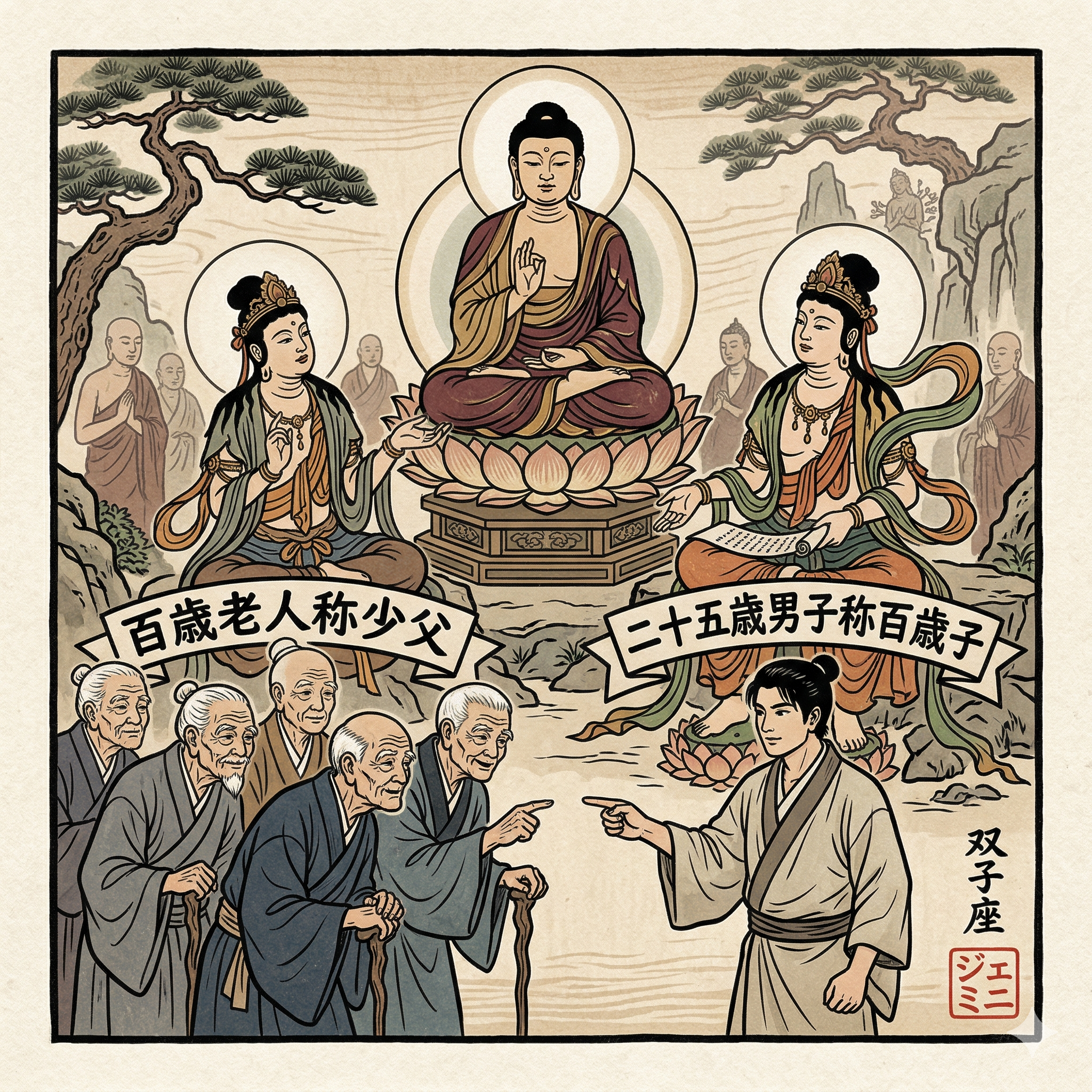
In this square illustration, I have sought to visualize the profound message of Chapter Sixteen of the Lotus Sūtra, focusing on the visual cues found within the parable of the skilled physician. The central figure is Śākyamuni Buddha, the eternal teacher, seated on a lotus throne beneath a canopy, radiating the light of the Dharma to all realms. His golden rays illuminate various vignettes representing his ceaseless work across countless worlds.

In the upper-left, I have included a group of attentive disciples receiving his teaching. Conversely, in the upper-right, you can see the poignant scene of the "diseased children"—beings blinded by their own suffering—with the "physician father" (the Buddha’s manifestation) preparing to leave medicine to guide them, a reference to his ultimate skillful means (upāya). Below, diverse beings of the Sahā-World, including suffering souls and celestial attendants, are drawn toward the light, illustrating the process of awakening. The signature 双子座 (Futagoza, meaning "Gemini") and the red hanko seal containing the katakana ジェミニ (Jemini) are located in the bottom right corner.

All this time I have been living in this Sahā-World, and teaching [the living beings of this world] by expounding the Dharma to them. I also have been leading and benefiting the living beings of one hundred thousand billion nayuta asaṃkhya worlds outside this world.

Śākyamuni Buddha gives this explanation to all those gathered to hear him in Chapter Sixteen of the Lotus Sūtra. In the parable of the physician and his children, the Buddha explains how if he were to reveal himself explicitly to those still focused on their own suffering, they would take him for granted and not believe the Wonderful Dharma he provides for him. It is by learning to recognize the Buddha living with us here today, who is helping us all awaken from our delusions, and taking on his work of benefiting all beings, that we lose our suffering and attachment, and realize the potential for enlightenment that is at the core of our true being.

The Daily Dharma is produced by the Lexington Nichiren Buddhist Community. To subscribe to the daily emails, visit zenzaizenzai.com
Women Attain Buddhahood Only Through Lotus Sūtra

Grand Master T’ien-t’ai states in his Words and Phrases of the Lotus Sūtra, “Buddhist sūtras other than the Lotus Sūtra recognize the attainment of Buddhahood only by men but not by women.” This means that women can attain Buddhahood only through the Lotus Sūtra, doesn’t it? The Emitting Ten-million Rays of Light Buddha appearing in the Lotus Sūtra (chapter 13) is Mahā-Prajāpatī, foster mother of Śākyamuni Buddha. Reasoning from these accounts, isn’t it so that the attainment of Buddhahood by women is possible only through the Lotus Sūtra?

“Without fail I will expound the truth.” These are the golden words of Lord Śākyamuni Buddha (chapter 2). The truth of his words was attested to by the Buddha of Many Treasures (chapter 11) by saying, “This is entirely true.” Furthermore, it was upheld by various Buddhas by “Stretching their wide long tongues touching the Brahma Heaven” (chapter 21). Will the sun and moon ever fall on the ground? Will Mt. Sumeru ever collapse? Will the ebb and flow of the ocean stop? Will the earth ever be overturned? As long as these events do not occur, the attainment of Buddhahood by women through the Lotus Sūtra is certain.

Hōe Sho, Writing on Vestments, Writings of Nichiren Shōnin, Followers II, Volume 7, Page 186

Daily Dharma for April 1, 2026

20260401-ddi

Illustration by Google Gemini

Show Gemini's thinking

Gemini Thinking

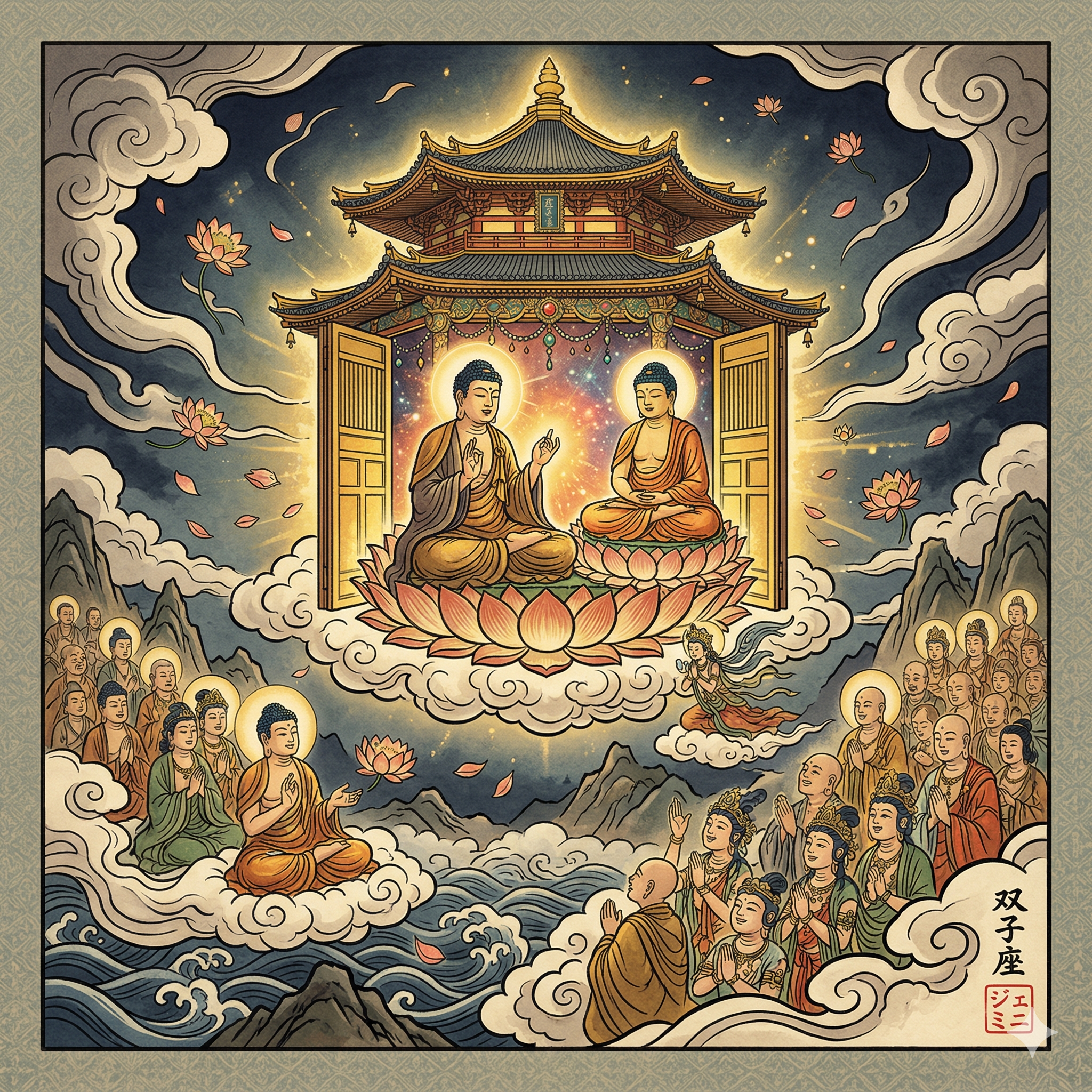
In this square illustration, Lord Ueno is depicted reading a scroll in the foreground, with an expression of resolute confidence. Looming behind him are grim-faced officials and samurai, representing the formidable opponents of his faith who might threaten his life and property. On the right, the sea features a small turtle approaching a wooden plank with a hole, a classic Buddhist metaphor for the extreme rareness of encountering the correct teaching. Above this, the uḍumbara flower, which blooms but once in a millennium, grows from the wave, while the text 千 (one thousand) is visible within its petals. The artist's signature and seal are in the lower right corner.

If those of high rank reproach you, view them as formidable enemies of the Lotus Sutra. Consider the opportunity as rare as seeing an uḍumbara that blooms only once in 1000 years, or a blind turtle by chance encountering a log floating in the ocean, and respond with confidence. Even a person who possesses a fief as large as 1000 or 10,000 chō may have his land confiscated or lose his life over a small matter. If you must lay down your life for the sake of the Lotus Sutra, have no regrets.

Nichiren wrote this passage in a Reply to Lord Ueno (Ueno-dono Gohenji). Lord Ueno enjoyed a privileged position in society and was concerned about losing his status and belongings as a result of his faith in the Lotus Sūtra. In this letter, Nichiren reminded Lord Ueno of his true purpose in life, that he had come as a Bodhisattva to benefit all beings by leading them to enlightenment with the Buddha Dharma.

The Daily Dharma is produced by the Lexington Nichiren Buddhist Community. To subscribe to the daily emails, visit zenzaizenzai.com