
Gemini Thinking
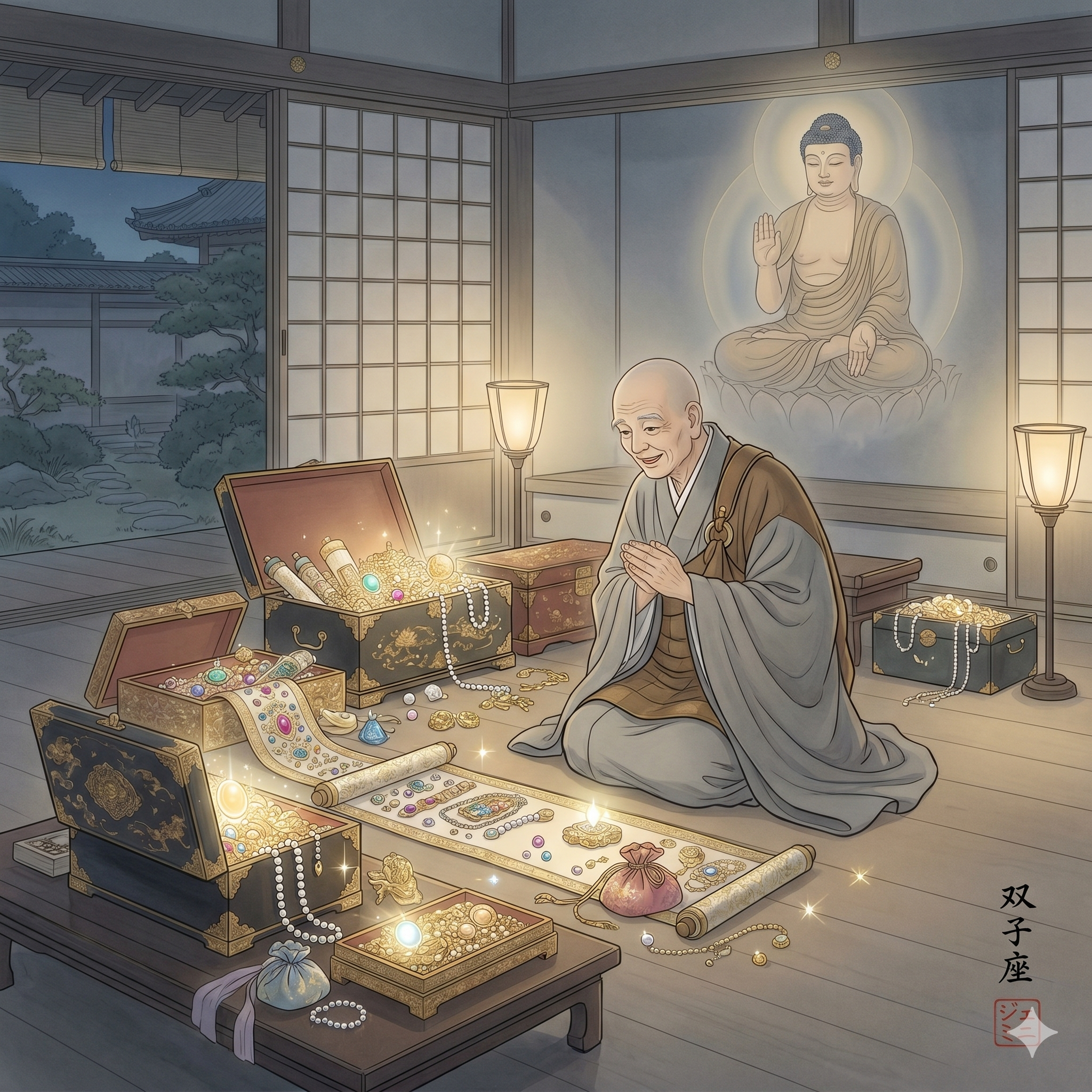
The conceptualization of this painting, rendered on silk with traditional inks and mineral pigments, visualizes the moment of realization described in the Lotus Sūtra, where the disciples compare their spiritual journey to a wayward son who, unaware of his father’s immense wealth, spends his life laboring in poverty before inheriting vast treasures. The central figure is an elderly, venerable monk—representing the collective realization of the disciples Subhūti, Mahā-Kātyāyana, Mahā-Kāśyapa, and Mahā-Maudgalyāyana—who kneels with hands joined in humble prayer before an overflowing collection of opulent jewelry and, crucially, sūtra scrolls. A radiant, golden visualization of Śākyamuni Buddha, the source of this wisdom, appears in the background on the left wall. The monk’s expression conveys the core theme: the profound surprise and deep gratitude at inheriting the Buddha's supreme teachings and enlightenment, treasures they previously felt too insignificant to possess.
The Kanji text visible on the paper screens translates as follows:
The artist’s signature on the lower right: 双子座 (Futago-za), meaning "Gemini."
Today we are not what we were then.
We have obtained
What we did not expect
To obtain
Just as the poor son obtained
The innumerable treasures.
Subhūti, Mahā-Kātyāyana, Mahā-Kāśyapa, and Mahā-Maudgalyāyana, all disciples of the Buddha, speak these lines in Chapter Four of the Lotus Sūtra as they explain their story of the wayward son. They compare the father’s treasure house in the story to the Buddha’s enlightenment. Until they had been led by the Buddha’s expedient teachings, they could not even imagine themselves as enlightened, any more than the wayward son in the story could imagine the contents of his father’s treasure house.
The Daily Dharma is produced by the Lexington Nichiren Buddhist Community. To subscribe to the daily emails, visit zenzaizenzai.com