Category Archives: LS32

Daily Dharma – Sept. 16, 2022

Anyone who keeps
The Sūtra of the Lotus Flower of the Wonderful Dharma
Should be considered to have given up his pure world and come here
Out of his compassion towards all living beings.

The Buddha declares these verses to Medicine-King Bodhisattva in Chapter Ten of the Lotus Sūtra. He reminds us that as Bodhisattvas, we are no longer concerned with getting into a paradise where all our desires are met. This also means that we were not sent into this world of conflict (Sahā) so that we could be tested to see whether we are worthy of getting into that paradise. Instead, we are Bodhisattvas, beings who through our great resolve to benefit all beings, have with great courage chosen to immerse ourselves in the misery of this world, because we know there is no other way to create benefit and lead all beings to the Buddha’s enlightenment.

The Daily Dharma is produced by the Lexington Nichiren Buddhist Community. To subscribe to the daily emails, visit zenzaizenzai.com

Day 27

Day 27 concludes Chapter 23, The Previous Life of Medicine-King Bodhisattva.


Having last month considered Gladly-Seen-By-All-Beings Bodhisattva’s burning of his arms, we consider that Gladly-Seen-By-All-Beings Bodhisattva is Medicine-King Bodhisattva.

The Buddha said to Star-King-Flower Bodhisattva:

“What do you think of this? Gladly-Seen-By-All-Beings Bodhisattva was no one but Medicine-King Bodhisattva of today. He gave up his body in this way, offered it [to the Buddha], and repeated this offering many hundreds of thousands of billions of nayutas of times [in his previous existence]. [He knows that he can practice any austerity in this Sahā-World. Therefore, he does not mind walking about this world.]

“Star-King-Flower! Anyone who aspires for, and wishes to attain Anuttara-samyak-saṃbodhi, should offer a light to the stupa of the Buddha by burning a finger or a toe. Then he will be given more merits than the person who offers not only countries, cities, wives and children, but also the mountains, forests, rivers and ponds of the one thousand million Sumeru-worlds, and various kinds of treasures. But the merits to be given to the person who fills the one thousand million Sumeru-worlds with the seven treasures and offers that amount of the seven treasures to the Buddhas, to the Great Bodhisattvas, to the Pratyekabuddhas, and to the Arhats, are less than the merits to be given to the person who keeps even a single gāthā of four lines of this Sūtra of the Lotus Flower of the Wonderful Dharma.

See The Deeper Meaning Beneath the Burning Question

Day 26

Day 26 concludes Chapter 21, The Supernatural Powers of the Tathāgatas, includes Chapter 22, Transmission, and introduces Chapter 23, The Previous Life of Medicine-King Bodhisattva.


Having last month concluded Chapter 22, Transmission, we begin Chapter 23, The Previous Life of Medicine-King Bodhisattva, and consider the question posed by Star-King-Flower Bodhisattva.

Thereupon Star-King-Flower Bodhisattva said to the Buddha:

“World-Honored One! Why does Medicine-King Bodhisattva walk about this Sahā-World? World-Honored One! This Medicine-King Bodhisattva will have to practice hundreds of thousands of billions of nayutas of austerities in this world. World-Honored One! Tell me why! Not only the gods, dragons, yakṣas, gandharvas, asuras, garuḍas, kiṃnaras, mahoragas, men and nonhuman beings but also the Bodhisattvas who have come from the other worlds’ and the Śrāvakas present here will be glad to hear the reason.”

Thereupon the Buddha said to Star-King-Flower Bodhisattva:

“Innumerable kalpas ago, that is, as many kalpas as there are sands in the River Ganges ago, there lived a Buddha called Sun-Moon-Pure-Bright-Virtue, the Tathāgata, the Deserver of Offerings, the Perfectly Enlightened One, the Man of Wisdom and Practice, the Well-Gone, the Knower of the World, the Unsurpassed Man, the Controller of Men, the Teacher of Gods and Men, the Buddha, the World-Honored One. He was accompanied by eight thousand million great Bodhisattva-mahāsattvas and also by great Śrāvakas numbering seventy-two times as many as there are sands in the River Ganges. The duration of his life was forty-two thousand kalpas. So were the durations of the lives of the Bodhisattvas. His world was devoid of women, hellish denizens, hungry spirits, animals and asuras. There was no calamity in his world. The ground of his world was as even as the palm of the hand. It was made of lapis lazuli, adorned with jeweled trees, and covered with a jeweled awning from which the streamers of jeweled flowers were hanging down. Jeweled vases and incense-burners were seen everywhere in that world. There was a platform of the seven treasures at the distance of a bowshot from each of the jeweled trees under which the Bodhisattvas and Śrāvakas were sitting. On each of the platforms of treasures, myriads of millions of gods were making heavenly music, singing songs of praise of the Buddha, and offering the music and songs to the Buddha.

The Daily Dharma from July 21, 2022, offers this:

Thereupon Star-King-Flower Bodhisattva said to the Buddha: “World-Honored One! Why does Medicine-King Bodhisattva walk about this Sahā-World? World-Honored One! This Medicine-King Bodhisattva will have to practice hundreds of thousands of billions of nayutas of austerities in this world.

This excerpt is from Chapter Twenty-Three of the Lotus Sutra. Star-King-Flower Bodhisattva is aware of the difficulties that Medicine-King or any other Bodhisattva will encounter while living in this world of conflict (Sahā) and asks the Buddha why this Bodhisattva would give up the pleasures of the higher realms to which he is entitled. The Buddha then tells the story of Medicine-King’s previous life, in which he gave up many attachments, including the attachment to his own body. These stories of Bodhisattvas are reminders of our own capacities, and that no matter what difficulties we face in our lives, our determination to benefit all beings, our certainty of enlightenment, and the help we receive from other beings will lead us to overcome any problems.

The Daily Dharma is produced by the Lexington Nichiren Buddhist Community. To subscribe to the daily emails, visit zenzaizenzai.com

Day 25

Day 25 covers all of Chapter 20, Never-Despising Bodhisattva, and opens Chapter 21, The Supernatural Powers of the Tathāgatas.


Having last month concluded today’s portion of Chapter 21, The Supernatural Powers of the Tathāgatas, we return to Chapter 20 and consider Powerful-Voice-King and the periods of his teaching.

Thereupon the Buddha said to Great-Power-Obtainer Bodhisattva-mahāsattva:
“Know this! Anyone who speaks ill of or abuses or slanders the bhikṣus, bhikṣunīs, upāsakās or upāsikās who keep the Sūtra of the Lotus Flower of the Wonderful Dharma, will incur the retributions previously stated. Anyone [who keeps this sūtra] will be able to have his eyes, ears, nose, tongue, body and mind purified, that is to say, to obtain the merits as stated in the previous chapter.

“Great-Power-Obtainer! Innumerable, limitless, inconceivable, asaṃkhya kalpas ago, there lived a Buddha called Powerful-Voice-King, the Tathāgata, the Deserver of Offerings, the Perfectly Enlightened One, the Man of Wisdom and Practice, the Well-Gone, the Knower of the World, the Unsurpassed Man, the Controller of Men, the Teacher of Gods and Men, the Buddha, the World-Honored One. The kalpa in which he lived was called Free-From-Decay; and his world, Great-Achievement. Powerful-Voice-King Buddha expounded the Dharma to the gods, men and asuras of his world. To those who were seeking Śrāvakahood, he expounded the teaching suitable for them, that is, the teaching of the four truths, saved them from birth, old age, disease and death, and caused them to attain Nirvana. To those who were seeking Pratyekabuddhahood, he expounded the teaching suitable for them, that is, the teaching of the twelve causes. To the Bodhisattvas who were seeking Anuttara-samyak-saṃbodhi, he expounded the teaching suitable for them, that is, the teaching of the six paramitas, and caused them to obtain the wisdom of the Buddha.

“Great-Power-Obtainer! The duration of the life of Powerful-Voice-King Buddha was forty billion nayuta kalpas, that is, as many kalpas as there are sands in the River Ganges. His right teachings were preserved for as many kalpas as the particles of dust of the Jambudvipa. The counterfeit of his right teachings was preserved for as many kalpas as the particles of dust of the four continents. The Buddha benefited all living being and then passed away. After [the two ages:] the age of his right teaching and the age of their counterfeit, there appeared in that world another Buddha also called Powerful-Voice-King, the Tathāgata, the Deserver of Offerings, the Perfectly Enlightened One, the Man of Wisdom and Practice, the Well-Gone, the Knower of the World, the Unsurpassed Man, the Controller of Men, the Teacher of Gods and Men, the Buddha, the World-Honored One. After him, the Buddhas of the same name appeared one after another, two billion altogether.

See Taking Personally the Three Phases of the Dharma

Day 24

Day 24 concludes Chapter 19, The Merits of the Teacher of the Dharma, and closes the Sixth Volume of the Sutra of the Lotus Flower of the Wonderful Dharma.


Having last month considered in gāthās the twelve hundred merit of the tongue, we consider the eight hundred merits of the body.

“Furthermore, Constant-Endeavor! The good men or women who keep, read, recite, expound or copy this sūtra, will be able to obtain eight hundred merits of the body. Their bodies will become as pure as lapis lazuli. All living beings will wish to see them. Some of the living beings in the one thousand million Sumeru-worlds are just born or have just died. All living beings are either noble or humble. They are either handsome or ugly. They are destined to be reborn either in a better region or in a worse region. All of them will be reflected on the pure bodies [of the good men or women]. The Surrounding Iron Mountains, the Great Surrounding Iron Mountains, Mt. Meru, Mt. Maha-Meru, and the other great mountains, and the living beings in those mountains also will be reflected on their bodies. [All the six regions] down to the Avici Hell and up to the Highest Heaven and the living beings therein also will be reflected on their bodies. The Śrāvakas, Pratyekabuddhas, and Bodhisattvas as well as the Buddhas who are expounding the Dharma, also will show their reflections on their bodies.”

Thereupon the World-Honored One, wishing to repeat what he had said, sang in gāthās:

Anyone who keeps
This Sūtra of the Lotus Flower of the Wonderful Dharma
Will be able to have his body purified like lapis lazuli.
All living beings will wish to see him.

Just as a reflection is seen
In a clear mirror
All things in the world will be reflected
On the pure body of this [person, that is, of this]
Bodhisattva.
No one but he
Will be able to see all things clearly.

The gods, men, asuras,
Hellish denizens,
Hungry spirits and animals,
That is, all living beings
Of the one thousand million Sumeru-world
Will be reflected on his body.

The palaces of the gods in the heavens
Up to the Highest Heaven,
The Surrounding iron Mountains,
Mt. Meru, Mt. Maha-Meru,
And the great oceans also
Will be reflected on his body.

The Buddhas, Śrāvakas, Bodhisattvas who are sons of the Buddhas
[That is, the saints] of whom some live a solitary life
While others are expounding the Dharma to the multitude,
Also will be reflected on his body.

Although he has not yet obtained the wonderful body
[Of the Bodhisattva who knows] the nature of the Dharma-without-āsravas,
He will be able to have all these things
Reflected on his pure and natural body.

The Daily Dharma from April 24, 2022, offers this:

Just as a reflection is seen
In a clear mirror,
All things in the world will be reflected
On the pure body of this [person, that is, of this] Bodhisattva.
No one but he
Will be able to see all things clearly.

The Buddha declares these lines to Constant-Endeavor Bodhisattva in Chapter Nineteen of the Lotus Sūtra, describing those who keep the Lotus Sūtra. When we encounter other beings in this world of conflict, we tend to filter our experience through our expectation. If it is a friend, we expect them to care about us and treat us well; an enemy, to harm us and treat us badly; a stranger, we compare them to other beings like them and expect them to be the same. When we use the Buddha Dharma to look for the complexity of all beings, and look for how we can bring out their ability to benefit and protect others, then we reflect back to them their true natures, rather than the clouds of their delusions.

The Daily Dharma is produced by the Lexington Nichiren Buddhist Community. To subscribe to the daily emails, visit zenzaizenzai.com

A Lotus Without 10 Suchnesses

This is another in a series of weekly blog posts comparing and contrasting the Sanskrit and Chinese Lotus Sutra translations.


While the differences between Kumārajīva’s 5th century Chinese translation of the Lotus Sutra from Sanskrit and H. Kern’s translation of an 11th century Nepalese Sanskrit document are relatively minor in the first chapter, the difference in Chapter 2 is striking.

Here’s Senchu Murano’s translation of the final portion of Hoben Pon, the section of Chapter 2, Expedients, which lays out the ten suchlike characteristics of reality:

No more, Śāriputra, will I say because the Dharma attained by the Buddhas is the highest Truth, rare [to hear] and difficult to understand. Only the Buddhas attained [the highest Truth, that is,] the reality of all things’ in regard to their appearances as such, their natures as such, their entities as such, their powers as such, their activities as such, their primary causes as such, their environmental causes as such, their effects as such, their rewards and retributions as such, and their equality as such [despite these differences].

Now consider Kern’s translation of the same section:

Enough, Śāriputra, let it suffice to say, that the Tathāgatas, &c., have something extremely wonderful, Śāriputra. None but a Tathāgata, Śāriputra, can impart to a Tathāgata those laws which the Tathāgata knows. And all laws, Śāriputra, are taught by the Tathāgata, and by him alone; no one but he knows all laws, what they are, how they are, like what they are, of what characteristics and of what nature they are.

For Nichiren, and before him T’ien T’ai and Saicho, the Ten Suchnesses are a fundamental component of the teaching of Ichinen Sanzen,  the theoretical expression of the interdependent nature of all reality.  What becomes of the Lotus Sutra without this teaching?
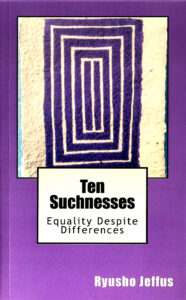
In 2018, Ryusho Jeffus Shonin published a 70-page book on the Ten Suchnesses.  The full title was “Ten Suchnesses: Equality Despite Their Differences. Volume II Ichinen Sanzen.”

The planned three volume discussion of Ichinen Sanzen was never published. Only this volume exists. Ryusho Jeffus died in August 2020.

As with all of Ryusho’s books, he is more interested in how a teaching can be applied to daily life than in the academic details.

As you read this book you will see that it is less a direct exposition on the meaning of each of the Ten Factors and more of a journey through their interconnectedness and interdependence. Unlike the Ten Worlds, which can easily be described independently, the Ten Factors are deeply connected and intertwined in such a way that extracting them out from the group deprives them of the mutual effect they have on each other. In fact one of the Factors is the mutuality of all ten, the equality of each despite their differences.

Ten Suchnesses, p8

This is clearly reflected in Ryusho’s summary of the Ten Suchnesses:

Appearance – Briefly, this is the way you look. This is not fixed as you can smile and appear one way or scowl and appear another. You can wear certain clothes and look different from when you wear other types of clothing. There are some aspects of appearance which are not changeable such as eye color, or skin color (well not so much generally), height once fully grown, hair color (well not permanently for the most part), hair or no hair. I would add gender except in certain circumstances.

Nature – This is how you are, not who you are. This includes such things as pessimistic, optimistic, daring, bold, shy, extrovert, introvert, gregarious, quick learner, visual learner, literal learner, learner by doing rather than instruction, adventurous, laid back, easy going, excitable. These are not always fixed, though for some people they may seem to be such. And further they are not always the same in any of us, we can be one way at one time and another in other instances. We can be both shy and gregarious, introverted and extroverted.

Entity – This is our total complete self, it can include genetics, disposition to certain diseases, blood type, physical strength, emotional strength, internal organs, demeanor as a total picture.

Power – Is not always only about physical or mental strength. It includes our ability to persevere, to challenge ourselves, to introspect, to reflect, (our nature may affect our willingness or tendency to do so even if we may have great power as an ability). Our ability to lead others, for good or ill, our skill with other people can be a power again for good or ill. Our ability to see our strengths and use them skillfully or not is a power even when the actual power may be limited. A person may not have the power to do something yet may be able to accomplish the goal through the power of working with others again for good or for ill.

Activity – What are we doing, what are we accomplishing or trying to accomplish, is the activity physical, mental, emotional, spiritual, is the activity for self or for others are some ways to consider activity.

Primary Cause – There is a cause which precedes every cause to some extent. There is a primary cause in all things, what is that in each of the situations we engage in and how does that impact all the other Ten Aspects. One primary cause is the difference between self and others, between self and environment, between self as a physical entity and self as a spiritual entity and self as a complete undifferentiated complete entity. Where is the primary cause directed inward versus outward, towards oneself or towards others, includes or excludes others, benefits others or only self all are primary causes beneath initial traditional activities. Also a primary cause is human, non-human animal, plant, or even alien.

Environmental Cause – There are factors which take place outside ourselves and often outside our control. Is it raining, if so did you think to bring an umbrella? Failing to consider environmental causes can lead to death such as by heat exhaustion and stroke, or freezing to death, starvation, disease and illness. Sometimes the environment is beyond our control but what is within our control may be able to mitigate the effects of the environment. Sometimes it can not, such as an earthquake, typhoon, airplane crash, fire, terrorist attack. In all cases we don’t ever act independent of our environment even if we may fail to consider it.

Effect – It’s what happens, seen, unseen, known, unknown, immediately observable or seemingly manifest later (all effects manifest instantly only some may not be observed instantly).

Reward or Negative reward (retribution) – Sometimes what seems to be boon may be an albatross. What is negative now may end up being reward to our future growth and development. These are not absolutes except in how we treat them. Could motivate us into changing poison into medicine.

Equality – there is complete equality and connectedness throughout these aspects which is one of the aspects. A subtle change in one causes a ripple throughout all. This is why it is important to not try to completely separate these as we try to understand them in our lives. No one aspect can be truly removed or analyzed independent of the others. This is their equality despite their differences.

Ten Suchnesses, p9-11

For a more traditional review of the Ten Suchnesses, consider Ryuei McCormick’s Open Your Eyes or the Foundations of T’ien T’ai Philosophy discussion of Three Ways of Reading 10 Suchness.

But such academic abstractions were not Ryusho’s thing.

At the end of this process I personally have to wonder what have we accomplished … that will enable us to end our suffering and enable us to attain enlightenment? Not everyone is like me so there may indeed be some who find this sort of abstraction beneficial. I find it more of a distraction and since I’m writing the book and I really can only from my point of view that’s what I’m going to do.

Ten Suchnesses, p52

Ryusho had a simple goal:

Understanding the map of the Ten Worlds and realizing that the Ten Aspects are how we live or manifest the Ten Worlds gives us the tools or key to ending our suffering.

Ten Suchnesses, p55

This all fits into his overarching view of Buddhism:

Buddhism is about examining our experiences and seeking to understand why they are that way, what can be done to either mitigate or change or eliminate the effects by making new causes. There isn’t some magic that takes place which replaces the necessity of making new causes. Buddhism is not a shortcut to wealth, fame, ease, and luxury. Buddhism is a religion of hard work, honest evaluation of one’s life, sincere effort to make necessary changes, and the dedication to carry out these for the duration of one’s life continually.

Ten Suchnesses, p59

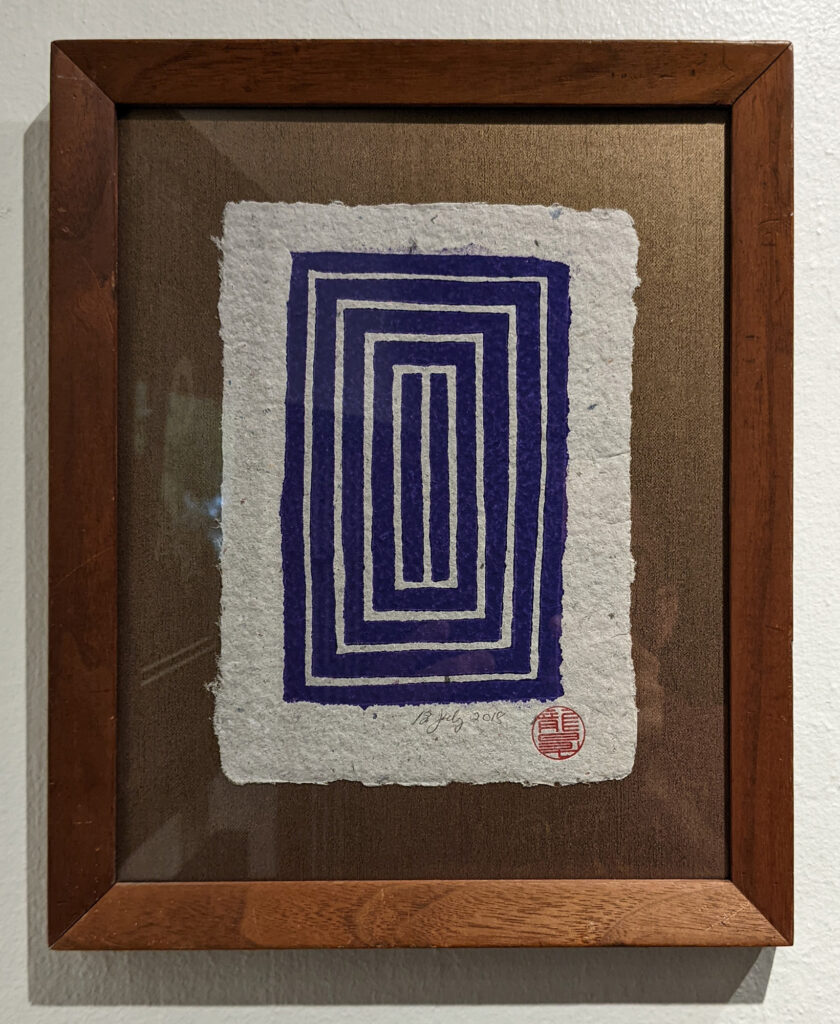
I have a copy of the artwork from the book cover among the decorations next to my altar.
20220817_ryusho_artwork-web
Were I to caption this artwork I would use this quote from the book:

This I believe is one of the great advantages of Buddhism. Through the study and practice of our faith we can delve into our self deeply and see the root of our suffering and with the tools provided to us from our faith we can then begin to work on solving the problems of our lives in constructive and beneficial ways.

Ten Suchnesses, p65

Next: Kern’s Sanskrit and Hurvitz’s Sanskrit

Daily Dharma – Sept. 12, 2022

For many hundreds of thousands of billions of asaṃkhyas of kalpas, I studied and practiced the Dharma difficult to obtain, and [finally attained] Anuttara-samyak-saṃbodhi. Now I will transmit the Dharma to you. Propagate it with all your hearts, and make it known far and wide!

The Buddha entrusts his highest teaching to all those gathered to see him in Chapter Twenty-Two of the Lotus Sūtra. He had already explained how difficult it is to believe and practice this highest teaching, and all the trouble it took for him to reach it. He also realizes that this teaching is not something he can keep for himself, and is meaningful only when it was shared with others. This is yet another example of the Buddha showing us how to live with the beings we want to benefit. We realize that our treasure is not what we keep for ourselves, but what we have in common with others. We are diminished not by what we lose, but by attempting to hold on to our delusions.

The Daily Dharma is produced by the Lexington Nichiren Buddhist Community. To subscribe to the daily emails, visit zenzaizenzai.com

Day 23

Day 23 covers all of Chapter 18, The Merits of a Person Who Rejoices at Hearing This Sutra, and opens Chapter 19, The Merits of the Teacher of the Dharma.


Having last month compared the merits of the great almsgiver with the 50th person who rejoices, we consider the merits of encouraging others to learn about the Lotus Sutra.

“Furthermore, Ajita! Anyone who goes to a monastery in order to hear this sūtra and hears it even for a moment while he is sitting or standing, in his next life will be able to go up to the palace of heaven, riding in a beautiful and wonderful elephant-cart or horse-cart or in a palanquin of wonderful treasure by his merits. Anyone who, while sitting in the place of the expounding of the Dharma, persuades another per on to it down or shares his seat with him to hear [the Dharma] when he sees him coming to the place, in his next life by his merits, will be able to obtain the seal of King Sakra, of the Brahman Heavenly-King or of a wheel-turning-holy-king.

“Ajita! Anyone who[, while he is staying outside the place of the expounding of the Dharma,] says to another person, ‘Let us go and hear the sūtra called the Lotus Flower of the Wonderful Dharma which is being expounded [in that place],’ and cause him to hear it even for a moment, in his next life by his merit , will be able to live with the Bodhisattvas who obtain dharanis. He will be clever and wise. He will not be dumb throughout thousands of millions of his future existences. His breath will not be foul. He will have no disease of the tongue or the mouth. His teeth will not be defiled, black, yell w, few, fallen out, uneven or crooked. His lips will not be pendulous, shrunk, chapped, cracked, broken, distorted, thick, large, yellow-black or loathsome. His nose will not be flat or awry. His face will not be black, long, distorted or displeasing. His lips, tongue and teeth will be well-shaped; his nose, long, high and straight. His face will be full; his eyebrows, thick and long; and his forehead, broad and even. In a word, he will have all the good features of a man. He will be able to see the Buddhas, hear the Dharma from them, and receive their teachings by faith throughout his future existences.

“Ajita, look! The merits of the person who causes even a single man to go and hear the Dharma are so many. It is needless to speak of the merits of the person who hears [this sūtra] with all his heart, reads it, recites it, expounds it to the great multitude, and acts according to its teachings.

The Daily Dharma from June 18, 2022, offers this:

Ajita! Anyone who[, while he is staying outside the place of the expounding of the Dharma,] says to another person, ‘Let us go and hear the sūtra called the Lotus Flower of the Wonderful Dharma which is being expounded [in that place],’ and causes him to hear it even for a moment, in his next life by his merits, will be able to live with the Bodhisattvas who obtain dhāraṇīs.

The Buddha gives this explanation to Maitreya (whom he calls Ajita – Invincible) in Chapter Eighteen of the Lotus Sutra. The dhāraṇīs are promises made by Bodhisattvas to protect those who keep and practice the Lotus Sūtra. They are included in the sūtra so that we can use them to remind these Bodhisattvas, and ourselves, of the protection we enjoy from our practice. This protection is not just meant for us. It is for all beings. When we share the teaching of the Wonderful Dharma with others, we help them become aware of their potential to become enlightened.

The Daily Dharma is produced by the Lexington Nichiren Buddhist Community. To subscribe to the daily emails, visit zenzaizenzai.com

800 Years: Becoming a Teacher of the Dharma

In Chapter 18, The Merits of a Person Who Rejoices at Hearing This Sutra, we learn of the merits to be given the beginner in faith and in Chapter 19, The Merits of the Teacher of the Dharma, we learn of the merits to be earned by a teacher of the dharma. As Nikkyō Niwano explains in Buddhism for Today, becoming such a teacher is part of the natural progression of faith:

“The practices of a preacher are of five kinds (goshu hosshi): receiving and keeping the sutra (juji), reading it (doku) and reciting it (ju), expounding it (gesetsu), and copying it (shosha). … In each of these five practices, the state of our gradually deepening faith is clearly shown.

“If we believe and discern the teaching after hearing it, and if we raise the mind of joyful acceptance of it, we proceed first to keep it firmly, then, reading and reciting the sutra, to inscribe it on our memory. As a personal discipline, this practice is done to establish the foundation of our faith. When our faith reaches this stage, we cannot help transmitting the teaching to others. As a result, we expound the sutra (the teaching) and copy it. We cannot say we have attained true faith until we go through each process of the five kinds of practices of the preacher.”

Buddhism for Today, p295

The Chapter 19’s specifics of how the teacher’s sense organs will be affected have always caused me pause. I want too much for literal benefits:

“He will be able to recognize by smell
The gold, silver, and other treasures
Deposited underground,
And the things enclosed in a copper box.”

But in Peaceful Action, Open Heart, Thich Nhat Hanh offers a more nuanced view of the benefits that flow from our growing faith:

“The merit of this teaching effects a great change in the field of our six sense organs (sadayatana) – our eyes, ears, nose, tongue, body, and mind. When we are able to receive the truth of the Lotus Sutra our sense perceptions undergo a profound transformation. Automatically our eyes are able to see things that before we were not able to see. We attain the eyes of the Dharma that are able to look deeply and see the true nature and suchness of all dharmas, all phenomena in the world of our perceptions. With Dharma eyes we can look into a wilted and yellow autumn leaf and see its wonderful, fresh green nature. We can see that one leaf, whether old and yellow or green and fresh, contains all the merits, all the wonderful suchness of the universe. The eyes of someone who has received and who maintains the teaching of this Sutra, the truth of the ultimate, are able to see the limitless life span, the unborn and undying nature of everything. This is the first merit, the transformation of our sight perception into the eyes of the Dharma.”

Peaceful Action, Open Heart, p125

While using my sense of smell to locate buried treasure seems farfetched, I can imagine looking into a wilted and yellow autumn leaf and seeing its wonderful, fresh green nature.


Table of Contents Next Essay

Day 22

Day 22 covers all of Chapter 17, The Variety of Merits.


Having last month concluded Chapter 17, The Variety of Merits, we begin and consider great benefits of hearing the the duration of the Buddha’s life.

Thereupon the innumerable, asaṃkhya living beings in the great congregation, who had heard from the Buddha that the duration of his life was so many kalpas as previously stated, obtained great benefits.
At that time the World-Honored One said to Maitreya Bodhisattva-mahāsattva:

“Ajita! When I said that the duration of my life was so long, six hundred and eighty billion nayuta living beings, that is, the living beings as many as there are sands in the River Ganges, obtained the truth of birthlessness. Bodhisattva-mahāsattvas numbering one thousand times the number of these living beings obtained the dharanis by which they could memorize all that they had heard. Bodhisattva-mahāsattvas as many as the particles of earth of a Sumeru-world obtained eloquence without hindrance. Another group of Bodhisattva-mahāsattvas as many as the particles of earth of a Sumeru world obtained the dharanis by which they could memorize many hundreds of thousands of billions of repetitions of teachings. Bodhisattva-mahāsattvas as many as the particles of earth of one thousand million Sumeru-worlds obtained the faculty of turning the irrevocable wheel of the Dharma. Bodhisattva-mahāsattvas as many as the particles of earth of one million Sumeru-worlds obtained the faculty of turning the wheel of the pure Dharma. Bodhisattva-mahāsattvas as many as the particles of earth of one thousand Sumeru-worlds obtained the faculty of attaining Anuttara-samyak-saṃbodhi after eight rebirths. Bodhisattva-mahāsattvas four times the number of the particles of earth of the four continents obtained the faculty of attaining Anuttara-samyak-saṃbodhi after four rebirths. Bodhisattva-mahāsattvas three times the number of the particles of earth of the four continents obtained the faculty of attaining Anuttara-samyak-saṃbodhi after three rebirths. Bodhisattva-mahāsattvas twice the number of the particles of earth of the four continents obtained the faculty of attaining Anuttara-samyak-saṃbodhi after two rebirths. Bodhisattva-mahāsattvas as many as the particles of earth of the four continents obtained the faculty of attaining Anuttara-samyak-saṃbodhi immediately after this life. Living beings as many as the particles of earth of eight Sumeru-worlds aspired for Anuttara-samyak-saṃbodhi.”

See Four Entrances to the Power of the Dharma