Category Archives: WONS

Writings of Nichiren Shonin

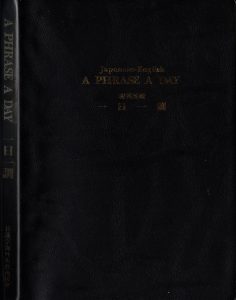
This category covers any article that contains a substantive quote from the Writings Of Nichiren Shonin. These are also found in the Daily Dharma and 100 Days of Study and A Phrase A Day.


For a discussion of Nichiren’s writings and the question of authenticity, see this Japanese Journal of Religious Studies 1999 article by Sueki Fumihiko, Nichiren’s Problematic Works.


NyoninGoshoCover
A Phrase A Day

Encouraging All the People in Japan to Recite the Daimoku

For the past 28 years since the 28th of the fourth month in the fifth year of Kenchō (1253) till the 12th month in the third year of Kōan (1280), I have devoted myself to nothing but encouraging all the people in Japan to recite the daimoku, the five or seven-character title of the Lotus Sūtra. This is exactly like the compassion of a mother trying to breast feed her baby. Now is the time for us to expound the teaching of the Lotus Sūtra as predicted by the Buddha to be spread in the fifth 500-year period, the beginning of the Latter Age of Degeneration after His death. The days of Grand Masters T’ien-t’ai and Dengyō were still in the Age of the Semblance Dharma prior to the time for the propagation of the Lotus Sūtra. Nevertheless, as there were some people whose capacity to understand and believe the Lotus Sūtra was ripe, the sūtra was spread a little. How much more it should be spread today, the Latter Age of Degeneration!

Kangyō Hachiman-shō, Remonstration with Bodhisattva Hachiman, Writings of Nichiren Shōnin, Doctrine 1, Page 245

Anger May Be Both Good and Evil

It is stated in [the Sūtra of Transmission of the Buddhist Teaching] that Nyagrodha became furious when his prayers were not answered. Ordinarily, those who get furious at the community deity will destroy themselves in this life and fall into evil realms in the next life. Nevertheless, Millionaire Nyagrodha was able to achieve his great wish of having a child as wise as Kāśyapa by getting very angry at the community deity and speaking ill of him. You should know that anger may be both good and evil. My remonstration with the Great Bodhisattva Hachiman today is anger for a good cause.

Kangyō Hachiman-shō, Remonstration with Bodhisattva Hachiman, Writings of Nichiren Shōnin, Doctrine 1, Page 245

The Previous Life of Venerable Kāśyapa

The Sūtra of Transmission of the Buddhist Teaching, fascicle 1, speaks of the previous life of Venerable Kāśyapa:

Once upon a time there lived a Brahman named Nyagrodha in the Kingdom of Magadha. Because of the great merit of his good acts for a long time in a previous life… , he was immensely rich and piled up vast wealth in this life. … which was worth a thousand times more than that of the king of Magadha. (…) Although he was very wealthy, he was childless, so the Brahman said to himself, “My days are numbered, but I have nobody to inherit my treasures filled in the warehouse. I wish to have a child.” Thus, the Brahman prayed to the forest god in the neighborhood for good luck of having a child. Having prayed for years without any luck, he became furious and said to the forest god: “I have prayed to you for the last several years to no avail. I am going to pray to you from the bottom of my heart for seven more days. If it does not do any good, I am going to burn down your shrine.” Hearing this, the forest god in agony relayed his problem to the Four Heavenly Kings, who in turn reported the matter to Indra.

Indra looked around all over the world but could not find anyone worthy of being Nyagrodha’s child, so he went to the King of the Brahma Heaven for help. With his divine eye, the King of the Brahma Heaven then closely observed the whole world, finding a heavenly being in the Brahma Heaven who was about to die. The King told him that if he was to be reborn in the human world, he should be born as a child of Nyagrodha Brahman in Jambudvīpa. The dying being answered that he did not want to be reborn in a family of a Brahman because Brahman dharma includes many evil and false views. The King of the Brahma Heaven told him again: “Nyagrodha Brahman is a powerful man of virtue that there is no one in the world worthy to be born as his child. If you are reborn to his family, I will protect you lest you should fall into evil view.” Thereupon the heavenly being in the Brahma Heaven answered, “I will respectfully follow your words.”

The King of the Brahma Heaven then reported the turn of events to Indra, who in turn informed the forest god. Elated by the good news, the forest god called upon the Brahman at home saying, “You should no longer have a grudge against me. Your wish will be fulfilled in seven days. As expected, the wife of the Brahman became pregnant in seven days and gave birth to a baby boy ten months later. (…) This is Venerable Kāśyapa today.

Kangyō Hachiman-shō, Remonstration with Bodhisattva Hachiman, Writings of Nichiren Shōnin, Doctrine 1, Page 244-245

The Rewards of Heavenly Beings

A colt, one or two-years old, does not look sick even if its joints grow long, legs become round and thin, and upper legs are long. When it becomes seven or eight years old and is heavier, all kinds of trouble become apparent as the blood vessels become larger and the upper part of the body grows bigger while the lower part remains small. The horse is no longer useful to people, as it is weak in strength and short in longevity. It is like a small boat loaded with huge rocks or a tiny tree with huge fruits.

The same is true with heavenly beings. At the beginning of the Kalpa of Construction, when the world is being created, gods were born with excellent rewards of virtuous acts in previous lives, and men were not evil. Therefore, heavenly beings were shiny in body, pure in spirit, as bright as the sun and moon, and as brave as the lion and elephant. When the Kalpa of Construction was over and the world entered the Kalpa of Continuance, heavenly beings from the previous period grew old and declined like the waning moon, newly born gods were mostly equipped with inferior rewards of actions in their previous lives. As a result, the three calamities and seven disasters occurred all over the world and people everywhere began experiencing sufferings and joys.

Then the Buddha appeared in this world and prepared the panacea of life, that is Buddhism, for the gods and people. Like oil added to a lamp or a cane supporting an elderly person, heavenly beings regained the authority and power they possessed in the Kalpa of Construction.

Kangyō Hachiman-shō, Remonstration with Bodhisattva Hachiman, Writings of Nichiren Shōnin, Doctrine 1, Page 232-233

When Bodhisattva Superior Practice Emerged

QUESTION: How did the great earthquake of the Shōka Era and the great comet of the Bun’ei Era happen?

ANSWER: T’ien-t’ai has said, “Men of knowledge know the causes of phenomena, and only snakes know the way of snakes.”

QUESTION: What does that mean?

ANSWER: It means that when Bodhisattva Superior Practice emerged from the earth as described in the fifteenth chapter of the Lotus Sūtra, even such bodhisattvas as Maitreya, Mañjuśrī, Avalokiteśvara, and Medicine King, who had reached only one step below Buddhahood by conquering the forty-one steps of darkness of mind, did not know that he had been called upon to spread “Namu Myōhō Renge Kyō,” the essence of the “Life Span of the Buddha” (16th) chapter of the Lotus Sūtra, in the Latter Age of Degeneration. It was because they had not yet conquered the fundamental darkness of mind and therefore were still considered ignorant.

Senji-shō, Selecting the Right time: A Tract by Nichiren, the Buddha’s Disciple, Writings of Nichiren Shōnin, Doctrine 1,
Page 216

Celebrate Being Born as Common People Today

According to Buddhist scriptures, the world goes through four kalpa (periods of construction, continuance, destruction, and emptiness), each of which consists of 20 small kalpa. In the period of continuance, the average human longevity increases by a year per century from 10 years until it reaches the maximum human longevity of 84,000 years. Thereafter the human life grows shorter by a year per century until it reaches the minimum average human life span of 10 years. Now, Śākyamuni Buddha was born to this world during the ninth small kalpa, within the kalpa of continuance, when the human life span was decreasing to 100 years. The fifty years of Śākyamuni’s appearance in this world, the 2,000-year period of Ages of the True Dharma and the Semblance Dharma, and the 10,000 years of the Latter Age of Degeneration are all included in this period, during which human longevity decreases from 100 years to the minimum of 10 years. It includes two periods in which the Lotus Sūtra flourishes: the last eight years of Śākyamuni Buddha and the first 500 years of the Latter Age of Degeneration after His extinction. Grand Masters T’ien-t’ai, Miao-lê and Dengyō missed the preaching of the Lotus Sūtra by the Buddha, nor were they able to be born in the Latter Age after His death. Regretting their misfortune for being born in between the two occasions, those grand masters made the statements cited above, wishing to have been born in the Latter Age.

This is like Hermit Asita’s lament. Seeing the birth of Prince Siddhartha, the Indian hermit deplored: “Being over ninety years old, I will not be able to live long enough to see the Prince attain Buddhahood in this world. Since I will be reborn in the realm of non-form, I will not be able to attend Śākyamuni’s preachings for fifty years in this world. Nor will I be able to be reborn after His death in the Age of the True Dharma, the Semblance Dharma, or the Latter Age of Degeneration.”

Those who have aspiration for enlightenment should be glad to see and hear these comments. Those who care for future lives should rather be born as common people today in the Latter Age than great kings during the 2,000-year period after the death of Śākyamuni Buddha, the Age of the True Dharma and that of the Semblance Dharma. How could they not believe in this? They should rather be suffering from leprosy in the Latter Age reciting “Namu Myōhō Renge Kyō (Homage to the Lotus Sūtra )” than to be the revered chief abbot of the Enryakuji Temple, grand temple of the Tendai School of Buddhism, during the Age of the Semblance Dharma. Emperor Wu of Liang in ancient China prayed: “I would rather be Devadatta, who sank to the worst Hell of Incessant Suffering but who eventually was able to attain Buddhahood through the Lotus Sūtra, than be Hermit Udraka-rāmaputra, who was able to be born in heaven but never succeeded in attaining Buddhahood.”

Senji-shō, Selecting the Right time: A Tract by Nichiren, the Buddha’s Disciple, Writings of Nichiren Shōnin, Doctrine 1,
Page 179

Spreading the Lotus Sūtra in the Latter Age

QUESTION: I see you have solid proofs in scriptures. Have T’ien-t’ai, Miao-lê and Dengyō also predicted the same?

ANSWER: Your question is out of order. You may ask for scriptural proofs to back up statements in later commentaries, but you may not look for proofs in later commentaries when statements in sūtras are clear. Are you going to side with commentaries against sūtras in case you find them contradictory?

INQUIRER INSISTS: You are absolutely right, but as an ordinary man I feel that the sūtras were preached thousands of years ago, while commentaries are closer to us because they are works of later people. As such if what is said in commentaries are made clear, I may be able to deepen my faith in sūtras.

ANSWER: Since your question is so sincere, I shall cite from some commentaries. Grand Master T’ien-t’ai states in his Words and Phrases of the Lotus Sūtra, “The wonderful way of the Lotus Sūtra will spread benefit far into the fifth 500-year period!” Grand Master Miao-lê explains it in his Annotations on the Words and Phrases of the Lotus Sūtra: “Not necessarily will there be no divine favor of the Lotus Sūtra at the beginning of the Latter Age.” Grand Master Dengyō declares in his Treatise on the Protection of the Nation: “The Age of the True Dharma and that of the Semblance Dharma are about to end, and the Latter Age of Degeneration is around the corner. This is the time for the One Vehicle teaching of the Lotus to spread. How can we say this? We know it because it is stated in the ‘Peaceful Practices’ (14th) chapter of the Lotus Sūtra that it should be spread at the time when the dharma is about to disappear in the latter world.” He also says in his Outstanding Principles of the Lotus Sūtra:

“The time is toward the end of the Age of the Semblance Dharma and the beginning of the Latter Age of Degeneration; the place is east of T’ang China and west of Katsu; when people live in the world of defilement and corruption, full of disputes and quarrels. The Lotus Sūtra, chapter 10, states that much hatred and jealousy existed even during the lifetime of Śākyamuni Buddha, not to speak of after His death. This is a meaningful statement indeed!”

Senji-shō, Selecting the Right time: A Tract by Nichiren, the Buddha’s Disciple, Writings of Nichiren Shōnin, Doctrine 1,
Page 178

When Great Monks Are Haunted by a Devil’s Spirit

It is said in the Lotus Sūtra, fascicle 7 (chapter 23), “It will spread throughout the world in the fifth 500-year period after the death of the Buddha lest it should be lost.” It means that the Lotus Sūtra will spread in the period after the destruction of the pure dharma predicted in the Sūtra of the Great Assembly. The Lotus Sūtra also makes such references as : “those who uphold it in the evil world during the Latter Age of Degeneration” (fascicle 6: chapter 17); “at the time when the dharma is about to disappear in the future latter age” (fascicle 5: chapter 14): “even during the time of the Buddha much hatred and jealousy is raised against this Sūtra; how much more after His death!” (fascicle 4: chapter 10); and “much hate exists toward this Sūtra in the world, making it difficult to uphold it” (fascicle 5: chapter 14). Speaking of the fifth 500-year period after the death of the Buddha, namely, the period of increasing disagreements and quarrels, the Lotus Sūtra in its seventh fascicle (chapter 23) declares: “Devils, devils’ subjects, dragons, yakṣa demons, and kumbhāṇḍa devils will be trying to take advantage.” It is stated in the Sūtra of the Great Assembly: “Disputes and quarrels will arise within Buddhism itself.” And in the Lotus Sūtra, fascicle 5 (chapter 13): “Monks in the evil world will be cunning, flattering, and arrogant;” “some monks will live in monasteries and appear to be practicing the true ways;” and “devils will enter the bodies of those monks and cause them to abuse those who uphold the True Dharma.”

These citations meant to say that a large number of great monks will be haunted by a devil’s spirit all over the country in the fifth 500-year period. Suppose a wise man appears then. Those high priests haunted by a devil’s spirit would induce the king and his ministers and populace into speaking ill of him, abusing him, beating him with sticks or pieces of wood, throwing stones or tiles at him, and banishing or even executing him. Then Śākyamuni Buddha, the Buddha of Many Treasures and Buddhas in all the worlds in ten directions would order the great bodhisattvas appearing from underground, who in turn would order the King of the Brahma Heaven, Indra, the sun, the moon, and the Four Heavenly Kings to inflict strange phenomena in the sky and natural calamities on earth. If those kings do not heed the divine punishments, their neighboring countries would be ordered to chastise those evil kings and monks, resulting in the most terrible war the world has ever had.

Then all the people in the world living under the sun and moon, desirous of the welfare of their countries or of themselves, would pray in vain to all Buddhas and bodhisattvas. Finally, believing in the poor monk whom they have hated, an incalculable number of high priests, 80,000 great kings, and all the people would bow low with their heads touching the ground and holding their hands together in reverence, reciting “Namu Myōhō Renge Kyō.” It would be just as when the Buddha revealed the eighth of His ten supernatural powers in the “Divine Powers of the Buddha” of the (21st) chapter of the Lotus Sūtra that all the people without exception in all the worlds throughout the universe faced this Sahā World, resoundingly reciting in unison “Homage to Śākyamuni Buddha! Homage to Śākyamuni Buddha! Homage to the Lotus Sūtra! Homage to the Lotus Sūtra!”

Senji-shō, Selecting the Right time: A Tract by Nichiren, the Buddha’s Disciple, Writings of Nichiren Shōnin, Doctrine 1,
Page 177-178

The Fifth 500-Year Period

The fifth 500-year period, the period of destruction of the pure dharma referred to in the Sūtra of the Great Assembly, is without doubt today. After the destruction of the pure dharma, however, the great pure dharma of “Namu Myōhō Renge Kyō,” the gist of the Lotus Sūtra, should spread widely among all the people and subjects of 80,000 kings of 80,000 lands in the world, just as today in Japan people all recite the name of the Buddha of Infinite Life. This has been decided by the Buddha, so we must make it a reality.

Senji-shō, Selecting the Right time: A Tract by Nichiren, the Buddha’s Disciple, Writings of Nichiren Shōnin, Doctrine 1,
Page 176

‘The Time Was Not Ripe’

When the Buddha preached the Flower Garland Sūtra at the Hall of Enlightenment, various Buddhas appeared from the worlds in ten directions, and all great bodhisattvas gathered together. Moreover, the Great King of the Brahma Heaven, Indra, and the Four Heavenly Kings danced for joy; eight kinds of gods and semi-gods such as dragon gods held their hands together in reverence; the wiser among ordinary men bent their ears to Him; and various bodhisattvas such as Moon of Emancipation (Vimuki-candra), who have attained enlightenment during the present life, begged Him to preach. However, Śākyamuni did not even reveal the names of His two most important teachings: “Obtaining Buddhahood by men of the Two Vehicles, śrāvaka and pratyekabuddha” (nijō-sabutsu) and “Śākyamuni’s attaining Enlightenment in the eternal past” (kuon-jitsujō). Nor did He expound the fundamental doctrines of the “becoming a Buddha with one’s present body” (sokushin-jōbutsu) and “3,000 existences contained in one thought” (ichinen-sanzen). It was not that He did not speak of those doctrines because no one had the capacity to understand them. It was solely because, as stated in the Lotus Sūtra, chapter 2 on “Expedients”, “the time was not ripe. “

Senji-shō, Selecting the Right time: A Tract by Nichiren, the Buddha’s Disciple, Writings of Nichiren Shōnin, Doctrine 1,
Page 172-173