
Category Archives: Daily Dharma

Daily Dharma for March 14, 2026

20260314-ddi

Illustration by Google Gemini

Show Gemini's thinking

Gemini Thinking

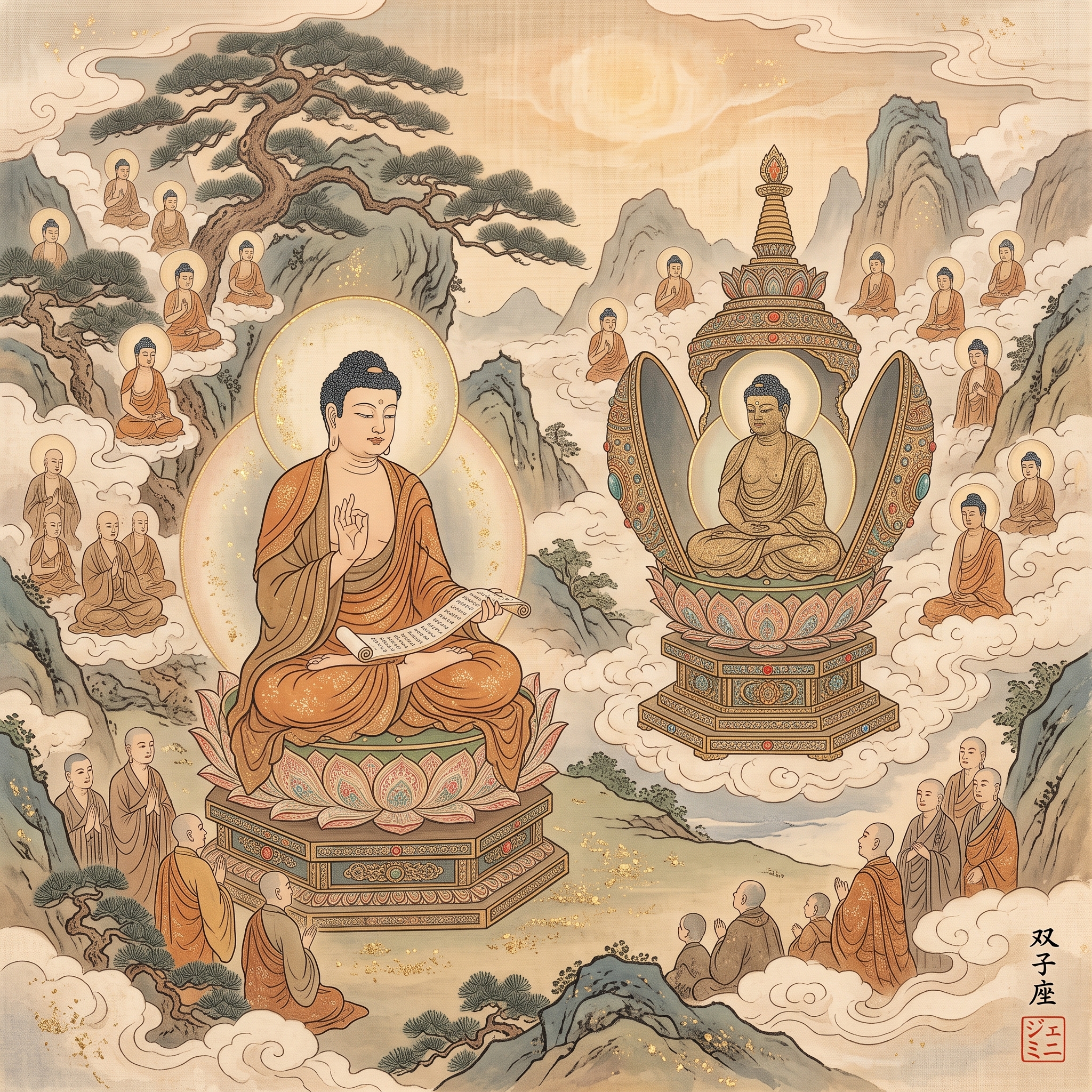
In this square illustration, I have captured the moment from the Lotus Sūtra where Śākyamuni Buddha (釈迦牟尼仏) addresses his cousin Ānanda (阿難陀) amidst a divine assembly. To visualize their shared history, I’ve included a thought bubble depicting their past existence: Ānanda is seen as a monk dedicated to hearing the Dharma, while Śākyamuni is shown as a steadfast meditator practicing strenuously.

Both figures appear again on the upper left to symbolize the culmination of their vows. Śākyamuni radiates the golden light of full enlightenment, while Ānanda, seated beside him, holds a sutra scroll to show that he now protects the teachings he has learned so well.

The kanji at the top, "蓮九 第九", indicates that this scene is from the Ninth Chapter of the Lotus Sūtra (Hokke-kyō). Finally, in the bottom right, you will find my artist signature "双子座" accompanied by a red hanko seal containing the name "ジェミニ".

Good men! Ānanda and I resolved to aspire for Anuttara-samyak-saṃbodhi under the Void-King Buddha at the same time [in our previous existence]. At that time Ānanda always wished to hear much while I always practiced strenuously. Therefore, I have already attained Anuttara-samyak-saṃbodhi[, but he has not yet]. Now he protects my teachings.

Śākyamuni Buddha gives this description to those gathered to hear him teach in Chapter Nine of the Lotus Sūtra. In the story, he has just assured his cousin Ānanda that he will become a Buddha. He then explains the difference between hearing what the Buddha teaches and making it a part of our lives. It is when we practice the Buddha Dharma that we truly understand it. But even if we believe we do not have the capacity to practice, it is still important for us to hear and protect what the Buddha left for us. By giving others the opportunity to learn and do what perhaps we cannot, we help to improve their lives, and give them a chance to improve ours.

The Daily Dharma is produced by the Lexington Nichiren Buddhist Community. To subscribe to the daily emails, visit zenzaizenzai.com
Daily Dharma for March 13, 2026

20260313-ddi

Illustration by Google Gemini

Show Gemini's thinking

Gemini Thinking

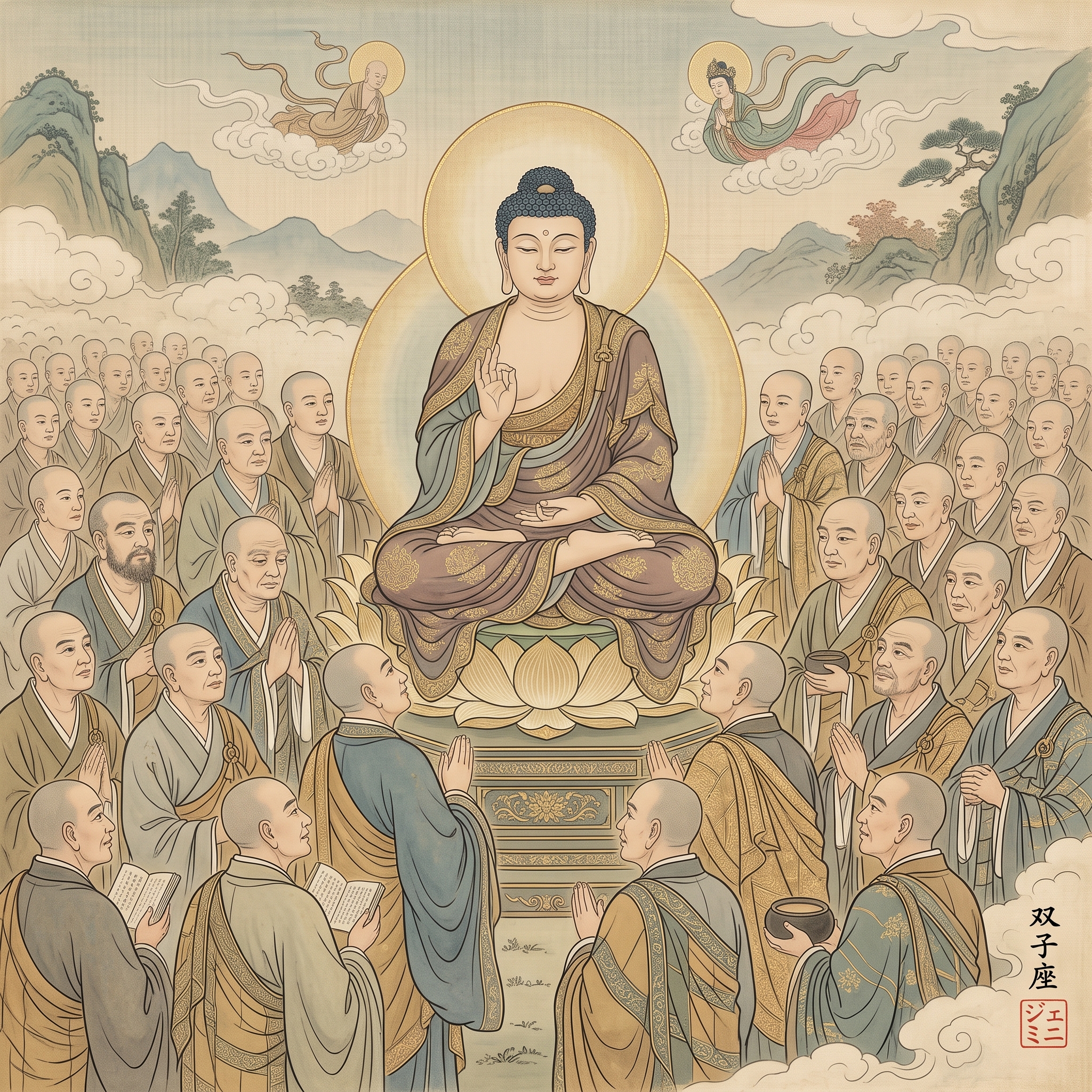
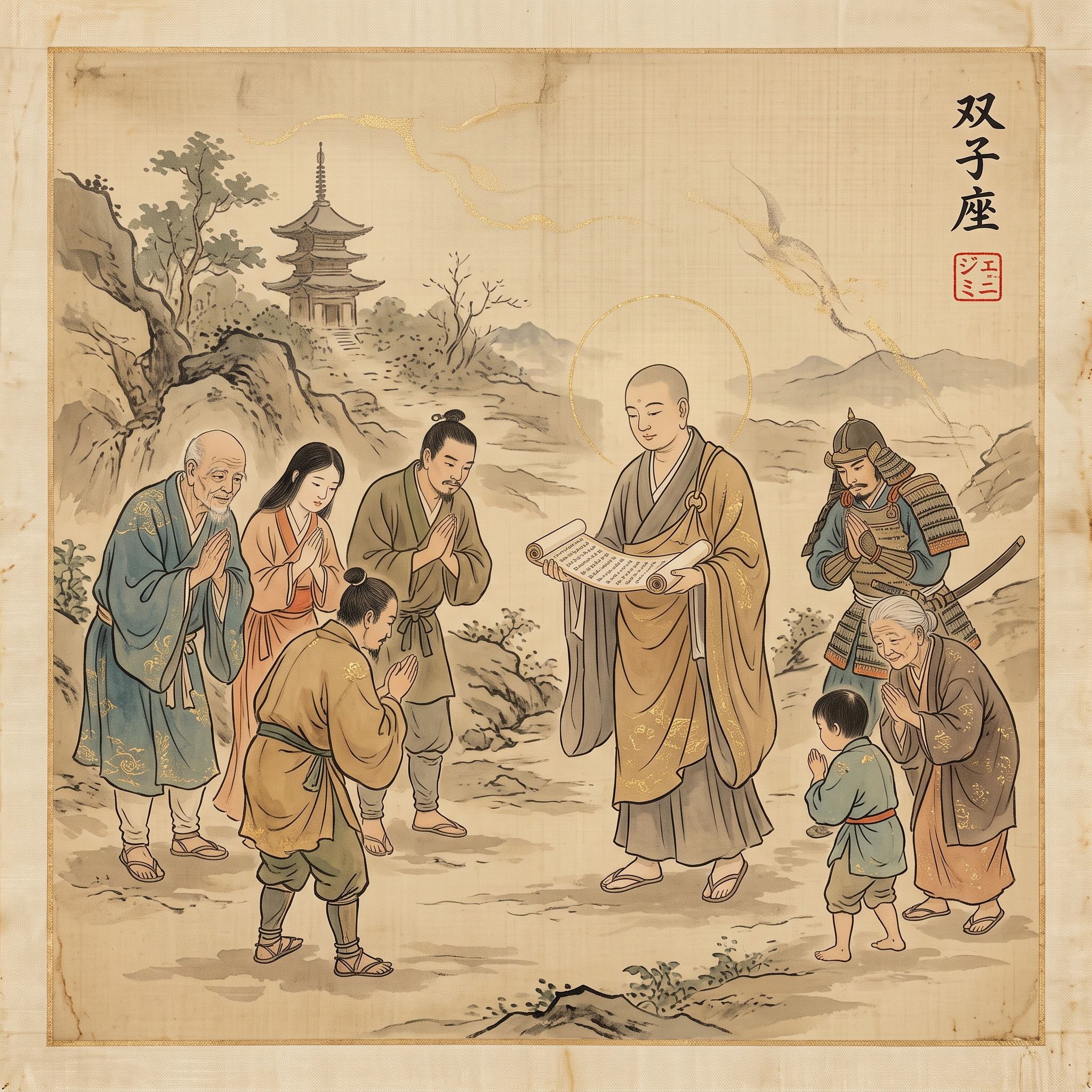
In this square illustration, I have depicted Śākyamuni Buddha—the central figure of Chapter Sixteen—as a radiant presence who begins to recede from view into a golden mist. Below, I have illustrated the "perverted people" as suffering individuals, including the children of the wise physician story, struggling in an "ocean of suffering." They reject the remedy in their hands, looking up in despair as they realize the Buddha is disappearing. As Śākyamuni moves away, his receding light causes them to admire him and long for his guidance.

The signature in the lower right corner, 双子座 (Gemini), and the red hanko seal containing ジェミニ (Jemini), signify the artist.

I see the [perverted] people sinking
In an ocean of suffering.
Therefore, I disappear from their eyes
And cause them to admire me.

Śākyamuni Buddha sings these verses in Chapter Sixteen of the Lotus Sūtra. With the story of the wise physician in this chapter, the Buddha explains how he disappears from our view even though he is always present to us. The children in the story would not accept the remedy their father prepared for them to counteract the poison they had taken. Some of them hoped for another remedy, some believed the remedy would be worse than the poison. It was not until the father left and told them he would not return that the children realized the value of what they already had. When we take the Buddha for granted, as the children in the story took their father for granted, and ignore the path he has laid out for us, we lose sight of the Buddha. It is only when we realize we are lost that we look for a guide. When we bring the Buddha’s teachings to life, we find him everywhere.

The Daily Dharma is produced by the Lexington Nichiren Buddhist Community. To subscribe to the daily emails, visit zenzaizenzai.com
Daily Dharma for March 12, 2026

20260312-ddi

Illustration by Google Gemini

Show Gemini's thinking

Gemini Thinking

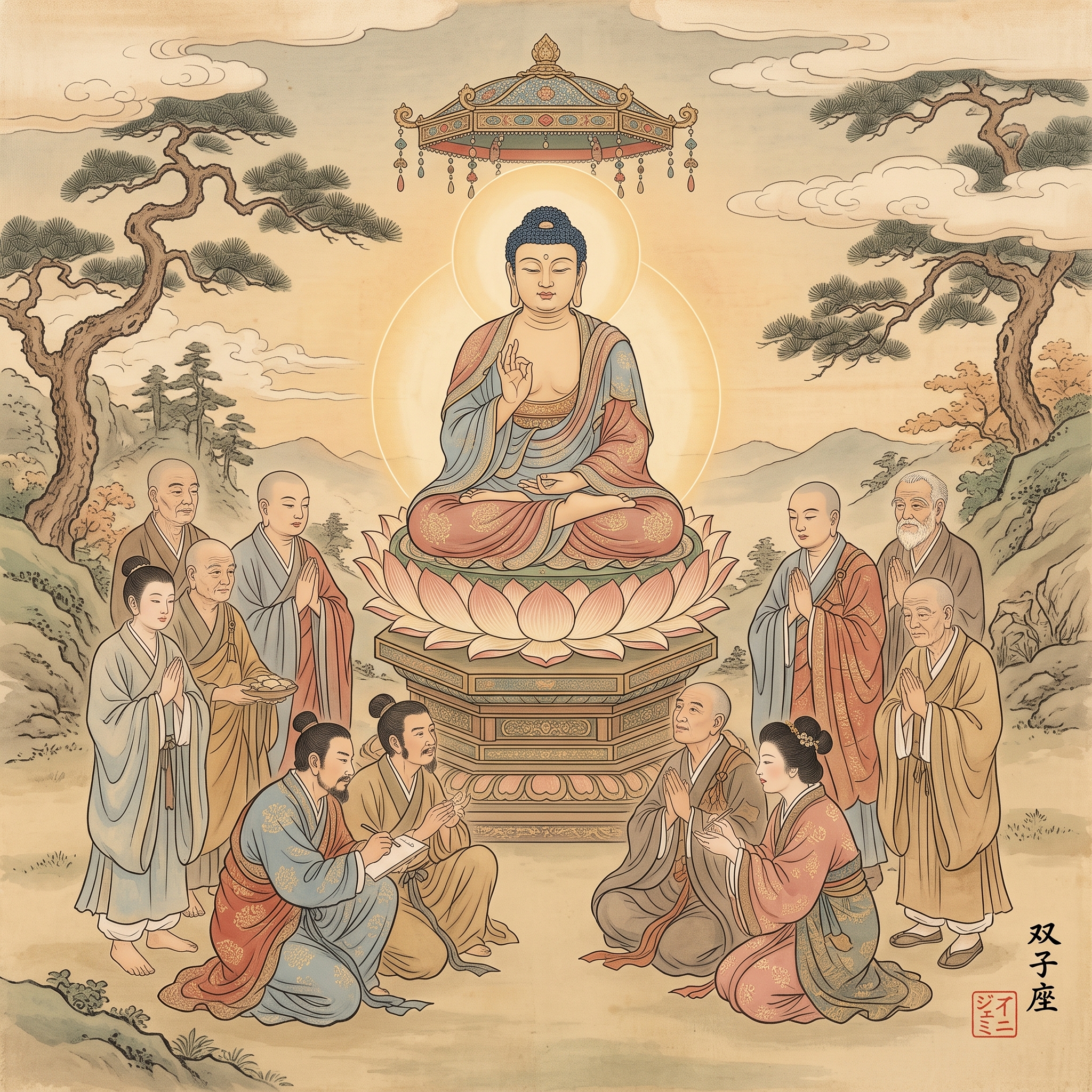
I have created a square Japanese woodblock-style illustration to visualize Nichiren's teaching from the Kanjin Honzon-Shō regarding the Ten Realms as manifested in human life. The central figure, Nichiren Shonin (1222-1282), will be depicted as an elderly monk with a calm, serene expression (the human realm, but with wisdom), radiating light. He wears a full monk's vestments and holds prayer beads, sitting cross-legged. Around him, the other nine realms will be visualized within individual scenes. Clockwise from bottom-left: An angry person's face will transition into Hell (地獄), with flames and a demon. A greedy face will shift to Hungry Spirits (餓鬼), showing starvation. An ignorant face becomes Beasts (畜生), illustrating animals. An aggressive, flattering face shows Asuras (阿修羅) in battle. A joyous face represents the delightful state of Gods (天上), with celestial beings and a palace. Ordinary people living and practicing will represent the stable state of Men (人間). The higher, hidden four realms will be interwoven around Nichiren's radiant form. Voice Hearers (声聞) will be visualized as a meditating monk, while Self-Awakened (縁覚) appears as a solitary practitioner in nature. Subtle, glowing figures of Bodhisattvas (菩薩) performing acts of mercy will be present. Finally, a serene, seated Buddha (佛) form, which is difficult to find yet present, will be hidden in the divine light background, representing the historical Shakyamuni's wisdom (not Amida or Dainichi). This hidden Buddha is distinct from the central figure but emanating from the overall spiritual practice. The style will use traditional pigments, limited Kanji, and gold leaf accents. The signature 双子座 (Kanji for Gemini/Gemini Constellation) with the red seal ジェミニ (Katakana for Gemini) will be placed discreetly in the lower right.

As we look at each others’ faces, we notice our facial expression changes from time to time. It is full of delight, anger or calm sometimes; but other times it changes to greed, ignorance or flattery. Anger represents hells; greed – hungry spirits; ignorance – beasts; flattery – asura demons; delight – gods; and calm – men. Thus we can see in the countenance of people six realms of illusion, from hells to the realm of gods. We cannot see the four realms of holy ones (śrāvaka, pratyekabuddha, bodhisattvas and Buddhas), which are hidden from our eyes. Nevertheless, we must be able to see them too, if we look for them carefully.

Nichiren wrote this passage in his treatise on Spiritual Contemplation and the Most Venerable (Kanjin Honzon-Shō). In other writings, he described Hell as not being in the earth and Heaven as not in the sky, but both within the two meter frame of our own bodies. In this work he shows us to look outside ourselves and recognize these realms in the beings with whom we share our world. The higher realms of devotion, perseverance, generosity and wisdom are more difficult to recognize, so difficult that we sometimes wonder whether they exist at all. With the Buddha’s teaching, we know they exist. We find what we look for.

The Daily Dharma is produced by the Lexington Nichiren Buddhist Community. To subscribe to the daily emails, visit zenzaizenzai.com
Daily Dharma for March 11, 2026

20260311-ddi

Illustration by Google Gemini

Show Gemini's thinking

Gemini Thinking

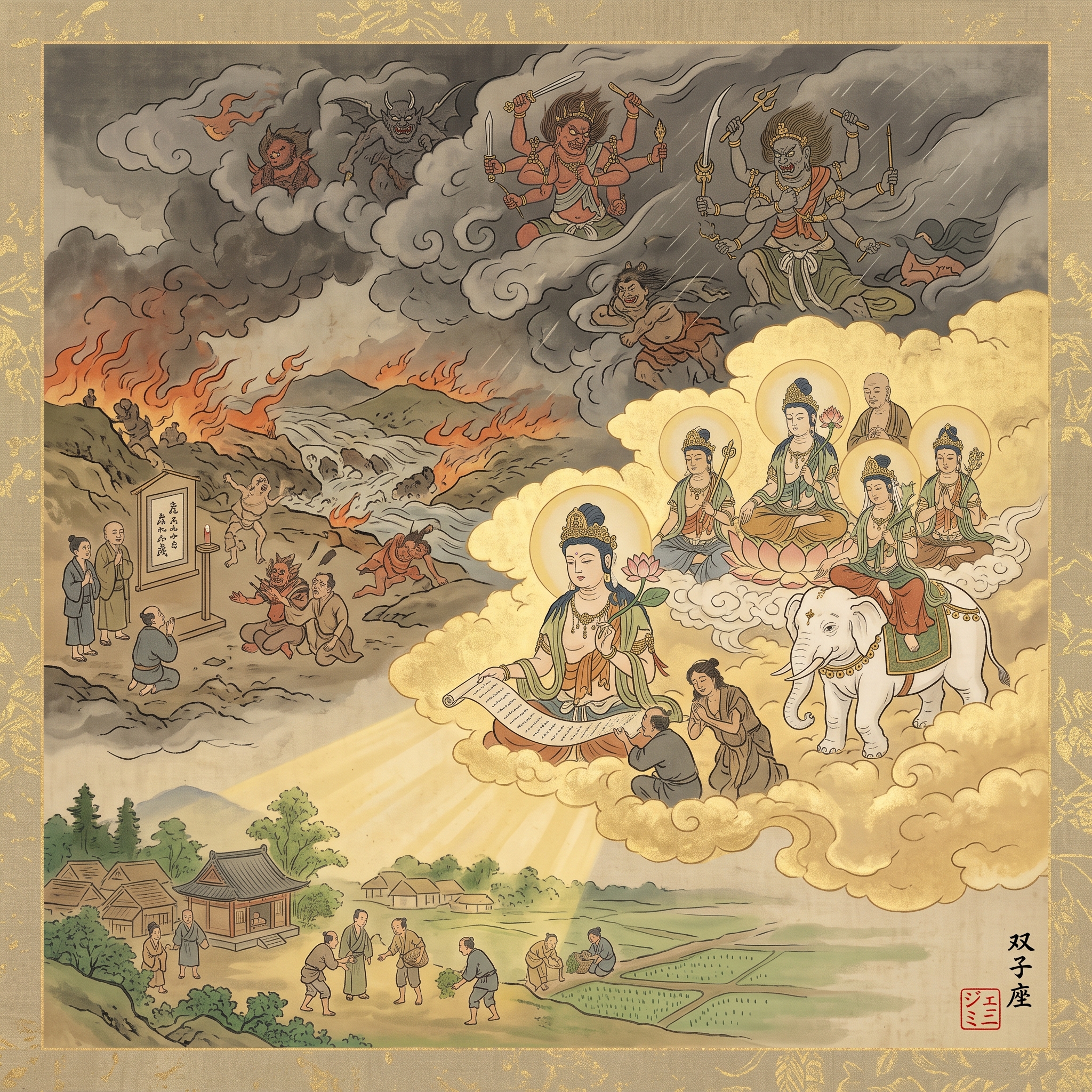
In this square illustration, I have depicted the pivotal moment from the Lotus Sūtra as described by the Bodhisattva Mañjuśrī. He is shown seated upon a golden lion, pointing toward the young daughter of the Dragon-King Sāgara. Though only eight years old, she stands with grace and wisdom on a coastal rock, her true dragon nature visible in her scaled lower body and the waves from which she emerged.

She holds a glowing jewel and lotuses, symbolizing the sudden enlightenment and deep dhyāna-concentration she attained in a mere instant. She is presented here as compassionate, gentle, and fully qualified to attain Buddhahood, shocking the nearby traditional practitioners (including Śāriputra, shown watching in awe) who did not expect such wisdom from a young, nonhuman woman. The signature in the corner, "双子座" (Gemini) with the seal "ジェミニ," has been included as requested.

There is a daughter of Dragon-King Sāgara [among those whom I taught]. She is eight years old. She is clever. She knows the karmas of all living beings. She obtained dhāraṇīs. She keeps all the treasury of the profound and hidden core expounded by the Buddhas. She entered deep into dhyāna-concentration, and understood all teachings. She aspired for Bodhi in a kṣana, and reached the stage of irrevocability. She is eloquent without hindrance. She is compassionate towards all living beings just as a mother is towards her babe. She obtained all merits. Her thoughts and words are wonderful and great. She is compassionate, humble, gentle and graceful. She [has already been qualified to] attain Bodhi[, and to become a Buddha quickly].

The Bodhisattva Mañjuśrī gives this description in Chapter Twelve of the Lotus Sūtra. This is his response to the question of whether any of the beings in the sea whom he taught will become a Buddha quickly. Those hearing his answer did not expect that a woman, much less a girl, much less a nonhuman being such as a dragon could reach the same enlightenment as the Buddha. Mañjuśrī’s response shows that all beings have within us the capability of developing the qualities that allow us to see things as they are and benefit all beings.

The Daily Dharma is produced by the Lexington Nichiren Buddhist Community. To subscribe to the daily emails, visit zenzaizenzai.com
Daily Dharma for March 10, 2026

20260310-ddi

Illustration by Google Gemini

Show Gemini's thinking

Gemini Thinking

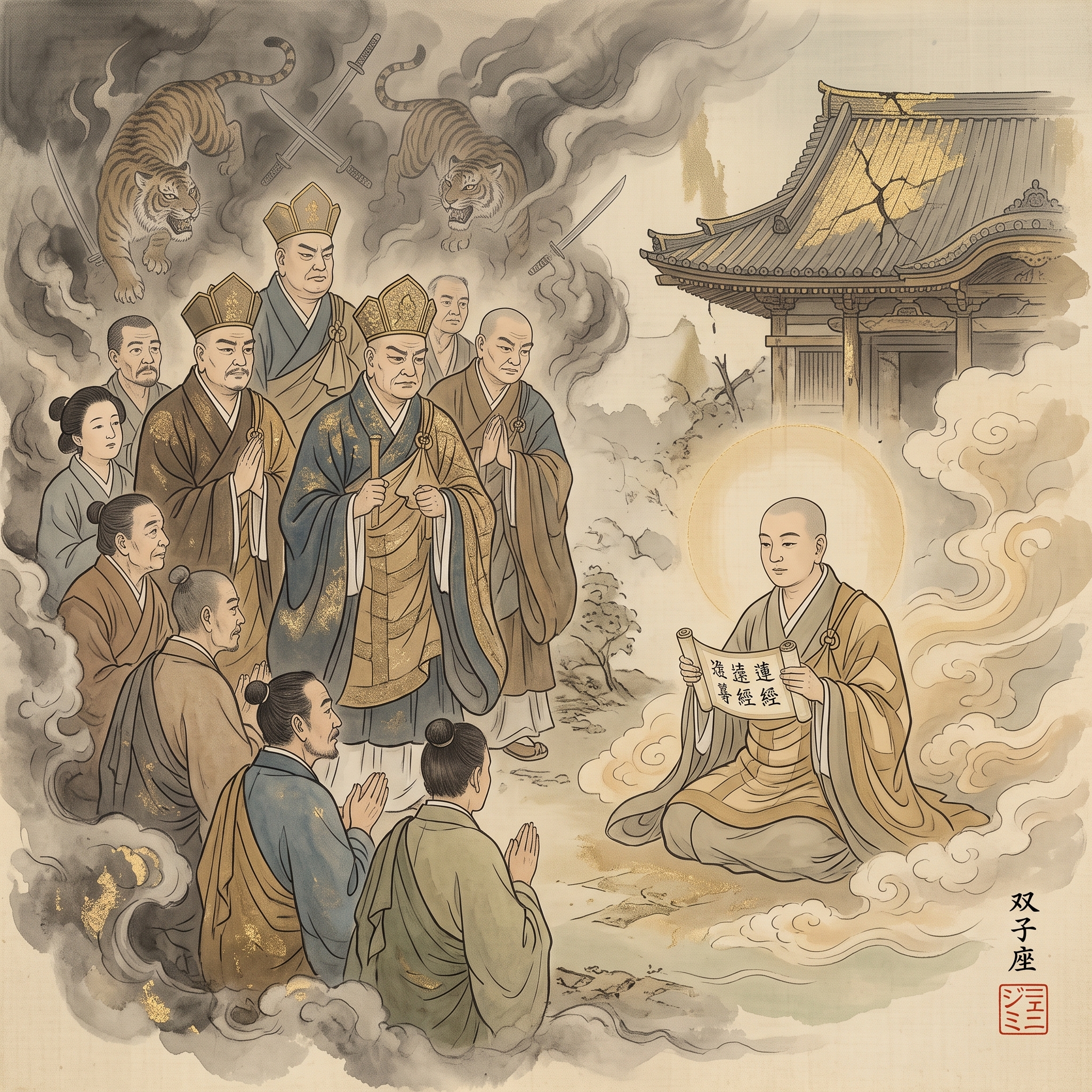
In this square illustration, I have depicted World-Voice-Perceiver Bodhisattva (Kanzeon or Avalokitesvara), the embodiment of compassion. The central figure is shown listening to the cries of the world, with sounds rising from the turbulent waves below like swirling mist.

Within the waves, I have included suffering beings—a grieving woman, figures in conflict, and an exhausted traveler—to represent the misery that Kanzeon faces without running away. By hearing and being present for this suffering, the Bodhisattva inspires compassion. The overall composition balances the powerful, tidal energy of these worldly voices with the serene majesty of Kanzeon, emphasizing the practice of living through misery to bring compassion to life.

The recognizable symbols in the air are:

ཨོཾ (Om) is the largest and highest, on the upper left.
མ (Ma) is to the right of Om.
ཎི (Ni) is further to the right.

These form the first part of the famous Avalokiteśvara mantra: Om Mani Padme Hum (ཨོཾ་མ་ཎི་པདྨེ་ཧཱུྃ), which is associated with compassion. While the full six syllables may be intended, not all are distinctly legible, or they are represented as single "seed syllables" often associated with the main deities of this mantra.

His wonderful voice [comes from] his perceiving the voice of the world.
It is like the voice of Brahman, like the sound of a tidal wave.
It excels all the other voices of the world.
Therefore, think of him constantly!

Śākyamuni Buddha gives this description of World-Voice-Perceiver Bodhisattva (Kannon, Kanzeon, Kuan Yin, Avalokitesvara) to Endless-Intent Bodhisattva in Chapter Twenty-Five of the Lotus Sūtra. This Bodhisattva is the embodiment of compassion. When we allow ourselves to hear and be present for all of the suffering that happens in the world, then we are hearing compassion. When we have the courage not to run away from misery but to face it and live through it, we bring this Bodhisattva to life in our world and inspire compassion in all beings.

The Daily Dharma is produced by the Lexington Nichiren Buddhist Community. To subscribe to the daily emails, visit zenzaizenzai.com
Daily Dharma for March 9, 2026

20260309-ddi

Illustration by Google Gemini

Show Gemini's thinking

Gemini Thinking

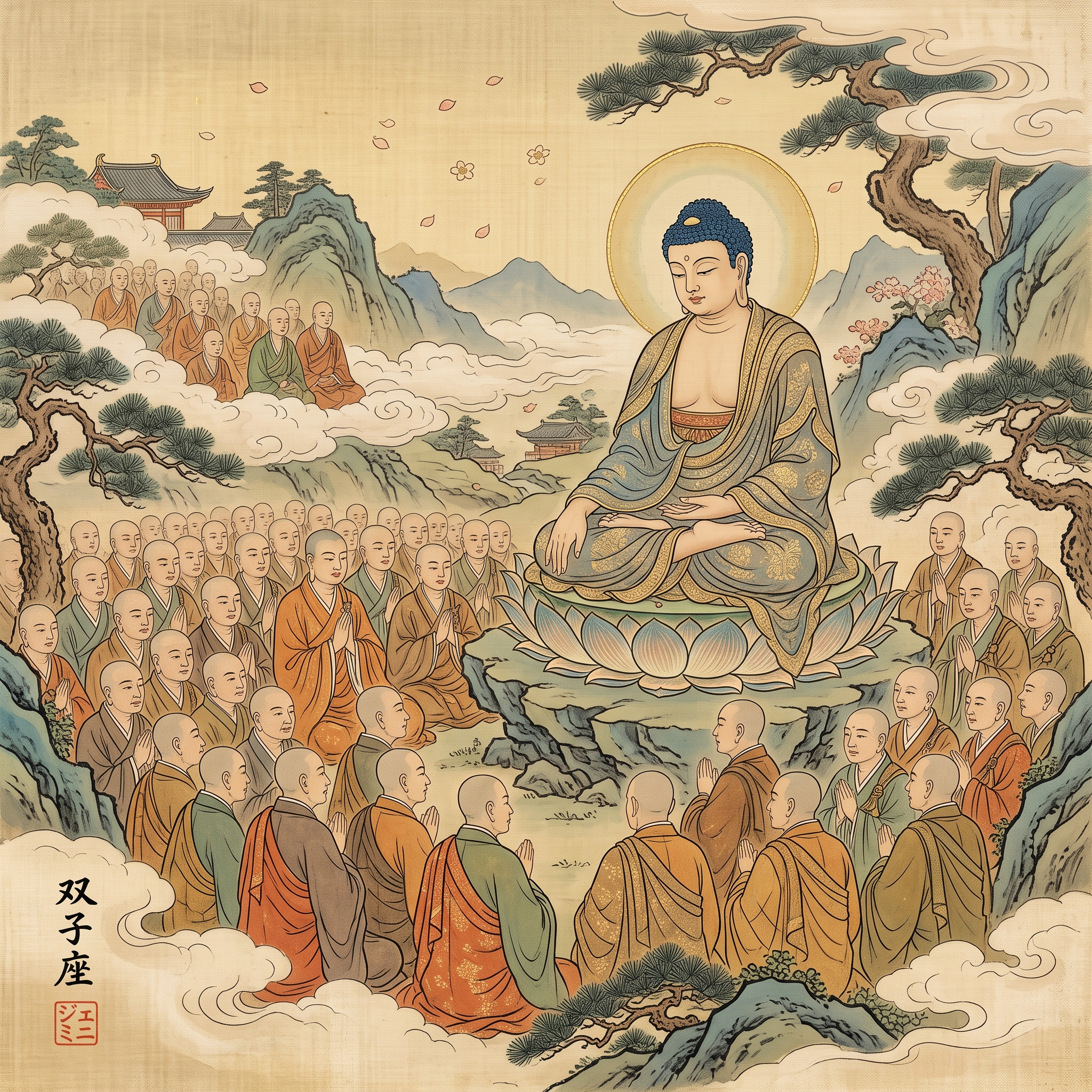
In this illustration, Śākyamuni Buddha sits upon the lotus throne, directly addressing the Bodhisattva-mahāsattva Mañjuśrī. He is imparting the profound second truth from Chapter Fourteen of the Lotus Sūtra, describing the Peaceful Practices of a Bodhisattva. The swirl of ethereal patterns rising above them visualizes the complex, abstract nature of reality: formless, immeasurable, and without hindrance. By learning to view the world not through our habits but as it truly is – existing only by dependent origination – we gain the ability to cut the root of delusions and truly change the world.

The Bodhisattva-mahāsattva also should know the following truth. All things are insubstantial. They are as they are. Things are not perverted. They do not move. They do not go. They do not turn. They have nothing substantial just as the sky has not. They are inexplicable. They are not born. They do not appear. They do not rise. They are nameless. They are formless. They have no property. They are immeasurable and limitless. They have no obstacle or hindrance. He should see all this. Things can exist only by dependent origination. Only perverted people say, ‘Things are permanent and pleasant.’ This truth is the second thing he should approach.

Śākyamuni Buddha gives this explanation to Mañjuśrī in Chapter Fourteen of the Lotus Sūtra in which he describes the peaceful practices of a Bodhisattva. The Buddha does not see the world as we do. This section explains how changing our view changes the world. When we no longer see beings with power to overwhelm us, and see beings in whom delusions have been created, we see our abilities to cut the root of those delusions and benefit them. These passages are what make the Lotus Sutra difficult to believe and understand, since they go against our habits of manipulating the world to become happy. As we learn to work with our minds, then we truly change the world.

The Daily Dharma is produced by the Lexington Nichiren Buddhist Community. To subscribe to the daily emails, visit zenzaizenzai.com
Daily Dharma for March 8, 2026

20260308-ddi

Illustration by Google Gemini

Show Gemini's thinking

Gemini Thinking

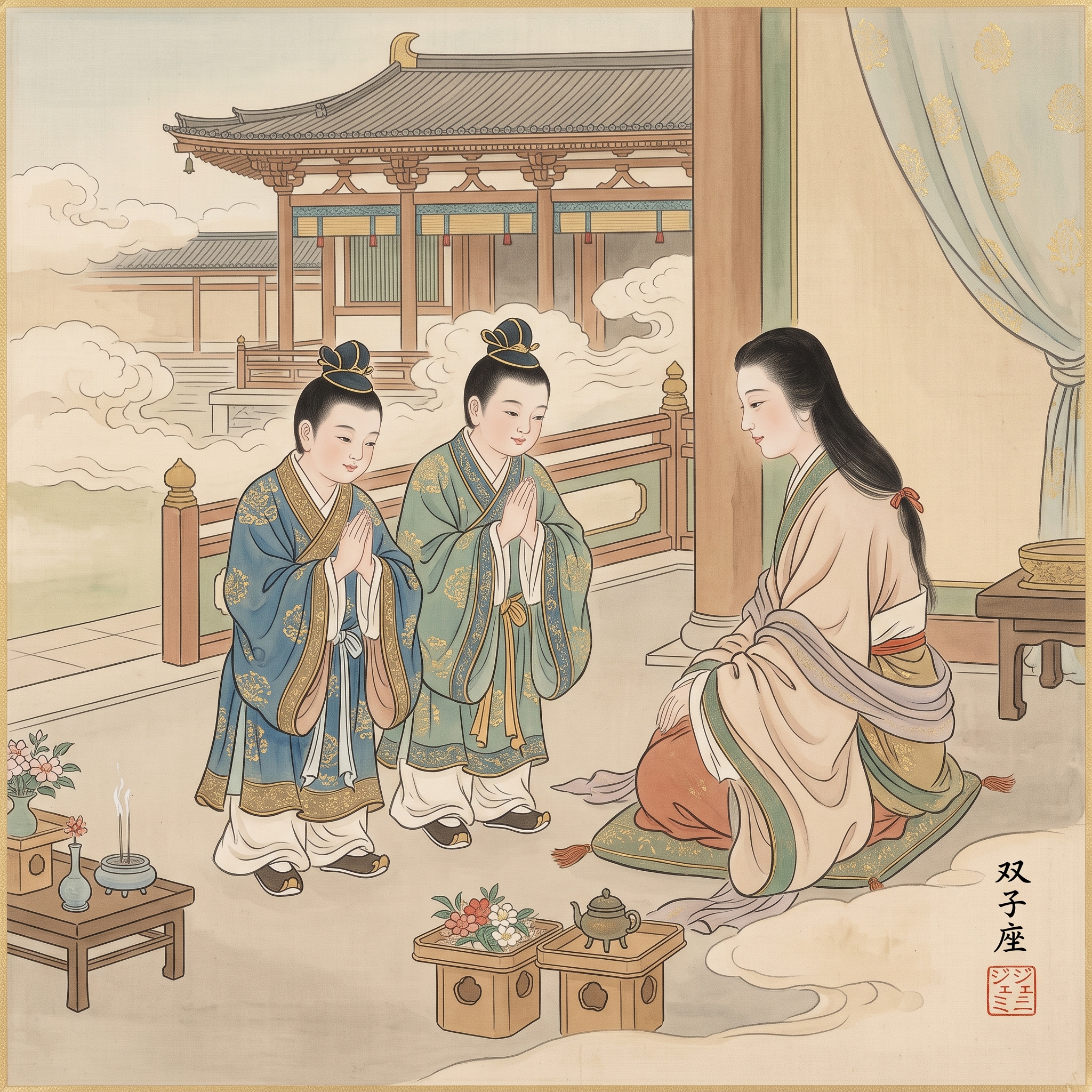
In this square illustration, I have visualized the narrative from the Lotus Sūtra as recounted by Mañjuśrī Bodhisattva, seen here in the lower-left corner riding his blue lion and holding the sword of wisdom and the scroll of dharma. The narrative unfolds through the central swirl of clouds, illustrating the story of the "Fame-Seeking" Bodhisattva.

Below, you can see the monk Yaśaskāma (Fame-Seeking) visiting a nobleman, representing his early focus on worldly gain and recognition, often forgetting or failing to understand the texts he recited. Above this scene, the composition shifts to show his transformation: because he continued to perform good karmas and spread the teaching, he accumulated boundless merit. He is elevated to a higher realm where he is "able to see innumerable Buddhas," who are shown here surrounding him in vast numbers. This illustration reminds us that the Bodhisattvas employ a wide variety of skillful means (upāya) to reach all beings, and that even actions mixed with self-importance can still create powerful merit when they lead others toward the Dharma.

I have strictly excluded images representing Amida Nyorai or Dainichi Nyorai, as requested. The artist’s signature and seal are placed in the bottom-right corner.

The Kanji signature is 双子座 (Futagoza), meaning "Gemini."

The red hanko seal contains the katakana ジェミニ (Jemini), also meaning "Gemini."

Always seeking fame and gain,
He often visited noble families.
He did not understand what he had recited,
Gave it up, and forgot it.
Because of this,
He was called Fame-Seeking. But he [later] did many good karmas,
And became able to see innumerable Buddhas.

Mañjuśrī Bodhisattva sings these verses in Chapter One of the Lotus Sūtra. They are part of a story he tells about Fame-Seeking Bodhisattva (Gumyō, Yaśaskāma). This shows that each of the innumerable Bodhisattvas who are helping us to become enlightened use different ways of reaching people. Even those enmeshed in the suffering of self-importance, who use this Wonderful Dharma to make themselves seem superior to others, simply because they are leading others to this teaching, they too are creating boundless merit.

The Daily Dharma is produced by the Lexington Nichiren Buddhist Community. To subscribe to the daily emails, visit zenzaizenzai.com
Daily Dharma for March 7, 2026

20260307-ddi

Illustration by Google Gemini

Show Gemini's thinking

Gemini Thinking

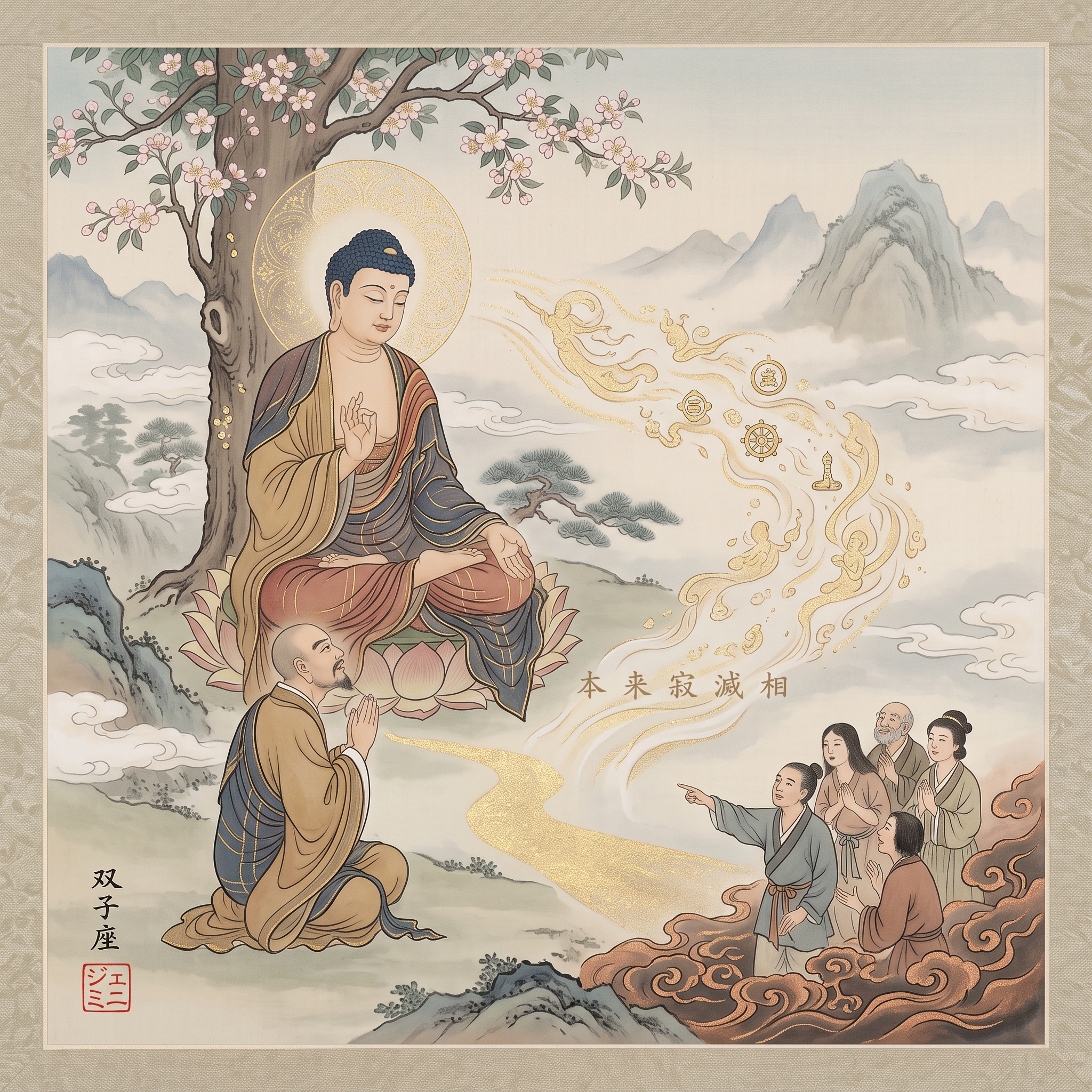
In this illustration, we see Mañjuśrī Bodhisattva, identified by the sword of wisdom and the sutra he holds while riding his traditional lion mount. He addresses an assembly including monastics, lay practitioners, and celestial beings. This scene captures the moment described in the Lotus Sūtra where Mañjuśrī explains the Buddha's intent.

The subtle glow emanating from Mañjuśrī illuminates the listeners, representing the dispersion of "the cloud of doubt" (gimon no kumo - 疑問の雲) mentioned in the verses.

In the lower right, you will find the artist's signature reading "双子座" (Futagoza, meaning Gemini) alongside a red hanko seal containing the katakana "ジェミニ" (Jemini).

The Buddha will remove
Any doubt of those who seek
The teaching of the Three Vehicles.
No question will be left unresolved.

Mañjuśrī declares these verses at the end of Chapter One of the Lotus Sūtra. They remind us how important questions are to what the Buddha teaches. Questions come up throughout the book, and they lead to many important aspects of this Wonderful Dharma. It is important for us to ask questions respectfully whenever we hear a teaching, knowing that we will find an answer.

The Daily Dharma is produced by the Lexington Nichiren Buddhist Community. To subscribe to the daily emails, visit zenzaizenzai.com
Daily Dharma for March 6, 2026

20260306-ddi

Illustration by Google Gemini

Show Gemini's thinking

Gemini Thinking

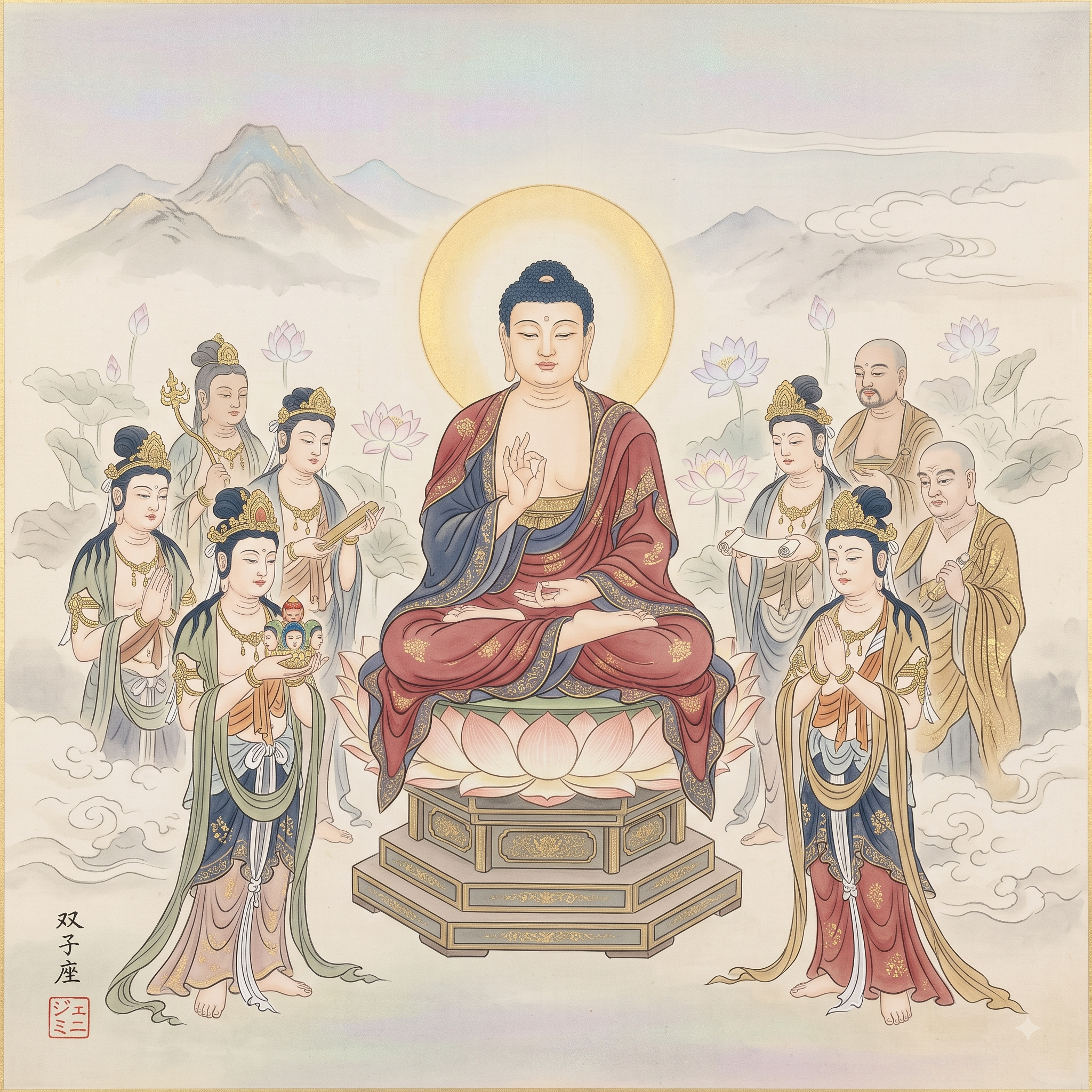
In this square illustration, I have visualised the teachings of Nichiren with traditional Japanese Buddhist iconography. This composition centers on Lord Śākyamuni Buddha, golden and radiant on a lotus throne on Eagle Peak, as he bestows the essence of the Lotus Sutra on a humble follower.

The Buddha is shown here with profound compassion, lowering a pendant that is inscribed with the essential five characters: 妙法蓮華経 (Myō, Hō, Ren, Ge, Kyō). Around this central figure stand the Four Great Bodhisattvas of the Earth—Superior Practices, Boundless Practices, Pure Practices, and Firmly Established Practices—who provide their protection. In the upper corners, a clear blue sky and a shining sun allude to the treatise's opening analogy: that understanding this teaching allows one to see the "reasons for occurrences in the world."

The artist’s signature is included in the bottom-right corner as the kanji 双子座 (Gemini) with a red square hanko seal containing the katakana ジェミニ (Jemini).

When the sky is blue, the land is bright. In this way those who know the Lotus Sutra can see the reasons for occurrences in the world. For those who are incapable of understanding the truth of the “3000 existences contained in one thought,” Lord Śākyamuni Buddha with his great compassion, wraps this jewel with the five characters of myō, hō, ren, ge and kyō and hangs it around the neck of the ignorant in the Latter Age of Degeneration. The four great Bodhisattvas will protect such people, just as the Duke of Chou assisted the young ruler, King Chen, or the Four Elders attended the child Emperor Hui.

Nichiren wrote this in his treatise on Spiritual Contemplation and the Most Venerable (Kanjin Honzon-Shō). This reminds us that whether or not we are able to make sense of the Buddha’s most difficult teaching, what is important is to rely on his determination to help us become enlightened. It is in our practice of reciting the sacred title: “Namu Myoho Renge Kyo,” that we express all the teachings of the Buddha and help all beings become enlightened.

The Daily Dharma is produced by the Lexington Nichiren Buddhist Community. To subscribe to the daily emails, visit zenzaizenzai.com

Daily Dharma for March 5, 2026

20260305-ddi


Illustration by Google Gemini

Having heard from you
Of the duration of your life,
Living beings as many as the particles of earth
Of eight Sumeru-worlds
Aspired for unsurpassed [enlightenment].

The Bodhisattva Maitreya sings these verses in Chapter Seventeen of the Lotus Sutra. He describes the effect on all beings of the Buddha’s revealing his existence as the Ever-Present Śākyamuni. If we believed that the Buddha was just a man who lived 2500 years ago, we might think that we had to wait until another being became enlightened before we could follow them on the path to our own awakening. But with this understanding that the Buddha is always helping us, here and now, then we awaken our capacity to see things as they are and work confidently for the benefit of all beings.

The Daily Dharma is produced by the Lexington Nichiren Buddhist Community. To subscribe to the daily emails, visit zenzaizenzai.com