All posts by John Hughes

Day 27

Day 27 concludes Chapter 23, The Previous Life of Medicine-King Bodhisattva.


Having last month considered Gladly-Seen-By-All-Beings Bodhisattva’s offering to Sun-Moon-Pure-Bright-Virtue Buddha, we consider the merits of offering a lightto the stupa of a Buddha.

The Buddha said to Star-King-Flower Bodhisattva:

“What do you think of this? Gladly-Seen-By-All-Beings Bodhisattva was no one but Medicine-King Bodhisattva of today. He gave up his body in this way, offered it [to the Buddha], and repeated this offering many hundreds of thousands of billions of nayutas of times [in his previous existence]. [He knows that he can practice any austerity in this Sahā-World. Therefore, he does not mind walking about this world.]

“Star-King-Flower! Anyone who aspires for, and wishes to attain Anuttara-samyak-saṃbodhi, should offer a light to the stupa of the Buddha by burning a finger or a toe. Then he will be given more merits than the person who offers not only countries, cities, wives and children, but also the mountains, forests, rivers and ponds of the one thousand million Sumeru-worlds, and various kinds of treasures. But the merits to be given to the person who fills the one thousand million Sumeru-worlds with the seven treasures and offers that amount of the seven treasures to the Buddhas, to the Great Bodhisattvas, to the Pratyekabuddhas, and to the Arhats, are less than the merits to be given to the person who keeps even a single gāthā of four lines of this Sūtra of the Lotus Flower of the Wonderful Dharma.

The Daily Dharma from Dec. 6, 2023, offers this:

What do you think of this? Gladly-Seen-By-All-Beings Bodhisattva was no one but Medicine-King Bodhisattva of today. He gave up his body in this way, offered it [to the Buddha], and repeated this offering many hundreds of thousands of billions of nayutas of times [in his previous existence]. [He knows that he can practice any austerity in this Sahā-World. Therefore, he does not mind walking about this world.]

The Buddha gives this explanation to Star-King-Flower Bodhisattva in Chapter Twenty-Three of the Lotus Sūtra. The story of the previous life of Medicine-King Bodhisattva shows us the capacities we have already developed and are not aware of. When we see ourselves as choosing to come into this world of conflict to benefit all beings, rather than stuck where we do not want to be and just making the best of it, then it is much easier to let go of our delusions.

The Daily Dharma is produced by the Lexington Nichiren Buddhist Community. To subscribe to the daily emails, visit zenzaizenzai.com

Once upon a Future Time: Counterfeit vs. Semblance

In sum, the division of the duration of the Dharma into two distinct and sequential periods is found in only a small number of canonical sūtras. And of these, only a tiny minority associate such a division with the career of Śākyamuni Buddha. It is particularly noteworthy that several of the sūtras that in East Asia became most closely identified with the division of the Buddha’s Dharma into sequential periods —in particular, the Pure Land and Lotus sūtras — do not apply a distinction between saddharma and saddharma-pratirūpaka to the teachings of Śākyamuni Buddha himself. The reading of these texts as if they contained such a distinction (supplemented by a third period of mo-fa, to be discussed below) is thus a contribution of later commentators, who in interpreting these texts through such a lens gave them an entirely new meaning.

We can distinguish, then, between two distinctive (though not entirely separate) uses of the term saddharma-pratirūpaka, which seem to have emerged in roughly the following sequence:

  • a first phase, during which the term refers to the total duration of the Dharma after a given Buddha’s death; and
  • a second phase, during which saddharma-pratirūpaka is restricted in meaning to only the latter part of this period, the second of two sub-periods in the lifetime of the Dharma.

In neither case, however, is the saddharma-pratirūpaka referred to in explicitly pejorative terms. Rather, it refers to the real and ongoing presence of the saddharma, whether it is used to refer to part or all of the period when this will be the case.

In light of the analysis given above it now seems quite peculiar that the translation of saddharma-pratirūpaka (and of its Chinese counterpart hsiang-fa) most frequently encountered in English-language studies is “counterfeit Dharma.” For in none of the passages cited above would such a translation make sense. In none of these texts is there any implication that the saddharma-pratirūpaka is a fake or a forgery of the True Dharma; rather, it refers to the presence of the True Dharma itself, in all or part of its duration. Even when a clear-cut distinction between periods of saddharma and saddharma-pratirūpaka begins to emerge, the latter period is still viewed as positive (if slightly less so than that in the preceding versions), and is credited to the account, so to speak, of a given Buddha as part of the total duration of his teachings.

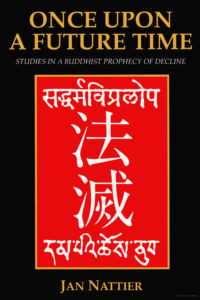
Once Upon A Future Time, p85-87

The term “semblance,” then, serves as a suitable equivalent of the Sanskrit term pratirūpaka, and conforms in meaning to Chinese hsiang and Tibetan gzugs-brnyan as well. The term “counterfeit” should clearly be abandoned, as it represents a radical misunderstanding of the significance of this expression in Mahāyāna usage.

Once Upon A Future Time, p89

Daily Dharma – Jan. 4, 2024

All of you, wise men!
Have no doubts about this!
Remove your doubts, have no more!
My words are true, not false.

The Buddha sings these verses in Chapter Sixteen of the Lotus Sūtra. If we come to the Buddha, attached to our delusions and fearful of the potential for peace and joy we all have within us, it is easy to doubt what he says. We have been suffering a long time. Like the children playing in the burning house, we are so caught up in the drama and insanity of our world that we cannot imagine any other way to live. When the Buddha warns us of how dangerous it is to continue as we are, we are more certain of our familiar pain than of his enlightenment. When we trust the Buddha Dharma, and cultivate our potential to create unimaginable benefit in this world, then we realize the pettiness of the crises we create for ourselves. We awaken our curiosity and gratitude and learn to see this beautiful world for what it is.

The Daily Dharma is produced by the Lexington Nichiren Buddhist Community. To subscribe to the daily emails, visit zenzaizenzai.com

Day 26

Day 26 concludes Chapter 21, The Supernatural Powers of the Tathāgatas, includes Chapter 22, Transmission, and introduces Chapter 23, The Previous Life of Medicine-King Bodhisattva.


Having last month considered Star-King-Flower Bodhisattva’s question, we consider the offerings made by Gladly-Seen-By-All-Beings Bodhisattva after hearing the Sūtra of the Lotus Flower of the Wonderful Dharma.

“Thereupon [Sun-Moon-Pure-Bright-Virtue] Buddha expounded the Sūtra of the Lotus Flower of the Wonderful Dharma to Gladly-Seen-By-All-Beings Bodhisattva, to the other Bodhisattvas, and also to the Śrāvakas. Gladly-Seen-By-All-Beings Bodhisattva willingly practiced austerities under Sun-Moon-Pure-Bright-Virtue Buddha. He walked about the world, seeking Buddhahood strenuously with all his heart for twelve thousand years until at last he obtained the samadhi by which he could transform himself into any other living being: Having obtained this samadhi, he had great joy.

“He thought, ‘I have obtained the samadhi by which I can transform myself into any other living being because I heard the Sūtra of the Lotus Flower of the Wonderful Dharma. Now I will make offerings to Sun-Moon-Pure-Bright-Virtue Buddha and also to the Sūtra of the Lotus Flower of the Wonderful Dharma.’

“He entered into this samadhi at once. He filled the sky with the clouds of mandārava-flowers, mahā-mandārava-flowers and the powdered incense of hard and black candana, and rained down those flowers and incense. He also rained down the powdered incense of the candana grown on this shore of the sea [between Mt. Sumeru and the Jambudvipa]. Six shu of this incense was worth the Sahā-World. He offered all these things to the Buddha.

“Having made these offerings [to the Buddha], he emerged from the samadhi, and thought, ‘I have now made offerings to the Buddha by my supernatural powers. But these offerings are less valuable than the offering of my own body.’

“Then he ate various kinds of incense taken from candana, kunduruka, turṣka, pṛkkā, aloes and sumac, and drank perfumed oil taken from the flowers of campaka and other flowers[. He continued doing all this] for twelve hundred years. Then he applied perfumed oil to his skin, put on a heavenly garment of treasures in the presence of Sun-Moon-Pure-Bright-Virtue Buddha, sprinkled various kinds of perfumed oil on the garment, and set fire to his body, making a vow by his supernatural powers. The light of the flame illumined the worlds numbering eight thousands of millions of times the number of the sands of the River Ganges.

The Daily Dharma from Jan. 23, 2023, offers this:

Having made these offerings [to the Buddha], he emerged from the samādhi, and thought, ‘I have now made offerings to the Buddha by my supernatural powers. But these offerings are less valuable than the offering of my own body.’

In Chapter Twenty-Three of the Lotus Sūtra, the Buddha tells the story of Gladly-Seen-By-All-Beings Bodhisattva, the previous life of Medicine-King Bodhisattva. This Bodhisattva practiced under an ancient Buddha, and made exorbitant offerings to that Buddha through his supernatural powers. He then realized that all the riches of the universe that he could conjure up paled in comparison to the treasure of his own body and his own life. He then made an offering of his body to the Buddha, which illuminated innumerable worlds. Nichiren wrote often of the hardships he faced in his life and those of his followers. He wrote of “reading the Lotus Sūtra with our bodies,” meaning bringing the Buddha’s wisdom to life in our lives. When we act according to the Wonderful Dharma, no matter what hardships we face, then we too are living the Lotus Sūtra, and making a perfect offering from our gratitude to the Buddha.

The Daily Dharma is produced by the Lexington Nichiren Buddhist Community. To subscribe to the daily emails, visit zenzaizenzai.com

Once upon a Future Time: The Missing Mo-Fa

nattier-once-upon-bookcoverTo the specialist in East Asian Buddhism, one of the most striking features of the texts reviewed in the previous chapter is that not a single one of them contains any reference to the concept of mo-fa (Jpn. mappō), lit. “end-dharma” or “final Dharma.” For it was not any of the timetables discussed above, but rather a three-part system culminating in a prolonged period of mo-fa, that was to become the most influential historical frame of reference in the Buddhist schools of China, Korea, and Japan.

Building on the concepts of saddharma (“True Dharma”) and saddharma-pratirūpaka (“semblance of the True Dharma”) that we have already met in the Indian sources, East Asian Buddhists formulated a system of three periods in the history of the Buddhist religion, which were expected to occur in the following sequence:

  • a period of the “True Dharma” (Ch. cheng-fa /Jpn. shōbō, corresponding to Skt. saddharma) immediately following the death of the Buddha, during which it is possible to attain enlightenment by practicing the Buddha’s teachings;
  • a period of the “Semblance Dharma” (Ch. hsiang-fa / Jpn. zōbō, a term patterned on but not identical to Skt. saddharma-pratirūpaka), during which a few may still be able to reach the goal of enlightenment, but most Buddhists simply carry out the external forms of the religion; and
  • a period of the “Final Dharma” (Ch. mo-fa / Jpn. mappō, a term for which no proper Sanskrit equivalent exists), during which traditional religious practice loses its effectiveness and the spiritual capacity of human beings reaches an all-time low.

While this system is known only in East Asian Buddhist sources, it is clearly constructed with reference to elements that were already known in India.

Once Upon A Future Time, p65-66

Daily Dharma – Jan. 3, 2024

You, the World-Honored One, are exceptional.
You reminded me of the teachings
Of innumerable Buddhas in the past
As if I had heard them today.

Ānanda, the Buddha’s cousin and one of his leading disciples, sings these verses in Chapter Nine of the Lotus Sūtra. In the Story, Ānanda had just been personally assured by the Buddha that he would become a Buddha himself in a future life. All the teachings of the Buddha across all time are always available to us. What prevents us from hearing them and putting them into practice is nothing more than our own attachment to our suffering and our doubts about our capacity for wisdom and compassion. When we take to heart the assurance that we and all beings can become enlightened, it clears away our delusion and allows to see the Buddha teaching us in all aspects of our lives.

The Daily Dharma is produced by the Lexington Nichiren Buddhist Community. To subscribe to the daily emails, visit zenzaizenzai.com

Day 25

Day 25 covers all of Chapter 20, Never-Despising Bodhisattva, and opens Chapter 21, The Supernatural Powers of the Tathāgatas.


Having last month concluded Chapter 20, Never-Despising Bodhisattva, we begin today’s portion of Chapter 21, The Supernatural Powers of the Tathāgatas, and consider the Buddha’s reaction to the announcement by the Bodhisattvas from underground.

Thereupon the Bodhisattva-mahāsattvas as many as the particles of dust of one thousand worlds, who had sprung up from underground, joined their hands together towards the Buddha with all their hearts, looked up at his honorable face, and said to him:

“World-Honored One! After your extinction, we will expound this sūtra in the worlds of the Buddhas of your replicas and also in the place from which you will pass away. Why is that? It is because we also wish to obtain this true, pure and great Dharma, to keep, read, recite, expound and copy [this sūtra], and to make offerings to it.”

Thereupon the World-Honored One displayed his great supernatural powers in the presence of the multitude, which included not only the many hundreds of thousands of billions of Bodhisattva-mahāsattvas who had already lived in this Sahā-World [before the arrival of the Bodhisattvas from underground], headed by Mañjuśrī, but also bhikṣus, bhikṣunīs, upāsakās, upāsikās, gods, dragons, yakṣas, gandharvas, asuras, garuḍas, kiṃnaras, mahoragas, men and nonhuman beings. He stretched out his broad and long tongue upwards until the tip of it reached the World of Brahman. Then he emitted rays of light with an immeasurable variety of colors from his pores. The light illumined all the worlds of the ten quarters. The Buddhas who were sitting on the lion-like seats under the jeweled trees also stretched out their broad and long tongue and emitted innumerable rays of light. Śākyamuni Buddha and the Buddhas under the jeweled trees displayed these supernatural powers of theirs for one hundred thousand years. Then they pulled back their tongues, coughed at the same time, and snapped their fingers. These two sounds [of coughing and snapping] reverberated over the Buddha-worlds of the ten quarters, and the ground of those worlds quaked in the six ways. By the supernatural powers of the Buddhas, the living beings of those worlds, including gods, dragons, yakṣas, gandharvas, asuras, garuḍas, kiṃnaras, and mahoragas, men and nonhuman beings, saw the many hundreds of thousands of billions of Buddhas sitting on the lion-like seats under the jeweled trees in this Sahā-World. They also saw Śākyamuni Buddha sitting by the side of Many-Treasures Tathāgata on the lion-like seat in the stupa of treasures. They also saw that the many hundreds of thousands of billions of Bodhisattva-mahāsattvas and the four kind of devotees were surrounding Śākyamuni Buddha respectfully. Having seen all this, they had the greatest joy that they had ever had.

See Sharing in the Tathagata’s Limitless Lifespan and Great Spiritual Power

The Problem With Mappō

Is it time to let go of our attachment as Nichiren Buddhists to the doctrine of Mappō, the Latter Age of Degeneration?

Back on Aug. 17, 2019, I wrote a blog post entitled “Does the Eternal Buddha’s Teaching Lose Its Potency?” I argued then that the Lotus Sutra clearly teaches that the Eternal Buddha is always present. How could his teaching decline?

To explore the issue, I recently picked up Jan Nattier’s “Once Upon A Future Time: Studies in a Buddhist Prophecy of Decline.” The first half of of Nattier’s 1991 book is devoted to establishing the roots of the prediction of the decline in Buddhism.

From Nattier’s book I learned of Kenneth Dollarhide’s “Nichiren’s Senji-Shō: An Essay on the Selection of the Proper Time.”  The book, published in 1982 as Volume One in Studies in Asian Thought and Religion, includes a description of Nichiren’s life and the Age of the Last Law.

Finally, I picked up Jacqueline Stone’s two-part journal article “Seeking Enlightenment in the Last Age: Mappō Thought in Kamakura Buddhism,” [PDF] which was published in 1985 in the Spring and Autumn editions of The Eastern Buddhist.

Over the next several weeks I will be publishing excerpts from these  sources.

Before that, I want make clear that Nichiren did not contend that the Lotus Sutra would lose its effectiveness over time. In Shugo Kokka-ron, Treatise on Protecting the Nation, Writings of Nichiren Shōnin, Doctrine 1, Pages 25-27, Nichiren writes:

QUESTION: Do you have any scriptural passages proving that the Lotus Sūtra alone will remain even after other sūtras all disappear?

ANSWER: In the tenth chapter on “The Teacher of the Dharma” of the Lotus Sūtra, Śākyamuni Buddha declared in order to spread the sūtra, “The sūtras I have preached number immeasurable thousands, ten thousands, and hundred millions. Of the sūtras I have preached, am now preaching, and will preach, this Lotus Sūtra is the most difficult to believe and to understand ” It means that of all the sūtras which the Buddha has preached, is now preaching, and will preach during 50 years of His lifetime, the Lotus Sūtra is the supreme sūtra. Of the 80,000 holy teachings, it was preached especially to be retained for people in the future.

Therefore, in the following chapter on “The Appearance of the Stupa of Treasures,” the Buddha of Many Treasures emerged from the great earth, and Buddhas in manifestation from the worlds all over the universe gathered. Through these Buddhas in manifestation as His messengers, Śākyamuni Buddha made this declaration to bodhisattvas, śrāvaka, pratyekabuddha, heavenly beings, human beings, and eight kinds of supernatural beings who filled the innumerable (400 trillion nayuta) worlds in eight directions:

“The purpose of the Buddha of Many Treasures to emerge and gathering of Buddhas in manifestation all over the universe is solely in order for the Lotus Sūtra to last forever. Each of you should vow that you will certainly spread this Lotus Sūtra in the future worlds of five defilements after the sūtras which have been preached, are being preached, and will be preached, will have all disappeared and it will be difficult to believe in the True Dharma.”

Then 20,000 bodhisattvas and 80 trillion nayuta of bodhisattvas each made a vow in the 13th chapter on “The Encouragement for Upholding This Sūtra”, “We will not spare even our lives, but treasure the Unsurpassed Way.” Bodhisattvas emerged from the great earth, as numerous as dust particles of the entire world, as well as such bodhisattvas as Mañjuśrī and all also vowed in the 22nd chapter on the “Transmission,” “After the death of the Buddha … we will widely spread this sūtra.” After that, in the 23rd chapter on “The Previous Life of the Medicine King Bodhisattva” the Buddha used ten similes in order to explain the superiority of the Lotus Sūtra over other sūtras. In the first simile the pre-Lotus sūtras are likened to river-water and the Lotus Sūtra, to a great ocean. Just as ocean water will not decrease even when river-water dries up in a severe drought, the Lotus Sūtra will remain unchanged even when the pre-Lotus sūtras with four tastes all disappear in the Latter Age of defilement and corruption without shame. Having preached this, the Buddha clearly expressed His true intent as follows, “After I have entered Nirvana, during the last five-hundred-year period you must spread this sūtra widely throughout the world lest it should be lost.”

Contemplating the meaning of this passage, I believe that the character “after” following “after I have entered Nirvana” is meant to be “after the extinction of those sūtras preached in forty years or so.” It is, therefore, stated in the Nirvana Sūtra, the postscript of the Lotus Sūtra:

“I shall entrust the propagation of this supreme dharma to bodhisattvas, who are skillful in debate. Such a dharma will be able to last forever, continue to prosper for incalculable generations, profiting and pacifying the people. ”

According to these scriptural passages the Lotus-Nirvana Sūtras will not become extinct for immeasurable centuries.


Quotes from Mappō discussion


Daily Dharma – Jan. 2, 2024

Their tongues will be purified.
Their tongues will not receive anything bad.
Anything they eat will become
As delicious as nectar.

The Buddha sings these verses to Constant-Endeavor Bodhisattva in Chapter Nineteen of the Lotus Sūtra, describing those who keep the Lotus Sūtra. With food and drink it is easy to see how different people will find the same food either delicious or disgusting. Our experience and beliefs shape what we are comfortable putting into our bodies, and whether we do so for the sake of our health or the pleasure that comes from experiencing their flavor. But when we find that something with good flavor is bad for our health, or vice versa, we can change our tastes. This is another example of how the Lotus Sūtra teaches us how to live in the world. We learn to embrace situations we once found frightening or intolerable. We increase our capacity with our focus on benefiting others. As a wise teacher once said, we learn to enjoy problems the way we enjoy ice cream.

The Daily Dharma is produced by the Lexington Nichiren Buddhist Community. To subscribe to the daily emails, visit zenzaizenzai.com

The Vision of Buddhism

The Wife adheres to a New Year’s Day rule: Don’t do anything on New Year’s Day that you don’t want to end up doing all year long.1 She cleans and straightens the house over the days leading to New Year’s Eve in order to enjoy her relaxed holiday. Having been married 34 years, I’ve adopted her rule – do only things you want to do all year long on New Year’s Day – but without all the preparatory inconvenience.

So today, Jan. 1, 2024, I’ve strictly limited television viewing. I’ve ignored the leaves littering the bottom of the pool in the backyard. And I’ve spent the majority of the day in my recliner reading.

I picked up Richard J. Smith’s “The I Ching: A Biography,” which I had been reading the day before. This is one of the “Lives of Great Books” series which “recount the complex and fascinating histories of important religious texts from around the world.” I’ve previously read “The Lotus Sutra: A Biography” and “The Tibetan Book of the Dead: A Biography,” both by Donald S. Lopez Jr.
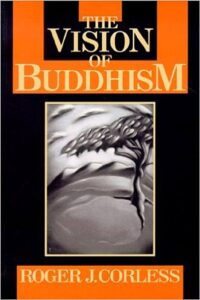
Vision of Buddhism bookcoverHowever, in keeping with my “only do things you want to do all year long,” I put The I Ching biography down and picked up “The Vision of Buddhism” by Roger J. Corless. This was an introductory Buddhism text recommended by Jan Nattier in her book “Once Upon A Future Time: Studies in a Buddhist Prophecy of Decline.” (More about that book tomorrow and subsequent days.)

I was attracted to this book by Corless’ effort to reject the Western tendency to teach Buddhism as a linear historical tale.

History is an academic discipline that has developed in the western hemisphere. The western hemisphere has been strongly influenced by the Abrahamic traditions (Judaism, Christianity, and Islam) and their conception of time as something created by God in and through which God manifests himself. On this view, time is meaningful. It has a beginning and an end, and the end is a goal, so that there is development, a progressive achievement of the goal. It makes sense to ask “What is the meaning of life?” A Christian hymn says “God is working his purpose out as year succeeds to year.” As soon as we substitute the word Buddha for God in this sentence, however, there is a problem.

History as a secular discipline has many of the features of the Abrahamic tradition’s view of time. God has been gradually eased out, and the notion of goal or purpose has become suspect, but the assumption that time is meaningful and that development is real does not seem to have been given up by even the most radical critics of the philosophy of history.

Buddhism, on the other hand, sees things as changing over time, but it does not see things as becoming more meaningful as they change. Change, for Buddhism, is a primary characteristic of cyclic existence (samsara), and history is just a lot of change. All that we can say about history, Buddhistically, is that as time goes on we get more of it.

I greatly enjoyed his summary of the basic story of the Buddha’s life, which uses the Tibetan story of the “Twelve Acts of the Buddha”:

  1. Waiting in the Tushita Heaven
  2. Growing in the womb of Mayadevi
  3. Birth as a human for the last time.
  4. Attainment of intellectual and physical skills
  5. Marriage and the enjoyment of sensuality
  6. Renunciation of the worldly life
  7. The practice of extreme self-denial
  8. The march to the center
  9. Overcoming Mara
  10. Attaining enlightenment
  11. Teaching
  12. Final Nirvana

His summary of the teaching of emptiness – or as he explains it, “transparency” – was very useful and I was looking forward to seeing how his college textbook published in 1989 would proceed. At that moment, however, I needed to run an errand with The Wife. (All year long I’ll do this!)

When I was able to return to my recliner, I picked up “The Vision of Buddhism” but instead of returning to where I had left off I decided to first browse the book index.

As a Nichiren Buddhist I’m always interested in what an introductory college text has to say about the Kamakura period of Japan’s Buddhist development.

Nothing. The word Kamakura does not appear in the index. The entry for “Japan, and Buddhism” points to pages 59-62.

This happens to be the place where Corless has devoted a little more than two full pages to “Nichiren Shoshu (“The Orthodox Nichiren Lineage”). There is no other index entry for Nichiren.

In Corless’ Chapter 2, The Value of Worldly Skills (Act 4 of the Buddha), in the subsection entitled “Social Buddhism,” he writes:

Social Buddhism
There are two forms of Buddhism that, in very different ways, emphasize social action above all else: the Nichiren Shoshu of Japan, and the reform movement of Dr. Ambedkar in India.

NICHIREN SHOSHU
Nichiren Shoshu, “The Orthodox Nichiren Lineage,” is nothing if not clear, organized, and motivated. It claims to have the true Buddhism, proves it by its physical success, and aims at the destruction of all other forms of religion. Its roots are in a medium length Mahayana Sutra, Saddharmapundarika Sutra or Sutra on the True Dharma which is like a White Lotus, called the Lotus Sutra for short. This text presents Shakyamuni in his gigantic-sized, Sambhogakaya form preaching the Mahayana doctrines that had been withheld from the Hinayana. It may have been written about the beginning of the Christian era. Partly perhaps because it was chosen by the Chinese monk Chih-i (531-597 C.E.) as the perfect expression of Mahayana, it has become one of the most popular texts of Far Eastern Buddhism. It was studied by Nichiren (1222-1282 C.E.), a Japanese Tendai monk practising on Mount Hiei. He seems to have decided that the scholastic exegesis of the Lotus Sutra had become over-subtle, and that its main points had been missed. The Sutra was not concerned, he felt, with voluminous doctrinal formulae, but with the victory of the oppressed under the leadership of the Bodhisattva Vishishtacharitra (“He of Superlative Action”; known as Jogyo Bosatsu in Japan), who is mentioned in chapter 15 of the Lotus Sutra as the leader of a vast army of Bodhisattvas who emerge from below the earth to worship the Buddha. Coming out of the earth signified, for Nichiren, the release of the lowly from injustice, and he identified Vishishtacharitra with himself. Later followers came to regard Nichiren as the pre-eternal Buddha, superior to all other Buddhas. Only by cleaving to the supreme doctrine of the Lotus Sutra could anyone be free, either relatively (i.e., within samsara) or absolutely (i.e., by leaving samsara). He expressed his contempt for competing forms of Buddhism in four staccato phrases:

  1. “Nembutsu muken”: Those who recite the Buddha’s Name in the hope of paradise will be reborn in hell.
  2. “Zen temma”: The practitioners of Zen are deluding demons.
  3. “Shingon bokoku”: The Tantric Buddhists, who say they are protecting the country, are traitors.
  4. “Ritsu kokuzoku”: The Buddhists who punctiliously observe the monastic regulations are rebels.

The government attempted to execute Nichiren as a troublemaker, but he was saved by a miracle, and exiled to the island of Sado between 1271 and 1274. He founded two temples before he died, and began the Hokke Shu, “Lotus Lineage” which emphasized the great merit of reciting the mantra NAM’MYOHO-REN-GE-KYO, “Hail to the Lotus Sutra.” Since the Lotus Sutra says that reciting a single phrase from it earns as much merit as reciting all of it, and since, according to classical Chinese thought, the essence of a book is encapsulated in its name or title, those who recite NAM’MYO-HO-REN-GE-KYO will find that they get all that they need.

After Nichiren’s death, the lineage did not have a large following until Toda Josei (1900-1958 C.E.) became president of the Soka Gakkai, “Value-Creation Society,” in 1951. Soka Gakkai is a lay organization that grew out of the educational theories of Makiguchi Tsunesaburo (1871-1944) who, in his four-volume work Soka Kyoikugaku Taikei, “A System of Value-Creation Education,” written between 1930 and 1934, offered the unexceptionable idea that education should increase the student’s sense of values. Toda befriended Makiguchi, both joined the Nichiren Shoshu (an outgrowth of the Hokke Shu), and, after Makiguchi’s death, Toda whipped up what had been a study circle into a tightly run missionary society. He vowed to obtain the conversion of seven hundred and fifty thousand families before his death, and far exceeded his goal.

Today, Soka Gakkai is a potent force in Japanese society, able to stage breathtakingly unified mass meetings and, through the Komeito, “Clean Government Party,” it is powerfully influential in the Diet (the Japanese parliament). Its militancy alarms non-members, who may argue that it is not really Buddhism. Soka Gakkai claims, for instance, that Japan lost the Second World War because the Four Divine Kings deserted Japan when the Lotus Sutra was neglected. Soka Gakkai also has a world mission, with an American headquarters near Los Angeles and branches throughout the United States. Members of Soka Gakkai in America, where it is called Nichiren Shoshu of America (N.S.A.), attribute such varied practical benefits as release from drug addiction, a happy sex life, improved sports performance, good business deals, and successful hitch-hiking to the persistent recitation of the mantra NAM’MYO-HO-REN-GE-KYO. Unlike most Buddhists, they make great efforts to gain converts, and may claim that other Buddhists are not “real” Buddhists. And, whereas Nichiren himself originally claimed the Lotus Sutra as the salvation of Japan, American devotees patriotically use it to pay homage to the Stars and Stripes, sometimes with fife-and-drum bands.

After reading this I was exhausted and took a nap. I set my watch’s timer for 30 minutes and closed my eyes.

Napping I don’t mind doing for the rest of the year. Reading Corless’ book, not so much. When I got up from my nap I went to my office to write this. Writing is something I want to do all year. Explaining how many ways Corless gets Nichiren Buddhism wrong, I can do without.

I’ll go do gonyo now while my wife proof-reads this. After I do my 32 Days of the Lotus Sutra post I’ll consider my wife’s suggestions and post this. Tomorrow I plan to pick up Jan Nattier’s “A Few Good Men: The Bodhisattva Path according to The Inquiry of Ugra (Ugraparip̣rcchā)


1
The Wife’s objection: I feel this is misleading. The rule is – What you do on NYD will dominate or be a major focus for the coming year. Therefore you want to do pleasurable and rewarding things. return