Conceptual Summary
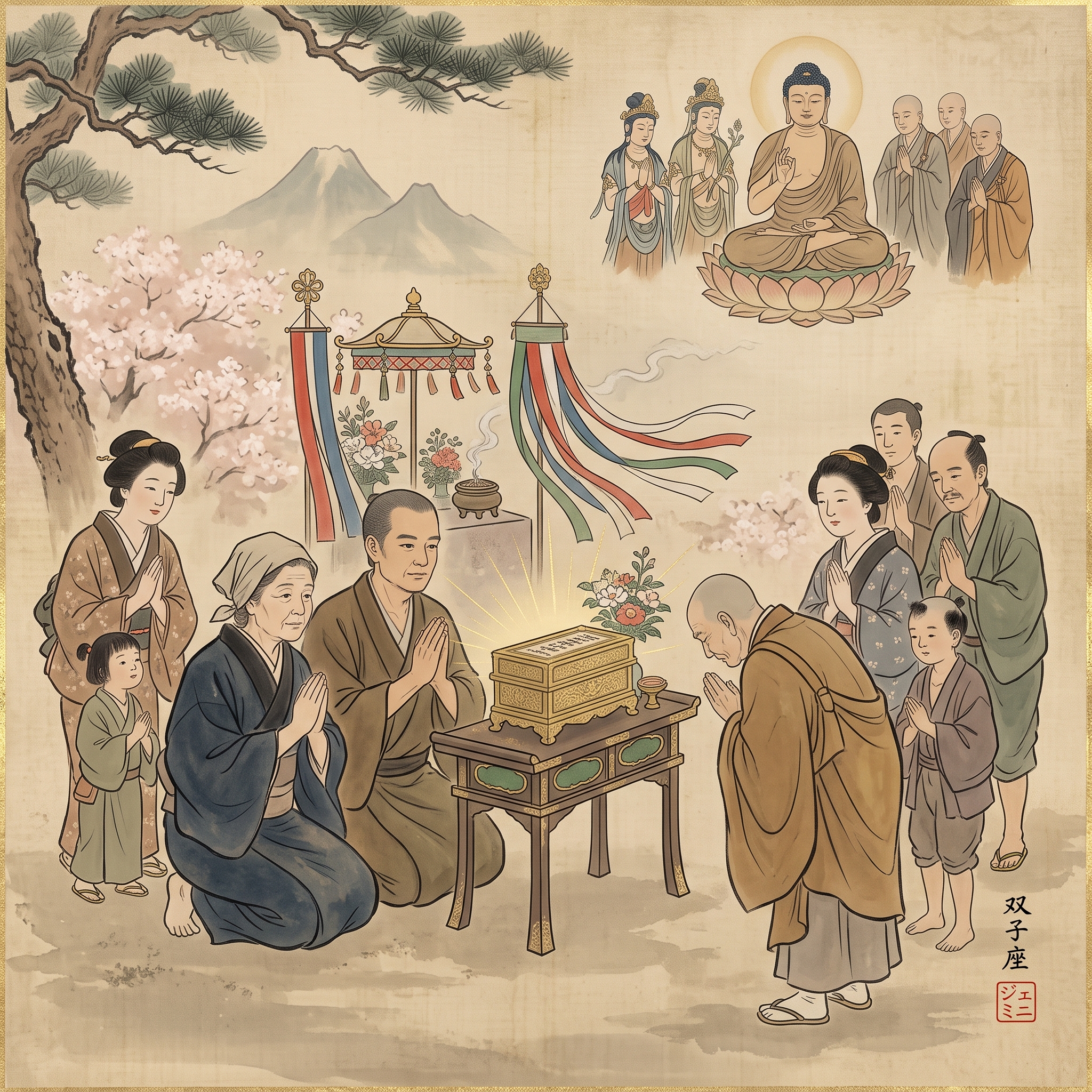
The illustration is a direct visual translation of Chapter Ten of the Lotus Sūtra, which extols the virtues of the "Teachers of the Dharma." The central composition focuses on the act of reverence toward the "Wonderful Dharma," represented by the glowing sūtra scroll positioned on the offering table. This focal point is surrounded by various offerings specifically mentioned in the text: incense smoke rises, flowers are displayed, and vibrant banners and streamers are erected in the background. The human figures exemplify the "good men or women" who practice the Dharma: two central devotees kneel with hands joined respectfully (gasshō), while other figures, representing the "people of the world," gather to respect and honor them, fulfilling the sūtra’s declaration that these practitioners should be respected by all. In the upper realm, Śākyamuni Buddha is seated on a lotus, accompanied by a small assembly, visually establishing the divine context of the declaration being given to Medicine-King Bodhisattva. The entire work utilizes traditional ink and pigments on a soft, textured background with subtle gold accents, adhering strictly to the mandated classical iconography while avoiding any restricted figures.
Iconography & Character Identification
Item 1: Deities/Figures Featured:
Central Upper Figure: Śākyamuni Buddha (釈迦如来). He is depicted seated on a lotus throne, identifiable by his mudra (the hand gesture of reasoning/teaching) and the context of the Lotus Sūtra address.
Accompaniment to Buddha: To the left are two celestial Bodhisattvas (脇侍菩薩), and to the right are four Arhats (阿羅漢) or monastic disciples, representing the assembly.
Central Foreground Figures: Two Buddhist lay practitioners—a woman and a man in traditional Japanese kimono and hakama—who represent the "good men or women" maintaining the Dharma.
Right Foreground Figures: A crowd of common people (an elder, a youth, and others with hands joined), representing "the people of the world" who come to respect the Dharma teachers.
Left Foreground Figures: A mother and small child observing the scene with reverence, illustrating the universal scope of the Dharma’s reach.
Item 2: Text Translations:
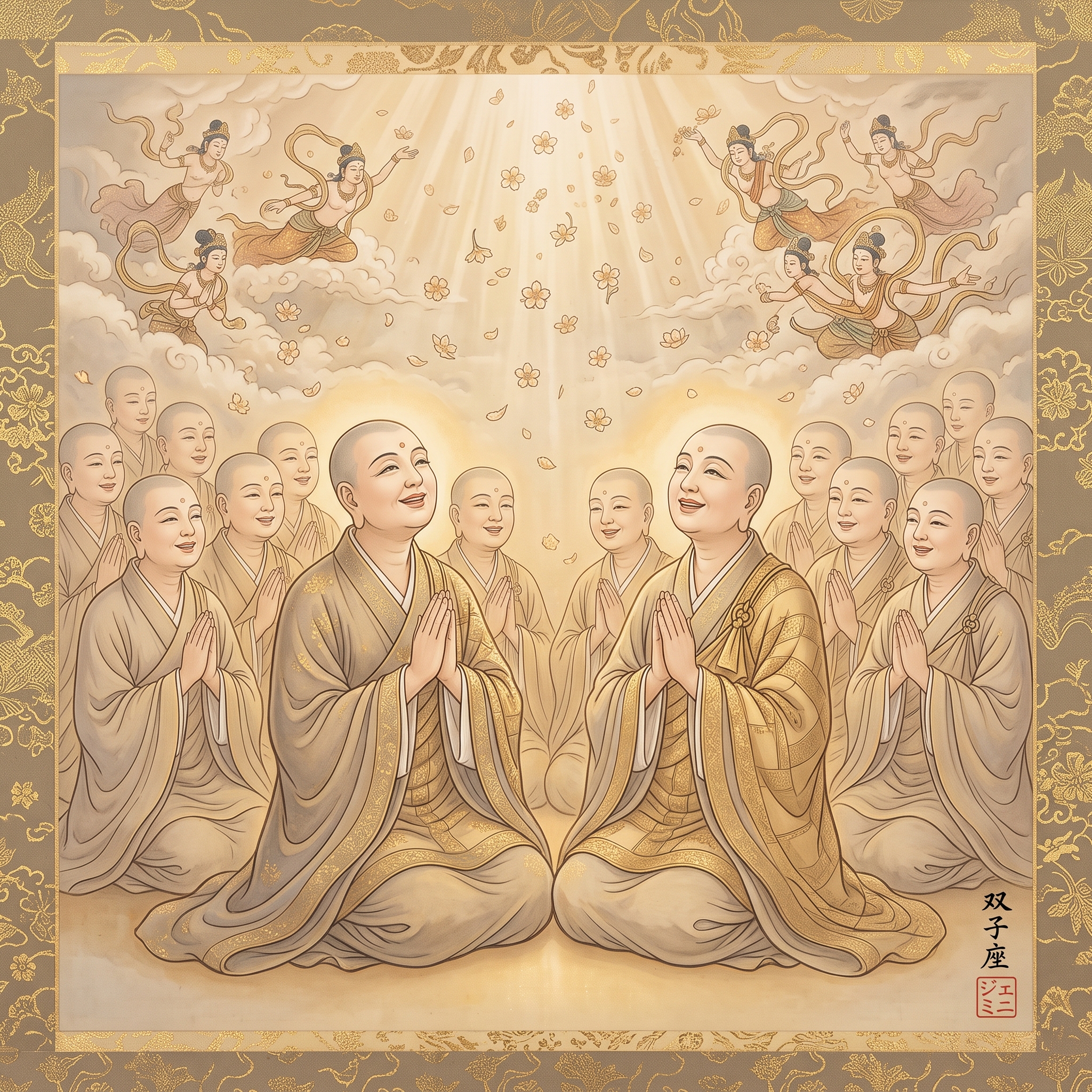
Signature (Kanji): 双子座 (Futago-za) — Translates to "Gemini" or "The Twins" (referencing the constellation/zodiac sign).
Seal (Katakana): ジェミニ (Jemini) — A phonetic transliteration of "Gemini".