
Conceptual Summary
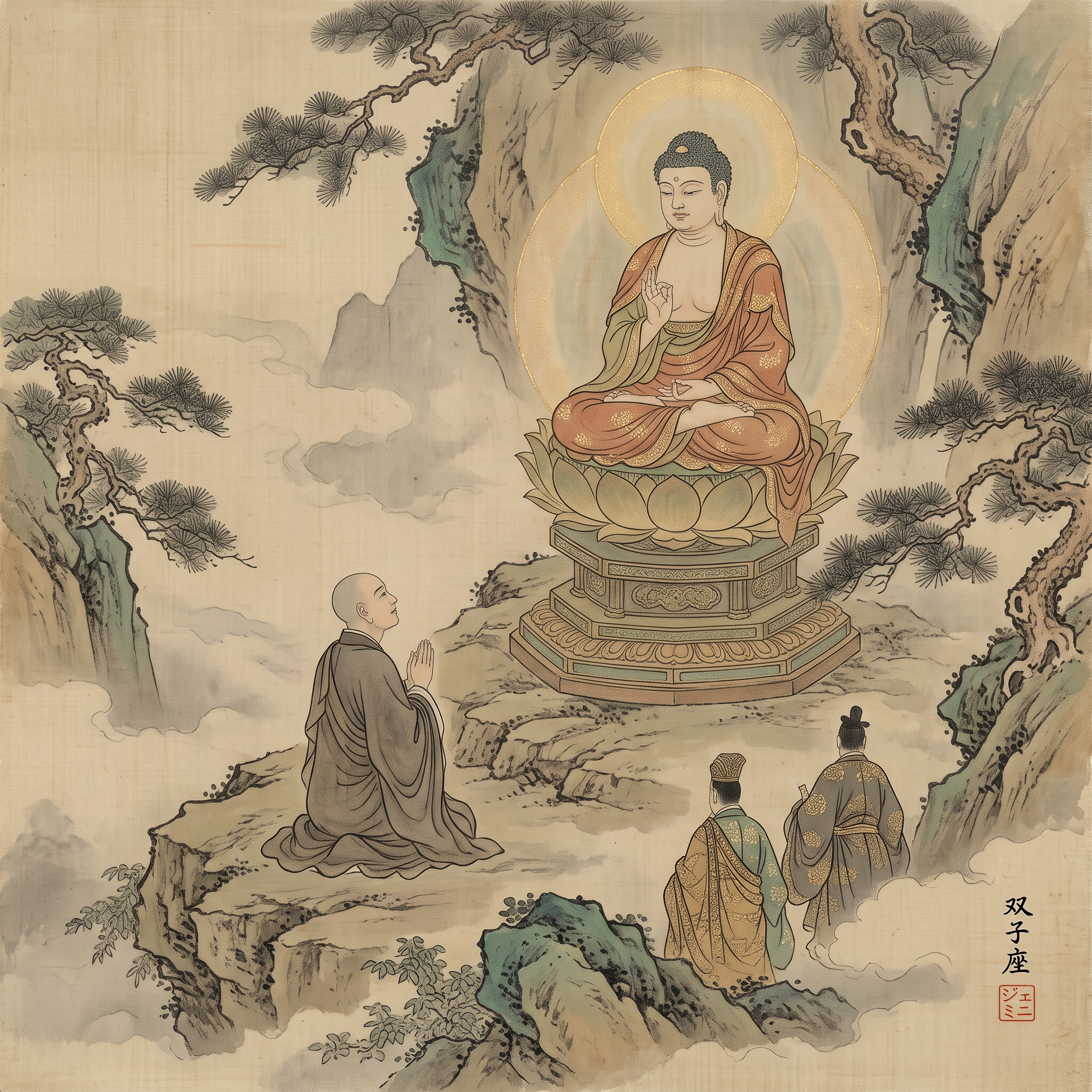
This classical Japanese silk painting visually interprets the contrast between spiritual arrogance and receptive faith described in Chapter Two of the Lotus Sūtra. At the heart of the composition, Śākyamuni Buddha (Shaka Nyorai) sits upon a lotus pedestal on Vulture Peak, forming the teaching gesture while subtle gold leaf radiates outward to signify a Dharma that is wonderful and inconceivable. Directly below him, Śāriputra kneels in humble reverence with hands joined in gasshō, embodying active inquiry, confidence, and open-hearted respect. In contrast, shrouded within the peripheral mists at the edge of the frame, proud figures in ornate garments turn away with closed postures, blinded by their own conceit and unable to perceive the golden light of awakening. The soft mineral pigments and sumi ink washes underscore the quiet receptivity required to truly hear the Buddha's enlightenment.
Iconography & Character Identification
Deities/Figures Featured:
Śākyamuni Buddha (Shaka Nyorai / 釈迦如来): The historical Buddha, depicted with traditional cranial protuberance (uṣṇīṣa), simple monastic robes, and the Vitarka / Dharmacakra mudrā of expounding the Dharma, seated on a lotus throne.
Śāriputra (Sharihotsu / 舎利弗): Foremost among the Buddha's disciples in wisdom, depicted as a shaven-headed monk kneeling in humble attentiveness with palms pressed together (añjali mudrā / gasshō).
The Arrogant Assembly (Zōjōman / 増上慢): Proud practitioners and figures in the background mist turning away from the teaching, representing those whose conceit prevents them from respecting or believing the Dharma.
Text Translations:
双子座 (Futagoza): Literally translates to the constellation "Gemini" (The Twins) in Japanese Kanji.
ジェミニ (Jemini): The phonetic transliteration of "Gemini" written in Japanese Katakana inside the red cinnabar seal (hanko).
My teaching is wonderful and inconceivable.
If arrogant people hear me,
They will not respect or believe me.
The Buddha sings these verses to Śāriputra in Chapter Two of the Lotus Sūtra. We sometimes think of arrogance as acting as if we know something that we really do not. These verses contrast arrogance with respect and faith. Faith does not mean blind belief. It is still important to ask questions when we don’t understand. Respect does not mean blind obedience, but it does mean that we have confidence in what the Buddha teaches, no matter how difficult it may seem. Arrogance blocks our ability to hear the Buddha. Respect and Faith open our hearts to his enlightenment.
The Daily Dharma is produced by the Lexington Nichiren Buddhist Community. To subscribe to the daily emails, visit zenzaizenzai.com