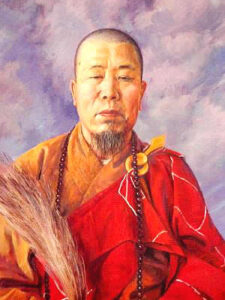
 A short biography of Chinese Master Hsuan Hua can be read here:
A Brief Account of the Life of the Venerable Master Hsuan Hua (1918-1995)

A short biography of Chinese Master Hsuan Hua can be read here:
A Brief Account of the Life of the Venerable Master Hsuan Hua (1918-1995)
But now, it has been over 200 years since the beginning of the Latter Age of Degeneration. I have not been allowed to meet opponents in debate; instead I have been banished with my life in jeopardy. It proves that the warning in the Lotus Sutra about much hatred and jealousy after the death of the Buddha is not an empty threat. It also proves that we are in the beginning of endless warfare and in a decadent world of corruption where unreasonableness takes precedence over reason.
Therefore, although my comprehension of the Lotus Sutra is not worthy even one ten millionth of that of T’ien-t’ai and Dengyō, I dare say that my endurance on its behalf and compassion for the people are beyond these masters. I am sure that I deserve to receive heavenly protection, but there is not even a shred of it. Instead I have been condemned to heavier and heavier penalties. Looking back in this light, I wonder whether or not I am a practicer of the Lotus Sutra and whether or not various gods and deities have left this land.
However, if only I, Nichiren, had not been born in this country, the twenty-line verse of the thirteenth chapter, “The Encouragement for Upholding This Sutra,” in the fifth fascicle of the Lotus Sutra would be empty words and the Buddha would almost be a great liar. Those uncountable number of bodhisattvas, who made the vow to uphold the Lotus Sutra, would be accused of committing the same sin of lying as Devadatta did. The verse says, “Ignorant people will speak ill of us, abuse us, and threaten us with swords or sticks.”
In the world today, is there any Buddhist priest other than me, Nichiren, who is spoken ill of, abused, and threatened with swords or sticks on account of the Lotus Sutra?
Kaimoku-shō, Open Your Eyes to the Lotus Teaching, Writings of Nichiren Shōnin, Doctrine 2, Pages 55
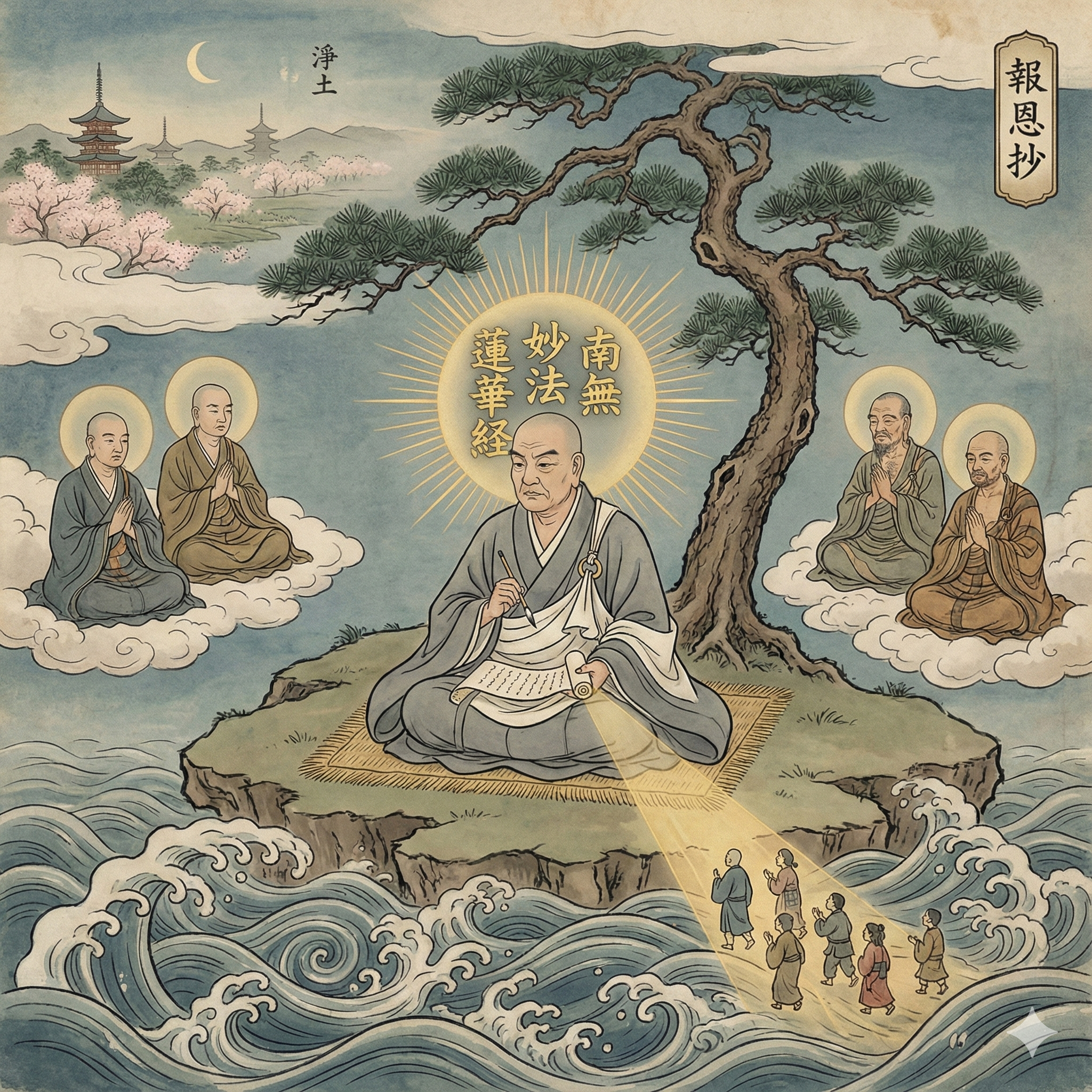
Examining Buddhist Iconography
I'm now focusing on the key figures and concepts within the text, like Nichiren and Nāgārjuna. I'm aiming to understand the core principles expressed through the language, identifying the essential elements for the illustration.
Analyzing Conceptual Relationships
I'm now working to connect the various figures and concepts. I'm focusing on how to visually represent the hierarchies within the ideas, using the layout to demonstrate relationships. The goal is to convey the central metaphor of removing obstacles to enlightenment.
Developing Visual Narrative
I'm now structuring the visual elements, concentrating on the placement and scale of figures and the overall feel. I am organizing the composition to emphasize Nichiren and his role within the "defiled world". The use of color and texture is also in focus.
Examining Image Alignment
I'm currently reviewing how the image reflects the user's instructions. It's a square illustration in a Japanese Buddhist style. Nichiren is the central focus, and kanji are only used where essential, like for "Namu Myoho Renge Kyo" and the source title.
Verifying Prompt Accuracy
I'm now carefully checking how well the image responds to the user's instructions. The piece is a square illustration with clear adherence to the Japanese Buddhist style. It correctly identifies Nichiren as the focal point and uses kanji only for core terms. The elements of the text, like the four masters and Pure Land, are captured in the composition. The illustration aligns well with the request, so I'm finalizing its preparation.
Kanji translation
1. Center (Above the main figure)
南無妙法蓮華経
Romaji: Namu Myōhō Renge Kyō
Translation: "Devotion to the Mystic Law of the Lotus Sutra"
Significance: This is the primary mantra (known as the daimoku) chanted in Nichiren Buddhism. The figure in the center is Nichiren, the founder of this school of Buddhism, and he is shown writing or invoking this mantra.
2. Top Right (In the cartouche)
報恩抄
Romaji: Hōon-shō
Translation: "On Repaying Debts of Gratitude" (or "Treatise on Gratitude")
Significance: This is the title of one of Nichiren's five major writings. The image is likely a visual representation of the themes found in this specific treatise.
3. Top Left (Near the moon and pagodas)
浄土
Romaji: Jōdo
Translation: "Pure Land"
Significance: This refers to a Buddhist celestial realm or paradise. In the image, it is depicted as a peaceful, idyllic land in the distance, contrasting with the turbulent, wavy sea (representing the suffering of the mundane world) below. The path of light leading from Nichiren is guiding people towards this state.
With Nichiren’s boundless compassion, “Namu Myoho Renge Kyo” will be heard forever even beyond the ten-thousand year period of Degeneration. It has the merit of curing the blindness of all people, blocking the way to hell. This merit is superior to those of Dengyō in Japan, T’ien-t’ai in China, Nāgārjuna in India or Kāśyapa who was the Buddha’s disciple. Practice for a hundred years in the Pure Land is not worth the merit of chanting the daimoku for one day in this defiled world. Propagation of the daimoku in a two-thousand year period following the death of the Buddha is not worth as much as spreading the daimoku for even a short while in the Latter Age of Degeneration. This is not from my wisdom; it is solely due to the time in which I live.
Nichiren wrote this passage in his Essay on Gratitude (Hōon-jō). In other writings, he explained that the superiority of the Lotus Sūtra is not in its power to change the world, but its power to lead all beings, without exception, to the same enlightenment the Buddha found. In this sūtra, the Buddha gives us a different idea of time, the world and our lives. All of these are truly boundless, and the Buddha is always here teaching us.
The Daily Dharma is produced by the Lexington Nichiren Buddhist Community. To subscribe to the daily emails, visit zenzaizenzai.com
Began the New Year at the Sacramento Nichiren Buddhist Church ringing the bell 108 times.
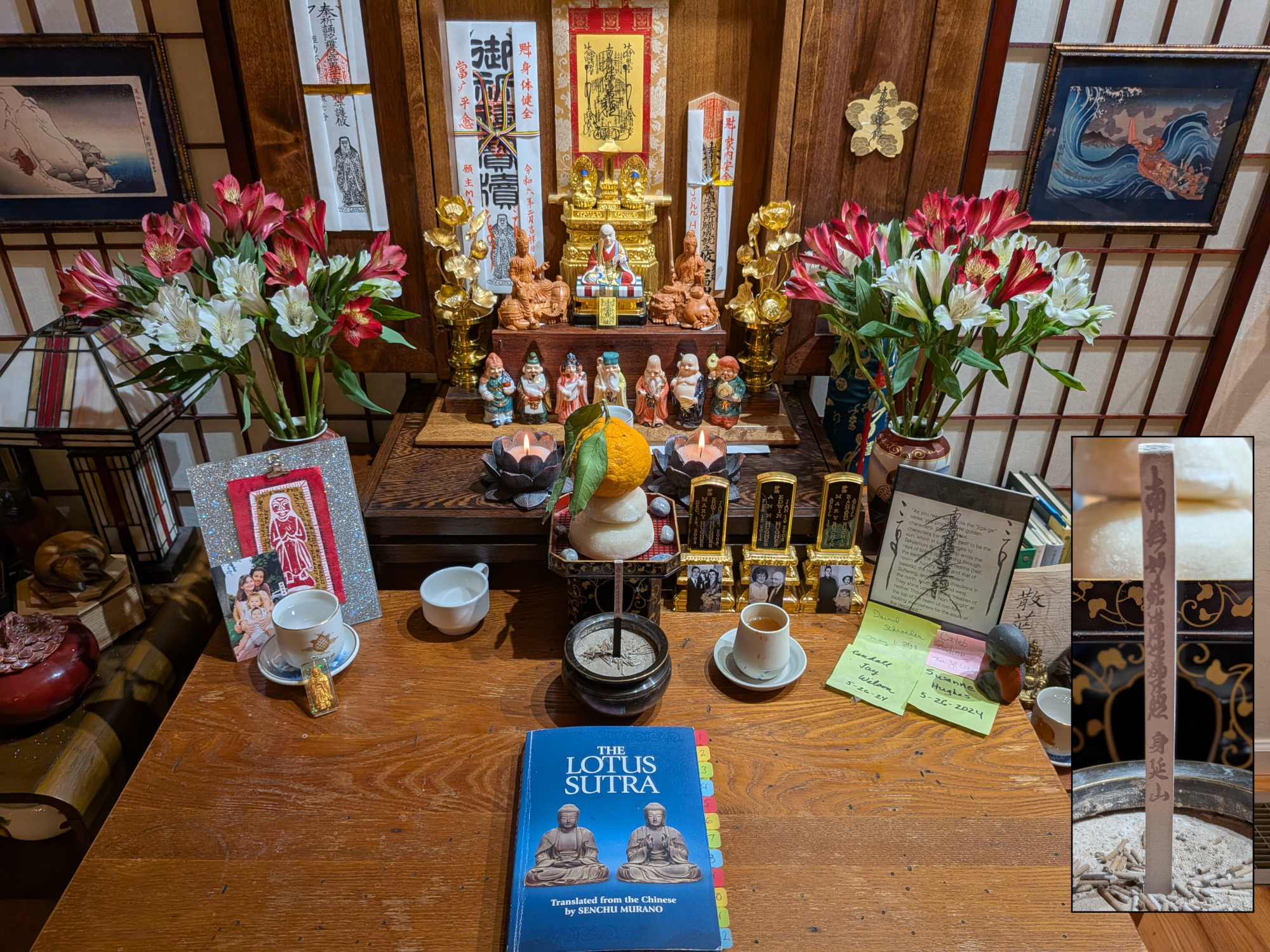
For my first service of the New Year I used special incense that says “Namu Myoho Renge Kyo, Mount Minobu” when it burns.
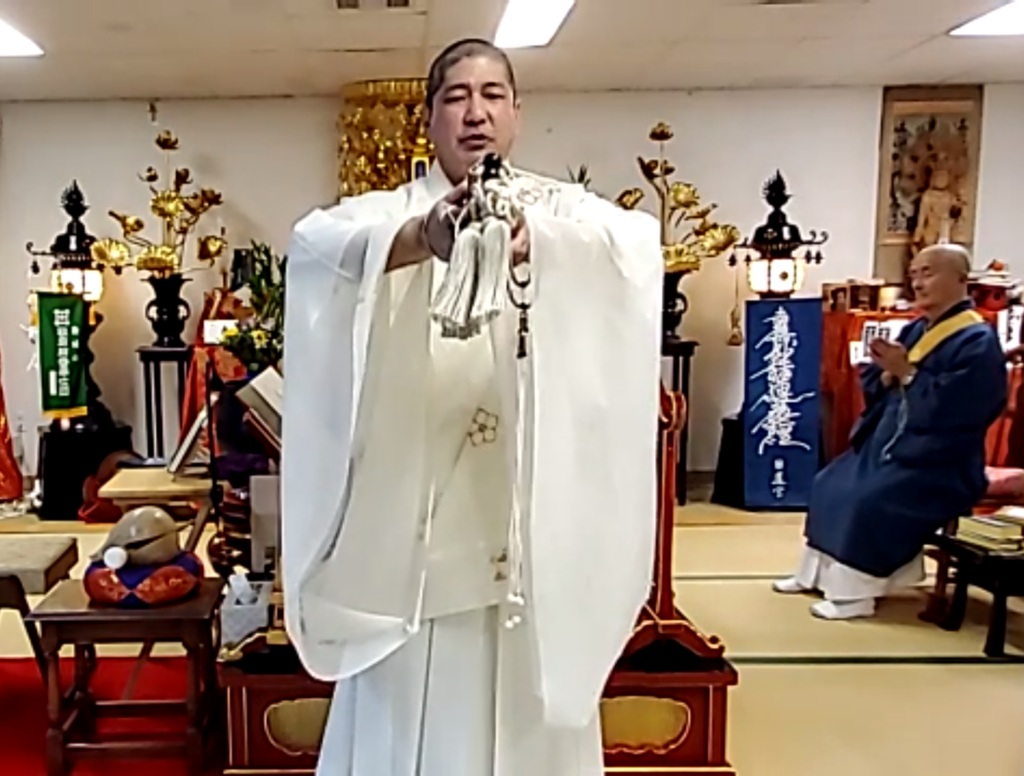
And to complete the morning, I attended the New Year service at Kannon Temple in Las Vegas with Shoda Kanai Shonin and his father, Rev. Shokai Kanai.
Ignorant of the past and future [these Four Chinese] sages cannot help in the future lives of their parents, rulers and teachers. Not knowing what they owe to them in the past, they cannot be considered truly holy and wise. This is why Confucius said, “Truly wise and holy men do not exist in China, but in the land to the west, there is a man called Buddha. He is a true sage.”
Confucius thus indicated Confucianism, which is non-Buddhist (geten), to be the first step toward Buddhism. It would be easier, Confucius knew, for the people to understand the fundamental Buddhist teachings of commandments, meditation, and wisdom if they first learned the fundamental Confucian concepts of rituals and music.
He therefore taught the kings’ subjects to be loyal to their rulers, children to be devoted to their parents, and students to respect their teachers. Grand Master Miao-lê therefore declared in his Annotations on the Great Concentration and Insight: “The dissemination of Buddhism in China indeed depended on Confucianism. Buddhism found its way by following on the heels of the rituals and music of Confucianism.”
Kaimoku-shō, Open Your Eyes to the Lotus Teaching, Writings of Nichiren Shōnin, Doctrine 2, Pages 30
For the New Year I’ve decided to repost the quotes I’ve gathered from the seven-volume Writings of Nichiren Shōnin. I collected those quotes originally during my 100 Days of Study project that started in March 2018. Since then Nichiren Shu has published a second edition of the writings.
My ostensible reason for reposting the quotes is to update them to reflect the page numbers from the second edition. To tell if a quote you find on this website is from the first or second edition, look at the bottom of the article for the “2ndEd” tag.
However, the real reason is I’m reposting these quotes is because I want to have something to read each day and this is a simple, if time consuming, project.
In a perfect world, I’d sit down and read the seven volumes again and gather a new collection of quotes. With more than a decade of study behind me I’m sure I’d find new material overlooked the first time. But with two grandkids to babysit and the requirements of my “Honey, do…” chores, I just don’t think I’ll have the time.
Between the 100 Days of Study, the Phrase a Day booklet and Rev. Shinkyo Warner’s Daily Dharma, this website contains more than 1,700 quotes from Nichiren’s writings. I’m unsure how many of those quotes I gathered from the Writings of Nichiren Shōnin. I expect that I will be posting daily quotes well into 2027 and maybe beyond.
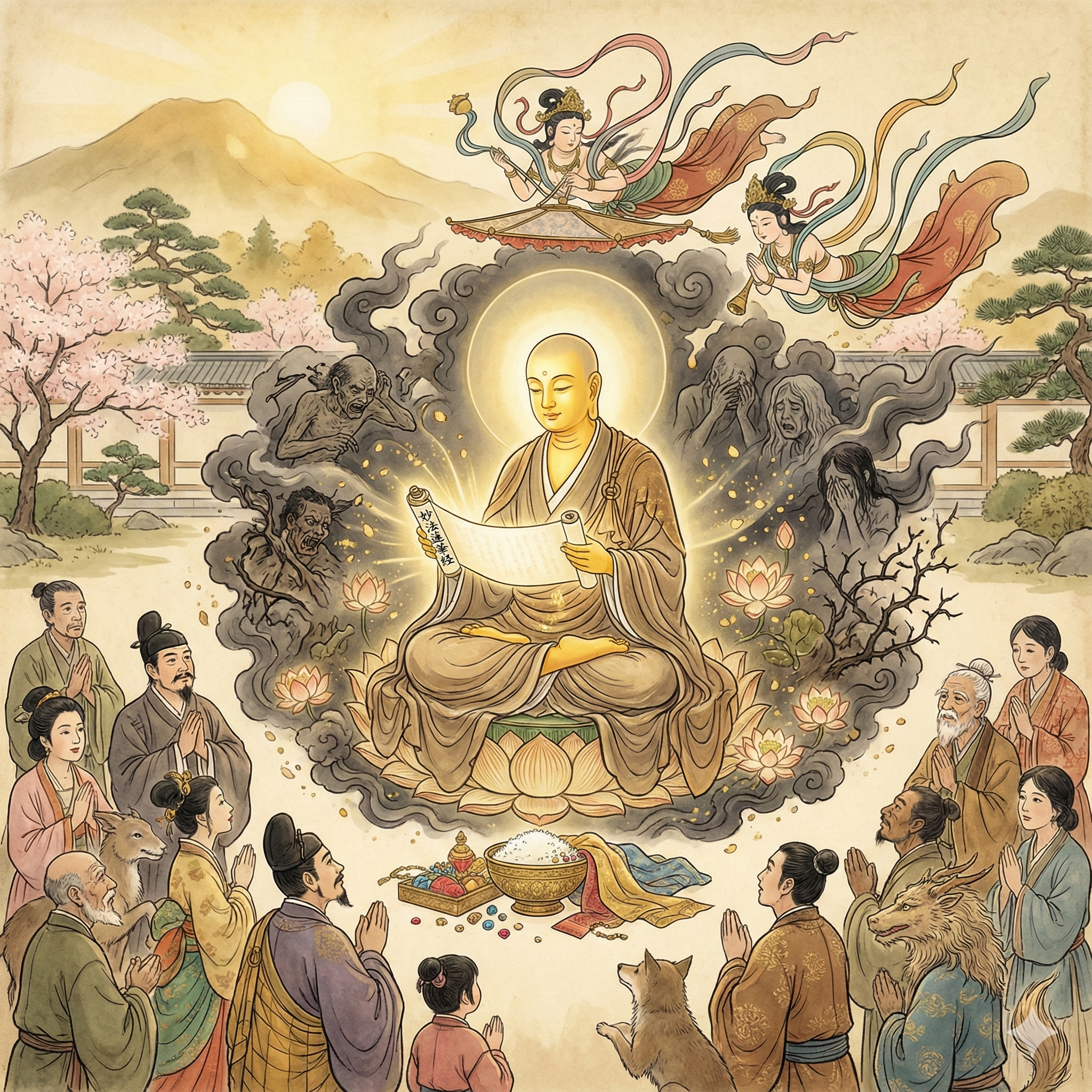
Visualizing Sutra Benefits
I'm now focusing on a square illustration adhering to Japanese Buddhist iconography, mirroring the text's description of sūtra reading benefits. I'm exploring ink wash and woodblock aesthetics, aiming for a muted, natural color palette. The goal is to convey the promised benefits visually within this stylistic framework. I'm considering compositions that effectively represent these ideas in a culturally resonant way.
Mapping Sūtra Rewards
I'm now iterating on the composition. The central figure remains, but I'm adjusting the radiating light to better integrate the symbols of suffering dissolving into peace. I'm focusing on the visual flow and balance between the central figure and the surrounding elements. The use of gold accents is being refined to enhance the overall harmony. I'm also ensuring a reverential approach to the central figure, in line with what would be required of a sage, but without distracting from the central visual theme.
Constructing a Sūtra Scene
I'm now establishing the core components. The central figure, reading the sūtra scroll, is now radiating light, representing the benefits of sūtra recitation. Surrounding this figure, visual representations of suffering are being transformed into symbols of peace and abundance, with details such as the figures becoming lotuses. A temple garden setting has also been established. I'm focusing on the interplay between the central focus and the environment now.
Analyzing Visual Correspondence
I'm currently focused on evaluating the visual alignment between the user's request and the generated output. The task involves a comparative analysis, specifically examining how well the image communicates the 'Illustrated Daily Dharma' concept through its square format and Japanese Buddhist motifs. Additionally, I am meticulously assessing the visualization of the sutra's benefits within the image.
Refining the Visualization
I'm now comparing the generated visual to the initial prompt. It effectively encapsulates the essence of an "Illustrated Daily Dharma" piece within a square format, replete with Japanese Buddhist imagery. The image also depicts the sutra's benefits, such as alleviating suffering and gaining reverence, through its visual elements. The textual elements are minimal and well-placed, a perfect fit for the user's initial instructions. The output aligns precisely with the user's requirements.
Kanji translation
the kanji text written on the scroll held by the central figure is:
妙法蓮華経
This is read as Myōhō Renge Kyō in Japanese.
It translates to "The Sutra of the Lotus Flower of the Wonderful Dharma", which is commonly known in English as the Lotus Sutra.
Anyone who reads this sūtra
Will be free from grief,
Sorrow, disease or pain.
His complexion will be fair.
He will not be poor,
Humble or ugly.
All living beings
Will wish to see him
Just as they wish to see sages and saints.
Celestial pages will serve him.
The Buddha sings these verses in Chapter Fourteen of the Lotus Sūtra. When we cultivate the mind of the Buddha, and bring his teachings to life, we help other beings find true happiness. This is different from our normal pattern of attempting to manipulate what others think about us through bribery, threats, and other forms of coercion. When we help others find their minds, they realize that they share our true mind of joy and peace.
The Daily Dharma is produced by the Lexington Nichiren Buddhist Community. To subscribe to the daily emails, visit zenzaizenzai.com
When the sun shines bright in the sky, everything is made clearly visible on the earth. In the same manner, when one knows the teachings of the Lotus Sutra, he will understand the meaning of the occurrences in the world. For the sake of those who live in the Latter Age of the Declining Law, who are too infantile to understand the Lotus or the Perfect Truth, and who are ignorant of the treasure of the truth of the “Three Thousand Existences in One Thought ” the Eternal Buddha will hang the treasure of the five characters (Myo-Ho-Ren-Ge-Kyo) around people’s necks. The four great Bodhisattvas who are apostles will protect the keepers of the five letters, as T’ai Kung-wang and Duke of Chou supported the young ruler Chen-wang, or as the four elders attended Emperor Hui-ti in China.
Great Compassion of the Buddha, Kanjin Honzon Sho
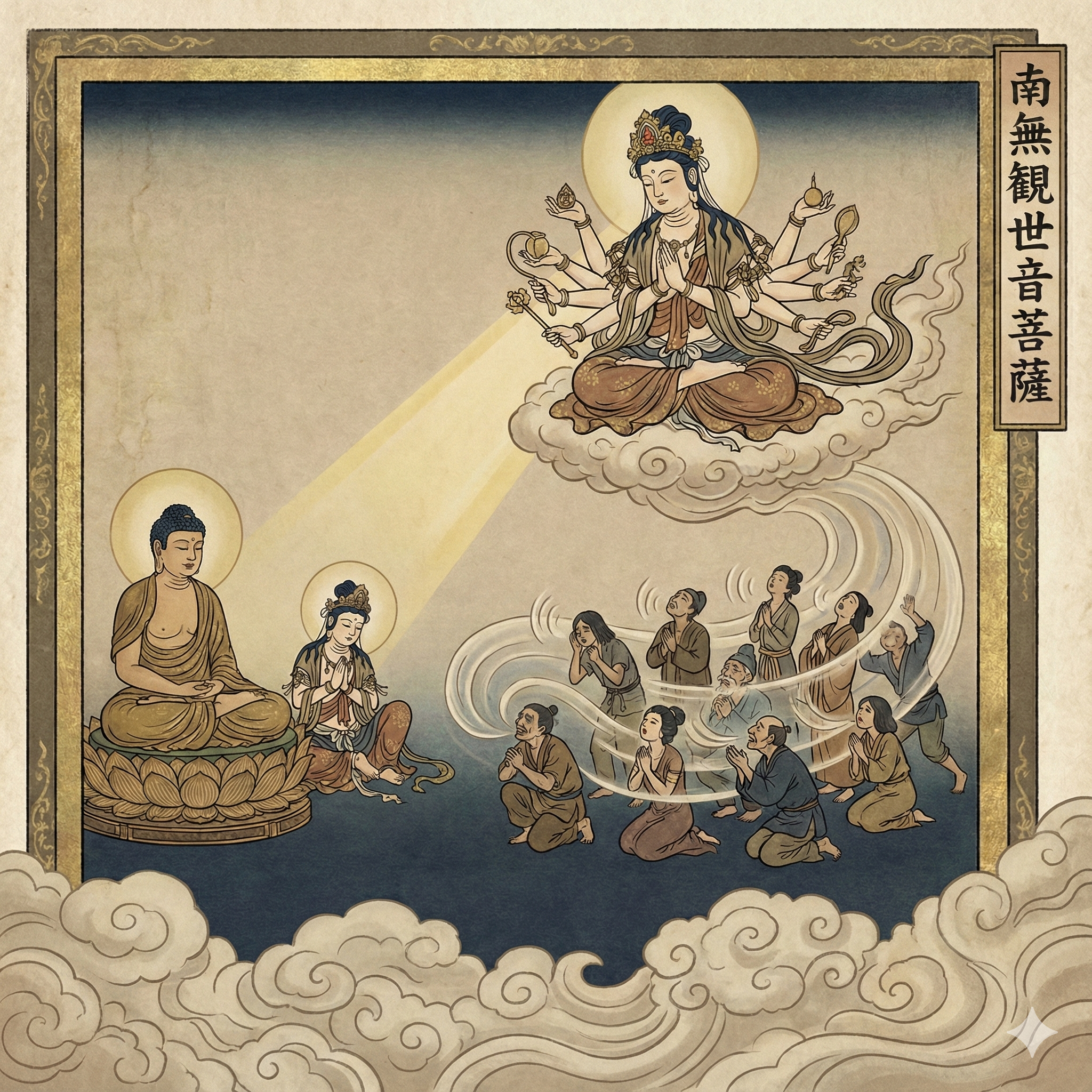
Conceptualizing Compassion
I'm focusing on the Lotus Sūtra and Kannon, specifically their relationship to the square format. I'm exploring various Japanese Buddhist iconography to find the most suitable visual representation of compassion within that framework.
Visualizing the Bodhisattva
I'm now zeroing in on composition, aiming for a visual narrative. The square format demands careful arrangement. I'm placing the Buddha and Endless-Intent Bodhisattva prominently, Kannon in the heavens, and the suffering beings below with connecting lines, and a minimalist calligraphic scroll. The goal is a flowing, symbolic illustration that emphasizes the interconnectedness of suffering and compassion.
Verifying the Visuals
I'm now cross-referencing the initial request with the resulting visual. It appears the core tenets of the illustration are holding up. The square format and the inclusion of the key figures are all accounted for. The interaction I was aiming for seems to have come through, too. The text inclusion will need a closer look.
Reviewing the Composition
I'm checking the output against the specified features. The square layout and key figures are as instructed. The intended interaction among them is present. I will need to double-check the integration of the text elements.
Kanji translation
The kanji text located in the vertical banner on the top right reads:
南無観世音菩薩
Here is the breakdown and translation:
Reading (Romaji): Namu Kanzeon Bosatsu
Translation: "Homage to Kanzeon Bodhisattva" or "I take refuge in the Bodhisattva Who Perceives the Sounds of the World."
Explanation of the terms:
南無 (Namu): A Buddhist term meaning "hail to," "homage to," or "I take refuge in."
観世音 (Kanzeon): The full name of the Bodhisattva of Compassion, often shortened to just Kannon (観音). It literally translates to "One who perceives the sounds (cries/prayers) of the world." This identifies the multi-armed figure in the upper right of the illustration.
菩薩 (Bosatsu): Meaning "Bodhisattva," an enlightened being who compassionately refrains from entering nirvana to help others.
The Buddha said to Endless-Intent Bodhisattva: “Good man! If many hundreds of thousands of billions of living beings hear [the name of] World-Voice-Perceiver Bodhisattva and call his name with all their hearts when they are under various sufferings, World-Voice-Perceiver Bodhisattva will immediately perceive their voices, and cause them to emancipate themselves [from the sufferings].”
The Buddha gives this description of World-Voice-Perceiver Bodhisattva (Kuan-Yin, Kannon, Kanzeon, Avalokitesvara) to Endless-Intent Bodhisattva in Chapter Twenty-Five of the Lotus Sūtra. World-Voice-Perceiver is the embodiment of compassion, a living manifestation of the desire that all beings be happy and free from suffering. By calling the name of this Bodhisattva, we awaken the compassion within ourselves. We become this Bodhisattva and remove our fear of suffering. With this awakening we can be fully present for those in this world of conflict who are suffering and liberate ourselves from the delusion and isolation of our own suffering.
The Daily Dharma is produced by the Lexington Nichiren Buddhist Community. To subscribe to the daily emails, visit zenzaizenzai.com
I asked Google Gemini to illustrate this Daily Dharma:
The Buddhas, the World-Honored Ones,
Say only expediently [that some are not Bodhisattvas]
To tell the truth,
All living beings taught by them are Bodhisattvas.
This verse comes from Chapter Three of the Lotus Sūtra. In Chapter Two, the Buddha declared that he only teaches Bodhisattvas. If we believe that we are not Bodhisattvas, we could conclude that the Buddha does not teach us. Part of what the Buddha is explaining here is that we are all Bodhisattvas. The way to reach the Buddha’s enlightenment is by living as Bodhisattvas: beings whose every breath is intended to improve our world.
I got this response:
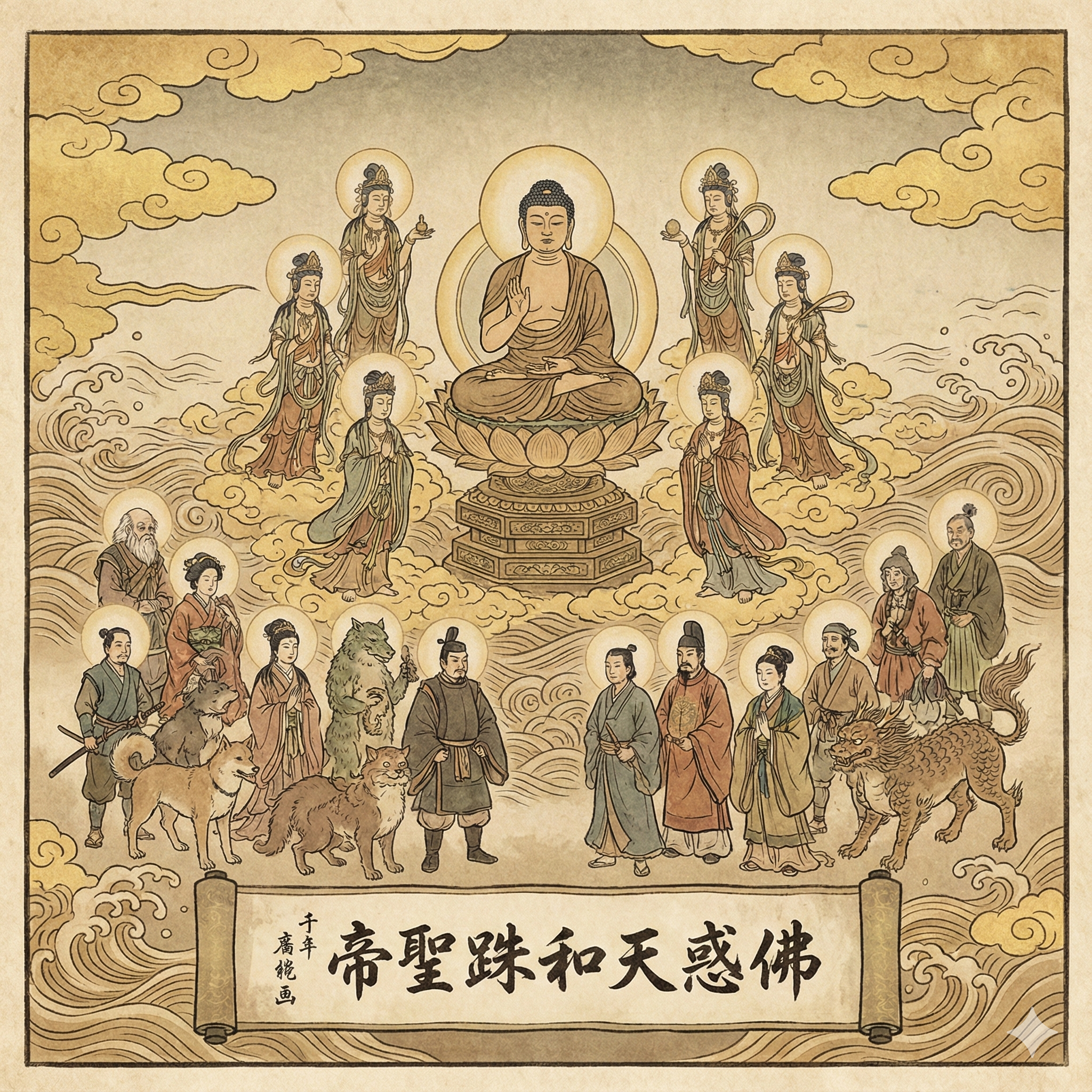
I checked the Kanji text in Google Lens:
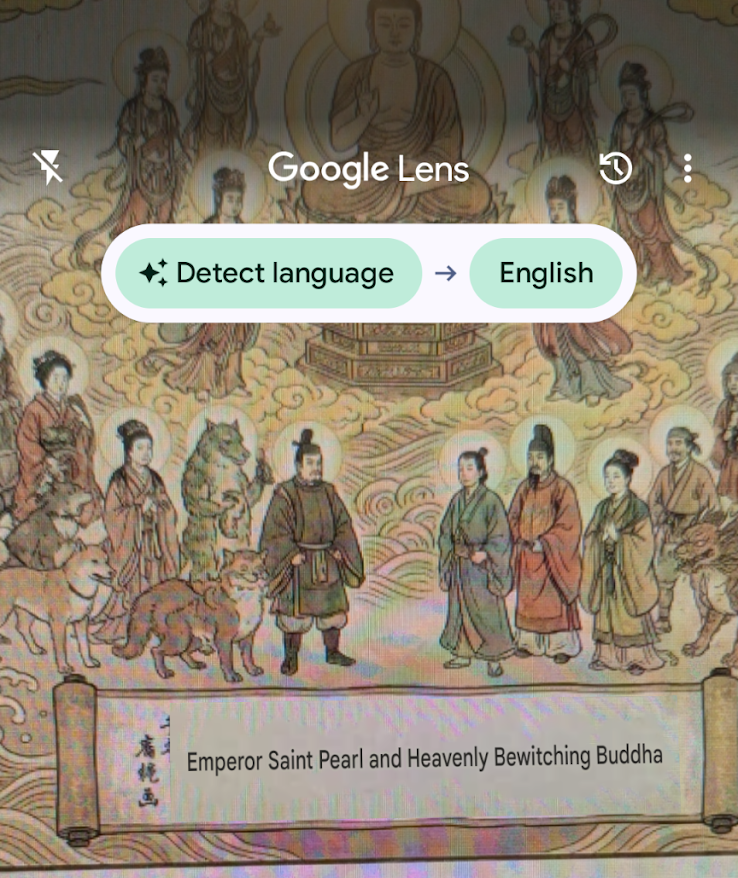
That didn’t make any sense so I asked Nano Banana, the image editor in Google’s Gemini, to translate the text. Nano Banana said:
The text on the scroll is in traditional Chinese/Japanese characters.
Reading from right to left, the large characters are: 佛感天和跡聖帝 (Fó gǎn tiān hé jī shèng dì)
The smaller characters on the left are: 千年廣繪画 (Qiān nián guǎng huì huà)
A direct translation is roughly:
佛感天和跡聖帝: Buddha feels Heaven, Harmony, and the Traces of the Sacred Emperors.
千年廣繪画: Thousand-Year Vast Painting (likely the artist’s signature or title).
That didn’t make any sense either, so I told Nano Banana to remove the text and the scroll.
The Nano Banana shows its thinking as it works:
Erasing and Replacing
I’m focusing on removing the scroll and text from the image. The aim is to seamlessly integrate traditional Japanese cloud and wave patterns in their place. Right now, I’m working with the original and figuring out the best way to extract the patterns needed.
Defining the Edits
I’m now zeroing in on the specific elements to remove: the scroll and all text. I’ve pinpointed the exact content that needs erasure, including the wooden components and the characters. The main focus is reconstructing the area where the scroll was to flawlessly incorporate the surrounding stylistic elements. The figures above must remain untouched.
Analyzing Image Accuracy
I’m currently verifying the image against the initial user instructions. My focus is on ensuring the complete removal of the scroll and its calligraphy as specified in the prompt. I’m carefully reviewing the background reconstruction to ensure it’s consistent with the original art style and meets the requirements.
Reviewing Background Elements
I’m now carefully examining the background reconstruction to confirm the consistency of the wave patterns and cloud formations with the original style. The prompt’s requirement for complete scroll removal has also been fulfilled; the text and scroll are entirely absent. I’m focusing on ensuring every detail meets the specified criteria.
The product of this work:
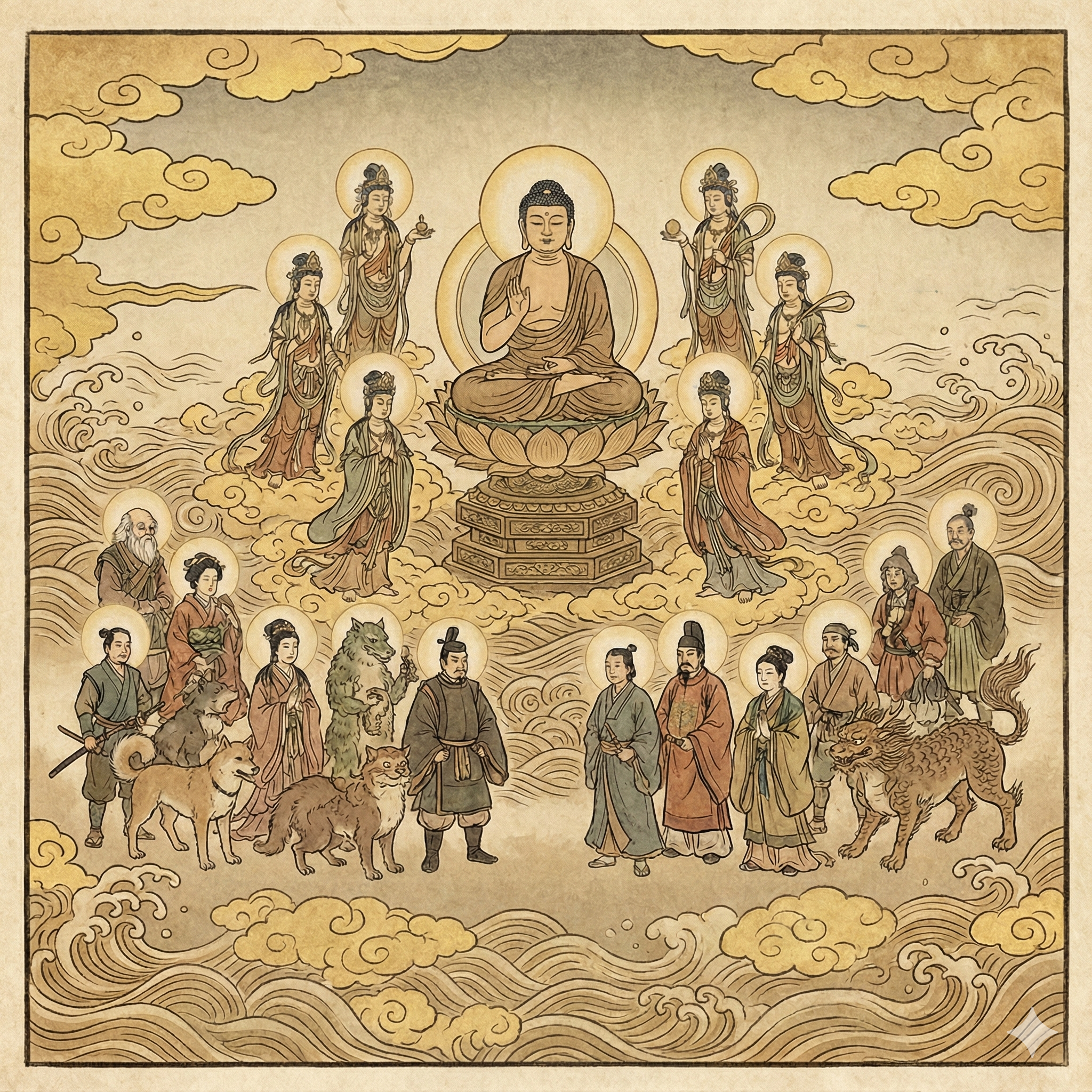
I really didn’t understand the illustration, so, hoping for something different, I asked Nano Banana:
Focus the illustration on showing that all people who follow the Buddha are Bodhisattvas
As Nano Banana worked, it said:
Modifying the Bodhisattvas
I’m working on transforming the original illustration by depicting all the figures, including the men, women, and children, as luminous Bodhisattvas. The goal is to evolve the initial image into a representation of enlightened beings.
Enhancing Divine Aura
I’m now focusing on transforming the human figures at the ground level into Bodhisattvas. They will wear robes, crowns, and have halos, floating on lotus clouds. Animals will also receive glowing symbols. The goal is to enhance the overall golden light and divine energy to emphasize the transformation, while keeping the Ukiyo-e style and aged paper texture.
Evaluating Abstract Symbolism
I’m currently focused on the image’s symbolic representation. The model successfully conveyed the abstract notion of Bodhisattvas through the use of lotus thrones, signifying enlightenment. This visual element aligns well with the user’s intent. The interpretation of ‘showing that all people who follow the Buddha are Bodhisattvas’ is clear.
Analyzing Symbolic Placement
I’ve examined how the model has visualized the user’s intent to represent the idea that all followers of the Buddha are Bodhisattvas. The placement of all figures on lotus thrones is key. This directly addresses the prompt, conveying the abstract concept through strong symbolism. The alignment of the visual elements with the intended message is very good.
The result:
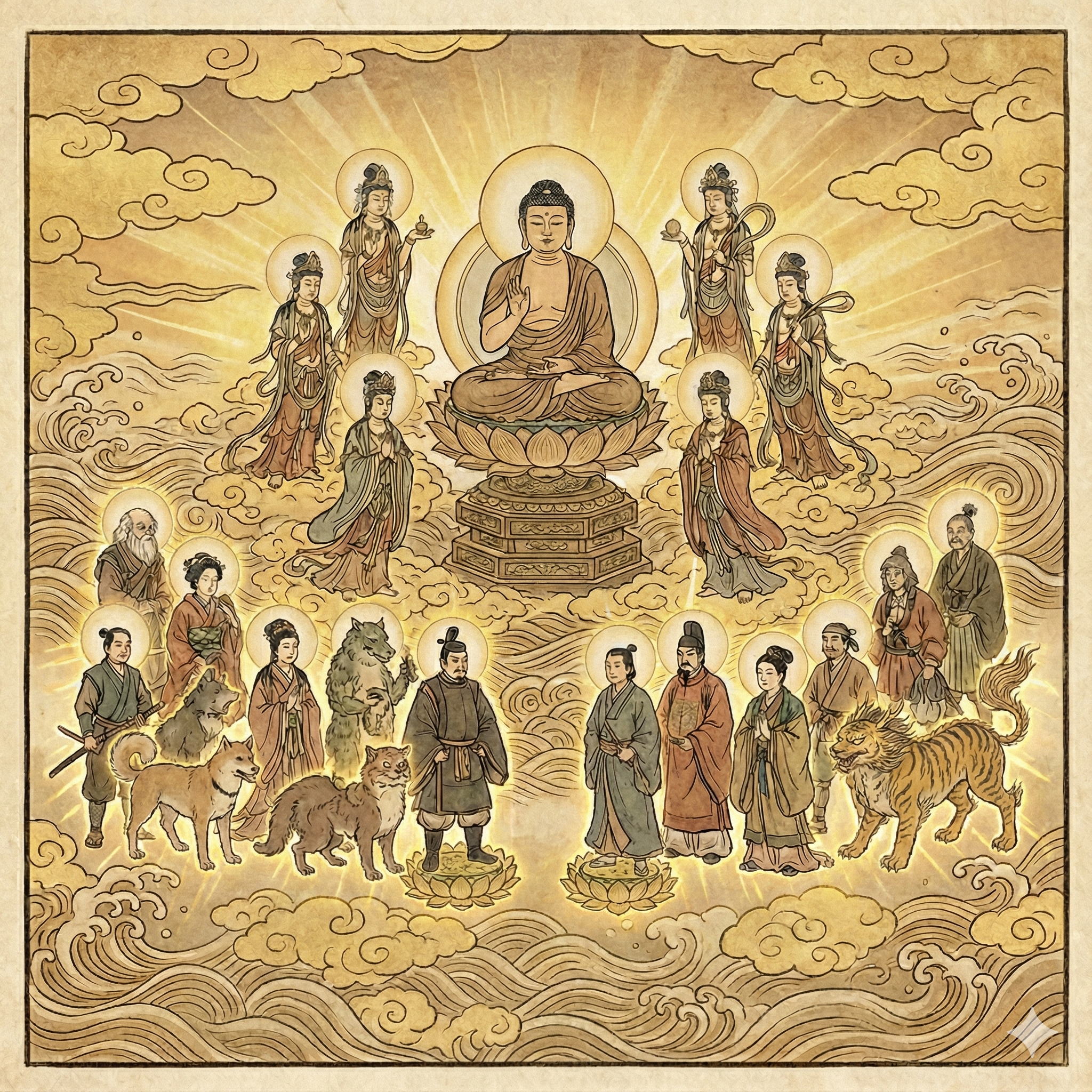
I gave up and published this version of the illustration.
In dealing with Google’s Gemini it is important to get the “prompt’ – the instructions – right. After publishing the day’s illustration, I went back to see if I could write a prompt that would generate a better illustration.
After starting a new session of my Illustrated Daily Dharma gem on Gemini, I submitted this prompt.
Special instruction: Focus this image on the line ” Part of what the Buddha is explaining here is that we are all Bodhisattvas. The way to reach the Buddha’s enlightenment is by living as Bodhisattvas: beings whose every breath is intended to improve our world.”
Source text: The Buddhas, the World-Honored Ones,
Say only expediently [that some are not Bodhisattvas]
To tell the truth,
All living beings taught by them are Bodhisattvas.This verse comes from Chapter Three of the Lotus Sūtra. In Chapter Two, the Buddha declared that he only teaches Bodhisattvas. If we believe that we are not Bodhisattvas, we could conclude that the Buddha does not teach us. Part of what the Buddha is explaining here is that we are all Bodhisattvas. The way to reach the Buddha’s enlightenment is by living as Bodhisattvas: beings whose every breath is intended to improve our world.
As Nano Banana worked, it explained:
Considering Theme & Scope
I’m currently focused on the overarching theme and scope for this illustration. I’ve distilled the core message down to the concept of universal Bodhisattvahood and compassionate action as the path to enlightenment. Now I’m working on specific imagery elements.
Formulating the Visuals
My current focus is on the visual details. I’m exploring how to represent the concept of “all beings as Bodhisattvas” through diverse figures in a Japanese Buddhist art style, maybe ukiyo-e. I’m also considering how to depict the “breath” of compassionate action flowing into a central, glowing world. I’m trying to figure out how to best integrate the text and quote.
Evaluating Visual Fidelity
I’m checking the image against the user’s instructions. The square format seems fitting for Instagram. It incorporates the “Bodhisattvas” message and the source text. There’s an effort to depict people breathing intention, though this needs further refinement.
Confirming Image Integration
I’m confirming the image’s alignment with the user’s intent. The square dimension is ideal for the intended platform. The graphic successfully conveys the “Bodhisattvas” message alongside the cited text. The visualization of people breathing intention is a strong element that enhances the central concept. It appears to meet all the criteria.
And the result:
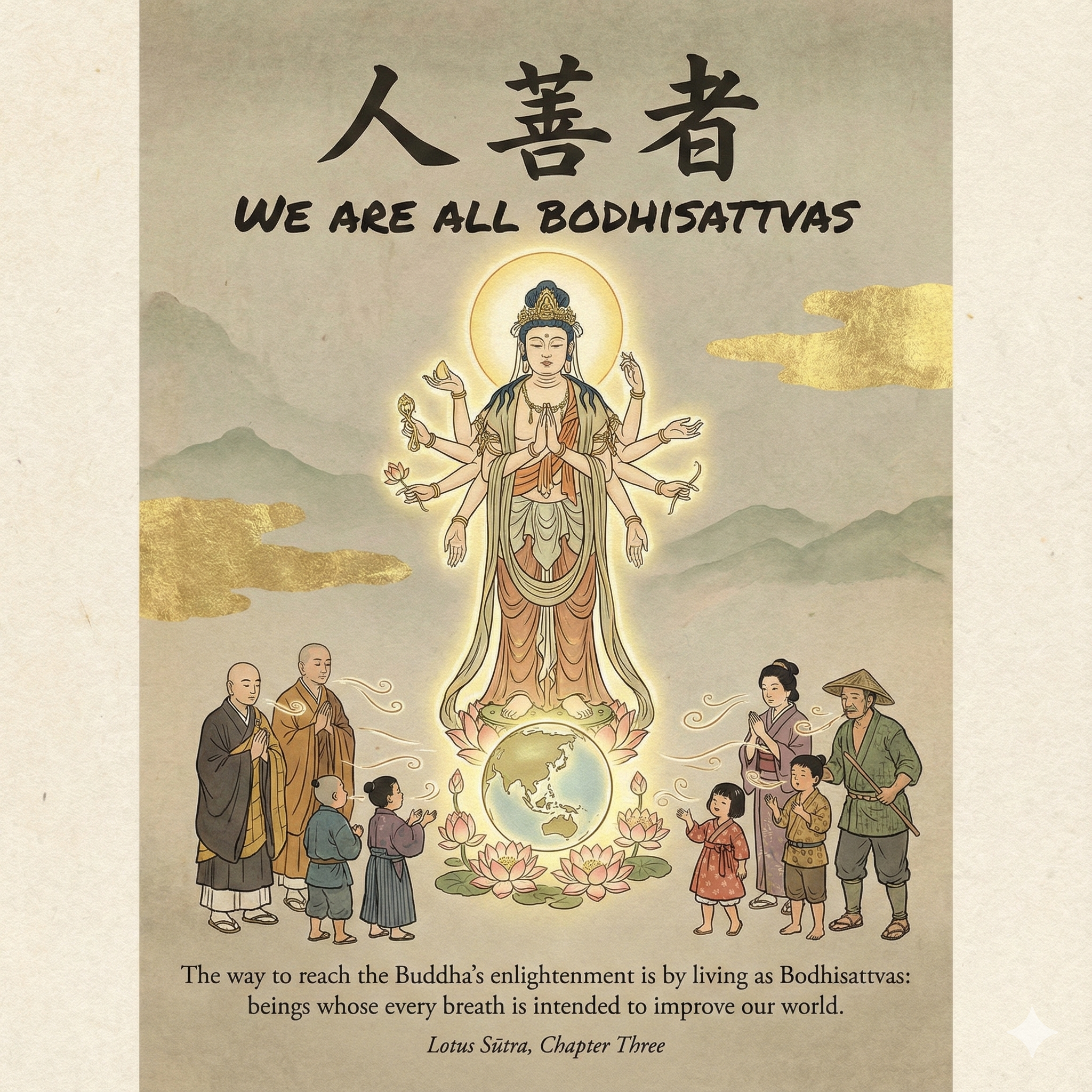
This was worse than the original. I asked Nano Banana to explain the central figure in the image.
With pleasure. Here is an explanation of the central figure in this illustration.
The Embodiment of Compassion: The Bodhisattva
The radiant, multi-armed figure at the heart of this illustration is a Bodhisattva (known in Japanese as a Bosatsu).
In Mahayana Buddhism, a Bodhisattva is an awakened being who, motivated by great compassion (bodhicitta), vows to attain supreme enlightenment not just for themselves, but for the sake of liberating all sentient beings from suffering.
While they share many attributes with a Buddha, Bodhisattvas in Japanese iconography are typically depicted wearing crowns, jewelry, and flowing celestial scarves—resembling Indian royalty—rather than the simple monastic robes of a Buddha. This signifies that they remain connected to the world to help us, rather than having departed into final Nirvana.
Specific Iconography in this Image:
Given the theme of universal compassion and the visual cues, this figure is highly likely a representation of Kannon Bosatsu (Avalokiteśvara in Sanskrit), the Bodhisattva of Infinite Compassion, who is one of the most beloved figures in East Asian Buddhism.
The Multiple Arms: Kannon is often depicted with many arms (sometimes eleven, sometimes a thousand). In this eight-armed form, the multitude of limbs symbolizes their immense capacity and “skillful means” to reach out and assist countless suffering beings simultaneously, using the appropriate tool or method for each situation.
The Lotus Pedestal: The figure stands upon a blooming lotus. The lotus is a paramount symbol in Buddhism; it roots in the mud at the bottom of a pond but rises to bloom, pristine and untouched, above the water. This symbolizes the Bodhisattva remaining in the “mud” of samsara (the cycle of suffering) to help others, while their mind remains pure and undefiled.
The Halo and Position: The golden halo and their elevated position above the globe establish them as an enlightened archetype. They are the ideal model of compassion that the text encourages us to emulate.
The Figure’s Role in the Composition:
This central Bodhisattva acts as the visual anchor for the text excerpt from the Lotus Sūtra.
The illustration suggests that this magnificent, divine being is not fundamentally different from the ordinary monks, villagers, and children standing below. The central figure is the realization of the potential that lies within the people below.
As the text states, “We are all Bodhisattvas.” The central figure shows us the perfection of that state—a being whose entire existence, whose “every breath,” is dedicated to healing the world depicted beneath their feet.
For years I worked with illustrators – actual people who drew artwork – to illustrate opinion pieces on the Opinion Pages of The Sacramento Bee. Looking back, I realize I didn’t have any more luck with the real people then than I did today with an AI agent named Nano Banana. There’s just no forcing art.