
Category Archives: LS32

Day 24

Day 24 concludes Chapter 19, The Merits of the Teacher of the Dharma and closes the Sixth Volume of the Sutra of the Lotus Flower of the Wonderful Dharma.

Having completed the merits of the mind last month, I circle back to the start, the merits of the nose.

Furthermore, Constant-Endeavor! The good men or women who keep, read, recite, expound or copy this sutra, will be able to obtain eight hundred merits of the nose. With their pure noses, they will be able to recognize all the various things above, below, within and without the one thousand million Sumeru-worlds.

And the “various things” that can be recognized are truly amazing:

He will be able to know by smell
Whether an unborn child is a boy or a girl,
Or a child of ambiguous sex,
Or the embryo of a nonhuman being.

He will be able to know by smell
Whether a woman is an expectant mother,
Or whether she will give an easy birth
To a happy child or not.

The Daily Dharma on Aug. 2, 2016, addressed these merits:

He will be able to know by smell
What a man or a woman is thinking of,
Or whether he or she is greedy, ignorant or angry,
Or whether he or she is doing good.

The Buddha gives this explanation to Constant-Endeavor Bodhisattva in Chapter Nineteen of the Lotus Sūtra, describing those who keep the Lotus Sūtra. As Bodhisattvas we chose to come into this world, as frightening and dangerous as it is, to make things better for all beings. We do not lose any of the six senses we have, but learn to use them in ways that may seem impossible to others. Any of our senses can be deluded. When we remove our attachments and delusions, we see with the Buddha’s eye the world as it is.

The Daily Dharma is produced by the Lexington Nichiren Buddhist Community. To subscribe to the daily emails, visit zenzaizenzai.com

Or, more to the point, with the Buddha’s nose the world as it is.

Anyone who keeps this sutra
Will be able to have these merits of the nose
Although he has not yet obtained the nose
Of the Bodhisattva [who attained] the Dharma-without-asravas.
Day 23

Day 23 covers all of Chapter 18, The Merits of a Person Who Rejoices at Hearing This Sutra, and opens Chapter 19, The Merits of the Teacher of the Dharma.

Last month, I introduced the Merits of the Teacher of the Dharma. Now for the first of those merits:

They will be able to adorn and purify their six sense-organs with these merits. With their pure eyes given by their parents, these good men or women will be able to see all the mountains, forests, rivers and oceans inside and outside the one thousand million Sumeru-worlds, [each of which is composed of six regions] down to the Avici Hell and up to the Highest Heaven. They also will be able to see the living beings of those worlds, to know the karmas which those living beings are now doing and the region to which each of those living beings is destined to go by his karmas.

Thereupon the World-Honored One, wishing to repeat what he had said, sang in gathas:

Listen! I will tell you of the merits
Of those who fearlessly expound
To the great multitude
This Sutra of the Lotus Flower of the Wonderful Dharma.
They will be able to obtain the excellent eyes
Adorned with eight hundred merits.
Their eyes will be pure
Because of this adornment.

With their eyes given by their parents,
They will be able to see Mt. Meru, Mt. Sumeru,
The Surrounding Iron Mountains,
And the other mountains,
And the forests, oceans and rivers
Inside and outside the one thousand million Sumeru-worlds.
They will be able to see the living beings
Of those worlds [each being composed of the six regions]
Down to the Avici Hell and up to th Highest Heaven.
Although they have not yet obtained heavenly eyes,
They will be able to see all this
With their natural eyes.

As I begin walking through these merits, it is important to underscore that these senses are not yet heavenly. In this case, these feats are accomplished “with their eyes given by their parents.”

Day 22

Day 22 covers all of Chapter 17, The Variety of Merits.

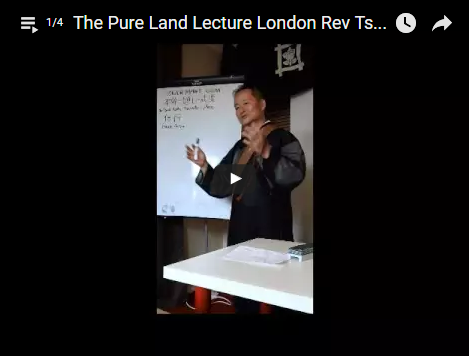
Last week I wrote a blog post about a video lecture on the Pure Land as understood by Nichiren Shu. Today’s reading from Chapter 17 provides another Lotus Sutra quote specifically explaining that the Eternal Buddha is always present and that this Saha World is the Pure Land.

Ajita! The good men or women who hear of my longevity of which I told you, and understand it by firm faith, will be able to see that I am expounding the Dharma on Mt. Grdhrakuta,* surrounded by great Bodhisattvas and Sravakas. They also will be able to see that the ground of this Saha-World is made of lapis lazuli, that the ground is even, that the eight roads are marked off by ropes of jambanada gold, that the jeweled trees are standing in lines, and that the magnificent buildings are made of treasures. They also will be able to see that the Bodhisattvas are living in those buildings. They will be able to see all this because, know this, they have already understood [my longevity] by firm faith.

*Mount Sacred Eagle

Link to Youtube playlist

Day 21

Day 21 covers all of Chapter 16, The Duration of the Life of the Tathāgata.

It amazes me that I can still have “ah-ha!” moments when reciting the Lotus Sutra. Today, I had one of those moments when reading the Parable of the Skillful Physician and His Sick Chilren.

To set the stage, we have the children who got into some poison and are rolling on the floor in agony by the time their father returns home.

At that time the father returned home. Some sons had already lost their right minds while the others still had not.

I bring this up because of how it plays out when the physician gives his children the medicine he says has a good color, smell and taste.

Notice here that the children can see the medicine has a good color and they can sniff the medicine to test its smell. But they must have faith in their father and his talents as a physician in order to believe the medicine tastes good before they take it.

And so…

The sons who had not lost their right minds saw that this good medicine had a good color and smell, took it at once, and were cured completely. But the sons who had already lost their right minds did not consent to take the medicine given to them, although they rejoiced at seeing their father come home and asked him to cure them, because they were so perverted that they did not believe that this medicine having a good color and smell had a good taste.

This is a wonderful example of faith because that faith – accepting that the medicine will taste good – is tested and confirmed. Once we take the medicine we realize it does, indeed, taste great.

Day 20

Day 20 completes Chapter 15, The Appearance of Bodhisattvas from Underground, and concludes the Fifth Volume of the Sutra of the Lotus Flower of the Wonderful Dharma.

Last month, covered Maitreya’s statement that “We have never seen these many thousands of billions of Bodhisattvas.” So today…

Thereupon Sakyamuni Buddha said to Maitreya Bodhisattva:

Excellent, excellent, Ajita! You asked me a very important question. All of you should concentrate your minds, wear the armor of endeavors, and be resolute. Now I will reveal, I will show, the wisdom of the Buddhas, their supernatural power without hindrance, their dauntless powers like a lion’s, and their great power of bravery.

Thereupon the World-Honored One, wishing to repeat what he said, sang in gathas:

Exert yourselves and concentrate your minds!
Now I will tell you about this matter.
Do not doubt me!
My wisdom is difficult to understand.

Arouse your power of faith,
And do good patiently!
You will be able to hear the Dharma
That you have never heard before.

Now I will relieve you.
Do not doubt me!
Do not be afraid!
I do not tell a lie.
My wisdom is immeasurable.
The highest Dharma that I attained
Is profound and difficult to understand.
Now I will expound it.
Listen to me with all your hearts!

The Daily Dharma of Oct. 19, 2016, had this response:

Excellent, excellent, Ajita! You asked me a very important question. All of you should concentrate your minds, wear the armor of endeavors, and be resolute. Now I will reveal, I will show, the wisdom of the Buddhas, their supernatural powers without hindrance, their dauntless powers like a lion’s, and their great power of bravery.

The Buddha makes this declaration to Maitreya Bodhisattva, whom he calls Ajita (Invincible) in Chapter Fifteen of the Lotus Sūtra. In the story, innumerable Bodhisattvas spring up from underground and vow to the Buddha to keep the sūtra after his extinction. Maitreya, knowing the minds of many others who have come to hear the Buddha teach, asks about these Bodhisattvas, whom he has never seen before. This question from Maitreya then leads to the Buddha later giving his most difficult teaching in Chapter Sixteen. The Buddha’s declaration in this passage shows how important questioning is to our faith.

The Daily Dharma is produced by the Lexington Nichiren Buddhist Community. To subscribe to the daily emails, visit zenzaizenzai.com

I wear my armor of endeavors. I am resolute. I have aroused my power of faith. I am listening with all my heart.

Day 19

Day 19 concludes Chapter 14, Peaceful Practices, and begins Chapter 15, The Appearance of Bodhisattvas from Underground.

Last month I covered the difficulty of hearing even the title of this Sutra and also the Parable of the Priceless Gem in the Top-Knot.

Keeping this in mind:

Manjusri! This Sutra of the Lotus Flower of the Wonderful Dharma is the treasury of the hidden core of the Buddhas, of the Tathagatas. It is superior to all the other sutras. I kept it [in secret] and refrained from expounding it for the long night. Now I expound it to you today for the first time.

I hear this instruction:

Be patient, and compassionate
Towards all living beings,
And then expound this sutra
Praised by the Buddhas!

Anyone who keeps this sutra
In the latter days after my extinction
Should have compassion towards laymen and monks
And towards those who are not Bodhisattvas.

He should think:
‘They do not hear this sutra.
They do not believe it.
This is their great fault.
When I attain the enlightenment of the Buddha,
I will expound the Dharma to them
With expedients
And cause them to dwell in it.’

With compassion.

Day 18

Day 18 concludes Chapter 13, Encouragement for Keeping this Sutra, and begins Chapter 14, Peaceful Practices.

Yesterday, I questioned the significance of the fact that Arhats, the Sravakas and the bhiksunis wouldn’t expound the Dharma in the Saha World. Even great Bodhisattvas Medicine-King and Great-­Eloquence only offered a grudging willingness to preach in the Saha World.

And today, we have the 80 billion nayuta Bodhisattva-mahasattvas who had already reached the stage of avaivartika, turned the irrevocable wheel of the Dharma, and obtained dharanis.

Do not worry!
We will expound this sutra
In the dreadful, evil world
After your extinction.

Ignorant people will speak ill of us,
Abuse us, and threaten us
With swords or sticks.
But we will endure all this.

Some bhiksus in the evil world will be cunning.
They will be ready to flatter others.
Thinking that they have obtained what they have not,
Their minds will be filled with arrogance.

Some bhiksus will live in aranyas or retired places,
And wear patched pieces of cloth.
Thinking that they are practicing the true Way,
They will despise others.

Being attached to worldly profits,
They will expound the Dharma to men in white robes.
They will be respected by the people of the world
As the Arhats who have the six supernatural powers.

They will have evil thoughts.
They will always think of worldly things.
Even when they live in aranyas,
They will take pleasure in saying that we have faults.

They will say of us,
“Those bhiksus are greedy for worldly profits.
Therfore, they are expounding
The teachings of heretics.
They made that sutra by themselves
In order to deceive the people of the world.
They are expounding that sutra
Because they wish to make a name for themselves.”

In order to speak ill of us, in order to slander us
In the midst of the great multitude,
In order to say that we are evil,
They will say to kings, ministers and brahmanas,
And also to householders and other bhiksus,
“They have wrong views.
They are expounding
The teachings of heretics.”
But we will endure all this
Because we respect you.

They will despise us,
Saying to us [ironically],
“You are Buddhas.”
But we will endure all these despising words.

There will be many dreadful things
In the evil world of the kalpa of defilements.
Devils will enter the bodies [of those bhiksus]
And cause them to abuse and insult us.

Today, it occurred to me that this litany of evils these Bodhisattvas saw in the Saha World is exactly why the Buddha did not transfer the Dharma to them. Coming to this point over and over again, I have the luxury of remembering the future. These Bodhisattvas, unlike the uncountable ones waiting in the sky below this Saha World, do not understand that this is the Buddha’s pure land and only our defilements prevent us from seeing that.

That “luxury of remembering the future” is something to ponder as well.

Day 17

Day 17 covers all of Chapter 12, Devadatta, and opens Chapter 13, Encouragement for Keeping this Sutra.

So I was reviewing Day 17, what I wrote last month and the month before and the month before that, and apparently I haven’t said a thing about Chapter 13, Encouragement for Keeping this Sutra, since January 2016. Go figure.

An important point is made.

We begin Chapter 13 with Medicine-King Bodhisattva-mahasattva and Great-­Eloquence Bodhisattva-mahasattva, together with their 20,000 attendants who were also Bodhisattvas, answering the Buddha’s request at the end of Chapter 11 for people to vow to expound this sutra after his extinction:

World-Honored One, do not worry! We will keep, read, recite and expound this sutra after your extinction. The living beings in the evil world after [your extinction] will have less roots of good, more arrogance, more greed for offerings of worldly things, and more roots of evil. It will be difficult to teach them because they will go away from emancipation. But we will patiently read, recite, keep, expound and copy this sutra, and make various offerings to it. We will not spare even our lives [in doing all this].

The Daily Dharma from June 29, 2016, offers this perspective:

Medicine-King Bodhisattva, his attendants and other Bodhisattvas make this vow to the Buddha in Chapter Thirteen of the Lotus Sūtra. Once we awaken to our Bodhisattva nature and resolve to benefit all beings, we may still hold on to the belief that those beings should gratefully receive the teaching and and keep progressing towards enlightenment. We may even become discouraged in our practice of the Wonderful Dharma when these beings do not live up to our expectations. The vow of these great Bodhisattvas reminds us of how difficult is is for us ordinary beings to keep the Lotus Sūtra, and of the determination it takes to create benefit in the world.

The Daily Dharma is produced by the Lexington Nichiren Buddhist Community. To subscribe to the daily emails, visit zenzaizenzai.com

Underline here our Bodhisattva nature and resolve to benefit all beings and then consider what 500 Arhats who already had been assured of their future attainment of Anuttara-samyak-sambodhi, who offered:

World-Honored One! We also vow to expound this sutra[, but we will expound it] in some other worlds [rather than in this Saha-World].

And then the 8,000 Sravakas, some of whom had something more to learn while others had nothing more to learn, who also had been assured of their future attainment of Anuttara-samyak-sambodhi, who vowed:

World-Honored One! We also will expound this sutra in some other worlds because the people of this Saha-World have many evils. They are arrogant. They have few merits. They are angry, defiled, ready to flatter others, and insincere.

Finally, the bhiksunis who are re-assured of their future Buddhahood in this chapter vow:

World-Honored One! We also will expound this sutra in other worlds.

What does it say of the Arhats, the Sravakas and the bhiksunis that only the Bodhisattvas, grudging as they are, can see themselves even attempting to preach in this Saha World?

Waiting in the sky below the Saha-World is the answer to the Buddha’s question, but we’ll leave that for Day 19.

Day 16

Day 16 concludes Chapter 11, Beholding the Stupa of Treasures, and completes the Fourth Volume of the Sutra of the Lotus Flower of the Wonderful Dharma.

Last month, I focused on the Hotoge verses and the reason why they are embellished with the odd rhythmic reading.

Today, it’s time to get back to the explanation of the Stupa of Treasures and its sudden appearance.

Sakyamuni explains to Great-Eloquence Bodhisattva:

The perfect body of a Tathagata is in this stupa of treasures. A long time ago there was a world called Treasure-Purity at the distance of many thousands of billions of asamkhyas of worlds to the east [of this world]. In that world lived a Buddha called Many-Treasures. When he was yet practicing the Way of Bodhisattvas, he made a great vow: ‘If anyone expounds a sutra called the Lotus Flower of the Wonderful Dharma in any of the worlds of the ten quarters after I become a Buddha and pass away, I will cause my stupa-mausoleum to spring up before him so that I may be able to prove the truthfulness of the sutra and say ‘excellent’ in praise of him because I wish to hear that sotra [directly from him].

He attained enlightenment[, and became a Buddha]. When he was about to pass away, he said to the bhisus in the presence of the great multitude of gods and men, ‘If you wish to make offerings to my perfect body after my extinction, erect a great stupa!’

If anyone expounds the Sutra of the Lotus Flower of the Wonderful Dharma in any of the worlds of the ten quarters, that Buddha, by his supernatural powers and by the power of his vow, will cause the stupa of treasures enshrining his perfect body to spring up before the expounder of the sutra. Then he will praise [the expounder of the sutra], saying, ‘Excellent, excellent!’

Great-Eloquence! Now Many-Treasures Tathagata caused his stupa to spring up from underground in order to hear the Sutra of the Lotus Flower of the Wonderful Dharma [directly from me]. Now he praised me, saying, ‘Excellent, excellent!’

Excellent, indeed.

Day 15

Day 15 concludes Chapter 10, The Teacher of the Dharma, and opens Chapter 11, Beholding the Stūpa of Treasures.

Last month, I dug for the water on a plateau in search of Anuttara-samyak-sambodhi and this month I review the three things necessary to expound the Sutra of the Lotus Flower of the Wonderful Dharma.

Medicine-King! How should the good men or women who live after my extinction expound this Sutra of the Lotus Flower of the Wonderful Dharma to the four kinds of devotees when they wish to? They should enter the room of the Tathagata, wear the robe of the Tathagata, sit on the seat of the Tathagata, and then expound this sutra to the four kinds of devotees. To enter the room of the Tathagata means to have great compassion towards all living beings. To wear the robe of the Tathagata means to be gentle and patient. To sit on the seat of the Tathagata means to see the voidness of all things. They should do these [three] things and then without indolence expound this Sutra of the Lotus Flower of the Wonderful Dharma to Bodhisattvas and the four kinds of devotees.

And in gathas:

If you wish to expound this sutra,
Enter the room of the Tathagata,
Wear the robe of the Tathagata,
Sit on the seat of the Tathagata,
[And after doing these three things,]
Expound it to people without fear!

To enter the room of the Tathagata means to have great compassion.
To wear his robe means to be gentle and patient.
To sit on his seat means to see the voidness of all things.
Expound the Dharma only after you do these [three] things.

The Daily Dharma of Aug. 8, 2016, offers this discussion on the voidness of all things:

To enter the room of the Tathāgata means to have great compassion.
To wear his robe means to be gentle and patient.
To sit on his seat means to see the voidness of all things.
Expound the Dharma only after you do these [three] things!

The Buddha sings these verses in Chapter Ten of the Lotus Sūtra. Our compassion leads us to engage with the world and benefit others. Cultivating our gentle and patient nature lets us live the peace everyone wants and show them how to obtain it. To see the voidness of things does not mean acting as if they don’t exist. We presume that things that do not exist forever do not exist at all. A wisp of smoke. A fleeting smile. The Buddha teaches that there is nothing permanent and self-existing. Only what is interdependent and changing truly exists. Only that which is connected with everything else truly exists. Nothing hinders us. Nothing opposes us. When we see the harmony in our changing existence, then we see the Buddha Dharma.

The Daily Dharma is produced by the Lexington Nichiren Buddhist Community. To subscribe to the daily emails, visit zenzaizenzai.com