Have you ever felt completely overwhelmed by the chaos, pain, and instability of our modern world? Have you ever found yourself wishing to escape to a distant, peaceful paradise far away from the struggles of daily life?
It is completely natural to look around at our environment and feel a sense of weariness. We live in what Buddhism terms the Saha world—a realm defined literally as the “world of endurance and suffering.” Every day, we face trials, anxieties, and the harsh realities of human existence. But today, I want to share with you a revolutionary, life-altering truth that comes directly from the heart of the Lotus Sutra and the profound teachings of Nichiren Shonin: This very world, with all its turmoil, is not a place to escape from. It is, in its ultimate, hidden reality, the Eternal Buddha’s Pure Land.
You do not need to wait until after death to find peace in a distant paradise. By placing your absolute faith in the Lotus Sutra and chanting Namu-Myoho-Renge-Kyo, you hold the key to unveiling this pure, indestructible reality right where you are standing.
The Scriptural Revelation: Unveiling the Eternal Land
To understand the magnitude of this truth, we must journey back into the visionary canvas of the Lotus Sutra. The deep-rooted misconception of medieval times—and even today—is that a “Pure Land” is a separate, celestial planet far removed from our gritty reality. The Lotus Sutra completely shatters this dualistic view through two monumental scenes.
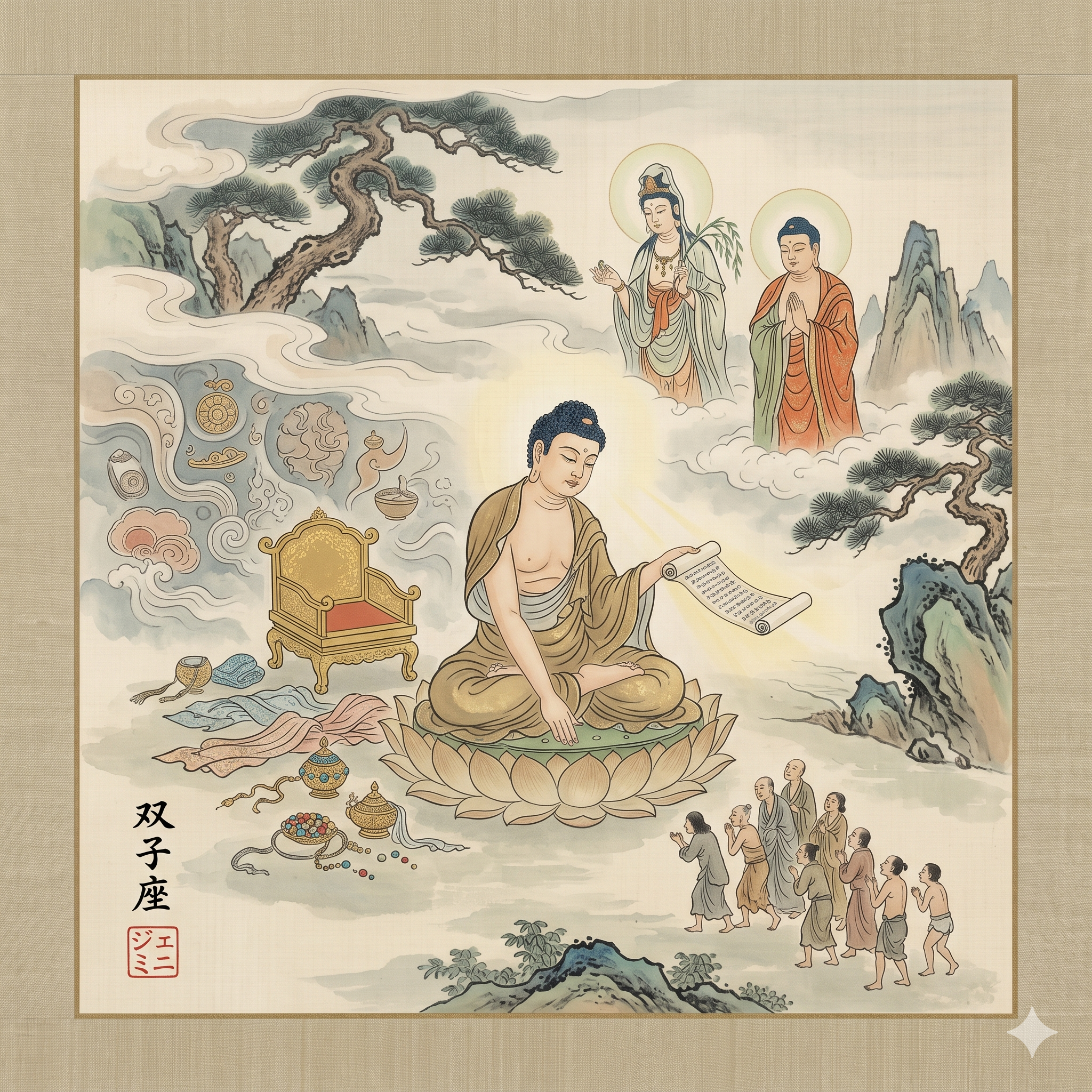
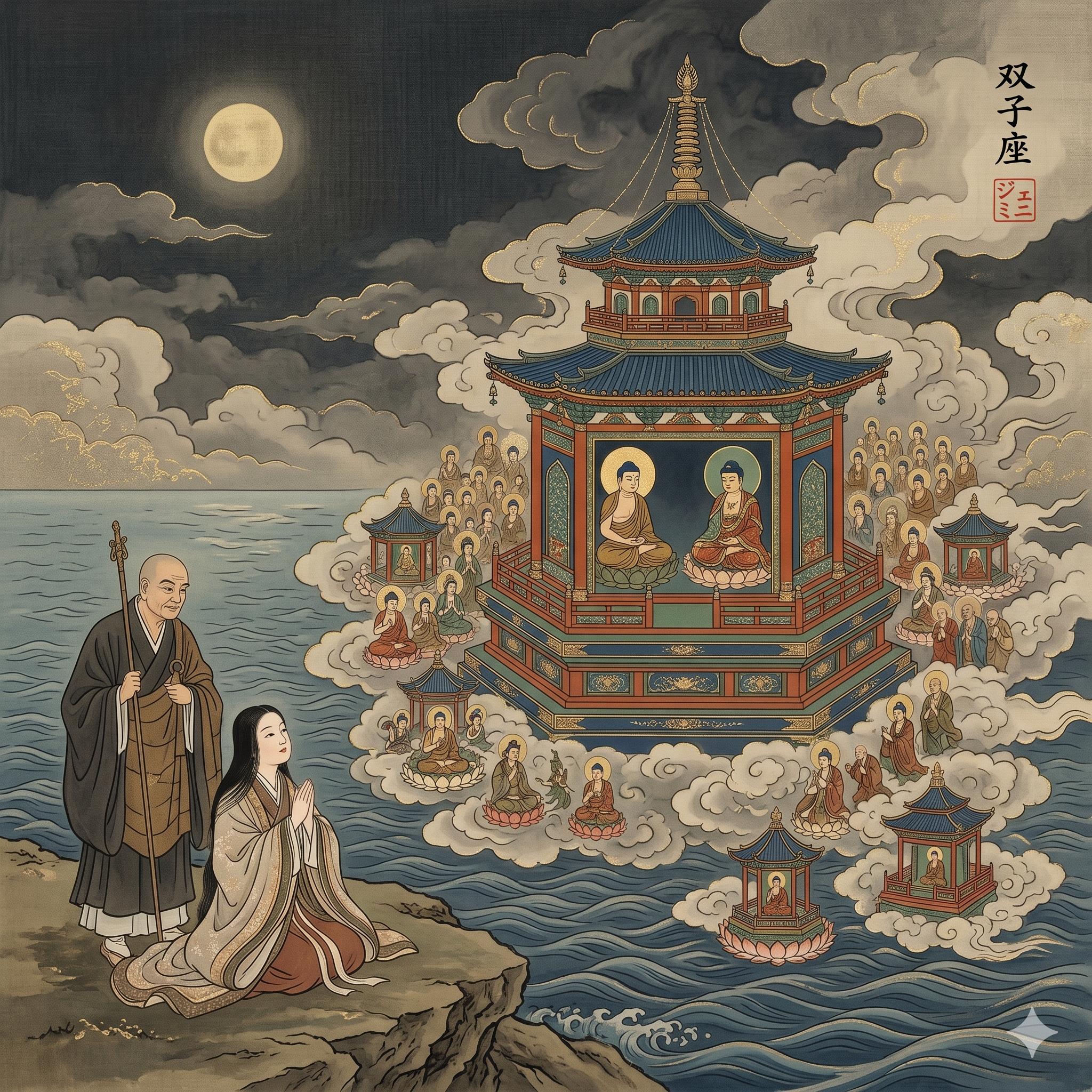
First, in Chapter 11, “The Emergence of the Treasure Tower,” a magnificent jeweled stupa floats in midair. To make room for the countless replica Buddhas summoned from across the cosmos, Sakyamuni Buddha magically purifies the Saha world not once, but three distinct times. In that mystical moment, the ground transforms into absolute purity, paved with lapis lazuli, bordered by golden cords, and shaded by exquisite jeweled trees. This stunning transformation birthed the core doctrine that the Saha World is identical with the Pure Land of Tranquil Light.
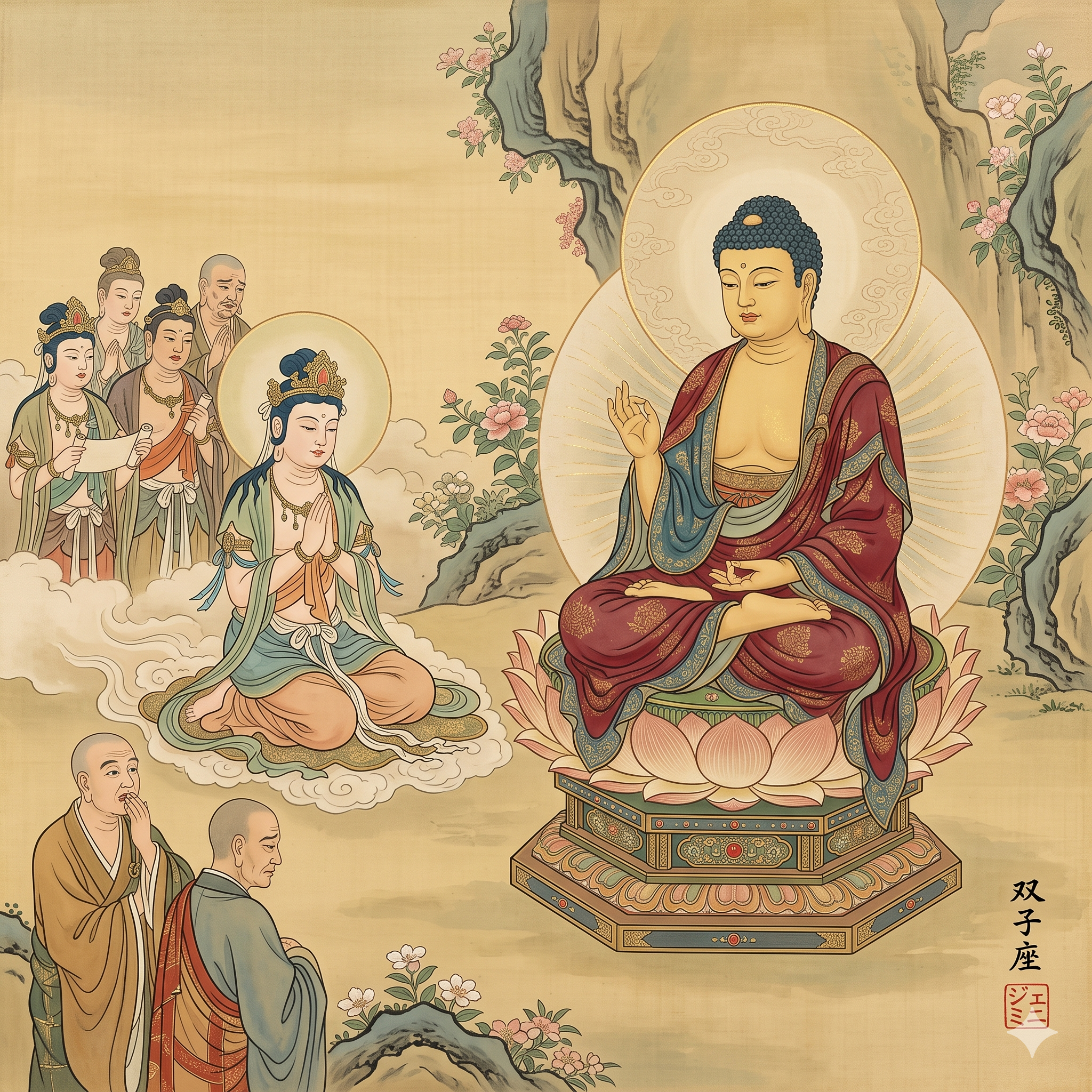
Second, this imagery moves from a temporary vision to an eternal reality in Chapter 16, “The Lifetime of the Tathagata”. Here, Sakyamuni Buddha delivers a paradigm-shifting revelation. He explains that he did not attain enlightenment for the first time under the bodhi tree in India; rather, he has been a fully awakened Buddha since the inconceivably remote and infinite past. Consequently, he makes an astounding declaration: “I have always been here in this sahā world, preaching the Dharma, and teaching and converting.”
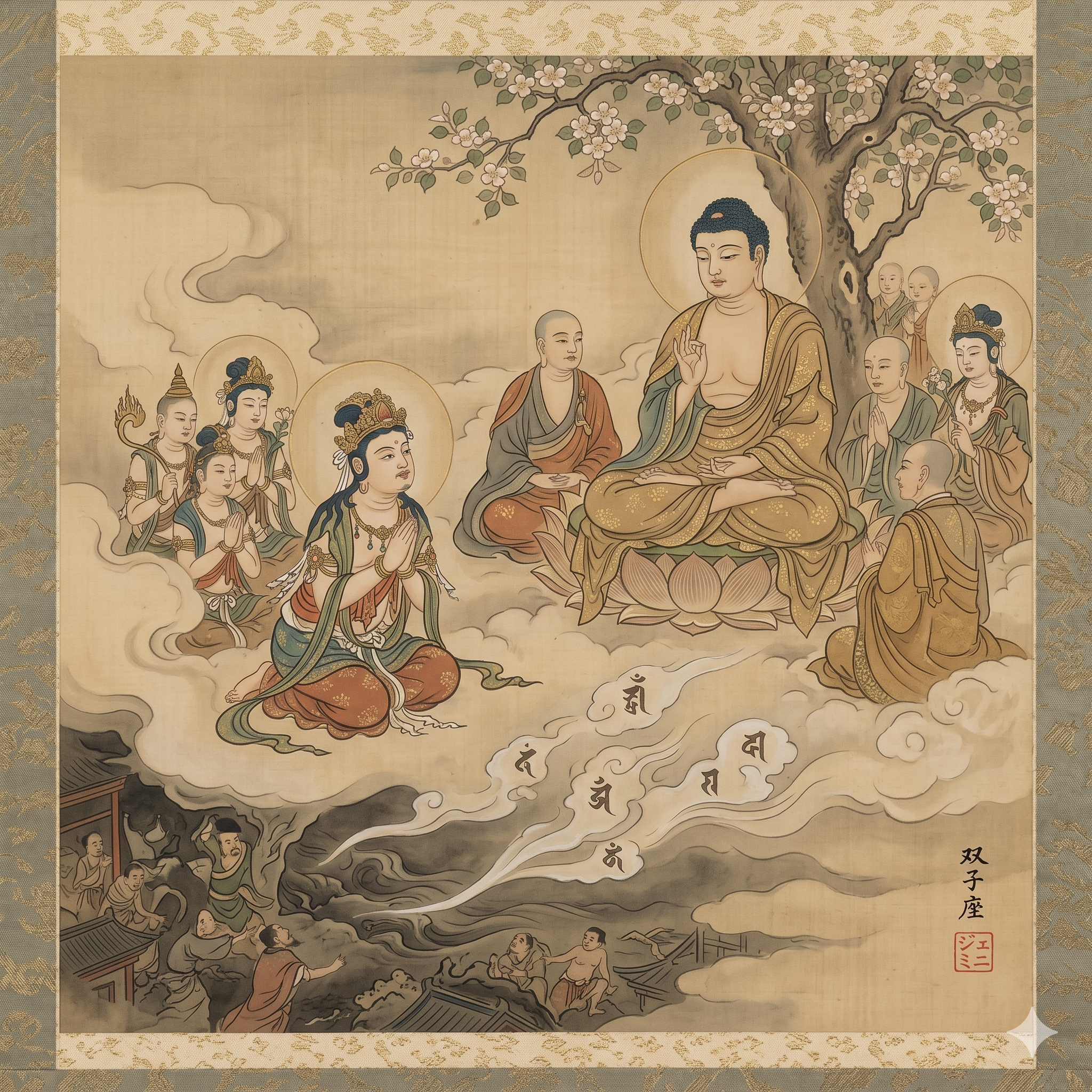
The Buddha never left us. He further explains that even when deluded living beings look out and perceive the world ending, consumed by a catastrophic fire at the close of an eon, his land remains perfectly safe, tranquil, and filled with heavenly beings, beautiful gardens, and jeweled trees. This teaches us a fundamental lesson: the pure land is not a distant geographic location. It is this very world, seen through the clear, unclouded eyes of an awakened Buddha.
The Philosophical Framework: Later Buddhist thinkers, particularly the Chinese patriarch Tiantai Zhiyi, formalized these visions into the doctrine of ichinen sanzen (three thousand realms in a single thought-moment). Central to this is eshō funi—the absolute nonduality of the living subject and their environment. Your environment is a perfect mirror of your inner life-state.
Four Life-Changing Implications for Us Today
Nichiren Shonin took this profound philosophical legacy and radicalized it, turning it into a practical blueprint. When you embrace faith in the Lotus Sutra and dedicate your life to chanting Namu-Myoho-Renge-Kyo, your entire relationship with reality undergoes a massive shift. Here is what this means for your daily life:
1. A Resounding Rejection of Escapism
In Nichiren’s time, the popular Pure Land (Nembutsu) school taught people to loathe this corrupt, painful world, encouraging them to focus solely on chanting to be reborn after death in a distant “Western Paradise.” Nichiren vehemently opposed this otherworldly view, labeling it a dangerous form of escapism. He argued that to abandon our present world in search of another is to completely abandon the true domain of Sakyamuni Buddha.
As followers of Nichiren, we do not wish away our lives or hope for a peaceful afterlife. We stand tall in the face of our challenges. As Nichiren boldly wrote, “Why should one abandon this world and aspire to another land? The place where one who practices the Lotus Sutra dwells should be regarded as the pure land.” Your home, your office, your neighborhood—no matter how stressful—is the exact location of your enlightenment.
2. Finding Noble Value in Life’s Impurities
The Lotus Sutra does not look at the world through rose-colored glasses. It acknowledges that the Saha world contains “hellish conditions,” severe hardships, and deep suffering. Yet, incredibly, Chapter 15 of the sutra actively praises the Saha world precisely because of these difficulties!
Why? Because a smooth, painless environment cannot forge a Buddha. The suffering of this world is the ultimate training ground. The sutra extols the Bodhisattvas who make courageous efforts and endure hardships to practice the Dharma in this actual human world, identifying them as the true, authentic disciples of the Buddha. Every problem you face is fuel for your spiritual growth. When you chant through your pain, you are acting as an authentic disciple, transforming poison into medicine.
3. Activating the Power of the Mind to Mirror Purity
Because of the principle of eshō funi (the inseparability of person and environment), we recognize that there is no difference between a mundane world of suffering and a Pure Land. The only difference lies entirely within the human mind: is it deluded or is it awakened?
If our minds are defiled by anger, greed, and delusion, the land we experience will naturally appear defiled, hostile, and broken. But when we align our lives with the Lotus Sutra by chanting Namu-Myoho-Renge-Kyo, we purify our inner lives. Because the environment merely mirrors our inner state, an awakened mind will naturally experience and manifest its environment as an awakened, safe, and tranquil realm. Purity starts within you!
4. Actualizing and Physically Transforming Reality Here and Now
This is where Nichiren’s teaching becomes beautifully concrete and infinitely inspiring. He took the theoretical concepts of older schools and brought them down to earth. He taught that faith and the chanting of the Daimoku do not just offer a subjective, psychological shift in perspective. It possesses the objective, cosmic power to physically transform the outer world.
Nichiren prophesied that when the people of the world genuinely embrace the Lotus Sutra and chant Namu-Myoho-Renge-Kyo, this threefold world will literally become a Buddha land. He beautifully described a transformed world where “the wind will not thrash the branches nor the rain fall hard enough to break clods,” and where the people are profoundly protected from disasters and calamities. Spreading this faith is a sacred mission to physically alter the karma of our planet, establishing an ideal, stable Buddha-land out of our current troubled reality.
A Call to Action
Do not look to the sky for salvation. Do not wait for circumstances to change before you decide to be happy. The Land of Eternally Tranquil Light is right beneath your feet, waiting to be pulled into reality.
No matter how dark your current environment seems, you possess the ultimate spiritual power to revolutionize it. Wake up every morning, sit facing your dynamic purpose, and chant with the ferocity of a lion. Let your voice ring out with the sound of absolute victory Let us actively transform this Saha world, day by day, thought by thought, into the brilliant, jewel-encrusted Pure Land it was always meant to be!