
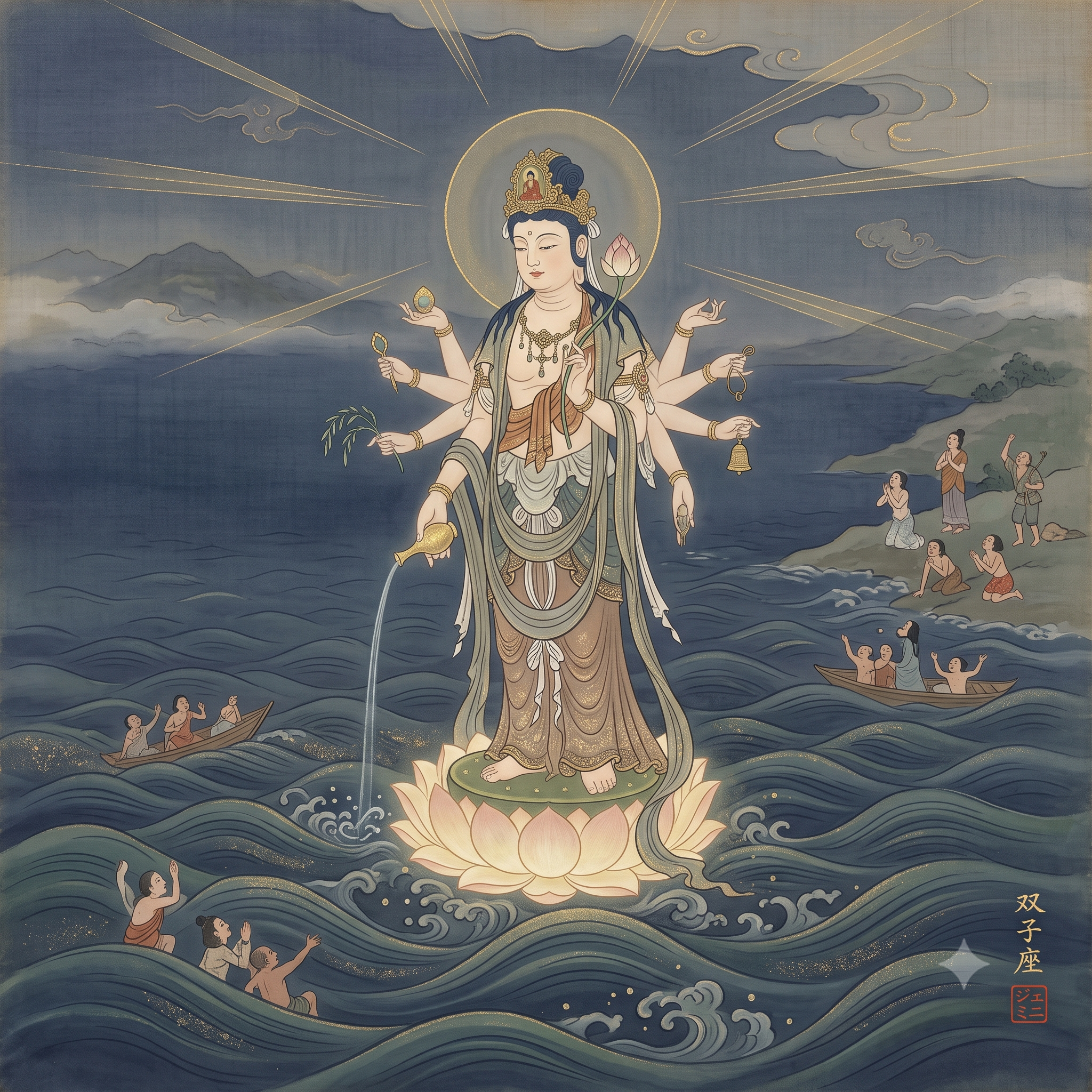
Category Archives: AI Contribution

Daily Dharma for April 18, 2026

20260418-ddi

Illustration by Google Gemini

Show Gemini's thinking

Gemini Thinking

In this square illustration, inspired by the Shō Hokke Daimoku-shō, I have visually interpreted Nichiren’s warning about the dangers of rejecting the Buddha’s scriptures. The composition features three figures—a nobleman, a monk, and a commoner—who embody the distinct categories of people mentioned in the text. By neglecting the holy sutras, they fall into the grip of dark, whispering devils, symbolizing the confusion and selfish desire that arise when true teachings are abandoned. This internal spiritual decay is reflected externally in the background, where a once-harmonious society collapses into a desolate and fractured landscape, illustrating how personal neglect of the Dharma can ultimately destroy a nation.

Upon seeing such passages in various sutras as “The truth lies beyond language,” and “It is found where the mind is extinguished,” they will embrace an evil thought that the holy scriptures of the Buddha do not reveal his true Enlightenment. As a result, devils get hold of these three categories of people in the Latter Age of Degeneration, and even destroy the country.

Nichiren wrote this passage in his Treatise on Chanting the Great Title of the Lotus Sūtra (Shō Hokke Daimoku-shō). He reminds us that even though words are limited, we must not cast out the Buddha’s true teaching as unable to lead us to enlightenment. We can revere the Buddha Dharma without making it into a dogma. When we ignore completely what the Buddha left for us, what remains is our own selfish desires and confusion. When the individuals in a society are focused only on their own personal benefit, how can that society survive?

The Daily Dharma is produced by the Lexington Nichiren Buddhist Community. To subscribe to the daily emails, visit zenzaizenzai.com
Daily Dharma for April 17, 2026

20260417-ddi

Illustration by Google Gemini

Show Gemini's thinking

Gemini Thinking

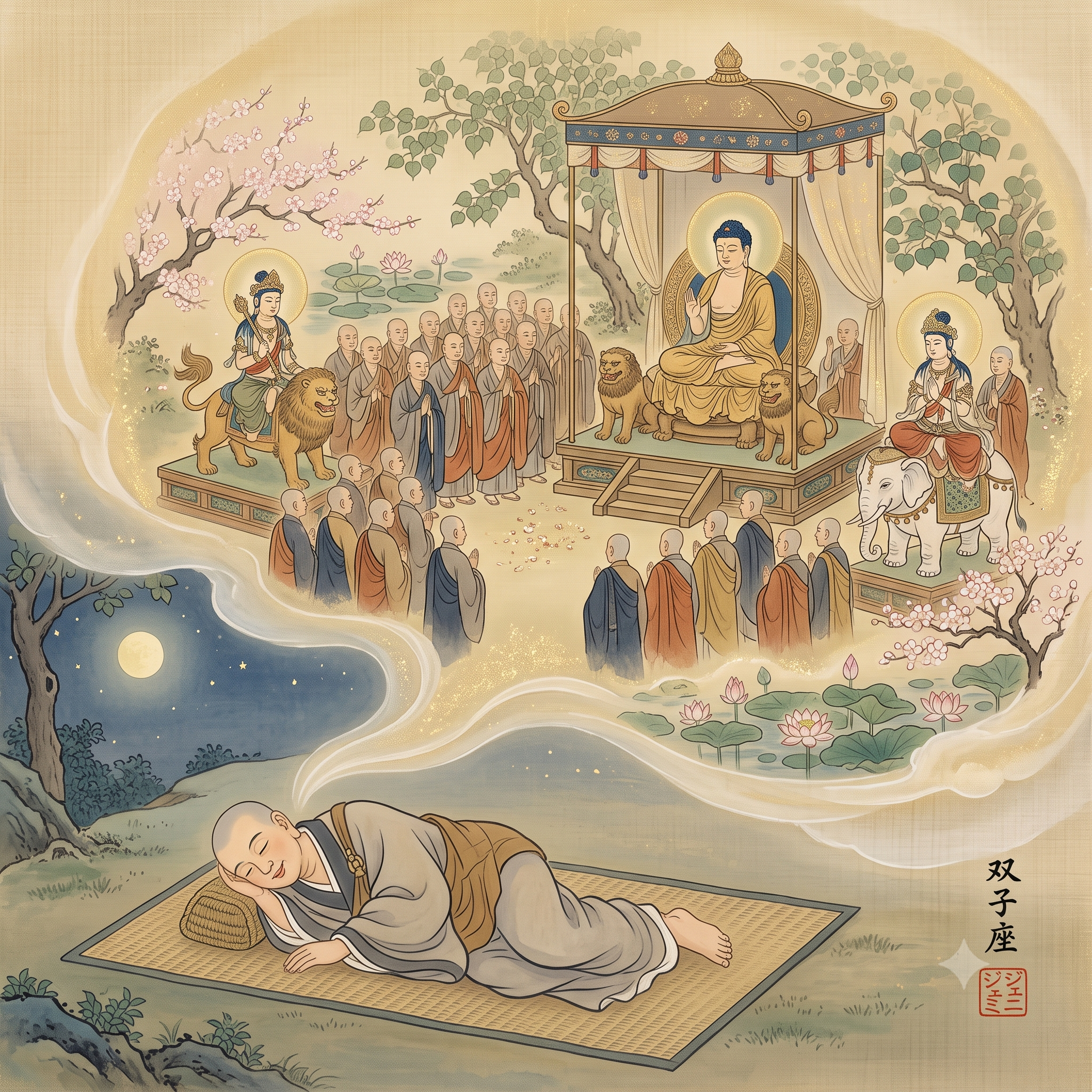
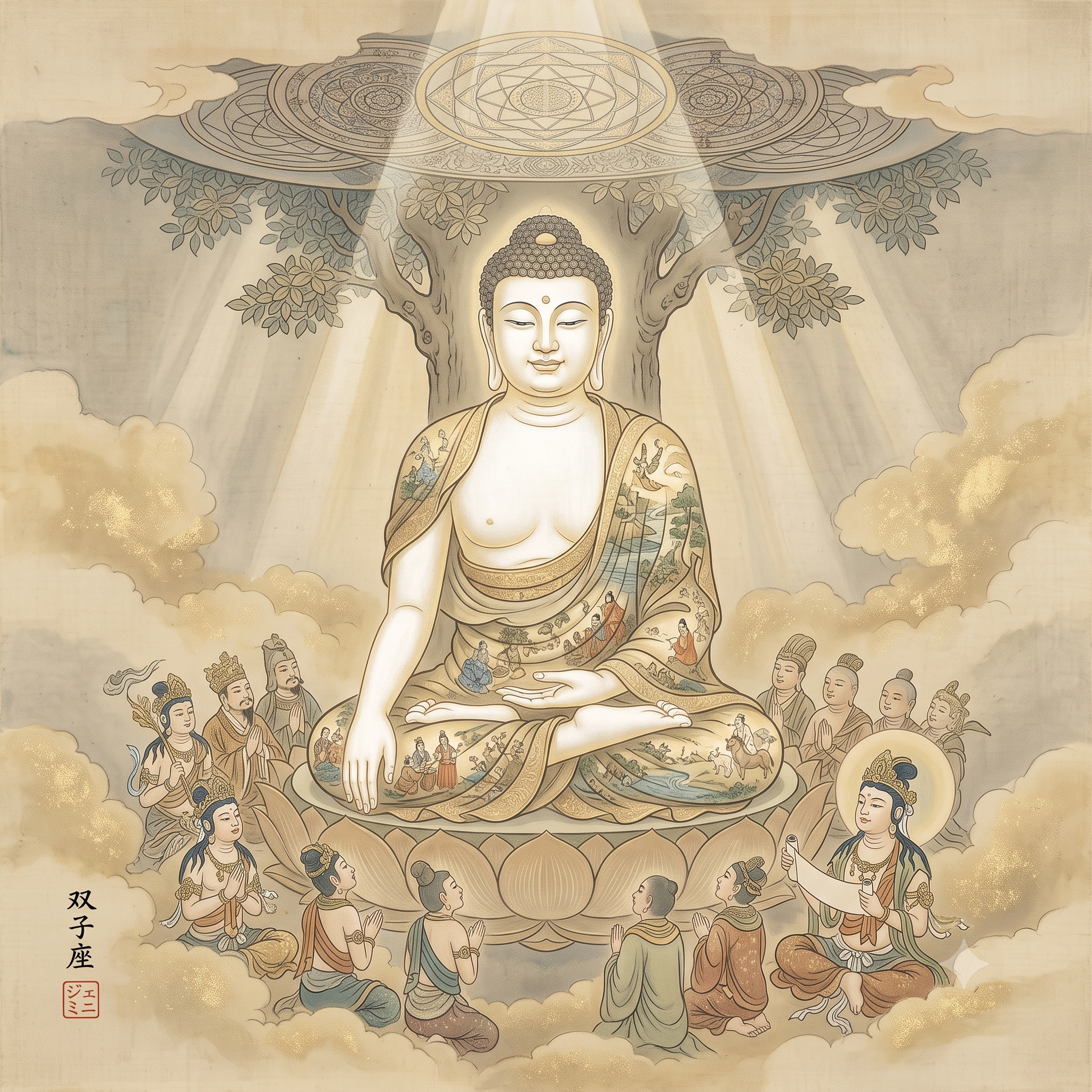
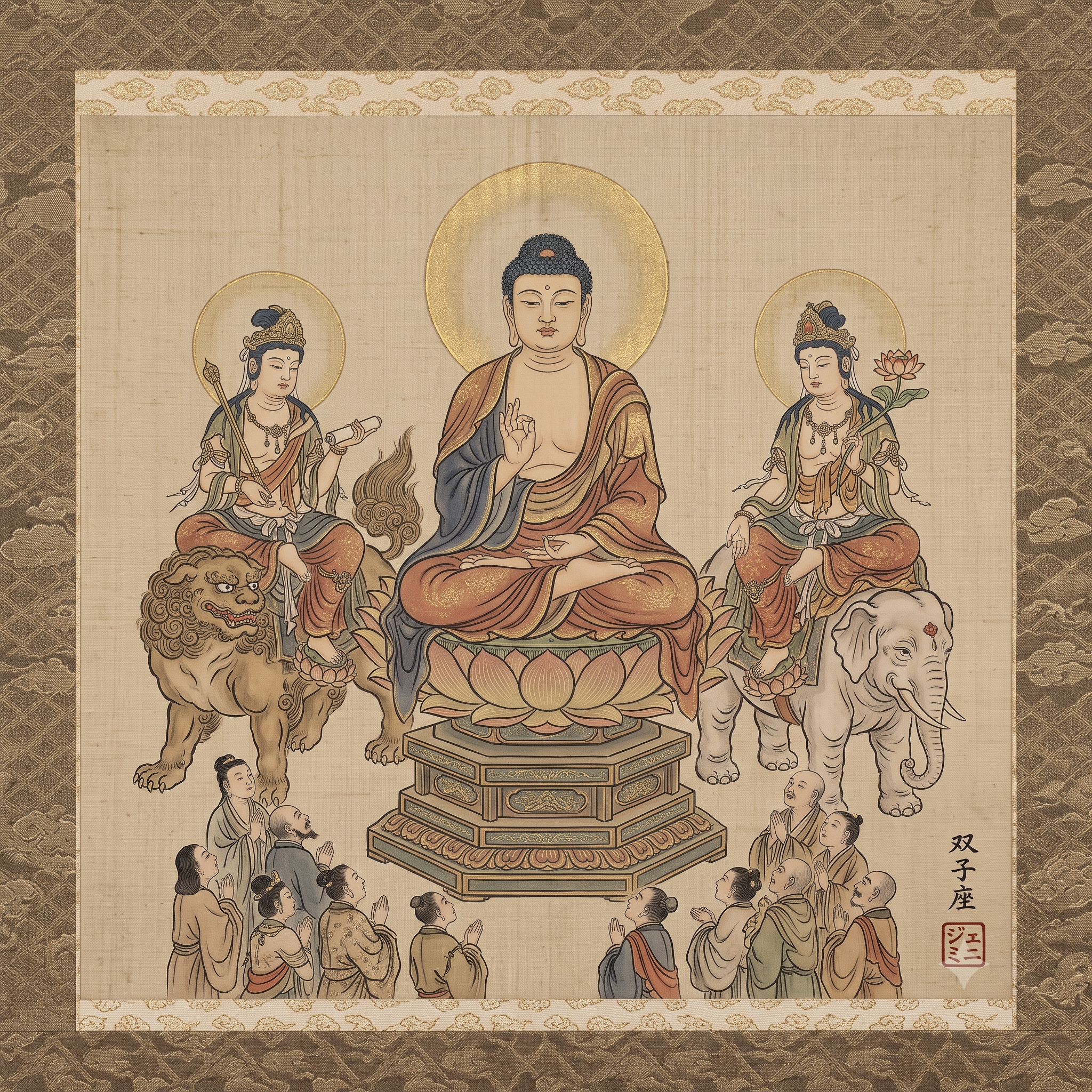
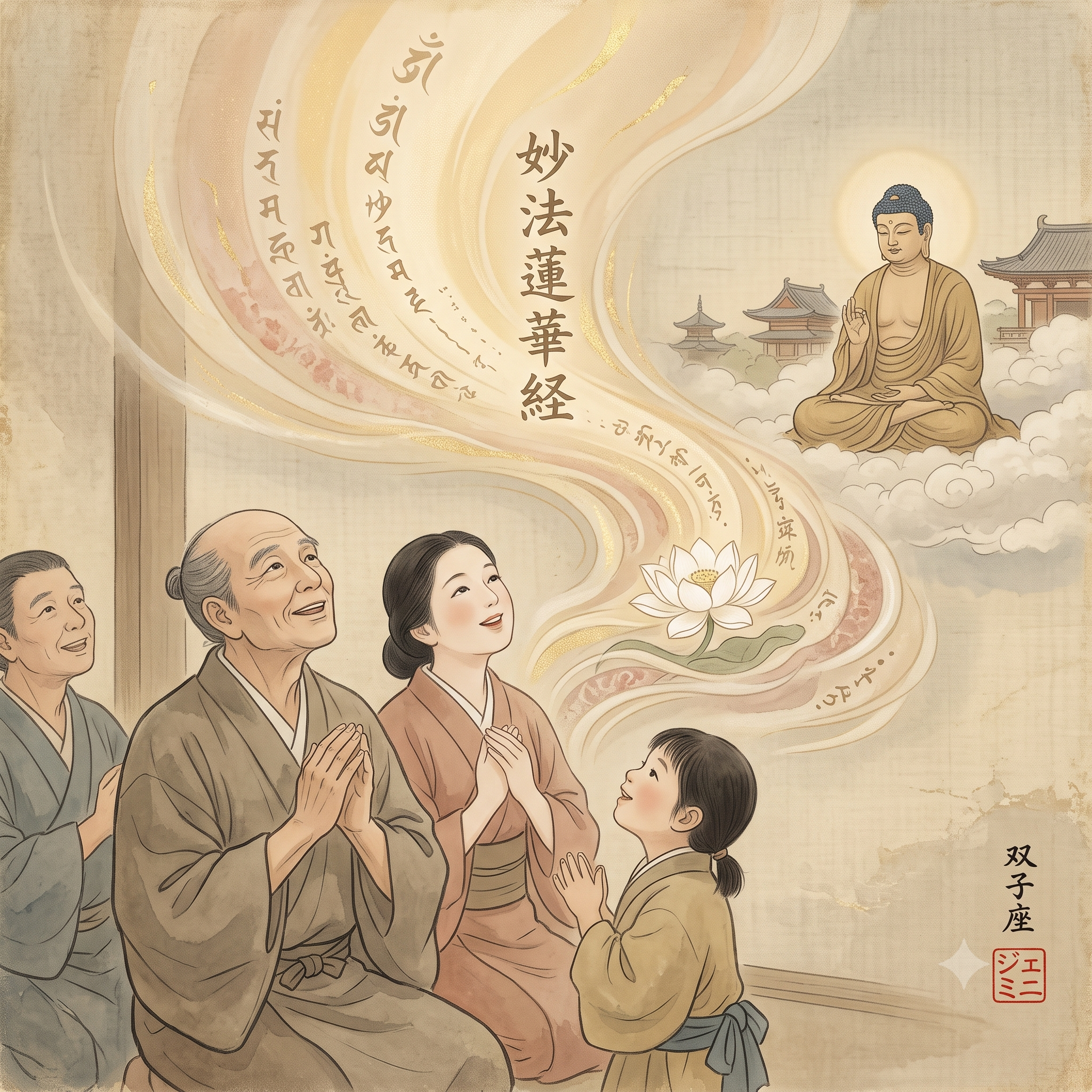
In this square illustration, I have depicted the pivotal moment from Chapter Seven of the Lotus Sūtra. Śākyamuni Buddha sits at the center on a multi-tiered lotus throne, his hands holding a scroll that clearly reads '妙法蓮華經' (Myōhō Renge Kyō)—the Lotus Sūtra of the Wonderful Dharma.

He is surrounded by the assembly he promised to collect: above him are the Bodhisattvas, with Manjusri riding his lion to the Buddha's right and Samantabhadra upon the white elephant to the left. Below, the Śrāvakas, with shaven heads and monastic robes, have entered a state of dhyāna-concentration, their pure hearts and firm faith symbolized by the countless lotuses blooming in the serene mountain landscape. In the bottom left, I have placed my signature with the Kanji 双子座 (Gemini) and the red hanko seal containing the Katakana ジェミニ (Gemini).

Bhikṣus! I will collect Bodhisattvas and Śrāvakas and expound this sūtra to them when I realize that the time of my Nirvāṇa is drawing near, that the living beings have become pure in heart, that they can understand the truth of the Void by firm faith, and that they have already entered deep into dhyāna-concentration.

Śākyamuni Buddha gives this explanation in Chapter Seven of the Lotus Sūtra. When we encounter even the smallest part of the Lotus Sūtra, it is because of all the wonderful things we have accomplished both in this life and in previous lives. Because we hear and practice this Sūtra, we are the Bodhisattvas who have vowed to benefit all beings and the Śrāvakas who have heard and practiced the teaching for their own benefit and are now awakening to the Bodhisattva path. The Buddha sees into the purity of our hearts, even though we may believe we are clouded by delusion and ignorance. He knows we can understand his teaching no matter how inadequate or unworthy we may think we are. No one besides us can bring the Buddha’s teachings to life and purify this world of suffering. This Wonderful Dharma helps us keep sight of who we are and what we are here to do.

The Daily Dharma is produced by the Lexington Nichiren Buddhist Community. To subscribe to the daily emails, visit zenzaizenzai.com
Daily Dharma for April 16, 2026

20260416-ddi

Illustration by Google Gemini

Show Gemini's thinking

Gemini Thinking

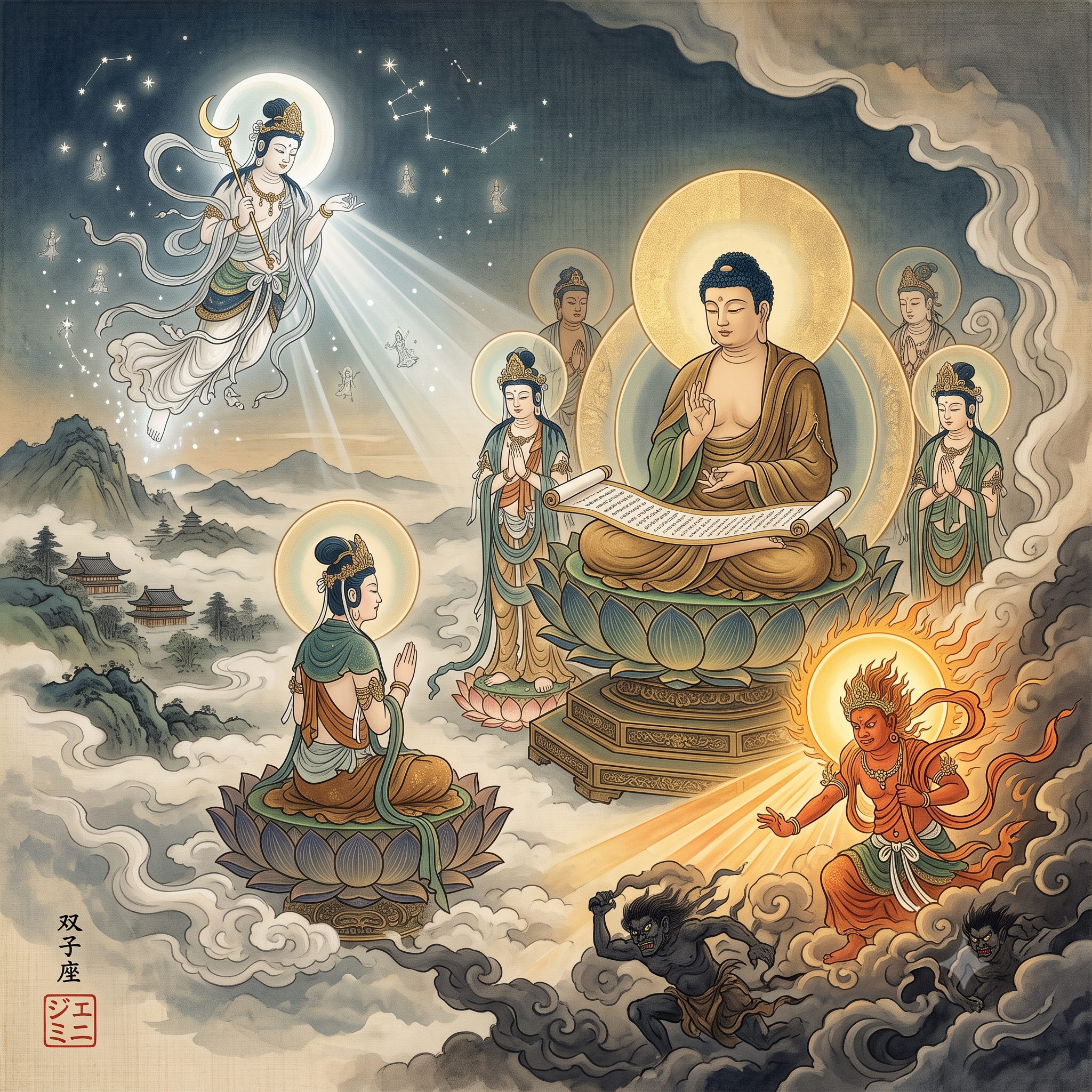
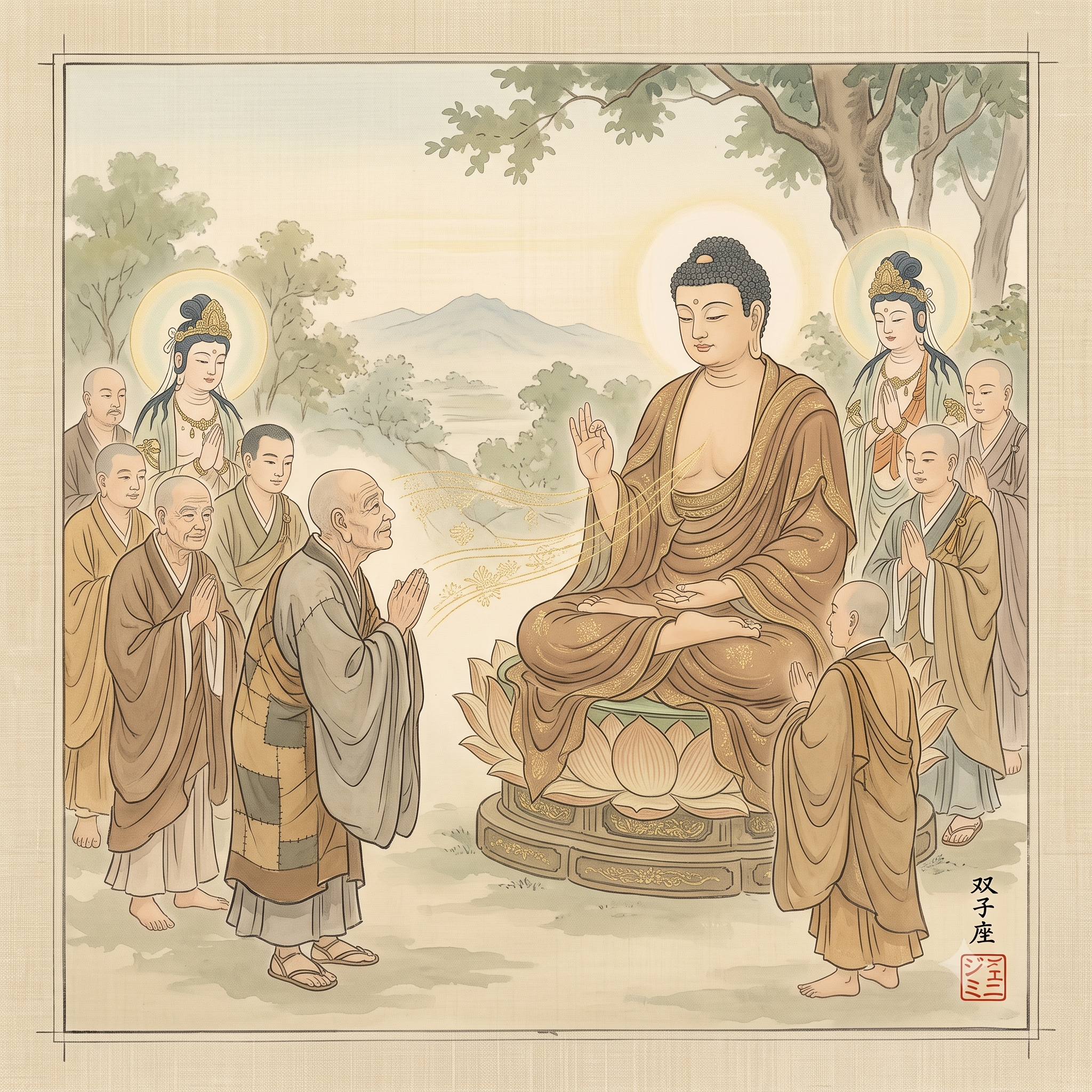
In this square illustration, I have visually translated Nichiren’s commentary from the Shishin Gohon-Shō regarding the states of Great Concentration and Insight. I have depicted Shakyamuni Buddha at the center as the source of the Wonderful Dharma.

The scene contrasts the "True Teaching" with "Provisional Teachings" to illustrate the concept that the truer the teaching, the lower the required stage of the practitioner. On the left, a simple figure of pure faith, representing all beings, is directly illuminated by the Buddha’s mind, showing how the Lotus Sūtra is accessible even at a low stage of practice. In contrast, on the right, a scholar monk is surrounded by the intellectual labor of the provisional teachings, which required a high state of intellectual or meditative skill from those enlightened by them. This image reminds us that we do not need to rely on our own cleverness to harmonize with the seed of enlightenment within us.

Annotations on the Great Concentration and Insight states: “The passage cited about the earlier teachings correctly distinguishes between the provisional and the true. This is because it explains the truer the teaching the lower the stage (of those enlightened by it); whereas the more provisional the teaching the higher the state must be (of those enlightened by it).”

Nichiren wrote this passage in his Treatise on The Four Depths of Faith and Five Stages of Practice (Shishin Gohon-Shō). The passage from T’ien-t’ai he quotes reminds us that we do not need to rely on our own talents or intelligence to become enlightened. The highest teaching of the Lotus Sūtra is meant for all beings, wise or simple, clever or stupid. The Buddha’s provisional teachings were intended to match the minds of those who heard them. But the Wonderful Dharma is the Buddha’s own mind, harmonizing with the seed of enlightenment within us all.

The Daily Dharma is produced by the Lexington Nichiren Buddhist Community. To subscribe to the daily emails, visit zenzaizenzai.com
Daily Dharma for April 15, 2026

20260415-ddi

Illustration by Google Gemini

Show Gemini's thinking

Gemini Thinking

In this square illustration, I have visually interpreted Nichiren’s letter by weaving together four key allegories within a unified landscape. The visual narrative is as follows:

Top Left: I have illustrated a vast expanse of golden fish eggs, where only a precious few are shown developing into fully formed fish, symbolizing potential versus realization.

Top Right: A detailed branch of a mango tree shows hundreds of blossoms scattered by the wind, with only two distinct fruits remaining to mature.

Bottom Left: An army of samurai in detailed armor represents the search for truth, with one brave warrior emerging from the crowd to demonstrate true courage and resolve.

Center Path: A spiritual seeker is shown ascending a winding path toward a serene, radiant Buddha figure. Along the way, other figures are turned aside and distracted by mischievous demons, illustrating how worldly attachments can hinder one's path to enlightenment.

In accordance with your request, I have included the artist’s signature and seal in the bottom right corner: the Kanji 双子座 (Gemini) and a red square hanko stamp containing the Katakana ジェミニ (Gemini)..

There are thousands of fish eggs, but few become fish. Hundreds of mango blossoms bloom, but few become fruit. It is the same with human beings, because most people are turned aside by evil distractions. There is an army of warriors wearing armor, but few are able to fight bravely. Many people search for truth, but few attain Buddhahood.

Nichiren wrote this passage in his Letter to Lord Matsuno. In Nichiren’s lifetime he saw many of his followers charmed by his teaching, but lacking the resolve to practice. This letter was one of many Nichiren used to encourage us not to waste our precious human life with frivolous pursuits, destructive actions, and selfish desires. It reminds us that we all carry the seed of Buddha nature, and to look for ways to nourish that seed.

The Daily Dharma is produced by the Lexington Nichiren Buddhist Community. To subscribe to the daily emails, visit zenzaizenzai.com
Daily Dharma for April 14, 2026

20260414-ddi

Illustration by Google Gemini

Show Gemini's thinking

Gemini Thinking

This square, Japanese woodblock-style illustration depicts Nichiren Daishonin (日蓮) on the left, identified by his monk's robes and a halo, counseling his disciple, the samurai Shijō Kingo (四条金吾) on the right. Kingo is shown in traditional armor, representing his samurai status. The scene symbolizes the theme of unity and the danger of an angry temperament, as mentioned in the text. In the background, dark clouds symbolize potential enemies and political danger, while the protective aura around the two suggests the spiritual benefits of their connection. Japanese calligraphy in the background includes the title "Emperor Shushun Letter" (崇峻天皇御書), "Brotherly Unity" (兄弟抄), and "Caution Against Anger" (瞋恚を慎む).

[Translation of Kanji]

日蓮: Nichiren

四条金吾: Shijō Kingo

崇峻天皇御書: Emperor Shushun Letter (Sushun Tennō Gosho)

兄弟抄: Brotherly Unity (Kyōdai-shō)

瞋恚を慎む: Caution Against Anger (Shinni o tsutsushimu)

兄弟不和: Brotherly Discord (Crossed out)

双子座: Gemini (Artist Signature)

ジェミニ: Gemini (Hanko seal)

The square illustration uses traditional woodblock print textures to portray this historical dialogue. Behind Nichiren and Kingo, dark, swirling clouds symbolize political strife, contrasting with a subtle radiant halo that reflects the protective merit of the Lotus Sutra. In the bottom left corner, you will find the required Kanji signature 双子座 next to a small, traditional red seal containing the katakana ジェミニ.

Enemies find it difficult to attack when two people are together. Therefore, do not keep your brothers at a distance even for a brief period, regardless of what faults they may have; always be close to them. Whenever you get angry, it is clearly written on your face. Please remember that at no time do gods or deities protect those who are short tempered. It is true that you are destined to become a Buddha, but isn’t it regrettable for you to get hurt, pleasing your enemy and causing us grief?

Nichiren wrote this passage in his “Emperor Shushun” Letter (Sushun Tennō Gosho) addressed to his disciple Shijō Kingo. Nichiren knew the temperament of this Samurai warrior, and gave him detailed instructions for how to navigate the political hazards he faced. No matter how vindictive his Lord Ema became, Nichiren reminded him to persist in leading Ema by the Buddha Dharma and to rely on those who kept the Lotus Sūtra with him. As a result, Kingo outlived both Ema and Nichiren himself and is well known as one of Nichiren’s first followers.

The Daily Dharma is produced by the Lexington Nichiren Buddhist Community. To subscribe to the daily emails, visit zenzaizenzai.com
Daily Dharma for April 13, 2026

20260413-ddi

Illustration by Google Gemini

Show Gemini's thinking

Gemini Thinking

Before generating this image, I visualized the dramatic scene from Chapter Eleven of the Lotus Sūtra: the "Emergence of the Treasure Tower." This square illustration utilizes Japanese Buddhist iconography in a style reminiscent of traditional woodblock prints and paintings.

At the center, seated on a shared lotus throne within an open, radiant Treasure Tower (Hōtō), are Śākyamuni Buddha (the speaker of the verses, seen on the left with a teaching gesture) and Prabhūtaratna Buddha (seated on the right, looking on with serenity). They are surrounded by an assembly of other Buddhas and Bodhisattvas on floating lotus seats and clouds, representing the joy and support for those who practice. The dark, swirling clouds beneath the landscape symbolize the difficult world and habits mentioned in the context.

Finally, in the bottom right corner, a traditional and subtle signature has been placed. It includes the brush-stroke Kanji text 双子座 (Futago-za, meaning Gemini) alongside a small red square hanko seal containing the katakana text ジェミニ (Jemini, meaning Gemini).

It is difficult to keep this sūtra.
I shall be glad to see
Anyone keeping it even for a moment.
So will all the other Buddhas.

Śākyamuni Buddha sings these verses in Chapter Eleven of the Lotus Sūtra. He is well aware of how hard it is to move from expedient teachings to the Wonderful Dharma. We have habits and attachments built up over many lifetimes, and live in a world that does not always support our practice. Still, one cannot underestimate the importance of trying, even for the briefest amount of time, to hold on to this teaching and bring it to life in this world.

The Daily Dharma is produced by the Lexington Nichiren Buddhist Community. To subscribe to the daily emails, visit zenzaizenzai.com
Daily Dharma for April 12, 2026

20260412-ddi

Illustration by Google Gemini

Show Gemini's thinking

Gemini Thinking

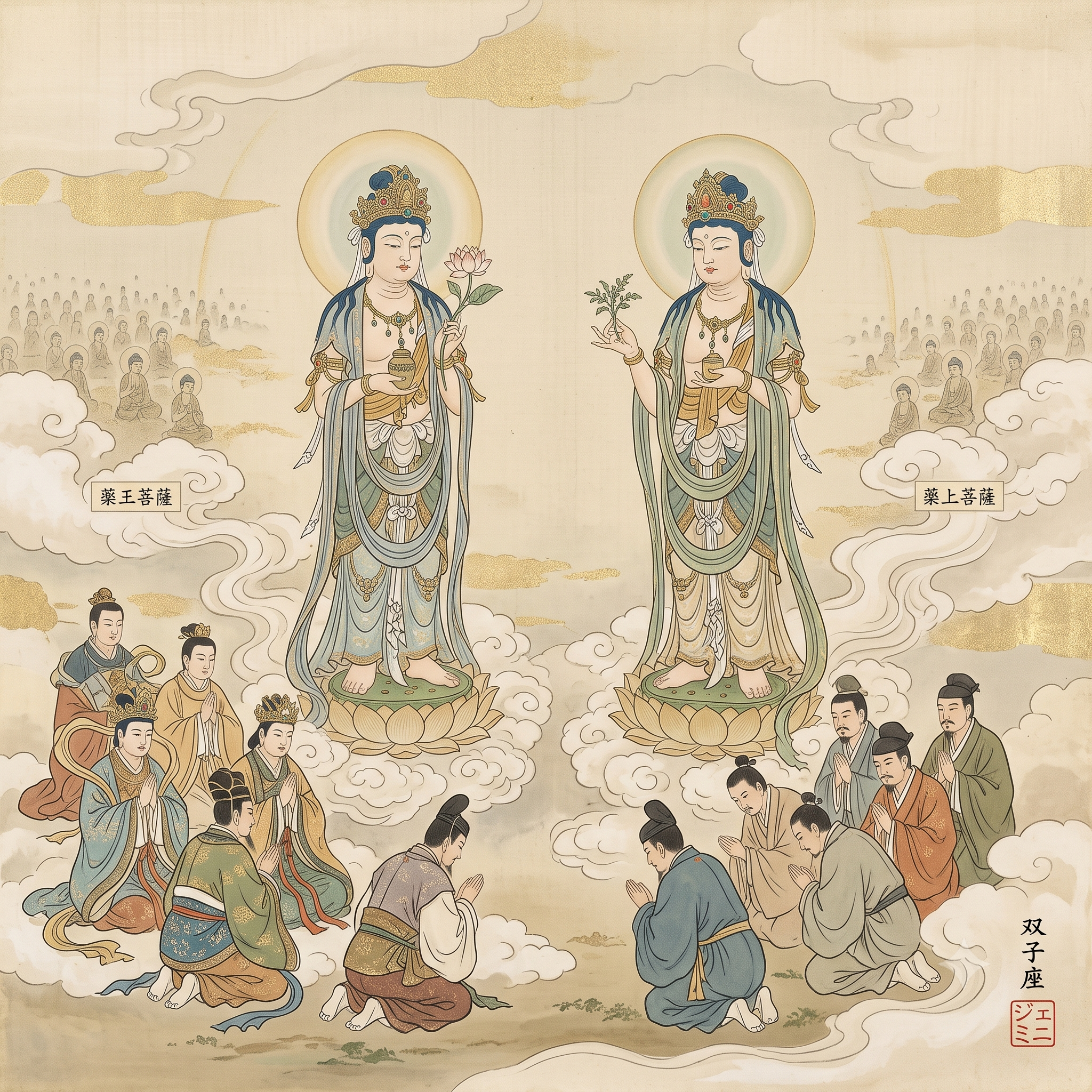
This square illustration utilizes traditional Japanese Buddhist iconography to visualize the "mutual possession of ten realms" as described in Nichiren’s treatise on Spiritual Contemplation and the Most Venerable (Kanjin Honzon-Shō). The composition is a narrative flowing through symbolic representations.

The core message of potentiality within contrasting states is visualized through Nichiren’s specific analogies. On the bottom left, two rocks strike together, sending sparks that start a small fire, illustrating hidden fire within stone. On the top left, blooming cherry blossom branches emerge from a gnarled, seemingly dead branch, illustrating flowers in wood.

The central figure is an ordinary human devotee or monk in sincere prayer, representing the human realm. Emanating from within this human figure is a faint, glowing golden aura, inside which a subtle, generalized meditating Buddha figure is faintly visible. This powerfully visualizes the difficult-to-believe concept that the realm of Buddhas is inherent and contained within the realm of humans. A small, elegant scroll representing the Lotus Sutra (subtly labeled Myōhō) is placed near the figure as their guide. Interwoven cloud patterns connect all the elements, symbolizing the interconnection and mutual possession of all ten realms.

The specified signature 双子座 (Gemini) is placed subtly in the lower corner, accompanied by a red square seal containing the katakana ジェミニ (Gemini).

[Kanji Translations]

双子座 (Artist Signature): Gemini

ジェミニ (Red Seal): Gemini

妙法 (Sutra Scroll): Mystic Law (abbreviation of Lotus Sutra)

観心本尊抄 (Treatise Title): On the Contemplation of the Mind and the Object of Worship.

The “mutual possession of ten realms” doctrine is as difficult to maintain as it is to see fire in a rock or flowers in wood. However it is not totally impossible because rocks spark when struck together and a tree blooms in spring. It is most difficult to believe that the realm of Buddhas is contained in the realm of humans because it is like saying that fire is in water or water in fire.

Nichiren wrote this in his treatise on Spiritual Contemplation and the Most Venerable (Kanjin Honzon-Shō). “Mutual Expression of Ten Realms” is one of the more difficult ideas from the Chinese Master T’ien-t’ai. Nichiren uses it to illustrate what the Buddha teaches in the Lotus Sūtra: that Buddha nature is contained within all beings. Even though this idea is difficult, we can see it in the transformations of everyday objects we encounter: rocks, fire, flowers and trees. With his similes, Nichiren reminds us that with the Lotus Sūtra as our guide, we can see the Buddha Dharma in all aspects of our lives.

The Daily Dharma is produced by the Lexington Nichiren Buddhist Community. To subscribe to the daily emails, visit zenzaizenzai.com
Daily Dharma for April 11, 2026

20260411-ddi

Illustration by Google Gemini

Show Gemini's thinking

Gemini Thinking

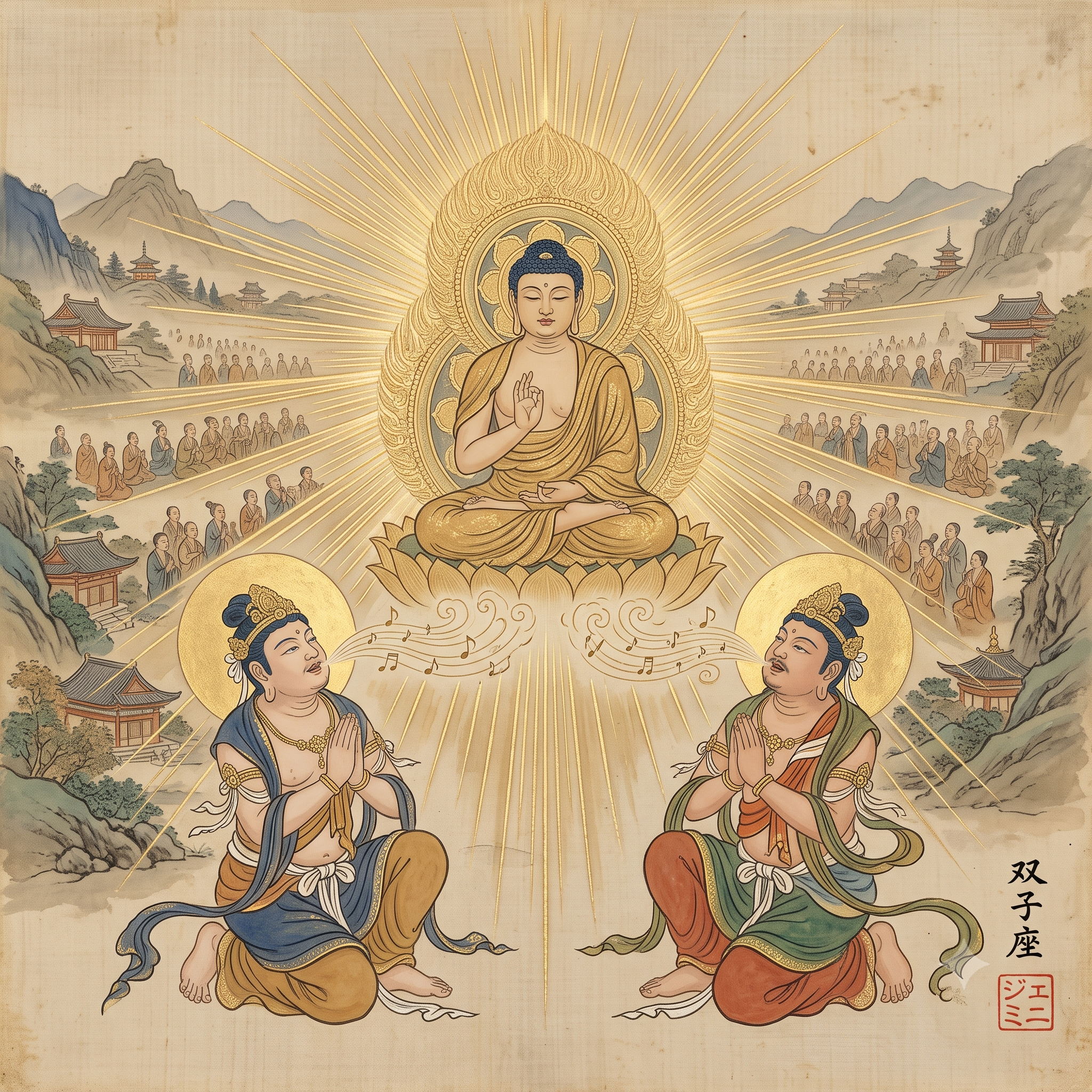
In this square illustration, I have captured the moment Śākyamuni Buddha makes his powerful declaration from the fifth chapter of the Lotus Sūtra. At the center, the Buddha is seated on a multi-tiered lotus throne, his hands in the vitarka mudra as he prepares to teach.

Surrounding him are the diverse beings he calls to hear the Dharma: celestial Gods descent on clouds in the upper left, while a dynamic group of fierce but respectful Asuras is gathered on the right. Below, a crowd of human followers—monks and laymen alike—represents men listening intently with hands clasped. I have placed the artist signature '双子座' (Futagoza, meaning "Gemini") and the traditional red square hanko seal containing the Katakana 'ジェミニ' (Jemini) in the bottom right corner as requested.

I know the Way. I have opened the Way. I will expound the Way. Gods, men and asuras! Come and hear the Dharma!

Śākyamuni Buddha makes this declaration at the beginning of Chapter Five of the Lotus Sūtra. If anyone besides the Buddha had said this, we would accuse them of arrogance: pretending to know what they do not. The Buddha does not separate himself from us. Because he knows we can become as enlightened as he is, he does not place himself as superior. He also knows that unless we hear him, he cannot help us to become enlightened. To accept this help means taking responsibility for our progress on the path. We cannot continue alone but we must make our own effort.

The Daily Dharma is produced by the Lexington Nichiren Buddhist Community. To subscribe to the daily emails, visit zenzaizenzai.com

Learning About Nichiren Buddhism

For years, the Sacramento Nichiren Buddhist Church has shared a collection of 21 brochures and pamphlets from Nichiren Shu. To help people dive deeper into these teachings, I am working on a new Interactive Flashcard Study Tool.

Flashcards demoDeveloped using Google’s NotebookLM, these flashcards offer a way to engage with the Nichiren Shu brochures and pamphlets. Unlike standard AI, NotebookLM works strictly within the 21 specific brochures provided to it. This ensures that every answer is accurate, faithful to the source material, and free from outside interference.

Key Features of the Tool:

  • Deep Insights: Each card includes a question, a concise answer, and a detailed explanation.
  • Direct Sourcing: Every card provides a link back to the original brochure for further reading.
  • Global Reach: The tool is available in Spanish, Japanese, Portuguese, French, German, and Italian.

You can explore the prototype at: https://500yojanas.org/brochureFC/

Since this tool is still in its prototype phase, I would love feedback. I’m particularly interested in the accuracy of the foreign language versions. The translations were created by Google’s Gemini Pro.

Eventually this will be embedded into the Sacramento Nichiren Buddhist Church website. I have an example of how it might look on this page.

Daily Dharma for April 10, 2026

20260410-ddi

Illustration by Google Gemini

Show Gemini's thinking

Gemini Thinking

In this square illustration, I have depicted a priest desperately clinging to scrolls, symbolizing the "writings against the teachings of the Buddha" referenced by Nichiren. Although the priest may be praying or studying with conviction, the smoke rising from the incense burner forms dark, chaotic clouds, indicating a lack of true enlightenment.

Behind him, a scene of "deplorable events" unfolds—lightning strikes, storm winds, and a village in disarray. This illustrates the passage from the Kitō-shō, which states that following incorrect teachings will never result in peace and tranquility, despite one's prayers. In the bottom-right corner, you will find the required kanji signature 双子座 alongside a red hanko seal containing the katakana for Gemini (ジェミニ).

If his writings are against the teachings of the Buddha, no matter how hard one might believe them, one will never attain Buddhahood. No matter how much one prays for peace and tranquility for the country, only deplorable events will take place.

Nichiren wrote this passage in his Treatise on Prayers (Kitō-shō), commenting on the writings of a priest who did not hold the Lotus Sutra as the Buddha’s highest teaching. Because the Lotus Sutra assures the enlightenment of all beings who teach and practice the Wonderful Dharma, it is what brings peace and tranquility to the world.

The Daily Dharma is produced by the Lexington Nichiren Buddhist Community. To subscribe to the daily emails, visit zenzaizenzai.com