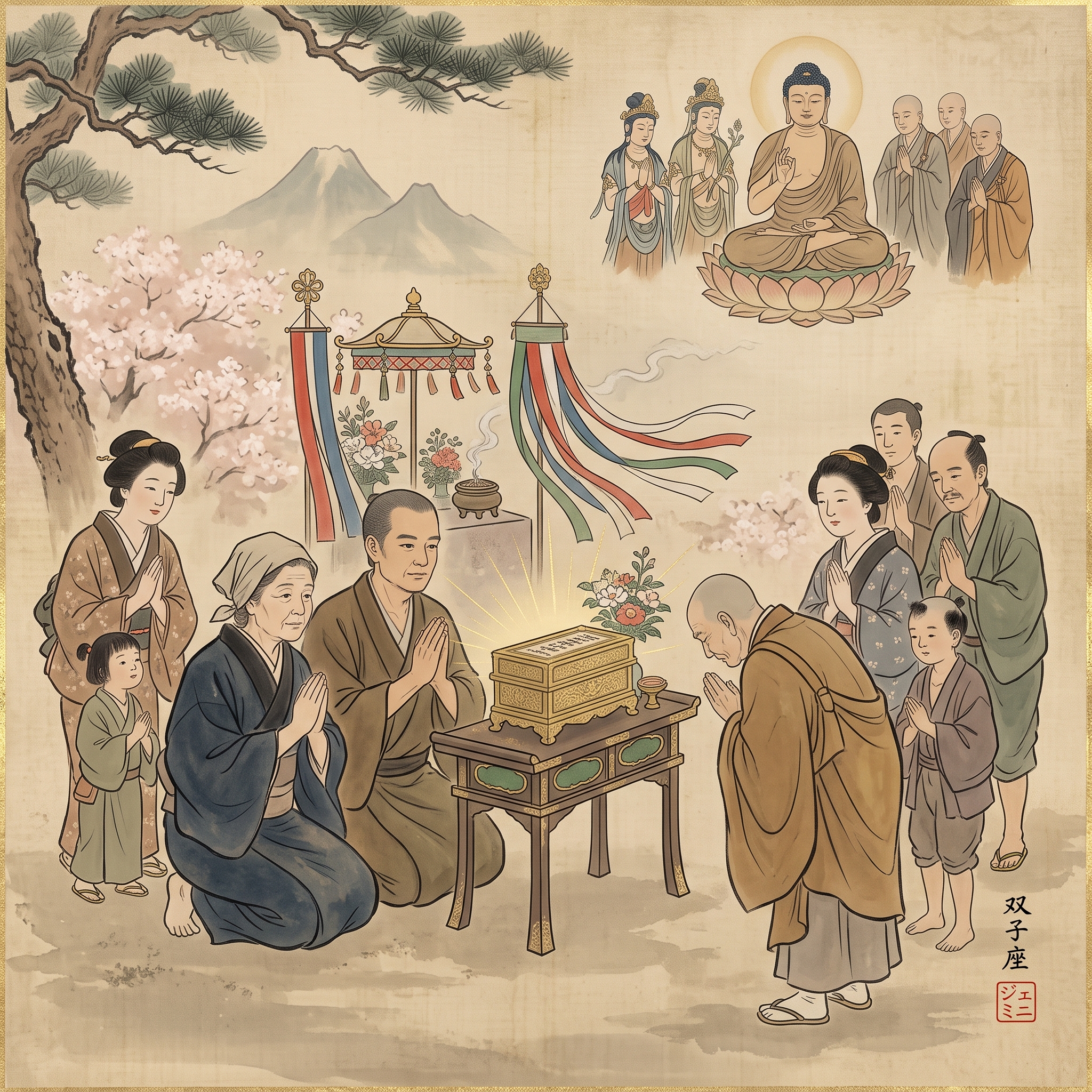
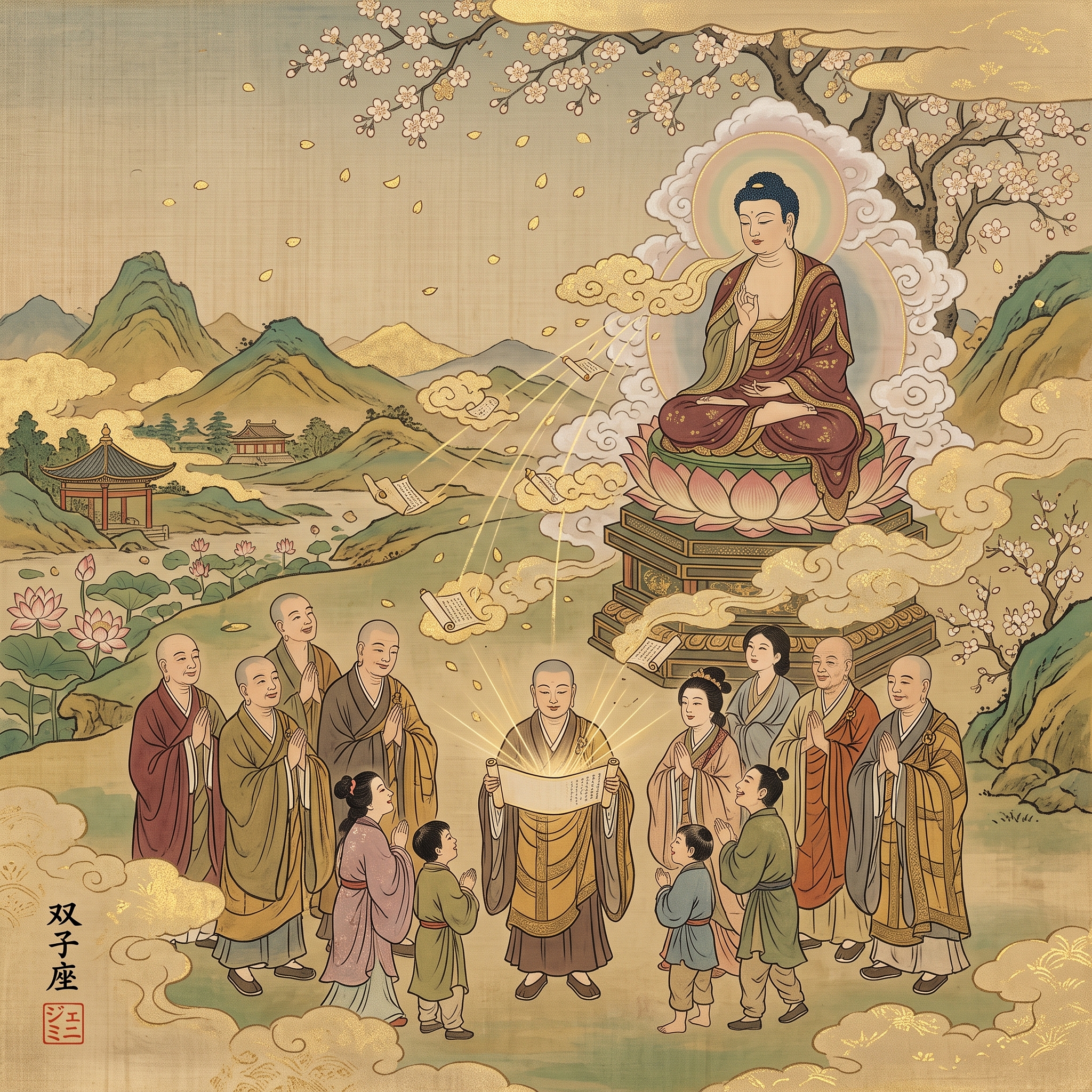
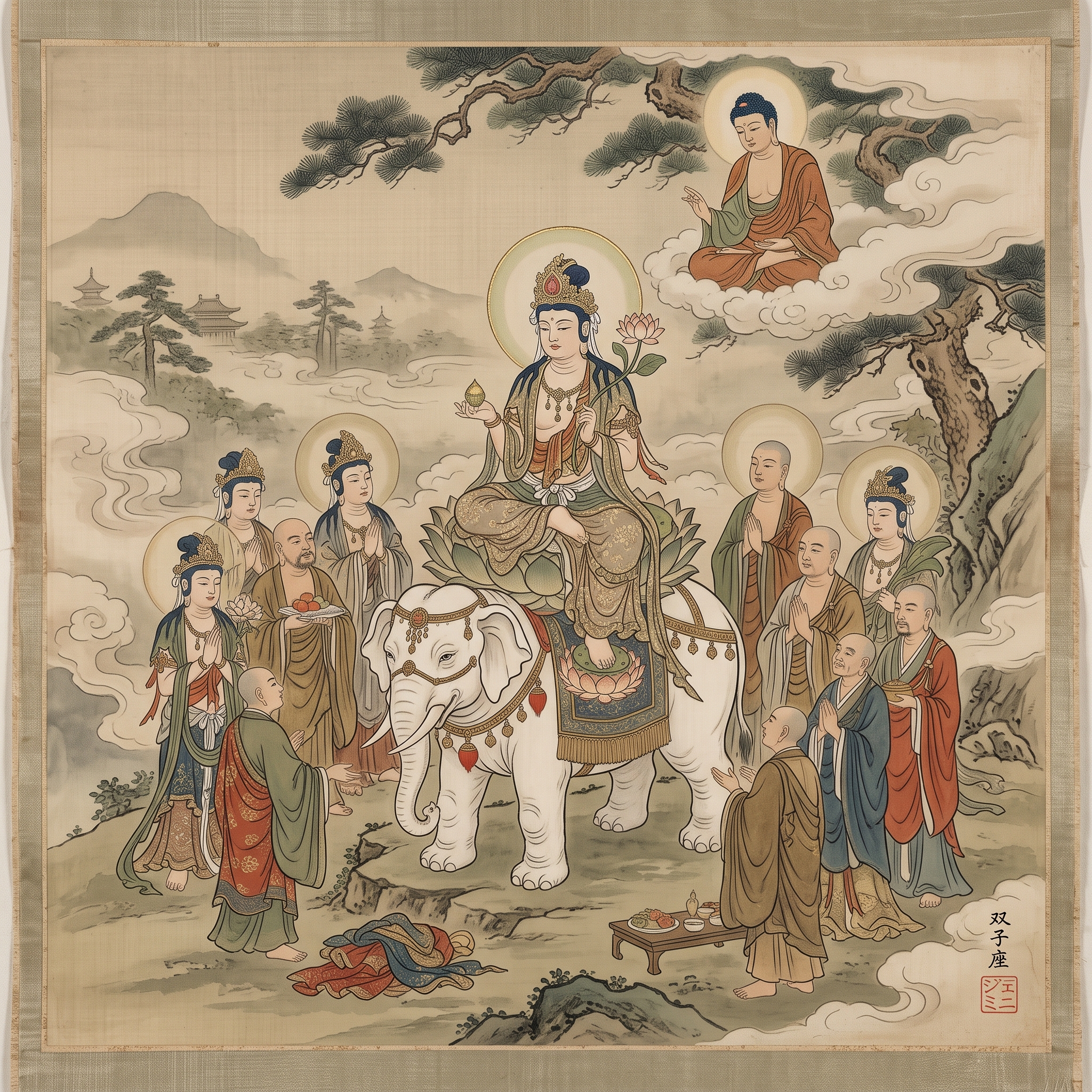
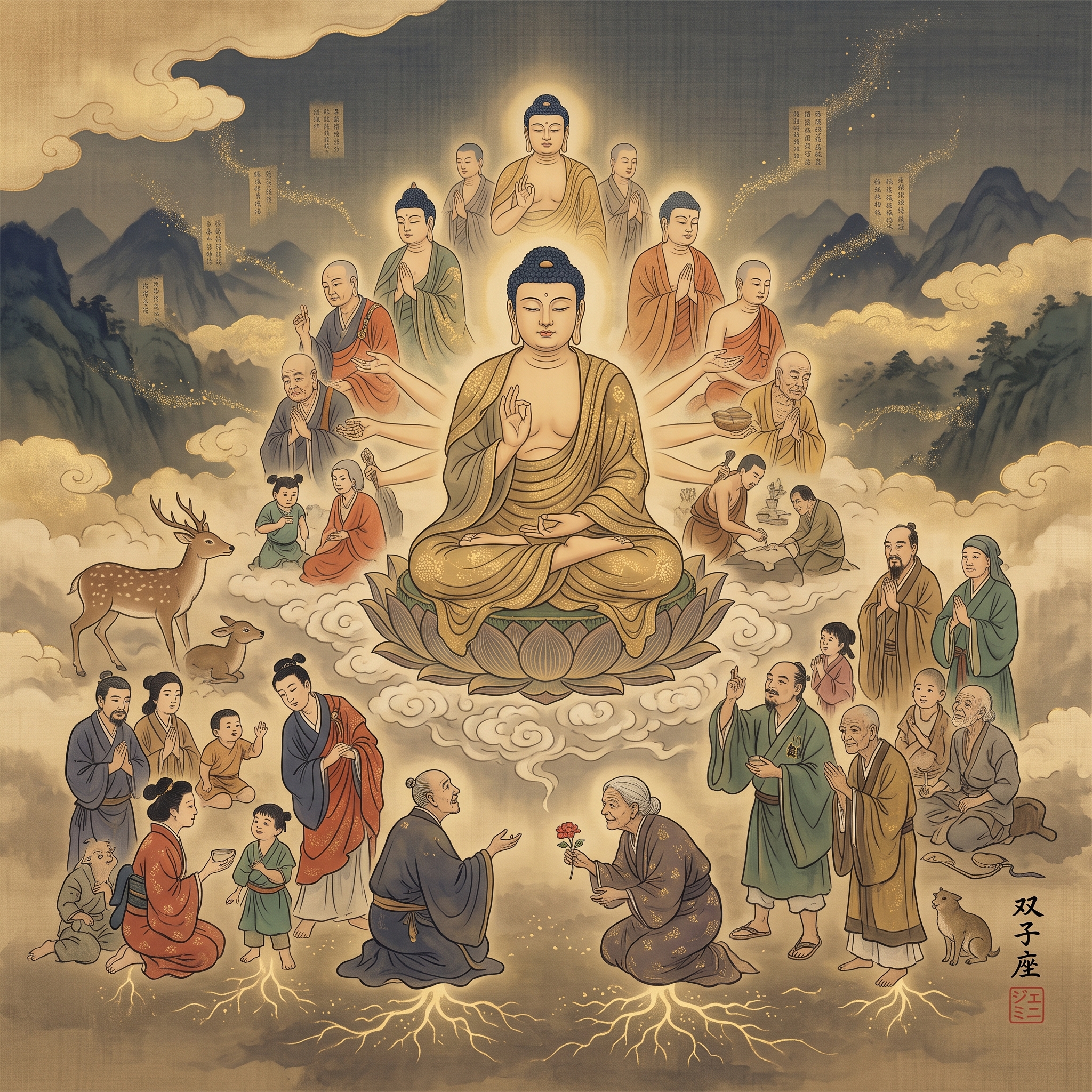
Something has been missing from the recent articles on faith and practice in Nichiren Buddhism. Magic. The promise that sincere Daimoku can produce tangible rewards.
When I first learned about the Daimoku in 1989 it was with stories of how chanting can free up curbside parking on a busy city street or help you get a better job or find a new romantic partner. The Pioneer Women of Soka Gakkai were adamant on this point. The Daimoku was magical.
While I left Soka Gakkai in part because I didn’t want chanting just to be a wish-fulfilling gem, I’ve found that the stories of the magical powers of chanting appear from all corners of Nichiren Buddhism.
Below is a reprint of a 1996 booklet published by the Nichiren Shu Overseas Propagation Promotion Association. The author is Rev. Taizui Kikuchi, who at the time was the head priest of the Hokkeji Temple in Kyushu. He was asked to write a series of articles under the theme of “Odaimoku-its Meaning and Merits.” These were originally published in the Nichiren Shu News in 1994.
I
Seven Letters of Odaimoku
“Namu-myoho-renge-kyo.” This is the Odaimoku. In this Odaimoku dwells the soul of the Buddha Sakyamuni. Nichiren Shonin staked his life on the dissemination of this Odaimoku.
When we chant this phrase, we are rewarded with invaluable merit. The Odaimoku is of little meaning if we do not chant it. It can be compared to the huge wealth of others. It means nothing to us because we do not own it.
Truth of Universe
When we chant the Odaimoku, we render ourselves to the truth of the great universe in both active and passive ways.
“Namu” means “adoration be to…!” When we utter the word “Namu,” we are pledging to “hold on to” the Odaimoku “for dear life.”
“Myo-ho” means “wonderful dharma,” that is the supreme truth of the universe where we live. The earth goes around the sun. Our life is finite. These are the solemn truths of the universe.
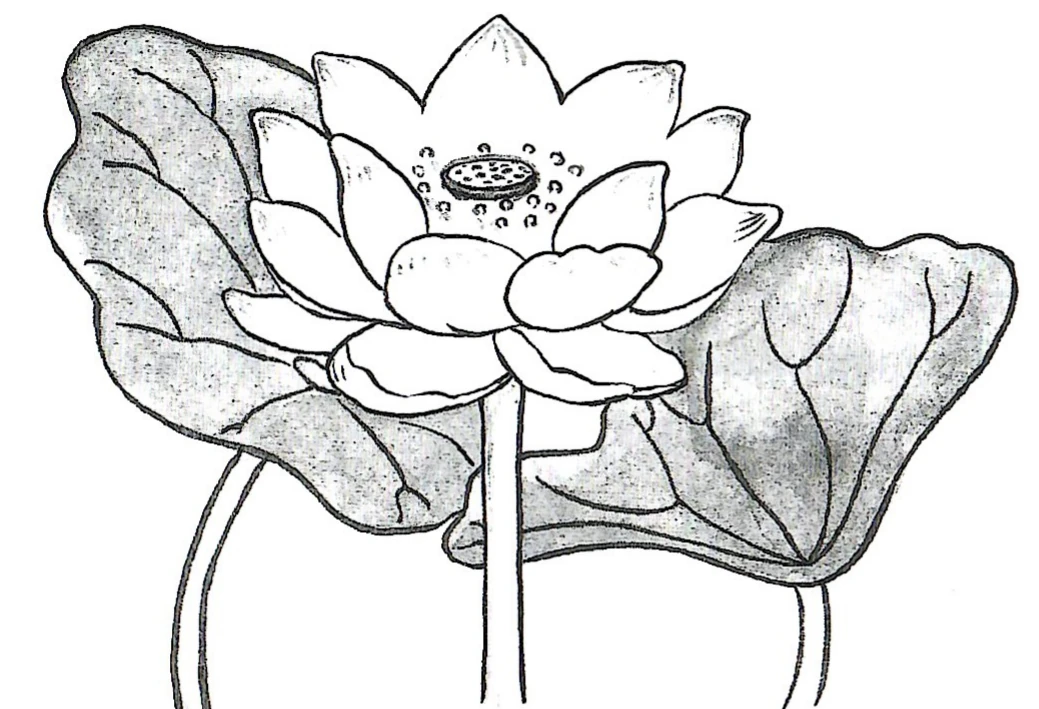
“Renge” is the lotus flower which bears pure blossoms in the muddy pond. Hence, “Myoho-renge-kyo” can be compared to the lotus flower which blooms out of muddy water.
Respectful Title
“Odaimoku” means a “respectful title” of a sutra. Accordingly, when we utter “Namu-myoho-renge-kyo,” we are chanting the entire Lotus Sutra, even if we do not perceive it.
“Namu-myoho-renge-kyo” consists of seven Chinese characters. The Lotus Sutra in the Chinese version contains some 70,000 Chinese characters. When we chant these seven words of Odaimoku 10,000 times, it equals to reading through the Lotus Sutra, composed of 70,000 characters, once.
One Million Times
In 1980, we started the practice of chanting the Odaimoku one million times at our temple (Hokkeji Temple, Oita Prefecture, Kyushu, Japan). Eight persons joined the practice at the beginning.
Our aim was to chant the Odaimoku altogether one million times (equivalent to reciting the Lotus Sutra 100 times) by these eight persons. We thought it would take a long time to achieve this goal, but to our surprise, a single person achieved this goal soon.
In eight years, a total of 148 persons joined the practice, and the combined total number of times we chanted it reached 100 million. By now, the total times of Odaimoku chanting have surpassed 220 million, making it necessary to rename our project “the Practice of Chanting the Odaimoku Immeasurable Times.” Thus we keep on chanting the Odaimoku.
Sustained Existence
We who participate in the Odaimoku chanting practice believe that we are not living on our own account, but our existence is sustained. It is because our life is sustained that we are able to chant the Odaimoku. And we fully realize that to chant the Odaimoku is to practice the Lotus Sutra.
Odaimoku-chanting practices are held monthly at Nichiren temples all over Japan as well as abroad. When we join the practice, we never fail to realize that our existence in this great universe is made possible because we are sustained. Let us start with chanting the Odaimoku!
II
To Be Reborn
When we chant the Odaimoku, we attain a new life. Thereafter we start our life afresh. It is claimed that “myo” (wonder) means resuscitation: being brought back to life or being reborn.
The following is a story of a 78-year-old man, living in a remote town in Kyushu. His aged wife has a deep faith in the Odaimoku and Odaimoku-chanting has become her daily habit.
‘Needless’
Her husband, however, used to say, “It is useless to chant the Odaimoku because I haven’t done anything evil.” Even so, he began to visit the temple as he was getting old.
It happened on a day in March. It was snowing even after the spring equinoctial week. (In Japan, we say, “Hot or cold weather does not last beyond the equinox.”) The old man visited my temple and was playing with my two-year-old daughter.
After an hour or so, my daughter toddled into my room saying, “Grandpa is sleeping.” With some ominous feeling, I rushed to the Main Hall of our temple and found the old man lying almost breathless.
‘He Is Dead’
I hastily phoned his family doctor and two or three more doctors. Two of them hastened to our temple. The two doctors examined the pupils of his eyes, and felt his pulse. Both of them declared, “He is dead.”
On that day, some 15 members of the temple happened to be present in the temple. They had gathered there for a group trip to Mount Minobu, where the Kuonji Temple, the head temple of Nichiren Sect of Buddhism, is located.
‘How Happy’
The wife of that old man, who was in the group declared, “How happy my husband is! How fortunate he is to end his life in a temple, especially in front of the statue of Nichiren Shonin!”
Nobody proposed it, but they spontaneously started chanting the Odaimoku. Picking up their hand drums, they all loudly chanted the Odaimoku to the accompaniment of the drums. After some 15 minutes, when they had chanted the Odaimoku around three hundred times, the old man regained consciousness. He was not hospitalized but stayed in our temple for a month, visited by a doctor every day.
Then he returned home, fully recuperated. Not suffering from any aftereffect, the old man has been visiting our temple daily for eight years since then.
‘Remote Sounds’
A few years after that incident, I asked him about his resuscitation. “I began to hear remote sounds of drums. Trying to get near to the drum sounds, l regained consciousness,” he said.
His experience shows that the Odaimoku can give a new lease of life to a man who is “dead.” More importantly, however, it can make us, living humans, to be “born again” and live a new life.
III
‘Filial Devotion Is High…’
When we chant the Odaimoku, we are practicing filial duty to our parents even if we do not realize it. “Filial devotion is far higher than the sky and thicker than the earth,” writes Nichiren Shonin. Sakyamuni Buddha is said to have sat in meditation for 90 days and preached the “Sutra of Gratitude” for Maya, his mother.
A statue of Nichiren Shonin, enshrined at Tokyo’s Ikegami Honmonji Temple and designated a national treasure, is known to bear some hair of Nichiren Shonin’s mother. The hair strands are mounted on the priest’s flapper held in the right hand of the statue.
The temple stands at the site where Nichiren Shonin passed away.
It is said that Nichiren Shonin was presented with the strings of hair by his mother when he entered the Seichoji Temple at Kominato in the present Chiba Prefecture at the age of 11 to start his priest life. He carried them with him throughout his life.
Atop Mt. Minobu
In a gesture of repaying his parents’ favors, Nichiren Shonin in his later years often climbed atop Mt. Minobu and bowed in the direction of the grave of his parents. To repay the favor of parents or to be dutiful to parents is difficult for us to accomplish. Here is a story of a girl who put her filial duty into practice without sparing anything.
Masue-chan
Masue-chan was the 16-year-old daughter of a couple running a Japanese inn located on the riverbank opposite my temple.
Her father, who worked at the Oita prefectural government office in the daytime, suddenly collapsed at his office. He was hospitalized immediately but remained unconscious and in very critical condition. His wife rushed to the hospital and kept watch over her husband, without as much as a thought for the inn.
The couple had three daughters. The eldest, who was married, lived far away. The second daughter was away from home too, attending college. So Masue-chan was the only one at home who was able to take care of the inn. The charming little girl visited me at my temple and said in tears, “I will do anything I can. Please save the life of my father.”
“I am no physician,” I answered, “so I am not able to cure him. But l can assure you that your father will be saved if you offer fervent prayers for his recovery.”
100 Times Worship
From the next day Masue-chan began a daily custom of “worshiping 100 times” at my temple. Before going to school she would visit our temple and go around the statue of Hariti (goddess of children) 100 times barefooted, chanting the Odaimoku. She continued the practice for 21 days, even in heavy rain or strong wind.
Her ritual became widely known at her school, and she was often ridiculed by her schoolmates. The 21-day ohyakudo (hundred times) practice turned out to be not enough. Strangely, however her father recovered consciousness after she finished the 21-day practice three times.
Masue-chan’s behavior of dutifulness to her father deserves admiration. Even more important, however, is to make offerings to our parents after their death in a gesture of repaying the favor they have given us.
IV
To Pray for Others
When we chant the Odaimoku, we will naturally be awarded evident merits.
However, the merits ·will not be given to us as long as we wish to get them for our own sake. Our wishes will not be realized one after another no matter how hard we chant the Odaimoku for ourselves. However, our wishes will come true when we chant the Odaimoku for the sake of others. Here, I would like to introduce the stories of two persons who regained their eyesight.
It was almost 45 years ago when I was staying at Honkoji Temple, Oita Prefecture, in Kyushu as a novice. Mrs. Kume Hatano, who was 90 years old, told me the following story.
Some months before entering elementary school, Kume suddenly lost her eyesight for unknown reasons. She went to an eye doctor every day to no avail. Her father, Kisaku, remembered that a mandala of Odaimoku written by Nitcho Shonin, the 11th head priest of Minobusan, the head temple of Nichiren Shu, was enshrined in that temple.
Nitcho Shonin is renowned for the healing of the eye disease. It is believed that when we pray to this priest for the healing of eye diseases, our prayer is rewarded.
Odaimoku
Kisaku took his daughter to the eye doctor every day. After finishing his day’s work, he went to his temple arid sat in front of Nitcho Shonin’s mandala, and continued to chant the Odaimoku late in the evening forgetting the hours going by.
He decided to offer a three-week prayer to Nitcho Shonin for the recovery of his daughter’s eyesight, three times. If Nitcho Shonin did not comply with his prayer, he thought, he would gouge his own eyes and offer them to Nitcho Shonin. He was carrying a knife for that purpose.
Miraculously, on the morning of the day following the completion of three-week chanting of the Odaimoku three times, his daughter regained her eyesight, though feebly. Her eyesight was fully restored before entering elementary school. Later she graduated from a women’s high school and became a school teacher. (In those days, not many girls studied in high school.)
In sutras, we find the phrase of “six pure organs or senses.” They are: eyes, ears, nose, tongue, body and mind. When these organs become pure, we will deserve longevity. Among them, the merit of eyes is most precious.
The second person to be referred to is Mrs. Fumika Uchikawa, 70 years old. After she got married, her mother-in-law taught her the merit of the Odaimoku. Mrs. Uchikawa had bad eyesight from younger days. She became almost blind as she got old. Even the eye doctors were not able to find out the reason. •
Kakurimbo Temple
Her stepmother recommended that she visit the Kakurimbo Temple located in Higashidani of Mt. Minobu, where Nitcho Shonin was enshrined. She visited this temple five times, traveling a long way from Kyushu.
“My blindness was my fate,” Mrs. Uchikawa told me. “However, if I remained blind, the persons around me would receive great annoyance. I therefore prayed to Nitcho Shonin for the recovery of my eyesight so that I would not bother people around me due to my blindness. If I had prayed for my own sake, I would not have recovered my eyesight.”
The merit of the Odaimoku are given as the results of sincere practice of chanting. Let us chant the Odaimoku.
Editor’s note: Nitcho Shonin (1422-1500), 11th head priest of Minobusan, assumed the post in 1462. During his 37 years of service at Minobusan, he refurbished the buildings of the temple, established the system of monthly and annual rituals, and wrote many theses on the teaching of the Lotus Sutra and Nichiren Shonin. In his later years when his eyesight declined, he offered a prayer to Nichiren Shonin for the recovery of his eyesight. In his prayer, he pledged that if he recovered his eyesight, he would do his utmost for those suffering from eye troubles. Thus he recovered his eyesight.
V
Bodhisattva Practice
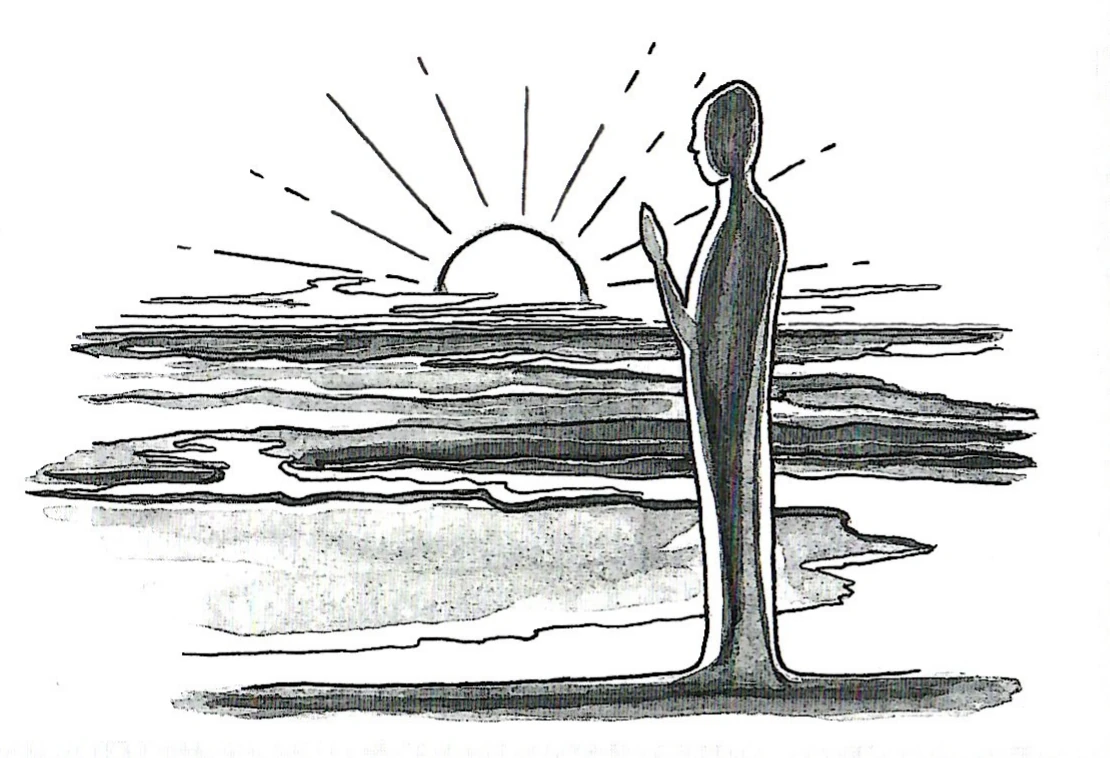
When we chant the Odaimoku, we should be fully aware that we are doing so, not on our own account, but for the sake of others.
The practice of the Lotus Sutra is the Bosatsu-gyo (bosatsu means bodhisattva; gyo, practice) practice. It is the practice of the Great Vehicle.
The Great Vehicle is not a vehicle for a single person. It is a vehicle, loaded with as many people as possible, bound for the world of enlightenment, that is, the attainment of the Buddhahood.
When many people flock together, conflicts naturally take place due to the difference of opinions and other reasons.
We should make room for others, acting in accordance with consideration for others. This behavior is the practice of the bodhisattva way, taking into account others’ standpoints and circumstances.
It happened before I entered the aragyo, 100-day ascetic practice, in 1950. Mrs. Ino Watanabe, a farmer’s wife fell ill.
Six Children
They had six small children. Mr. Senji Watanabe, her husband, visited me at the temple and consulted me, complaining it was too much for him to take care of six kids while engaged in farming, his business.
I didn’t know what to do for them. I had no idea as to which part of the sutra we should read to pray for the healing of the illness of his wife, because it was before I had learned about those things in the course of the aragyo practice.
However, I decided to recite again and again: “This sutra is the good medicine of the world. When one becomes sick and happens to listen to this sutra, his illness instantly vanishes and he will not grow old, attaining immortality.” (Chapter XXIII: the Original Existence of Yakuo Bosatsu or Medicine King Bodhisattva) and practiced the Odaimoku chanting together with them. His wife was healed.
Some years later, the farmer died. When I visited his home for the evening wake service, I found Noriko-chan, his granddaughter entirely depressed.
In an attempt to encourage her, I said to her, “Your grandfather was very kind, wasn’t he?”
Then the granddaughter• answered, “My grandfather bought me this red car, this spring. He practiced the Odaimoku chanting, every morning and evening, praying that I might not be involved in a car accident.” When she said so, she was all in tears.
Devout Member
Thus this farmer chanted the Odaimoku for his wife when he was young, and for- his granddaughter when he got old. He was a devout member of the Odaimoku chanting gathering of my temple.
I was driven to the cliff of death due to the children’s dysentery when I was a fourth-grader in elementary school. I had injections of salt in the thigh. I remembered the first injection. However, at the second shot, I almost lost consciousness.
Nobody believed I would be saved. The extra-high fever would prove fatal, they thought. My parents chose their own house, instead of the hospital, for the place where I would take the last breath. I was told after I had grown up that my grandmother offered a prayer, saying, “I would give up my life if my grandson is saved.”
A few months after I got healed, my grandmother passed away, falling down in my presence.
It is a pure conduct to pray for others.
VI
To Expiate Sins
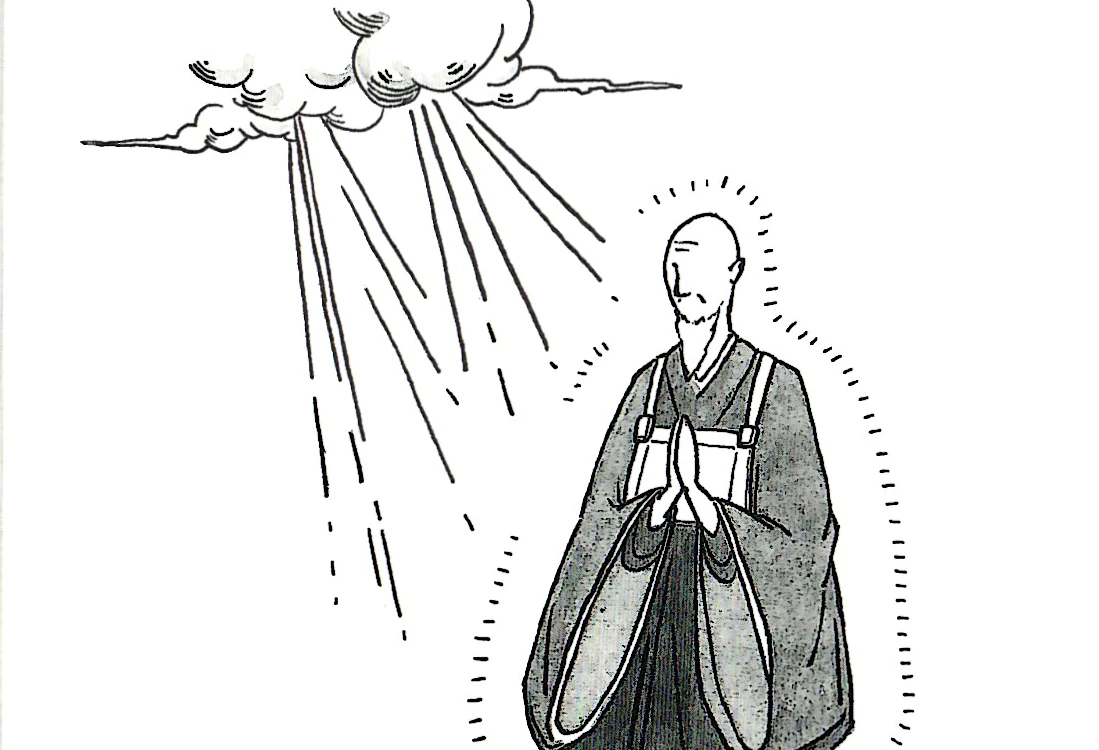
When we chant the Odaimoku, we are praying in the expiation of our sins.
Priests engaged in the aragyo austerities splash water on themselves seven times a day throughout the 100-days in the coldest season in Japan.
The water-splashing practice starts at three o’clock in the morning, and the day’s last and seventh water-splashing practice is conducted at eleven o’clock at night.
“Let my sins be expiated!” they chant loudly as they splash bucketfuls of water over their heads, exposed to the freezing cold wind.
The colder the wind, the stronger their realization that they are engaged in the practice of repentance and expiation.
While splashing cold water over their heads, blown by cold winds, the practicers often wonder what wrong things they have done so that they should be engaged in such an austere practice. “We cannot help it since we have volunteered for this practice,” they say to themselves.
Big Wrong Things
The fact is that we are doing big wrong things in our daily life though we are unaware of them and even if we are not put on trial for these wrong deeds.
For example, we are filled with greed, anger, grumbling and other evil feelings and thoughts. These adverse feelings and thoughts cause harm to others.
We should also become aware that we are taking lives of other living beings. It is just because we are living. In urban districts, we seldom discover ants. This proves that we are killing so many living beings.
Those who chant the Odaimoku are said to enjoy longevity. It is because the minds of such people are purified by the virtue of the Odaimoku.
When we drink foul water, we become sick. We need clean water.
We should learn from a phrase of the Lotus Sutra. “Be not infected by evil deeds of the world as lotus flowers bloom above the muddy pond water.”
Mrs. Yoshie Ono
Following is the story of Mrs. Yoshie Ono, who married into a family which had founded my temple, was still getting along very well at the age of 96 just before she died.
Her father’s family used to be a large landowner, which had owned even the site of the castle. But the family fortune had declined. By the time of her father’s generation, the large plot of land owned by the family had been reduced to the site of the execution ground located on the western tip of the castle compound.
Her father had built a small temple in the compound for the repose of the souls of his ancestors and there he was engaged in Buddhist practice. He had built this temple under the guidance of a priest.
The priest advised her father to build a temple when he consulted him on how to compensate for evil deeds attributable to his ancestors.
The priest instructed him to build a hall so that not only he himself and his family might do practices there but also many people nearby might visit the place and receive the teachings of Buddhism.
Mrs. Yosie Ono, his daughter, was determined that the sins of the ancestors should not be passed onto coming posterity. She devoted herself to the Odaimoku chanting practice.
Buddha Nature
When we chant the Odaimoku, the sacred title blots out the effects of wrong deeds, and Buddhas come to work and the bud of the Buddha nature owned by each one of us grows bigger, restraining people from conducting evil things. •
And we are inclined to take things favorably and reflect on our conduct. This change of mind takes place very naturally as the dew vanishes as the sun rises.
Editor’s Note: The Dai-aragyo (really-hard ascetic practice) is yearly held at the Hokekyoji Temple, Ichikawa, Chiba Prefecture. Lasting 100 days, it starts on November 1 and winds up on February 10. Every year, some 150 Nichiren-shu priests participate in the practice.
VII
To Chant Odaimoku Repeatedly
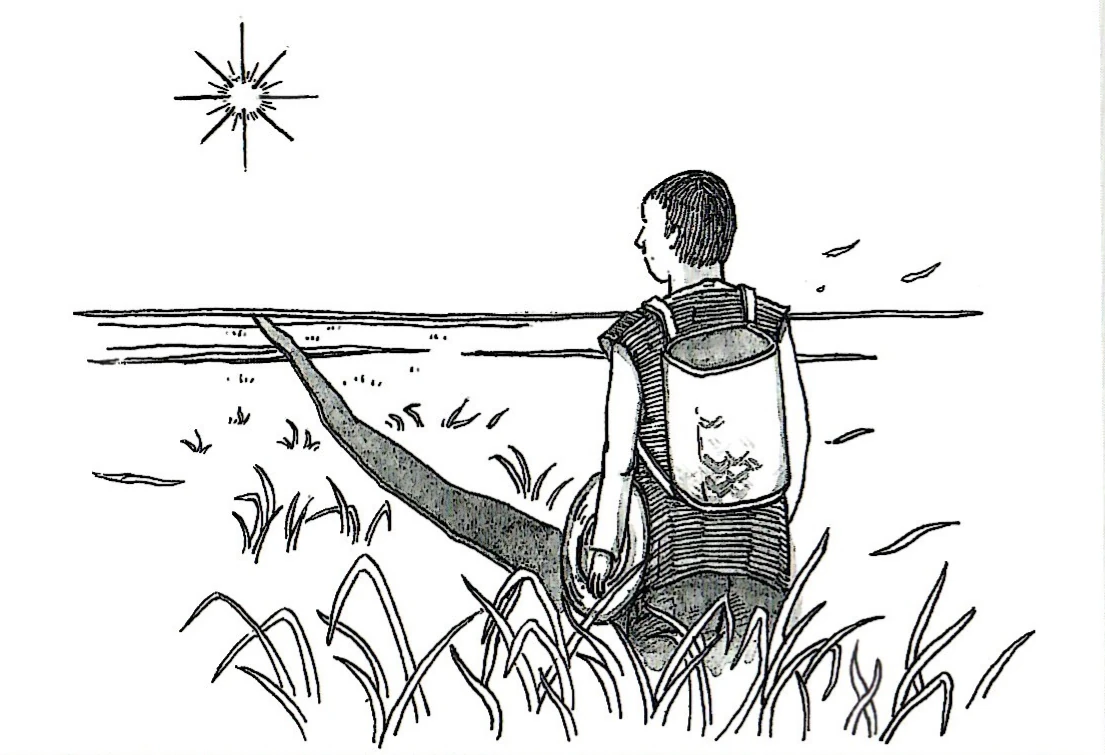
When we chant “Namu-myoho-renge-kyo” over and over, the Odaimoku we say begins to assume its true meaning.
It is often claimed, “No matter how often we chant the Odaimoku, our practice is no use if we do not chant it from the heart,” “We will not be able to receive the merit of the Odaimoku simply because we chant the Odaimoku again and again,” or “Even if we chant the Odaimoku only three times, it is. important to chant it whole-heartedly.”
As such, some deny the merit of chanting the Odaimoku over and over. Are these claims well-founded? I do not think so.
Repeated Exercises
Repeated exercises produce good results. This is common sense in the world of sports. When we challenge again and again, we are able to reach the higher standard of achievement in the fields of learning arts and all other activities. This is also true with the “Wonderful Dharma” or “myoho” of the “namu-myoho-renge-kyo,” the Odaimoku.
Some two hundred people are participating in the “Practice of Chanting the Odaimoku Innumerable Times” at our temple. One of them has so far chanted the Odaimoku as many as eight million times.
More than 16 Years
The practice started on January 1, 1980, lasting more than 16 years. This means that this person has been chanting the Odaimoku some one thousand five hundred times a day. Three other persons are almost reaching the point of eight million times.
At our temple, we chant the Odaimoku three hundred times in the morning, and five hundred times in the evening. Besides these daily practices, people get together four times a month for the “one-thousand Odaimoku practice.” The person who has chanted the Odaimoku eight million times so far never misses these meetings. So this person must also be chanting it daily some seven hundred times at his own home.
100 Times in 30 Minutes
I recommend people to chant the Odaimoku one hundred times in about five minutes. Thus it takes some thirty minutes to chant the Odaimoku seven hundred times. A thirty-minute practice is not what we are unable to accomplish. It is rare, however, to continue this practice for as long as several decades without a break, just as the river flows continuously.
The person credited for the record number of Odaimoku chanting is over eighty years of age. In the daytime, he is out in the field engaged in agricultural work. When he gets tired toward the evening, he returns home.
“You are chanting the Odaimoku so many times. You are the example for others to follow.” This is the compliment I make every time I hand him a certificate of accomplishment in chanting the Odaimoku 10 thousand times.
To tell the truth, however, he is chanting the Odaimoku many times more than his record shows because he is chanting it continuously, while working on the farm or walking on the street.
No Limit
There is no limit in chanting the Odaimoku. It cannot be claimed that we have accomplished the practice of chanting the Odaimoku because we have chanted it so and so many times.
We are not conscious· of the existence of air although we live in it, inhaling and exhaling it incessantly. How wonderful it is to chant the Odaimoku continually all day!
VIII
Let Us Cover the Earth With Odaimoku
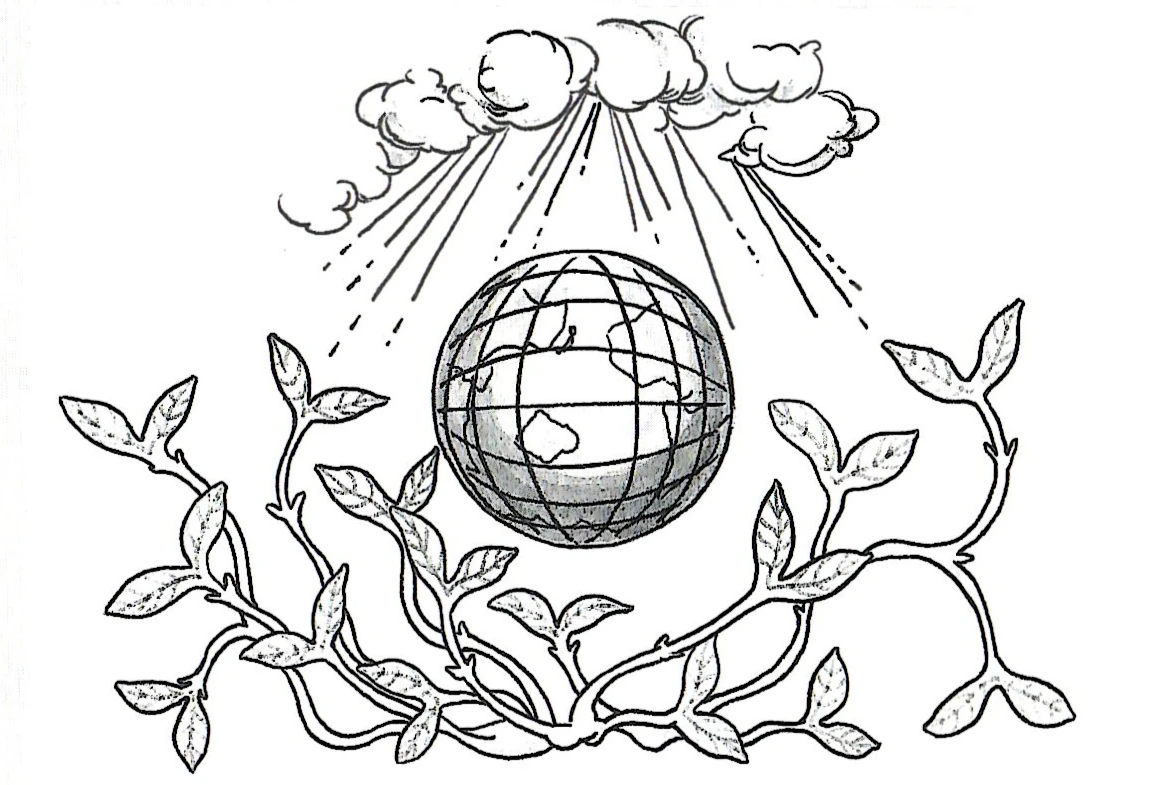
When we chant the Odaimoku, the Buddha bestows His compassion and wisdom upon us. “If we lead our life by keeping compassion in mind, we are able to enter the world of Buddha’s wisdom.” It is so expounded in the Lotus Sutra. This phrase of the sutra is my motto.
Buddha’s Wisdom
Buddha’s wisdom is not the kind we learn at school or to be acquired by reading books. His wisdom shows us the true way to live. It is commonly claimed that old folks are the fountain of wisdom. Because of their rich experiences in life, their daily life reflects the true way of life, though it may not be theoretical.
This column is the eighth and last of the series, “Odaimoku: Its Meaning and Merits.” Shown in this series are the lessons I have learned from those who have been engaged in the Odaimoku chanting practice for long years. Let us review each of the lessons.
“To chant the Odaimoku” means to us:
- to live in compliance with the truth of the universe;
- to be reborn as a human being and lead a life humanly;
- to practice filial piety toward parents;
- to receive its merits in tangible forms;
- not to pray only for own self but to pray for others;
- to expiate own sins;
- to realize the true meaning of the Odaimoku by chanting it repeatedly;
- to be bestowed Buddha’s compassion and wisdom.
Limitless Virtues
The virtues of the Odaimoku are not limited to the above mentioned ones. When we chant the Odaimoku innumerable times, we will be accredited with innumerable virtues and merits.
As I have said earlier, we will not be benefited with the virtues or merits of the Odaimoku at our own wish. When we continue to practice the Odaimoku chanting, we receive the merits in the natural course of matters, and when we are confronted with great difficulties in life, the merit we receive proves to be really magnificent.
We often pray to the Buddha and guardian deities, “May great calamities be reduced to small calamities, and small calamities to no calamities.” Even if we do not chant this phrase, things will turn out exactly like this when we continue to chant the Odaimoku.
Dependence on Buddha
When we believe things like this, concentrating on the practice of the Odaimoku chanting, we will become dependent on the Buddha and be able to purify our own mind as well as the minds of others.
As the Odaimoku spreads the world over, the earth is purified and world peace is established.
NICHIREN SHONIN
| YEAR |
DATE |
AGE |
EVENTS |
| 1222 |
Feb. 16 |
|
Born in Kominato in present Chiba Prefecture. |
| 1233 |
May 12 |
11 |
Sent to Seichoji Temple on Mt. Kiyosumi. |
| 1237 |
|
15 |
Ordained by Master Dozen. Given the priest name of Rencho. |
| 1238 |
|
16 |
Studies Zen and Pure Land Buddhism in Kamakura. |
| 1242 |
|
20 |
Studying at Enryakuji Temple of Tendai Sect on Mt. Hiei, present Shiga Prefecture and other great temples.
Nissho becomes a disciple. |
| 1253 |
|
31 |
Returns to Seichoji Temple. Proclaims His faith, reciting “Namu Myoho Renge Kyo” for the first time on Mt. Kiyosumi on April 28. |
| 1254 |
|
|
Nichiro becomes a disciple. |
| 1258 |
|
36 |
Leaves Kamakura for Jissoji Temple, Shizuoka Prefecture, to study Tripitaka (entire scriptures of Buddhism). |
| 1259 |
|
37 |
Nikko becomes a disciple. |
| 1260 |
|
38 |
Returns to Kamakura. Writes “Rissho Ankokuron” (“Treatise on Spreading Peace Throughout the Country by Establishing True Dhrma”)
July 16 Presents “Rissho Ankokuron” to Kamakura Government.
Aug. 27 A mob attacks his hamlet at Matsubagayatsu in Kamakura. |
| 1261 |
May 12 |
39 |
Arrested and exiled to Ito, Shizuoka Prefecture. |
| 1263 |
Feb.22 |
41 |
Pardoned from exile i_nlzu and returns to Kamakura.
Nichiji becomes a disciple. |
| 1264 |
Nov. II |
42 |
Peril at Komatsubara, present Chiba Prefecture. |
| 1271 |
Sep. 12 |
49 |
Escapes execution at Tatsunokuchi.
Nov. 28 Exiled to Sado Island. |
| 1272 |
Feb. |
50 |
Writes “Kaimokusho” (“Opening the Eyes”). |
| 1273 |
Apr. |
51 |
Writes “Kanjin-honzon-sho” (“The Spiritual Contemplation and the Object of Warship”); reveals the Great Mandala Gohonzon. |
| 1274 |
Feb. |
52 |
Pardoned from the Sado exile. Returns to Kamakura in March.
May 17 Leaves Kamakura for Mt. Minobu. |
| 1275 |
|
53 |
Writes “Senji-sho” (“Selecting the Right Time”). |
| 1276 |
|
54 |
Writes “Hoon-jo” (“On the Recompense of Indebtedness”). |
| 1282 |
Sep. 8 |
60 |
Leaves Mt. Minobu for recuperation.
Sep. 18 Reaches the residence of Ikegami Munenaka, Ikegami, Tokyo.
Oct. 13 Enters Nirvana. |
| 1283 |
May |
|
Ashes enshrined on Mt. Minobu. |
Postscript
“When we are confronted with great difficulties in life, the merit we receive by chanting the Odaimoku proves really magnificent.”
Rev. Taizui Kikuchi, head priest of the Hokkeji Temple in Kyushu, is the Nichiren priest who is of this conviction, hardly comparable. He practices the Odaimoku chanting not only by himself but persuades others to practice the Odaimoku chanting with this conviction.
This is the reason I asked him to write a series of articles under the theme of “Odaimoku-its Meaning and Merits,” on the Nichiren-shu News, which is being published jointly by Shumuin, administrative headquarters of the Nichiren Order of Buddhism and Kaigai Fukyo Koenkai, Overseas Propagation Promotion Association. The series was carried on the by-monthly newspaper eight times from the August 1994 issue.
The original copy was written in Japanese, and translated by myself, and revised by Rev. Kyotsu Hori. Rev. Genichi Oikawa compiled this series into this booklet.
By Keiryu Shima
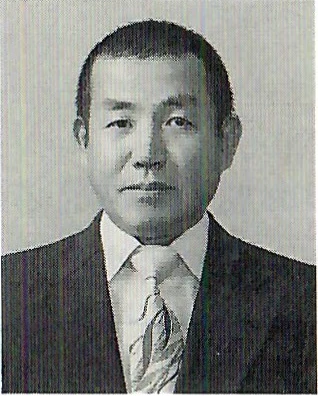
Rev. Taizui Kikuchi
Resident Minister of the Hokkeji Temple,
Oita Prefecture, Japan
Graduate of Rissho University
Bishop of Oita Prefecture
Bishop of Kyushu District
Director of the Nichiren Shu Newspaper Co.
Odaimoku
Published in 1996
by Nichiren Shu Overseas Propagation Promotion Association
c/o Joenji 7-12-5 Nishi-shinjuku, Shinjuku-ku, Tokyo 160 Japan
Illustration Kikuko lwano
Layout Molt Inc., Tokyo, Japan
Printed by Miyano Printing Inc., Tokyo, Japan
©Nichiren Shu Overseas Propagation Promotion
NICHIREN SHU OVERSEAS PROPAGATION PROMOTION ASSN
Download this brochure