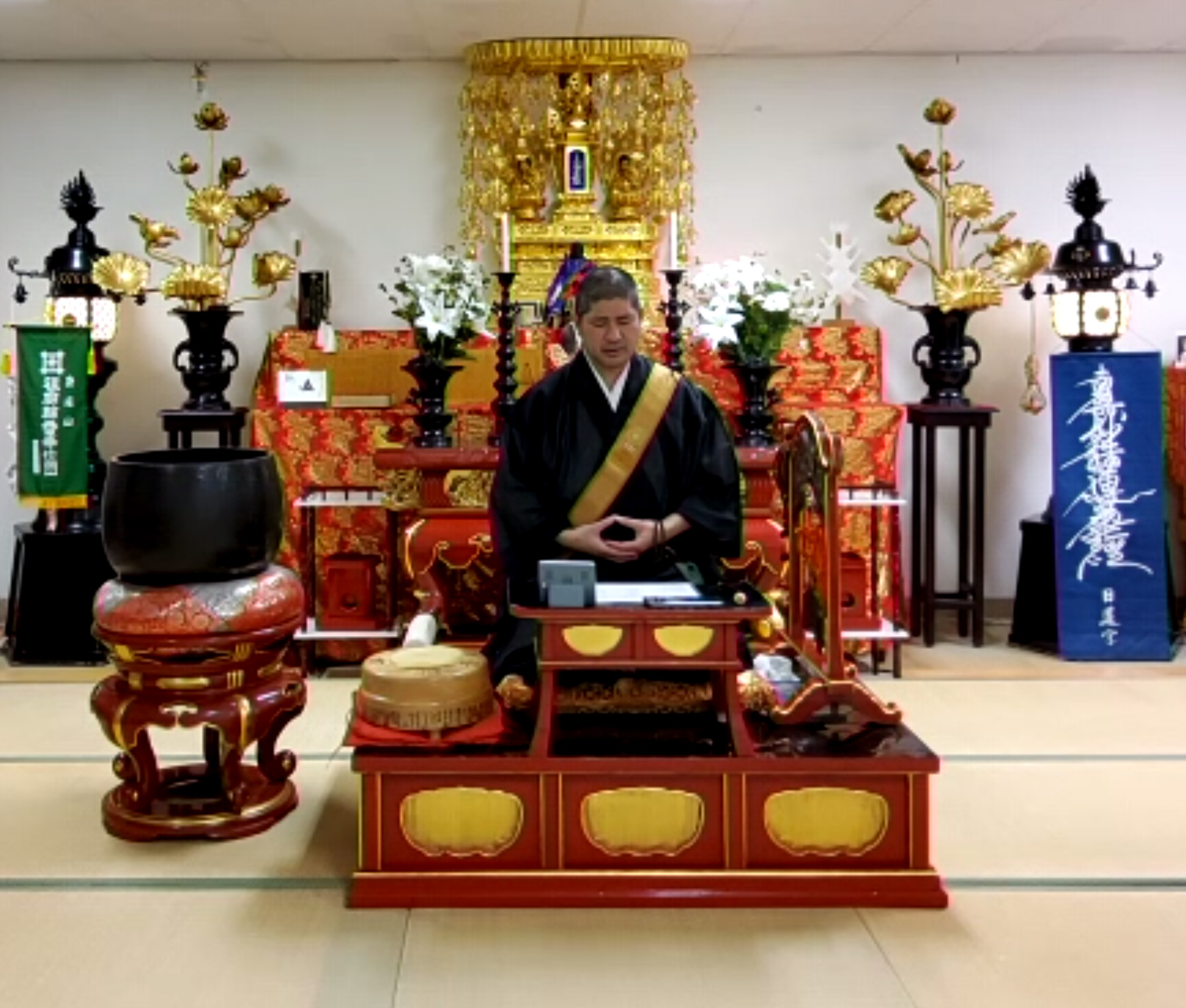
The One Year Memorial Service for Rev. Ryusho Jeffus will be held online on Sunday, Aug. 15 via Zoom at 10:30 AM Pacific Time – 1:30 PM Eastern Time, 6:30 PM GMT (London), 7:30 PM CET (Prague).
You must register in advance if you want to attend.
After registering, you will receive a confirmation email containing information on how to join Rev. Ryusho Shonin’s Service. Check your spam folder if the email does not arrive. For questions about the service, contact Mark Herrick.
Day 14 covers all of Chapter 9, The Assurance of Future Buddhahood of the Śrāvakas Who Have Something More to Learn and the Śrāvakas Who Have Nothing More to Learn, and opens Chapter 10, The Teacher of the Dharma.
Having last month considered the Buddha’s prediction for Ananda, we consider the question posed by the new Bodhisattvas.
There were eight thousand Bodhisattvas who had just resolved to aspire [for Anuttara-samyak-saṃbodhi] in this congregation. They thought, ‘As far as we have heard, even great Bodhisattvas have never been assured of their future Buddhahood. Why have these Śrāvakas been so assured?’
Thereupon the World-Honored One, seeing what the Bodhisattvas had in their minds, said to them:
“Good men! Ānanda and I resolved to aspire for Anuttara-samyak-saṃbodhi under the Void-King Buddha at the same time [in our previous existence]. At that time Ānanda always wished to hear much while I always practiced strenuously. Therefore, I have already attained Anuttara-samyak-saṃbodhi[, but he has not yet]. Now he protects my teachings. He also will protect the store of the teachings of future Buddhas, teach Bodhisattvas, and cause them to attain [Anuttara-samyak-saṃbodhi], according to his original vow. Therefore, now he has been assured of his future Buddhahood.”
“O you of good intent! This sutra can be likened to a single seed from which a thousand million seeds result. And each of these seeds, in turn, also results in a thousand million in number. In this way, the production of seeds is limitless in measure. So it is also with this sutra—it is a single teaching that gives rise to a hundred thousand meanings, and each one of these, in turn, produces a thousand million in number. In this way, meanings are produced to an unlimited and boundless extent.”
In the Nichiren Buddhist Sangha of the San Francisco Bay Area discussion of Chapter 9 there is a lot of discussion about practice and in particular the perils of becoming disheartened if your personal practice falls short of your goal.
While it is important to remember that a single Daimoku is the equivalent of reciting the entire Lotus Sutra, I think the point Chapter 9 is making is that just knowing stuff is not enough. You have to put that knowledge to work. In the above quote from today’s portion of Chapter 9, we learn that Śākyamuni and Ananda both aspired for enlightenment under the Void-King Buddha, but Ananda was too focused on learning and neglected his practice. In the future, he will protect the store of the teachings of future Buddhas, just as he does now, but he will also teach Bodhisattvas, and that will be how he becomes a Buddha named Mountain-Sea-Wisdom-Supernatural-Power-King.
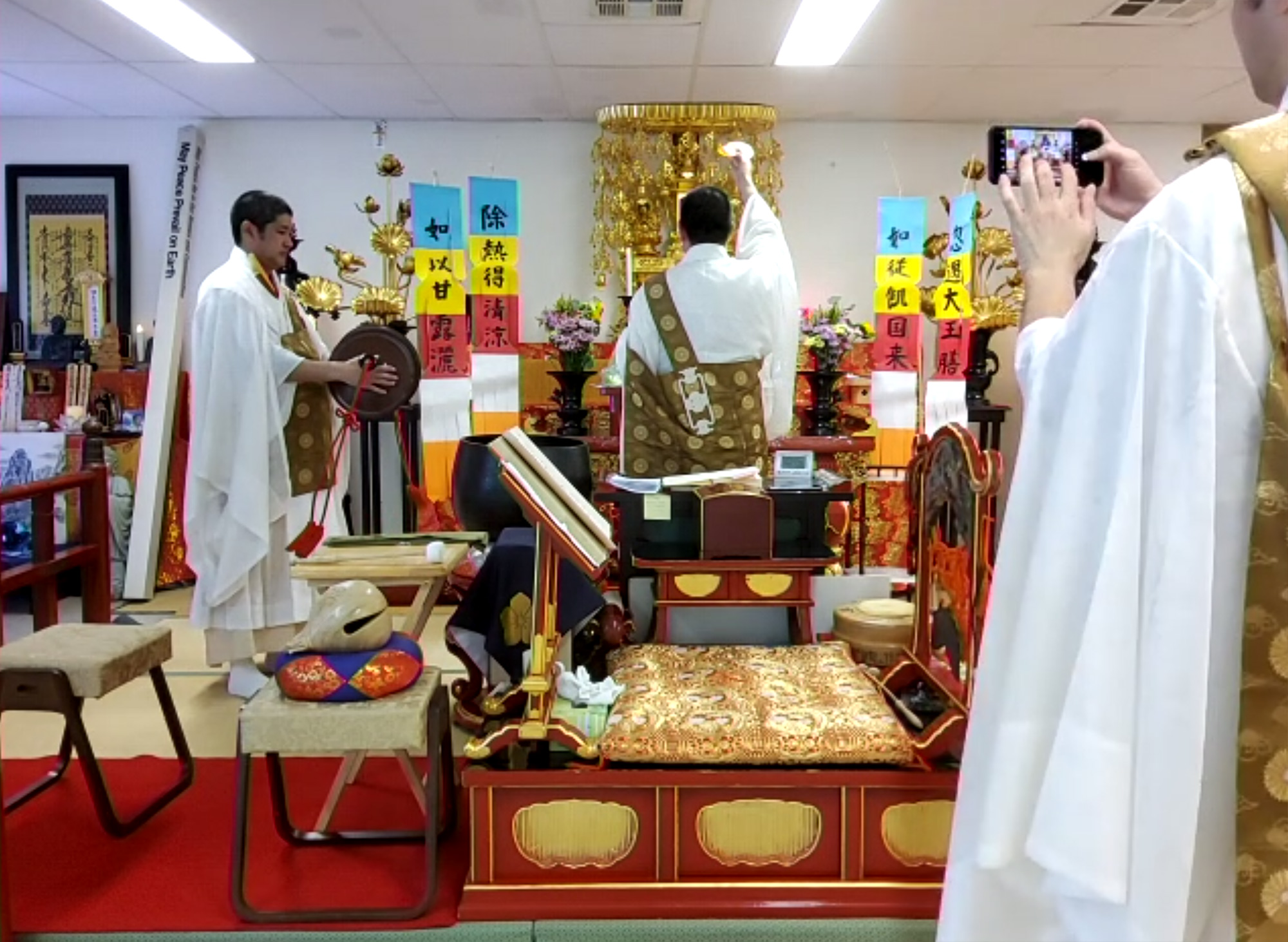
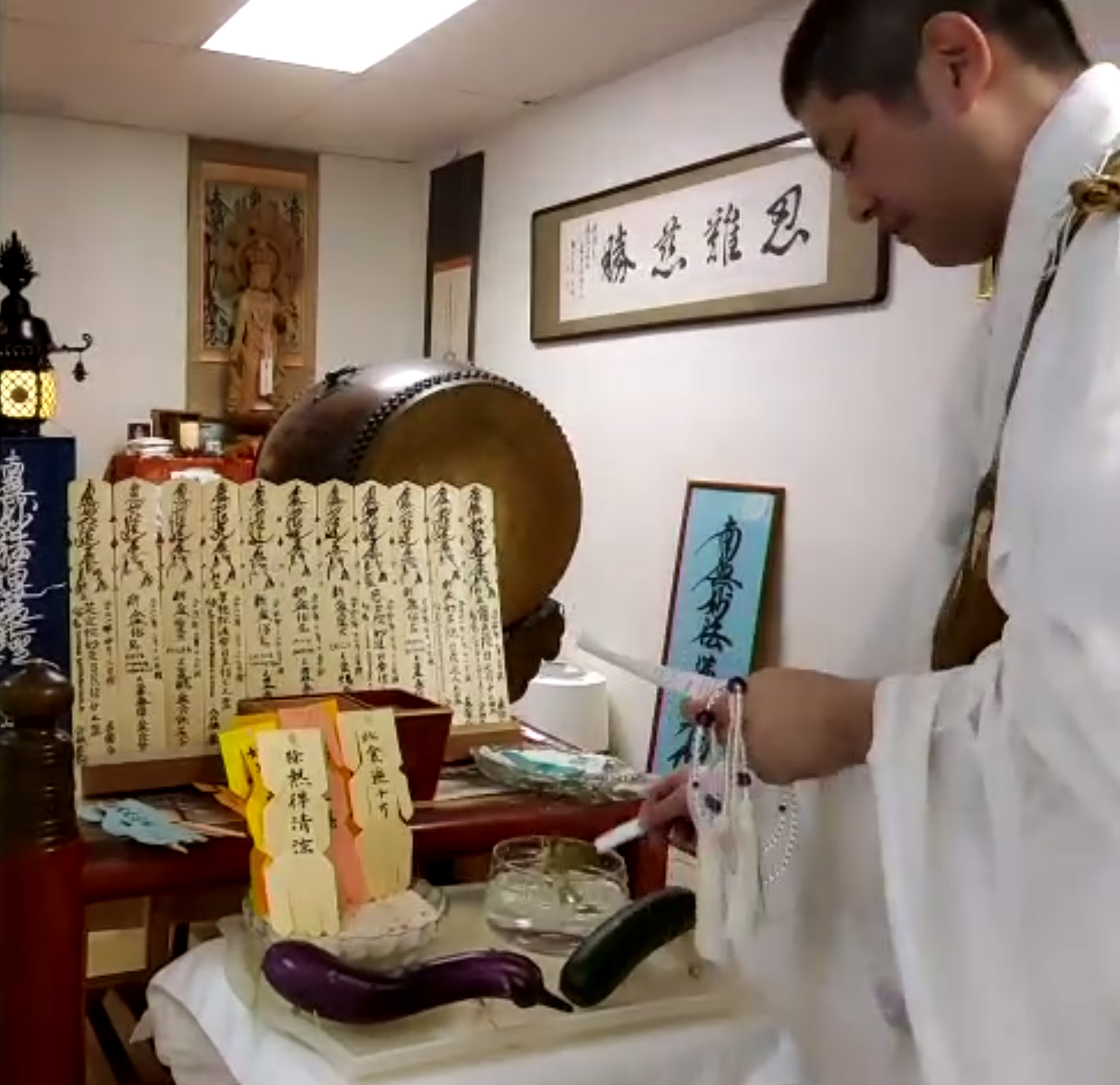
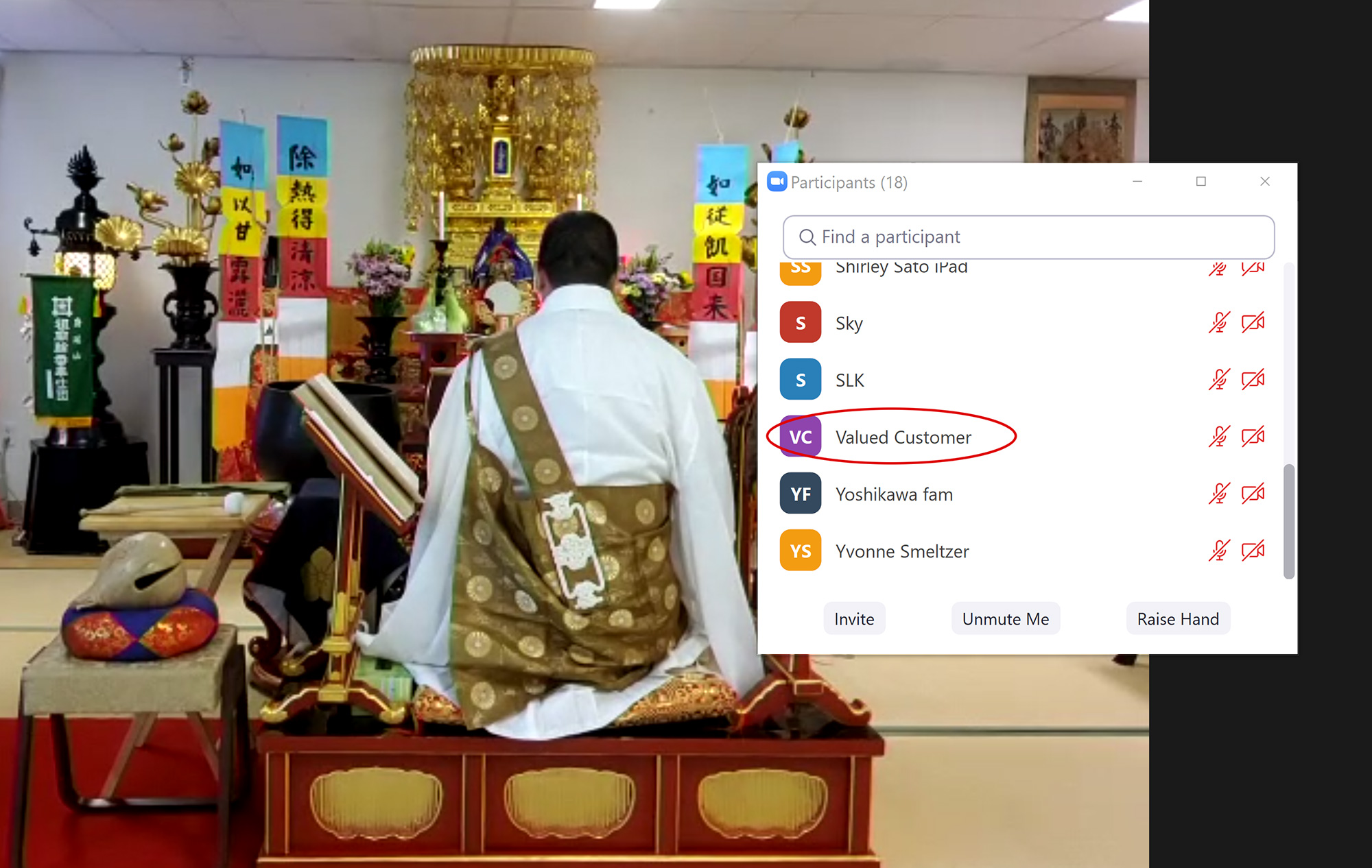
Rev. Shoda Kanai playing all of the instruments in his orchestral arrangementRev. Shoda Kanai feeding the hungry spirits. The tobas — paper stupas — are for people for whom this was there first Obon. Among those tobas is one for Rev. Ryusho Jeffus.Included among the 18 participants in the Zoom service was this Valued Customer.
Keisho Tsukamoto’s Source Elements of the Lotus Sutra is not a book about the teaching of the Lotus Sutra as much as it is a book about how the evolution of Buddhism is reflected in the Lotus Sutra. As such it is filled with archeological and historical minutia that is of little interest outside academic circles. Today’s post, Embracing the Nāga cult, is a good example.
The book was originally published in Japanese in 1986 and republished in English by Kosei Publishing in 2007. When I purchased this book last year, it was going for $50 used. The cover price was originally $26.95. Today you would be hard-pressed to find this book for sale for less than $300. This is the Pokemon card in my Lotus Sutra library – do I hold on to it or sell it for a big profit.
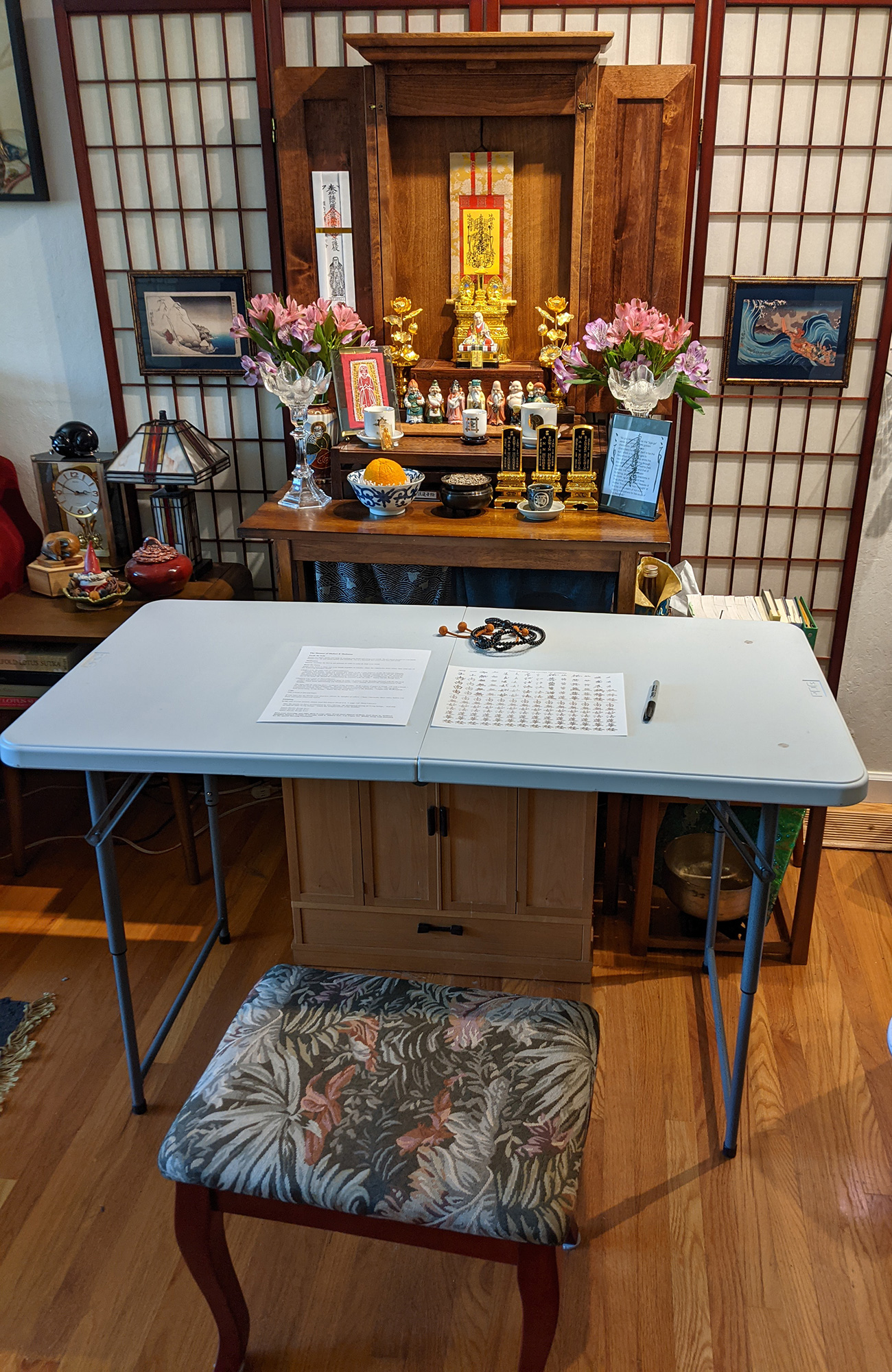
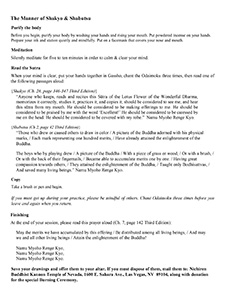
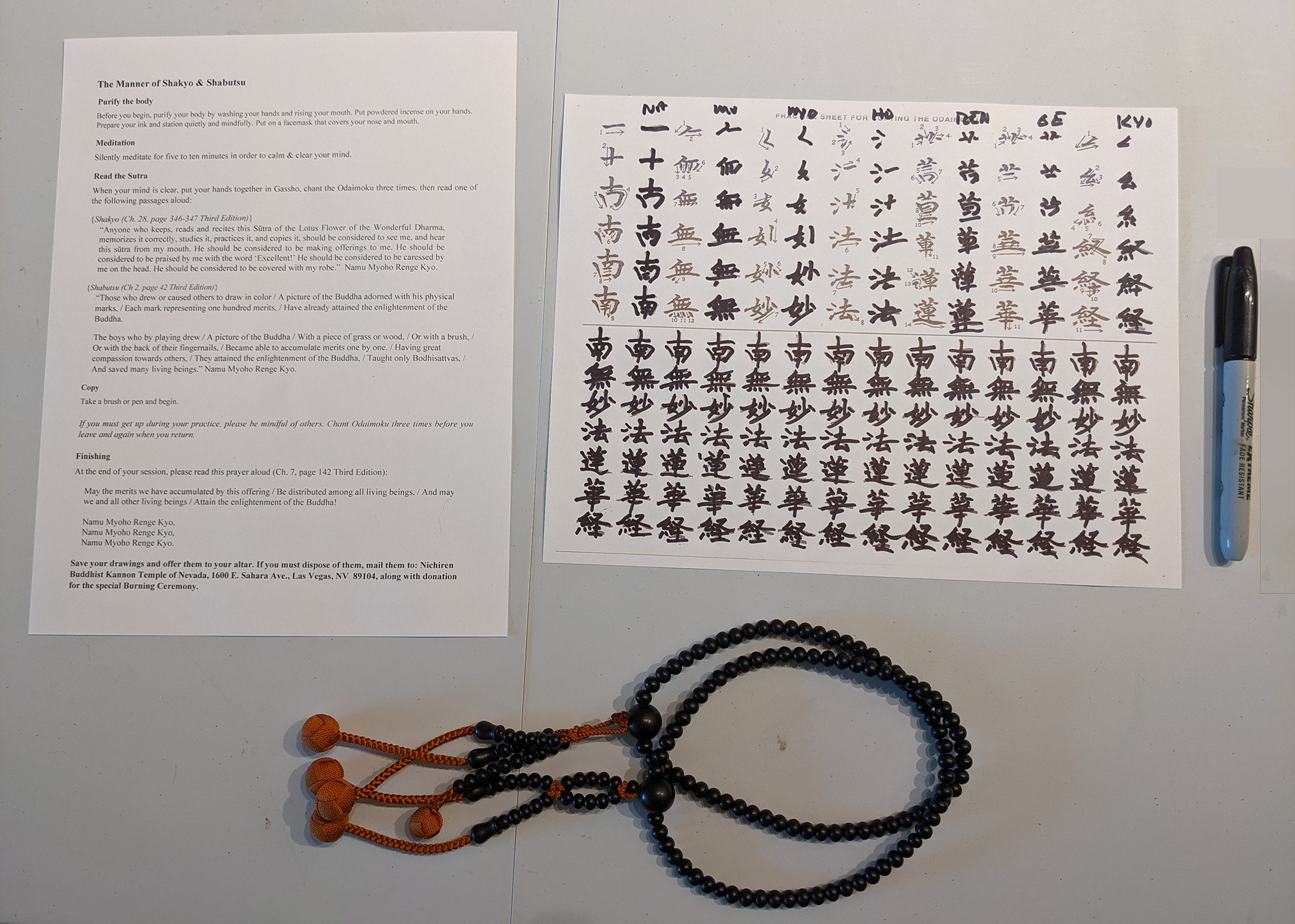
Not only do the instructions include all of the ritual preparation, but it also includes stroke-by-stroke diagrams for each character of the Daimoku.
This is a far cry from the last time I tried this. Rev. Ryusho Jeffus offered shakyo tracing during his 2nd Annual Urban Dharma Retreat in August 2016. However, Ryusho didn’t offer the stroke order or the purification setup.
I hope to make this a regular addition to my practice.
In editing “Nichiren, The Buddhist Prophet” by Masaharu Anesaki I’ve had no trouble changing “Scripture” to Lotus Sutra or “Sole Road” to One Vehicle, as I attempt to reduce potential distractions caused by Anesaki’s insertion of Christian vocabulary into his explanation of Buddhism and the teaching of Nichiren. But Anesaki’s description of the Lotus Sutra as Johannine gave me pause.
The first reference comes in Chapter 2, in a short section entitled, “The Lotus of Truth; its general nature”:
Critical study of Buddhist literature will doubtless throw more light on the formation and date of the compilation; but even apart from minute analysis, we can safely characterize the book as occupying the place taken in Christian literature by the Johannine writings, including the Gospel, the Apocalypse, and the Epistles.
Google Johannine and one quickly finds that it relates to the Apostle John the Evangelist or to his Gospel and epistles in the New Testament.
Clearly this is an important distinction to Anesaki.
My Googling failed to find a description of “the place taken in Christian literature by the Johannine writings” that might shed some light on what Anesaki was trying to point out.
Later in the book, in discussing T’ien T’ai’s teachings, Anesaki writes:
This book [the Lotus Sutra], as has been observed above, may be called the Johannine Gospel of Buddhism. It tries to solve the problems of reality by the key given in the identification of Buddha’s enlightenment with cosmic truth.
Identifying the Śākyamuni of Chapter 16, the Eternal Original Buddha, with cosmic truth is reasonable. The Sutra of Contemplation of the Dharma Practice of Universal Sage Bodhisattva, the concluding sutra of the Threefold Lotus Sutra, says, “Śākyamuni Buddha is Vairocana.” But how that relates to the Johannine Gospel is lost on me.
Perhaps it’s as simple as the opening lines of the Gospel of John:
In the beginning was the Word, and the Word was with God, and the Word was God.
The same was in the beginning with God.
All things were made by him; and without him was not any thing made that was made.
In him was life; and the life was the light of men.
And the light shineth in darkness; and the darkness comprehended it not.
There was a man sent from God, whose name was John.
The same came for a witness, to bear witness of the Light, that all men through him might believe.
He was not that Light, but was sent to bear witness of that Light.
That was the true Light, which lighteth every man that cometh into the world.
Perhaps not. I don’t know. I’m self-taught in almost all aspects of my education, the product of California public schools and limited higher education. It is at times like this that I feel the loss.
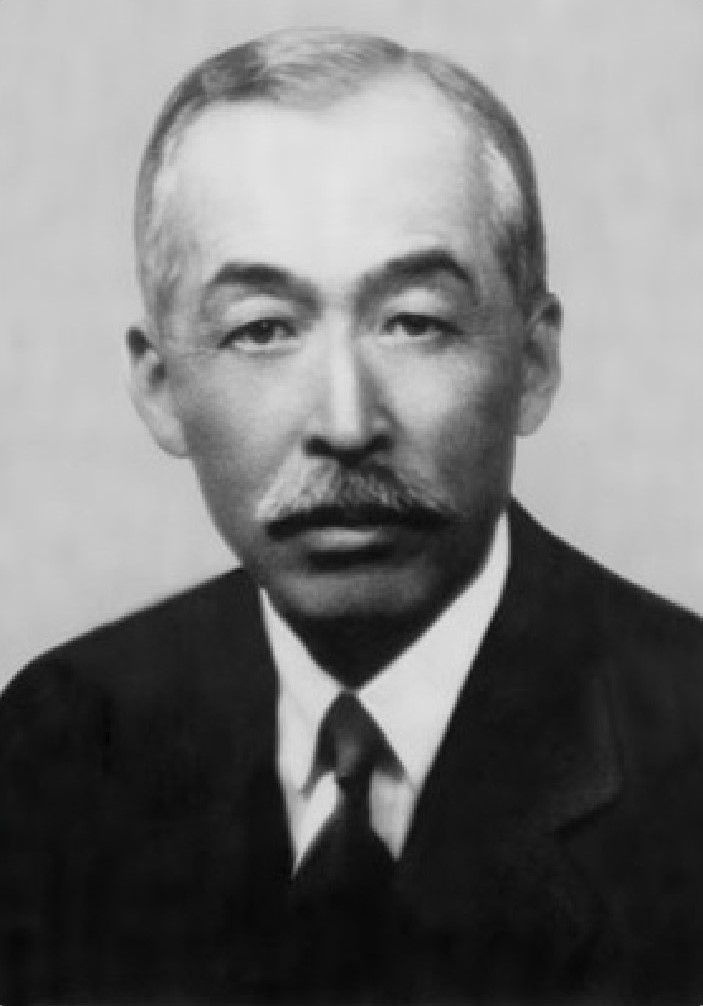
Beginning today and continuing through Aug. 25, I will serialize “Nichiren, The Buddhist Prophet” by Masaharu Anesaki.
First published in 1916, the book is now in the public domain. I’ve had excerpts from the book on this website since August 2016 but recently I decided it would be worthwhile to re-read the book and, while I was at it, chop it up into digestible pieces to make it more appealing to general audiences.
Anesaki is famous enough to merit an entry in the Oxford Dictionary of Buddhism:
Professor of Japanese Literature and Life at Harvard University and Professor of the Science of Religion at Tokyo Imperial University, he was Japan’s leading writer on Japanese religious history. His writings on Shintō and Japanese Buddhism, especially Nichiren Buddhism, as well as his general works on Japanese religion, formed some of the earliest scholarly reports on Japanese religious life to become available in the West.
His book on Nichiren is considered a classic. University of Hawaii professor David W. Chappell, in a review of an English translation of Nichiren’s major writings, had occasion to mention that “Anesaki’s pioneering study in 1916 remains the best introduction.”
And yet Anesaki’s book on Nichiren is not without its detractors. In particular, he is criticized for his extensive use of Roman Catholic imagery to explain Buddhist terms and Nichiren’s ambitions.
When taken out of context, Anesaki’s use of Christian imagery is jarring:
“Behold, the kingdom of God is within you!” This was the creed of Nichiren also, witnessed by his life, confirmed by the Scripture, and supported by his metaphysical speculation.
This idea gradually crystallized in Nichiren’s mind into a definite plan for establishing the center of the universal church, the Holy See, the Kaidan.
But substitute Buddha Nature for “Kingdom of God” and Lotus Sutra for “Scripture” and this becomes a wholly conventional view of Nichiren’s teaching. While objection can be made to Anesaki’s association of Nichiren’s Kaidan – the Precept Platform and the second of the Three Great Secret Dharmas – with the Roman Catholic Holy See, is it inaccurate within the context of Nichiren’s efforts to have the Japanese government establish faith in the Lotus Sutra as the sole Buddhist teaching in medieval Japan?
In my editing to prepare the book for serialization, I’ve added clarifying information within square brackets. Anesaki’s “Scripture” is restored to Lotus Sutra. References to “Sole Road” are changed to One Vehicle. I’ve also changed his spelling to maintain consistency with content on this website: Chi-ki becomes Chih-i. Anesaki further introduced a certain level of confusion by referring to Chih-i as “Tendai” rather than T’ien T’ai. On several occasions Anesaki made references to the “great masters Tendai and Dengyō.” I’ve also removed all of his efforts to translate Medieval lunar calendar dates into solar calendar equivalents. (See Calendar: East Meets West.)
I have, in effect, made this book my own. Readers are encouraged to download the PDF copy of the book as originally published.
All this begs the question: Why bother?
To answer that I offer a quote from the book. When reading this quote you are asked to substitute Ichinen Sanzen for “mutual participation,” Gohonzon for “graphic representation of the Supreme Being,” Namu Myōhō Renge Kyō for “Sacred Title” and the Eternal Śākyamuni Buddha as revealed in Chapter 16 for “Supreme Being” and the “Lord of the Universe.”
Vain is all talk and discussion concerning existences and reality, unless the virtues of existence are realized in one’s own person. Noble and sublime may be the conception of the Supreme Being, but it is but an idol or image, a dead abstraction, if we ourselves do not participate in its supreme existence and realize in ourselves its excellent qualities. Thus, worship or adoration means a realization of the Supreme Being, together with all its attributes and manifestations, first, through our own spiritual introspection, and second in our life and deeds. The practice of introspection is carried on in religious meditation. This, however, does not necessarily mean intricate and mysterious methods, such as are employed by many Buddhists; the end can be attained by uttering the Sacred Title, and by gazing in reverence at the graphic representation of the Supreme Being as revealed by Nichiren. The truths of universal existence and “mutual participation” remain abstractions if detached from the true moral life; but any morality, however perfect it may seem, is vain apart from the profound conviction in the truth of the “mutual participation,” and from an apprehension of our primeval relation to the Lord of the Universe.
Thus, to participate in the virtues of the Supreme Being is the aim of worship; but that participation means nothing but the restoration of our primeval connection with the eternal Buddha, which is equivalent to the realization of our own true nature. In other words, the true self of every being is realized through full participation in the virtues of the Supreme Being, who, again, reveals himself – or itself – in the perfect life of every believer. The relation between the worshipped and the worshipper exemplifies most clearly the truth of “mutual participation,” because the worshipped, the Supreme Being, is a mere transcendence if it does not reveal itself in the believer’s life, while the worshipped realizes his true being and mission only through the elevating help (adhiṣṭāna) of the Supreme Being. Thus, mutual participation is at the same time mutual revelation – realization of the true being through mutual relationship, to be attained by us through spiritual introspection and moral living. Religious worship, in this sense, is at the same time moral life; and moral relationships in the human world are nothing but partial aspects of the fundamental correlation between us and the Supreme Being. The point to be emphasized in regard to this conception of the religious relation is that the Supreme Being alone, without our worship of it in enlightenment and life, is not a perfect Being, just as, without a child, “father” is but an empty name, if not a contradiction in terms.
I can think of no better explanation of Nichiren Buddhism.
In serializing the book I’ve decided to reorder things a bit. After the Preface, which appears today, I’m moving two Appendix chapters – The Fundamental tenets of Buddhism concerning reality and T’ien T’ai’s doctrines of the Middle Path and reality – to the front in order to provide background useful when reading Anesaki’s description of Nichiren’s teachings. I’ve arbitrarily divided these appendices into three and two parts, respectively. For the main biography of Nichiren, I have used the book’s Table of Contents to create the daily portions. Some are very short, others much longer:
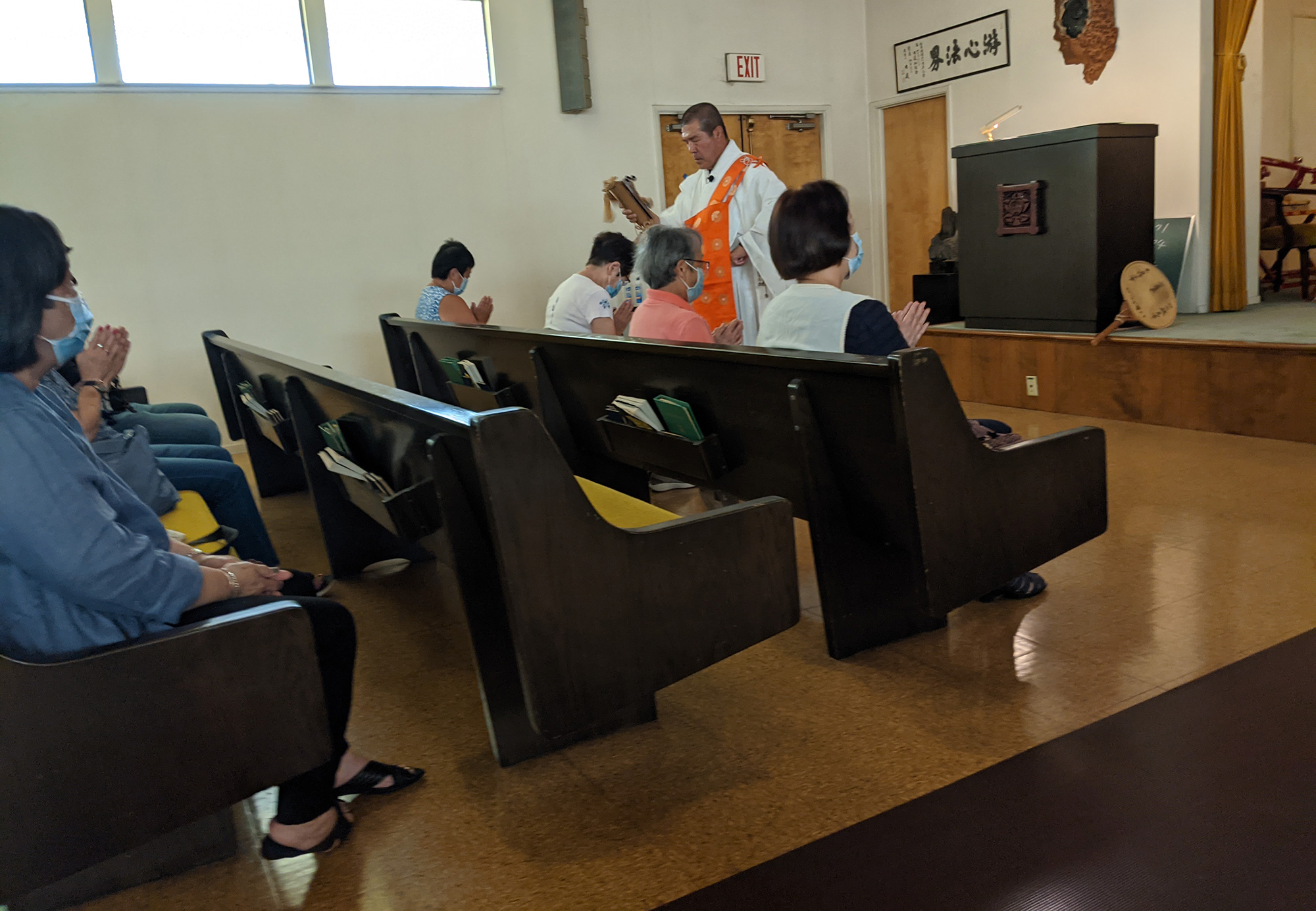
Finally, after more than a year, Rev. Kenjo Igarashi ventured into the congregation of the Sacramento Nichiren Buddhist Church to give his monthly Kito Blessing. During the pandemic Rev. Igarashi had to provide the purification blessing remotely from the altar stage without moving about the congregation.
Rev. Igarashi said afterward during his sermon that this had been a special kito blessing in which he “looked into your mind” to see if those he was blessing were being affected by harmful spirits. In my case, he pulled me aside after the service to say that he felt the presence of a deity working on my behalf and asked if I had any ideas on which deity it might be. No clue, I said, but I pointed out that it was quite possible that a deity had been working to bring me and him together since he arrived in Sacramento in 1989. At that time I was recently divorced and looking to buy a new home. By chance (read: helped by deity?) I found a house just down the street from the Sacramento Nichiren Buddhist Church. I didn’t know anything about Nichiren Shu at the time, having only just joined Nichiren Shoshu, but I’m sure it would not have taken 25 years for me to start attending Rev. Igarashi’s services. Alas, unhelpful spirits working at the CalVet Loan agency discouraged me from buying that home.
During the sermon Rev. Igarashi stressed the importance of his purification ceremony, especially for new members. He said he has resumed his monthly trips to Chicago, where he ministers to “the young ones.” The oldest member, he said, is maybe 38. That’s close to the age of the youngest person who regularly attends services in Sacramento. At 69, I’m in the middle of the average. Our oldest active member is 93, and she still drives herself to services.
Rev. Igarashi contrasted the motivation of the “young ones” to get benefits to the people who attend in Sacramento because their parents and grandparents attended. That seemed harsh to me, but you can’t deny that Sacramento is sorely lacking in “young ones” seeking immediate benefits.
Rev. Igarashi pointed out that everyone who practices is equipped with the same tools with which to reach their goals, whatever those goals may be. Each person who practices has a strong bow and a straight arrow with which to hit their target. These are the Lotus Sutra and the Daimoku. The only difference is in the strength of the archer. That strength – the ability to bend the bow to the archer’s will and send the arrow flying to pierce the target – is a measure of our faith. Those who chant and practice develop strong faith and that faith allows those people to hit their targets.
Why do you suppose it is that I read something again and again and then suddenly realize I haven’t been paying attention.
Today’s Daily Dharma says, “Superior-Practice is the embodiment of the fourth vow of a Bodhisattva: The Buddha’s teachings are immeasurable; I vow to attain supreme enlightenment.”
The Four Great Vows of the Bodhisattva are:
SHUJO-MUHEN SEIGANDO – Sentient beings are innumerable: I vow to save them all.
BONNO-MUSHU-SEIGANDAN – Our evil desires are inexhaustible: I vow to quench them all.
HO-MON MUJIN SEIGANCHI – The Buddha’s teachings are immeasurable: I vow to study them all.
BUTSUDO-MUJO-SEIGANJO – The way of the Buddha is unexcelled: I vow to attain the Path Sublime.
The Fourth Vow is the Buddha’s way, not his immeasurable teachings.
Gene Reeve’s “Stories of the Lotus Sutra” explains the correspondence between the Four Great Leaders of the Bodhisattvas from Underground and the Four Great Bodhisattva Vows:
[T]he four great bodhisattvas – Superior Practice, Unlimited Practice, Pure Practice, and Firm Practice – who lead the great horde of bodhisattvas who emerge from the earth are said to display, or correspond to, the four great bodhisattva vows:
Firm Practice: However innumerable living beings are, I vow to save them all;
Pure Practice: However innumerable hindrances are, I vow to overcome them all;
Unlimited Practice: However innumerable the Buddha’s teachings are, I vow to master them all;
Superior Practice: However supreme the Buddha Way is, I vow to reach it.
I probably didn’t know the Four Great Vows by heart in August 2015, but that doesn’t excuse not noticing this error until today. Just Not Paying Attention.
My father is dead. He died in 2009. Now I have no role on Father’s Day other than to be appreciative of whatever my wife and son cook up to mark the occasion. At least that was my outlook before Rev. Shoda Kanai’s Shodaigo service from the Nichiren Buddhist Kannon Temple of Nevada.
Following the service, Rev. Kanai discussed our other father, the Eternal Śākyamuni, who has been teaching us since the remotest past. The sermon was something of a revelation for me. While I am very familiar with Chapter 7’s lesson about our link to Śākyamuni when he was among the 16 śramaṇeras who were the sons of Great-Universal-Wisdom-Excellence Tathāgata, the lens of Father’s Day brought this relationship into focus.
“These sixteen Bodhisattvas willingly expounded the Sūtra of the Lotus Flower of the Wonderful Dharma. Each of them taught six hundred billion nayutas of living beings, that is, as many living beings as there are sands in the River Ganges. Those living beings were always accompanied by the Bodhisattva[, by whom they were taught,] in their consecutive existences. [In each of their consecutive existences,] they heard the Dharma from him, and understood it by faith. By the merits [they had thus accumulated], they were given a privilege to see four billion Buddhas, that is, four billion WorldHonored Ones. They have not yet seen all of them. …
“Those living beings who followed me, heard the Dharma from me in order to attain Anuttara-samyak-saṃbodhi. Some of them are still in Śrāvakahood. I now teach them the Way to Anuttara-samyak-saṃbodhi. They will be able to enter the Way to Buddhahood by my teaching, but not immediately because the wisdom of the Tathāgata is difficult to believe and difficult to understand. Those living beings as many as there are sands in the River Ganges, whom I taught [ when I was a śramaṇera], included you bhikṣus and those who will be reborn as my disciples in Śrāvakahood after my extinction.
As Śāriputra says in Chapter 3:
Today I have realized that I am your son, that I was born from your mouth, that I was born in [the world of] the Dharma, and that I have obtained the Dharma of the Buddha.”
Rev. Kanai used a quote from Chapter 28 to illustrate his point:
Universal-Sage! Anyone who keeps, reads and recites this Sūtra of the Lotus Flower of the Wonderful Dharma, memorizes it correctly, studies it, practices it, and copies it, should be considered to see me, and hear this sūtra from my mouth. He should be considered to be making offerings to me. He should be considered to be praised by me with the word ‘Excellent!’ He should be considered to be caressed by me on the head. He should be considered to be covered with my robe.

 The One Year Memorial Service for Rev. Ryusho Jeffus will be held online on Sunday, Aug. 15 via Zoom at 10:30 AM Pacific Time – 1:30 PM Eastern Time, 6:30 PM GMT (London), 7:30 PM CET (Prague).
 Beginning today I will be posting excerpts from