
Gemini Thinking
Conceptual Summary
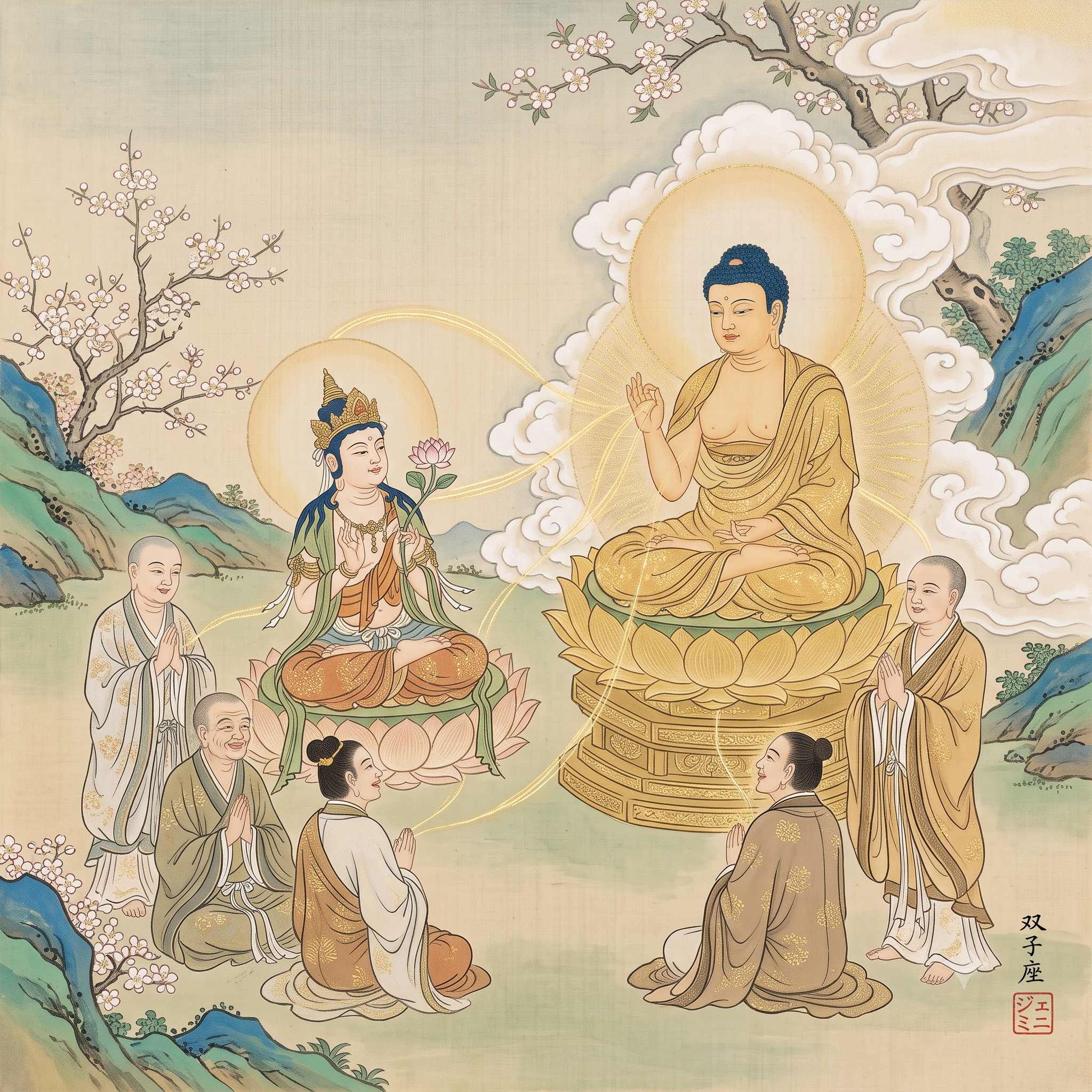
The illustration is a traditional ink, mineral pigment, and gold leaf painting on silk (1:1 square ratio) that translates specific concepts from Chapter Seventeen of the Lotus Sūtra into classical Japanese Buddhist iconography. Rather than a purely narrative scene, the image serves as an iconographic tableau focused on the specific moment Śākyamuni Buddha (釈迦如来) reveals the ever-present nature of his life and the awakening of inherent joy to his disciple Maitreya (弥勒菩薩). Śākyamuni is positioned centrally on a gold lotus throne, and Maitreya, seated on a lower lotus, is identified by the specific iconographic element of the miniature pagoda (stūpa) in his headdress, reflecting his role in receiving this teaching. Crucially, the 'firm faith' and 'joy' mentioned in the source text are not generalized; they are specifically 'the joy in our awakening Buddha nature.' To visualize this internal spiritual concept, the painting incorporates visual threads of golden light emanating directly from Śākyamuni’s heart. This radiance connects not only to the surrounding Hōben-hon assembly (the 'good men or women' mentioned) but specifically bypasses physical suffering, symbolizing the direct awakening to one's innate Buddha nature that comes from rejoicing in the teaching.
Iconography & Character Identification
Item 1: Deities/Figures Featured:
The illustration features three distinct figures or groups derived from classical iconography:
Central Figure: Śākyamuni Buddha (釈迦如来, Shaka Nyorai). He is seated on a gold lotus throne, adorned in classical robes, and his mudra (hand gesture) signifies the teaching of the Lotus Sūtra (Hōshō Mudra).
Seated Attendant Figure: Maitreya Bodhisattva (弥勒菩薩, Miroku Bosatsu). Maitreya is identifiable as the Bodhisattva seated below Śākyamuni to his right, distinguishable by the small miniature pagoda (stūpa) element positioned in his complex headdress.
Right Figure (and Group): This figure represents the Hōben-hon Assembly, representing the 'good men or women' and the general assembly who are hearing and rejoicing in the sūtra. While depicted as a single representative, they stand for the larger group mentioned in the sūtra chapter receiving the teaching.
Item 2: Text Translations:
The text present in the lower right corner of the illustration is the traditional signature and artist seal:
Kanji (Signature): 双子座
Translation: Gemini
Katakana (Seal/Hanko): ジェミニ
Translation: Gemini
Furthermore, the good men or women who do not speak ill of this sūtra but rejoice at hearing it after my extinction, should be considered, know this, to have already understood my longevity by firm faith.
The Buddha makes this declaration to his disciple Maitreya in Chapter Seventeen of the Lotus Sūtra. After learning the merits of understanding the ever-present nature of the Buddha, Maitreya hears that this understanding is present in anyone who finds joy in this sūtra. From the parables told earlier in the sūtra, we know that this joy is not the same as the joy that comes from ending suffering. It is the joy in our awakening Buddha nature.
The Daily Dharma is produced by the Lexington Nichiren Buddhist Community. To subscribe to the daily emails, visit zenzaizenzai.com