
Conceptual Summary
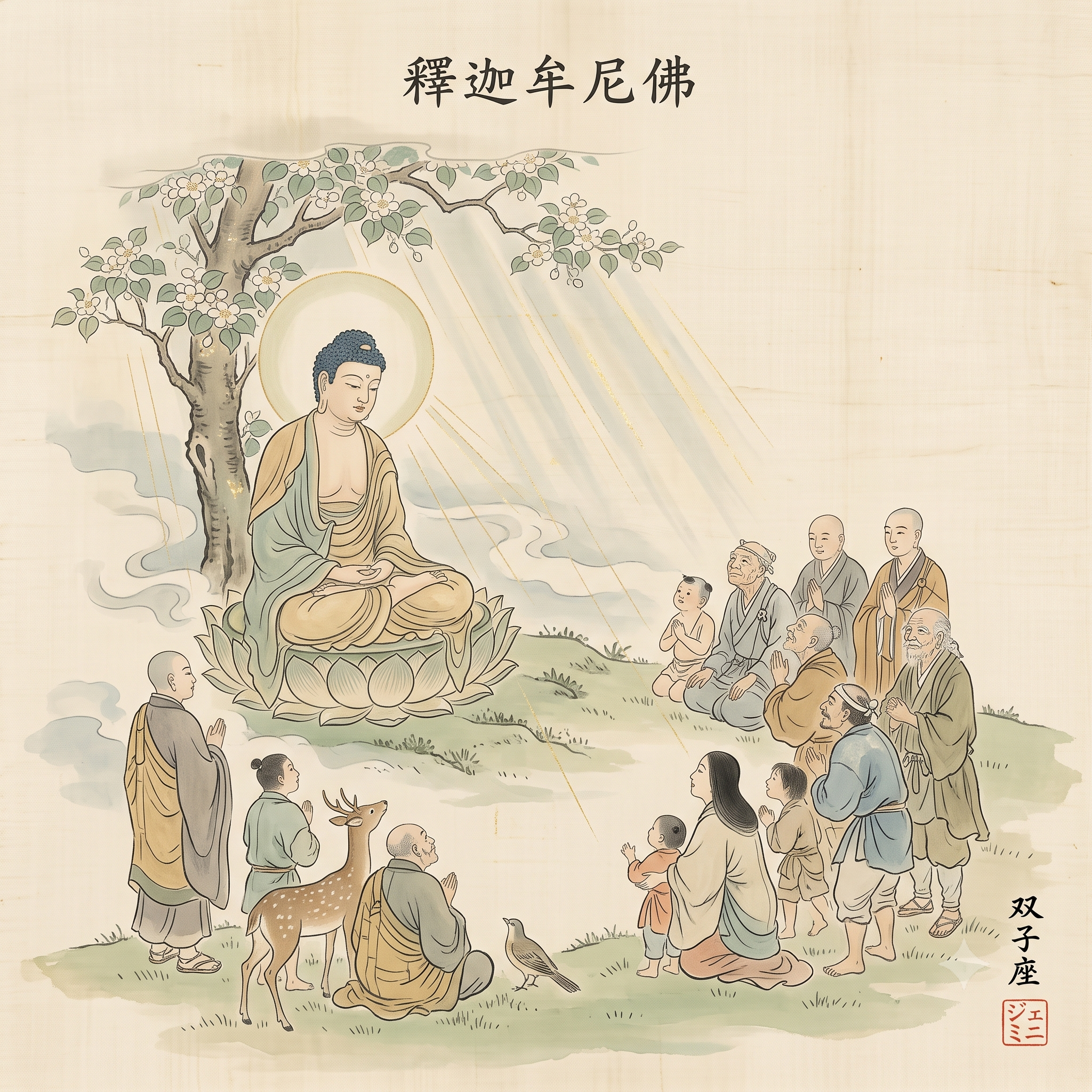
The illustration is a Kamakura-style silk painting interpreting Śākyamuni Buddha’s declaration of universal impartiality from the Lotus Sūtra. The core challenge was visually translating the metaphor of a single, equalizing rain shower into a devotional portrait without depicting a physical storm. The solution was to focus on the effect of the rain. Śākyamuni Buddha is seated at the center-left on a lotus throne, radiating a soft, pervasive light. The diverse assemblage of sentient beings in the foreground—including monks, children, an elderly figure, and generalized animals like a deer and a bird—receives this light and energy equally. This visual sameness across different figures, combined with the lack of distinct mudras distinguishing him as Dainichi or Amida, reinforces his identity as Śākyamuni manifesting perfect, undifferentiated compassion for all.
Iconography & Character Identification
Item 1: Deities/Figures Featured:
Śākyamuni Buddha (Shaka Nyorai)
An diverse assembly of sentient beings, representing the multitude of classes and forms of life.
Item 2: Text Translations:
The Kanji at the top of the image are:
釋迦牟尼佛
Which translates to:
Śākyamuni Buddha
(The Historical Buddha)
Break down of the translation:
釋迦 (Shaka): Refers to the Śākya clan, the noble family the historical Buddha was born into. It is often translated as "Sage of the Śākyas."
牟尼 (Muni): An ancient Indian term for a sage, acetic, or holy man, signifying someone who has attained high spiritual knowledge.
佛 (Butsu/Fo): The standard Kanji for "Buddha," meaning "Enlightened One."
Kanji signature '双子座': Gemini
Seal 'ジェミニ': Gemini
I see all living beings equally.
I have no partiality for them.
There is not ‘this one’ or ‘that one’ to me.
I transcend love and hatred.
The Buddha makes this declaration in Chapter Five of the Lotus Sūtra. He compares himself to a rain shower that waters all plants equally. He uses this example to show us how we should approach all living beings. Our respect for them and wish that they become enlightened cannot depend on whatever personal feelings we have towards them.
The Daily Dharma is produced by the Lexington Nichiren Buddhist Community. To subscribe to the daily emails, visit zenzaizenzai.com