
Gemini Thinking
Conceptual Summary
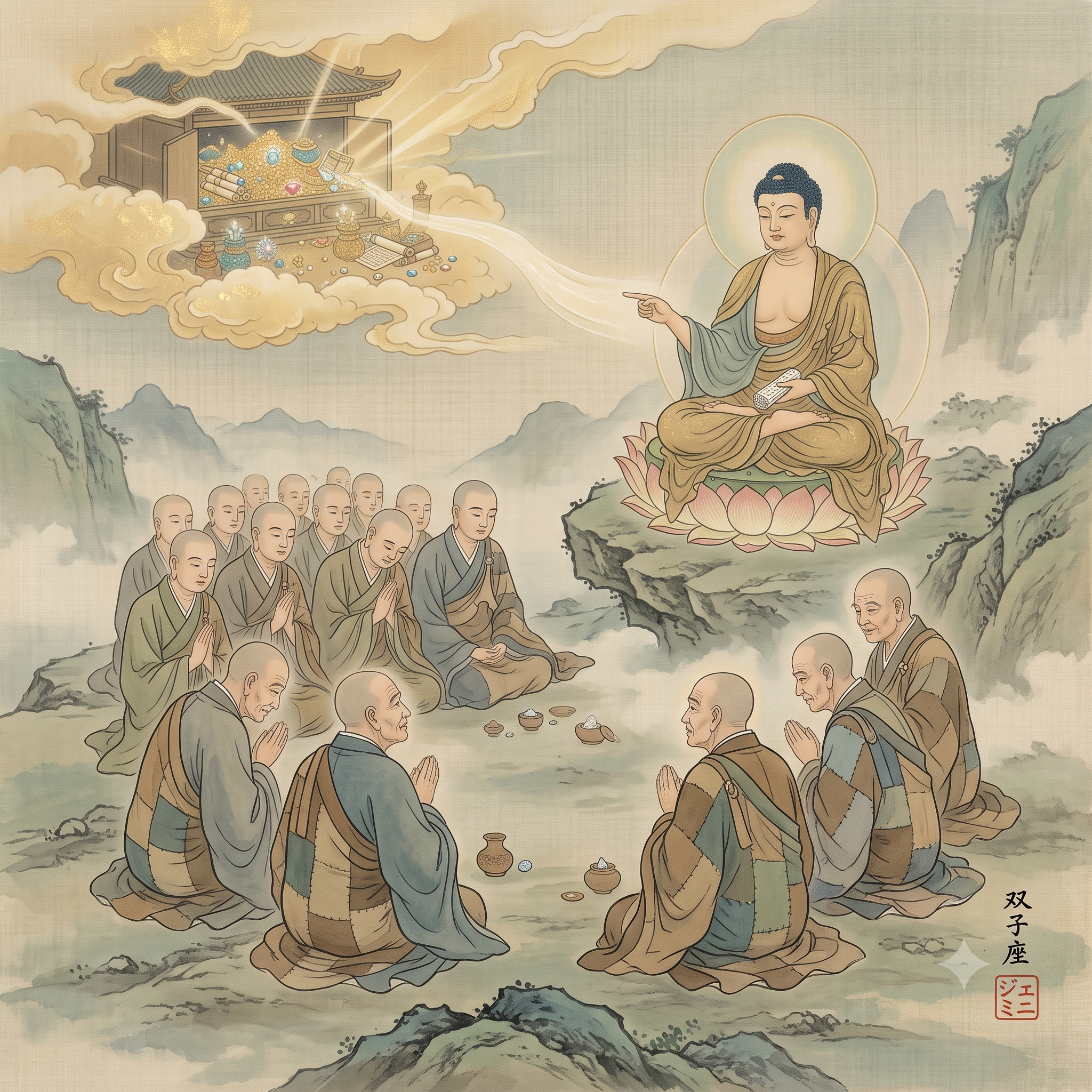
The illustration translates the parable from Chapter Eight of the Lotus Sūtra into visual metaphor. It contrasts the monks' previous self-limited understanding of realization with the boundless treasure house of the Buddha's full teaching. The monks, shown in humble postures of prayer and introspection, represent the 'foolish men' who contented themselves with the partial attainment of personal release from suffering. This limited Nirvana is symbolized by the few small, isolated containers. Above, Śākyamuni Buddha, identifiable by his classic iconography and posture on the lotus seat, gestures toward a vast, overflowing treasure house in the clouds. This visually expansive source of jewels, scrolls, and divine artifacts represents the "immeasurable treasures" of enlightenment and the realization that their true purpose is the Mahayana ideal: to actively benefit all beings. The composition uses traditional pigments and gold to evoke a profound, sacred moment of dawning realization.
Iconography & Character Identification
Item 1: Deities/Figures Featured: Śākyamuni Buddha (the historical Buddha) is seated on the lotus throne. A large group of monastic disciples, representing the five hundred monks mentioned in the Lotus Sūtra, are kneeling and standing in reverence.
Item 2: Text Translations: The Kanji signature in the lower-right corner, 双子座, translates to 'Gemini'. The text within the red square seal, written in Katakana, เจミニ, translates to 'Gemini'.
The Nirvāṇa we attained was
Only part of the immeasurable treasures of yours.
We were like a foolish man with no wisdom.
We satisfied ourselves with what little we had attained.
Five hundred of the Buddha’s monks give this explanation in Chapter Eight of the Lotus Sūtra. They had spent all of their time with the Buddha working to rid themselves of suffering. While this is a remarkable achievement, it does not compare to the true purpose of the Buddha’s teaching. When these monks heard the Buddha teach the Lotus Sutra, and understood that their true purpose was to benefit others, they realized that their earlier practice was preparation. By remaining preoccupied with suffering, they had lost sight of the treasure of enlightenment.
The Daily Dharma is produced by the Lexington Nichiren Buddhist Community. To subscribe to the daily emails, visit zenzaizenzai.com