
Gemini Thinking
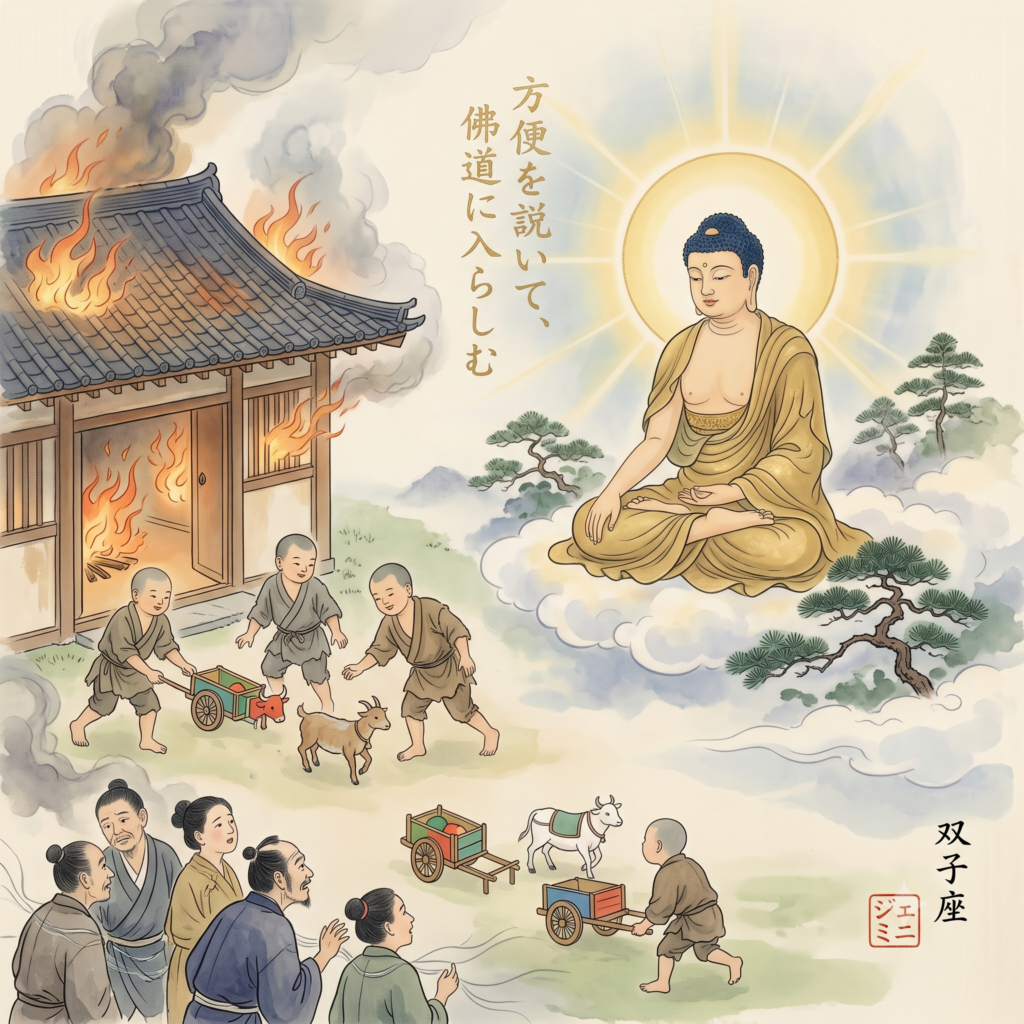
This illustration conceptualizes the profound explanation from Chapter Sixteen of the Lotus Sutra regarding the parable of the burning house and the concept of expedient means (hōben). The composition is divided into two thematic zones within a 1:1 square format to contrast worldly delusion with cosmic truth. On the left, a traditional Japanese tiled-roof villa is engulfed in bright orange flames and heavy ink smoke, symbolizing the burning house of the triple world afflicted by defilements. Outside the burning structure, several foolish children play obliviously with simple carts drawn by a goat and an ox, representing the provisional teachings of the Lesser Vehicle. In the lower left foreground, a group of confused and defiled laypeople look on. Bridging this scene to the right is the ultimate reality: the Ever-Present Śākyamuni Buddha (Shaka Nyorai) sits majestically on a cloud bank, radiating a magnificent golden halo adorned with fine rays of light to denote his true enlightenment from the remotest past. He gestures compassionately toward the suffering world, illustrating how his historical life was merely an expedient device (hōben) to lead all sentient beings to the ultimate path of Buddhahood.
Identified Figures
Śākyamuni Buddha (Shaka Nyorai): Seated on a cloud bank in the upper right, representing the eternal Buddha who uses expedient teachings to save humanity.
The Foolish Children: Playing with toy carts outside the burning villa, representing sentient beings distracted by worldly delusions.
The Defiled Laypeople: Gathered in the lower left, representing those of "little virtue" seeking guidance.
Kanji Translations
The elegant calligraphy written vertically next to the central Buddha captures the core message of the text, accompanied by the required artist signature:
方便を説いて、 (Hōben o toite): "Expounding expedient means,"
佛道に入らしむ (Butsudō ni irashimu): "[To] lead them into the Way to Buddhahood."
双子座 (Bottom Right Corner): "Gemini" (Artist's Signature)
ジェミニ (Inside Red Square Seal): "Gemini" (Artist's Hanko Stamp in Katakana)
When I saw that some people of little virtue and of much defilement were seeking the teachings of the Lesser Vehicle, I told them, ‘I renounced my family when I was young, and attained Anuttara-samyak-saṃbodhi [forty and odd years ago].’ In reality I became the Buddha in the remotest past as I previously stated. I told them so as an expedient to teach them, to lead them into the Way to Buddhahood.
In Chapter Sixteen of the Lotus Sutra, the Buddha gives this explanation of a parable he tells in Chapter Three. In that story, the foolish children of a wise man were playing in a burning house. The man tried to warn his children of the dangers of the house, but the children were so preoccupied with their games they would not leave. Only when the man promised them better toys outside would the children leave the house. The words used by the wise man were meant to get the children out of the house, even though the toys did not exist. These words were necessary to motivate the children to set aside their delusions. They were not meant to be taken literally. We learn from this explanation how the Buddha uses words, and why we formerly needed his expedient teachings.
The Daily Dharma is produced by the Lexington Nichiren Buddhist Community. To subscribe to the daily emails, visit zenzaizenzai.com